
Game review
Kin and Conquest
7 / 10
- Developer
- The Fox Knocks
- Publisher
- The Fox Knocks, Gamersky Games
- Released
- 3 August 2026
- Platforms
- Windows
- Genre
- Incremental Action-Adventure
- Monetisation
- One-off premium purchase, no DLC, no in-app purchases and no premium currency
- Players
- None. Single-player only, with no leaderboard, co-op or shared-progress feature
The short version
Kin and Conquest takes the swarm-clearing rhythm of a Vampire Survivors-style bullet heaven and bolts a genuine incremental gear economy onto it — mining resources between runs, upgrading and re-rolling equipment, climbing a twelve-floor tower across three escalating difficulty tiers — and the combination feels considered rather than opportunistic. Early player reaction is strongly positive, with the gear management and the genre blend singled out repeatedly as the game's best idea. The catches so far are ones a young launch usually has: a handful of players report the run clocking in around four hours with limited reason to repeat it, one describes build variety mattering less than expected once a strategy is found, and at least one magic weapon's secondary effect is reported as bugged.
Biggest strengths
- The gear unlock-and-upgrade loop gives bullet-heaven combat genuine incremental depth instead of just layering a shop on top of an unrelated shooter
- Twelve tower floors across Normal, Hard and Extreme difficulty give the achievement structure — and by extension the game's sense of progression — a clear, escalating shape
- Early player reaction specifically calls out that the game "respects your time," a rarer compliment for the genre than it should be
Biggest weaknesses
- Several early reviewers describe the full run as roughly four hours with little pull to replay it, a thin amount of content at this price point if that estimate holds up
- One reviewer specifically reports that weapon choice stops mattering once a working build is found, which would undercut the gear system's central selling point if it turns out to be representative rather than an outlier
- At least one report of a magic weapon's secondary effect not functioning correctly, unpatched as of the day-one hotfix
Who it's for: Fans of Vampire Survivors-style bullet heavens who also enjoy incremental gear progression, and returning players of the developer's earlier Kin and Quarry looking for a faster, more combat-forward take on the same studio's ideas.
Our recommendation: A well-built day-one launch worth playing now if a shorter, focused run appeals to you; players who specifically want a long-tail incremental to sink weeks into may want to wait and see whether post-launch content addresses the replayability complaints already showing up in the review sample.
7 / 10
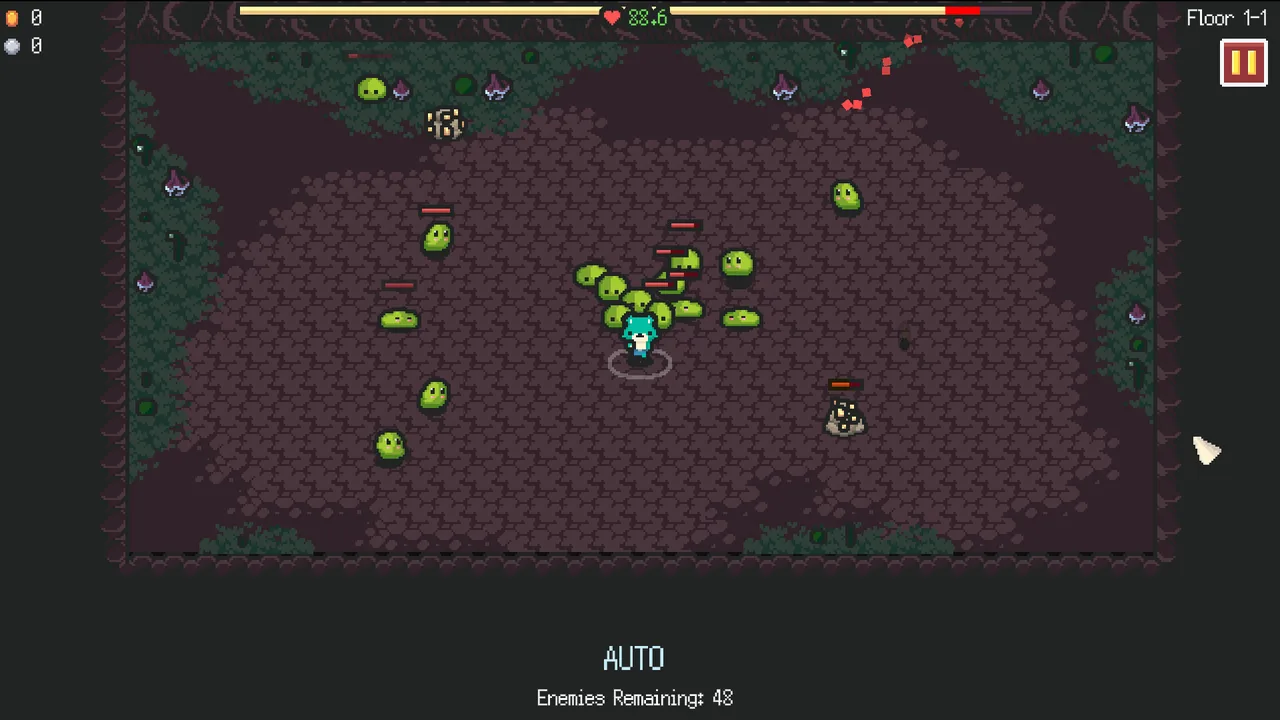
Kin and Conquest launched on Steam yesterday, which makes it an unusual thing to review: there's no mature community consensus to lean on yet, no achievement curve worn in by months of players, no long tail of patches to weigh against the original release. What there is, from developer The Fox Knocks — best known for the mining incremental Kin and Quarry — is a confident, well-scoped hybrid of two genres that don't get combined nearly often enough: the swarm-clearing rhythm of a Vampire Survivors-style bullet heaven, and the gear-upgrading, resource-spending backbone of a proper incremental game.
Two genres that actually fit together
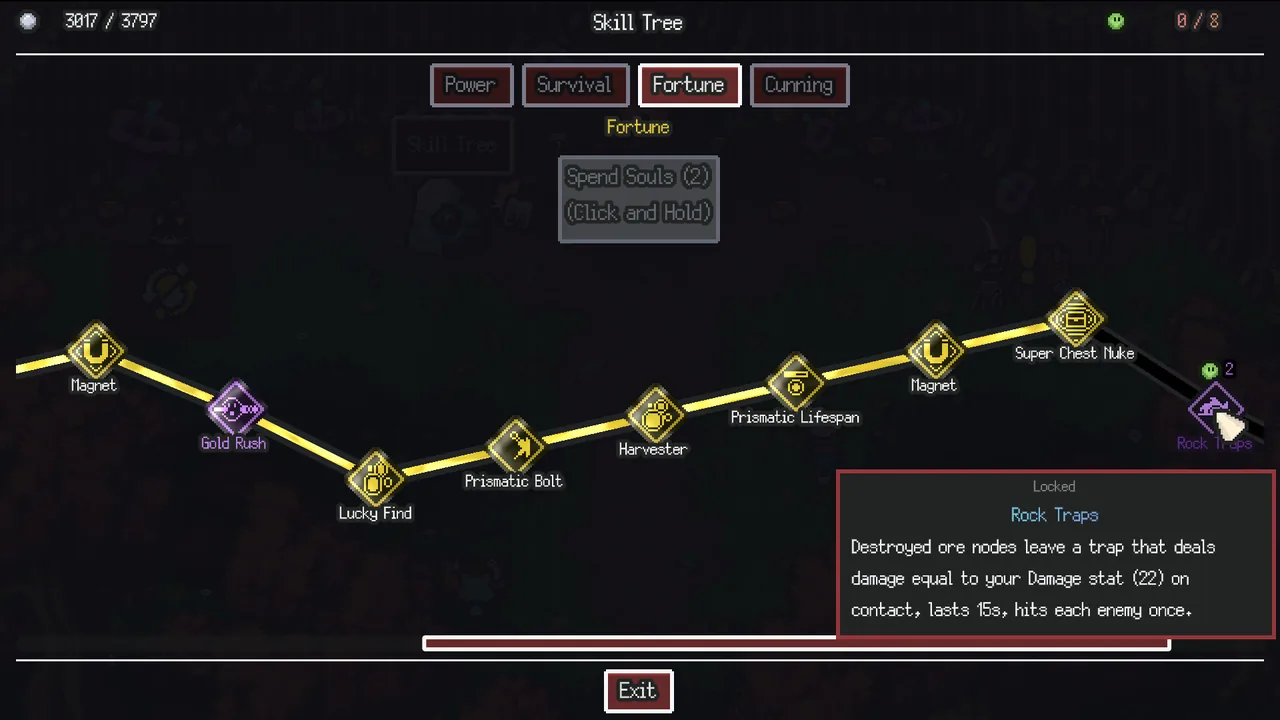
The pitch is straightforward — battle foes, mine rocks, defeat bosses, grow stronger, climb toward the Evil Geomancer at the top of the mountain — but the execution is where it earns credit. Bullet-heaven games usually treat their meta-progression as a side dish: a shop screen between runs, a handful of permanent multipliers, done. Kin and Conquest instead builds a real gear economy around mining and combat rewards, with equipment that can be unlocked, upgraded and apparently re-rolled for better properties between attempts at the tower. Early reviewers specifically call this out as the game's strongest idea, describing "a lot of build to check & upgrade" and praising the gear management as a genuine point of engagement rather than a formality standing between runs.
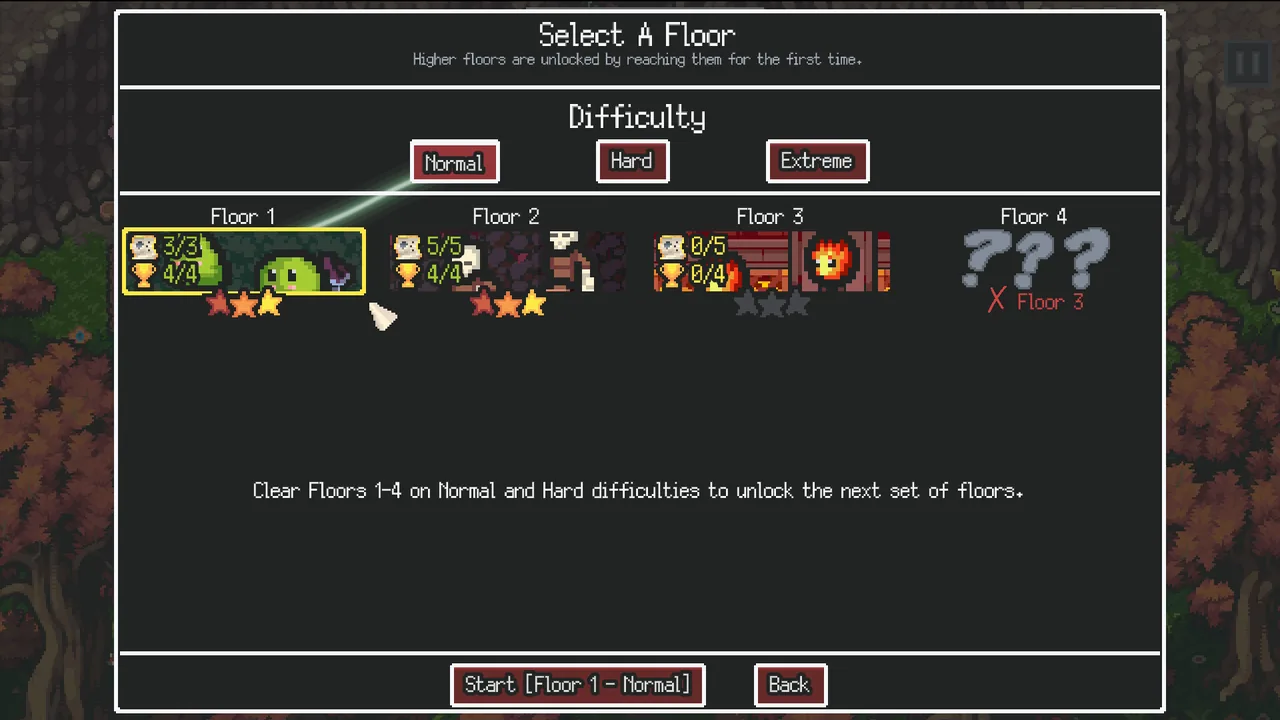
The tower itself is structured around twelve floors, each clearable at Normal, Hard or Extreme difficulty — a shape that shows up clearly in the game's Steam achievement list, which tracks completion at all three tiers across every floor. It's a clean, legible way to communicate progress: a player always knows roughly how far they've climbed and what the next rung asks of them, which is a harder thing to get right in a genre that can otherwise turn into an undifferentiated wall of enemies.
What a one-day-old launch looks like
Because the game is so fresh, everything here needs the caveat that a launch-week review sample is small and can shift fast. With that said, the early signal is genuinely good: of the first wave of English-language reviews, the clear majority are positive, and the recurring praise is consistent — the blend of genres, the pacing, and specifically a comment that the game "respects your time," a virtue this exact genre doesn't always practice.
The criticism worth taking seriously, even this early, clusters around two points. The first is length: more than one reviewer estimates a full playthrough at around four hours, with one explicitly calling the price "a bit expensive for four hours of zero replayability." Whether that holds up as more players reach the endgame, or whether the Hard and Extreme difficulty tiers on each floor give committed players meaningfully more to chew on, isn't settled yet — but it's the kind of complaint that either gets addressed by post-launch content or hardens into the game's defining weakness, and it's worth watching either way. The second is a report that weapon choice stops mattering once a workable build is found, which cuts directly against the gear system being the game's headline strength; if that turns out to be a widely shared experience rather than one player's particular run, it's a real problem for a game selling itself on build variety.
There's also a specific, concrete bug report: at least one magic weapon's secondary effect isn't functioning as intended, still present as of the same-day 1.0a hotfix. Bugs at launch are close to unavoidable for a solo-adjacent indie team, and a same-day hotfix is a good sign the developer is actively watching feedback — but it's worth knowing about before buying in, rather than after.
Where this leaves a buyer today
At NZ$13.49 during its launch discount, Kin and Conquest is priced like a focused, self-contained experience rather than a long-tail time sink, and for players who want exactly that — a tight handful of hours blending two genres that complement each other better than expected — the early reaction suggests it delivers. Returning fans of Kin and Quarry get a faster, more combat-forward expression of the same developer's sensibilities without needing to have played the original first, since this is a standalone game rather than a direct sequel.
Anyone specifically shopping for a deep, weeks-long incremental in the mould of the genre's biggest names should treat the current length complaints as a real signal rather than launch-week noise, and either wait for the post-launch picture to clarify or go in expecting a shorter, tighter experience than that comparison implies. For a day-one release, though, this is a well-aimed idea executed with more care than the bullet-heaven genre usually bothers to put into its own progression systems — and that alone makes it worth watching, if not an automatic buy for every incremental fan on the strength of one day's reviews.
Pros and cons
Pros
- The gear unlock-and-upgrade loop gives bullet-heaven combat genuine incremental depth instead of just layering a shop on top of an unrelated shooter
- Twelve tower floors across Normal, Hard and Extreme difficulty give the achievement structure — and by extension the game's sense of progression — a clear, escalating shape
- Early player reaction specifically calls out that the game "respects your time," a rarer compliment for the genre than it should be
- A standalone follow-up rather than a sequel requiring the original — Kin and Quarry fans get a familiar sensibility without new players needing any prior context
Cons
- Several early reviewers describe the full run as roughly four hours with little pull to replay it, a thin amount of content at this price point if that estimate holds up
- One reviewer specifically reports that weapon choice stops mattering once a working build is found, which would undercut the gear system's central selling point if it turns out to be representative rather than an outlier
- At least one report of a magic weapon's secondary effect not functioning correctly, unpatched as of the day-one hotfix
- No mac or Linux support, and no multiplayer or co-op of any kind for a genre that often thrives on both
Screenshots
-
Kin and ConquestImage: The Fox Knocks via Steam -
Kin and ConquestImage: The Fox Knocks via Steam -
Kin and ConquestImage: The Fox Knocks via Steam -
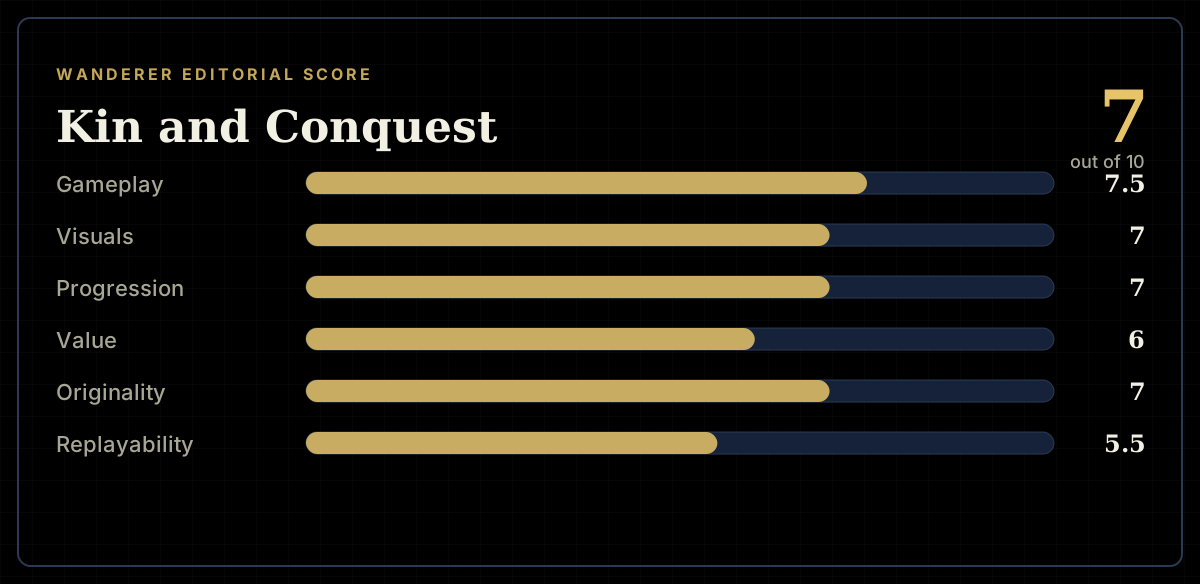
How the review scores each part of the gameWanderer Editorial -
The short versionWanderer Editorial