
Game review
Rogue Breaker
6.5 / 10
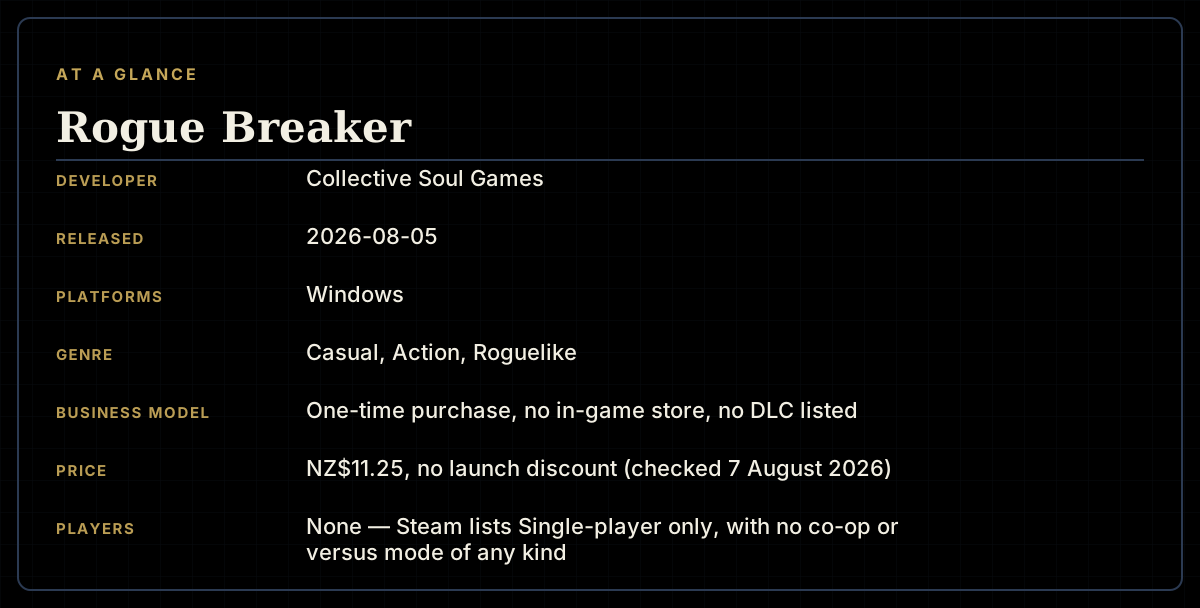
- Developer
- Collective Soul Games
- Publisher
- Collective Soul Games
- Released
- 5 August 2026
- Platforms
- Windows
- Genre
- Casual, Action, Roguelike
- Monetisation
- One-time purchase, no in-game store, no DLC listed
- Players
- None — Steam lists Single-player only, with no co-op or versus mode of any kind
The short version
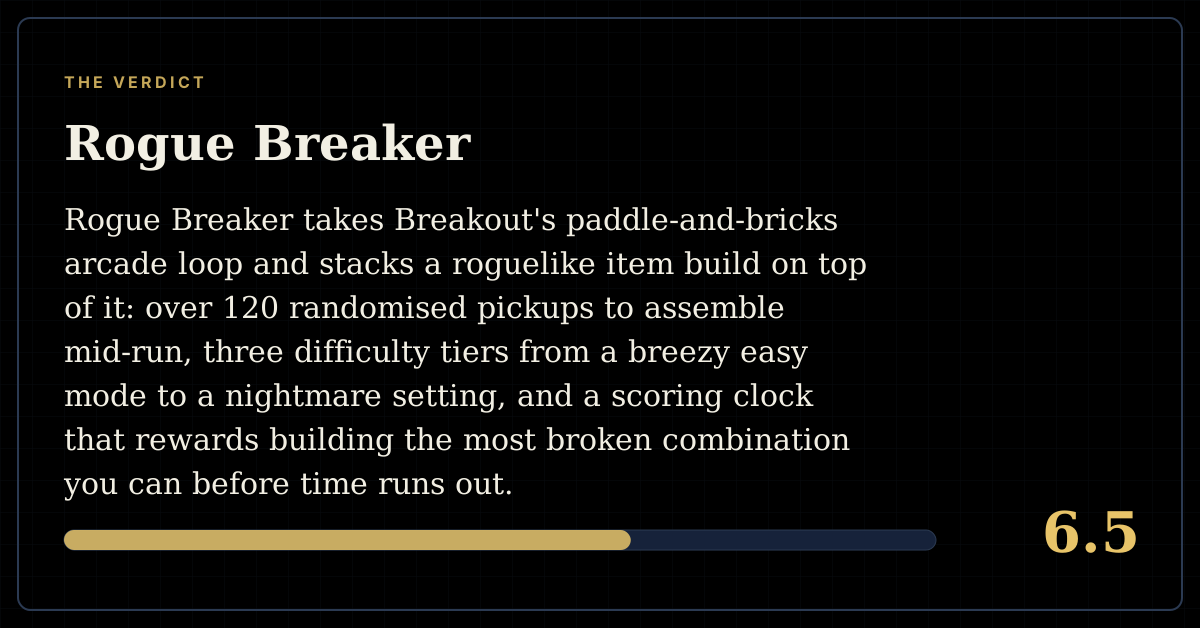
Rogue Breaker takes Breakout's paddle-and-bricks arcade loop and stacks a roguelike item build on top of it: over 120 randomised pickups to assemble mid-run, three difficulty tiers from a breezy easy mode to a nightmare setting, and a scoring clock that rewards building the most broken combination you can before time runs out. Despite carrying both the Roguelite and Perma Death tags on its own store page, nothing in that page, its feature list or its 29-achievement list describes any progress that survives a death — no unlockable starting items, no persistent currency bank, no permanent stat growth. Everything documented happens inside a single run and vanishes with it. That's a real and important distinction for anyone expecting the genre's usual hook of getting stronger between attempts, and it's the first thing worth knowing about this game rather than assuming from its name or its tags.
Biggest strengths
- A free demo sits on the same store page, letting anyone test the core paddle-and-item loop before paying a cent — a genre where that matters given how physics-dependent this style of game is
- Over 120 randomised items promise real build variety within a single run, and the 29-achievement list backs that up with distinct weapon and playstyle feats (Gatling, Barrage, Pyro, Blaster, Minimalist, Perfectionist) rather than one repeated goal
- Full controller support plus Keyboard Only Option, Adjustable Difficulty and Playable without Timed Input — an accessibility spread this genre rarely bothers with
Biggest weaknesses
- No documented meta-progression of any kind — no persistent currency, no unlockable starting items, no permanent upgrades — despite the game wearing the Roguelite tag alongside Perma Death, a combination that reads as a contradiction until you check the fine print
- Launched with zero Steam user reviews in any language and no press coverage this review could locate, so nothing about how the core physics actually feel has been confirmed by anyone outside the developer
- Windows only, no Mac or Linux build
Who it's for: Score-attack players who want a self-contained arcade session rather than a long-term unlock grind, and anyone who liked Breakout's core physics but wanted more decision-making layered on top of it. A poor fit for roguelite fans specifically chasing meta-progression, since the evidence points to none existing here.
Our recommendation: A cheap, focused arcade package with a genuinely large item pool and unusually strong accessibility options for its genre, undercut by zero outside verification two days after launch and a structure that doesn't match the meta-progression a lot of its own tagging implies. The free demo is the safest way to find out if the paddle-and-combo loop clicks before spending anything.
6.5 / 10
Rogue Breaker's own store page carries two tags that don't usually sit together: Roguelite, which in most players' shorthand means "you keep something when you die," and Perma Death, which traditionally means the opposite — a run that ends and takes everything with it. Collective Soul Games' arcade take on Breakout is a useful test case for that exact ambiguity, because its name and genre placement invite the assumption of a meta-progression ladder, and the documented evidence says there isn't one.
What actually carries over between runs
Nothing that's been published does. The store description talks entirely in single-run terms — "build the perfect run to score as many points as possible within the time limit," assembling an inventory from "over 120 items" to "fire lasers, cause explosions, amass a fortune, and spawn an ungodly amount of balls" during that run. The three listed features are randomised items, difficulty tiers and that's it: no mention of a currency bank that survives a death, no unlockable starting loadouts, no permanent stat track. The achievement list tells the same story from a different angle. Of the 29 achievements, the ten with public names describe single-run feats — Bane of Bricks, ULTRA COMBO!, Shopping Spree, Antique Collector, Professional Paddler — and the un-named 19 follow the same pattern by their internal names: Gatling, Barrage, Pyro and Blaster read as build archetypes you assemble mid-run, while Minimalist and Perfectionist sit at the opposite extreme, rewarding a lean or flawless single attempt rather than an accumulated total. Nothing among them reads as "unlock the next tier" or "complete N runs." For a genre category where meta-progression is usually the entire point — the reason a roguelite gets replayed for weeks instead of an afternoon — that's the single most important thing to know about this game before buying it, and it's worth taking at face value rather than assuming the marketing copy is just being economical with detail.
Breakout plus a shop
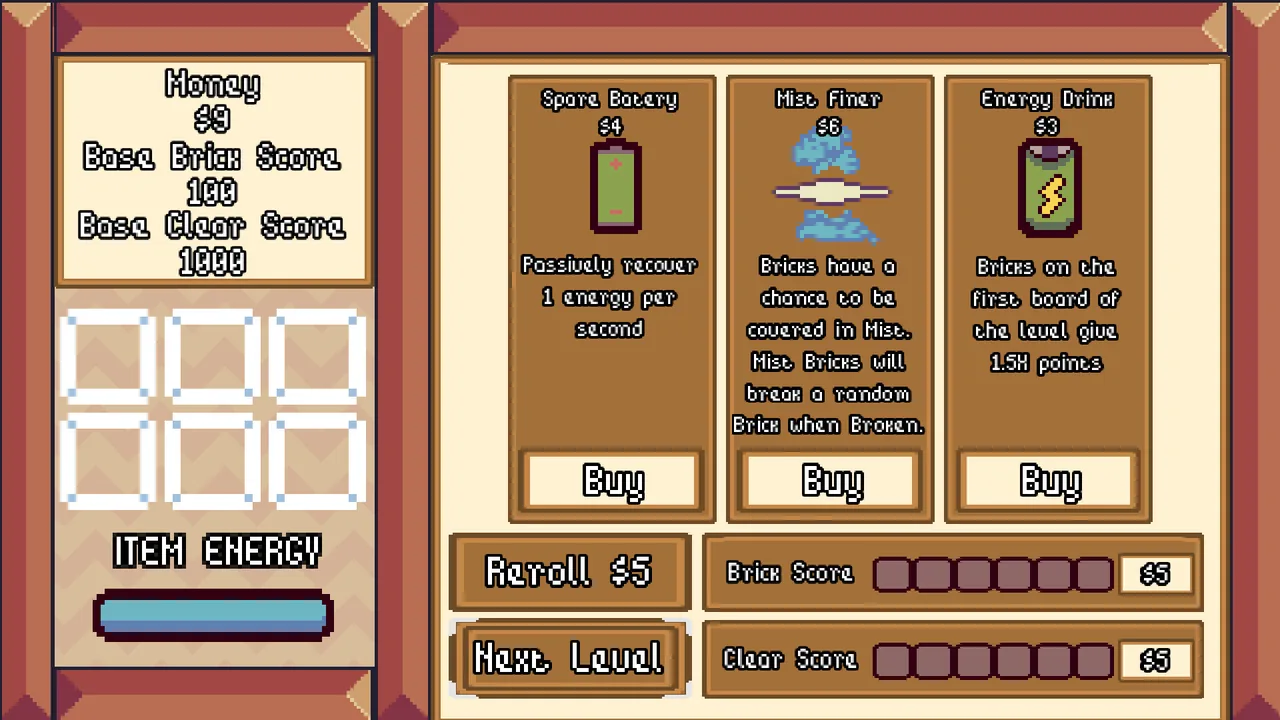
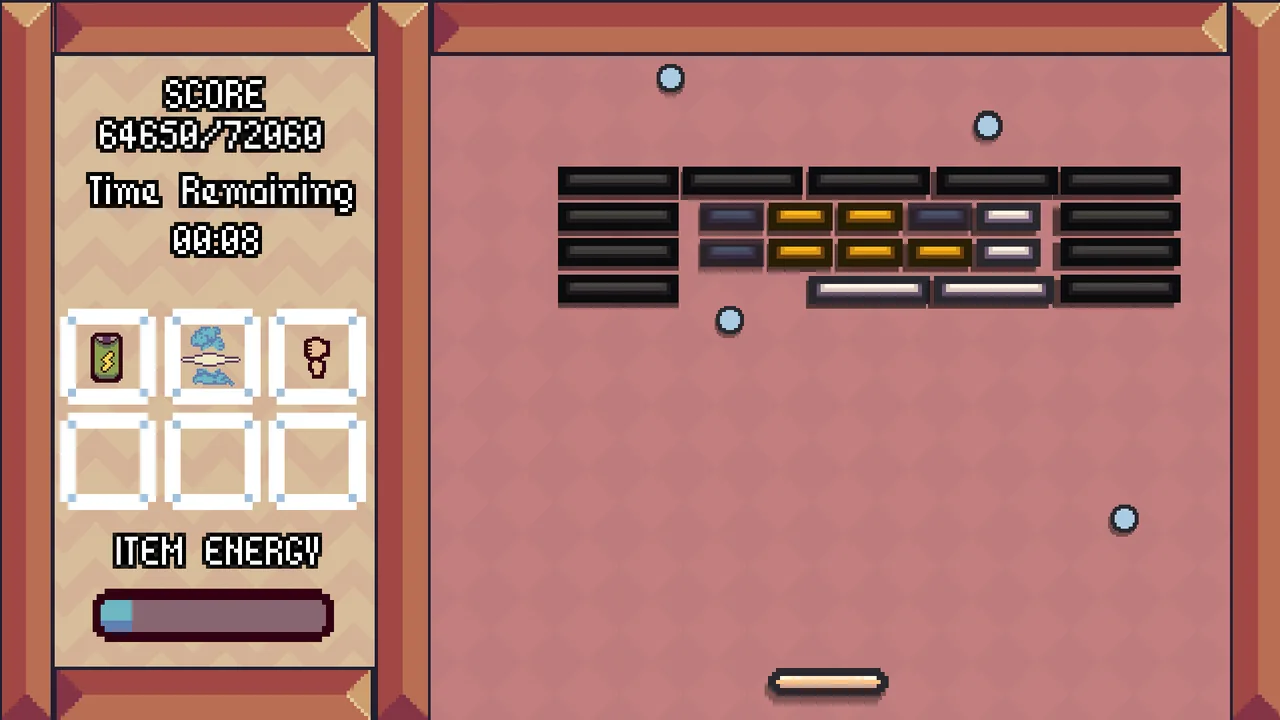
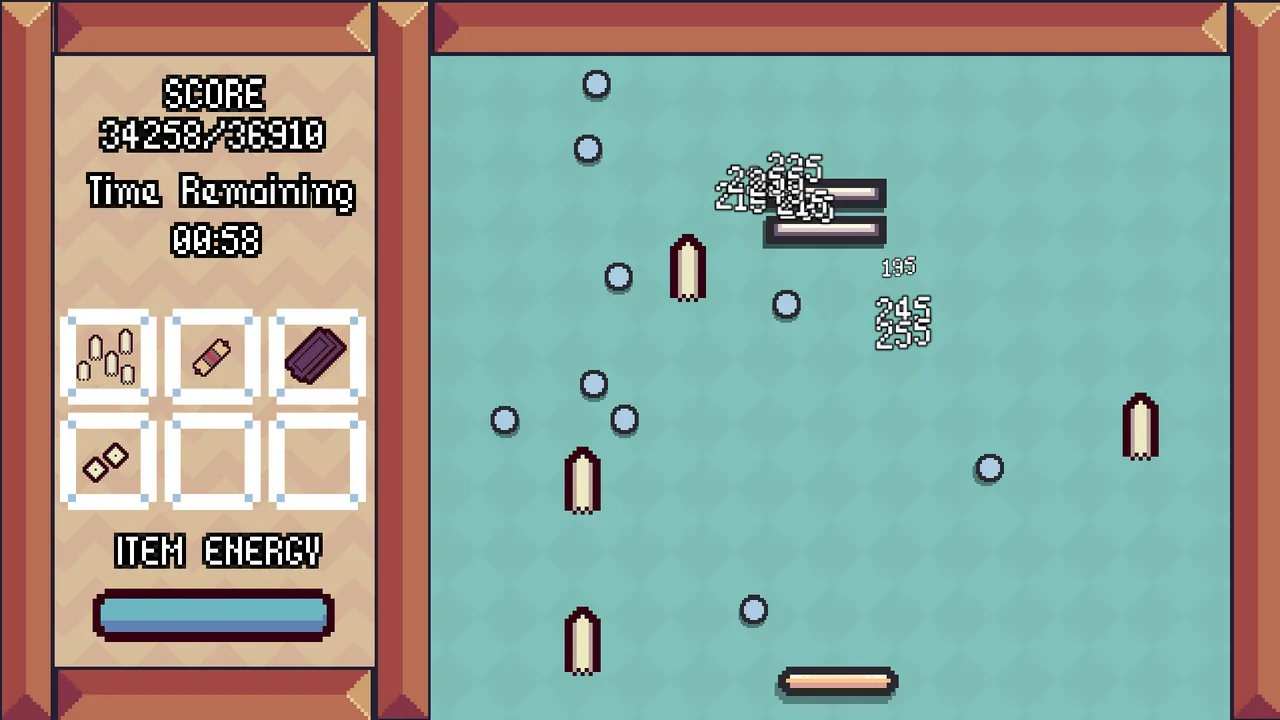
The core loop reads as Breakout with decisions bolted on. A paddle keeps a ball or balls — one of the highlighted achievements is specifically about spawning an "ungodly amount" of them at once — in play against fields of bricks, and the roguelike layer sits in what happens between volleys: items get picked up or bought (Shopping Spree implies an in-run currency and a shop, not a real-money purchase) and stack into the kind of synergy this genre is built around, whether that's raw damage output, ball count, elemental effects like the implied Pyro line, or utility. Three difficulty settings apply that same 120-item pool to different pressure levels, from what the store page calls a breeze on easy to what it calls the game's greatest challenge on nightmare — one system reused three ways rather than three separate modes competing for development time.
Accessibility that outpaces the genre norm
Whatever the physics feel like, the options around them are unusually generous for an arcade-roguelike. Full controller support sits alongside a dedicated Keyboard Only Option, Adjustable Difficulty, and — notably for a genre that traditionally lives or dies on split-second paddle placement — Playable without Timed Input. DualShock and DualSense are both explicitly listed, and Custom Volume Controls round out a spread that a lot of bigger, better-funded arcade titles skip entirely. None of that compensates for an unproven core loop, but it does mean the game was built with more than one kind of player in mind, and it's a genuine point in its favour regardless of how the review score around it settles.
What's missing from the evidence
Two days after release, Rogue Breaker has zero Steam user reviews in any language, no news posts on its feed, and no press coverage this review could locate. The global achievement percentages are close to flat — the single most-earned achievement sits at 7.1%, and the other 22 of 29 are still at exactly 0.0% — which is exactly what a brand-new release with a tiny early audience looks like rather than evidence of a difficulty cliff or content shortage. None of that is a mark against the game specifically; it's simply too soon for any of it to mean anything, and treating a flat curve like this as proof of a problem would be a mistake in either direction. What it does mean is that nobody outside the developer has yet said whether the paddle physics feel tight, whether the 120 items produce interesting combinations or a handful of obvious best picks, or whether a 15-to-20-minute run holds attention across repeat sessions with nothing carrying forward to the next one.
One detail meaningfully lowers the risk of finding out the hard way: a free demo sits on the same store page under the same listing, sharing the base game's appid family. That's the single most useful piece of practical advice this review can offer — try the demo before paying anything, because a physics-driven arcade game either feels right in the first few minutes or it doesn't, and no amount of item variety fixes a paddle that doesn't respond the way you want it to.
Value and final verdict
At NZ$11.25 with no discount, no in-game store and no DLC on the listing, Rogue Breaker is priced like exactly what it appears to be: a small, focused arcade package rather than a live-service platform. That's a fair match for a single-run score chaser, less so for anyone specifically shopping this library's top genre priority — roguelites with real meta-progression — since the documented evidence points squarely away from that structure existing here.
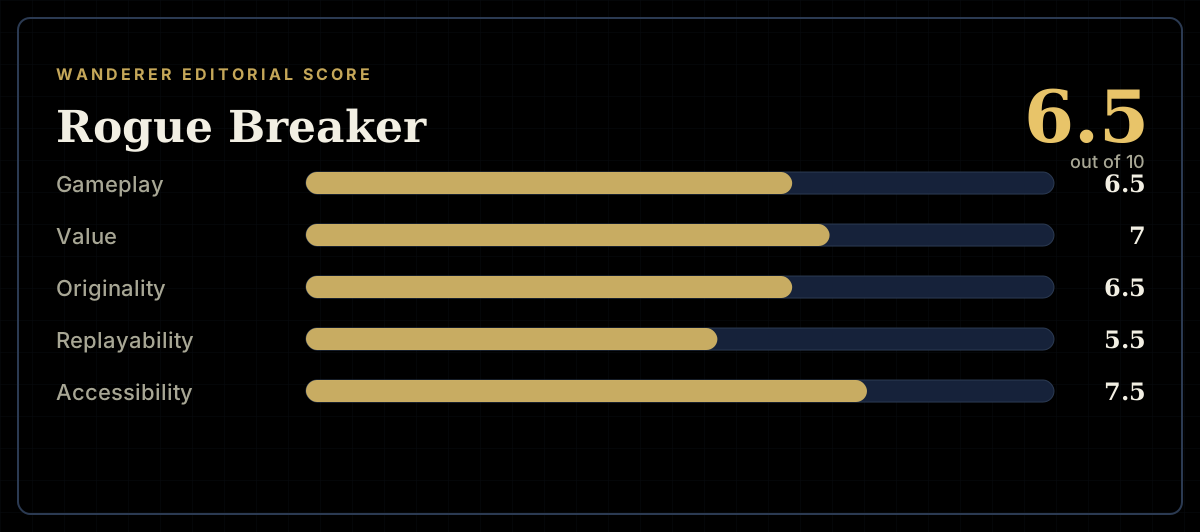
Six point five reflects a game whose fundamentals look sound on paper — a large item pool, genuine difficulty scaling, and an accessibility list that puts more prominent arcade titles to shame — weighed against the total absence of outside verification and a genre framing that oversells what the store page itself actually documents. Players drawn to the Breakout-plus-build premise should use the demo rather than the tag list to decide, and anyone specifically hunting a roguelite with persistent progression should look elsewhere until Collective Soul Games says otherwise.
Pros and cons
Pros
- A free demo sits on the same store page, letting anyone test the core paddle-and-item loop before paying a cent — a genre where that matters given how physics-dependent this style of game is
- Over 120 randomised items promise real build variety within a single run, and the 29-achievement list backs that up with distinct weapon and playstyle feats (Gatling, Barrage, Pyro, Blaster, Minimalist, Perfectionist) rather than one repeated goal
- Full controller support plus Keyboard Only Option, Adjustable Difficulty and Playable without Timed Input — an accessibility spread this genre rarely bothers with
- A single NZ$11.25 purchase with no in-game store, no premium currency and no DLC listed
- Three difficulty tiers give the same 120-item pool a genuinely easier or genuinely harder framing rather than padding a single mode
Cons
- No documented meta-progression of any kind — no persistent currency, no unlockable starting items, no permanent upgrades — despite the game wearing the Roguelite tag alongside Perma Death, a combination that reads as a contradiction until you check the fine print
- Launched with zero Steam user reviews in any language and no press coverage this review could locate, so nothing about how the core physics actually feel has been confirmed by anyone outside the developer
- Windows only, no Mac or Linux build
- No multiplayer, co-op or leaderboard category is listed on the store page, which is a notable gap for a score-attack game built around chasing a number
- The global achievement curve is close to flat at zero two days in, which is expected for a release this new but means the difficulty and pacing claims on the store page remain entirely unverified
Screenshots
-
Rogue BreakerImage: Collective Soul Games via Steam -
Rogue BreakerImage: Collective Soul Games via Steam -
Rogue BreakerImage: Collective Soul Games via Steam -
How the review scores each part of the gameWanderer Editorial -
The game at a glanceWanderer Editorial -
The short versionWanderer Editorial