Game review
Skogdal
8.1 / 10
- Developer
- Erlend Kirkeboe, Kay Arne Kirkeboe
- Publisher
- Erlend Kirkeboe
- Released
- 28 April 2025
- Platforms
- [Windows]
- Genre
- Strategy
- Monetisation
- Paid
- Players
- Single-player only
The short version
Skogdal takes the now-familiar shape of the Slay the Spire-style deckbuilder and dresses it in a setting no other game in the genre has attempted: a grubby, hand-drawn 1990s Norwegian town full of punks, bodybuilders, black metal, and something deeply wrong lurking beneath the surface. The card mechanics hold up on their own merits — deep, synergy-rich, and rewarding of experimentation — but it's the voice, humour, and hand-crafted overworld that make reviewers describe it as one of the most underrated games on Steam. A slightly uneven difficulty curve and some early RNG swings are the only real friction in an otherwise excellent package.
Biggest strengths
- A genuinely distinctive setting and art direction — a hand-drawn, comic-book-styled 1990s Norwegian town — that reviewers repeatedly call unlike anything else in the deckbuilder genre
- Deep, synergy-driven card and companion systems that reward experimentation and support wildly different builds across runs
- An unusually memorable, hand-crafted overworld map that functions like an explorable comic rather than a generic node-based path
Biggest weaknesses
- Early runs can feel RNG-heavy, with a starting hand of fairly generic cards before the more interesting synergies unlock
- The difficulty curve is described as uneven, occasionally spiking hard at specific boss encounters that punish underdeveloped builds
- Several playable characters feel underdifferentiated from one another, sharing similar starting decks rather than distinct identities
Who it's for: Deckbuilder fans looking for something with real mechanical depth and a genre-defying setting, especially anyone with a soft spot for black metal, punk culture, or Scandinavian dark comedy who's grown tired of yet another fantasy-themed card roguelike.
Our recommendation: Highly Recommended
8.1 / 10
A Uniquely Norwegian, Uniquely Hand-Drawn Deckbuilder
Skogdal arrives in a genre that has, by now, produced no shortage of Slay the Spire-alikes, and several reviewers reach for that comparison almost reflexively before immediately qualifying it: "Skogdal is Skogdal." Rather than another fantasy dungeon crawl, the game drops players into a small, gloomy Norwegian town rendered in rough, hand-drawn pencil art that one detailed reviewer describes as feeling like "an old underground comic book." The setting is soaked in 1990s counterculture — punks, bodybuilders, priests, conspiracy theorists, and a supernatural mystery bubbling underneath a town whose residents attack you on sight for reasons the story only reveals gradually. It's a combination reviewers describe as immediately distinctive: "you'll immediately be drawn in by the pencil drawn aesthetics," notes one, while adding that unlike games that "rely on a strong aesthetic to excuse a lack of polish," Skogdal backs its look with real substance underneath.
That substance extends to the soundtrack, which comes up in nearly every review in the sample as a standout in its own right. The game's music blends punk and black metal, reportedly featuring contributions from real Norwegian metal musicians — one reviewer specifically credits musician Anders Odden by name, calling the soundtrack a "belter" and noting a personal appreciation as someone who has spent time in those music scenes. Others describe the effect more bluntly: "the riffs still make me headbang," and "so Norwegian it hurts," phrases that capture how specific and committed the game's cultural identity feels compared to genre norms.
Card Battles With Real Depth, an Overworld That Feels Alive
Underneath the presentation, Skogdal is a roguelike deckbuilder in the traditional sense — battle through encounters using a growing deck of cards, building synergies and managing resources across a run — but reviewers repeatedly emphasise that the mechanics hold up independently of the aesthetic. One reviewer who explicitly said they'd grown tired of reviewing "genre-related slang-ridden" deckbuilders made an exception for Skogdal, calling it "one of the best deckbuilders I've ever played." Another compares the strategic depth favourably to competitive card games, writing that "getting legend in Hearthstone requires less brain power," and praising the game's balance of card economy, risk-versus-reward map choices, and long-term build planning.
A companion system adds a further layer: recruitable followers such as pyromaniacs or skaters provide passive bonuses or special abilities in combat, and because only a limited number can be brought along at once, deciding which allies to recruit becomes a genuine strategic decision layered on top of card selection. Reviewers also single out the overworld map itself as an underappreciated strength of the genre entry — rather than a generic branching node map, Skogdal's world is described as "an interactive comic book," with hand-crafted locations, recurring characters, and small explorable scenes between fights that make the world feel, in one reviewer's words, "more lived in than any other game in the genre."
A Story Told Between Runs, One Piece at a Time
Where many roguelike deckbuilders treat narrative as an afterthought to the core loop, Skogdal's mystery plot is frequently cited as a reason to keep returning. The game reveals its story gradually across repeated runs rather than all at once, and reviewers describe piecing together what's actually happening in the town as genuinely compelling rather than a chore to sit through between fights. The structure supports this: completing a run unlocks new forks along the map toward additional bosses, with one detailed review estimating the process repeats roughly four times before all of normal mode is accessible, after which a hard mode adds new enemies and reworked boss encounters rather than simply scaling existing ones up. Total playtime estimates in the sample vary widely — from roughly 10-12 hours to reach the credits once, up to reviewers reporting 60, 200, or more hours logged and still returning for more — which points to a game with substantially more content than its presentation might suggest at a glance.
Where It Stumbles: RNG Swings and a Slow Difficulty Ramp
The criticisms that do surface in the sample are notably consistent and fairly minor next to the praise. Several reviewers describe the difficulty curve as uneven, with builds feeling underpowered and interchangeable in the early game before a run can suddenly collapse mid-way if a player hasn't assembled a workable strategy in time; one reviewer flags this directly as "way too RNG-heavy," particularly when an opening hand of generic cards fails to develop into anything interesting before a tough encounter arrives. A second, related complaint concerns the playable character roster: while the game offers several distinct starting classes, more than one reviewer feels they lean too heavily on similar generic cards rather than being pushed into more clearly defined niches from the outset. Neither issue appears to be a dealbreaker for reviewers overall — most describe pushing through the early friction as worthwhile once builds start coming together — but they're consistent enough across the sample to be worth flagging for players who bounce off punishing early-run RNG in other roguelikes.
Verdict
Skogdal earns its reputation as one of the more quietly excellent releases of the past year: a roguelike deckbuilder with real mechanical depth, wrapped in a setting, art style, and soundtrack genuinely unlike anything else competing in the genre. The uneven early difficulty curve and some underdeveloped character variety keep it from being flawless, but reviewers across dozens and sometimes hundreds of hours consistently describe it as one of the most underrated games on Steam, and the sample here backs that up. For deckbuilder fans willing to look past a rough-looking exterior, this is very easy to recommend.
Pros and cons
Pros
- A genuinely distinctive setting and art direction — a hand-drawn, comic-book-styled 1990s Norwegian town — that reviewers repeatedly call unlike anything else in the deckbuilder genre
- Deep, synergy-driven card and companion systems that reward experimentation and support wildly different builds across runs
- An unusually memorable, hand-crafted overworld map that functions like an explorable comic rather than a generic node-based path
- A striking, genre-appropriate soundtrack of punk and black metal, produced with real Norwegian metal musicians, that multiple reviewers single out as a highlight in its own right
- A slow-reveal mystery narrative that unfolds across multiple runs, giving repeat playthroughs a reason to exist beyond raw difficulty
Cons
- Early runs can feel RNG-heavy, with a starting hand of fairly generic cards before the more interesting synergies unlock
- The difficulty curve is described as uneven, occasionally spiking hard at specific boss encounters that punish underdeveloped builds
- Several playable characters feel underdifferentiated from one another, sharing similar starting decks rather than distinct identities
- The game's dry, culturally specific Norwegian humour and rough aesthetic are acknowledged even by fans as a style that won't land for everyone
- A very small number of reviewers report a rare freeze or technical hiccup, though these appear to be isolated incidents rather than a pattern
Screenshots
-
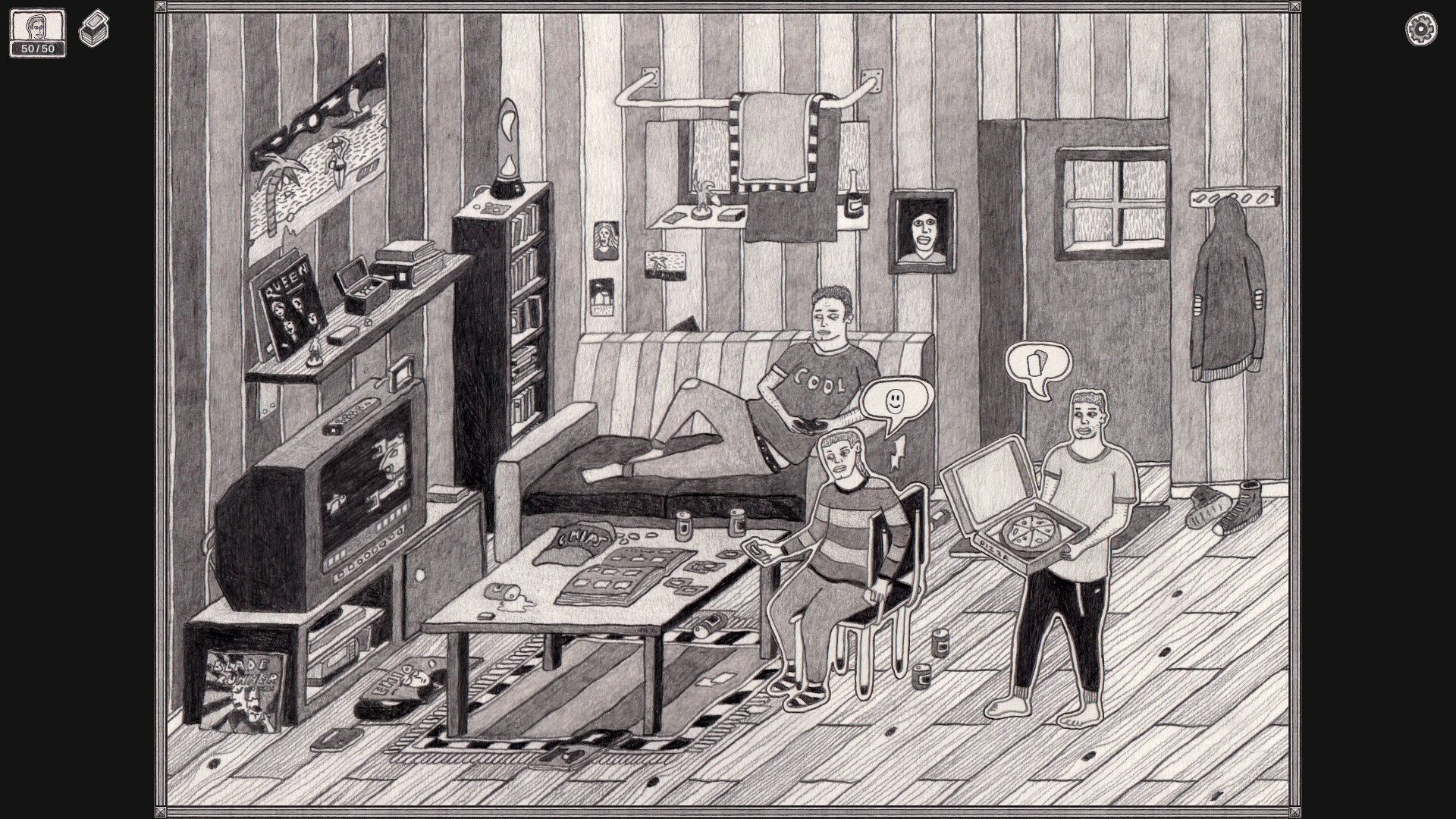
The hand-drawn, comic-book art style carries the game's overworld scenes as much as its card battlesErlend Kirkeboe -
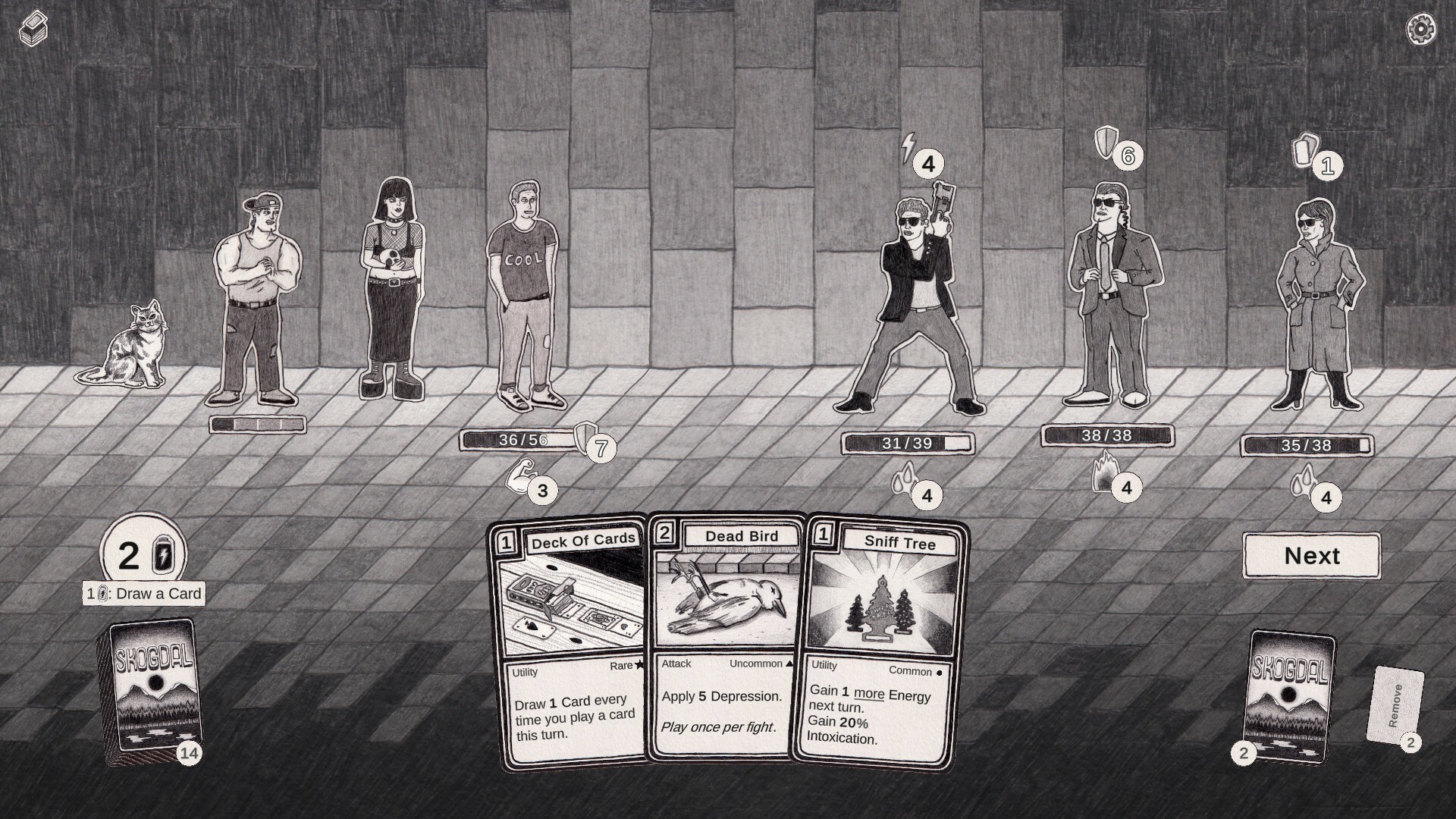
Card battles lean on synergy and resource management rather than raw stats, with a companion system layered on topErlend Kirkeboe -
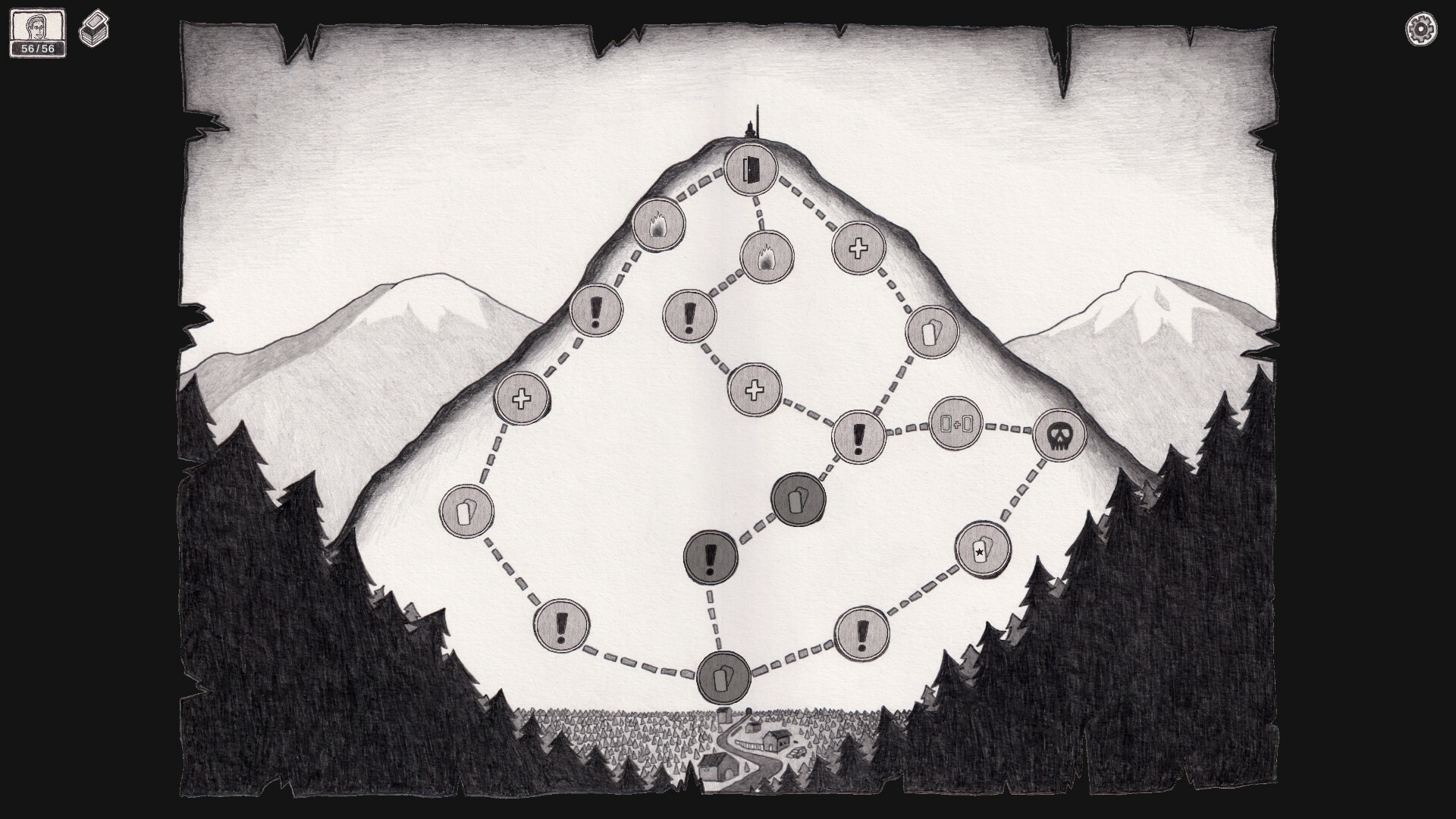
The hand-crafted overworld map, described by reviewers as feeling like an explorable comic book rather than a generic node pathErlend Kirkeboe -
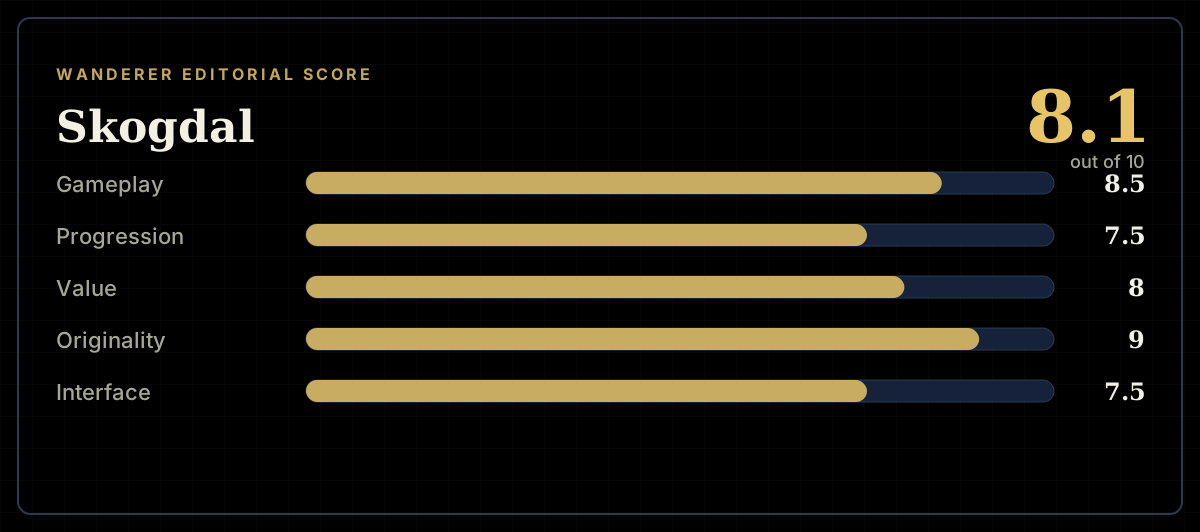
How the review scores each part of the gameWanderer Editorial -
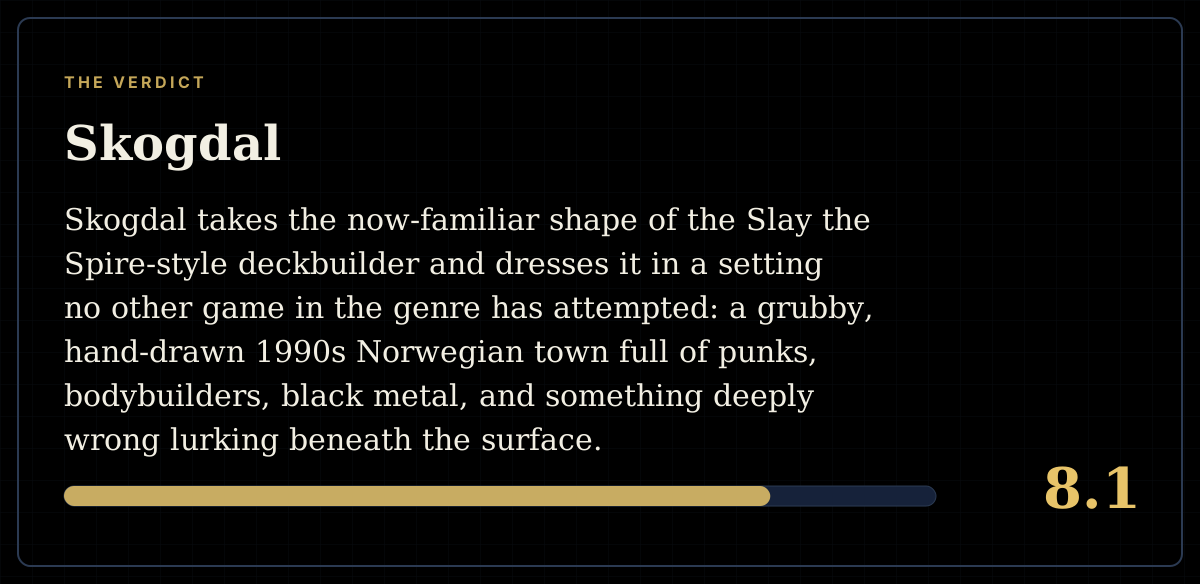
The short versionWanderer Editorial