Game review
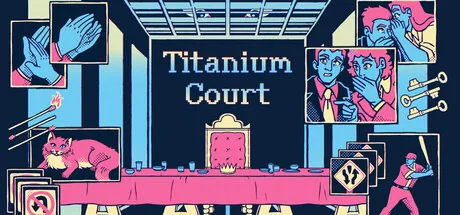
Titanium Court Review: A Surreal Match-3 Roguelite Unlike Anything Else
8.4 / 10
- Developer
- AP Thomson
- Publisher
- Fellow Traveller
- Released
- 23 April 2026
- Platforms
- Windows, Mac
- Genre
- Strategy
- Monetisation
- $14.99
- Players
- false
The short version
Titanium Court is a genre-blending match-3, tower-defense, and roguelite hybrid wrapped around a sprawling, surreal, self-aware story that reviewers describe as unlike anything else they've played, and while it demands patience for its dense text and a grindy back half, it consistently rewards that patience with one of the most memorable indie narratives of the year.
Biggest strengths
- A genuinely original genre blend of match-3, tower-defense, deck-drafting, and roguelite systems that reviewers say keeps expanding and surprising them for dozens of hours
- A surreal, self-aware, frequently hilarious narrative that a large number of reviewers describe as among the best writing they've encountered in a game, with several naming it a personal game of the year
- A strong, evocative soundtrack that reviewers repeatedly single out alongside the writing as core to the game's identity
Biggest weaknesses
- Extremely dense, text-heavy storytelling that several reviewers found overwritten, twee, or actively grating rather than charming
- A demanding late-game structure that at least one reviewer describes as requiring a fresh save file and a substantial new grind to see certain narrative outcomes through
- Core mechanics are explained only loosely at first, and a handful of reviewers found the match-3 and strategy-layer rules unclear early on
Who it's for: A strong fit for players who love densely written, experimental narrative games and don't mind a genuinely deep, evolving strategy layer underneath; a poor fit for anyone who wants a tight, low-friction match-3 session or is put off by heavy amounts of in-game text.
Our recommendation: Buy it
8.4 / 10
A game that refuses to explain itself
Titanium Court's own marketing copy makes a running joke of not being able to describe what the game actually is, and after digging through nearly twelve hundred player reviews, it's clear that's not false modesty. Reviewers repeatedly, almost apologetically, admit they can't summarize it without either spoiling something or sounding faintly unhinged. One puts it bluntly: "I don't know how to explain this game to people who haven't spent time with it." Another calls it "a game, a story, a commentary," and leaves it there on purpose.
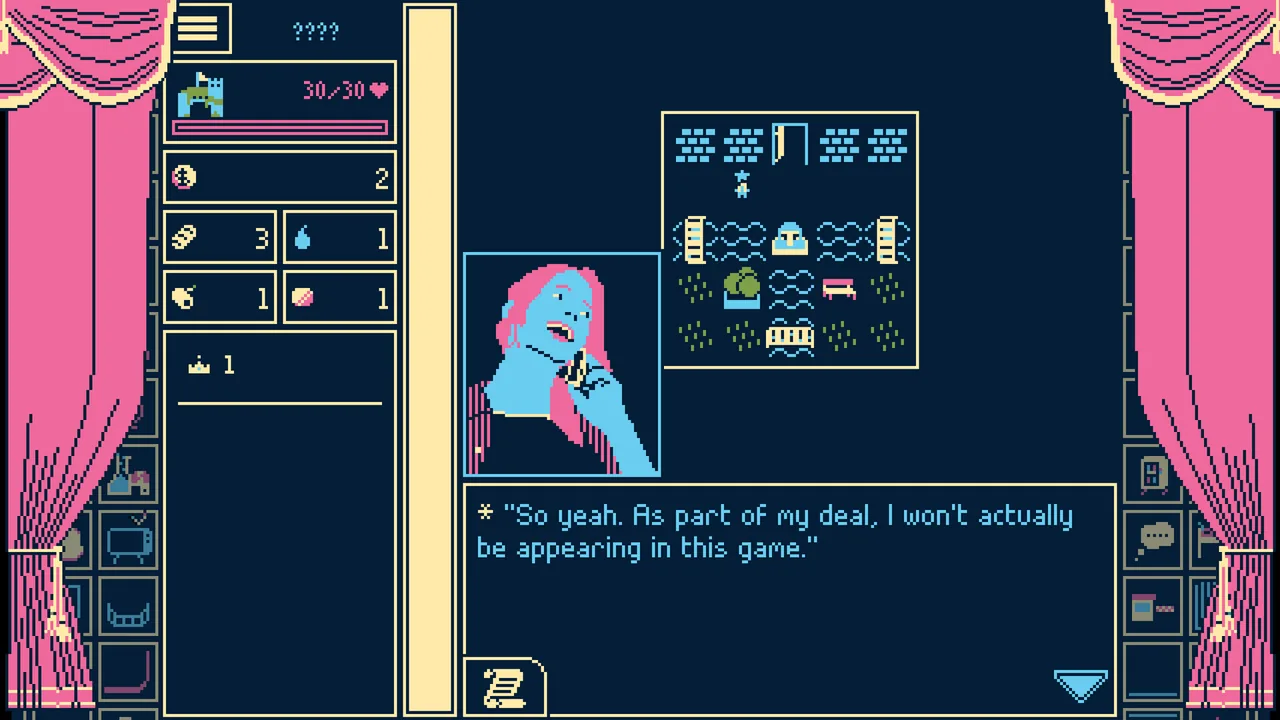
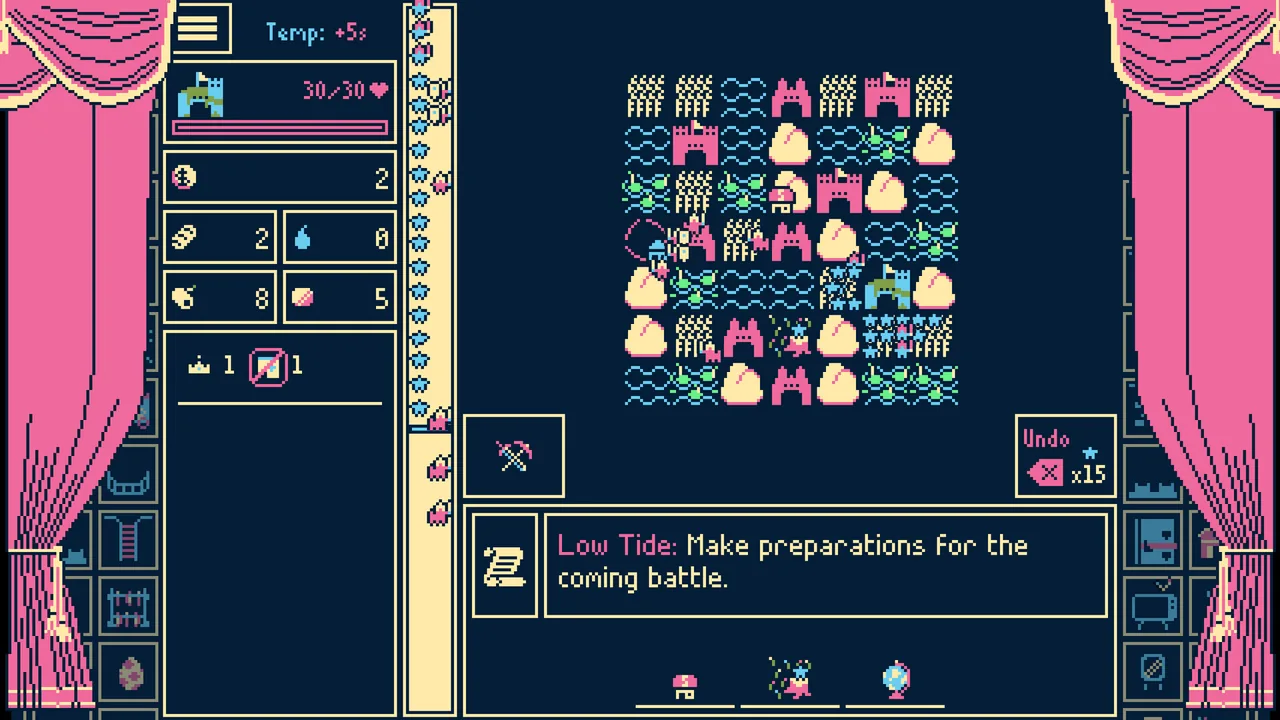
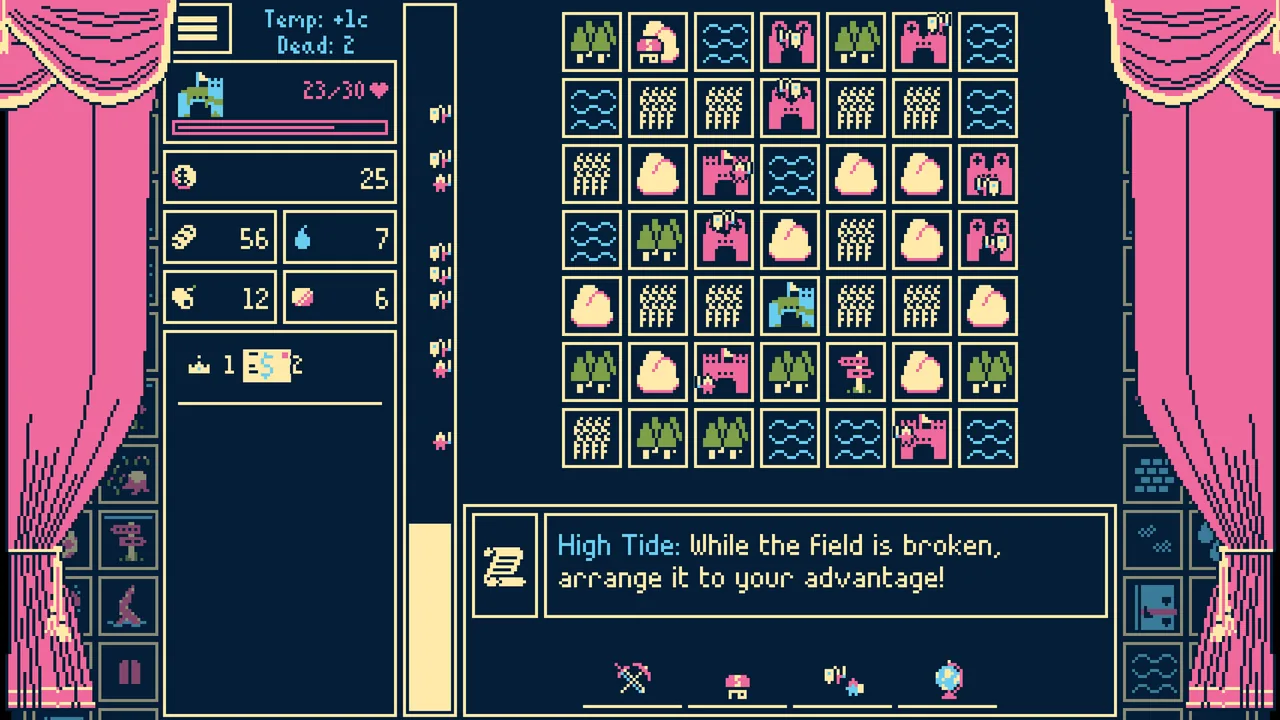
Mechanically, the closest anchor point is a match-3 tower-defense roguelite with deck-drafting elements layered on top, but even that description undersells how much the systems evolve. Reviewers consistently describe a game that starts as a fairly approachable matching puzzle and gradually reveals deeper strategic layers, new "jobs" and modifiers, and mechanical twists that reframe what you thought you understood about the core loop. It's a slow-burn design philosophy that rewards sustained play rather than front-loading everything at once.
The writing is the main event, and reviewers know it
What elevates Titanium Court above being simply a clever puzzle-strategy hybrid is its narrative, which developer AP Thomson has built into something reviewers describe as surreal, meta, absurdist, and often laugh-out-loud funny. Comparisons range from Shakespearean surrealism to Steam-Next-Fest-adjacent experimental fiction, and one reviewer flatly names it their game of the year despite only being roughly halfway through it. The story leans hard into self-awareness, with reviewers noting the fourth wall "buckles and bends" repeatedly, and the game frequently comments on its own nature as a game, on genre conventions, and on player expectations.
That density of writing is also the review base's single biggest fault line. A meaningful minority found the constant stream of text, in-game events that pause the action to deliver more narrative, and a tone some describe as "twee," to be actively grating rather than charming. One reviewer summarized their reaction as "trying to figure out if I love this game or hated it," specifically because the writing style rubbed them the wrong way even as they respected the depth of the systems underneath it. This isn't a minor stylistic quibble: for a game this text-forward, tone is going to make or break the experience for a given player, and Titanium Court's tone is a very specific, idiosyncratic one.
A grind that tests the patience it demands
Beyond tone, the most substantive criticism in negative reviews concerns pacing and structure in the back half of the game. Several reviewers who spent their first eight or nine hours thoroughly hooked describe a noticeable shift afterward, where progress slows and some story outcomes apparently require starting an entirely new save file and grinding back up before certain narrative branches open. One reviewer who otherwise loved the characters and story explicitly calls this expectation "really really mad"-inducing, framing it as a demand the game's own narrative ambitions don't fully justify mechanically.
This is echoed by a smaller group who found the balance between the strategic matching gameplay and slower, exploratory "wandering" sequences uneven, describing stretches that feel like padding between the actual game rather than meaningful pacing. It's worth noting these complaints come almost exclusively from a minority of the review base; the Very Positive standing overall suggests most players who commit to the game's rhythm find the payoff worth the demands it places on them.
Presentation built to match its strangeness
Titanium Court's soundtrack comes up almost as often as its writing in positive reviews, described as a core part of what makes the world feel cohesive and strange in the right way. Visually, the game favours a distinctive, stylized presentation over technical showiness, which suits its tone; nobody in the review sample complains about how it looks, and several specifically credit the audio-visual package with reinforcing the unsettling, dreamlike atmosphere the writing is going for.
The game supports a wide range of accessibility options, including full controller support, adjustable difficulty, keyboard-only and mouse-only control schemes, and the ability to play without timed input, which is a meaningful accommodation given how much of the experience is built around reading and absorbing text at your own pace rather than reacting quickly. It's available on both Windows and Mac at launch, priced at $14.99.
A structure that keeps reframing itself
One quality that comes up across a surprising range of otherwise very different reviews is how often Titanium Court manages to recontextualize systems players thought they already understood. New "jobs," modifiers, and narrative revelations don't just add content on top of the existing loop, they retroactively change how earlier mechanics read, a design trick that a number of reviewers compare favourably to the best roguelike deck-builders while noting it's wrapped in far stranger packaging than that genre usually offers. It's part of why so many reviewers resist summarizing the game directly: describing any one system in isolation risks spoiling how it later gets subverted or reinterpreted by something that comes later.
That same structure is also why the game rewards, and arguably requires, a fairly significant time investment before its full shape becomes clear. Reviewers who bounced off it early tend to do so in the first few hours, before the deeper systemic and narrative interplay kicks in; reviewers who stuck with it past that point are disproportionately represented among the game's most enthusiastic advocates. It's a slow-burn structure that won't suit players looking for something immediately legible, but it's also clearly deliberate rather than a case of a game finding its footing late.
Try the demo first, then commit
Titanium Court is not a game that works for everyone, and both the developer and its reviewers say so plainly and repeatedly: the free Steam demo exists specifically so players can gauge whether the tone, pacing, and density of text are a fit before spending money on the full six-to-thirty-hour experience. For players willing to meet it on those terms, the consensus across the review base is that it delivers one of the most distinctive, genuinely surprising indie experiences of the year, a rare game that reviewers describe changing how they think about the geometry of tiles in their own homes. For players who bounce off dense, self-aware, text-heavy storytelling, no amount of mechanical depth underneath is likely to change their mind, and that's a fair trade-off for a game this determined to be exactly what it is rather than something more broadly palatable.
Pros and cons
Pros
- A genuinely original genre blend of match-3, tower-defense, deck-drafting, and roguelite systems that reviewers say keeps expanding and surprising them for dozens of hours
- A surreal, self-aware, frequently hilarious narrative that a large number of reviewers describe as among the best writing they've encountered in a game, with several naming it a personal game of the year
- A strong, evocative soundtrack that reviewers repeatedly single out alongside the writing as core to the game's identity
- A demo is available on Steam, and the developer explicitly points to it as the best way to gauge whether the game's tone and pace are a fit before buying
Cons
- Extremely dense, text-heavy storytelling that several reviewers found overwritten, twee, or actively grating rather than charming
- A demanding late-game structure that at least one reviewer describes as requiring a fresh save file and a substantial new grind to see certain narrative outcomes through
- Core mechanics are explained only loosely at first, and a handful of reviewers found the match-3 and strategy-layer rules unclear early on
- Pacing between the strategic gameplay and slower, exploratory story sequences is inconsistent, with some reviewers describing pointless-feeling wandering segments between the actual game
Screenshots
-
Titanium CourtImage: Fellow Traveller via Steam -
Titanium CourtImage: Fellow Traveller via Steam -
Titanium CourtImage: Fellow Traveller via Steam -
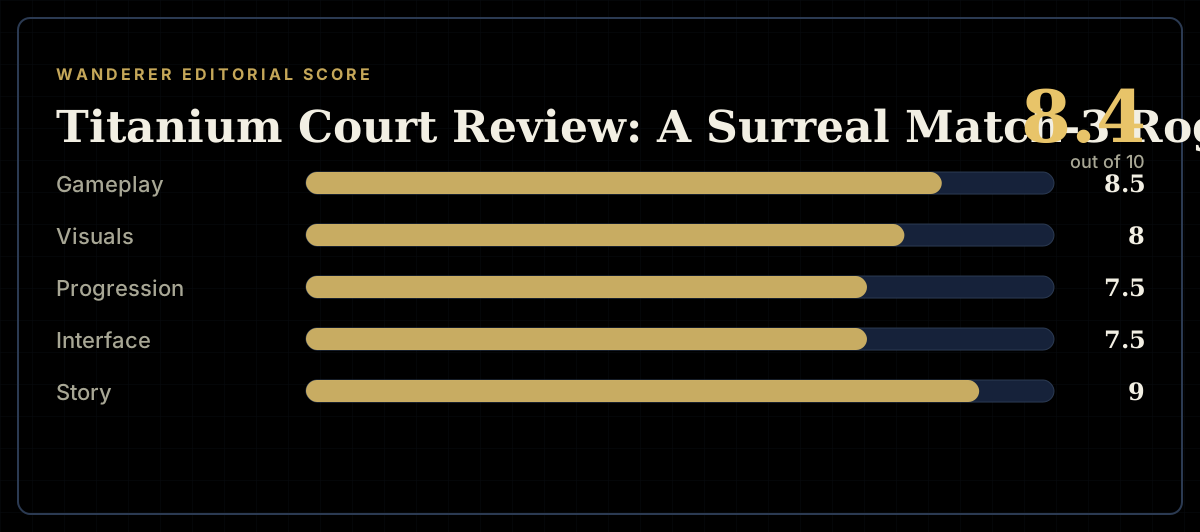
How the review scores each part of the gameWanderer Editorial -
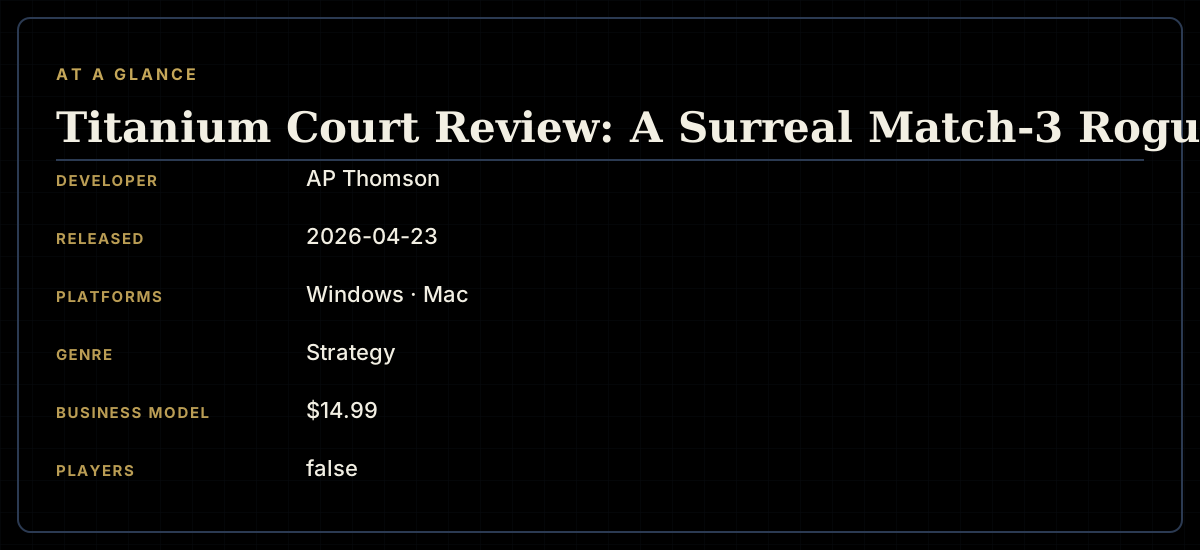
Platform and release detailsWanderer Editorial -
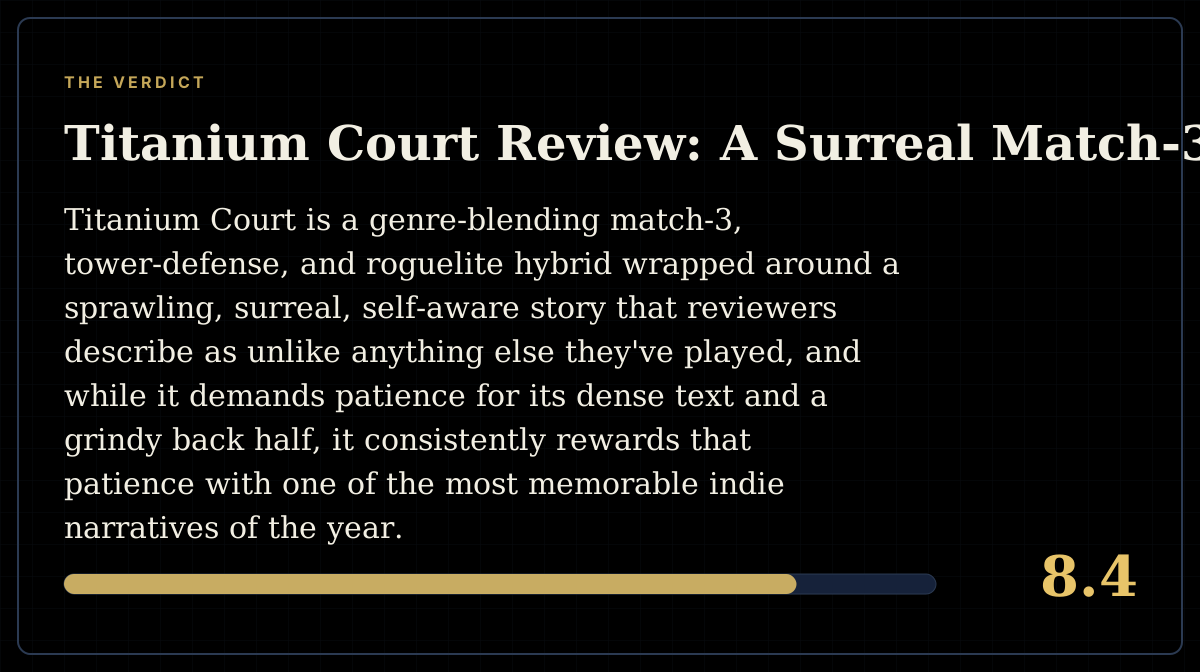
The short versionWanderer Editorial