Game review
Gem Miner TD Review
7.3 / 10
- Developer
- iFeral Games
- Publisher
- iFeral Games
- Released
- 20 January 2026
- Platforms
- Windows
- Genre
- Strategy
- Monetisation
- Premium
- Players
- Single-player only
The short version
Gem Miner TD takes the cherished Gem TD formula from Warcraft 3's custom map scene and rebuilds it as a full, standalone roguelite tower defense, adding a genuinely clever water-and-line-of-sight mazing twist on top of the classic gem-merging loop. Mazing decisions matter, runs stay varied thanks to roguelite perks and randomised gem drops, and there's real longevity here for maze-defense fans. The interface asks a lot of new players before the depth clicks into place, and some quality-of-life rough edges remain.
Biggest strengths
- A faithful, expanded take on the classic Gem TD formula with a clever water/line-of-sight mazing twist
- Deep build variety across towers, miners, perks, and game modes that keeps runs from feeling repetitive
- A genuinely inventive asynchronous PvP mode that brings competition to a genre that rarely offers it
Biggest weaknesses
- The sheer number of build options can overwhelm new players before the systems click
- Some UI elements require extra clicking to track which towers carry which buffs
- At least one dimly lit level makes it hard to see your own maze clearly
Who it's for: Fans of classic mazing tower defense games (especially Warcraft 3's Gem TD custom map) who want deep build variety and don't mind a learning curve.
Our recommendation: Recommended for tower defense and mazing-genre fans; newcomers to the genre should expect an adjustment period before the systems click.
7.3 / 10
Mine, Maze, Merge
Gem Miner TD is built for a specific, devoted audience: players who spent hours in Warcraft 3's custom game browser playing Gem TD, the community-made tower defense map where players mazed rocks into place, mined gems from them, and merged those gems into increasingly powerful towers. The review sample is dense with players making exactly that connection, several describing it as "one of the best tower defense games I've played since the Warcraft 3 days" and treating the comparison as the highest possible compliment. The core loop translates faithfully: place rocks to build a maze, mine random gems from them, combine gems into towers with distinct properties, and defend against waves that get more inventive as a run continues.
Critically, the game doesn't simply reskin the old formula. It swaps in an entirely new set of starting gem properties rather than recycling the diamonds-crit, topaz-multihit conventions long-time players would already know, forcing even veterans to relearn the puzzle rather than coast on old knowledge. On top of that sits a genuinely praised original addition: a water mechanic that lets flying enemies take shortcuts over water tiles spawning around a player's gems, forcing players to mentally track two separate enemy paths — ground and air — while juggling detectors for invisible units and general damage-zone placement. One detailed review singled this out as an "EXCELLENT twist" that adds real mazing complexity without overcomplicating the underlying rules.
Roguelite Structure, Real Replayability
Layered on top of the mazing puzzle is a roguelite run structure: "offer three, pick one" upgrade choices mid-run, builder perks, multiple playable characters with distinct passives, and several game modes. The randomised gem drops and perk offers give each run enough variance to avoid the game becoming a single solved strategy, which several reviewers flag as the key ingredient that separates this from a static, memorise-and-repeat tower defense. Long play logs back this up — reviewers reporting fifty, a hundred, even close to two hundred hours are common in the sample, unusually high for a tower defense at this price point.
The standout feature by reviewer consensus is an asynchronous PvP mode, a rarity for the genre. Rather than real-time competition, players complete a run under shared rule modifiers, then send their final boss — its health scaled to the damage it took to defeat — into other players' saved mazes on a leaderboard. If the boss survives an opponent's maze, that player loses the exchange; if it dies, they win, with the system iterating until a rank is found. One detailed reviewer called it "a wonderful way to bring PvP to the tower defense genre," noting it lets players study competitors' maze designs and strategies even without real-time interaction — a clever workaround for a genre that has rarely managed multiplayer well.
Accessibility support is more thorough than the genre typically bothers with. Full controller support, including specific DualShock and DualSense compatibility, sits alongside adjustable difficulty, a mouse-only control option, camera comfort settings, custom volume controls, and play that isn't gated behind timed input. Save-anytime functionality also means a run's careful mazing decisions are never at risk of being lost to an unplanned exit mid-session, which matters given how long a single well-built maze can take to assemble.
Where New Players Struggle
The depth that veterans praise comes with a real cost for newcomers. Multiple reviewers describe the sheer volume of towers, augments, playable characters, and maps as overwhelming at first, with one admitting to feeling actively intimidated before the systems clicked. That learning curve is compounded by interface issues the sample raises repeatedly: buff and augment tracking requires extra clicking to figure out which towers carry which effects, and at least one detailed review notes that a useful mechanic — deselecting up to five default towers to open up build variety — isn't explained clearly, leaving that reviewer converging on the same handful of towers for roughly ten hours before discovering it by accident.
Smaller but persistent complaints round out the picture: one lava-themed level is dark enough that players report struggling to see their own maze, some quality-of-life additions like path-blocking warnings or clearer visualisation of flying versus ground paths are requested but not yet present, and visual noise from particle effects can get overwhelming in busier mazes. None of these are described as dealbreakers, and the developer is repeatedly praised in the sample as active and responsive to feedback, but they're real friction for a game whose core appeal depends on players sticking around long enough to see its systems open up.
One long-time player's review also raises a subtler concern worth flagging: enemy and boss designs are described as fairly forgettable compared to the strength of the tower and mazing systems around them, a criticism that stands out precisely because it comes from someone who otherwise rates the game very highly after well over a hundred hours. That same review expresses hope that the asynchronous PvP mode will eventually run in seasons tied to balance and content updates, which would give the leaderboard-chasing crowd a reason to keep adapting their strategies rather than settling on one dominant maze design indefinitely.
Verdict
Gem Miner TD earns the comparisons its review sample keeps making to a beloved decades-old custom map, not by resting on nostalgia but by genuinely expanding the formula with a clever mazing twist, roguelite variety, and one of the only well-executed PvP systems the tower defense genre has produced in years. It asks patience of new players before its depth becomes apparent, and its interface could do more to explain its own best features, but for fans of mazing tower defense specifically, this is an easy recommendation at its price. Warcraft 3 veterans in particular should not hesitate.
Pros and cons
Pros
- A faithful, expanded take on the classic Gem TD formula with a clever water/line-of-sight mazing twist
- Deep build variety across towers, miners, perks, and game modes that keeps runs from feeling repetitive
- A genuinely inventive asynchronous PvP mode that brings competition to a genre that rarely offers it
- Exceptional value for the amount of content and replayability on offer
Cons
- The sheer number of build options can overwhelm new players before the systems click
- Some UI elements require extra clicking to track which towers carry which buffs
- At least one dimly lit level makes it hard to see your own maze clearly
- Non-obvious features, like deselecting default towers to open up strategy, aren't well explained
Screenshots
-
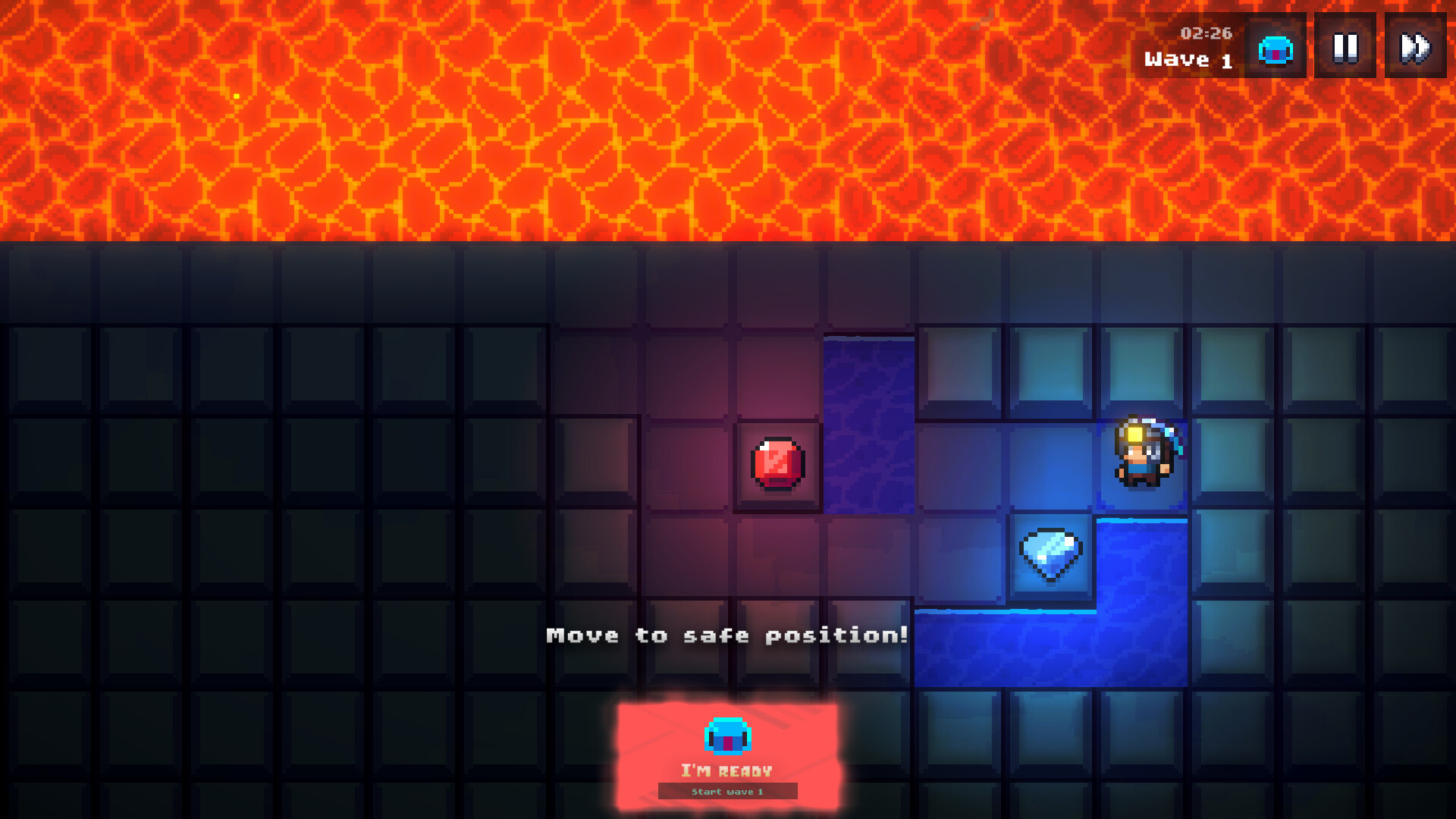
Water tiles like the one shown here force players to plan for both ground and flying enemy pathsiFeral Games -
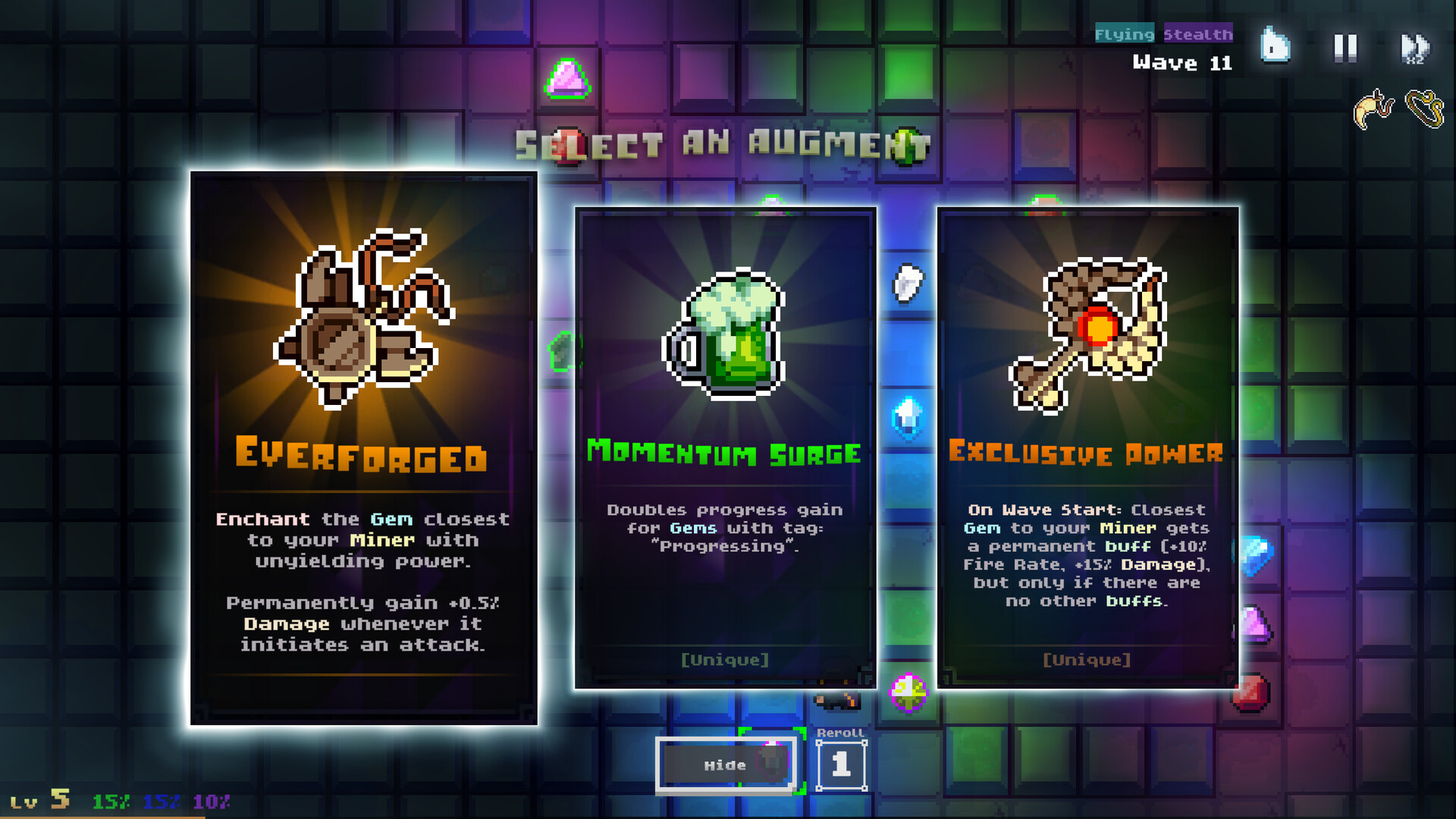
Roguelite "offer three, pick one" augments keep individual runs from playing out the same way twiceiFeral Games -
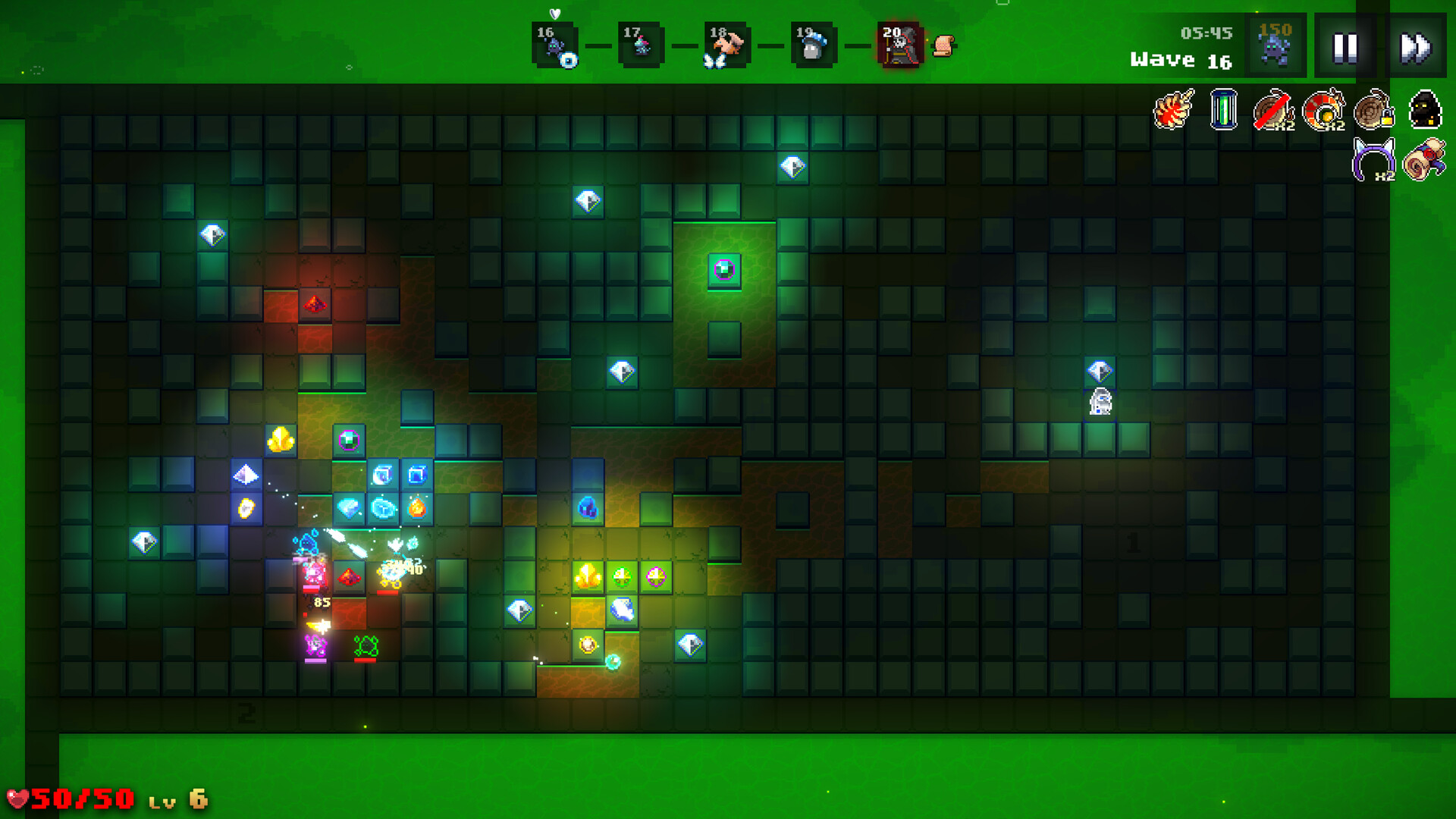
Late-game mazes grow dense with merged gems and towers as a run's build comes togetheriFeral Games -
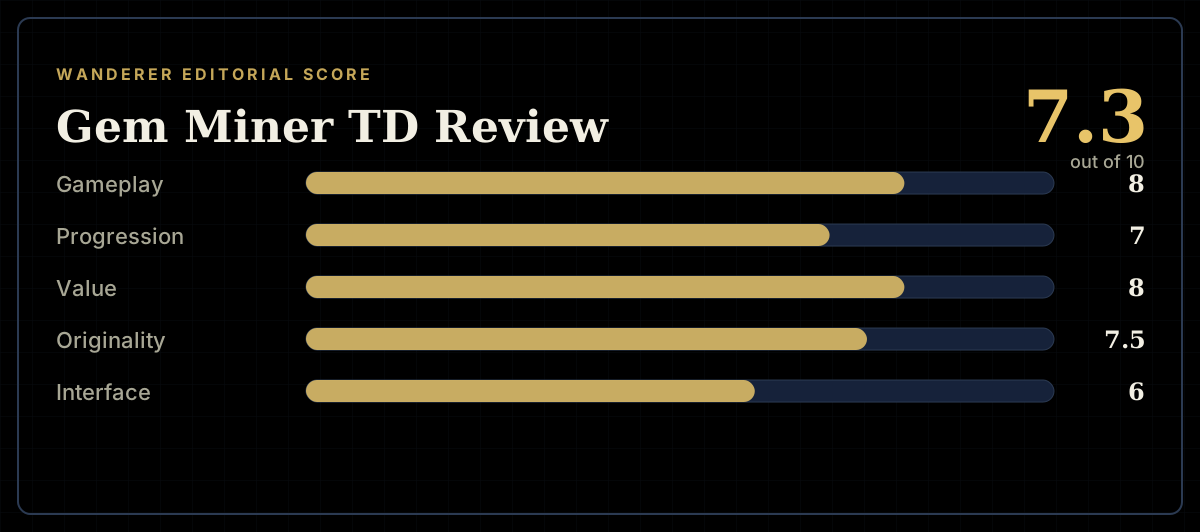
How the review scores each part of the gameWanderer Editorial -
The short versionWanderer Editorial