Game review
Atomic Owl
5.7 / 10
- Developer
- Monster Theater
- Publisher
- Eastasiasoft Limited
- Released
- 31 July 2025
- Platforms
- PC, Mac
- Genre
- Action, Adventure, Indie
- Monetisation
- Premium (one-time purchase)
- Players
- false
The short version
Atomic Owl commits hard to its premise — a warrior owl ninja hacking and slashing through a neon-soaked, arcade-inspired world — and its movement, soundtrack and pixel art all deliver on that commitment. What holds it back is everything around the edges: a dash that doesn't always go where you point it, combat that flattens out against tankier enemies, patchy voice acting, and bugs that have locked at least a few players out of progress entirely.
Biggest strengths
- Movement is fast, expressive and satisfying, with double jump, air dash, gliding and wall traversal all available early
- A genuinely committed retro-arcade aesthetic — vibrant neon pixel art paired with a widely praised synth soundtrack
- A "No Rogue Lite" mode that turns the roguelite structure off for players who just want a straightforward side-scroller
Biggest weaknesses
- The dash fires in the direction the character is facing rather than the direction pressed, which several reviewers found awkward in fast combat
- Combat lacks directional attacks and enemies become noticeably tankier later on, flattening the pace
- Voice acting is inconsistent — some dialogue is fully voiced, other lines are just a grunt with subtitles, which several reviewers found jarring
Who it's for: Fans of retro-inspired action platformers (Mega Man, Castlevania, The Messenger) who want tight movement and don't mind rough edges, and who appreciate having the option to turn the roguelite structure off entirely.
Our recommendation: Worth a look on sale for the movement, art and soundtrack alone, but go in aware of the combat's simplicity and the risk of hitting a bug near the end of a run.
5.7 / 10
An Owl Ninja With a Beef
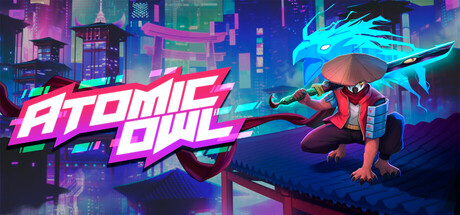
Atomic Owl casts the player as Hidalgo Bladewing, a warrior owl who wakes into a corrupted world threatened by the return of a villain called the Omega Wing. It's a deliberately absurd premise — "fowl Ninja action," as the game's own store page puts it — and the review sample treats that absurdity as a selling point rather than something to apologise for. One reviewer, evidently a Kickstarter backer, put it plainly: "Personally I'm not big on platformer but an OWL NINJA .. come on that's epic and I know you want to be an owl ninja too!!" A long, detailed review in the sample frames the tone precisely: "a fast-paced adventure inspired by the arcade era, but polished with present-day design ideas," built around Hidalgo's transforming, voice-acted sword and a colourful, tongue-in-cheek cast.
The game clearly began life as a crowdfunded project, and that history shows up throughout the sample — several reviewers mention backing the Kickstarter, seeing their names in the credits, and having followed the game through its development. That kind of goodwill buys Atomic Owl some patience for its rougher edges, but it doesn't erase them.
Movement That Delivers, Combat That Flattens Out
Where Atomic Owl is most consistently praised is its movement. Hidalgo has a double jump, an air dash usable both horizontally and vertically, gliding, and wall traversal, all available relatively early, and reviewers repeatedly single out how responsive and expressive the resulting platforming feels. One review calls the gameplay "incredibly tight and responsive," while a more detailed writeup credits the toolkit for keeping "an interesting" flow between platforming and combat throughout, rather than front-loading the good tools and coasting on simpler mechanics later.
Combat is more divisive. The weapon variety is real — a hammer, blades, a whip, a boomerang, and elemental enhancements layered on top — and several reviewers enjoyed switching between them, with the "hard hitting boomerang hammer" earning specific praise. But a chunk of the sample finds the actual combat mechanics thin underneath that variety. One reviewer's breakdown is blunt: "combat (way to simple, no directional attacks and enemy become really tanky)." Another lists the dash's direction-facing quirk — it fires wherever the character is currently facing rather than the direction the player is pressing — as a recurring annoyance in fast exchanges. The pattern across the sample is consistent: the tools look and feel great, but the fights built around them don't always keep pace with the movement they're paired with.
Roguelite Structure, With an Escape Hatch
Atomic Owl frames itself as a roguelite — deaths send Hidalgo back to a hub with permanent upgrades, and a full clean run is technically required to see the whole game — but it offers a "No Rogue Lite" mode that instead restarts the player at the beginning of the level they died in, without the repeated trips through earlier areas. Reviewers consistently call this option out as a smart piece of design, since it lets players choose between a tighter arcade challenge and a more forgiving, straightforward platformer without changing the underlying game. One reviewer who plays almost exclusively without roguelite structures called it "great for people who enjoy a quicker experience."
That flexibility doesn't extend to every part of the progression system, though. Upgrades are tied partly to drops from regular enemies, and one reviewer flags this specifically as a low point: "upgrades being tied to rare random drops from normal enemies," turning what should be a straightforward power curve into something dependent on luck.
Presentation Carries the Game, Bugs Undercut It
Nearly every review in the sample, positive or not, agrees on the presentation: vivid neon pixel art, fluid animation, and a synth-driven soundtrack that reviewers describe as the game's standout feature more often than any other element. "The soundtrack is Bon Appetit," reads one enthusiastic (if odd) compliment, and a Steam Deck player specifically praised the neon-blue-and-purple palette for its "Blade Runner vibes" and smooth performance on handheld hardware.
What holds the presentation back from carrying the whole package is a consistent thread of technical complaints. Multiple reviewers describe crashes tied to specific rooms, stuttering during a late-game "death gauntlet" sequence, and — most seriously — a bug that permanently locks a player out of a combat arena after dying inside it near the end of the game, effectively ending their run. Voice acting is similarly inconsistent: some dialogue is fully performed, while other lines are represented only by a grunt and subtitle text, a mismatch several reviewers found distracting rather than charming. None of this appears to be a dealbreaker for the majority of the sample, but it's a recurring enough pattern that it reads as a genuine polish gap rather than isolated bad luck.
Verdict: A Confident Style Held Back by Its Own Rough Edges
Atomic Owl knows exactly what kind of game it wants to be — a fast, colourful, arcade-inspired platformer with an absurd hook and a soundtrack worth remembering — and its movement system and presentation both live up to that ambition. Where it falls short is in the mechanics meant to support that ambition over a longer playthrough: combat that thins out against tougher enemies, a dash that doesn't always cooperate, drop-based upgrades, and bugs that have cost at least a few players their progress outright. For players drawn to its retro-platformer pedigree and willing to tolerate some jank, Hidalgo's quest is a genuinely fun one. For anyone expecting a more polished package at this price point, it's worth waiting for a patch or two — or at least a sale.
Pros and cons
Pros
- Movement is fast, expressive and satisfying, with double jump, air dash, gliding and wall traversal all available early
- A genuinely committed retro-arcade aesthetic — vibrant neon pixel art paired with a widely praised synth soundtrack
- A "No Rogue Lite" mode that turns the roguelite structure off for players who just want a straightforward side-scroller
- A generous weapon toolkit (hammer, blades, whip, boomerang) with elemental variants that keeps combat visually varied even when it's not mechanically deep
Cons
- The dash fires in the direction the character is facing rather than the direction pressed, which several reviewers found awkward in fast combat
- Combat lacks directional attacks and enemies become noticeably tankier later on, flattening the pace
- Voice acting is inconsistent — some dialogue is fully voiced, other lines are just a grunt with subtitles, which several reviewers found jarring
- Multiple reviewers reported progress-blocking bugs, including one that permanently locks a player out of an arena after dying inside it
Screenshots
-
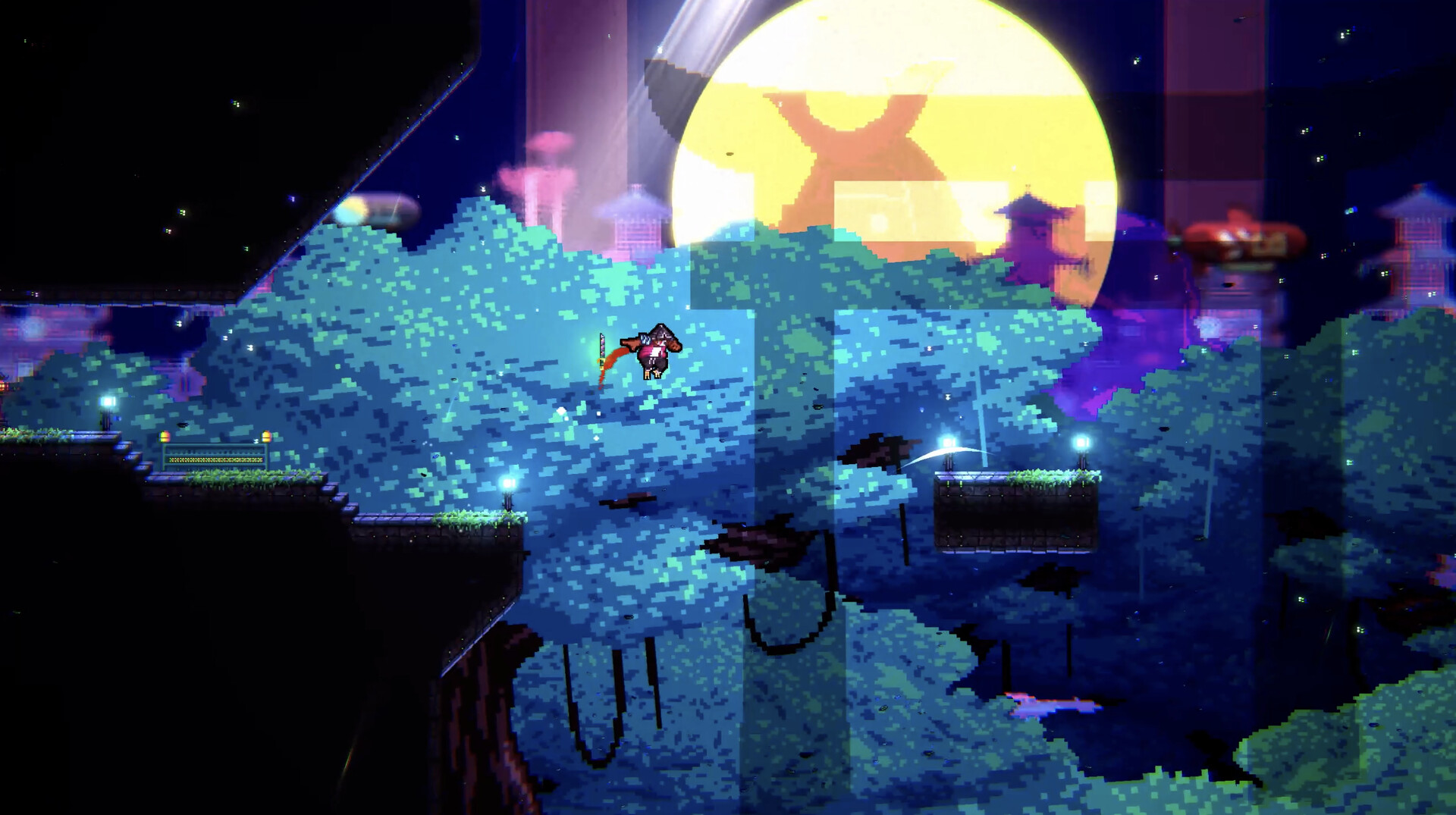
The movement system in action — double jumps, air dashes and gliding keep Hidalgo constantly airborneEastasiasoft Limited -
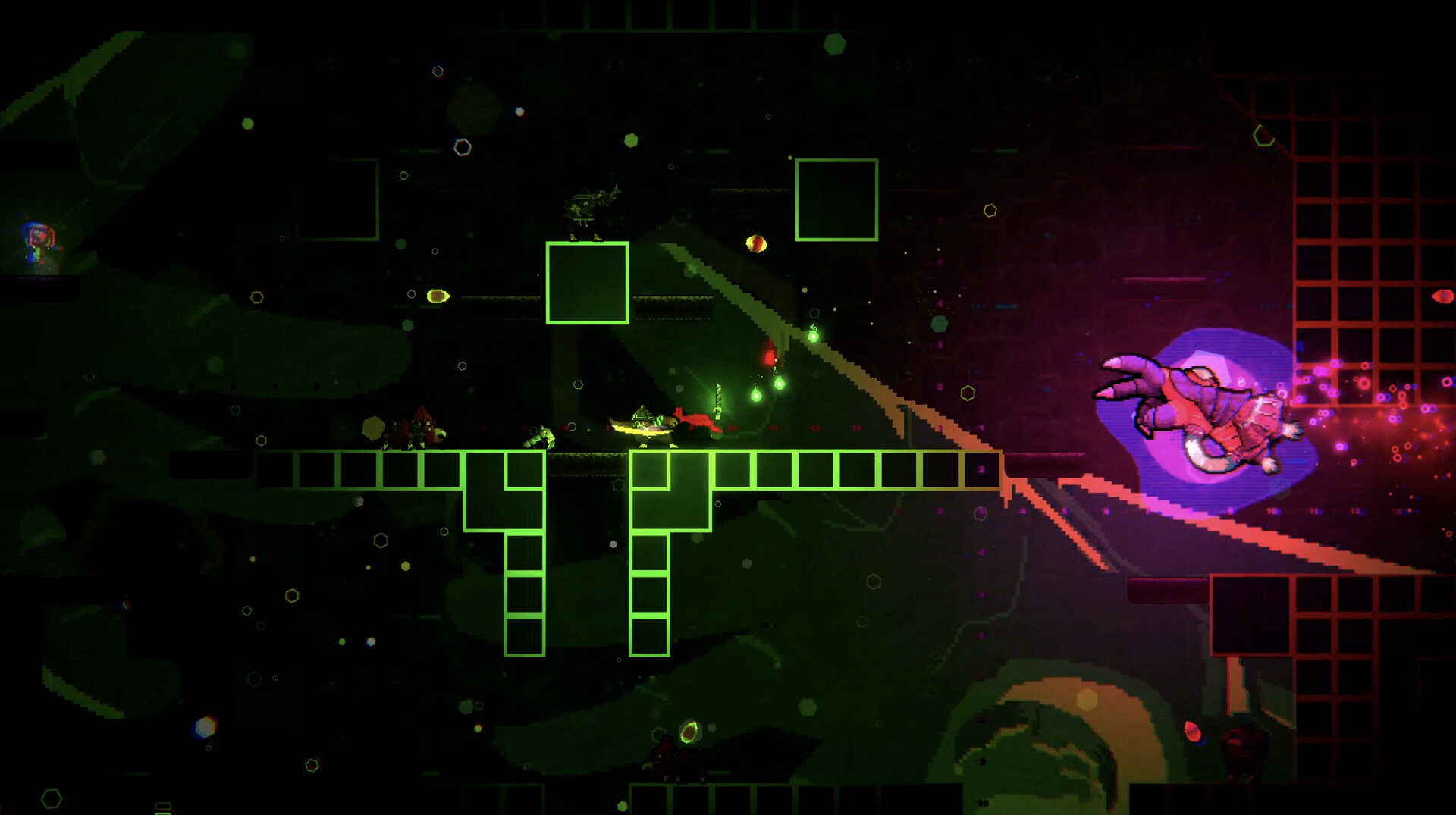
A later stage's tougher, tankier enemies, the kind reviewers say start to strain the game's simpler combatEastasiasoft Limited -
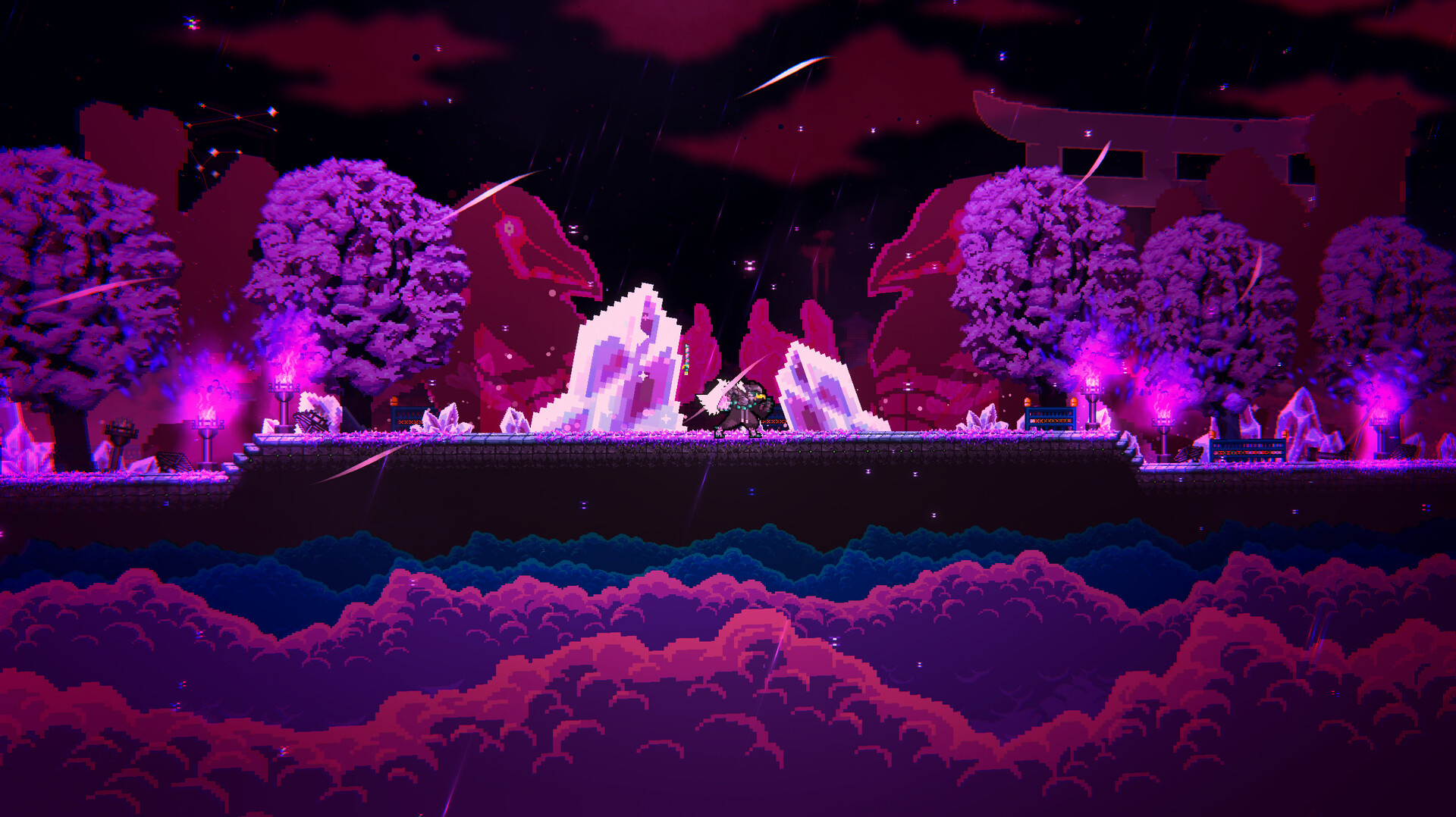
A quieter combat moment showcasing the game's vivid neon pixel art and Japanese-inspired settingEastasiasoft Limited -
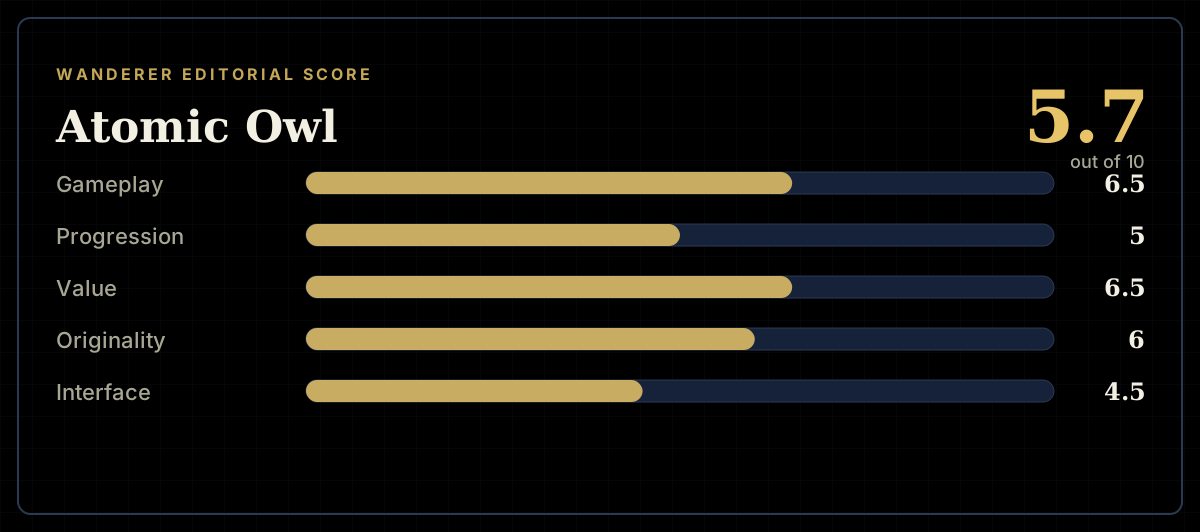
How the review scores each part of the gameWanderer Editorial -
The short versionWanderer Editorial