
Game review
BeatHero Review: A Genuinely Clever Rhythm Roguelite With Rough Edges
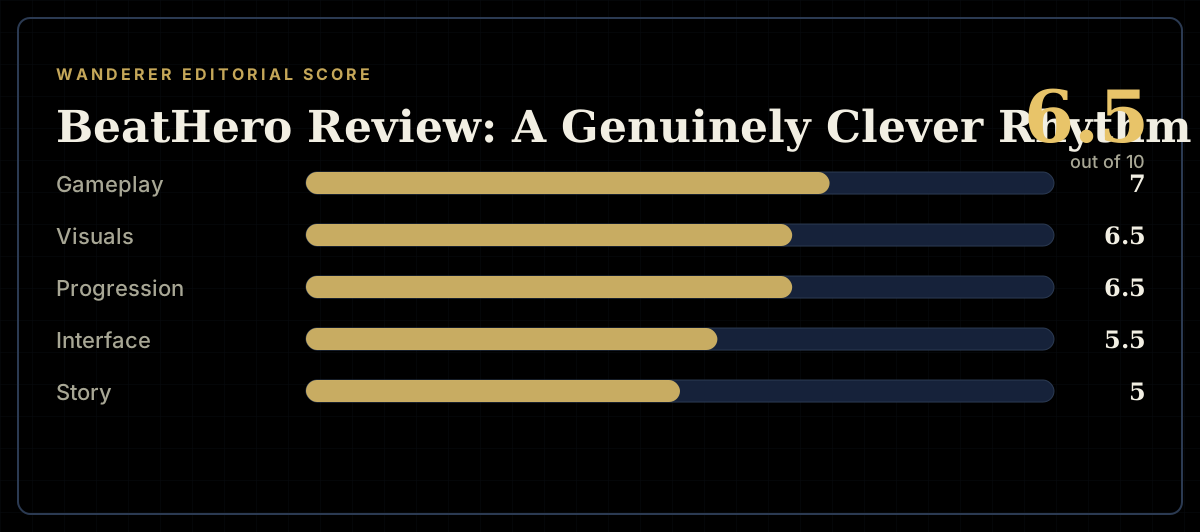
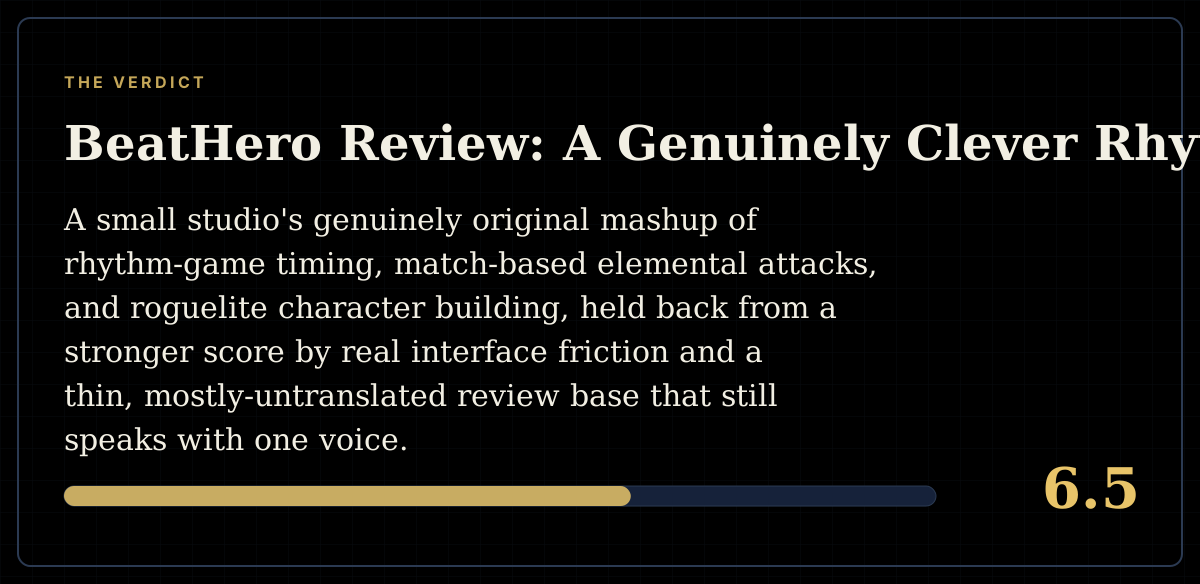
6.5 / 10
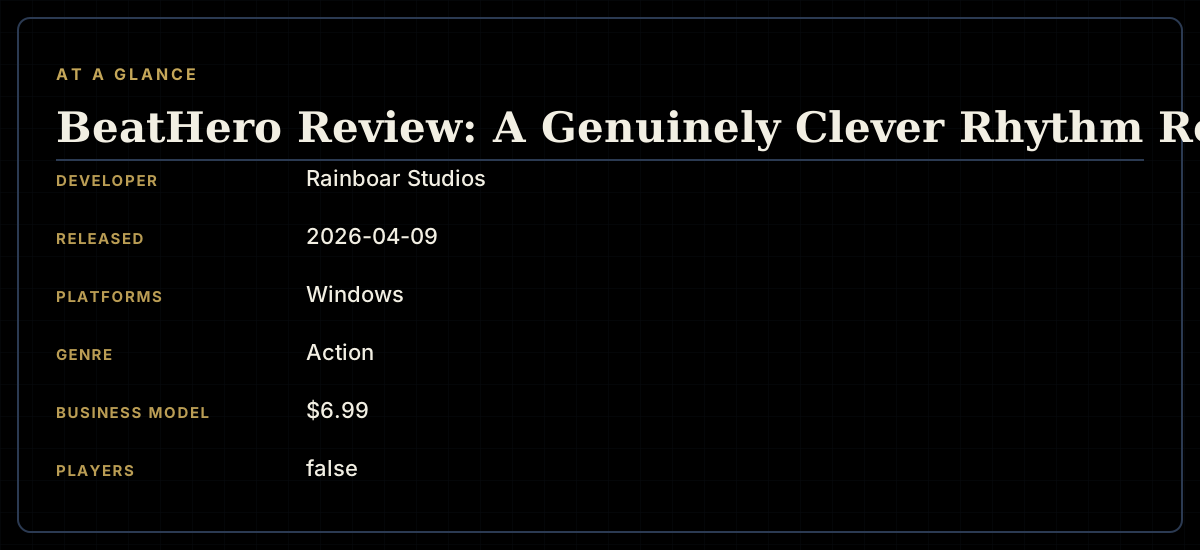
- Developer
- Rainboar Studios
- Publisher
- Rainboar Studios
- Released
- 9 April 2026
- Platforms
- Windows
- Genre
- Action
- Monetisation
- $6.99
- Players
- false
The short version
A small studio's genuinely original mashup of rhythm-game timing, match-based elemental attacks, and roguelite character building, held back from a stronger score by real interface friction and a thin, mostly-untranslated review base that still speaks with one voice.
Biggest strengths
- A genuinely novel hybrid of beat-matching, elemental tile-clearing, and roguelite character/build variety that every reviewer credits as legitimately fun
- A wide, varied soundtrack spanning rock, liquid, and hi-tech electronic genres, praised specifically for being worth listening to on its own merits
- Real roguelite depth: multiple playable heroes with distinct ultimate attacks and playstyles, corroborated by a natural, staggered achievement completion curve
Biggest weaknesses
- A visual timing bar that reviewers say doesn't reliably carry over its calibration between stages, forcing repeated readjustment
- No in-game music volume slider, despite the soundtrack being mixed loud enough that multiple reviewers called it out directly
- No way to skip or preview stage rewards, forcing an unwanted build override in the middle of a run
Who it's for: Rhythm and roguelite fans willing to tolerate rough UI edges for a genuinely novel hybrid; not for anyone wanting a polished, feature-complete rhythm game out of the gate.
Our recommendation: Buy it if the concept appeals to you
6.5 / 10
A rhythm game that's also a match game, that's also a roguelite
BeatHero's pitch is a genuine mashup: a 9x9 grid of elemental tiles that you clear in same-color clusters, timed strictly to the beat of an energetic electronic soundtrack, with each clear firing a barrage of attacks at monsters marching down toward you. Layer in roguelite structure — randomized hero builds, run-based progression, permanent unlocks between attempts — and you get something that reads like a checklist of trendy genre ingredients but, according to every reviewer in its small sample, actually holds together as its own thing rather than a Frankenstein of borrowed parts.
The idea works, and reviewers agree it works
What's striking about BeatHero's nine reviews is how consistently they credit the core loop specifically, rather than just being generally positive. One detailed Chinese-language review calls it "a creative rhythm game" that combines "beat plus elimination" gameplay, comparing it favorably to genre forerunner Crypt of the NecroDancer while noting BeatHero carves its own identity through the elemental-clearing mechanic layered on top. Another reviewer, writing in Traditional Chinese, singles out the roguelite character variety — naming specific heroes like the Moon Priestess and the Unyielding Knight — as genuinely adding replay incentive rather than being cosmetic window dressing. A third calls the combination of rhythm-driven attacks and match-based elimination "quite interesting," praising the strong particle effects and how genuinely enjoyable the music is to listen to independent of the gameplay wrapped around it.
A soundtrack doing more work than expected
Several reviewers separately volunteer praise for the music itself, which is a meaningfully different thing from praising a rhythm game's "sense of timing." One Japanese-language review specifically notes the genre range is "surprisingly wide" — spanning rock, liquid, and what they call "hi-tech" electronic styles — and says the tracks hold up as worth listening to on their own. That matters more in a rhythm game than in almost any other genre: if the music is merely functional rather than good, the whole loop feels hollow no matter how clever the mechanical hook is. Here, reviewers consistently treat the soundtrack as a genuine strength rather than a backdrop.
Where the interface gets in the way
The complaints, when they show up, cluster tightly around interface and pacing friction rather than the core concept. The same Japanese-language reviewer who praised the soundtrack also flags that the on-screen timing bar doesn't reliably reset between stages — carrying over the previous stage's rhythm calibration into a new stage with a different tempo, forcing an awkward readjustment mid-run. That reviewer also notes there's no way to skip or preview a stage reward, meaning an unwanted build change can get forced onto you without warning, and that songs don't loop cleanly during longer fights, leading to an abrupt, deflating silence — what they bluntly call a "void kick" — if a battle runs long. A separate English-language reviewer raises a smaller but related complaint: the music is mixed loud enough to be an issue, and they couldn't find an in-game volume slider to bring it down independently of other audio.
Progression math that doesn't always add up
One of the more specific and useful pieces of feedback in the sample comes from a Traditional Chinese review of a full clear with a starting character: combo counts don't meaningfully scale damage output, since the available combo-damage buff caps out too low to matter by the third chapter, where even four-hundred-combo streaks fail to kill basic enemies. The same reviewer flags that in-run and permanent currency are pooled together and required for character leveling, creating an uncomfortable tension between spending resources to get stronger now versus saving for permanent unlocks later — a design friction point rather than a bug, but one that affects how satisfying progression feels run to run.
A thin but unanimous verdict
Nine reviews is a small sample by any measure, and eight of the nine are written in Chinese, Japanese, or Korean rather than English, which limits how much a global audience has weighed in so far. But unanimity matters, too: every single review is positive, and — more usefully — every one of them engages with specific mechanical details rather than reading as a rubber-stamped thumbs-up. That consistency, across five different languages, on largely the same set of praise points (the hybrid concept, the soundtrack, the roguelite variety) and the same set of complaints (timing bar carryover, no volume control, reward-skip absence) gives this small sample more evidentiary weight than its raw size would suggest.
Only one real patch so far
Steam's news feed shows just two posts since launch: the release announcement itself, and a single patch, issued about a week after release, that focuses entirely on fixing achievement-unlocking and restoration — a legitimate but narrow fix that doesn't yet touch any of the UI or pacing complaints reviewers have specifically raised. That's not necessarily a red flag for a small studio this early post-launch, but it does mean the timing-bar carryover, missing volume slider, and reward-skip issues were all still present as of the most recent review in this sample, and anyone buying today should expect to encounter them rather than assume they've already been patched out.
Is $6.99 a fair price for what's here
At under seven dollars, BeatHero is priced like the small, focused indie project it is, and reviewers who raised the price at all treated it as a non-issue relative to what's delivered — a legitimately novel core loop, a soundtrack worth the price of admission on its own, and enough roguelite structure (multiple heroes, run-based unlocks) to support repeat sessions. The achievement data supports genuine engagement beyond a single playthrough: early hero-specific boss-clear achievements sit in the 20-40% range while later heroes and later bosses drop into the single digits, the kind of steep, staggered curve you'd expect from players progressively unlocking and experimenting with different heroes rather than stopping after one run.
Verdict
BeatHero earns its unusual elevator pitch: a beat-matching, tile-clearing, roguelite hybrid that actually holds together as a coherent, enjoyable loop rather than a pile of mismatched genre parts. Its small, heavily non-English review base is unanimous in both what it praises (the concept, the soundtrack, the character variety) and what it flags (a timing bar that doesn't reset properly, no volume slider, no reward-skip option), and only one patch has landed since launch to address any of it. At $6.99, it's a reasonable bet for anyone drawn to the concept, with the clear understanding that the rough edges its own fans are describing haven't been sanded down yet.
Pros and cons
Pros
- A genuinely novel hybrid of beat-matching, elemental tile-clearing, and roguelite character/build variety that every reviewer credits as legitimately fun
- A wide, varied soundtrack spanning rock, liquid, and hi-tech electronic genres, praised specifically for being worth listening to on its own merits
- Real roguelite depth: multiple playable heroes with distinct ultimate attacks and playstyles, corroborated by a natural, staggered achievement completion curve
- Short, digestible runs (roughly two minutes per stage) that suit quick sessions
Cons
- A visual timing bar that reviewers say doesn't reliably carry over its calibration between stages, forcing repeated readjustment
- No in-game music volume slider, despite the soundtrack being mixed loud enough that multiple reviewers called it out directly
- No way to skip or preview stage rewards, forcing an unwanted build override in the middle of a run
- Only one substantive patch since launch, focused on achievement-syncing rather than the specific complaints reviewers have raised about pacing and UI
Screenshots
-
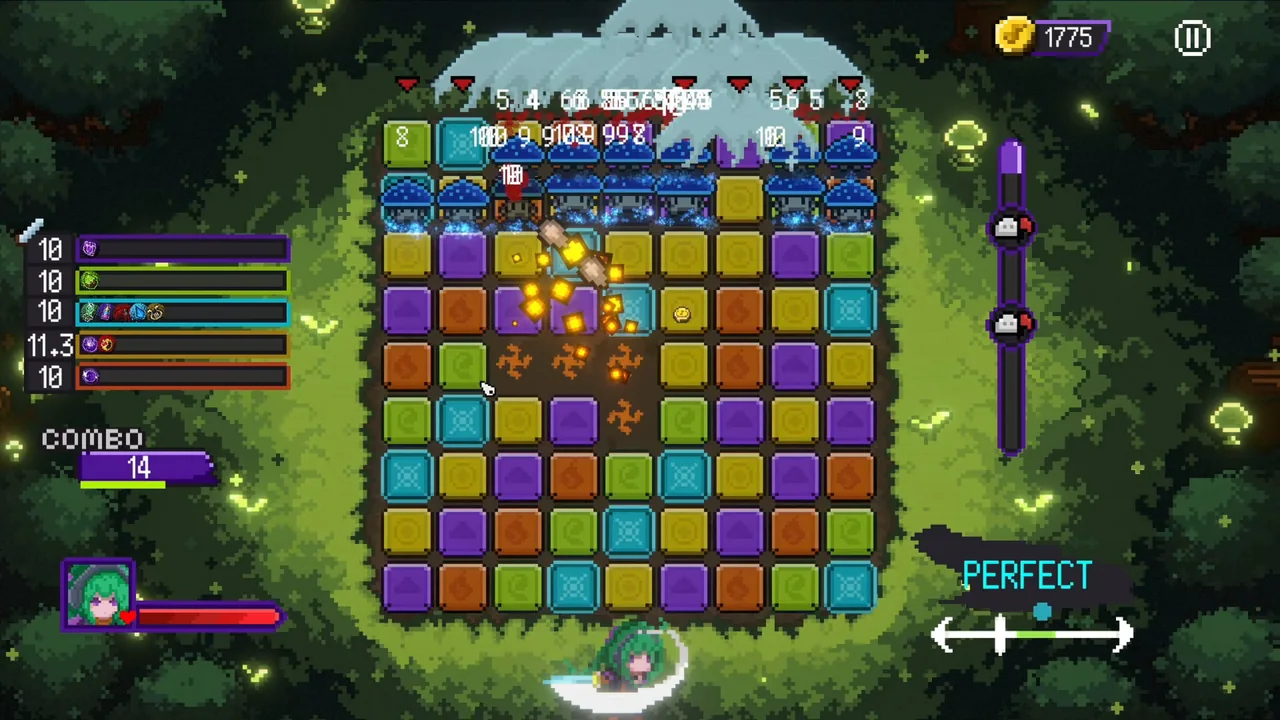
Image: Rainboar Studios via Steam -
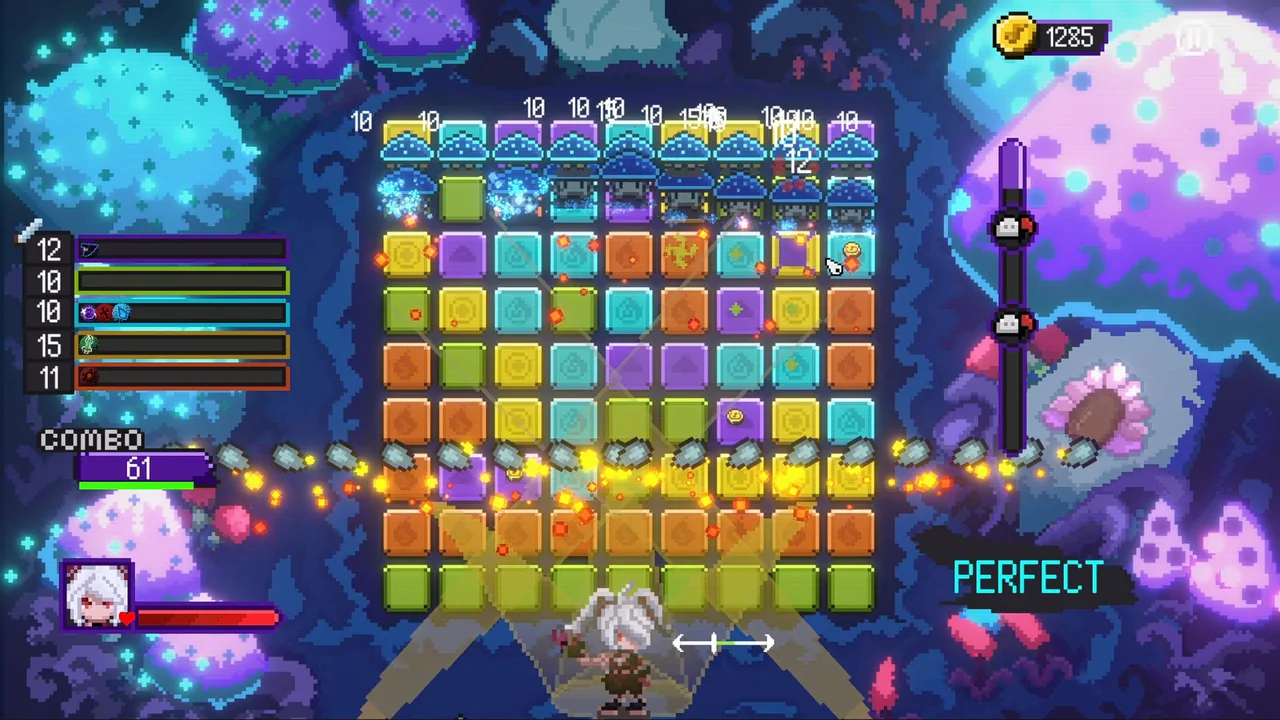
Image: Rainboar Studios via Steam -
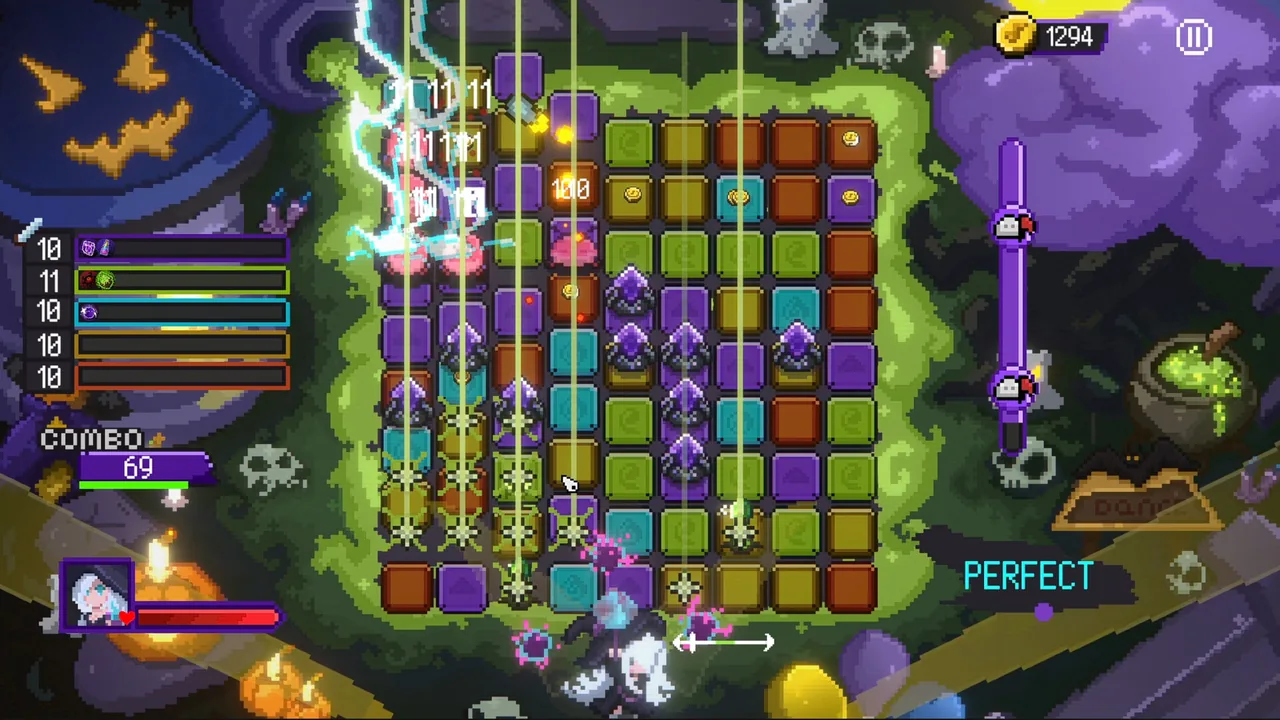
Image: Rainboar Studios via Steam -
Wanderer Editorial -
Wanderer Editorial -
Wanderer Editorial