
Game review
Bakso Simulator 2
6.5 / 10
- Developer
- Akhir Pekan Studio
- Publisher
- Akhir Pekan Studio
- Released
- 18 June 2026
- Platforms
- Windows
- Genre
- Casual, Indie, Simulation
- Monetisation
- paid
- Players
- false
The short version
Biggest strengths
- A more balanced, faster-paced follow-up that multiple reviewers who played the original said improved on its predecessor's mechanics
- Simplified meatball-serving mechanics that reviewers described as easy to learn even while following an on-screen recipe
- A story with genuine plot twists that reviewers were reluctant to spoil, going out of their way to praise it without giving details away
Biggest weaknesses
- Multiple reports of an unusually heavy GPU load, with one reviewer describing their graphics card pinned at 99% usage despite the game not appearing visually demanding
- Several reviewers, including fans of the sequel, mentioned unspecified bugs still present at launch
- A specific night-market minigame that one reviewer called nearly impossible to complete within its time limit
Who it's for: Fans of Akhir Pekan Studio's earlier games (Warnet Life, Comic Book Store Simulator) or anyone drawn to a quirky, story-driven restaurant sim with a distinctly Indonesian flavor, who can tolerate some reported bugs and a heavier-than-expected GPU load
Our recommendation: recommended with caveats
6.5 / 10
A sequel with a built-in fanbase
Bakso Simulator 2 is the latest release from Akhir Pekan Studio, an Indonesian developer whose earlier games, Warnet Life and Comic Book Store Simulator, have built up a loyal following for quirky, story-driven slice-of-life management sims. That history shows clearly in the review pool, where returning fans dominate the praise. One wrote, "this game really brings tears of joy to my eyes, im drowned with tsunami nostalgia... unlike other simulator games, the exploration and the story is so fire and gonna blows your mind with the plot twists, and this time in Bakso Simulator 2, they added a lots of very fun and engaging" content. Another described the release in more measured terms: "The long-awaited sequel to my favorite simulation game has finally been released, and it turned out to live up to my expectations. The new mechanics for serving meatballs are really easy. You can even do it while looking at the recipe."
Building a meatball empire, one customer at a time
The core loop asks players to build, manage, and scale a bakso, or Indonesian meatball, restaurant from the ground up: designing a layout, hiring and training staff, upgrading equipment, and expanding into a larger operation. Reviewers who played the first game consistently described this sequel as a refinement rather than a reinvention. One wrote, "This one is a lot more fast-paced and linear than the previous installment, but I don't find that hurts the experience," while another put it more simply: "the game's good, way better and more balanced than the previous games from the same dev team. hopefully they keep this pace throughout the later games." A third reviewer, having played since the developer's earliest release, framed the improvement in terms of long-term trust: "I really love all the game from this developer... this is a good game, worth every cent."
A story reviewers are protective of
Beyond the management mechanics, several reviewers went out of their way to praise the game's narrative without spoiling it, a notable pattern in a genre where story usually takes a back seat to systems. One wrote, "The story is unique and worth paying close attention to. Overall, everything is great and even better than the first game. I'm looking forward to the next story update in this game so I can hopefully complete it 100 percent." Another, mixing English and Indonesian, praised the plot twists directly while asking for expanded staff and quest content in future updates. That combination, a management sim whose story is good enough that fans are actively protecting it from spoilers, is a stronger signal than generic praise for "good writing" would be.
A GPU load that doesn't match the visuals
The most concrete technical complaint in the pool concerns performance, and specifically graphics card load. One detailed reviewer wrote, in a mix of Indonesian and English, that the game was well-designed and bug-free in their experience so far, but added a clear caveat: "the biggest downside is that it's very GPU-intensive. I don't know why, but on my PC this game runs my graphics card at 99%, even though the game shouldn't be that demanding. Please, that's the only issue I've noticed so far." That's a specific, reproducible complaint from a reviewer otherwise satisfied with the game, and it's worth taking seriously given how unusual it would be for a stylized restaurant-management sim to genuinely require that kind of graphics horsepower.
Bugs acknowledged even by happy players
Several other reviewers, including ones who ultimately recommended the game, mentioned unspecified bugs still present at launch. One wrote, in translation, "the game is good, designed very seriously. So far I haven't found any bugs. The tutorial also doesn't feel forced, since it progresses along with our gameplay progress. It also has a fairly good story," directly contradicting others in the pool who flagged bugs as a real, if apparently non-blocking, issue. Another reviewer's plea, translated, asked the developer to keep updating and fix the bugs "as soon as possible," while still calling the game fun. A specific minigame at a night market also drew a pointed complaint: one reviewer said its timer was too short and its required speed unreasonable, making a high score "nearly impossible" to reach.
An engaged developer and community
A recurring theme across the pool, positive even among critical reviewers, is confidence in the developer's responsiveness. One reviewer wrote, "developer juga dengerin keluh kesah, komunitas juga saling bantuu, rekomen parah guys. mana update terus jadi ga rugiiii buat belii," roughly, the developer listens to complaints, the community helps each other out, and updates keep coming, making the purchase worthwhile. That pattern, of players treating early bugs as forgivable because of a track record of continued support, echoes the same goodwill Akhir Pekan Studio appears to have built with Warnet Life and Comic Book Store Simulator, though it's worth noting that one reviewer specifically lamented that the latter game's updates had since stopped, a reminder that this kind of goodwill isn't unconditional.
Verdict
Bakso Simulator 2 is a competent, well-liked sequel that most returning fans agree improves on its predecessor with a more balanced pace, easier core mechanics, and a story worth staying spoiler-free for. Its reported bugs and, more unusually, a graphics card load that doesn't match its visual ambition are real concerns that even satisfied reviewers raised unprompted. At its low price, it's an easy recommendation for anyone already fond of Akhir Pekan Studio's earlier work or looking for a quirky, culturally specific take on the restaurant-management genre, with the caveat that some technical rough edges remain unresolved at launch.
Pros and cons
Pros
- A more balanced, faster-paced follow-up that multiple reviewers who played the original said improved on its predecessor's mechanics
- Simplified meatball-serving mechanics that reviewers described as easy to learn even while following an on-screen recipe
- A story with genuine plot twists that reviewers were reluctant to spoil, going out of their way to praise it without giving details away
- Helpful, trainable staff mechanics and an active developer that reviewers said responds to community feedback with regular updates
Cons
- Multiple reports of an unusually heavy GPU load, with one reviewer describing their graphics card pinned at 99% usage despite the game not appearing visually demanding
- Several reviewers, including fans of the sequel, mentioned unspecified bugs still present at launch
- A specific night-market minigame that one reviewer called nearly impossible to complete within its time limit
- No multiplayer or co-op, which at least one enthusiastic reviewer said they wanted enough to pay a premium for
Screenshots
-
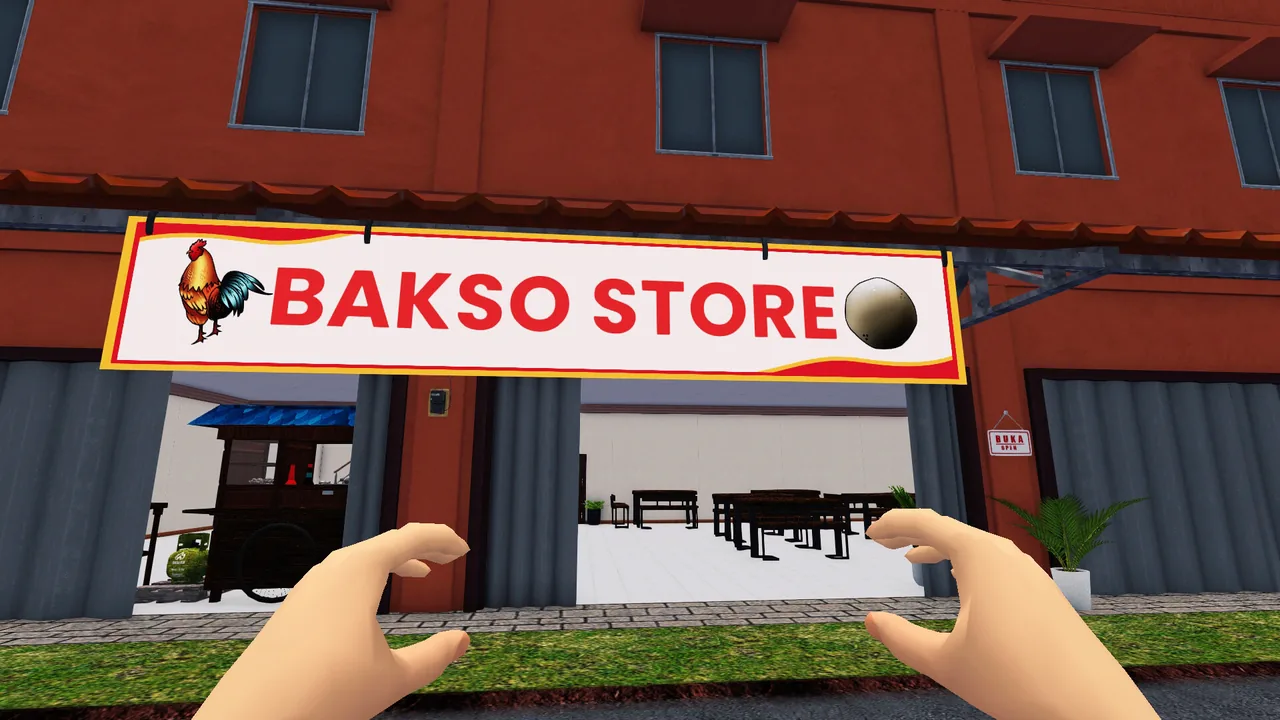
Bakso Simulator 2Image: Akhir Pekan Studio via Steam -
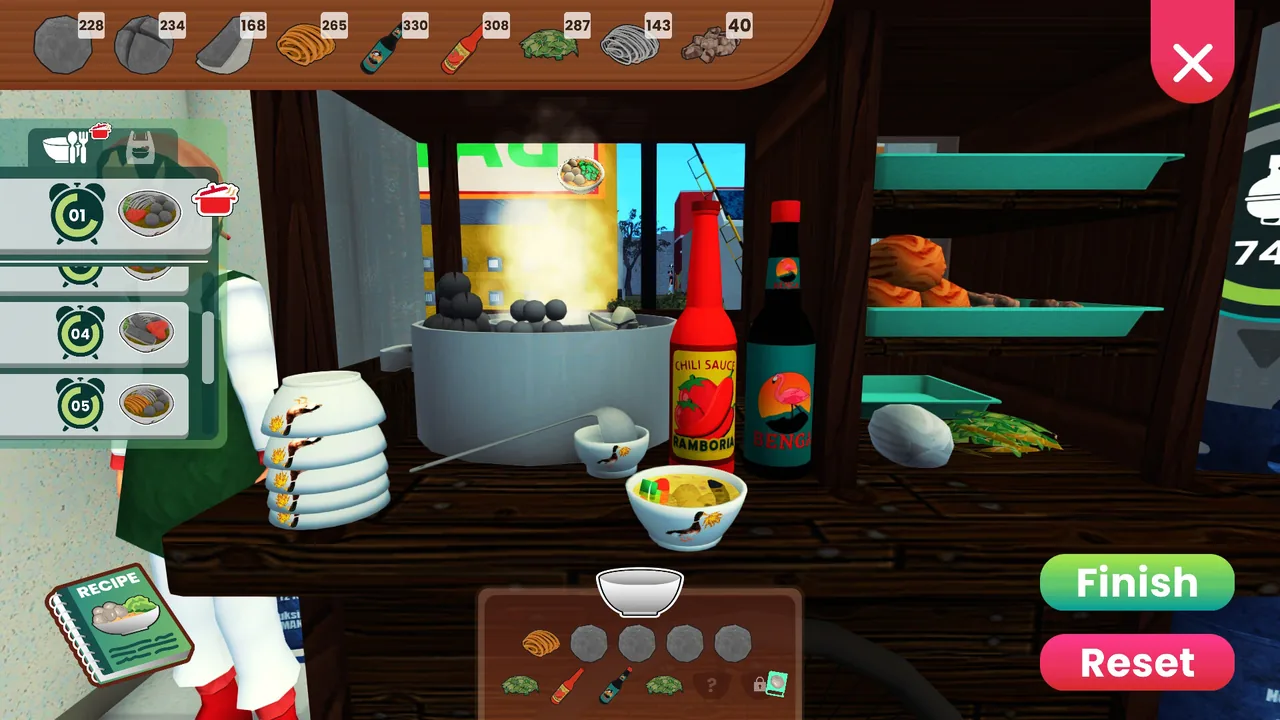
Bakso Simulator 2Image: Akhir Pekan Studio via Steam -
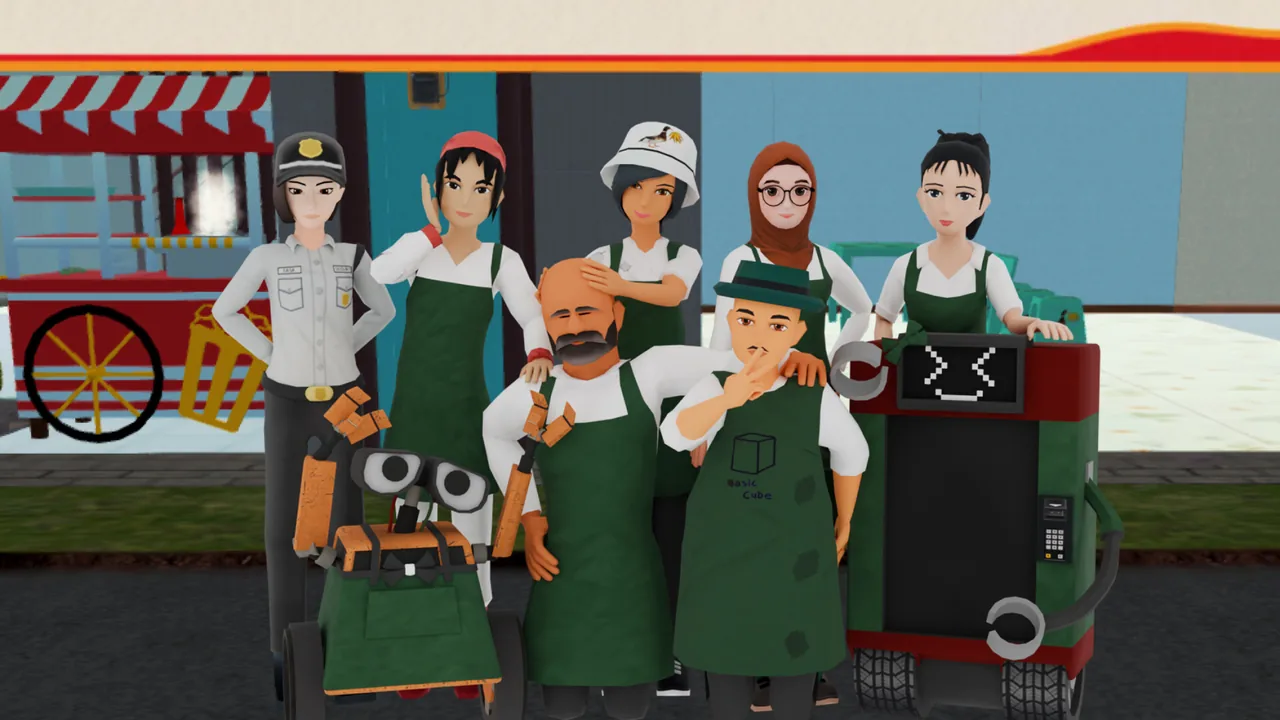
Bakso Simulator 2Image: Akhir Pekan Studio via Steam