Game review
Worlds Upon The Wind
8.5 / 10
- Developer
- Max Shawabkeh
- Publisher
- Max Shawabkeh
- Released
- 23 July 2026
- Platforms
- Windows, macOS
- Genre
- Roguelite Deckbuilder
- Monetisation
- One-time purchase, no in-game store, no DLC
- Players
- Single-player only
The short version
Worlds Upon The Wind is a deckbuilding roguelite about resettling the shards of a shattered world, one expedition at a time, built entirely around historical Japanese woodblock art, mythology and an optional language-learning layer, with no combat and no timers pressuring any decision. It released 23 July 2026 from solo developer Max Shawabkeh, and three weeks later sits at a startling 98.9% positive among its English reviews.
That reception is earned through specificity rather than hype — reviewers describe a deckbuilder where losing isn't really possible in the traditional sense, where meaningful trade-offs replace combat as the source of tension, and where the use of real, public-domain Ukiyo-e prints gives the whole experience a genuine cultural weight most games in this genre don't attempt. The one honest complaint in this review's sample deserves care rather than either dismissal or alarm: a reviewer discovered the developer had used AI-generated placeholder art during development, removed before the demo or full release shipped, and felt the absence of a disclosure statement about that history was worth flagging even though nothing AI-generated remains in the game itself.
Biggest strengths
- A genuinely novel structure for the genre: there's no combat and no timer, "losing" isn't the threat driving decisions, and every expedition can be ended on the player's own terms once it feels complete, which multiple reviewers specifically credit as removing stress without removing depth
- Built around real, public-domain Ukiyo-e woodblock prints and Japanese mythology, giving the game a specific cultural and visual identity reviewers describe as far beyond a surface-level aesthetic choice
- An optional Japanese-language learning layer woven into the game's systems, praised repeatedly as thematically appropriate rather than a bolted-on gimmick
Biggest weaknesses
- One reviewer discovered and disclosed that the developer had used AI-generated placeholder art during development; those assets were removed before the demo and full release shipped, and no AI-generated content currently exists in the game, but the reviewer felt this history deserved disclosure regardless — a nuanced complaint about transparency rather than about the shipped product's content
- A second reviewer describes some negative random events as landing without enough warning, including one action that cost two-thirds of a character's health with only subtle on-screen cues that it wasn't the safer choice — a fair balance critique in an otherwise low-stress design
- As a genuinely unusual, mechanically dense game, the learning curve is real even for players with deckbuilder experience, though most reviewers describe the systems clicking within the first few hours
Who it's for: Deckbuilder and roguelite fans looking for something genuinely different from the genre's combat-heavy default, and anyone drawn to historical Japanese art and mythology looking for a game that treats that material with real care. A strong fit for players who want strategic depth without stress or time pressure.
Our recommendation: A confident recommendation, and one of the more distinctive small releases this library has covered this year. Read the note below about placeholder AI art before buying if that history matters to your purchase decision, but know that nothing AI-generated ships in the current release.
8.5 / 10
Introduction
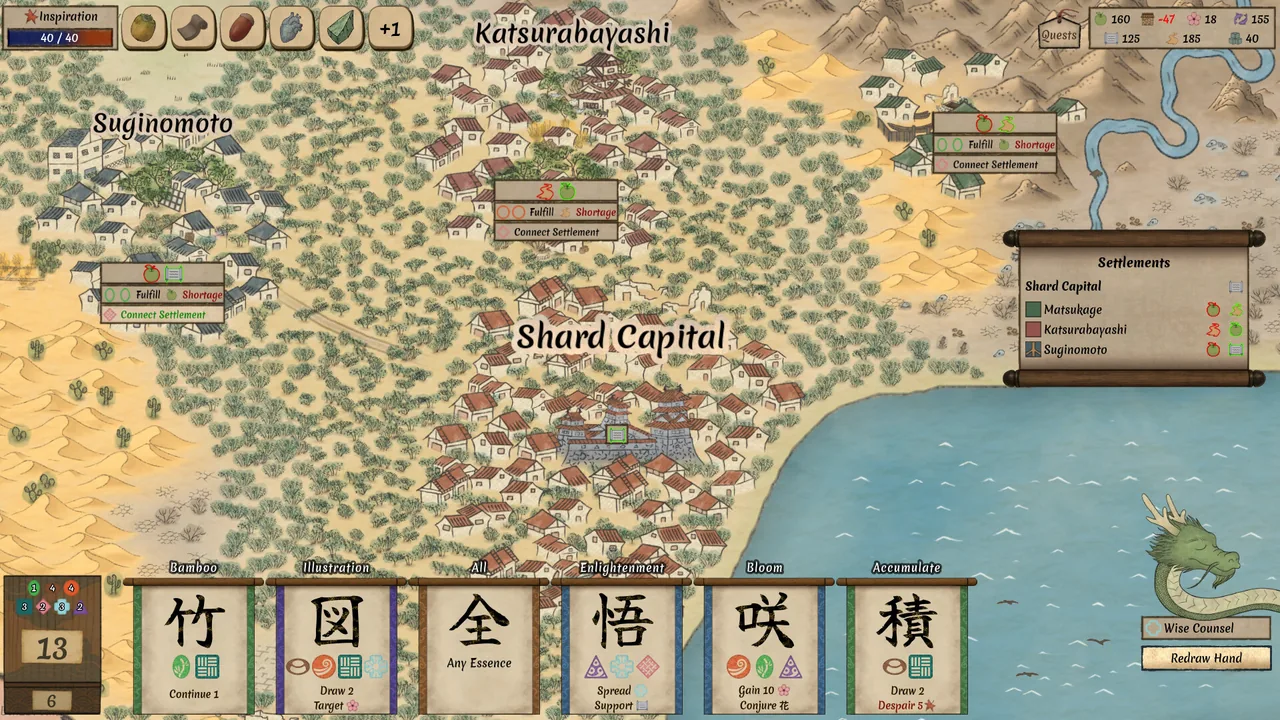
Most deckbuilding roguelites are built around a fight you might lose. Worlds Upon The Wind removes that premise entirely, and the removal is the point. Developed solo by Max Shawabkeh and released 23 July 2026, it asks players to resettle the shattered fragments of a world — ten thousand islands, according to the game's own framing — one expedition at a time, building settlements, meeting the needs of a growing community, and choosing when an expedition is complete rather than being forced out by a clock or a health bar. Three weeks after launch, its English review sample sits at 98.9% positive, a figure this review's research suggests is earned rather than inflated by a small, self-selecting audience.
No combat, no timers, and real tension anyway
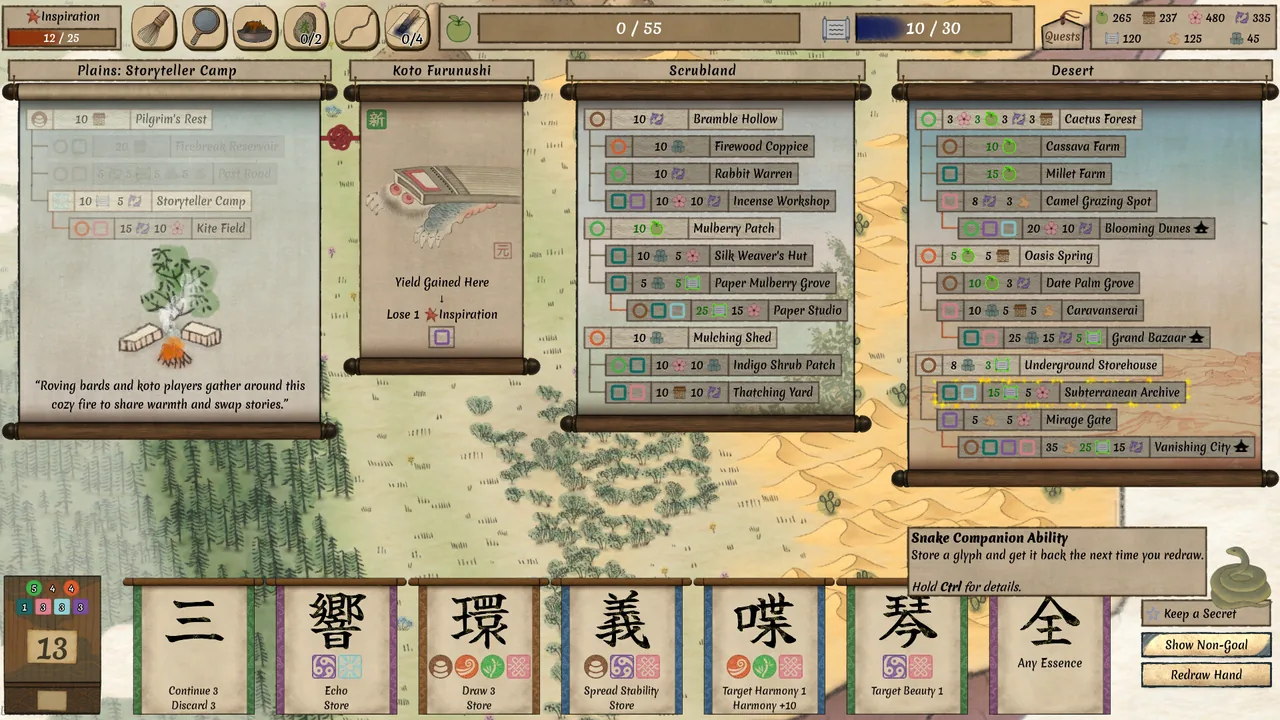
The structural choice at the centre of Worlds Upon The Wind is the thing nearly every reviewer leads with. "No timers, no combat. Strategy over stress," wrote one reviewer, describing the core loop directly: each expedition settles one island, building outward as the community's needs grow more complex, with the player choosing when to bank an expedition's rewards and move on rather than being forced to by failure. Another reviewer, deep into the deckbuilder genre by their own account, put it in comparative terms: "This is a very good deckbuilder with roguelike elements in which, unlike most roguelikes, you don't have to 'lose' — every playthrough is an expedition to another land, which you can finish whenever it feels right to get the hard-earned rewards and move the story forward." That's a genuinely different design proposition from the genre's dominant "run until you die" structure, and reviewers across this sample describe it producing real tension anyway — trade-offs that matter, choices with lasting consequences, difficulty that scales meaningfully — without the accompanying stress that usually comes bundled with roguelike stakes.
Built on real history, not aesthetic dressing
What elevates the presentation beyond "pretty indie game" in this review's sample is specificity about where the art actually comes from. Multiple reviewers note the game uses real, public-domain Ukiyo-e woodblock prints rather than art merely inspired by that tradition, and credit the difference directly: "The use of historical public domain Ukiyo prints has created so many [layers of meaning]," wrote one detailed review, describing the game as simultaneously "an optional teaching tool," "a 'god game' with a little imagination," and "a storyteller if you read the well written text and descriptions." An optional Japanese-language learning element woven into the game's systems draws specific, repeated praise as thematically integrated rather than a superficial add-on — one reviewer called it "a pretty cool addition, and very thematic for this game" while acknowledging it as entirely optional for players who just want the strategy layer.
Progression draws a more technical kind of praise from reviewers who specifically look for it: "A rare game where the vertical metaprogression makes sense... because it's paired with increasing complexity/difficulty as the player progresses," wrote one, distinguishing this from games where getting stronger simply makes everything trivially easy. Playtimes across the positive sample run long relative to the game's modest price — 42, 47, 121 hours logged by reviewers still actively recommending it — a pattern more consistent with genuine long-term engagement than a quick, shallow hit of novelty.
A complaint worth reporting exactly as it is
This review's sample contains only two English-language negative reviews out of 174, and one of them deserves careful, precise handling rather than either amplification or dismissal. A reviewer, thirty hours into the game and previously positive, discovered that the developer had used AI-generated placeholder art during the game's development. By the reviewer's own account, those placeholder assets were removed before the public demo released and are not present in the shipped game — a fact this review independently confirmed by checking the store page directly, which carries no AI Generated Content Disclosure at all, consistent with there being no AI-generated content in the final product for the developer to disclose. The reviewer's disappointment wasn't about content currently in the game; it was about not having known that history existed, writing that the discovery came as a real letdown given how much evident care had gone into everything else. This review reports that distinction precisely: a transparency complaint about development history, not a claim that anything AI-generated currently ships. Readers who weigh that history heavily in their own purchasing decisions should know it plainly; readers who care only about what's in the box today are getting exactly what the store page and every other review describe.
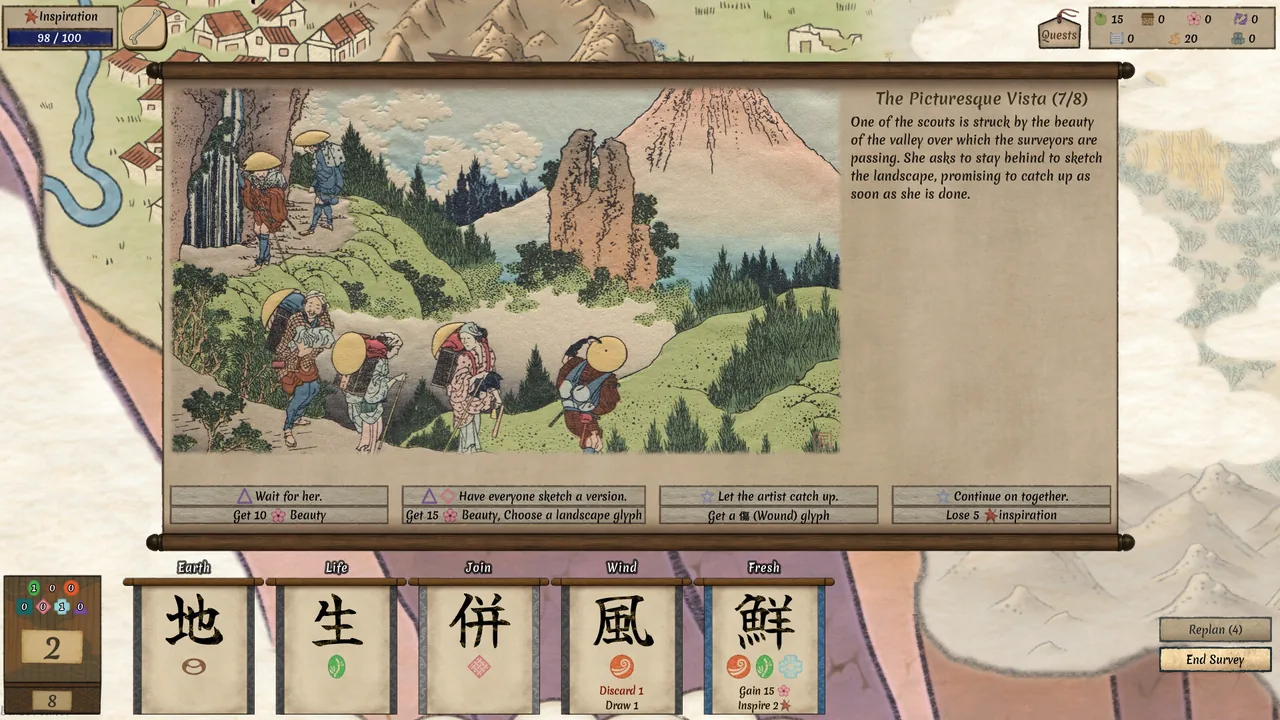
A second, smaller complaint concerns the game's negative random events, which one reviewer felt could land without enough warning — describing losing two-thirds of a character's health to an action that wasn't clearly flagged as risky beforehand. That's a fair, specific balance note in a game whose whole identity is built around avoiding unfair surprises, and worth knowing about even though it's a minority view in this sample.
Final Verdict
Worlds Upon The Wind earns its extraordinary early reception through genuine specificity rather than hype: a structural choice — no combat, no timers, no forced losses — that reviewers describe as adding tension rather than removing it, real historical art used with evident respect for its source, and a solo developer supporting the launch with a patch cadence most small teams can't match. The one real complaint in its record is a nuanced one about development history rather than shipped content, and this review has tried to report it with exactly the precision it deserves — neither buried nor inflated past what a single, thoughtful reviewer actually found. For deckbuilder and strategy fans looking for something that genuinely doesn't play like everything else in the genre, this is one of the more distinctive, well-realised small releases this library has covered this year.
Pros and cons
Pros
- A genuinely novel structure for the genre: there's no combat and no timer, "losing" isn't the threat driving decisions, and every expedition can be ended on the player's own terms once it feels complete, which multiple reviewers specifically credit as removing stress without removing depth
- Built around real, public-domain Ukiyo-e woodblock prints and Japanese mythology, giving the game a specific cultural and visual identity reviewers describe as far beyond a surface-level aesthetic choice
- An optional Japanese-language learning layer woven into the game's systems, praised repeatedly as thematically appropriate rather than a bolted-on gimmick
- Meta-progression that scales in a way multiple reviewers specifically call rare and well-judged — later runs grow more complex and demanding alongside growing stronger, avoiding the common trap of power fantasy without challenge
- Extremely active solo-developer support: ten distinct patches and hotfixes in the roughly three weeks since launch, including a major content update and fast turnarounds on save-corruption and macOS crash reports
Cons
- One reviewer discovered and disclosed that the developer had used AI-generated placeholder art during development; those assets were removed before the demo and full release shipped, and no AI-generated content currently exists in the game, but the reviewer felt this history deserved disclosure regardless — a nuanced complaint about transparency rather than about the shipped product's content
- A second reviewer describes some negative random events as landing without enough warning, including one action that cost two-thirds of a character's health with only subtle on-screen cues that it wasn't the safer choice — a fair balance critique in an otherwise low-stress design
- As a genuinely unusual, mechanically dense game, the learning curve is real even for players with deckbuilder experience, though most reviewers describe the systems clicking within the first few hours
Screenshots
-
Worlds Upon The WindImage: Max Shawabkeh via Steam -
Worlds Upon The WindImage: Max Shawabkeh via Steam -
Worlds Upon The WindImage: Max Shawabkeh via Steam -
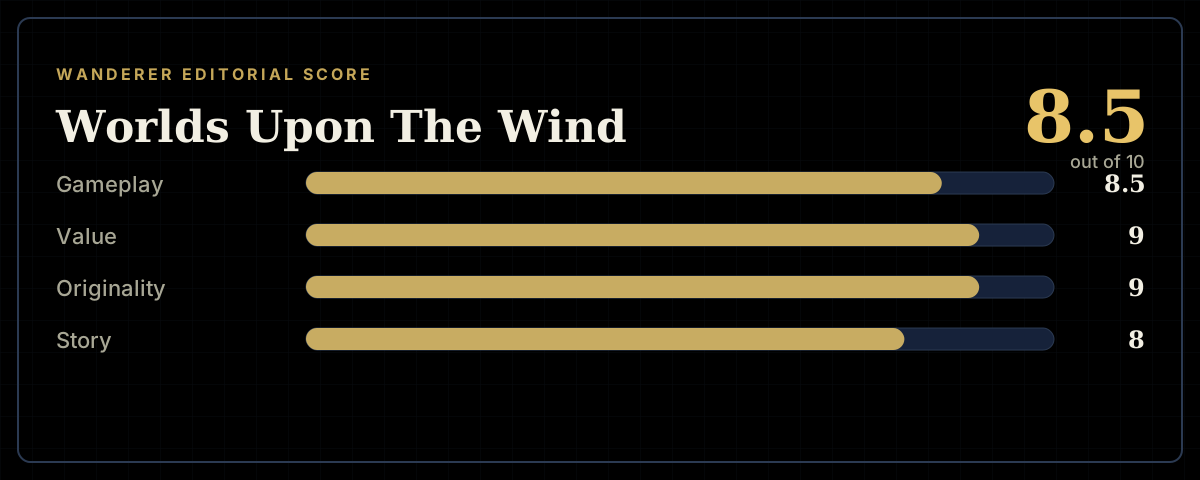
How the review scores each part of the gameWanderer Editorial -
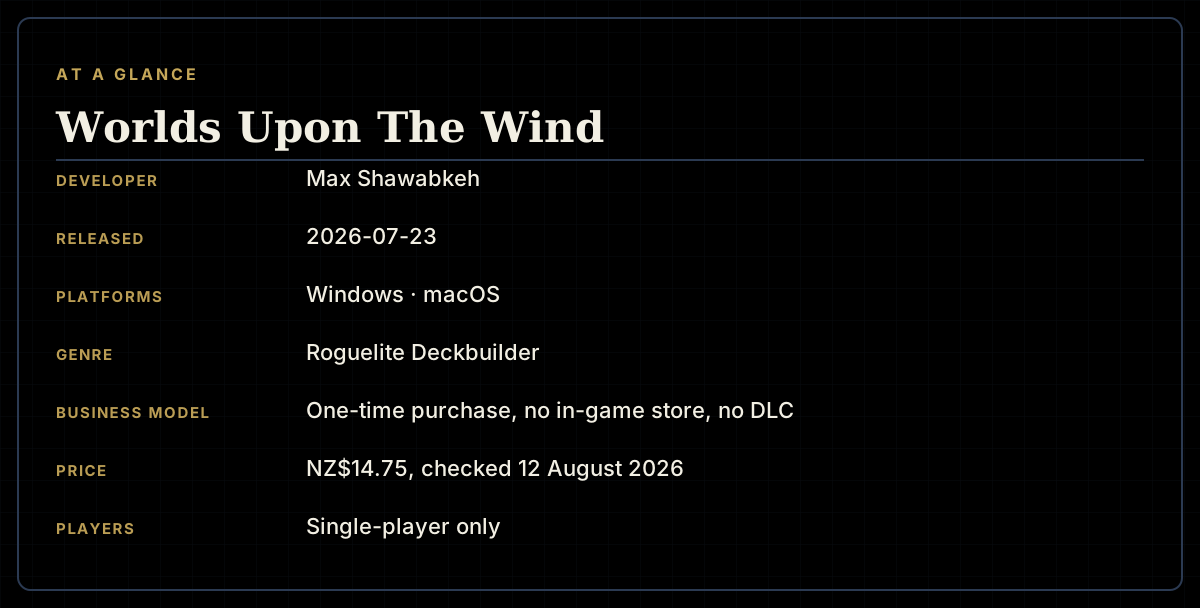
The essentials at a glanceWanderer Editorial -
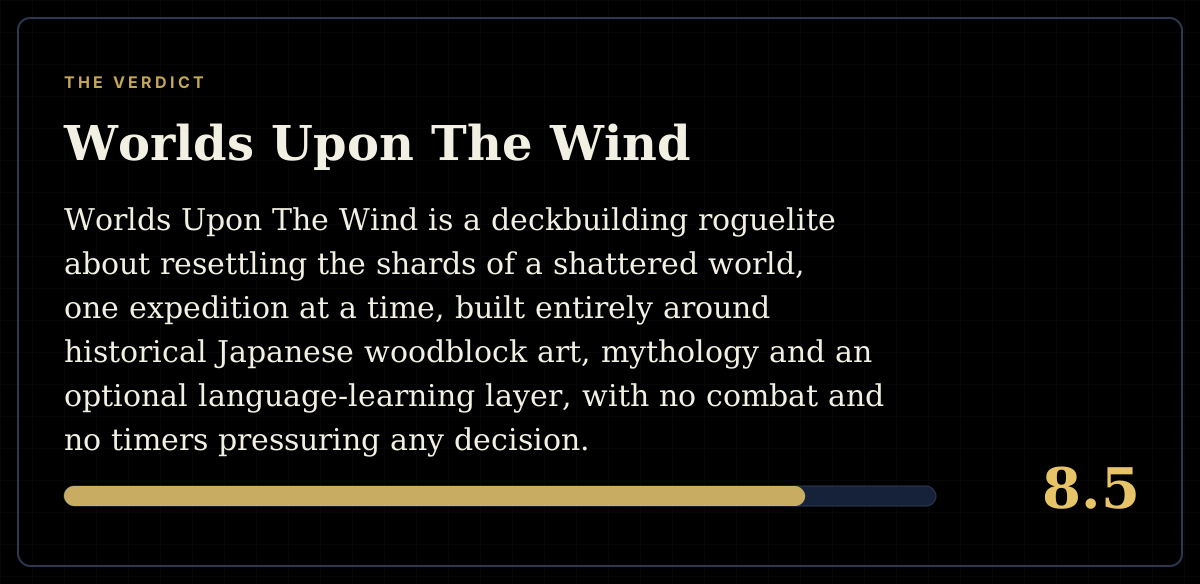
The short versionWanderer Editorial