
Game review
Montabi Review
8 / 10
- Developer
- Mankibo
- Publisher
- Akupara Games
- Released
- 6 August 2026
- Platforms
- ["Windows"]
- Genre
- Creature-Collector Roguelike Deckbuilder
Slay the Spire, Pokemon, and Mega Man Battle Network Walk Into a Bar
Montabi, from Indonesian solo-turned-small-team developer Mankibo and publisher Akupara Games, launched on Steam on August 6, 2026 at $19.99, after more than a year of public demos, playtests, and Next Fest appearances. Its pitch sounds almost too busy to work on paper: take Slay the Spire's run-based deckbuilding, graft on a Pokemon-style creature-collecting loop where each captured "Montabi" evolves into stronger forms, and resolve every fight on a 3x3 grid where a Mega Man Battle Network-style emphasis on positioning matters as much as the cards themselves. Every Montabi in the player's three-strong active team brings its own separate deck built entirely around its own archetype, and building a run means figuring out how those decks, plus the player's own Trainer deck, interact and cover each other's weaknesses. The reception has been outstanding: 117 English-language reviews sit at a 97% positive rating for what reviewers overwhelmingly describe as a genre mashup that, against the odds, actually works.
A Genuinely Novel Combo That Reviewers Can't Stop Comparing to Three Different Classics
The dominant thread running through the review pool is astonishment that a first-time commercial release pulls off a combination this ambitious. Reviewers repeatedly reach for the same three reference points, Slay the Spire, Pokemon or Digimon, and Mega Man Battle Network, and just as repeatedly note that Montabi earns the comparison rather than merely borrowing from it. The core hook that separates it from other deckbuilders gets singled out again and again: rather than managing one big deck, the player juggles a handful of small, tightly-themed decks at once, one per active Montabi, and figuring out how those decks combo together is described by many reviewers as the most satisfying puzzle they've found in the genre in years. The 3x3 grid earns similarly strong praise for making movement and positioning genuinely tactical rather than decorative, with several reviewers noting that a badly-positioned team can lose a fight before a single card is played. On top of the mechanics, the charming comic-book art style, the varied and inventive creature designs (several reviewers highlight favorites built around everyday objects like a washing machine or a fire hydrant), and a soundtrack multiple reviews call genuinely excellent round out a presentation reviewers describe as punching well above the game's modest price and studio size.
A Real Balance and Difficulty-Curve Problem Sits Underneath the Praise
Set against that near-universal enthusiasm, a specific and well-corroborated criticism runs through even many of the overwhelmingly positive reviews: the power gap between the strongest and weakest Montabi, and between the strongest and weakest individual cards, is unusually wide for a genre built around variety, with several reviewers noting they can build a near-deterministic early kill with certain Montabi while others feel close to useless by comparison. A related complaint concerns the game's difficulty system, which unlocks all of its difficulty tiers from the start rather than gating harder modes behind clears the way Slay the Spire's ascension system does, leaving new players to guess at an appropriate starting difficulty with little guidance, and several reviewers who found the default tier too easy note there's currently no long-term structure to keep pushing them further, denting the game's replayability past an initial handful of runs. The single detailed negative review in the sample, itself acknowledged even by some positive reviewers as raising fair points, goes further and describes the default difficulty as actively punishing for newcomers: permanent injury cards added to a Montabi's deck after it's knocked out, rare mid-run healing, and an action-point economy that can force a loss the moment units are placed before the player even understands an unfamiliar enemy's attack pattern. It's a minority view relative to the review pool's overall enthusiasm, but its specific mechanical complaints echo, in gentler form, the same balance and onboarding concerns that recur across many of the positive reviews too.
A Deep, Steep Learning Curve That Rewards Patience
Beyond balance, several reviewers flag a genuinely steep learning curve as the price of the game's depth: understanding several Montabi decks at once, their evolutions, and the growing pool of relics, charms, and stickers layered on top takes real time to click, and more than one reviewer describes feeling overwhelmed in the opening hours before the systems suddenly came together. A smaller cluster of interface complaints reinforces the same onboarding problem: enemy attack tooltips that can't be reopened once dismissed during the placement phase, a wall of stacked buff and debuff icons that gets hard to parse against tougher enemies, and a couple of reviewers asking for clearer glossaries for status effects. None of these were widely described as game-breaking, and multiple reviewers explicitly praise the developer's active, receptive engagement with exactly this kind of feedback, but the learning curve is real and consistent enough across the review pool to set expectations accordingly.
Verdict
Montabi succeeds at something genuinely difficult: fusing three distinct, beloved genres into a single package where none of the parts feel bolted on. The per-Montabi deck system turns team-building into a puzzle unlike anything else in the deckbuilding space right now, the grid-based positioning gives every turn real tactical weight, and the art, music, and creature designs give the whole thing a personality that reviewers across the board describe as instantly endearing. For $19.99, with dozens of hours reported by players still discovering new synergies well past their first clears, it's an easy recommendation for fans of any of its three inspirations.
The caveats are real, though, and worth taking seriously rather than dismissing as growing pains: a wide power gap between Montabi and cards, a difficulty system that offers little guidance to new players, and a genuinely steep learning curve are all corroborated closely enough across the review pool to expect them going in. Reviewers overwhelmingly conclude the depth is worth pushing through that curve for, and an unusually responsive developer already patching balance issues suggests the gap between the strongest and weakest builds should narrow over time, but new players drawn in purely by the adorable creature designs should know that Montabi asks for real strategic effort in return.
Screenshots
-
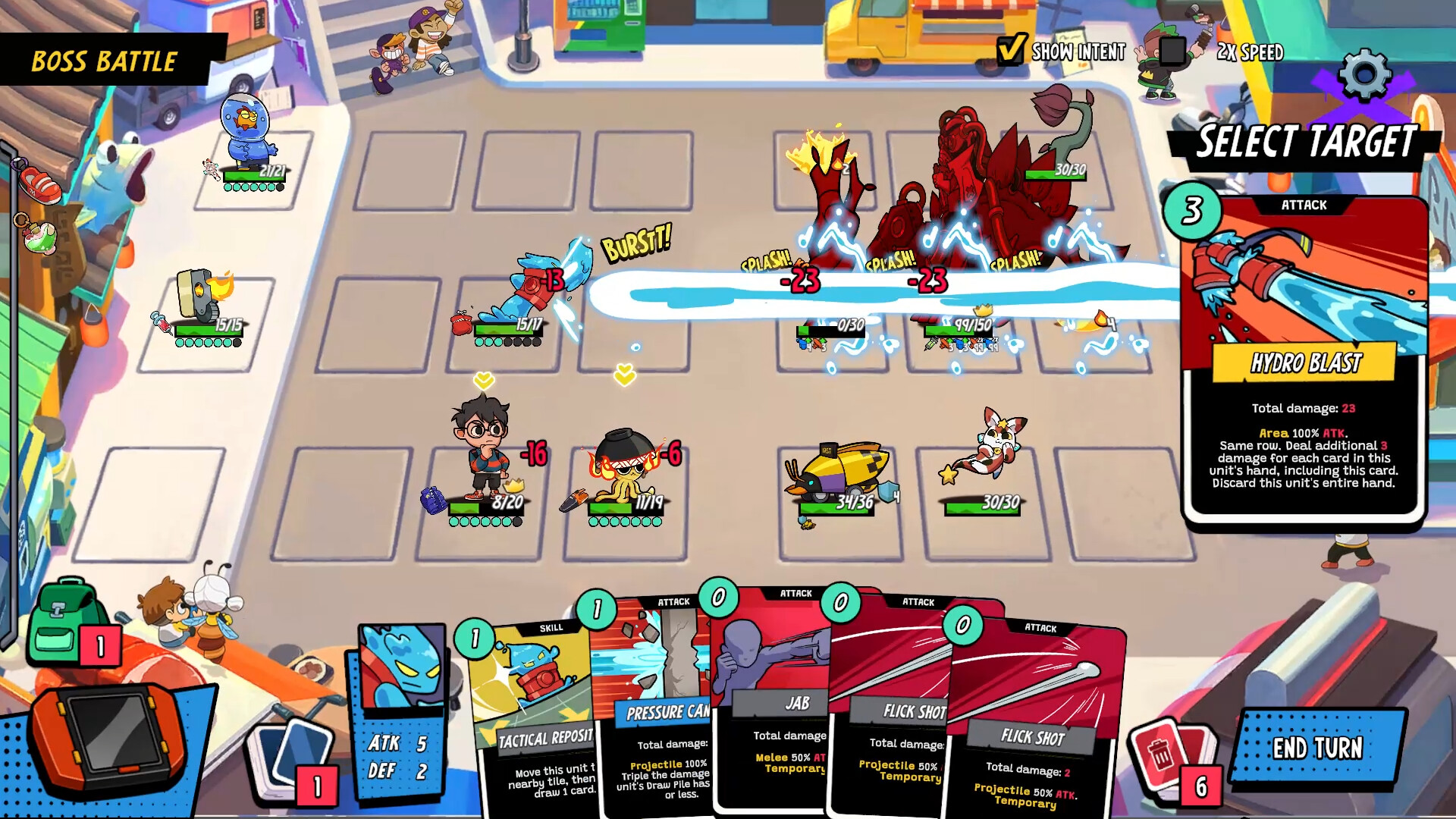
A boss fight on the 3x3 grid, where positioning units across tiles matters just as much as which card gets played.Image: Akupara Games via Steam -
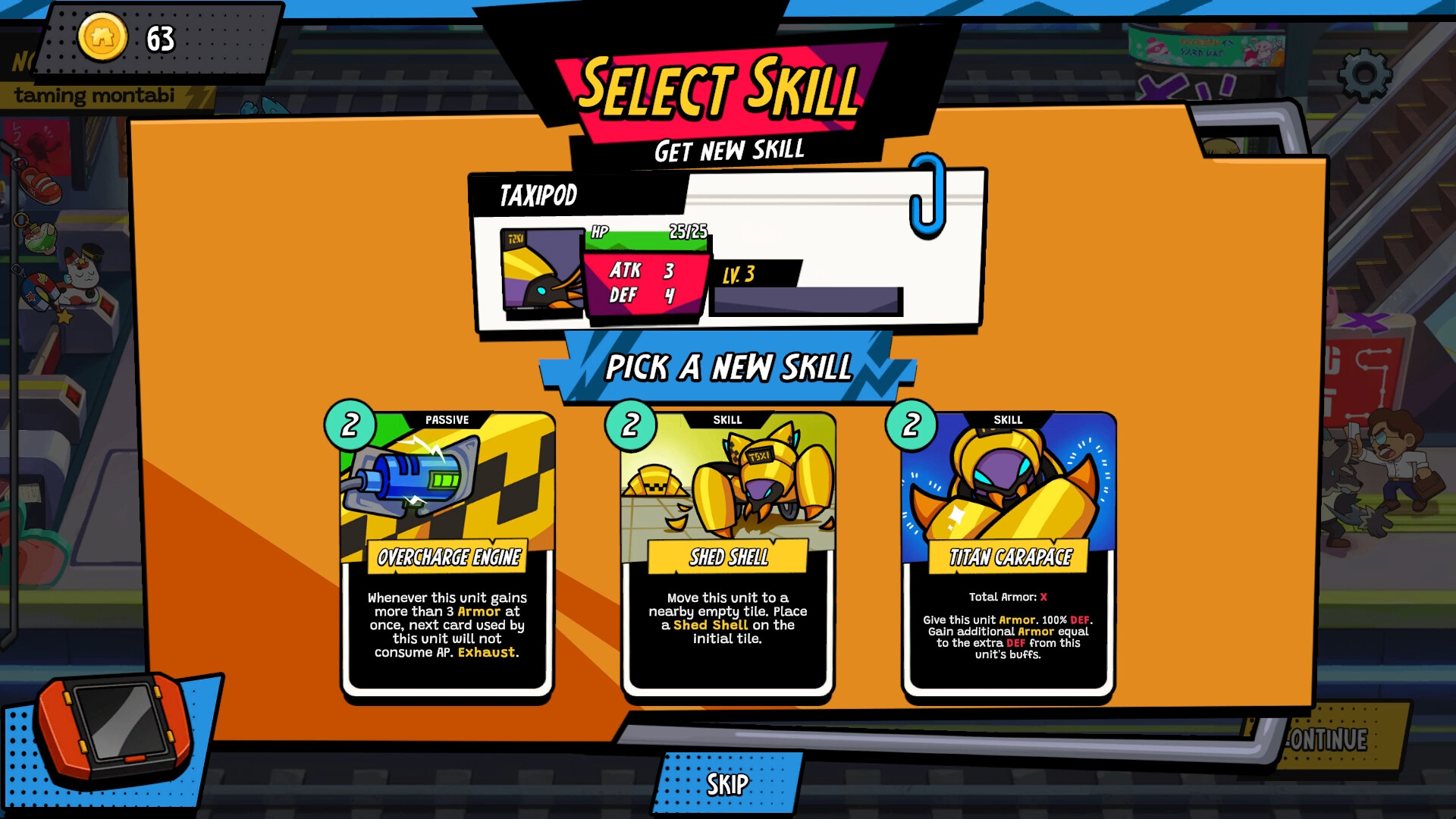
Choosing a new skill for a leveled-up Montabi, one of the moments reviewers point to as proof each creature's deck grows its own distinct identity.Image: Akupara Games via Steam -
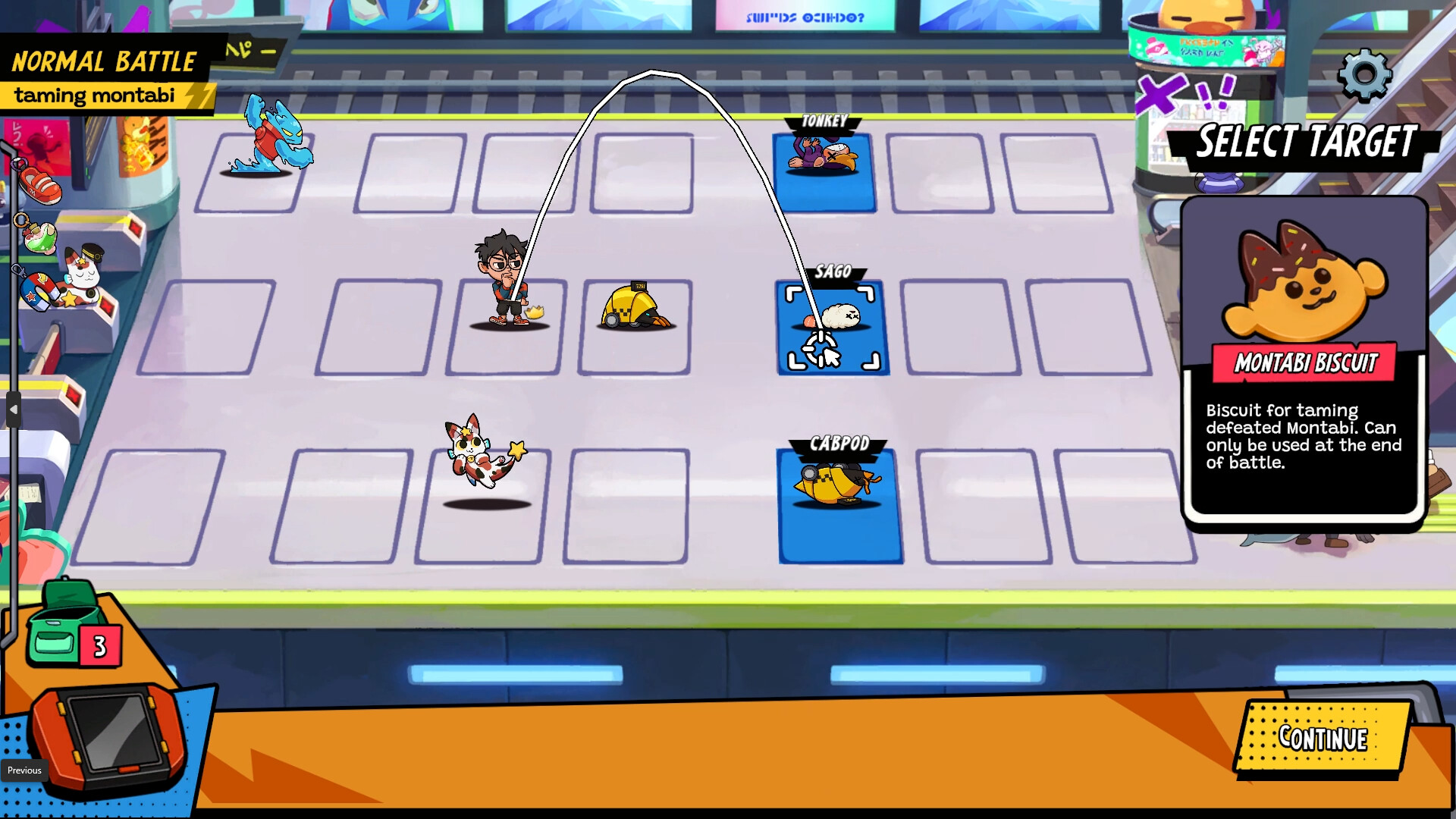
Taming a defeated Montabi with a biscuit after a battle, the creature-collecting hook layered on top of the game's deckbuilding combat.Image: Akupara Games via Steam