
Game review
Stackmon Review
7 / 10
- Developer
- Riftpoint Entertainment
- Publisher
- Alibi Games
- Released
- 18 August 2026
- Platforms
- ["Windows"]
- Genre
- Creature-Collecting Card Stacker
Stacklands Meets Pokémon, On Purpose
Stackmon, from Riftpoint Entertainment and publisher Alibi Games, launched into full release on August 18, 2026, after a February playtest and a June demo that, by several reviewers' own admission, ate dozens of hours of their lives before the game even shipped. Its pitch is disarmingly simple to state and harder to pull off: take the card-stacking, resource-crafting loop that Stacklands popularized, and bolt a genuine creature-collector on top, complete with 100-plus catchable Stackmon, evolutions, and shiny/foil variants for the completionists. Reviewers are refreshingly blunt about the influences; several openly call it a "rip-off" of both touchstones in the same breath as recommending it, and one longtime Stacklands fan says outright, "if stacklands and pokemon made sweet, sweet love to each other and had a beautiful baby this would be that baby." At 116 English-language reviews and roughly 92% positive, "Very Positive," the influences aren't a knock against it; they're the entire sales pitch, and the review pool overwhelmingly agrees the combination works.
A Base-Building Loop That Earns Its Hooks
What reviewers praise most consistently is how naturally the two halves fuse. You build up a home camp by stacking resource and equipment cards, discover new recipes through experimentation rather than a hand-holding tutorial, and send scouts out into procedurally varied routes to fight and capture creatures, whose stats and abilities feed right back into the crafting side. Multiple reviewers single out a specific joy in discovering that two fruits and a stick can be combined into something worth more than the sum of its parts, and more than one admits to losing entire evenings to "just farming resources in the base without even realizing it." The creature designs draw consistent, specific praise for their charm and variety, with one reviewer comparing the art style favorably to Gravity Falls, and the shiny/foil hunting layer gives the collector-minded a long tail of things to chase well past the main story's end. For a game built openly from two other games' DNA, the review pool's enthusiasm for how well the transplant took is the clearest signal that Stackmon earned its own identity in the execution.
Bugs, Lost Saves, and a Late-Game Wall That Falls Over
The most serious, specifically corroborated complaint in the review pool is data loss: several independent reviewers describe losing hours of progress to save bugs at launch, one after a crash mid-session despite the game displaying an autosave indicator, another after a bug that made the game stop responding entirely and silently broke manual saves too. A few reviewers explicitly flag the same underlying UI freeze, where cards and menus simply stop being clickable after a specific sequence of interactions, as the likely culprit. A second, less severe complaint about progression shows up almost as often: reaching a mid-game unlock nicknamed "the Essence Machine" lets players instantly max out any Stackmon in minutes, and multiple reviewers say this trivializes the game's second half so completely that the back half becomes rote box-checking rather than a real challenge, even as they're quick to add that the first half was worth the price of admission on its own. A smaller but real interface complaint thread covers a too-small UI on Steam Deck, black bars on ultrawide monitors at launch, and inventory management that several reviewers call cramped once the card count grows late in a run.
A Developer Visibly Racing to Fix It
What tempers nearly every one of those complaints, and shows up almost as often as the complaints themselves, is how quickly Riftpoint has been patching. Reviewers repeatedly note the developers reading feedback directly and shipping fixes within days, and the ISteamNews patch cadence backs that up: nearly a dozen numbered hotfixes landed in the first two weeks after launch alone, including a save-bug fix that at least one reviewer confirmed directly in an edited, updated review, striking through their original "cannot recommend" verdict once the issue was resolved. A night-mode brightness slider and alternate font, added specifically in response to readability complaints, is called out by name as evidence the team is listening rather than just patching crashes. That responsiveness doesn't erase the fact that Stackmon shipped with real, save-threatening bugs, but it does mean the specific complaints in this review pool are, for the most part, a snapshot of a launch week that's already improving rather than a permanent ceiling on the game.
Verdict
Stackmon takes two extremely well-worn templates, straps them together, and somehow makes the combination feel like more than either half alone, which is exactly the kind of trick reviewers keep describing in their own words even while cheerfully admitting they knew what they were buying. The base-building and creature-collecting loops reinforce each other well enough that dozens of reviewers report losing untracked hours to it, the art and creature designs land consistently, and the shiny-hunting endgame gives completionists a real reason to stick around after the story wraps.
Set against that, the launch-week save bugs are a legitimate reason for caution, especially for anyone allergic to losing progress, and the late-game trivialization once the Essence Machine unlocks means the back half of a full playthrough is unlikely to test you the way the front half does. At $13.99, with a developer patching daily and a review pool that's already forgiving a rocky launch in real time, Stackmon earns a solid recommendation for anyone who likes either of its two inspirations, tempered only by the advice several of its own reviewers already give for free: save often, and don't expect the second half to fight back as hard as the first.
Screenshots
-
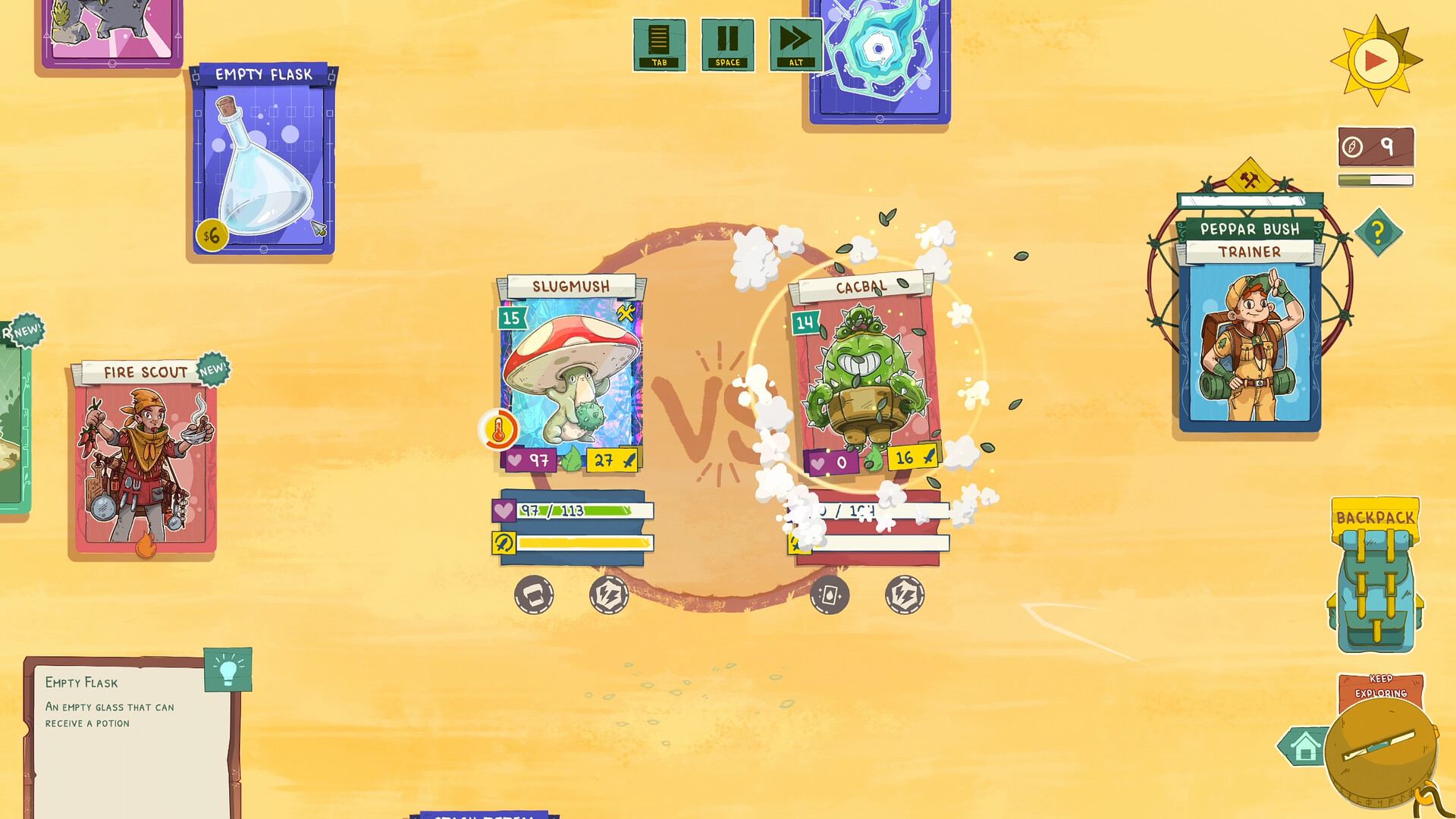
A one-on-one Stackmon battle, the auto-battling combat layer that several reviewers call the game's least demanding half.Image: Alibi Games via Steam -
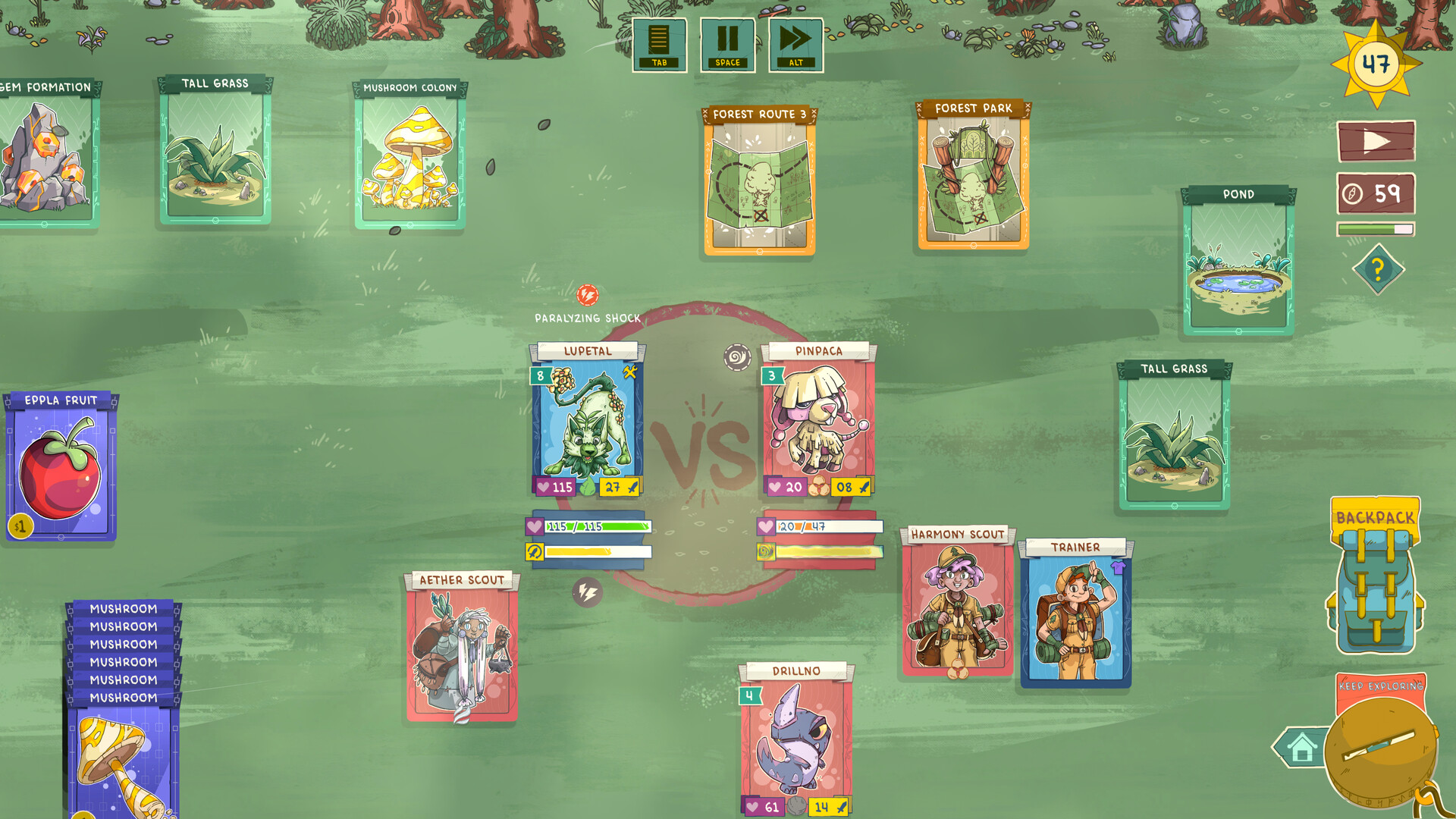
The forest routes where scouting, resource stacking, and battling all happen on the same board at once.Image: Alibi Games via Steam -
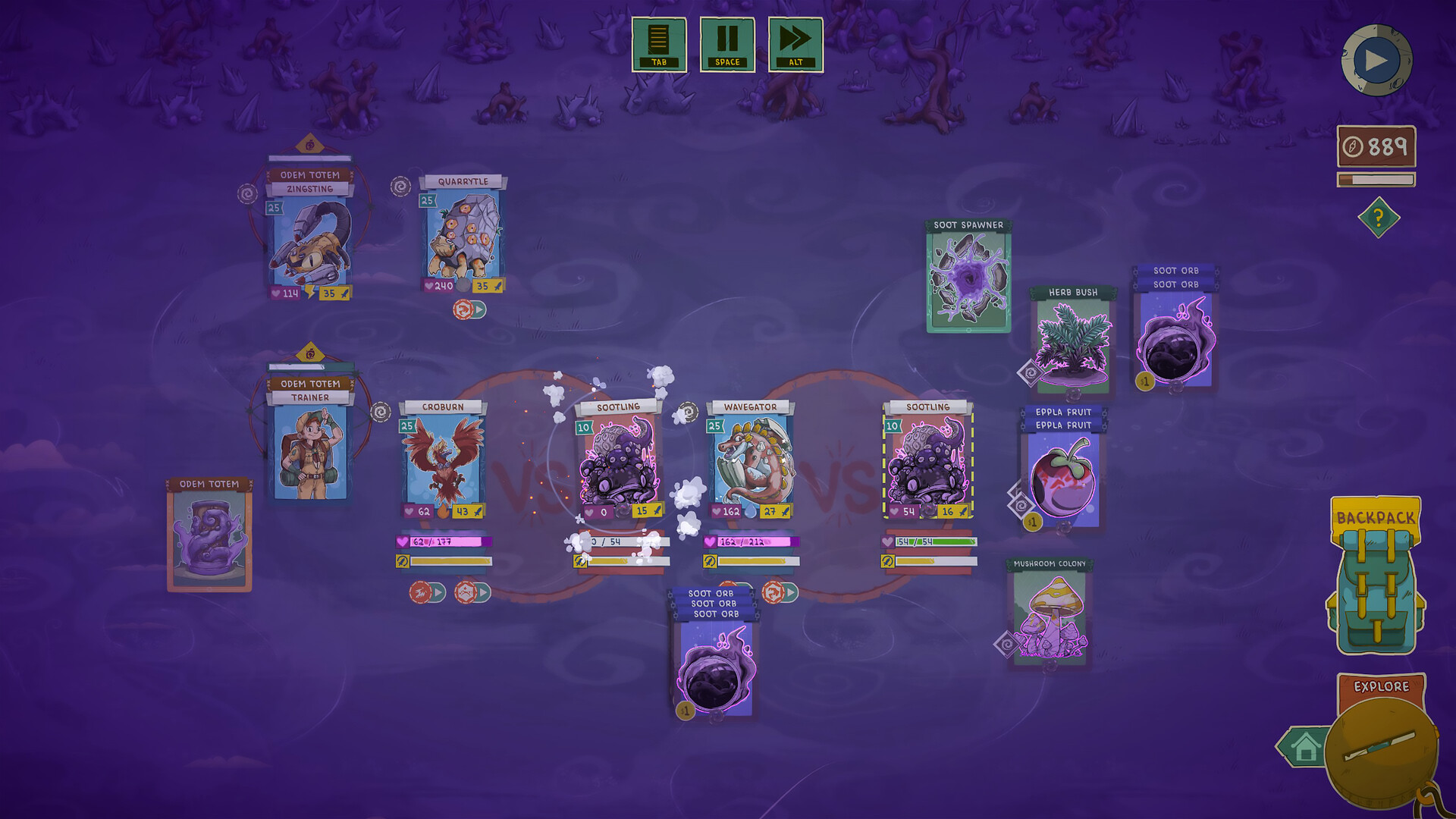
The corrupted Soot biome late in a run, well past the point where several reviewers say the challenge starts to flatten out.Image: Alibi Games via Steam