Game review
The Sorting Bureau Review
6 / 10
- Developer
- Apelsinka Games
- Publisher
- Apelsinka Games
- Released
- 21 August 2026
- Platforms
- ["Windows"]
- Genre
- Cozy Simulation
A Tokyo Workshop, One Cluttered Box at a Time
The Sorting Bureau, from developer Apelsinka Games, launched as a full 1.0 release on August 21, 2026 after a demo period that stretched back to at least May. The premise is disarmingly simple: clients bring boxes of clutter, buttons, coins, gears, stamps, old candy, to a cozy little Tokyo workshop, and you sort it all by shape, color, material, or theme, either into labeled boxes or laid out on paper for a keepsake photo. There are no timers, no fail states, and a resident cat wandering the shop. It's a clean, low-stakes premise executed competently enough to land 193 English-language reviews at "Very Positive," 83%, though the negative fifth of that pool has specific, recurring complaints worth taking seriously.
Satisfying Sound, Simple Sorting
The strongest, most consistently praised element across nearly every review, positive or negative, is the sound design. Reviewers describe a "satisfying little clink" when pulling pieces from a pile, and more than one says the ASMR-style audio "tingles the brain" in exactly the way the genre demands. Layered over hand-drawn, colorful art and a genuinely relaxed pace, several reviewers frame the whole experience as a deliberate evening wind-down: one wrote that they put on a podcast, sort for an hour, and find their own mind gets "tidier too." As pure sensory comfort food, the game clearly works, and that's not a small thing for a genre built almost entirely around vibes.
Held Up Against Better Games, and Found Wanting
The single most repeated critique in the review pool is comparative: reviewer after reviewer brings up A Little to the Left, Unpacking, or Sorting Inc, and finds The Sorting Bureau's version of the format thinner. One reviewer called comparing it to A Little to the Left "a vast disservice to an amazing game," while another, a longtime fan of the genre, described sorting the same exact items into the same exact boxes "the same exact way every time, ad nauseam." A third pointed out that the game never actually claims to be a clone of those bigger titles and shouldn't be punished for not being one, but that defense is itself telling: this is a review pool constantly measuring the game against its more inventive peers, and by its own admission it comes up simpler rather than more ambitious.
The Photo-Sorting Puzzles Are the Weak Link
Within the game's own three sorting modes, box-sorting, "matryoshka" nesting, and laying items out on paper for a client photo, the paper-sorting puzzles draw the sharpest specific criticism. One reviewer called the format "deeply unsatisfying" and said the game "forces you to take pictures of an unsatisfying job u just did," since it requires mixing categories in ways that undercut the neat, symmetrical payoff the boxes deliver. Another asked, only half joking, why anyone would photograph pasta and screws laid out together, and found the whole mode "pointless" rather than meditative. It's a corroborated design gap: the moment the game asks players to do something other than drop matching items into matching boxes, the loop that makes the rest of it satisfying breaks down.
A Recurring Bug, and a Fair Fight Over Repetition
Beyond the design critique, at least two independent reviewers report the same specific bug: every few in-game days, a box arrives missing a piece, a torn stamp or a lost piece of candy, that can only be fixed by restarting the game, at which point the box's contents reset entirely even though other progress is saved. It's a small, annoying, and clearly reproducible issue rather than an isolated crash. Separately, the review pool is genuinely split, not confused, but split, over whether the game's repetitiveness is a flaw or the point: several defenders argue explicitly that it's meant to be played in short daily sessions rather than binged, while critics counter that four seasons of nearly identical boxes, required in full for 100% completion and achievements, wears out its welcome well before the credits roll.
Verdict
The Sorting Bureau is a competent, pleasant little cozy game that never quite escapes the shadow of the better-loved titles its own reviewers keep comparing it to. The sound design is a genuine highlight, the premise is charming, and at ten dollars several reviewers call it a fair, even generous price for what's here. But the paper-sorting puzzles are a real design misstep, a recurring missing-piece bug undercuts an otherwise satisfying box-sorting loop, and the underlying gameplay, sort matching items into matching containers, four seasons in a row, doesn't have the inventive twists that made its genre-mates memorable. It's worth a look for genre completionists and anyone who wants a truly undemanding evening game, but it's a solid tier below the games it keeps getting held up against.
What ultimately keeps this from being an easy recommendation isn't any one flaw so much as the review pool's own ambivalence: this is a game whose fans and critics largely agree on what it is, a simple, well-sounding, repetitive sorting toy, and disagree only on whether that's enough. If the premise alone appeals and expectations stay modest, there's a genuinely calming few hours here. If you're hoping for the next A Little to the Left, this isn't it, and the review pool is refreshingly honest about saying so itself.
It's also worth sizing up exactly how much game is here for the price. Most reviewers who set out to earn every achievement land somewhere around six to nine hours across a full in-game year of four seasons, after which the boxes simply start repeating with no new systems, locations, or sorting criteria introduced. That's a reasonable amount of content for ten dollars of low-stakes comfort gaming, and nobody in the review pool seriously argues otherwise, but it does mean The Sorting Bureau is best thought of as a short, pleasant errand rather than a game with much left to discover once that first year is done. Anyone drawn in by the cat, the clinking sound effects, and the promise of a quiet evening should get exactly what they're expecting; anyone hoping the format opens up over time will find the ceiling lower than the genre's best examples.
Screenshots
-
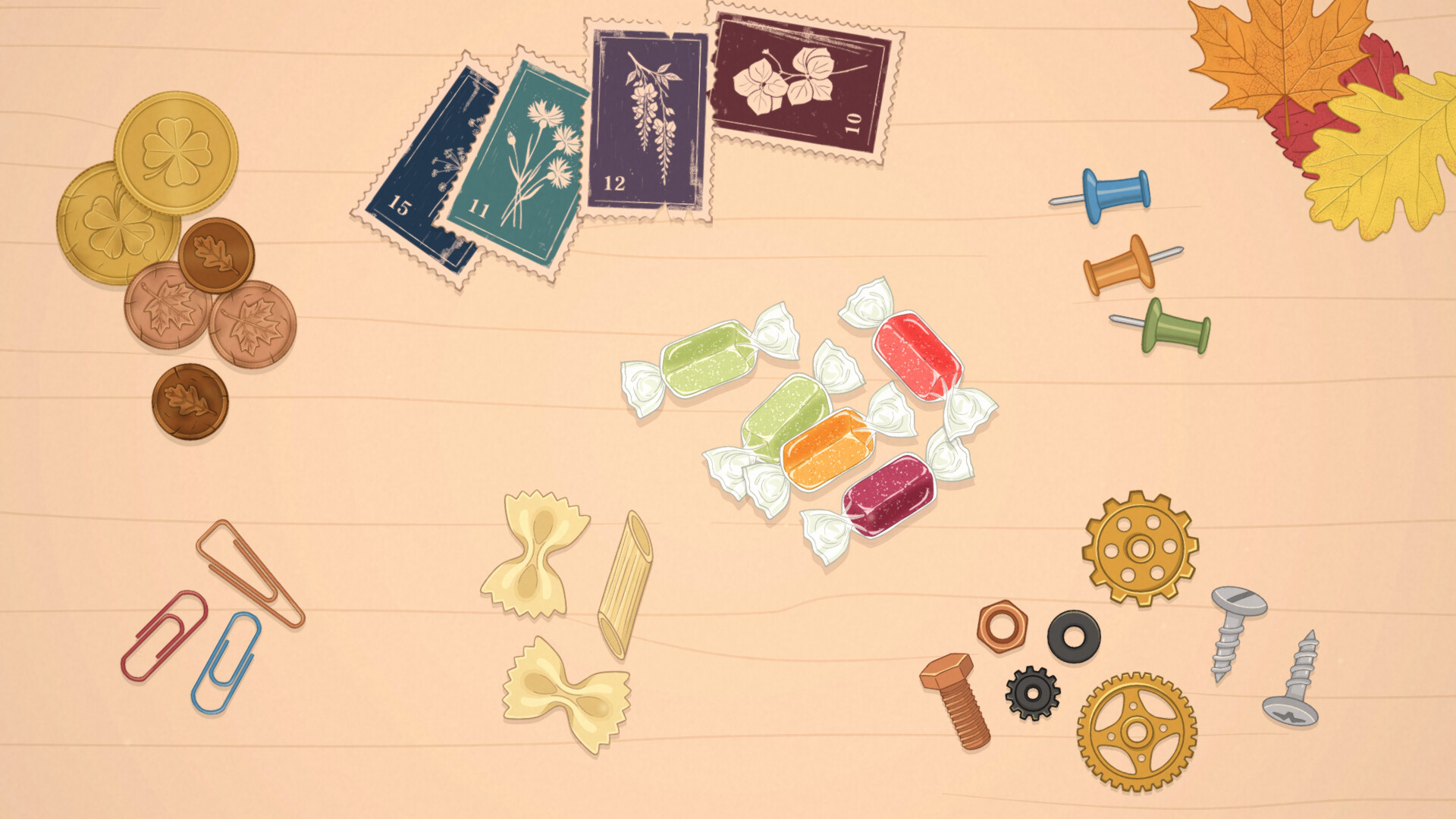
A typical incoming box: coins, stamps, candy, pasta, and hardware all mixed together, waiting to be picked apart by category.Image: Apelsinka Games via Steam -
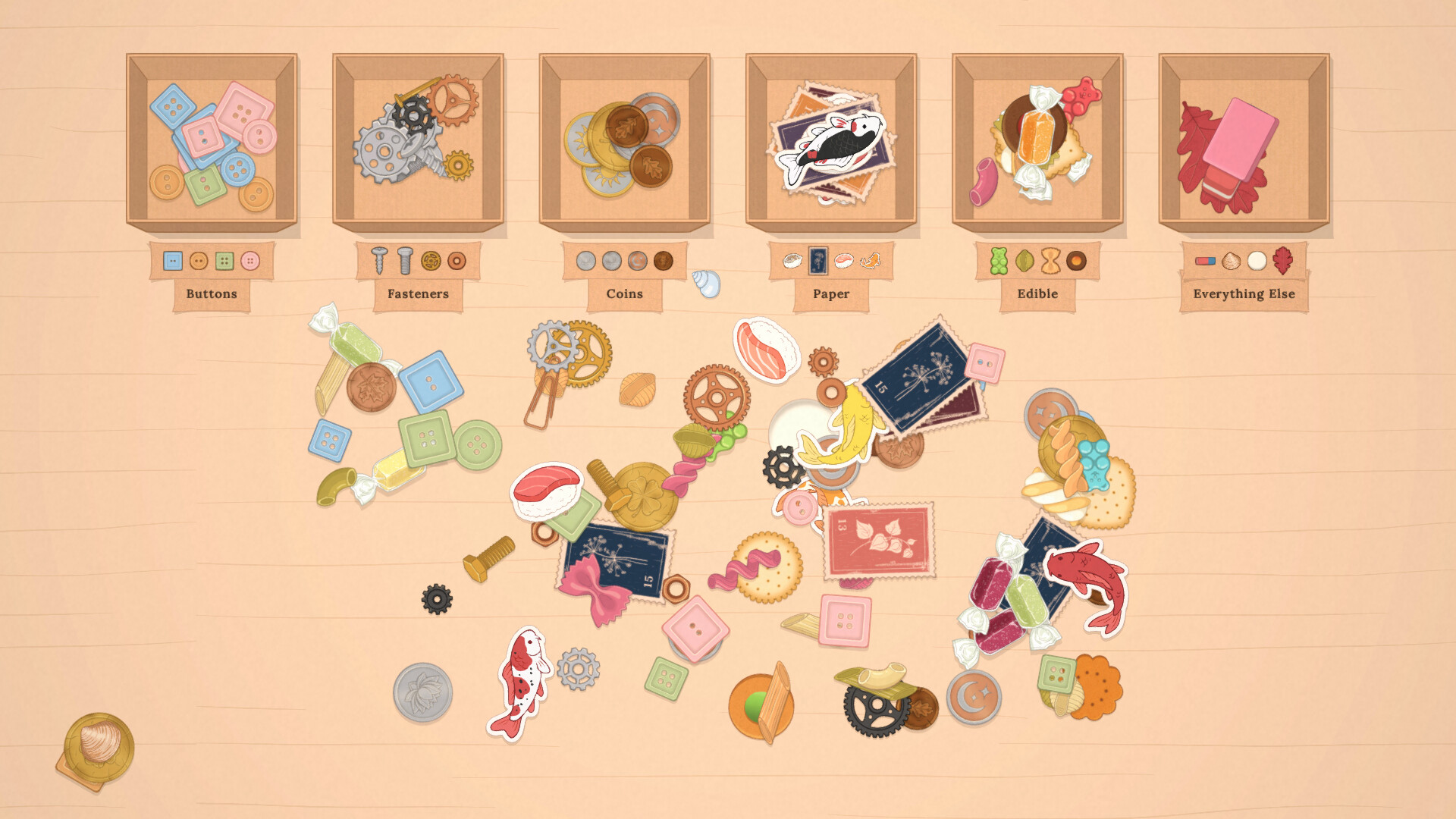
The core box-sorting loop, six labeled destinations and a pile of buttons, coins, stamps, and snacks to divide between them, the mode reviewers say the game does best.Image: Apelsinka Games via Steam -
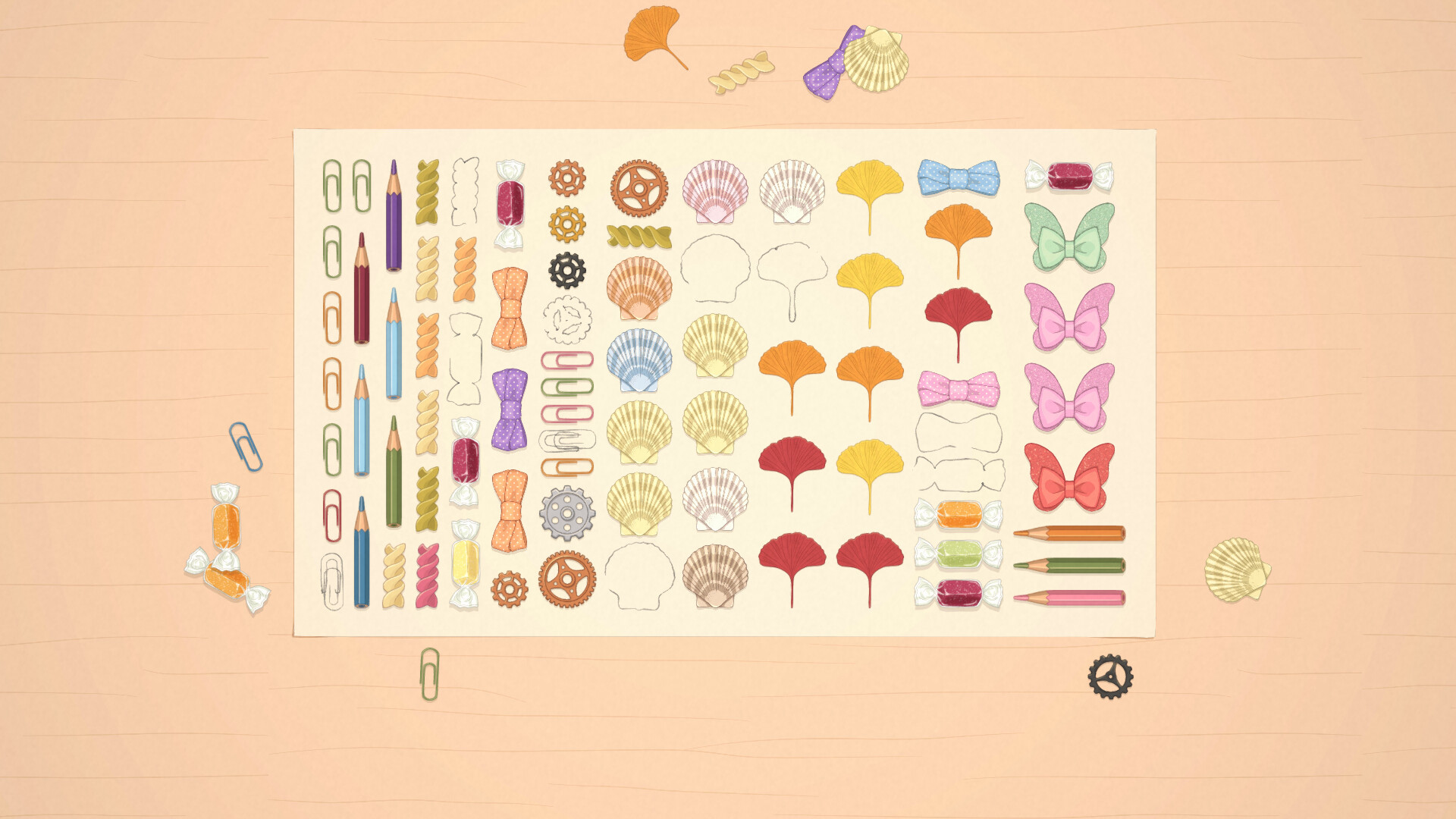
One of the paper-layout puzzles, arranging items into rows for a photograph, the mode several reviewers single out as the game's weakest, least satisfying moment.Image: Apelsinka Games via Steam