Game review
Mall: Tidy Up Together Review
3.5 / 10
- Developer
- Games Together
- Publisher
- Games Together, Gamersky Games
- Released
- 21 August 2026
- Platforms
- ["Windows"]
- Genre
- Organizing Simulation
Another Shelf, Another Mall
Mall: Tidy Up Together, from developer Games Together, dropped on August 21, 2026, into a Steam storefront that is, by its own reviewers' account, absolutely flooded with games like it. One reviewer opens their review by noting they've played "nearly 20" similarly-titled tidying games in the past month alone. That context matters, because it's the lens almost every one of the 143 English-language reviews views this $4.99 co-op sorting sim through: not "is this good," but "is this a worthwhile pick among a dozen near-identical competitors." The verdict, at 66% positive and a "Mixed" rating, is a fairly firm no, and the reasons are specific rather than vague genre fatigue.
The Core Loop Still Basically Works
Strip away the controversy for a moment and the fundamentals are recognizable: boxes of unsorted mall merchandise, from surfboards to lighters to sunglasses, arrive at various shops, and you and up to a few friends pick through the pile and shelve everything correctly before time or patience runs out. Several reviewers genuinely enjoy this at a mechanical level, calling it a decent chill-out loop for background music and idle chat, and praise a nice touch where character skills recharge by placing items rather than on a cooldown timer. One reviewer who says they've tried the entire current wave of tidying games ranks this one in their personal top three to five, ahead of asset-flip-feeling competitors like Konbini or Supermarket Chaos. For players not bothered by the game's other problems, there's a real, if unambitious, evening's entertainment here, especially in co-op or the game's competitive PvP shelving mode.
The Undisclosed AI Problem
The single most repeated, most heavily upvoted complaint in the entire review pool, by a wide margin, is that the game's product packaging, most visibly its book and magazine covers, is generated with AI imagery and text, and that this was not disclosed anywhere on the store page. This isn't a stray, ambiguous aside from one player; it's an explicit, specific accusation repeated across dozens of reviews, both negative and, notably, several positive ones. Reviewers describe "janky AI writing" on covers, call the visuals "AI slop," and one lengthy, heavily-upvoted review makes clear their objection isn't to AI-assisted art existing at all, but to the lack of disclosure: "the devs did not disclose that information on the store page... they robbed me of that choice." Several players who otherwise enjoyed the tidying loop say they refunded specifically over this. Steam's own community-applied tags for the game now include "Artificial Intelligence" alongside its more conventional genre tags, matching the reviewer consensus rather than describing some in-game NPC mechanic. It's a legitimate, well-corroborated strike against the game's honesty with its buyers, not a matter of taste.
Bugs That Can Block a Full Run
Beyond the disclosure issue, a cluster of specific, reproducible bugs shows up again and again. The most serious: multiple independent reviewers report finishing a full sorting run only to find the last few items simply cannot be found anywhere in the level, sometimes clipped beneath the floor geometry, making 100% completion and achievement unlocks impossible without abandoning the run. A second, separately corroborated issue is that oversized items, surfboards, large boxes, block most of the screen and even the crosshair while being carried, with only a marginal fix from adjusting field of view. A third recurring report describes shelf-completion counters that don't match reality, showing a shelf as short one item when every visible slot is already full. None of these are one-off anecdotes; each is described independently by at least two or three separate reviewers using near-identical language, which is a stronger signal than any single complaint would be on its own.
A Rushed Sibling in a Crowded Family
Several reviewers connect Mall: Tidy Up Together to the same developer's other, similarly-titled releases, describing this as the second or third such game shipped in quick succession, sometimes just a week apart, with one reviewer flatly calling it "a straight up rip" of the developer's own earlier "Librarian Tidy Up Academy," alleging that skill mechanics were copied over from that game even though the systems they were meant to interact with weren't. Another reviewer makes a related but distinct point: that instead of patching and refining the previous entry, the studio launched a new one that plays noticeably worse. Taken together with the achievement-hunting reviewer who name-checks nearly twenty entries in this micro-genre, the picture that emerges is of a developer, and a wider market, churning out near-identical tidying games faster than any one of them gets properly finished or supported.
Verdict
Mall: Tidy Up Together isn't broken beyond function, and for five dollars, a handful of reviewers genuinely got their money's worth out of an evening of low-stakes co-op shelving with friends. But the review pool's two dominant, well-corroborated complaints, undisclosed AI-generated packaging art and completion-blocking item bugs, are exactly the kind of issues that should have been caught before launch, and both cut against the same casual, trust-your-time-with-us premise the genre depends on. Stack that against a storefront reviewers themselves describe as saturated with a dozen-plus near-identical competitors, several of which are explicitly called out as doing the same loop better, and there's little reason to reach for this particular box of clutter over its rivals.
If Games Together patches the missing-item bug and is transparent about its asset pipeline going forward, there's a serviceable, unpretentious tidying game buried in here, and the sound mechanical bones several reviewers point to are real. As it stands at launch, though, this is a game whose own audience is doing more due diligence and disclosure than its developer did, which is a strange, uncomfortable position for a five-dollar cozy game to occupy. Buyers who've already made peace with AI-assisted art in budget titles and don't mind a shot at an unfinishable completion run may still find a pleasant hour or two here; anyone hoping for the standout of this crowded little genre should look elsewhere first.
Screenshots
-
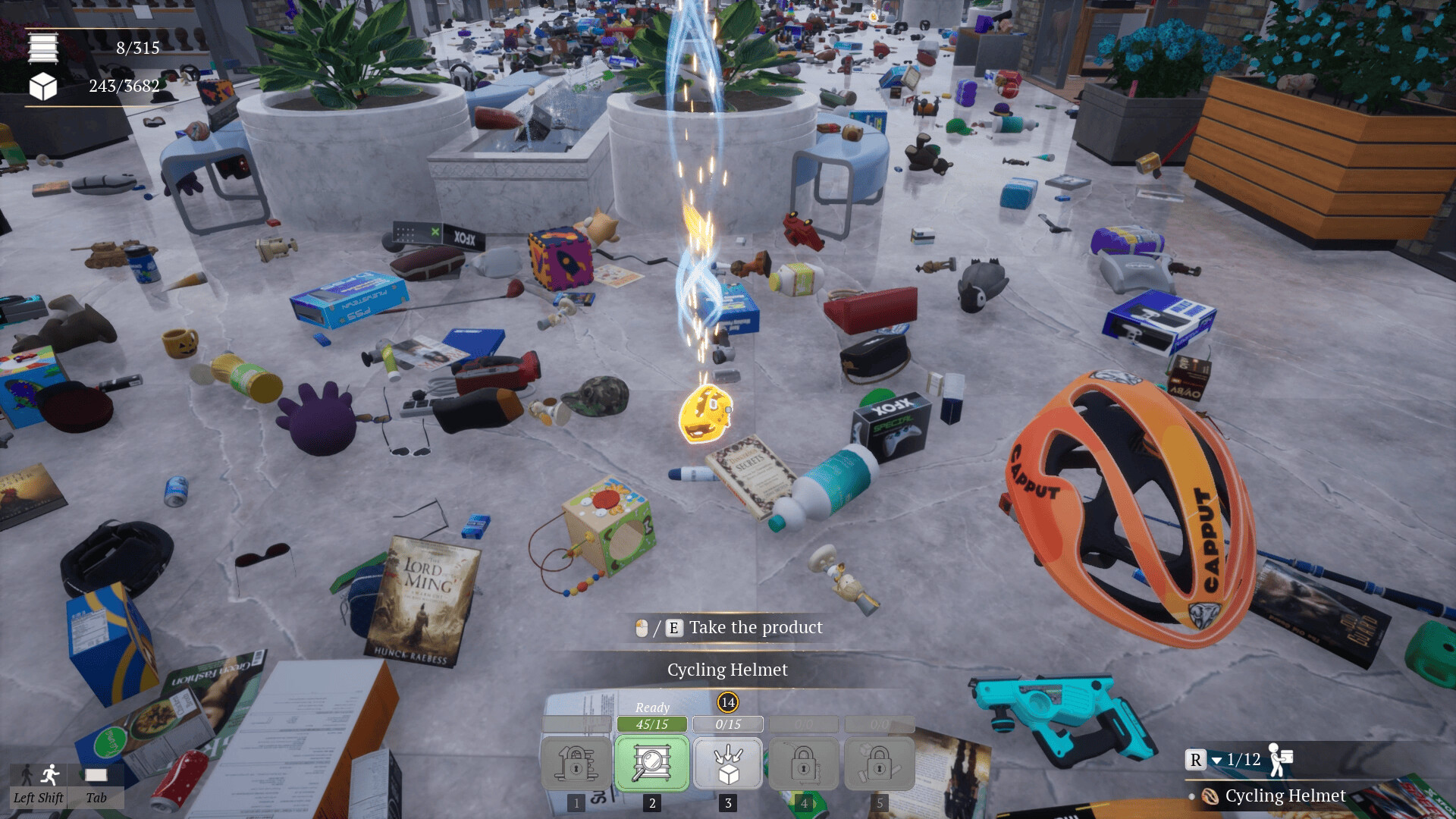
A typical spill of unsorted stock, electronics, toys, books, and helmets alike, waiting to be carried off and shelved, with the skill bar and item counters running along the bottom and top of the screen.Image: Games Together via Steam -
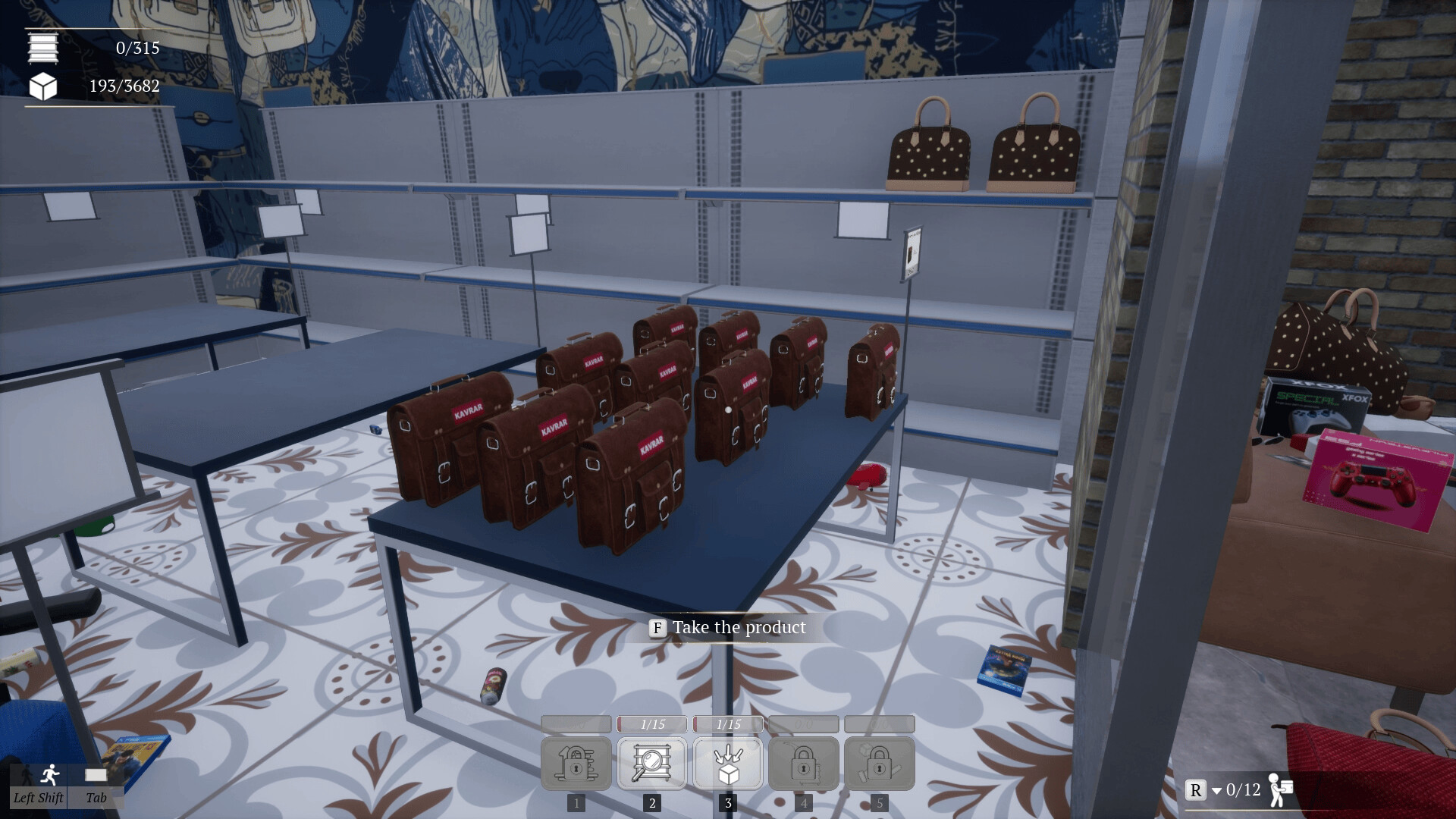
Inside one of the mall's shops, a table stacked with identical satchels waiting to be moved onto the bare shelves behind them, the core shelving loop several reviewers say still works well when the game cooperates.Image: Games Together via Steam -
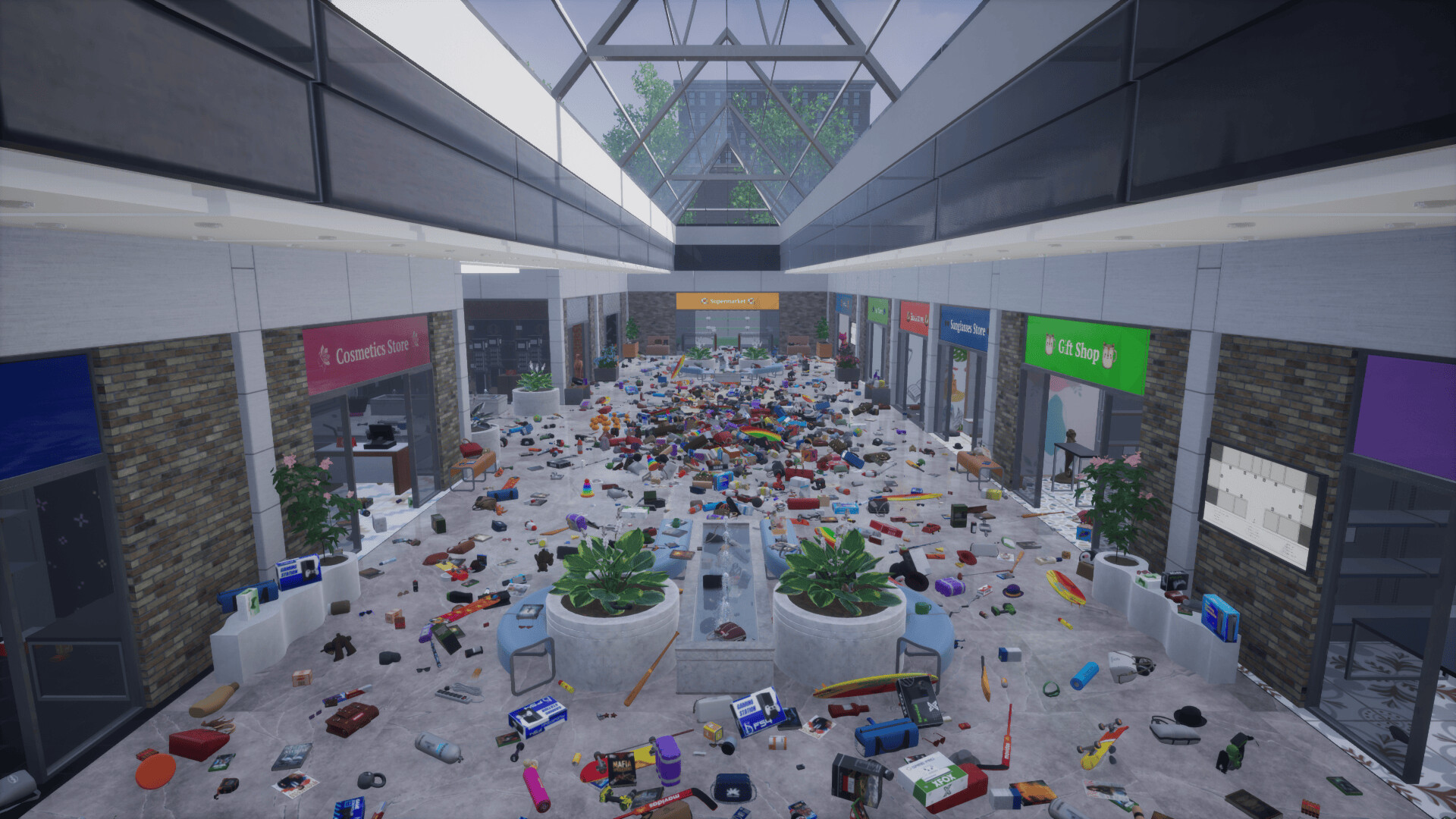
The mall's central atrium at the start of a run, every inch of the floor buried in the surfboards, gaming gear, and knick-knacks that need sorting into the storefronts lining both sides.Image: Games Together via Steam