
Game review
Lucky Shot Review
7.5 / 10
- Developer
- Deliver Games
- Publisher
- Deliver Games
- Released
- 7 August 2026
- Platforms
- ["Windows"]
- Genre
- Roguelike Deckbuilder FPS
Balatro, But You Actually Have to Aim
Lucky Shot, from developer Deliver Games, released on Steam on August 7, 2026 at $12.99, following a Steam Next Fest demo run earlier in the year. Its pitch is disarmingly simple: take the run-based, joker-stacking deckbuilder formula popularized by Balatro and rebuild it around an actual first-person shooting gallery. Each stage gives the player a time limit to hit targets for points, with a scoring multiplier that climbs as long as shots keep landing and drops the moment one misses. Between rounds, a shop sells "Holos" (this game's stand-in for jokers), special bullet types, one-time consumables, and cosmetic spray paints that modify how targets behave, all in service of building a run that can survive escalating score thresholds across difficulties that unlock separately for each of the game's growing roster of weapons. The reception has been enthusiastic: 144 English-language reviews sit at a 98% positive rating.
An Addictive Hybrid That Reviewers Can't Stop Comparing to Balatro
The single most consistent thread running through the review pool, dozens of reviews independently reach for the exact phrase "Balatro with guns" or some close variant of it, is that Lucky Shot successfully threads a needle few expected: making an aim trainer that's actually fun to sit with for hours, rather than the usual dry, purely mechanical drilling tools like Aimlabs or Kovaak's that several reviewers explicitly compare it against. Reviewers who self-identify as aim-trainer regulars and reviewers who say they normally dislike FPS games both land in the same positive camp, a genuinely rare crossover appeal for a niche-sounding concept. The weapon variety earns particular praise, with reviewers highlighting that each gun, from pistols and shotguns to rifles and snipers, changes not just damage numbers but the entire feel and strategy of a run, and the sheer number of Holo synergies to discover keeps runs from repeating themselves even after dozens of hours. Built-in co-op and PvP multiplayer are called out repeatedly as a welcome bonus on top of an already-strong solo loop, and the developer's visible responsiveness, patching bugs and adding requested settings within days, comes up again and again as a reason reviewers trust the game's early post-launch trajectory.
RNG-Heavy Difficulty Spikes and a Cluttered HUD Draw Real Complaints
Set against that goodwill, the review pool converges on a specific, well-corroborated frustration: once a run advances past the intentionally easy first difficulty tier, progress becomes heavily dependent on what the shop happens to offer, since early shop rolls aren't meaningfully weighted to help a struggling run recover. Multiple reviewers describe feeling "gated" by a bad first shop with no real way to compensate, a sharper RNG dependency than Balatro itself, according to several reviewers who play both games and find Lucky Shot less forgiving at higher stakes. A second recurring complaint targets the difficulty-unlock structure: because each of the game's many weapons has its own separate ladder of difficulties, reaching the hardest content requires dozens of individual wins, a grind more than one reviewer calls "tedious," though a global-unlock option does technically exist (at the cost of disabling leaderboards and achievements, a workaround several reviewers only discovered after initially missing it). A smaller but consistent cluster of complaints targets visual clarity: a hard-to-see default crosshair, HUD elements and vending-machine art that clash with the game's retrowave aesthetic, and general on-screen clutter that a few reviewers say makes certain targets difficult to track, especially in busier late-run stages.
Demanding on Hardware for a Retro-Styled Shooter, but Actively Improving
A separate, more technical complaint appears often enough to note: several reviewers report the game is surprisingly demanding on graphics hardware for its stylized, low-fidelity look, with more than one specifically dropping resolution just to hit the high frame rates that competitive aim training benefits from. A couple of isolated bug reports, a multiplayer shop screen that can become unresponsive after clearing a stage, and a seed-reset feature that can accidentally block progression unlocks, also surface, though neither appears widespread enough to call systemic. What tempers all of this is a pattern that shows up throughout the review pool: reviewers reporting that specific complaints they raised were patched within days of posting, a level of active post-launch support that's earned the developer real goodwill on top of the game's already strong initial reception.
Verdict
Lucky Shot earns its enthusiastic reception by committing fully to a genuinely clever mashup: a deckbuilding roguelike that actually tests the player's mechanical shooting skill rather than merely gesturing at action, wrapped in a weapon roster and Holo synergy pool deep enough to reward dozens of hours of experimentation. At $12.99, with built-in co-op and PvP on top of a substantial solo campaign and endless mode, reviewers overwhelmingly consider it a fair, even generous, price for the amount of replayable content on offer.
The RNG-driven difficulty spikes past the opening tier, the per-weapon difficulty grind, and the readability issues around crosshairs and HUD elements are all corroborated closely enough across independent reviews to treat as real, current shortcomings rather than isolated gripes, and players who struggle with FPS aiming in general should go in aware that the early game is far more forgiving than what comes after. Even so, an active developer visibly iterating on community feedback, and a core loop so many reviewers describe as impossible to put down, make Lucky Shot an easy recommendation for anyone who has ever enjoyed both Balatro and a good aim trainer, and a pleasant surprise even for those who thought they were only interested in one of the two.
Screenshots
-
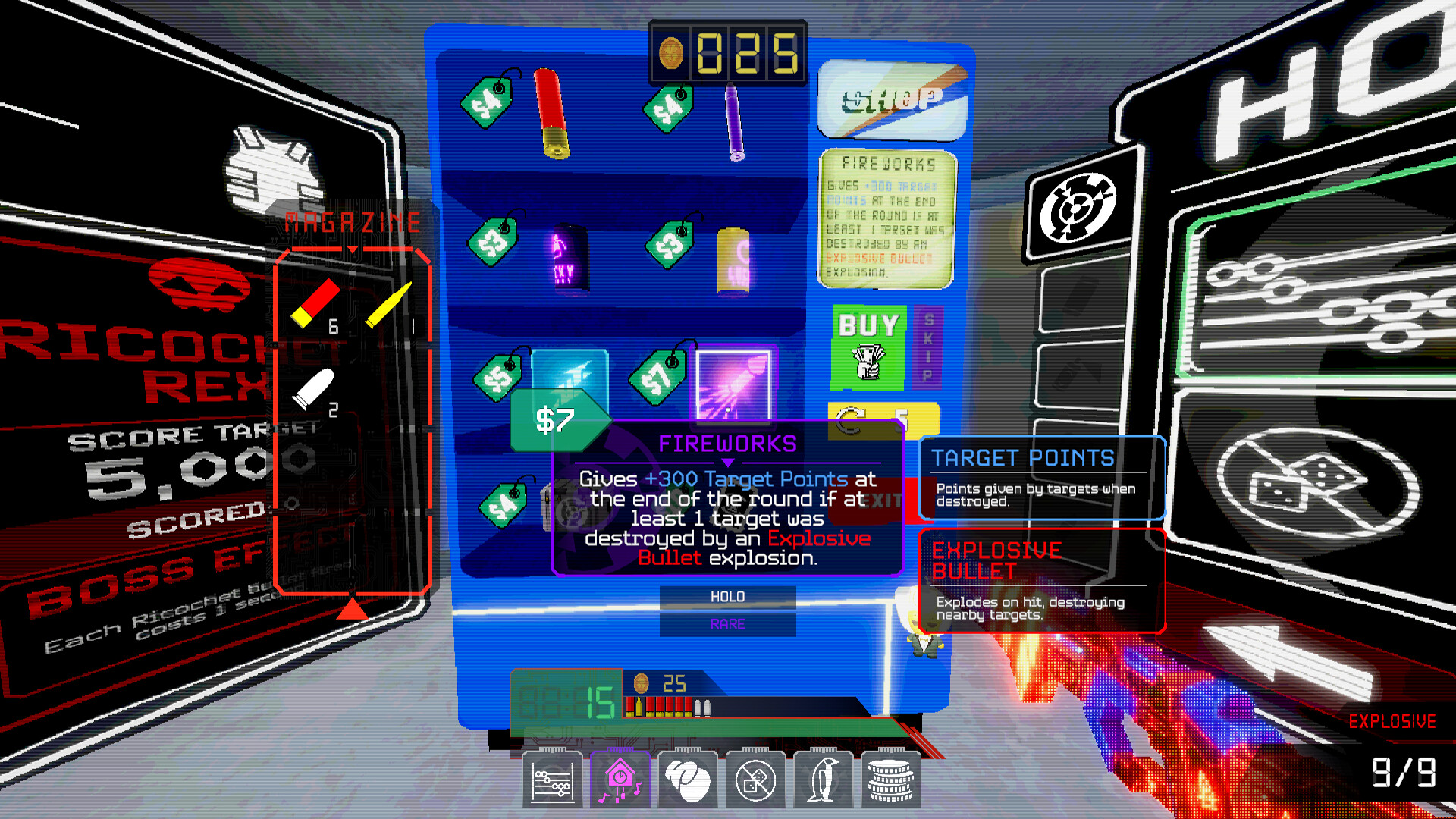
The shop between rounds, where bullets, sodas, and Holos (this game's take on Balatro's jokers) are bought to build a run.Image: Deliver Games via Steam -
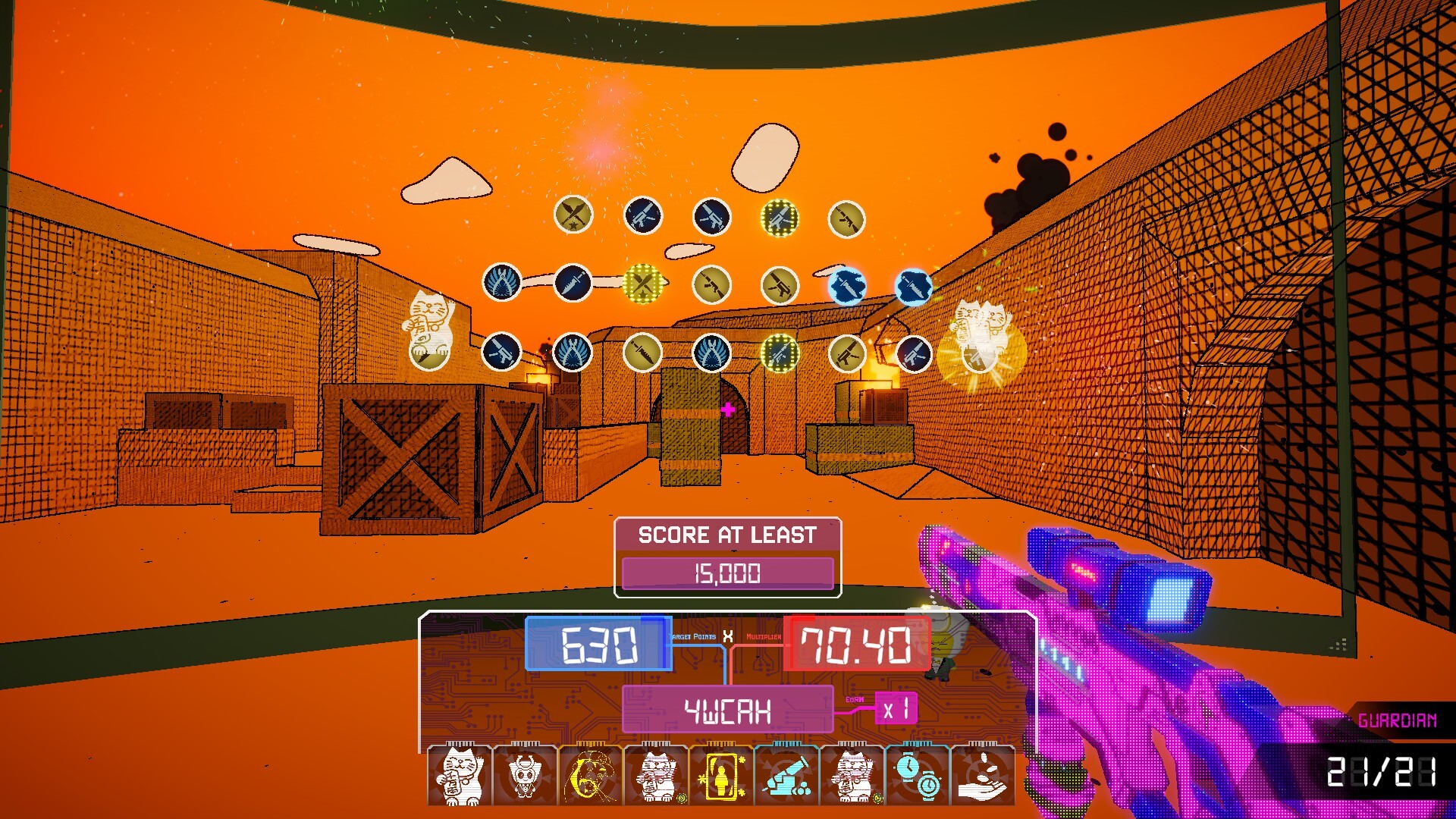
A shooting-gallery stage: rows of floating targets to clear before the round's score threshold runs out.Image: Deliver Games via Steam -
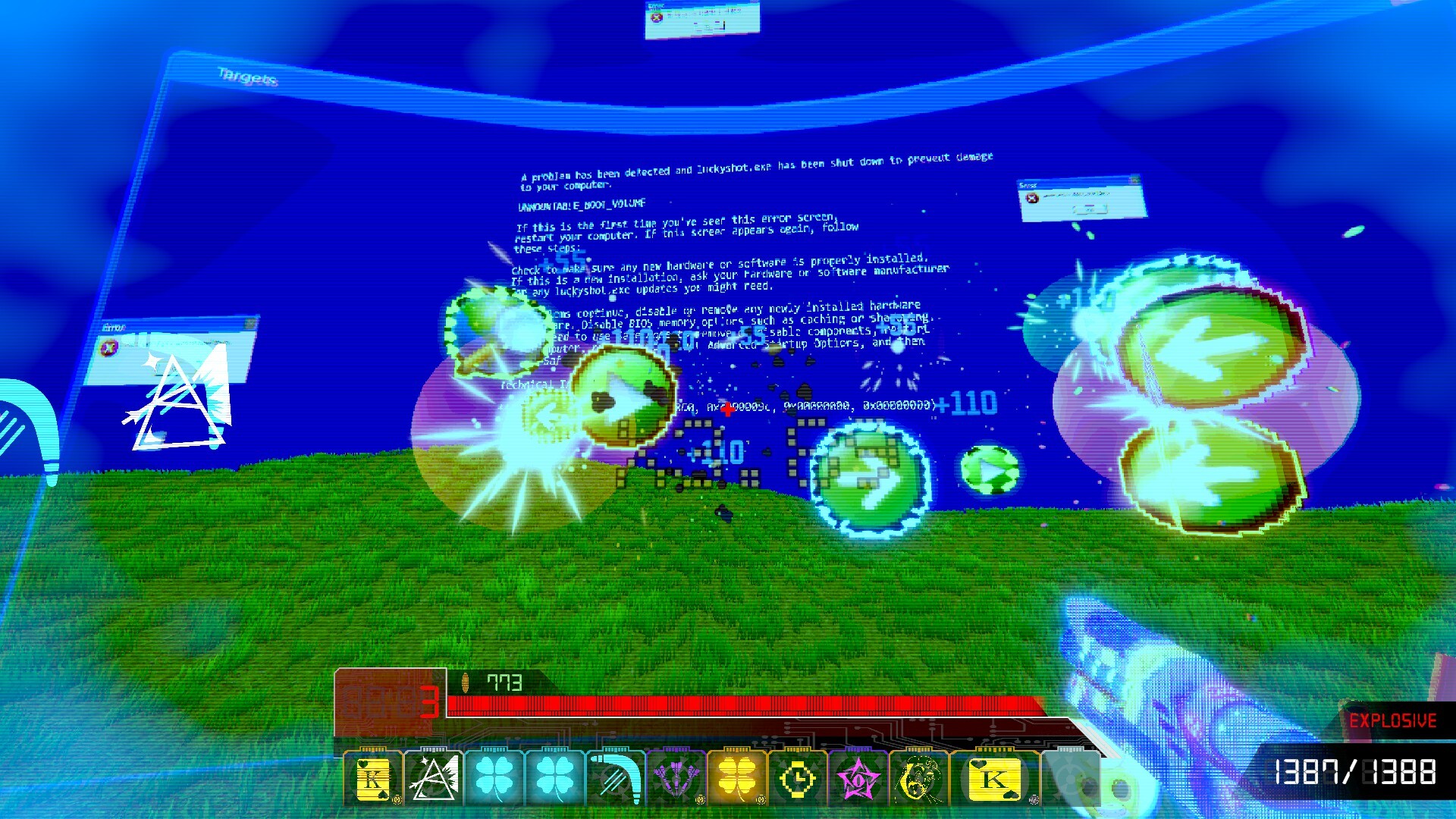
A busier late-run stage, the kind of visual clutter and crowded HUD several reviewers flagged as hard to read.Image: Deliver Games via Steam