Game review
Gunstoppable Review
6.5 / 10
- Developer
- CAGE Studios
- Publisher
- CAGE Studios
- Released
- 5 August 2026
- Platforms
- ["Windows"]
- Genre
- Momentum-Based Roguelite FPS
Speed Is Damage, and Damage Is King
Gunstoppable launched on Steam on August 5, 2026 at $12.49, following more than a year of public demo builds and a long, visible stretch of community-driven patches from solo-adjacent developer CAGE Studios. The pitch is simple and immediately legible from its Steam tags alone: a first-person roguelite shooter where the faster you move, the more damage you deal, built around a movement toolkit of double jumps, wall-runs, rail-grinding, power-slides, and a grappling hook that can latch onto nearly any surface. Fifty-eight English-language reviews put it at 81% positive, and the reviews read like a genre-savvy crowd instantly recognizing what they're playing: an ULTRAKILL and Titanfall-inspired speed shooter with roguelite trappings bolted on, one that lands its core hook convincingly even when reviewers have real reservations about everything built around it.
A Genuinely Satisfying Movement and Gunplay Loop
The single most consistent point of praise, echoed across nearly every positive review and even several mixed ones, is how good the moment-to-moment movement and shooting feel. Reviewers repeatedly describe chaining grapples, wall-runs, and slides into a constant state of motion, with the speed-equals-damage mechanic giving that movement a direct, satisfying payoff rather than existing for its own sake. Dual-wielding two of the game's guns at once, each with independent reload timers, and mixing them with a slow-motion ability that recharges as you deal damage, gives fights a rhythm several reviewers compare favorably to Roboquest and, far more often, to ULTRAKILL specifically. The build variety built from weapons, stackable attachments, and run-to-run augments earns consistent praise for encouraging experimentation, and the soundtrack comes up unprompted in an unusually large number of reviews as a genuine standout, with several reviewers specifically asking the developer to release it separately. On top of the mechanics, reviewers highlight an engaged, visibly present developer who has been active on the game's Discord addressing bug reports and balance feedback since well before launch, which several reviewers cite directly as a reason for optimism about where the game goes from here.
A Difficulty Curve That Turns Punishing Fast, and Sometimes Unfairly So
Set against that praise, a specific and well-corroborated complaint runs through a large share of the review pool: the difficulty spikes hard and, in the view of several reviewers, somewhat unfairly, particularly from the third zone onward or immediately after the second boss. Multiple reviewers describe a starting stretch that feels easy giving way, within just a couple of areas, to enemy density and damage output that can down a player in a handful of hits, with one reviewer noting the jump from areas one and two to area three specifically demands a health-leech build just to survive, and describing enemies that teleport on top of the player or turn to fire with what they call inhumanly fast reaction times. A smaller but pointed group of negative reviews goes further, describing specific bugs at launch, including a grappling hook that clipped players outside the map on more than one occasion, a crosshair that disappears while not firing and competes visually with the grapple-target icon, and a mixed art direction combining a toon shader with high-resolution textures that one reviewer found visually inconsistent. None of these reviewers dispute that the core concept works, but several explicitly frame the game as an idea that outran its execution at launch, softened somewhat by the developer's continued post-launch patches.
Thin on Content for Genre Veterans, Even Among Fans
A second, gentler but still frequent criticism concerns how much game is actually here. Several reviewers, including some who recommend it, note they finished the entire campaign in as little as three to four hours, and specifically ask for more weapons, more bosses, and more perk variety, with one reviewer pointing out that the starting pistol and rifle noticeably outclass the rest of the arsenal simply by virtue of firing faster. Others note the roguelite structure is comparatively shallow next to genre peers, with level order and layouts staying largely fixed between runs rather than proceduralizing meaningfully, which several reviewers say makes repeat attempts feel stale faster than they'd like. The narrative, delivered through voiced dialogue and a livestream framing device that isn't well explained, gets a mixed reception too: reviewers who enjoyed it point to a genuinely surprising late-game reveal, while others found the writing thin, "cheesy," or occasionally "cringey," though even critical reviewers generally agree the voice cast performs well with the material they're given.
Verdict
Gunstoppable nails the hardest part of a movement shooter, the movement, and pairs it with a gunplay loop and a build-crafting system that reviewers across the board find genuinely satisfying to experiment with, backed by a surprisingly memorable soundtrack and a developer who has stayed visibly engaged with the community throughout a long, transparent development. For $12.49, especially for players who specifically want more of the ULTRAKILL-adjacent speed-shooter niche, it's an easy recommendation.
The caveats are real and consistent enough across the review pool to set expectations going in: a difficulty curve that turns sharply and sometimes unfairly hard partway through, a handful of launch-week bugs including a grappling hook that could clip players out of the map, and a campaign short enough that dedicated genre fans can finish it in a single sitting with relatively little weapon or level variety to bring them back for more. None of it looks fatal, and the developer's track record of rapid post-launch patches suggests much of it may narrow with time, but this is currently a strong foundation more than a complete package.
Screenshots
-
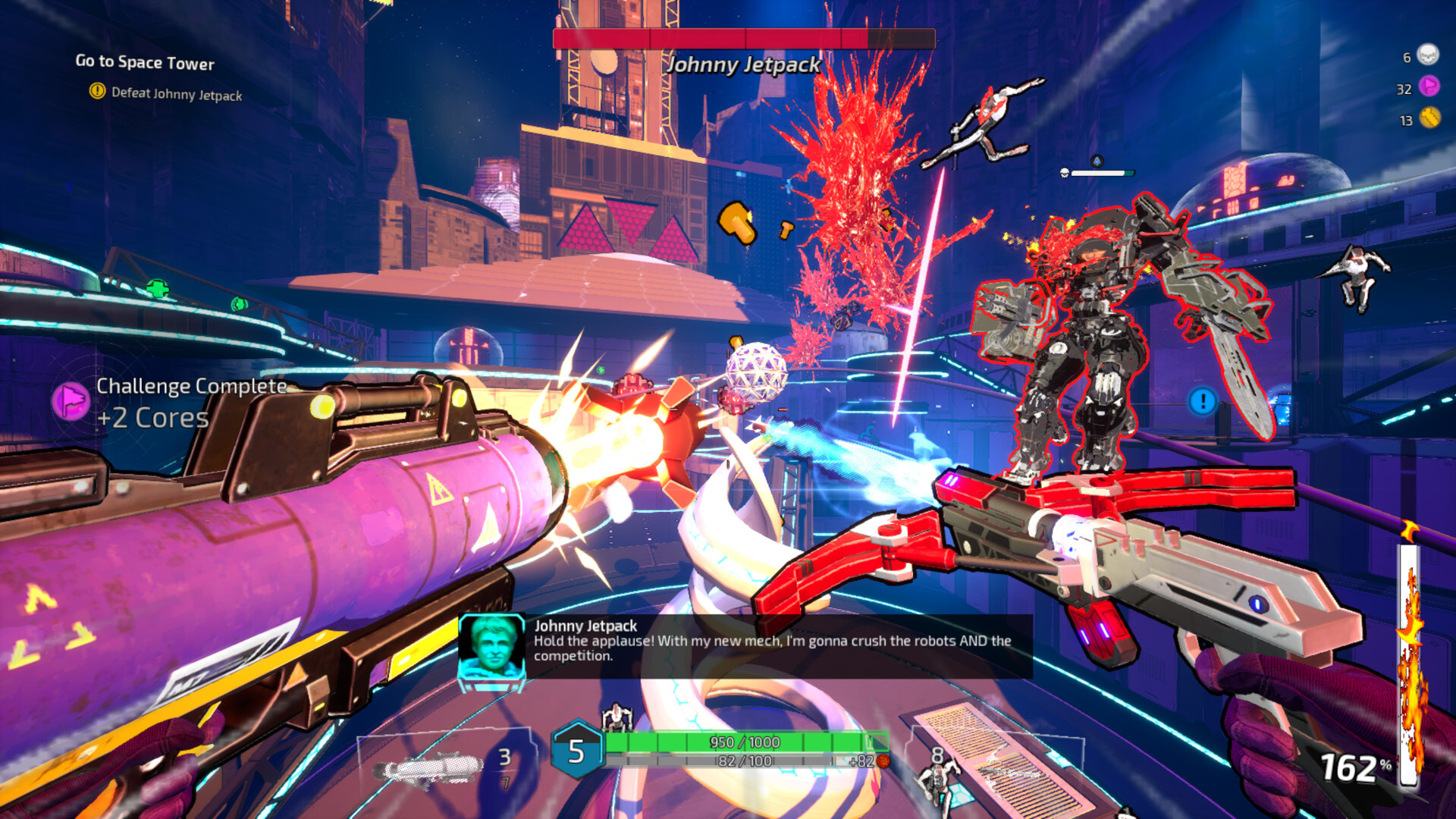
Boss fights lean on voiced dialogue and spectacle, and reviewers who liked the writing point to moments like this, while others found the banter cheesy.Image: CAGE Studios via Steam -
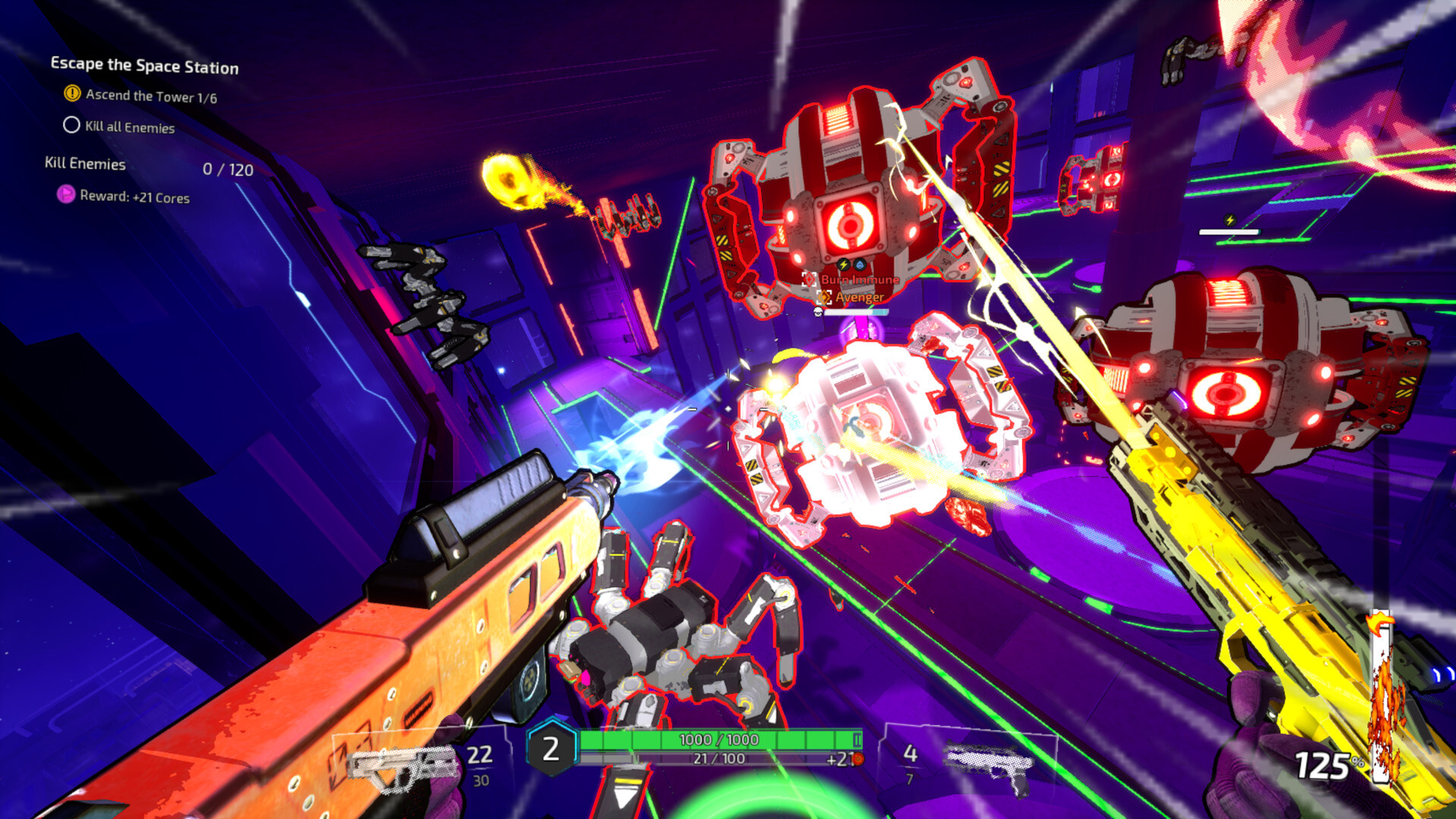
Enemy density ramps up fast in these tower-ascent encounters, and it's exactly the kind of stretch reviewers cite when describing the difficulty spiking hard from zone three onward.Image: CAGE Studios via Steam -
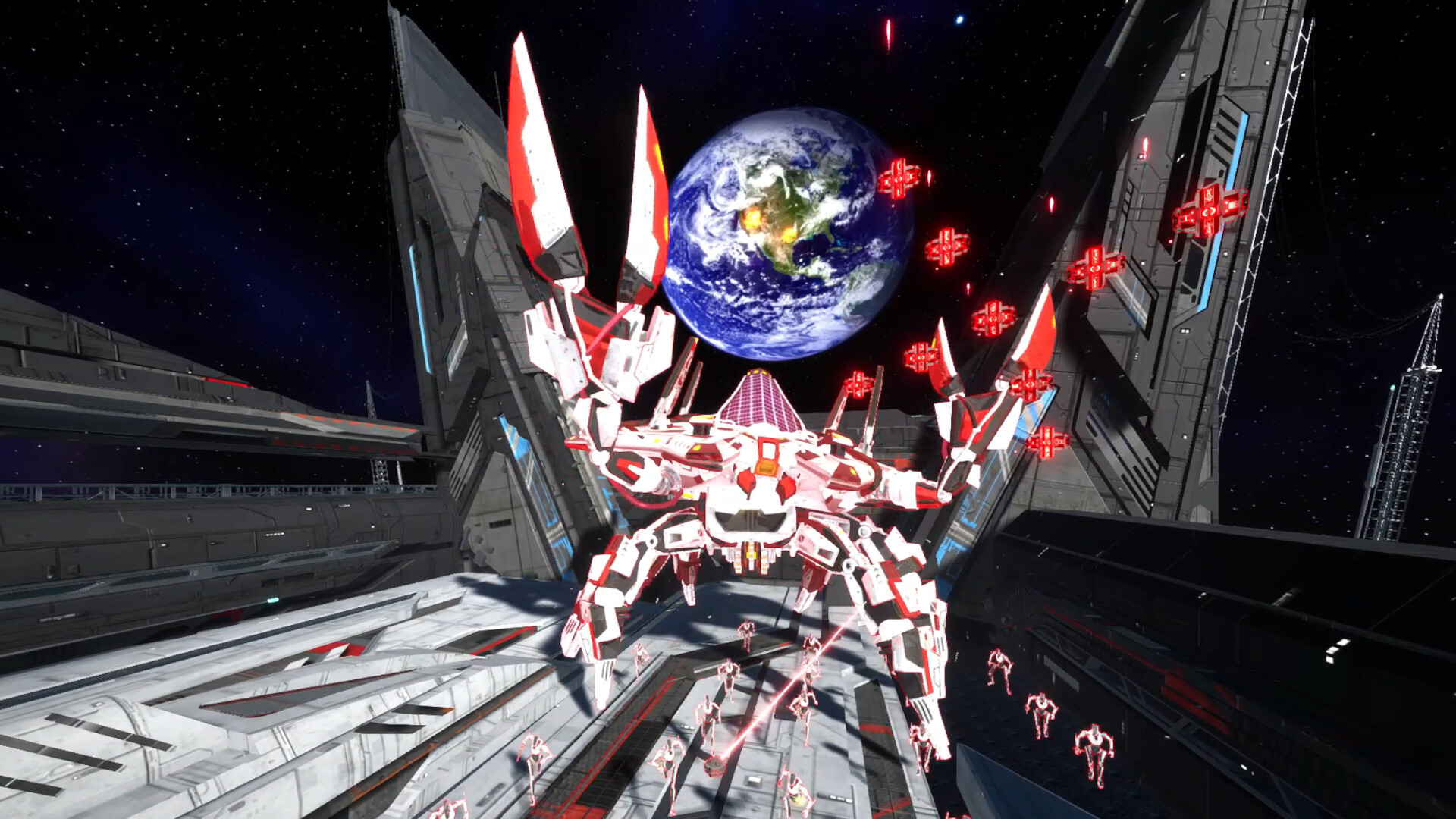
Boss encounters draw mixed reviews, praised for their spectacle but frequently criticized for dragging on or feeling under-tuned next to regular enemies.Image: CAGE Studios via Steam