Game review
Hold the Core Review
7.5 / 10
- Developer
- Faven Games
- Publisher
- Faven Games
- Released
- 16 July 2026
- Platforms
- ["Windows"]
- Genre
- Strategy
Trading Safety for Power, One Risk Card at a Time
Hold the Core is a $5.99 roguelite tower defense game built around a single, sharp design idea: between cycles, you draft Risk Cards that let you deliberately make your run harder in exchange for bigger rewards, rather than simply accumulating strength on a fixed curve. You shape enemy routes, evolve towers into specialized weapons, and survive escalating waves and bosses across a series of cycles, with the entire experience hinging on how aggressively you're willing to gamble against your own defenses. It released July 16, 2026 from Faven Games, following an April store-page debut, a May demo, and several rounds of difficulty-tuning patches — and its lone review so far calls it, bluntly, "absolute gem, diamond in the rough."
Risk Cards Turn Difficulty Into a Deliberate Choice
The screenshots make the core hook immediately legible: a "Choose Your Risk" draft screen presents three hexagonal cards, each spelling out an exact trade-off rather than a vague promise. One card offers +18 gold instantly and an extra card in the next Risk Market, at the cost of an 8% enemy HP increase for the entire remaining run. Another, labeled "Chaos," offers +51 gold and +2 tower damage this cycle, but raises rifted enemy spawn chance by 26% and enemy count by 15% for that same cycle. A third promises gold-per-drop bonuses in exchange for a 10% enemy count increase and a small Swarm Event. That's an unusually precise way to gamify difficulty selection — instead of a slider or a named difficulty tier, you're negotiating specific percentage trade-offs card by card, cycle by cycle, and the stakes only escalate as a run goes on.
Fifteen Cycles of Escalation, Visibly
The game's structure runs across a fixed number of cycles — 15, based on the screenshots — and the later stages show a dramatically different battlefield than the early ones. One screenshot from cycle 11 of 15 shows a sprawling, more complex path layout dense with enemy clusters, status-effect text like "CORRODE" floating above damaged targets, and a gold total that's climbed into the thousands, a sharp contrast to the comparatively sparse early-cycle screenshot showing a simpler winding path and a gold count still in the low hundreds. That visible escalation across the run — more enemies, more status effects, more towers required to keep pace — suggests the Risk Card system isn't just a flavor mechanic bolted onto a static tower defense loop, but something that meaningfully reshapes the back half of a run based on choices made in the front half.
Route-Shaping Adds a Second Layer of Control
Beyond towers and cards, the store page emphasizes that you can actively shape enemy routes yourself — extending paths, bending the flow of incoming waves, and building chokepoints and kill zones rather than simply reacting to a fixed lane layout. That's a meaningful point of difference from tower defense games where the path is static and all the strategic decisions happen at the placement layer; giving players control over the route itself, on top of tower placement and the Risk Card economy, stacks a third strategic lever onto a genre that often only offers one or two.
Towers That Evolve Into Distinct Combat Roles
The developer's own framing — that each tower "solves a different problem" and evolutions push it toward control, burst, range, or sustained damage — points to a deckbuilding-adjacent structure sitting underneath the tower defense shell, which tracks with "Deckbuilding" showing up explicitly among the Steam tags alongside "Tower Defense" and "Roguelite." Screenshots show a visually distinct roster of turret types at various evolution states scattered along the path, reinforcing that towers here are meant to be built around and specialized, not simply spammed in bulk.
A Long, Careful Pre-Launch Runway
The patch history leading up to release is notably methodical for a small indie release: an April store-page debut, a May demo alongside a hotfix addressing leaderboards and quality-of-life issues, a further round of bug fixes and difficulty tuning in late May, and another difficulty pass in June — all before the actual July 16 launch. That kind of iterative, demo-tested runway is a meaningfully different pattern than a game rushed straight to release, and it's a reasonable, if circumstantial, sign that the difficulty curve reviewers will encounter at launch has already been shaped by real player feedback rather than shipped untested.
A Thin Sample, but an Enthusiastic One
One review, at 6.2 hours, isn't much to build a full picture from, but the specific phrase used — "diamond in the rough" — is a telling one. It signals genuine enthusiasm for the underlying design while acknowledging the game may still have rough edges, which lines up with what a small indie tower defense roguelite releasing at $5.99 with a single-developer credit would reasonably be expected to have. It's a small sample, but not an ambiguous one.
Verdict
Hold the Core takes the well-established tower defense-roguelite hybrid and sharpens its core tension — safety versus power — into an explicit, numbers-forward Risk Card system that visibly reshapes how a run escalates over its 15 cycles. Route-shaping and tower evolution add real strategic depth on top of that central gamble, and a careful, demo-tested pre-launch runway suggests a developer who took the time to get the difficulty curve right before shipping. At $5.99, with a thin but genuinely enthusiastic review sample behind it, this is an easy recommendation for roguelite and tower defense fans looking for a design with real teeth, even if it hasn't yet built up the review base to prove it at scale.
Screenshots
-
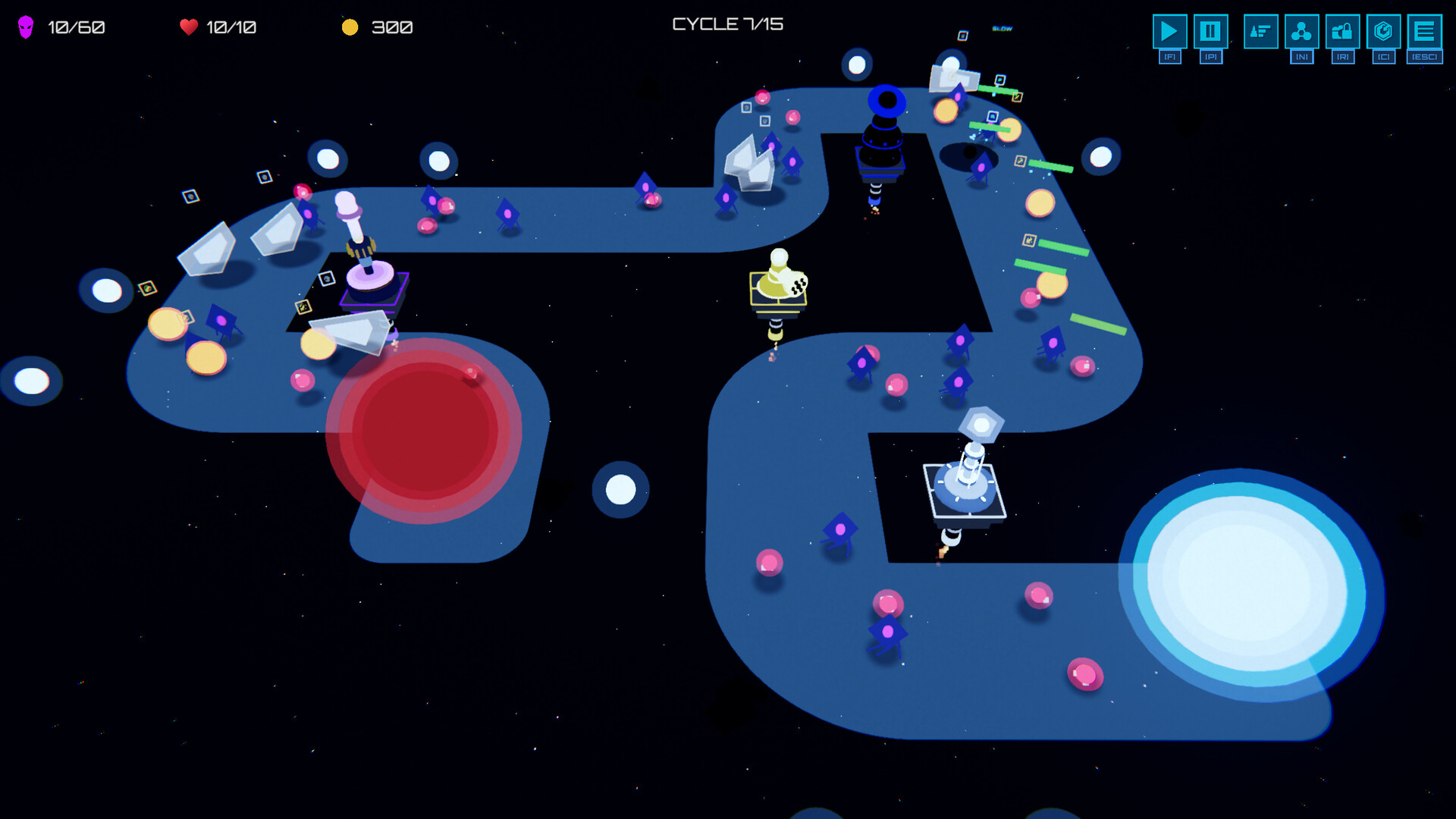
A mid-run map showing the core tower defense loop — turrets placed at chokepoints along a winding path, with enemy counts and a cycle timer ticking down in the corner.Image: Faven Games via Steam -
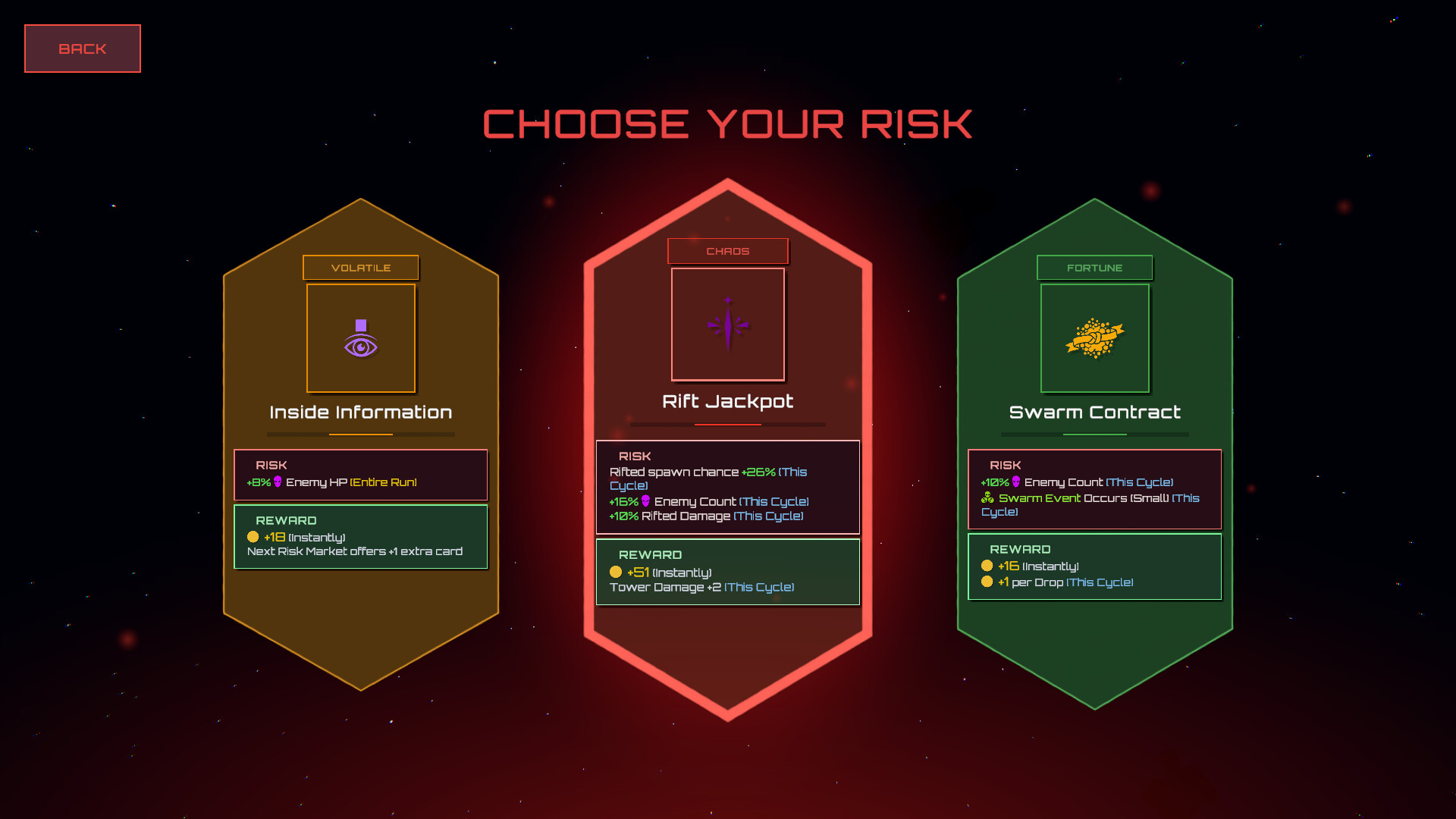
The Risk Card draft screen lays out its trade-offs in exact numbers — no vague 'more danger, more reward' hand-waving, just precise percentages for both sides of the bet.Image: Faven Games via Steam -
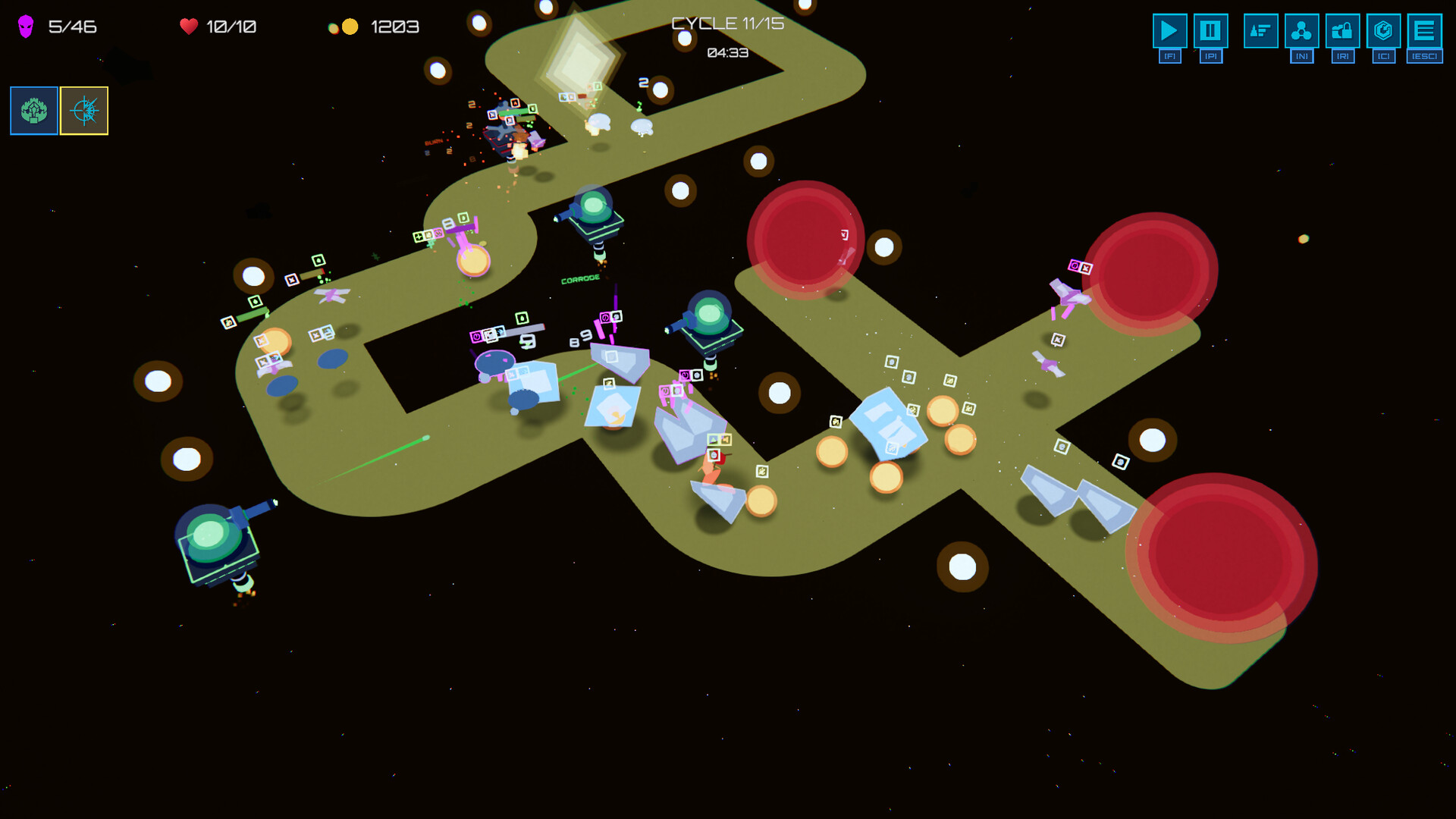
By cycle 11 of 15, the screen fills with status effects and enemy clusters — a visibly escalating mid-to-late-game state that rewards the earlier risk-taking decisions.Image: Faven Games via Steam