Game review
MoeArmy vs SuArmy Review
6.5 / 10
- Developer
- KumiLGames
- Publisher
- KumiLGames
- Released
- 16 July 2026
- Platforms
- ["Windows"]
- Genre
- Strategy
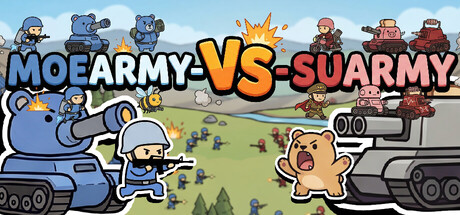
Two Cute Armies, One Very Serious Grid
MoeArmy vs SuArmy sells itself on a contrast: the high-tech, elite-unit Moe Army versus the brute-force, mechanized Su Army, drawn in a bright, cartoon-military art style and priced at a token $2.99. Underneath that lighthearted presentation, though, it's playing a fairly dense combination of genres — auto-battler, tower defense, deckbuilder, and light RTS all layered onto the same grid. The review sample so far is tiny, just five reviews, but it leans clearly positive at four to one, and the detail level in the reviews that do exist is unusually high for a sample this small, which makes it easier than usual to trust what's being said about the mechanics themselves.
Build, Drop, and Let the Units Fight Themselves
The core loop is deliberately hands-off once a match starts: you drag building cards from a rotating hand of four onto a construction grid, and each building automatically produces units that march down a lane toward the enemy base, engaging anything in their path along the way. You never micromanage a unit directly after it spawns — instead, the strategic decisions all happen upstream, in which buildings you place, where you place them, and how you upgrade them. One detailed reviewer walks through this at length: money accumulates automatically over time, and can be redirected into an economy upgrade that boosts income, a tech upgrade that unlocks stronger unit types, or a wrench upgrade used to enhance existing units directly, with each purchase getting more expensive than the last.
Merging Buildings Instead of Micromanaging Units
Rather than combining units that are already deployed, MoeArmy vs SuArmy asks you to stack identical building cards on top of each other to raise their star level, with basic one-star troops giving way to considerably stronger three-star elite forces from the same production line. That same reviewer notes a hard limit on how far any single building can be upgraded this way, which keeps a match from becoming a single stacked super-tower and instead forces a real choice between concentrating your economy on fewer, stronger production lines or spreading it across more building types for variety. Six special abilities, each purchasable once per battle and re-locked between matches, add a further layer of short-term tactical decisions on top of the building economy.
Three Commanders, Three Different Openers
Before a match even starts, picking a commander sets the tone for the run. One detailed reviewer breaks down the tradeoff plainly: the first commander leans toward cheap units and faster resource generation but caps out below the strongest late-game options, the third commander unlocks the most powerful units at the cost of a slower, pricier start, and the second commander sits in between. Each commander also comes with a different free unit spawn — one deploys several cheap rocket launchers on a short cooldown, another spawns tougher tanks far less often — which gives even a single faction meaningfully different early-game rhythms depending on who you pick.
Two Factions That Actually Play Differently
The Moe Army versus Su Army framing isn't just cosmetic. Reviewers describe the Moe side as leaning on precision and elite, higher-tech units, while the Su side wins through overwhelming firepower and mechanized brute force, with each faction fielding its own exclusive roster of infantry, armor, and support units. One reviewer specifically calls out that switching factions mid-playthrough feels like learning a new approach to combat rather than just relearning a skin, which is a meaningfully higher bar than most auto-battlers with a simple two-team coat of paint clear.
A Genuinely Rocky Launch, Patched Hard and Fast
The developer's own update history backs up what reviewers describe as a bumpy start. The jump from beta versioning straight into "1.0.0 — Official Release!" on July 16 was followed within days by a dense run of hotfixes: five separate updates in the first three days alone addressing balance, bugs, and audio, plus a public statement specifically responding to complaints about campaign difficulty being too punishing. That cadence continued for weeks afterward, with the tutorial getting a complete rework in response to player feedback and dozens of further balance and performance passes through late August. It's the kind of aggressive, responsive post-launch support that's easy to undervalue from the outside but clearly mattered to the players sticking around for it.
The Rough Edges: Difficulty, UI, and a Thin Content Pool
Not every note in the sample is positive. The one negative review in the sample is blunt, calling the game "designed for children" with essentially no challenge and an interface it describes as "awful looking," conceding that the low asking price is at least in line with what's on offer. The sample's most detailed positive review echoes part of that concern more diplomatically, noting the existing content pool may feel limited after extended play and that balance between certain unit combinations could use further refinement, alongside a Workshop and cloud-save gap the developer has flagged as still unresolved. None of this stops that reviewer from landing on a firm 7 out of 10, but it's a real, specific list of gaps rather than a vague hedge.
Verdict
MoeArmy vs SuArmy takes a cute, low-stakes aesthetic and hides a surprisingly layered building-and-upgrade economy underneath it, with two factions that genuinely play differently and a developer that responded to a rough launch with weeks of rapid, responsive patching. The difficulty curve is soft enough that at least one reviewer found nothing to push against, the UI has real detractors, and the current content pool is thin enough that a long-term commitment might outrun what's here today. At $2.99, though, none of that is much of a risk. For fans of auto-battlers and tower-defense hybrids looking for a cheap, colorful way to spend a few hours experimenting with building layouts and faction matchups, this is an easy, low-cost recommendation with room to grow into something more substantial.
Screenshots
-
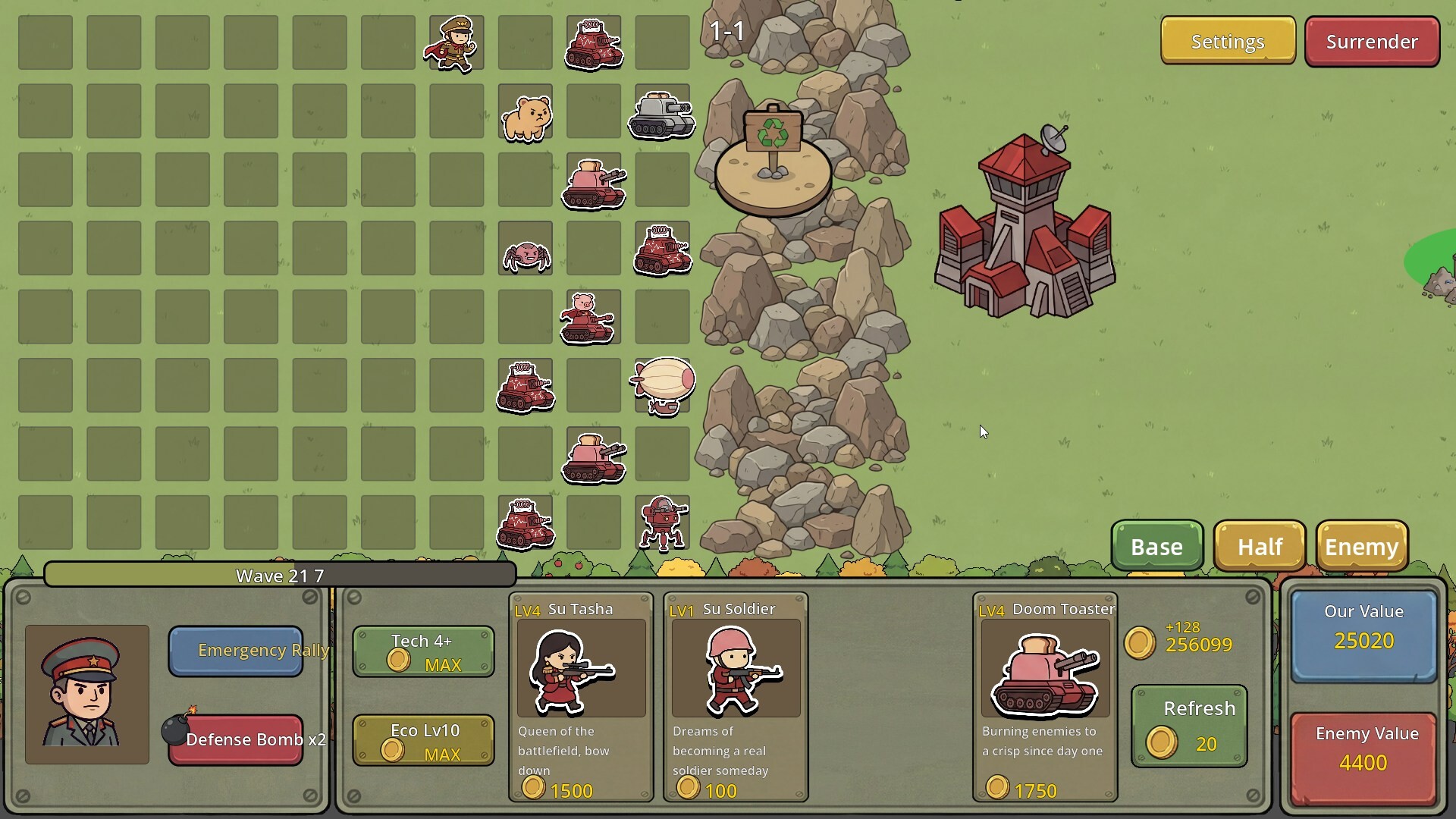
The construction grid is where every strategic decision actually happens; the battle itself plays out automatically.Image: KumiLGames via Steam -
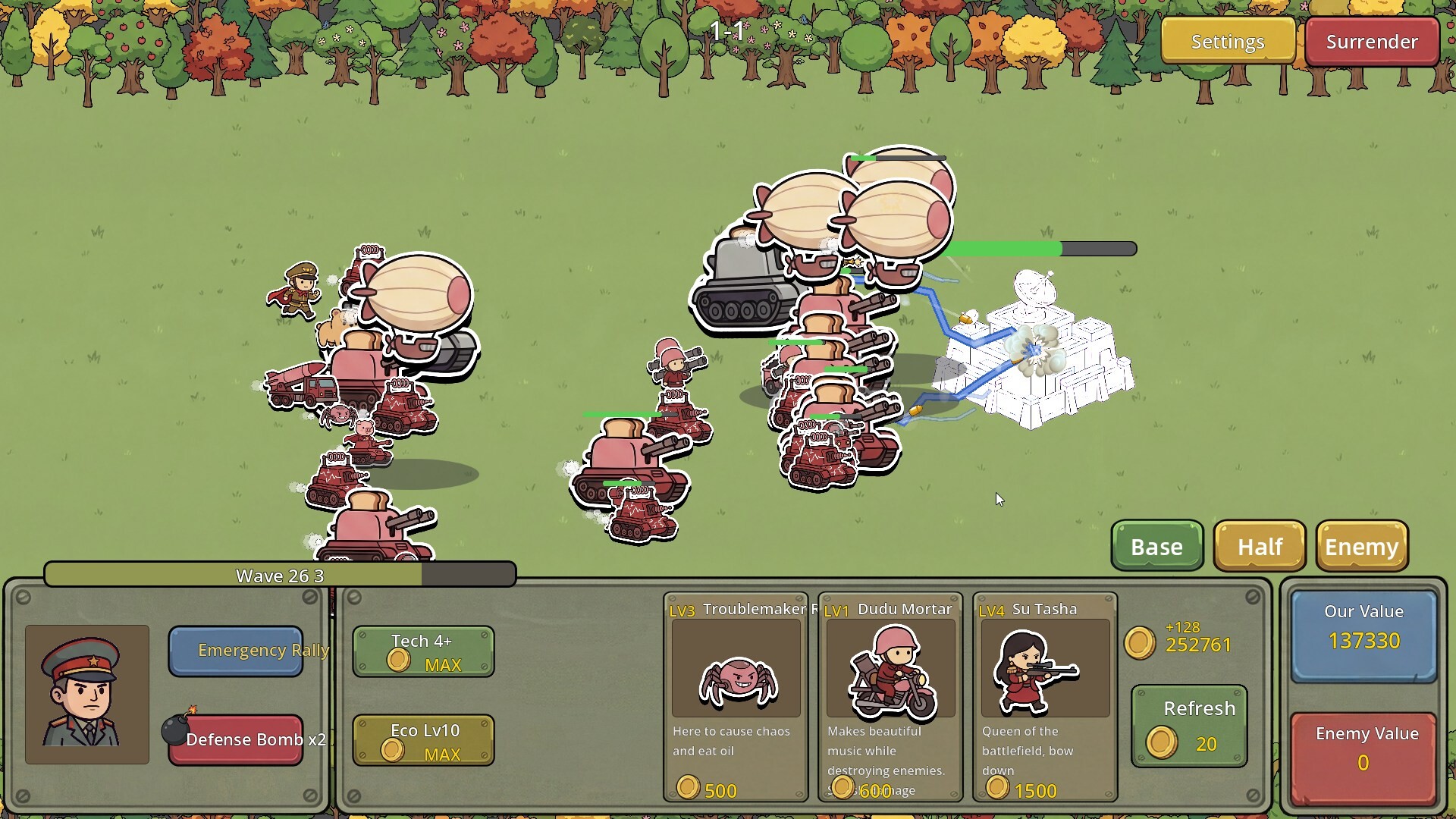
A combined-arms push in full swing, tanks and blimps advancing together after grinding the enemy base's value down to nothing.Image: KumiLGames via Steam -
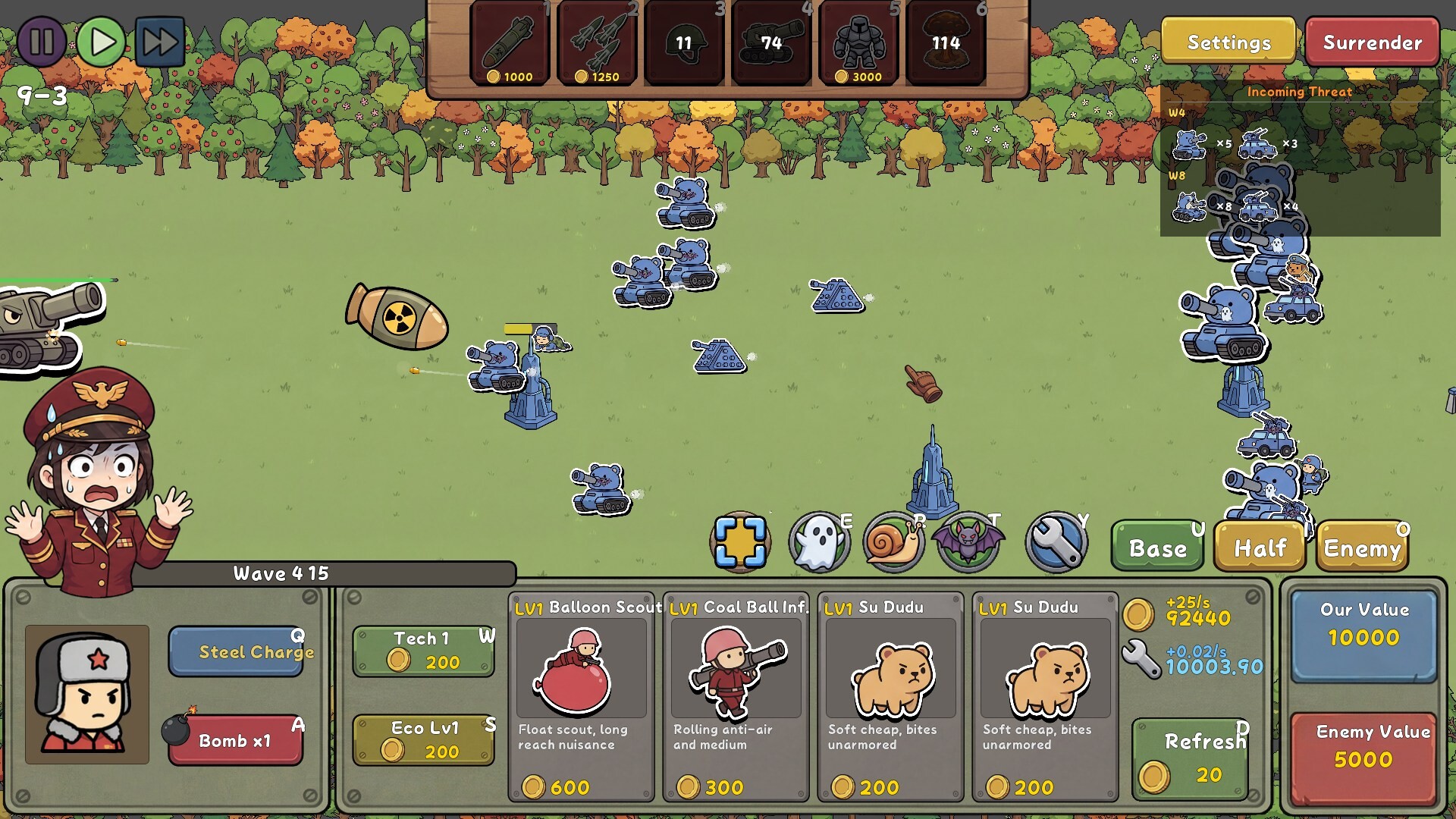
An Incoming Threat panel gives advance warning of exactly what the next few waves will throw at you.Image: KumiLGames via Steam