Game review
Cube Kingdoms Review
6.5 / 10
- Developer
- GamingPugsStudios
- Publisher
- GamingPugsStudios
- Released
- 16 June 2026
- Platforms
- ["Windows"]
- Genre
- Strategy
A Voxel City Builder Grafted Onto an Auto-Battler
Cube Kingdoms bills itself directly as "Survival City builder meets Auto-Battler," and that combination is the whole pitch: build and maintain a medieval fantasy settlement in isometric voxel graphics, then defend it against raids and strike back at hostile factions across an overworld map, with combat resolved as an automated battle based on preparation and positioning rather than direct real-time control. Steam's own description is upfront that the focus "is not on micro-managing units or building a complex economy, but on mastering the challenges of each map, using the limited available space wisely, and defeating your enemies before they overwhelm you." One reviewer who bought in on that premise recommended it specifically to fans of a genre touchstone, writing simply, "I'd recommend it if you are into Stronghold," while another praised the presentation itself: "I find the graphics of this game quite nice, not a typical strategy, and the armies marching animations are especially cute."
Two Distinct Views: Economy and Defense
The game splits its systems cleanly into an Economy View, where players build production chains through lumberjacks, quarries, smithies and more specialised buildings like wells and charcoal kilns to sustain a growing settlement, and a separate Defense View for placing walls, gates, traps and stationed troops ahead of an attack. When a raid arrives, the game loads a dedicated battlefield where the attacker deploys at the map's edge and the defenders try to hold the central keep, with the outcome determined by how well the player prepared rather than moment-to-moment micromanagement. A third layer, the Overworld Map, adds friendly and hostile castles, neutral settlements, bandits, boss monsters, and roaming merchants, armies and scouts, giving the settlement-building loop a wider strategic context beyond simply surviving in place. One reviewer summarised the appeal of that structure plainly: "Building a town, defending your town, conquering others towns and building them and so on," calling the underlying concept good even while flagging execution problems elsewhere. That three-layer split is a deliberate design choice rather than an accident of scope: separating the peaceful economy-building work from the tense defensive planning, and then separating both of those again from the map-level strategic layer of choosing which factions to provoke or avoid, gives the game a rhythm of distinct modes rather than asking the player to juggle construction and combat decisions simultaneously in one cluttered view.
Real Depth, With Real Rough Edges
Reviews consistently frame Cube Kingdoms as a game with a genuinely interesting core loop that hasn't yet had all its edges sanded down. One of the more detailed reviews lists a specific, credible set of complaints: building placement "snapping" is described as "temperamental as all hell," with an annoying lag before objects lock into position; defensive units have reportedly failed to appear during raids on multiple occasions, with the same reviewer reporting "several times my defending knights and/or archers just weren't there and couple of times even the walls were mysteriously missing"; and unit pathing during battles is inconsistent, with troops sometimes taking absurdly long routes to reach nearby enemies instead of the shortest available path. The same review also flags a resource-tracking gap in the UI, wanting the storage panel to calculate actual consumption rates rather than just production numbers, since goods like bread can show a "positive" production rate on the interface while warehouses are visibly emptying in practice. None of this is described as universally game-breaking, but the pattern across specific, itemised complaints suggests these are real, reproducible issues rather than one player's bad luck.
An Actively Updated Early-Life Release, Not an Abandoned One
Despite the rough edges, multiple reviews independently credit the developer with active, ongoing improvement work. One reviewer noted "the dev is constantly improving the game, just recently there was a big update," while a separate review — despite listing several specific frustrations — still recommended the game partly "because the state of the game is holding it back" from its "big potential" rather than because the game had failed outright. That combination, real problems paired with visible developer responsiveness, is a meaningfully different situation than an abandoned or scam-flagged release, and it's the throughline connecting an otherwise mixed set of specific critiques into an overall positive reception on Steam.
A Single Upfront Price With No Monetisation Concerns
Cube Kingdoms costs a single NZ$11.99 with no in-app-purchase category flagged on its store page, no premium currency, and no live-service structure layered on top of the city-building and auto-battler loop. For a genre — fantasy settlement building with combat — that could easily have been retrofitted with cosmetic shops or expansion-pack-style content gates, its straightforward one-time-purchase structure is worth noting as a clean positive, and nothing in the review sample suggests any monetisation friction at all.
Verdict
Cube Kingdoms pairs a genuinely appealing "Stronghold-like" concept — build an economy, fortify it, then fight your way across an overworld map of rival factions — with a UI and combat-AI layer that clearly still needs polish, from finicky building placement to inconsistent unit pathing during raids. Reviews are honest about both halves of that equation, and the developer's visible pattern of updates gives real reason to expect the rough edges to keep smoothing out over time. At a modest single price with no monetisation baggage, it's a reasonable pick for fans of colony-sim strategy games willing to tolerate some jank in exchange for a distinctive economy-and-siege loop with real potential.
Screenshots
-
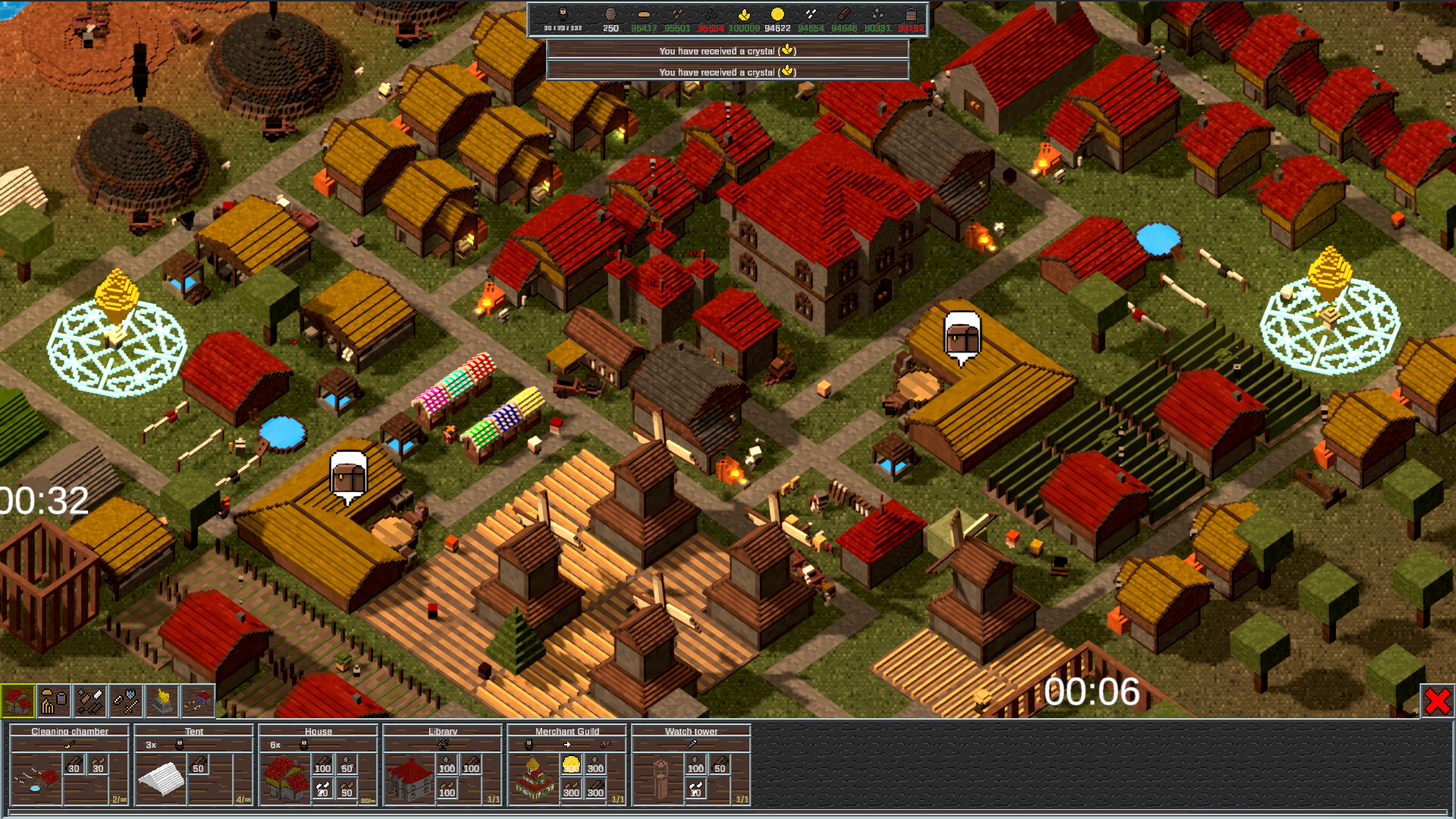
The Economy View, showing a built-up settlement with production buildings, market stalls and resource counters along the top bar.Image: GamingPugsStudios via Steam -
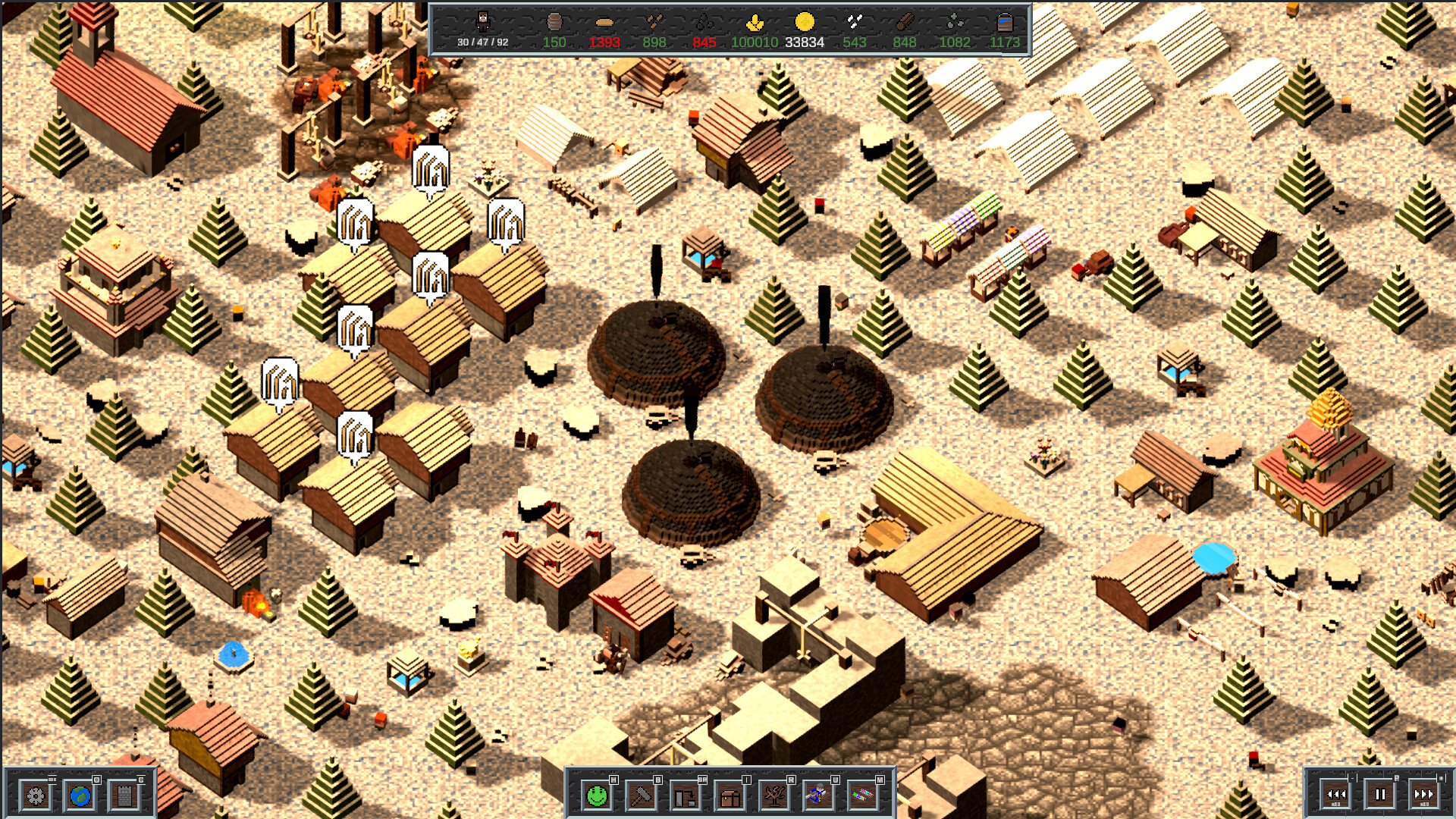
A desert-biome settlement mid-expansion, with build-queue icons floating over houses under construction.Image: GamingPugsStudios via Steam -
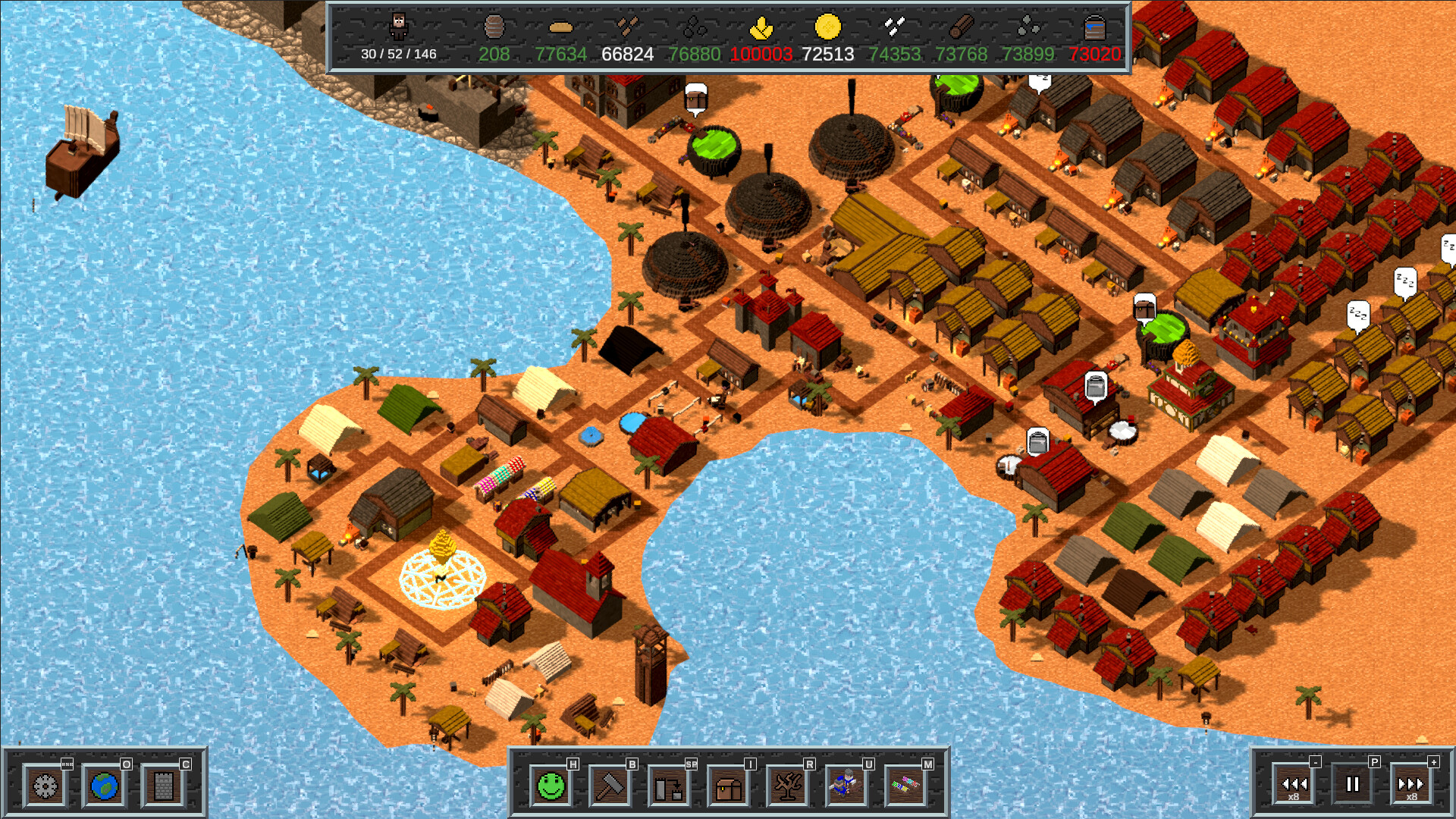
A larger, more developed coastal settlement, with a dock and boat alongside expanded housing rows.Image: GamingPugsStudios via Steam