
Game review
Glimvale: My Mini Overworld Review
7 / 10
- Developer
- Milkshake Games
- Publisher
- Milkshake Games
- Released
- 17 June 2026
- Platforms
- ["Windows"]
- Genre
- Strategy
A Game Master's Village, Not an Adventurer's Story
Glimvale: My Mini Overworld drops the usual RPG framing and hands players a different role entirely: game master of a tiny, self-running fantasy MMO. One reviewer summed up the pitch cleanly: "Glimvale: My Mini Overworld takes the familiar fantasy village concept and reshapes it into a relaxed combination of city building, idle progression, light management, and creative decoration... [it] puts you in the position of a game master overseeing a miniature MMO-like settlement rather than playing as one of its adventurers." Paladins, Mages, and Thieves wander in on their own, take up residence, craft, cook, and quest through small dungeons, while the player's job is to keep the village running and worth living in. It's an idle game built around a premise most idle games don't bother with: you're not the hero, you're the one building the world the heroes get to live in.
Idle Progress That Keeps Moving Without You
The core loop follows familiar idle-game rules — buildings produce resources on their own schedule, progress continues offline, and there's no time pressure pushing players to check in constantly. But several reviewers noted that Glimvale pulls them back in more than a typical idle title. One wrote: "This is the first idle game where I actually play more than I leave it running! It's not your usual farming, fishing, or pet care idle loop. Instead, you're basically the admin of a tiny MMO server, making sure [things run smoothly]." Another reviewer compared it directly to a genre stalwart: "Very nice mix of a decoration and idle game! Has some light similarities with a Kairosoft game, a bit more focused on the decoration side than the management part." That framing is fair — Glimvale leans harder into hands-on village layout than the pure numbers-go-up idling its Steam tags might suggest.
Three Hundred Decorations and a Village That's Genuinely Yours
Customisation is where Glimvale draws its clearest praise. The store page lists more than 300 decorations across categories like a "Latte Café Tavern," book staircases, and a roster of mounts, and reviewers consistently called the resulting village charming and personal. Several described spending most of their playtime on layout and detail work rather than letting the game run in the background — "Even though it's technically an idle/clicker-style game, I spent almost all of my time actively" arranging their settlement, as one put it. Another was blunter about where the appeal (and the limit) sits: "I would recommend this game with ONE caveat... ONLY BUY IT IF YOU LIKE DECORATING SIMULATORS. In terms of actual gameplay, it's kinda lame. It's a town-builder game disguised as a clicker game disguised as an idle ga[me]." For players drawn in by the decorating loop specifically, that's a feature; for anyone expecting deeper systems underneath it, several reviews suggest there's less there than the surface implies.
A Short, Easy Village-Builder With Some Rough Edges
Multiple reviewers reported clearing the game's content, including full achievement completion, in well under ten hours — one logged "6.8 hours to 100%," adding that "it's really too easy, fast and every level is pretty much the same." That brevity cuts both ways: it makes Glimvale approachable as a relaxed, low-stakes session, but it also means the idle systems don't have much room to develop real depth before the content runs out. One detailed negative review focused specifically on decoration bugs undercutting the game's central appeal: after building a custom archery range out of fences and target dummies, the reviewer found "the game occasionally bugs up and changes what type of fence is placed," scrambling the layout, and separately noted the game "gives you zero feedback" when a requested decoration combination doesn't register as complete. The same reviewer flagged an odd difficulty spike in a system meant to be stress-free: several achievements are "extremely rare, taking a lot of work to get," which sits awkwardly against a game pitched as "a relaxing idle experience with no stress and no time limits."
A Cosy Idle Game That Doesn't Always Explain Itself
The clearest recurring criticism is that Glimvale undersells how much active clicking and management it actually asks for. "This is a clicker game with idle elements. Nowhere does it say this though. Not recommended for people looking for a true idle game," wrote one reviewer who went in expecting a purer idle experience. A second echoed the same complaint about unclear systems: "The decoration system feels very tacked-on, and a lot of mechanics are very opaque, progression isn't made clear outside of the tutorial-style quest system." Neither of these reads as a dealbreaker for most of the review sample — the overwhelming majority still recommend the game — but they're a consistent thread pointing at the same gap: the interface and onboarding don't always make clear what the systems underneath are asking of the player.
Verdict
Glimvale: My Mini Overworld succeeds at a genuinely different idle-game pitch — game master rather than adventurer, decoration and village layout rather than pure number-crunching — and its "cosy" tone, generous decoration options, and low asking price have earned it a Very Positive Steam standing. It's let down by real rough edges: opaque feedback on its decoration and quest systems, the occasional bug undermining the exact creative freedom it's selling, and a short overall runtime that limits how deep its idle mechanics ever get to run. For players who want a relaxed, low-pressure village-builder to fill in the gaps of a Steam session and don't mind figuring some systems out through trial and error, there's a charming few hours here.
Screenshots
-
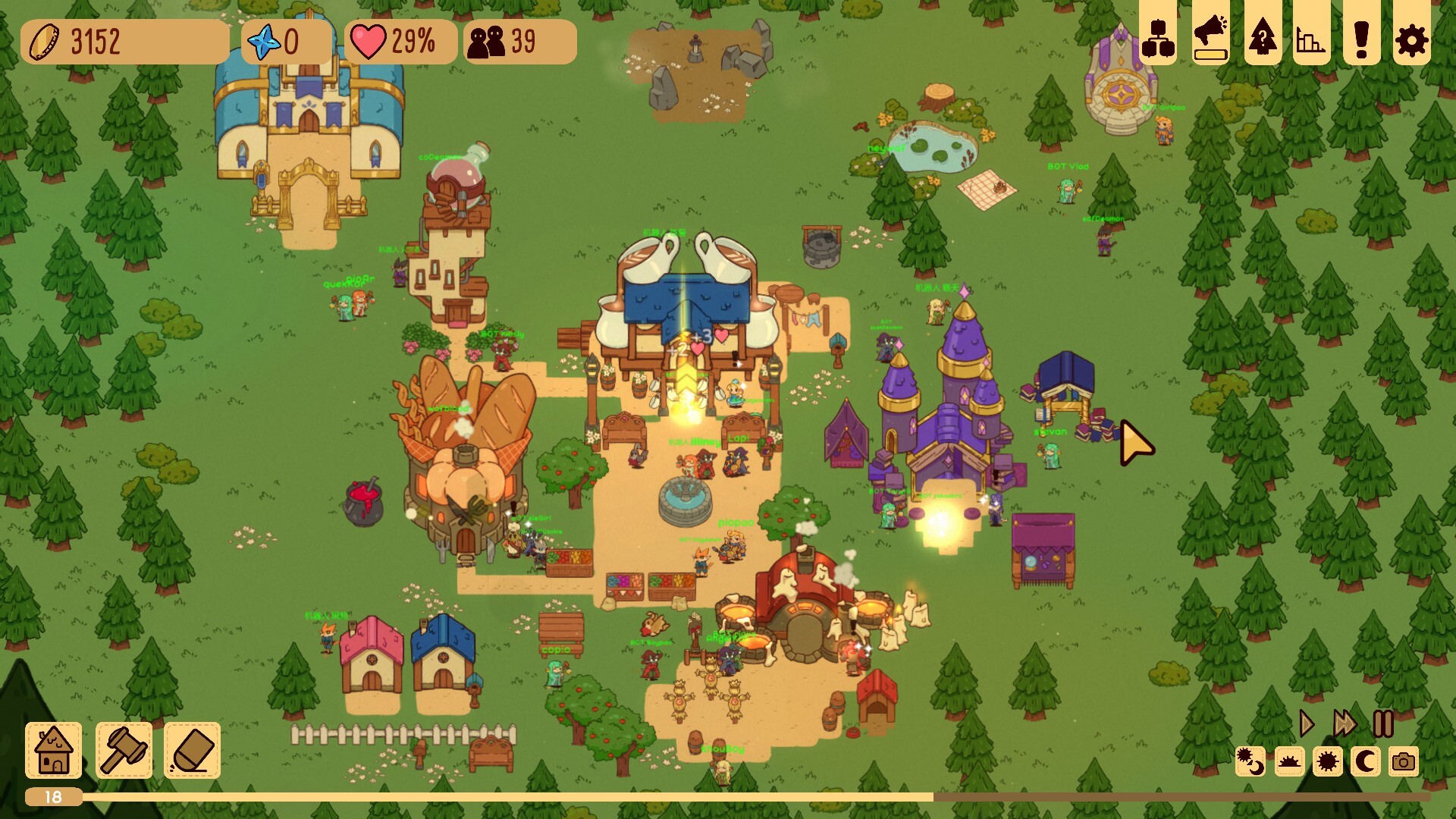
A grown-out village, complete with a bakery shaped like bread and a resident population in the dozensImage: Milkshake Games via Steam -
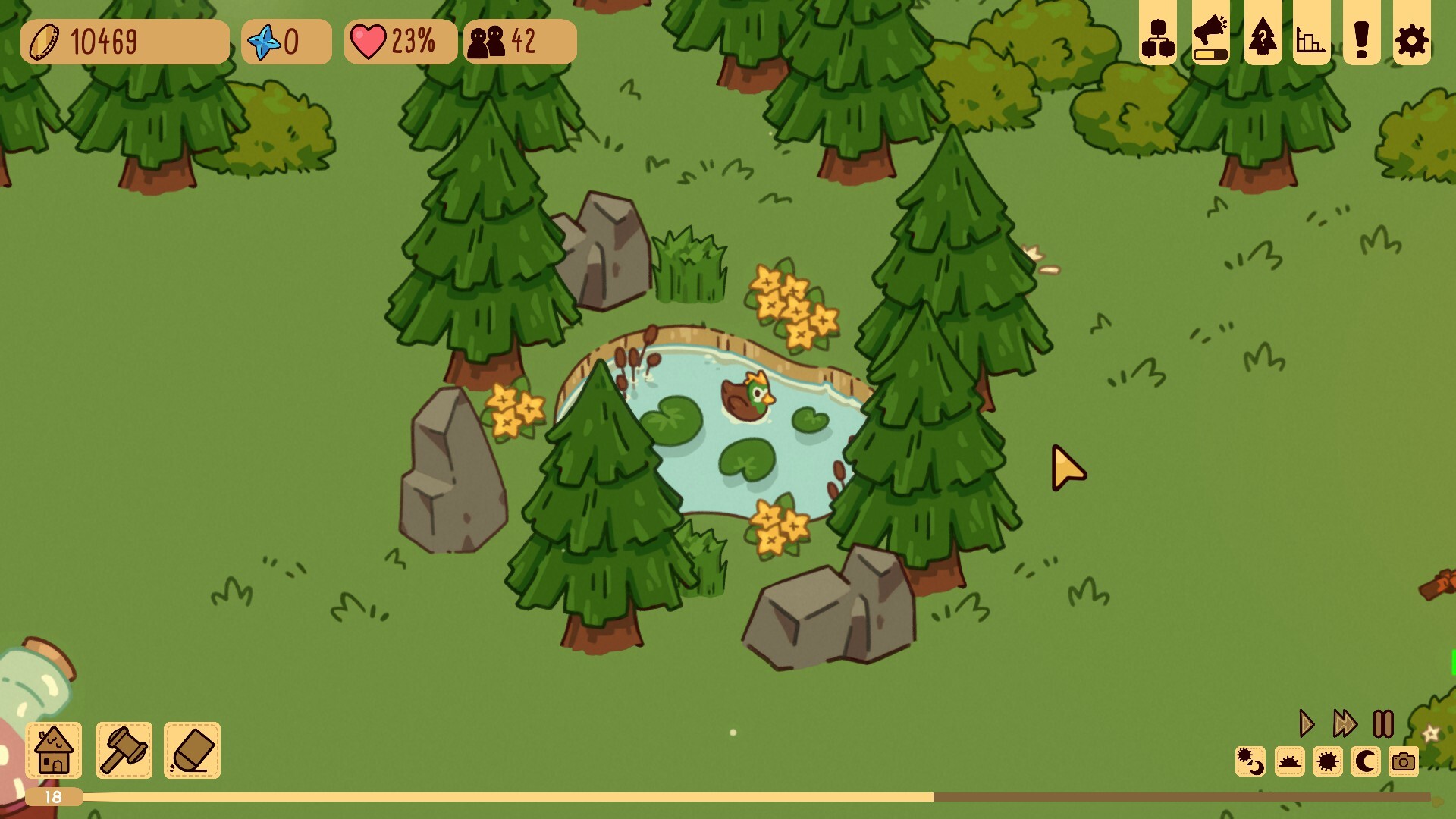
One of the game's many decoration pieces — a small forest pond tucked between the treesImage: Milkshake Games via Steam -
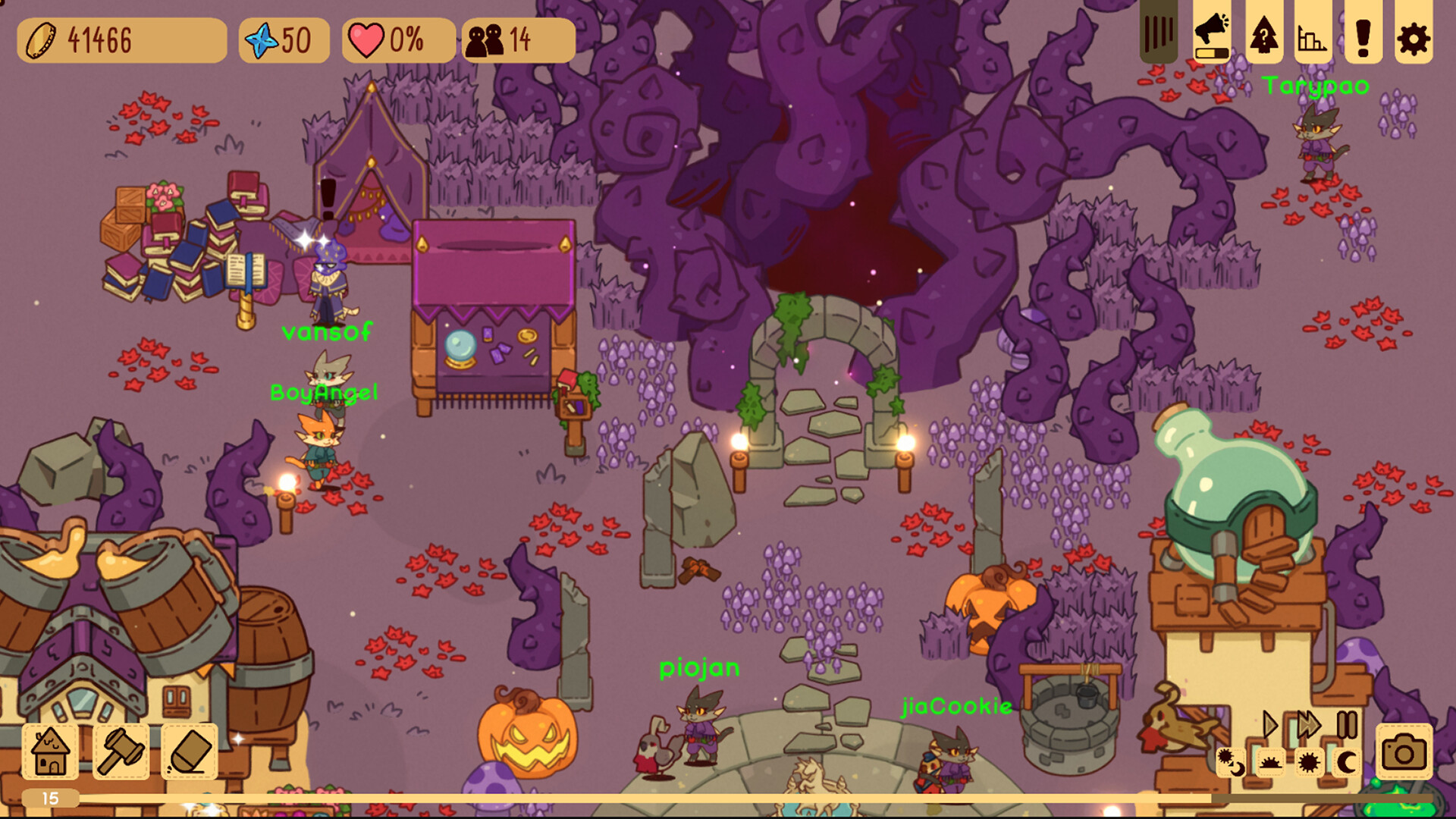
A seasonal, Halloween-themed decoration set applied to part of the villageImage: Milkshake Games via Steam