
Game review
Hexalith Review
7.5 / 10
- Developer
- Artemi Studios
- Publisher
- Artemi Studios
- Released
- 13 July 2026
- Platforms
- ["Windows"]
- Genre
- Simulation
A Sci-Fi Colony Built One Hex at a Time
Hexalith launched July 13, 2026 from solo-feeling developer and publisher Artemi Studios, tasking players with dropping hexagonal tiles to grow a sprawling sci-fi space colony, chaining resource tiles into buildings, merging those buildings into bigger ones, and racing against scenario turn limits or an open-ended infinite mode to chase a leaderboard high score. It followed an unusually long public playtest and demo period stretching back well over a year before its actual $9.99 release, and it launched to a small but completely one-sided English review pool: 17 reviews, all 17 positive, "Positive" on Steam's own scale, every single one read in full for this review.
The Comparison Every Reviewer Reaches For, and What Hexalith Adds to It
Ask this review pool what Hexalith is like, and the same reference point comes up again and again: Dorfromantik. "If you like Dorfromantik and feel like playing a sci-fi version of it, this game is good fun and will be relevant to you," one reviewer wrote, laying out the shared premise of placing hexagon tiles to score points before pivoting to what actually sets the two apart. Another reviewer distilled the pitch even more bluntly: "Dorfromantik with neon lights." A third went further, folding in a second reference point entirely: "it's like Dorfromantik and Dystopika had a baby," while a fourth compared the loop to a different genre touchstone altogether, writing that it "gives me vibes of Islanders, but in boardgame-like parallel universe," and rating it "8/10." What all of these comparisons agree on is that Hexalith isn't just borrowing Dorfromantik's tile-laying skeleton wholesale; the resource-chaining and building-merging layer on top, the thing that lets players "gain resources by placing tiles which allow you to also put down buildings, merge them into bigger ones and score a second factor of points," as one detailed review put it, gives the formula a genuine strategic wrinkle the comparisons keep circling back to. The sci-fi dressing gets its own share of specific praise, too, with more than one reviewer singling out the game's "brutalist architecture inspired by famous Balkan buildings" as an unusually distinctive visual choice for the genre, one reviewer calling it out by name twice across two separate points in the same review because they "love" it that much.
A Casual-Looking Game That Keeps Surprising Its Own Players
A second theme running through nearly every review is genuine surprise at how much strategic depth is hiding underneath what looks, at a glance, like a relaxing casual time-waster. "Did not expect this seemingly casual game at first to contain the strategic depth it has," one reviewer wrote, describing how "each city card has synergy that can make for some insane highscore combos" while missions "get progressively harder so you're forced to pay attention in order not to lose." Another reviewer who says they "don't normally play games like this" described picking it up on launch day and immediately getting hooked: "You start placing tiles and suddenly you're way more invested than you expected to be... Easy recommend, even if this isn't your usual genre." A third, more skeptical going in, admitted they "was drawn to try this hidden gem because of the beautiful visuals" but "stayed for the completely unexpected depth this game has to offer, especially once you start unlocking new buildings." The game's Creative Mode gets specific credit as the place where that depth becomes almost meditative rather than competitive; one reviewer who otherwise praised the scenario structure said "for some reason I enjoyed creative mode the most though and spent over 2 hours just placing more and more cities, matching resource tiles and tweaking visuals," even flagging a small hidden Easter egg in the main menu they stumbled onto along the way.
The One Recurring Technical Complaint: Building Placement Hiccups
For a review pool this uniformly positive, it's worth taking seriously the one specific technical complaint that shows up independently more than once, because it's oddly consistent in its wording. "It feels like there's room for a lot more content and polish, especially with the performance of the game, placing building sadly causes hiccups which hampers your momentum when building," one reviewer wrote, tempering an otherwise glowing recommendation. A separate reviewer described almost the identical symptom from a different angle: "One major flaw is that late game, there are some fps drops when placing buildings, but it's not too big of a deal and sounds like an easy fix devs will handle in a patch." Both reviewers frame the issue as a late-game or high-density problem rather than something that ruins an early session, and both stop well short of walking back their recommendation over it, but two independent reports of the same specific stutter, tied to the exact same action of placing buildings, is the kind of narrow, corroborated complaint worth flagging even inside an otherwise spotless pool. A separate, more isolated note came from a reviewer who admitted they "couldn't figure out" the game's systems at first and "had to go through" the tutorial a second time after failing their first round, a minor onboarding wrinkle rather than a design flaw, but consistent with a game whose surprising depth takes a session or two to fully click.
Verdict
Hexalith doesn't pretend to reinvent the hex-tile city-builder it so clearly grew up alongside, and its own review pool is refreshingly upfront about exactly which games it's borrowing from. What it does instead is layer a genuinely satisfying resource-and-building-merge system, a distinctive Balkan-brutalist sci-fi art direction, and a generous Creative Mode on top of that familiar Dorfromantik-style foundation, and the result has connected with essentially everyone who's reviewed it so far. At $9.99, with a pool of reviewers who keep describing themselves as surprised converts rather than genre die-hards, and only a narrow, specific building-placement performance hiccup as a real recurring blemish, Hexalith is an easy recommendation for anyone who likes watching a tidy little settlement grow one hexagon at a time, sci-fi trappings or otherwise.
Screenshots
-
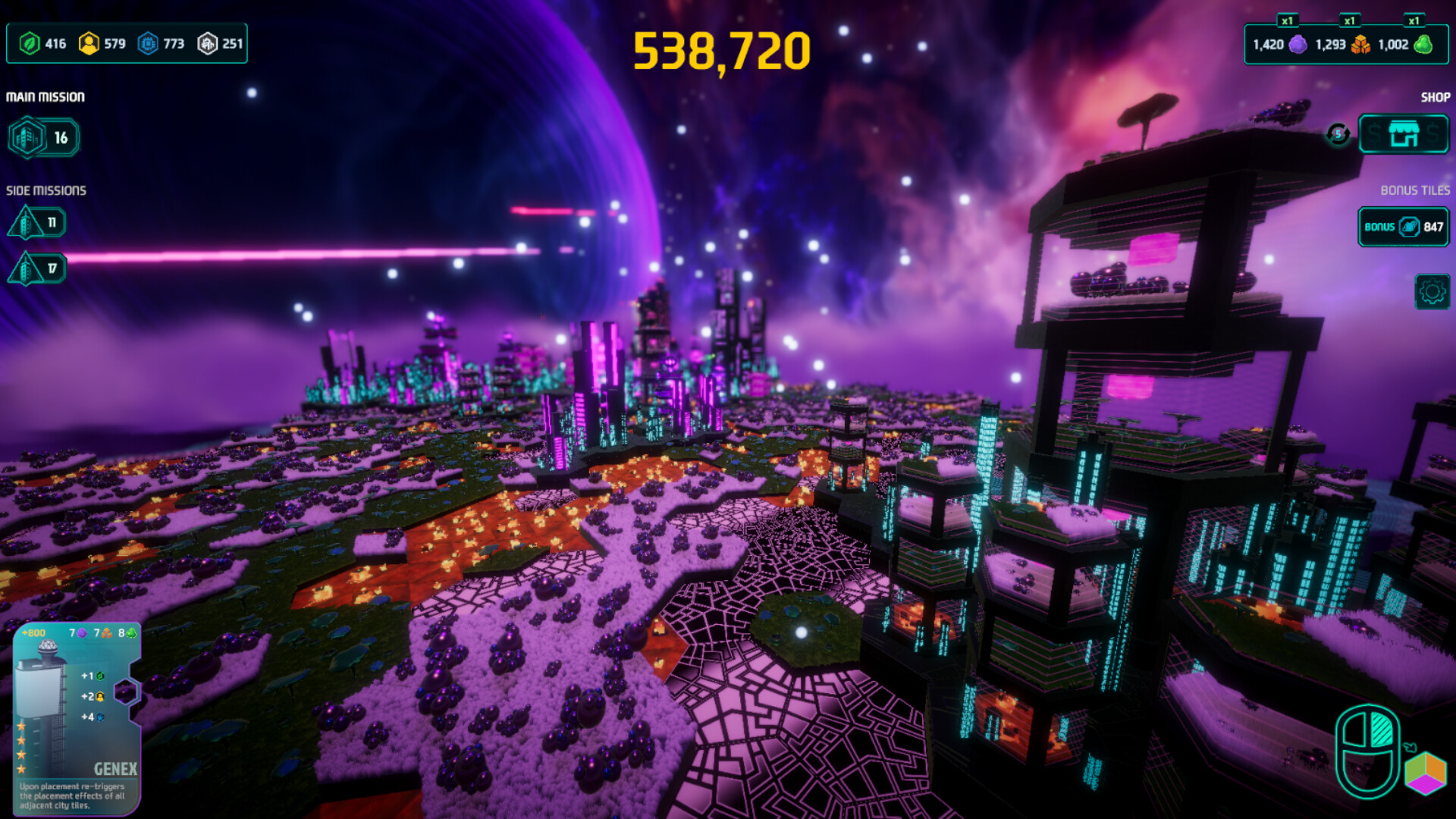
A colony in full swing: main and side mission trackers on the left, resource counts and a shop button on the right, and a card in the corner showing the bonuses its most recently placed building grants.Image: Artemi Studios via Steam -
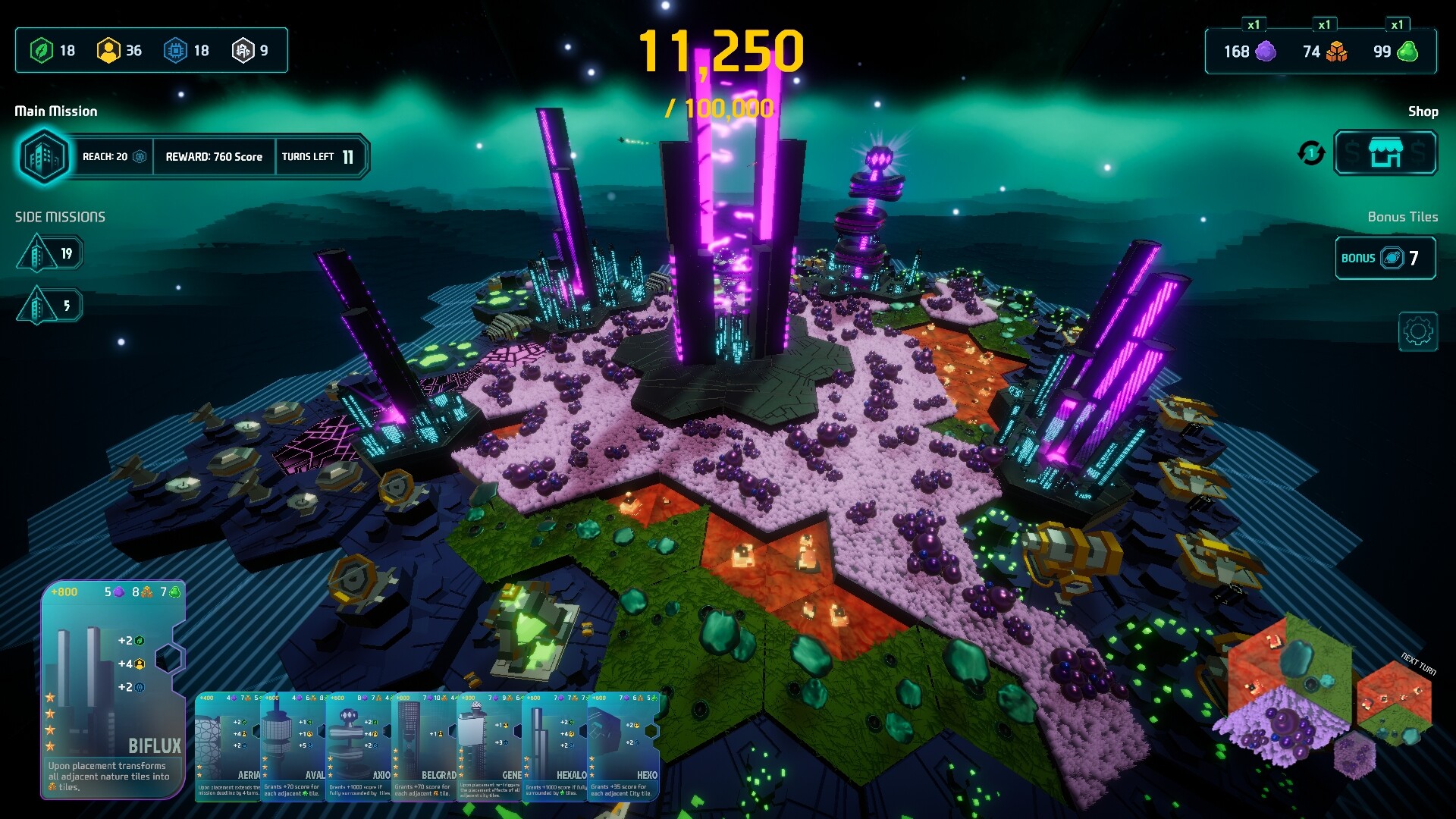
The building-card row at the heart of the run: each card's placement effect, shown here chaining bonuses across adjacent tiles toward the run's 100,000-point target.Image: Artemi Studios via Steam -
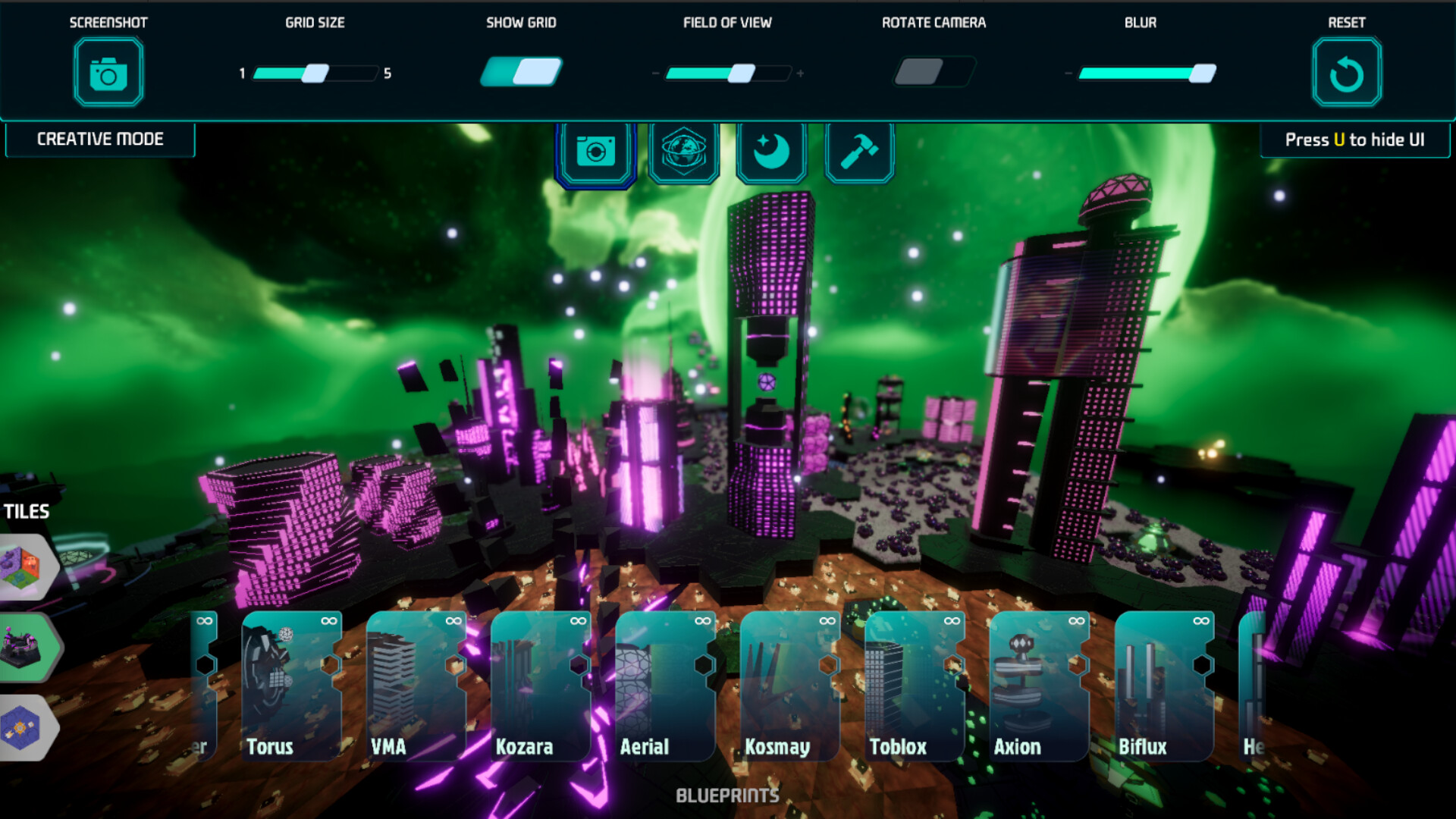
Creative Mode strips away the mission timer and resource limits entirely, the mode more than one reviewer said they lost hours to without meaning to.Image: Artemi Studios via Steam