
Game review
Pocket Squire: Arena
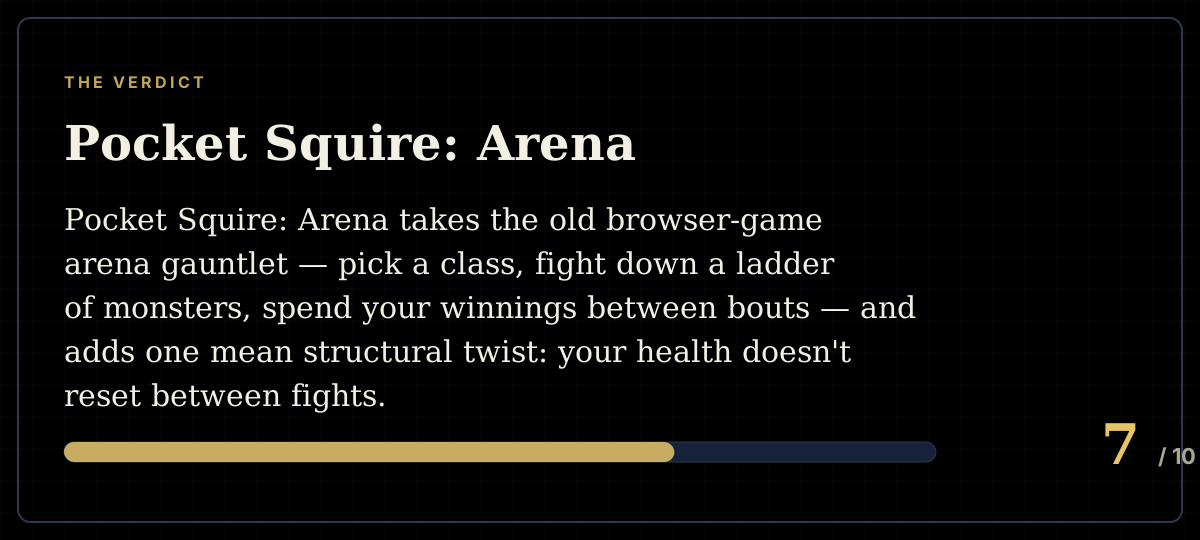
7 / 10
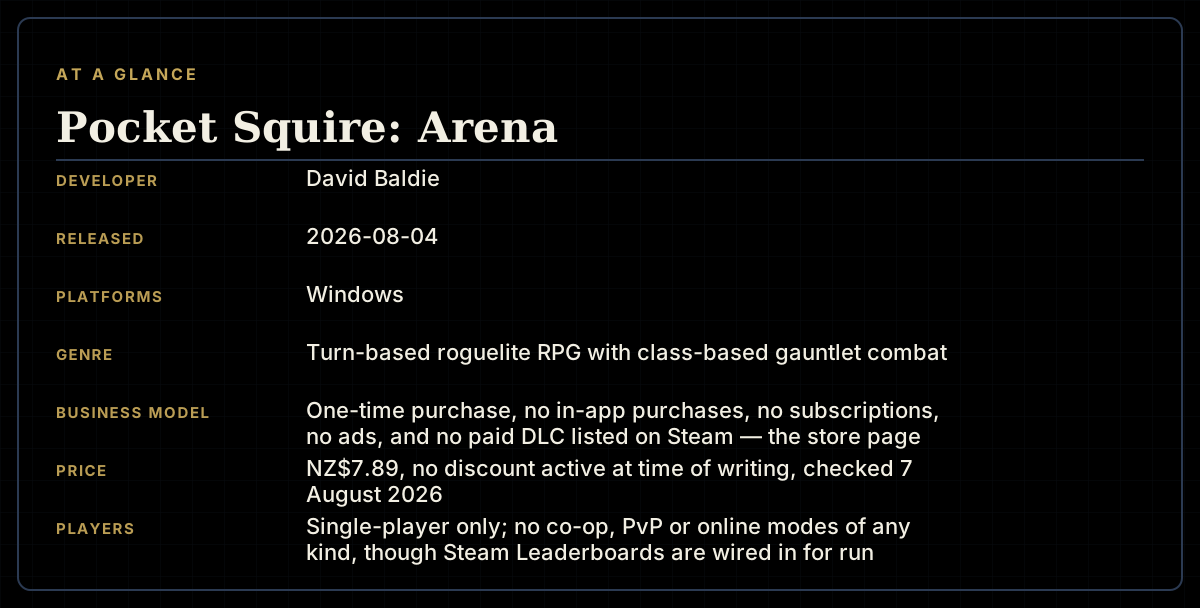
- Developer
- David Baldie
- Publisher
- Pocket Squire
- Released
- 4 August 2026
- Platforms
- Windows
- Genre
- Turn-based roguelite RPG with class-based gauntlet combat
- Monetisation
- One-time purchase, no in-app purchases, no subscriptions, no ads, and no paid DLC listed on Steam — the store page states this outright, and the only linked add-on is the free playtest build, not a real DLC pack
- Players
- Single-player only; no co-op, PvP or online modes of any kind, though Steam Leaderboards are wired in for run comparisons
The short version
Pocket Squire: Arena takes the old browser-game arena gauntlet — pick a class, fight down a ladder of monsters, spend your winnings between bouts — and adds one mean structural twist: your health doesn't reset between fights. Win a bout at 8 percent HP and you walk into the next one at 8 percent HP, which turns every "do I attack or defend" decision into a resource question that compounds across all nine fights in an arena. Eighteen classes plus a hidden nineteenth, 45 power-ups that fuse into new effects, and 50 talents give the run-to-run variance real teeth, and the pricing is about as clean as this genre gets — no in-app purchases, no ads, no subscriptions, just NZ$7.89 once. What it doesn't have, three days after launch, is anyone else's verdict to check that against.
Biggest strengths
- HP and status carry across all nine fights in an arena with no automatic healing between bouts, so managing a wound from fight three all the way to fight nine is the actual skill being tested, not just picking the biggest number each turn
- 18 combat classes plus a hidden 19th, each with its own stat priorities, specials and talent lines, so the class you pick is a real build decision rather than a cosmetic skin
- The Yield option lets you bank your winnings and go home mid-run instead of pushing on, a risk lever most permadeath gauntlets don't bother offering
Biggest weaknesses
- Zero Steam user reviews and a global achievement population consistent with only around 15 tracked players three days after release, too small a sample to say anything about how the game is actually landing
- The developer's own AI Generated Content Disclosure states AI was used for asset generation, language translations, and porting to multiple platforms — worth knowing before you decide how much that matters to you
- Five fixed arenas of nine fights each is the whole game; the store page doesn't claim the encounter order itself is randomised, so replay variety currently rests on power-up draws and class choice rather than a shuffled run structure
Who it's for: Roguelite and gauntlet-battler fans who want permadeath tension from resource management rather than randomised dungeon layouts, and who don't mind buying in before a player consensus exists.
Our recommendation: At NZ$7.89 for a one-time purchase with no further spending built into the design anywhere, the downside of trying it is small even if the fixed five-arena structure turns out to wear thin faster than its class count suggests. There's no free demo of the finished 1.0 build to fall back on, but the linked playtest listing shows Baldie was iterating on this in public before launch.
7 / 10
Most gauntlet battlers reset you to full health between fights, because the alternative is a design headache: how do you keep a run fun once the player is one careless turn from losing it entirely, for the next six fights in a row? Pocket Squire: Arena doesn't solve that problem so much as build the entire game around it. HP carries over from monster to monster within each of its five arenas, so the fight you scrape through at 8 percent health isn't a footnote — it's the opening state of the next one, and possibly the one after that.
The gauntlet, and the arithmetic underneath it
The structure is blunt on paper: five themed arenas, nine fights each, no rest in between, and a loss at any point sends you all the way back to the start. What keeps that from feeling punishing in a lazy way is the turn-by-turn menu underneath it — Special, Attack, Defend, Item, Yield — where every choice is legible and every one of them costs something real. Defending trades your turn for reduced damage taken, which is the correct call against a boss you're trying to out-attrition, but it's the wrong call against a weak trash monster you could just kill outright before it gets to swing back. Burning a potion mid-fight buys survival now at the cost of not having it for the arena boss three fights later. None of that is a novel mechanic on its own — turn-based menu combat with attack/defend/item choices is one of the oldest structures in the genre — but tying it to HP that doesn't reset is what makes each individual decision compound instead of resetting to zero every fight, which is the thing most gauntlet battlers don't bother doing.
And then there's Yield: an option to walk away from a run mid-arena and go home with whatever you've already banked, rather than risk it all on the next fight. It's a small addition, but it's the one that turns "keep pushing or cut your losses" into an actual decision the game asks you to make every single fight, instead of leaving you locked into a binary of win-the-run or lose- everything.
Eighteen classes, one build decision that actually matters
Baldie's pitch is that picking a class is "the first build decision," and the mechanics back that up as far as the official material shows it. Each of the 18 available classes — plus a 19th kept hidden until discovered — carries its own stat priorities, specials and talent options, and one of the official screenshots shows the difference plainly: an archer squire fighting from range with a straightforward HP bar, next to a mage squire whose UI adds a second, blue mana bar beneath the health bar entirely absent from the melee classes' screens. That's not a cosmetic reskin, it's a different resource system depending on what you picked at the start.
Layered on top of class choice is a pool of 45 power-ups drawn during a run, some of them plain stat boosts and some built to fuse together into new effects when the right pieces line up. One of the official screenshots shows the exact text of a fused card, Ruler's Scepter: "Regular attacks trigger a guaranteed-hit follow-up at 50% damage" — a specific, legible rule rather than a vague flat bonus, which is the standard this whole system needs to hit consistently for the promised combinatorics to actually feel different run to run. Whether all 45 power-ups clear that bar the way this one does isn't something the store material can settle, but the one example on display is a good sign. Fifty additional talents unlock across play to shape a build around a favoured class, a favoured power-up type, or the specific arena that keeps ending a run — permanent, between-run progression sitting on top of the disposable run-to-run one.
What the arenas actually look like
The five arenas earn their "themed" billing in the screenshots examined for this review: a sunlit tournament ground under a hilltop castle for the opening bouts, an autumn forest ring with a timber-built spectator stand, a torch-lit cave for a bat fight, and a crumbling crypt for a skeletal Bone Drake, each with its own enemy roster and framing rather than the same backdrop repainted. Between fights, a proper shop hub appears — an archer NPC offering Shop, Talk and Leave options at a fletcher's stall in one screenshot — which is where the gold you're carrying into later fights actually gets spent. The visual direction throughout is warm, storybook-cartoon character art over painterly backgrounds, colourful and family-friendly rather than grim, which tracks with the "Colorful" and "Family Friendly" tags players themselves have attached to the store page.
One disclosure worth naming plainly: the store page's own AI Generated Content Disclosure states that AI was used in "asset generation," "language translations," and "porting to multiple platforms." That's the developer's own wording, not an inference from anything in the art itself, and it's offered here because readers increasingly want to know before they buy, not because the screenshots examined for this review show anything that reads as obviously synthetic.
Accessibility that actually shows up in the category list
For a one-person project, the accessibility footprint on the Steam listing is unusually complete: adjustable text size, colour alternatives for players who need them, custom volume controls, narrated game menus, a keyboard-only control scheme, a touch-only control scheme, and — notably for a turn-based game — an explicit "Playable without Timed Input" category, meaning nothing here is designed to punish slow reactions. None of that requires taking the developer's word for it; Steam only shows these categories when a game's own settings support them. It's a genuinely strong showing next to most solo-developed releases in this genre.
The gap this review can't close
What's missing, three days after a 4 August launch, is anyone else's read on any of this. Pocket Squire: Arena carries zero Steam user reviews on both the lifetime and negative-only pulls, and the global achievement stats — Steam's other aggregate signal — are tracking a population consistent with roughly 15 players across the 41 achievements Steam currently reports percentages for, out of 43 total. That's too small a sample to draw a difficulty curve from, and this review isn't going to pretend otherwise; it's simply the honest state of a brand-new release. What that population does confirm is scope — achievements spanning a run-ending Yield ("Know When to Fold"), a full clear ("Squire No More"), a series of hidden late-run milestones, and a leaderboard-flavoured "Top of the Ladder" and "Prestige Worthy" pair that suggest there's a reason to keep running the gauntlet after your first clear.
The other open question is structural rather than statistical: the store material describes five fixed arenas of nine fights apiece, and nothing in the official description claims the fight order or arena layout is itself randomised the way a Slay the Spire or Dicey Dungeons map would be. If that's accurate, the game's replay variance is coming entirely from which power-ups and talents you draw and which class you're running, not from the shape of the run itself — a perfectly workable design, closer in spirit to a classic arena climb like Swords and Sandals than to a fully procedural roguelike, but worth knowing going in if "roguelite" led you to expect shuffled floors.
Final verdict
Pocket Squire: Arena earns a 7.0 for doing something genuinely load-bearing with a familiar structure — carrying HP across nine fights per arena turns ordinary attack/defend choices into a resource-management problem that compounds the way most gauntlet battlers never let it — and for pairing that with real class variety, a fused power-up system that shows its work in at least one verifiable example, and a monetisation model about as clean as this genre gets. It doesn't score higher because there's no player base yet to confirm whether 45 fights across five fixed arenas stays interesting past a first clear, and because the AI-assisted asset and porting pipeline is worth knowing about even where nothing in the screenshots looks obviously synthetic. At NZ$7.89 for a one-time purchase with nothing else to pay for afterward, the cost of finding out for yourself is low.
Pros and cons
Pros
- HP and status carry across all nine fights in an arena with no automatic healing between bouts, so managing a wound from fight three all the way to fight nine is the actual skill being tested, not just picking the biggest number each turn
- 18 combat classes plus a hidden 19th, each with its own stat priorities, specials and talent lines, so the class you pick is a real build decision rather than a cosmetic skin
- The Yield option lets you bank your winnings and go home mid-run instead of pushing on, a risk lever most permadeath gauntlets don't bother offering
- Genuinely comprehensive accessibility options for a one-person team — adjustable text size, colour alternatives, narrated menus, keyboard-only and touch-only control schemes, and no timed inputs anywhere in a turn-based game that never needed them
- A one-time NZ$7.89 purchase with no in-app purchases, subscriptions, ads or real paid DLC, in a genre where free-to-play gauntlet clones usually gate the fun behind a shop
Cons
- Zero Steam user reviews and a global achievement population consistent with only around 15 tracked players three days after release, too small a sample to say anything about how the game is actually landing
- The developer's own AI Generated Content Disclosure states AI was used for asset generation, language translations, and porting to multiple platforms — worth knowing before you decide how much that matters to you
- Five fixed arenas of nine fights each is the whole game; the store page doesn't claim the encounter order itself is randomised, so replay variety currently rests on power-up draws and class choice rather than a shuffled run structure
- Currently Windows-only on Steam despite macOS and Linux minimum-spec blocks already published on the store page, including a stated SteamOS/Steam Deck target, so those ports evidently haven't shipped yet
Screenshots
-
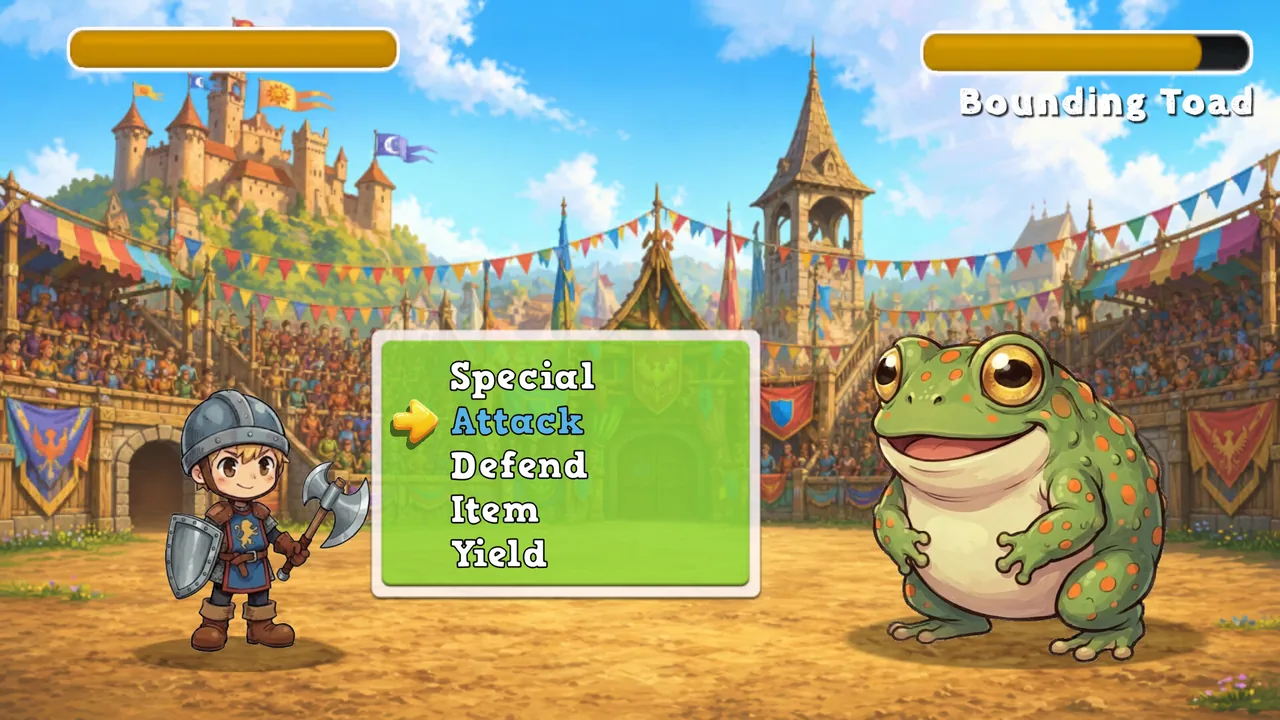
Pocket Squire: ArenaImage: Pocket Squire via Steam -
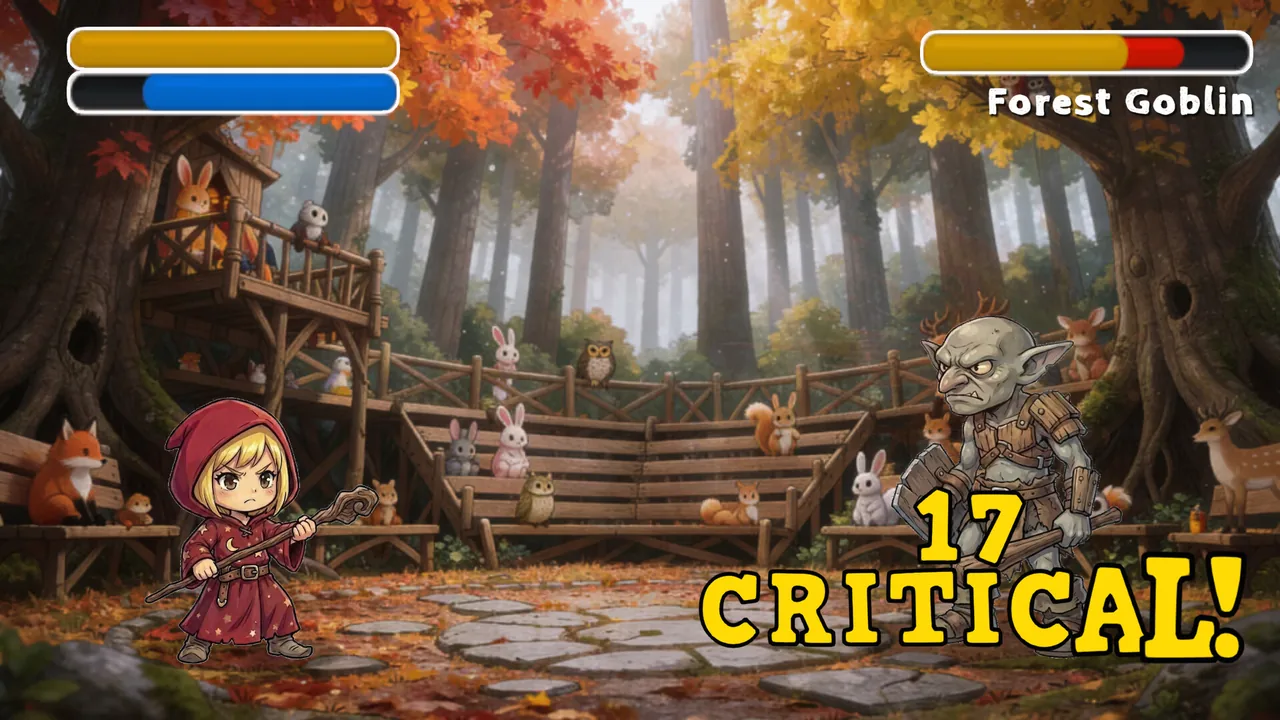
Pocket Squire: ArenaImage: Pocket Squire via Steam -
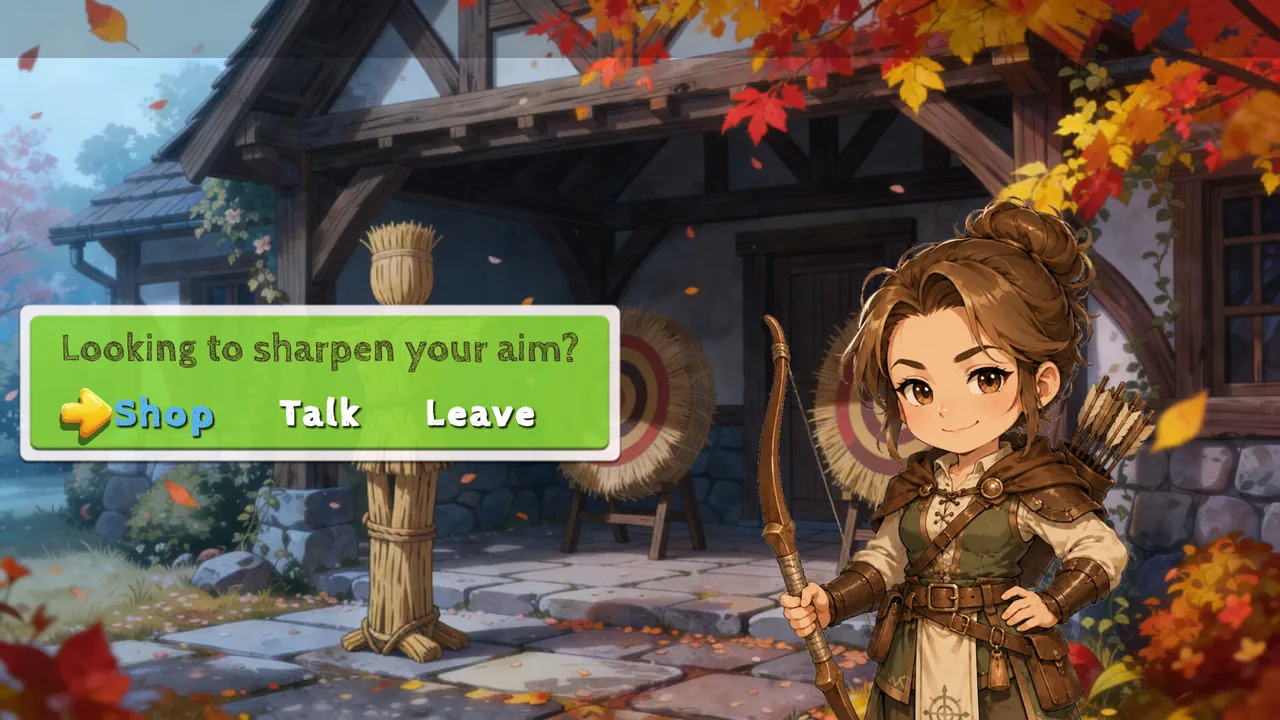
Pocket Squire: ArenaImage: Pocket Squire via Steam -
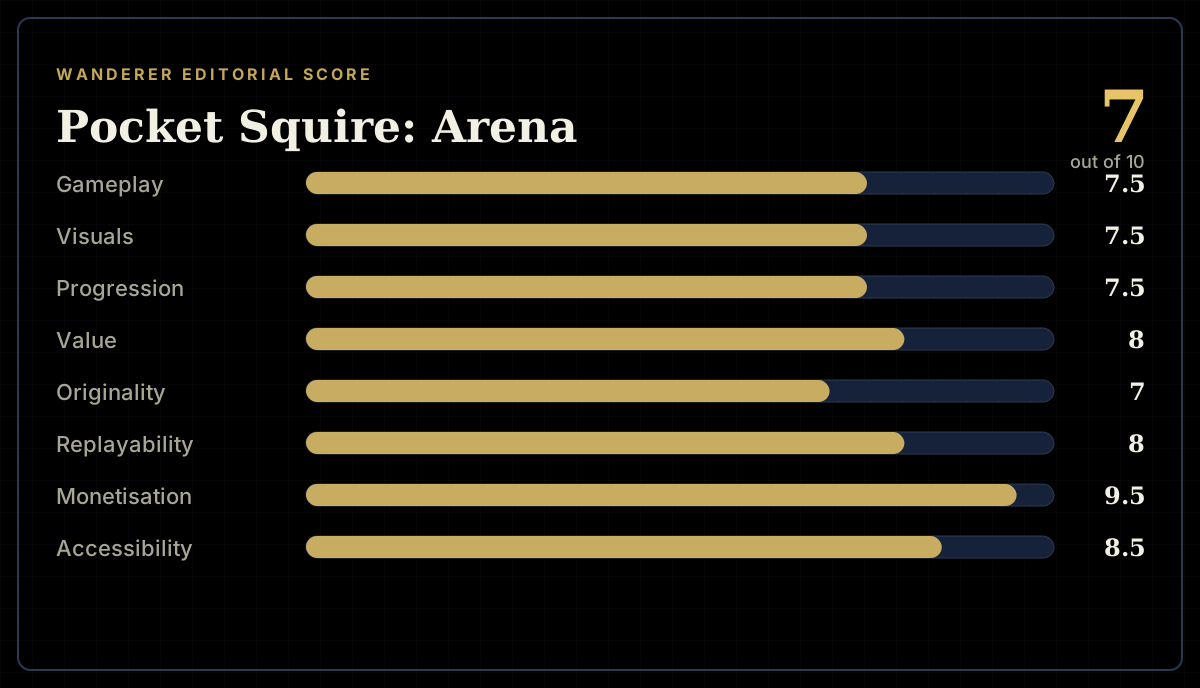
How the review scores each part of the gameWanderer Editorial -
The game at a glanceWanderer Editorial -
The short versionWanderer Editorial