Game review
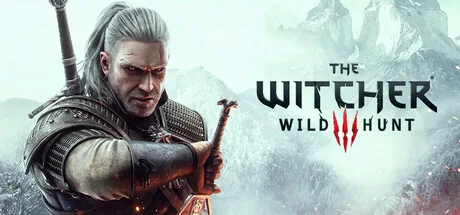
The Witcher 3: Wild Hunt
9 / 10
- Developer
- CD Projekt Red
- Publisher
- CD Projekt
- Released
- 19 May 2015
- Platforms
- Windows, PlayStation 4, PlayStation 5, Xbox One, Xbox Series X/S, Nintendo Switch
- Genre
- Action RPG / Open-World RPG
- Monetisation
- Premium, one-off purchase. The two story expansions, Hearts of Stone and Blood and Wine, are sold separately or bundled with the base game in the Complete Edition. The 2022 next-gen visual overhaul was a free update for everyone who already owned the game — no in-game store, currency, battle pass or microtransaction of any kind
- Players
- None — entirely single-player, no co-op or competitive modes
The short version
The Witcher 3's real achievement was never the war between Nilfgaard and the Northern Kingdoms, or even the search for Ciri — it's the side quests and Witcher Contracts, dozens of them, that treat a missing cat or a haunted barn as material for a genuinely dark short story with a moral sting in it. That writing hasn't aged a day. The systems wrapped around it have: combat that stays merely competent across a hundred-hour game, an inventory that turns into a junk drawer by hour twenty, and level-gating that actively fights the open world it's built on top of. Velen, the game's second and largest region, drags on long enough to test that patience directly.
None of that erases what's underneath it. Blood and Wine, the second expansion, is close to the best argument the genre has for what a paid expansion can be rather than what it usually is, and the 2022 next-gen update means the 2015 game still looks and runs like something released this decade. This is still a landmark, just not a frictionless one.
Biggest strengths
- Witcher Contracts and "minor" side quests routinely out-write the main campaign, turning throwaway bounty-board jobs into complete, morally uncomfortable short stories
- Blood and Wine reframes an entire region around a fairy-tale aesthetic and gives Geralt one of the best-written send-offs in the series
- The 2022 next-gen update adds ray tracing, higher-resolution textures and a substantial performance uplift as a free upgrade, not a paid remaster
Biggest weaknesses
- Combat stays adequate rather than exceptional for the entire runtime — sign-and-swing rhythms rarely gain new depth past the first ten hours
- Inventory management becomes a genuine chore by the midgame, with near-identical junk, crafting components and readable books all competing for the same limited slots
- Quest and gear level requirements routinely sit well above Geralt's actual level, turning underleveled fights into slow attrition rather than a fair challenge
Who it's for: Players who want a world that keeps writing short stories out of its side content long after the main plot has stopped surprising them, and who don't mind an action-RPG combat system that never becomes more than good enough.
Our recommendation: At NZ$16.99 for the Complete Edition (both expansions included, checked 30 July 2026), this is one of the largest amounts of well-written content money can buy in an RPG. Worth owning even for players who bounce off open-world bloat elsewhere — the writing carries the parts that don't hold up mechanically.
9 / 10
Skellige has a quest where you're hired to fish a drowned man out of the sea so his family can bury him properly. There's no combat, no boss, no branching dialogue tree with a "good" and "bad" outcome clearly labelled. You just do the job, and the game trusts you to sit with what it implies about the family you just met. Multiply that by several dozen, spread across Witcher Contracts, Treasure Hunts and quests that never get a marker more dramatic than a noticeboard pin, and you have the actual case for why The Witcher 3 is still talked about eleven years after release. It was never really about the war for the Northern Kingdoms.
That's the argument worth making properly, because it's specific enough to defend rather than just assert. The flip side is just as specific: this is also a game where combat never becomes more than good, where the inventory turns into a landfill by hour twenty, and where the open world's level requirements actively work against letting you explore it freely. Both things are true at once, and neither one cancels the other out.
Quests as the game's actual genre
Most open-world RPGs treat side content as volume — more markers, more collectibles, more distance between the moments that actually matter. The Witcher 3 treats its side quests as the format itself. Witcher Contracts are framed as monster-hunting jobs, and mechanically that's what they are: track a beast, investigate its lair, kill it or don't. But the game routinely uses that structure to deliver something closer to a short story with teeth. A contract that starts as "kill the ghost haunting this orchard" can end with the discovery that the "monster" is a wronged woman, and that killing her is the easy option rather than the right one. Geralt's neutrality as a professional witcher — paid to solve a problem, not to moralise about it — gives every one of these stories somewhere to land that a more heroic protagonist couldn't reach.
Treasure Hunts and the game's dozens of smaller, unmarked-on-arrival side quests do the same work at a smaller scale. A quest that begins as "find my runaway pig" can resolve as a story about a village turning on one of its own. None of this requires the main plot to be weak for it to land — the Ciri storyline is genuinely well told — but it does mean the game's best writing is opt-in, tucked behind noticeboards and half-overheard conversations rather than pushed at you through cutscenes. Players who treat side content as filler to be cleared as fast as possible are skipping the best part of the game without realising it.
Combat that never quite catches up
Set against that writing, the combat system is the part of The Witcher 3 that time has been least kind to. Geralt fights with a light and heavy attack split across steel and silver swords, five magic Signs (Aard for a telekinetic shove, Axii for confusion, Igni for fire, Yrden to slow enemies, Quen for a temporary shield), and a stamina bar that limits how liberally any of it can be used. It's a functional, occasionally elegant system — chaining Yrden into a heavy silver-sword combo against a group of drowners still feels good on the fiftieth hour the same way it did on the first — but it never really grows past that first impression. There's no meaningful new combat idea introduced in the back half of a hundred-hour game; you're doing the same sign-and-swing rhythm at level 40 that you were doing at level 10, just against enemies with bigger health bars.
Lock-on and camera behaviour in group fights remain a known soft spot, and the crossbow — Geralt's only ranged option outside of Signs — has always felt like an afterthought bolted onto a melee kit rather than a genuine second combat style. None of this makes the game bad to fight in. It makes the combat the part of the design that was never going to be the reason people still talk about this game in 2026, and CD Projekt Red seems to have understood that even at launch: everything else in the design is built to make the moments between fights carry more weight than the fights themselves.
Inventory, itemization and a level system that fights the map
The Witcher 3 gives you an enormous amount of stuff, and very little help sorting it. Crafting components, alchemy ingredients, readable books, quest items and straightforward vendor junk all compete for the same inventory space, and the difference between "keep this, it's a rare crafting component" and "sell this, it's worth nothing" is rarely obvious from the item's name or icon alone. Twenty hours in, a routine inventory check turns into an actual task rather than a glance, and the game never really solves that — it just adds carrying-capacity upgrades that push the problem back a few more hours rather than removing it.
The bigger structural issue is how quest and gear levels interact with an open world explicitly built around going wherever you want. Contracts, main quests and loot all carry recommended levels, and wandering into content well above Geralt's current level doesn't produce an interesting hard fight — it produces enemies that shrug off damage and hit disproportionately hard, turning exploration into a guessing game about which direction is currently "safe." That's a strange design choice for a game whose biggest selling point is the freedom to go anywhere, and it means the world's openness is more theoretical than practical for a large chunk of the early-to-mid game, until Geralt's level catches up to wherever curiosity has taken him.
Weapon and armor degradation compounds the busywork without adding real stakes: swords lose sharpness over time and need whetstones, armor needs repair kits, and neither system meaningfully changes how you approach combat — it just means periodic detours to a blacksmith or armorer to maintain the status quo. It's friction without a payoff, and it's one of the few systems here that a decade of hindsight makes look more like padding than design.
Velen, and the shape of the game's middle
Velen — the "no man's land" region Geralt and Ciri's story routes through early — is where the game's structural ambition and its pacing problems collide most directly. It's a genuinely well- realised setting: a war-ravaged countryside where neither the Northern Kingdoms nor Nilfgaard's authority means much, populated by desperate villagers, deserters and the Bloody Baron's household drama, one of the campaign's best-written subplots. The problem is scale. Velen is also the largest of the game's early regions, and its density of bandit camps, monster nests and "clear this location" markers keeps going well past the point where the setting's thesis — that war has made this place lawless and cruel — has already been made. You can absolutely spend twenty or more hours here without touching the main quest, and a meaningful chunk of that time is repeating the same handful of encounter types the region already demonstrated in its first few hours.
That's the tension at the center of The Witcher 3's world design generally: the writing wants you to slow down and notice things, and the map wants you to clear things. Velen is where that tension is least resolved. Novigrad and Skellige, which follow it, feel considerably tighter for covering similarly large areas, which makes Velen's bloat stand out rather than read as a consistent house style.
The next-gen update: five years late, still welcome
CD Projekt Red's December 2022 "Next-Gen" update is worth treating as part of the current package rather than a footnote, because it changes what buying this game in 2026 actually gets you. It was released free for every existing owner on PC, PlayStation and Xbox, adding ray tracing, higher- resolution textures, improved crowd density and a handful of new outfits and a quest tied to the Netflix adaptation, alongside all of the previously released expansion content in one package. The update did launch with its own performance complaints and bugs on some platforms, which CD Projekt Red has continued to patch in the years since — the version available today is considerably more stable than the one that shipped at launch.
What matters for a 2026 buyer is simpler: this is a nine-year-old game that still looks and runs like something built for current hardware, at no extra cost beyond the original purchase. That's a meaningfully different proposition than most "definitive editions" of games this age, which usually ask for a second purchase to get the modern version.
Blood and Wine: the case for the best expansion in the genre
If the base campaign's argument is "the side quests are the point," Blood and Wine is that argument taken to its logical extreme and given an entire region to prove it in. Geralt travels to Toussaint, a duchy the war never touched, to hunt a beast terrorising the local nobility — and the expansion uses that fairy-tale setting deliberately, swapping Velen's grey desperation for a sun-lit, vineyard- soaked aesthetic that's a genuine tonal departure from everything that came before it. That contrast isn't decoration; it's the point. Toussaint's chivalric fantasy is presented as a beautiful lie worth examining, and the expansion's central mystery uses the setting's own self-image against it in a way the base game, tonally locked into grim pragmatism, never really could.
It also functions as a proper send-off. Blood and Wine was announced as Geralt's final major story content, and it plays like a team that knew it was writing a farewell rather than another content drop — new mechanics (a customisable vineyard base, mutation-based combat upgrades), a new region built at a scale that rewards exploring it rather than clearing it, and a conclusion to Geralt's arc that lands with real weight. Winning Best RPG at The Game Awards 2016 wasn't a formality; among expansion packs specifically, very few games in the genre have matched an add-on this complete, this tonally distinct from its base game, and this clearly not just "more of the same, priced separately."
Who should play this instead of Baldur's Gate 3
Both are landmark RPGs, and Wanderer has reviewed both, so the comparison is worth making directly rather than leaving implicit. Baldur's Gate 3 is the better pick for players who want their choices to visibly restructure a scene in real time — a failed check spawning new combat, a dead companion rerouting a quest chain — inside a turn-based system with genuine tabletop depth. The Witcher 3 is the better pick for players who want that same sense of consequence delivered through prose and world-state rather than branching mechanics, wrapped around real-time action combat that asks far less of you moment to moment than 5th Edition rules do. If what you actually want is turn-based tactics and reactive combat encounters, Baldur's Gate 3 wins that comparison outright. If what you want is a hundred hours of dark fantasy short fiction with a monster-hunter walking you through it, this is still the reference point, and its combat asking less of you is arguably a feature rather than a compromise for that specific audience.
Verdict
The Witcher 3 earns its reputation through material that most open-world RPGs treat as padding: the side quest, the bounty-board contract, the quest nobody remembers the name of two years later. That writing hasn't dated at all. What has dated is the scaffolding around it — combat that plateaus early and never really develops, an inventory that becomes a genuine chore, level-gating that punishes the exact kind of free exploration the world is designed to reward, and a second region that outstays its welcome before Skellige and Novigrad tighten things back up. None of that is minor, and pretending otherwise wouldn't be honest.
None of it changes what Blood and Wine proves, either: that this team, at its best, could build an entire expansion around a single tonal idea and land it better than most studios land a whole game. Combined with a free next-gen update that keeps the whole package looking current nine years on, and a Complete Edition currently sitting at NZ$16.99 with both expansions included, this remains one of the strongest value propositions in the genre regardless of when you're buying it. Players who want their open world to keep telling them stories, not just handing them icons to clear, should already own this. Players who need their combat to keep evolving across a hundred hours will find the seams here more than most.
Price and Steam review data checked 30 July 2026.
Pros and cons
Pros
- Witcher Contracts and "minor" side quests routinely out-write the main campaign, turning throwaway bounty-board jobs into complete, morally uncomfortable short stories
- Blood and Wine reframes an entire region around a fairy-tale aesthetic and gives Geralt one of the best-written send-offs in the series
- The 2022 next-gen update adds ray tracing, higher-resolution textures and a substantial performance uplift as a free upgrade, not a paid remaster
- Gwent, the in-world card game, is deep enough that CD Projekt Red later shipped it as its own standalone title
- Doug Cockle's performance as Geralt and the orchestral score give the whole game a consistent, weathered tone that never breaks character
- Choices from Act 1 resurface in dialogue and world state dozens of hours later instead of quietly disappearing after their scene ends
Cons
- Combat stays adequate rather than exceptional for the entire runtime — sign-and-swing rhythms rarely gain new depth past the first ten hours
- Inventory management becomes a genuine chore by the midgame, with near-identical junk, crafting components and readable books all competing for the same limited slots
- Quest and gear level requirements routinely sit well above Geralt's actual level, turning underleveled fights into slow attrition rather than a fair challenge
- Velen, the game's largest early region, pads its "no man's land" premise with repetitive bandit camps and monster nests long after the point has been made
- Weapon and armor degradation forces regular trips to blacksmiths and armorers that add busywork without adding challenge
- The base campaign's final act noticeably compresses compared to the unhurried pace of everything before it
Screenshots
-
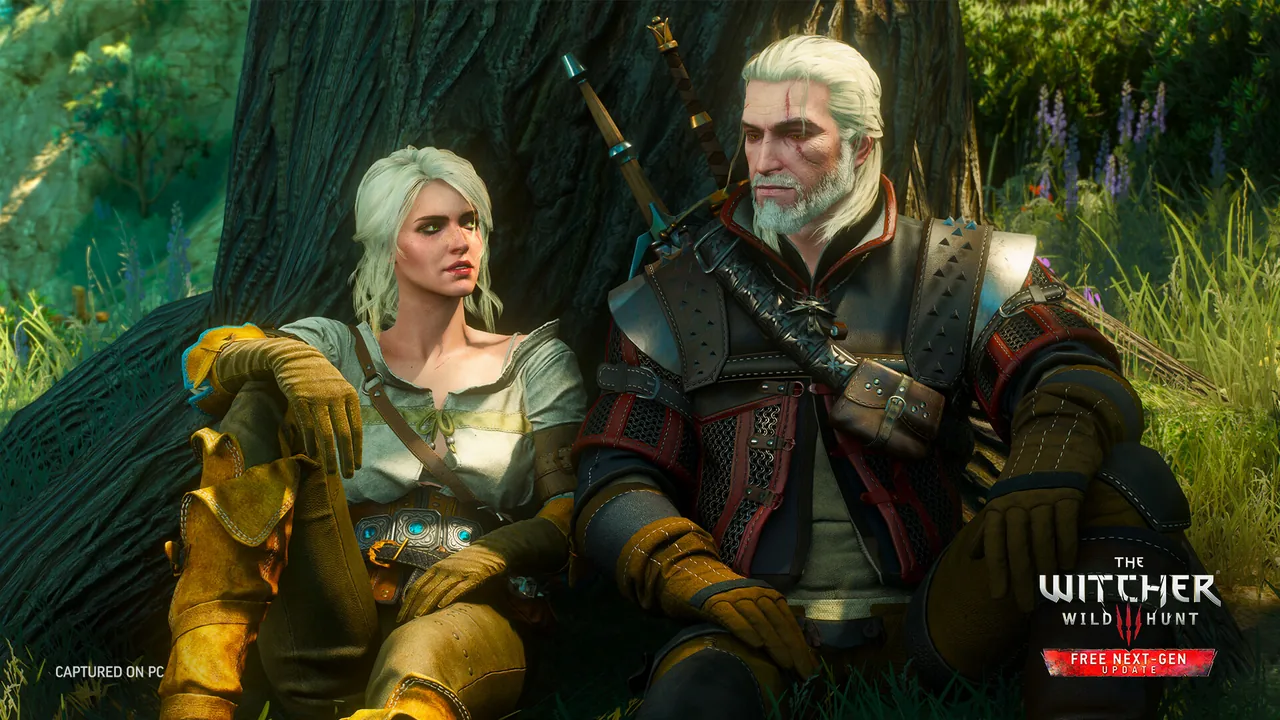
The Witcher 3: Wild HuntImage: CD PROJEKT RED via Steam -
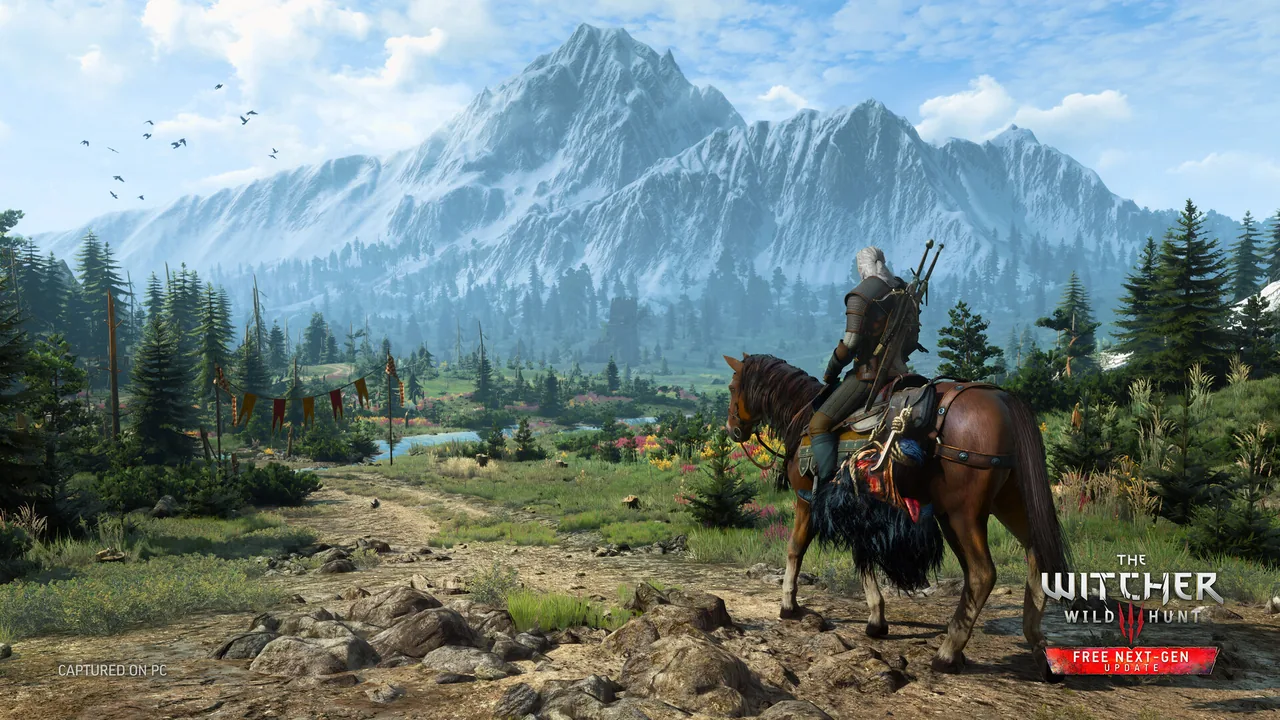
The Witcher 3: Wild HuntImage: CD PROJEKT RED via Steam -
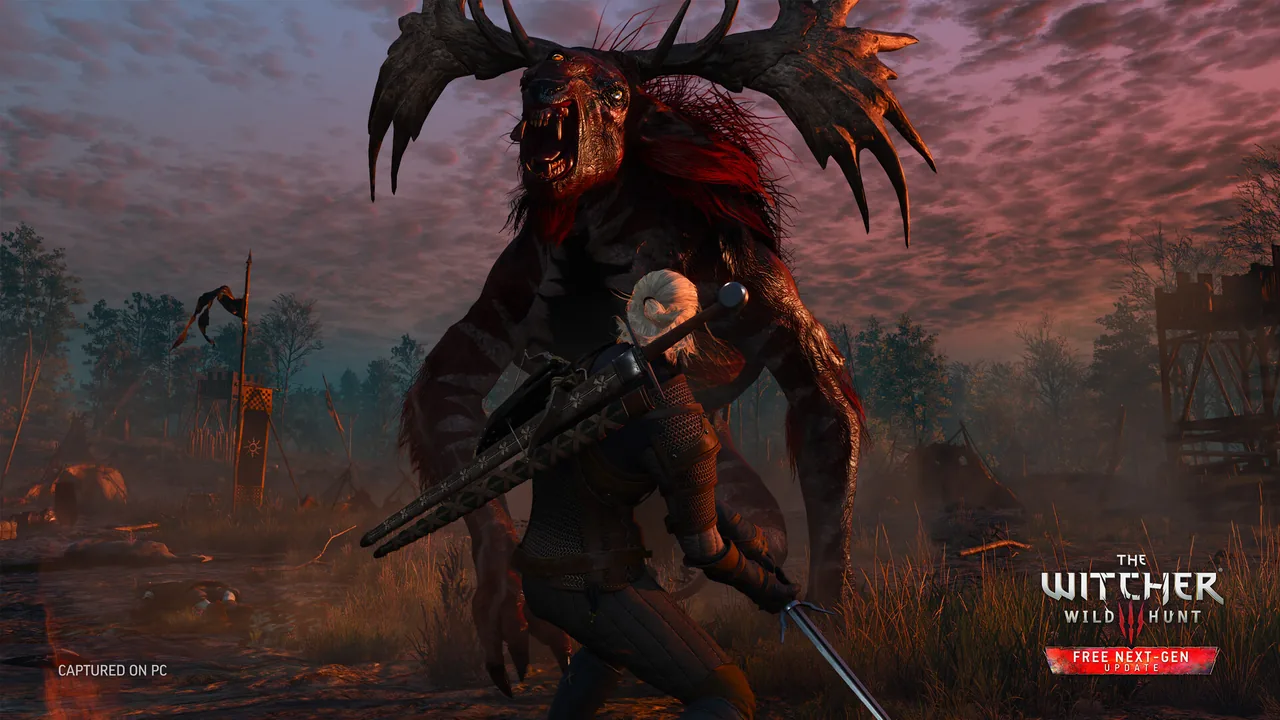
The Witcher 3: Wild HuntImage: CD PROJEKT RED via Steam -
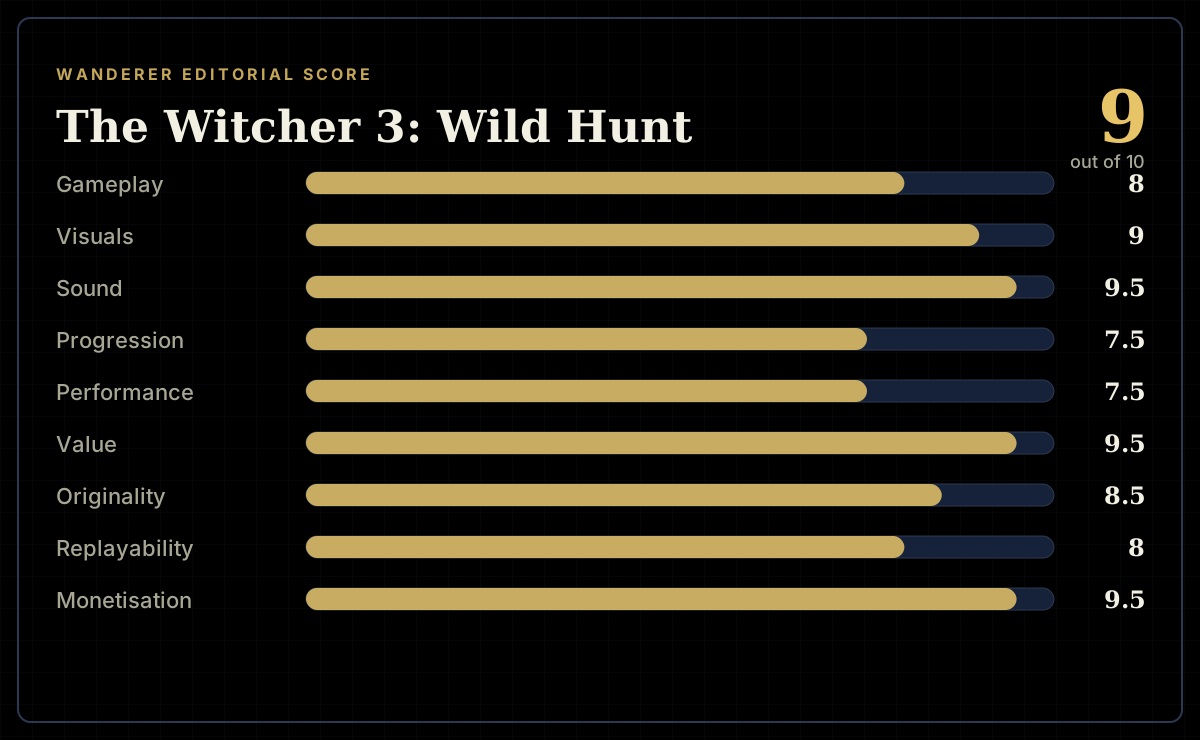
How the review scores each part of the gameWanderer Editorial -
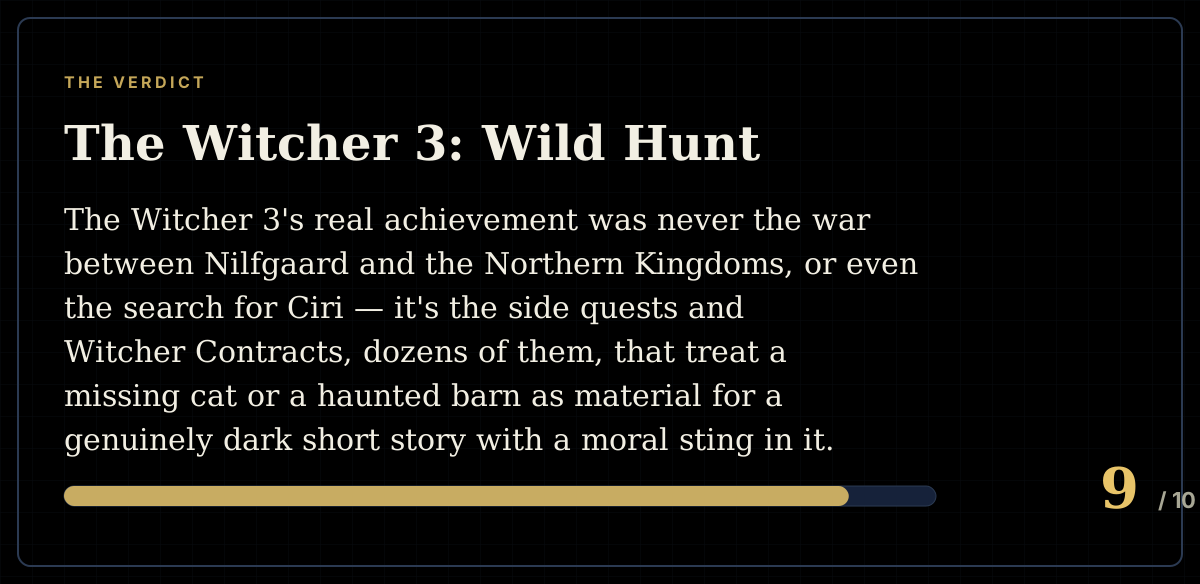
The short versionWanderer Editorial