Game review
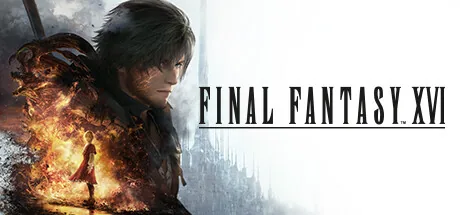
Final Fantasy XVI
7.5 / 10
- Developer
- Square Enix
- Publisher
- Square Enix
- Released
- 22 June 2023
- Platforms
- Windows, PlayStation 5, Xbox Series X|S
- Genre
- Action RPG
- Monetisation
- Premium, one-off purchase; two story DLC expansions sold separately or bundled as an Expansion Pass, no gameplay-affecting microtransactions
- Players
- Single-player
The short version
Final Fantasy XVI is the mainline series' most confident action game and its thinnest RPG, and those two facts are the same decision made twice. Battle designer Ryota Suzuki, a Capcom veteran of the Devil May Cry series, builds Clive's moveset around stagger windows, dodge timing and Eikon-ability combos with a depth that rewards real execution, and the Eikon set pieces — city-levelling clashes between giant summoned beasts, staged as playable action sequences rather than cutscenes — are unlike anything else the genre has produced. Getting there costs the series almost everything that used to make it an RPG: one controllable character, no meaningful gear stats, no job system, no party tactics. The mid-game side quests, which exist mostly to justify that structure, are the weakest content Square Enix has shipped under this name in years.
Biggest strengths
- Stagger, dodge and Eikon-ability combos give Clive's moveset a genuinely high execution ceiling for players who push past the auto-friendly default settings
- Eikon battles restage giant-monster clashes as fully playable, city-scale action sequences with their own bespoke mechanics rather than quick-time cutscenes
- Masayoshi Soken's score shifts between orchestral menace and full rock arrangements during Eikon fights without ever feeling like a gimmick
Biggest weaknesses
- Only Clive is directly controllable; companions fight on their own AI logic with no party-tactics layer to manage
- Gear amounts to one weapon and a couple of accessories per slot with no meaningful build variety, socket system or itemisation depth to chase
- A stretch of mid-game side quests reduces to fetch-and-report busywork with barely disguised padding, and several are required to keep pace with the main story
Who it's for: Action-game players who want a Devil May Cry-calibre combat system wrapped in a prestige dark-fantasy story, and existing Final Fantasy fans willing to accept that this entry trades series-standard RPG systems for that combat rather than layering them on top of it. A poor fit for anyone who wants meaningful gear choices, party control or a game that gets harder without switching difficulty modes.
Our recommendation: Worth full price if the combat system and the Eikon battles are what you're buying it for — they don't disappoint. Worth waiting for a sale if you're coming for an RPG, since the systems that word usually implies are mostly not here, and the mid-game side quests will test your patience regardless of what you paid.
7.5 / 10
Final Fantasy XVI opens with a decision the marketing never really hid: this is the first mainline entry built as an action game first and a role-playing game a distant second, and almost everything about how it plays follows from that choice. Where the last numbered entry tried to have both — an open world, a party, real-time combat that still gestured at command menus — Final Fantasy XVI picks a lane and drives down it at full speed, with a battle system designed by a Capcom veteran and set pieces built at a scale nothing else in the genre attempts. The question worth settling before you buy it isn't whether that combat system is good. It's whether you're the kind of Final Fantasy player who came for the systems it removed to make room.
What actually got removed
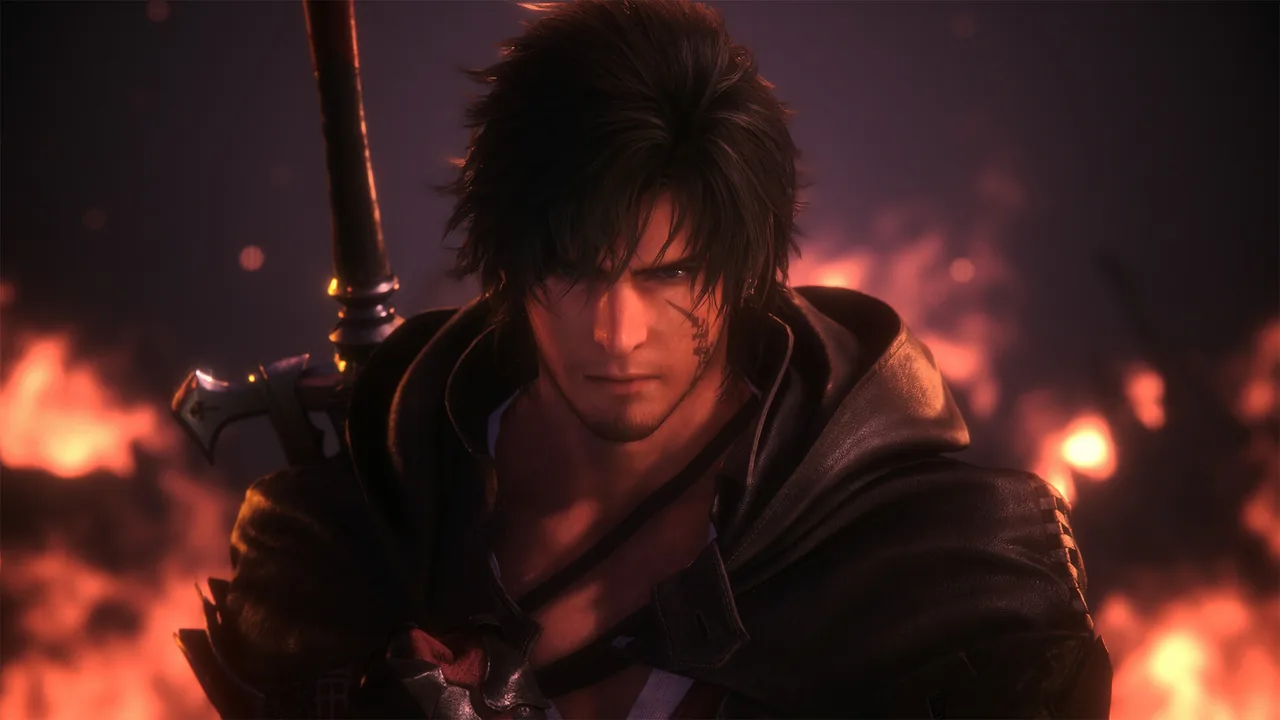
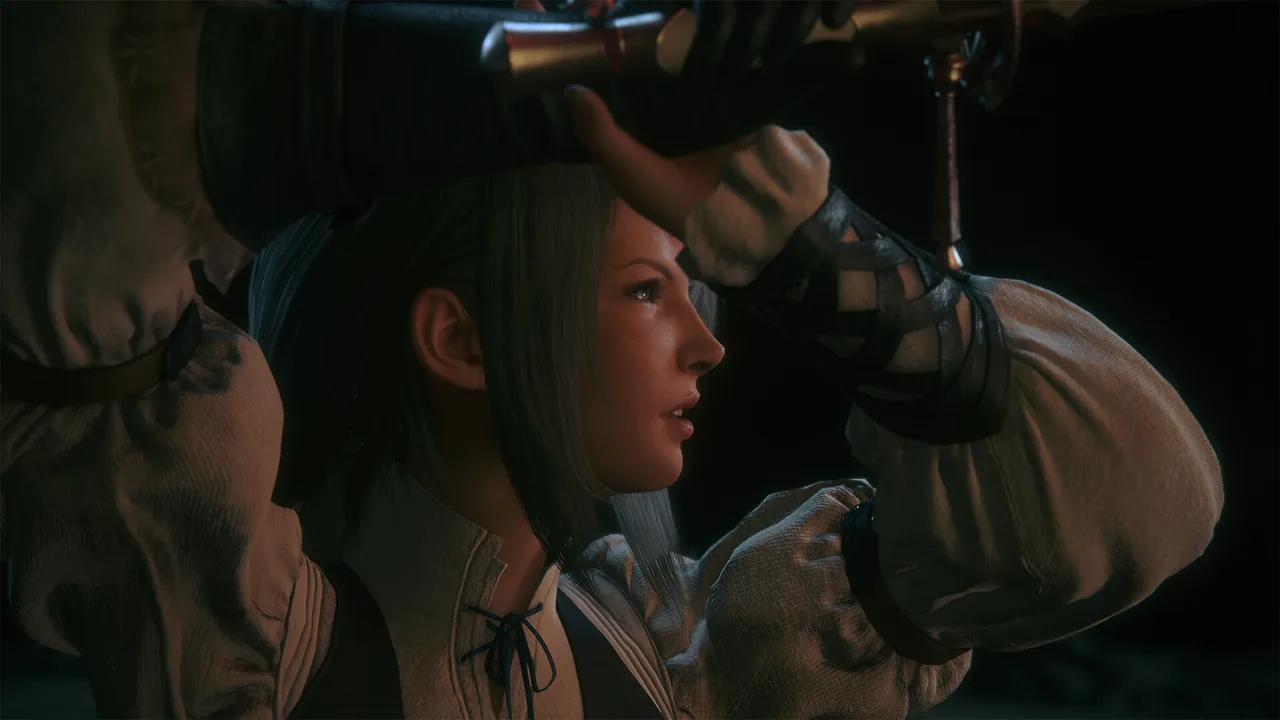
Start with the specifics, because "it's not an RPG anymore" gets thrown around a lot in Steam reviews without much precision behind it. Here's what changed. Clive Rosfield is the only character you directly control for the entire game; his companions — Jill, Torgal the dog, and whoever else is in the party at a given story point — fight alongside him on their own AI logic, with no menu to issue them orders and no way to swap into their perspective mid-fight. Torgal takes limited commands, but that's the extent of party management. An Eikon-based job system — distinct combat classes built around each summon — was in development early on and was cut before launch specifically because it constrained what Clive could look like and do at any given moment; what shipped instead is a single, universal moveset that borrows a little of everything rather than specialising into a class.
Gear follows the same logic. There's a weapon slot and a small number of accessory slots, and between them the entire equipment layer amounts to a handful of stat numbers and passive effects — no socket system, no set bonuses, no meaningfully different weapon archetypes to chase, no gear-driven build identity the way Materia or Sphere Grids or Job Crystals have given past entries. Character progression runs almost entirely through the ability system instead: Eikon powers earned from story progress, slotted into a loadout and levelled up with points spent as you see fit. That's a real design decision, not neglect — it concentrates every ounce of player agency into "which abilities do I bring to this fight" rather than spreading it across gear, classes and party composition the way the series has for decades. Whether that's a fair trade depends entirely on what you play Final Fantasy for. If the answer is build crafting, inventory management or squad tactics, XVI has almost none of it. If the answer is "give me one character whose combat toolkit I can master completely," that's precisely what it delivers.
Combat: judged as an action game, it earns the comparison it invites
Judge Final Fantasy XVI on those terms and the removal starts to look less like a loss and more like a trade that was made deliberately, by someone who knew what he wanted the result to feel like. Battle designer Ryota Suzuki is a Capcom veteran of the Devil May Cry series, and it shows in exactly the places you'd expect: a stagger system that rewards sustained pressure over button-mashing, dodge timing tight enough to punish greedy attacks, and Eikon abilities — fire, wind, ice and more, each granting a distinct set of ranged and melee options — that slot into a loadout you can freely reassign between encounters rather than commit to permanently. Chaining a melee combo into an Eikon special into a follow-up from a second ability, timed around an enemy's stagger window, is where the system peaks, and it rewards the kind of execution that action-game players specifically look for.
The catch, and it's the single most common complaint in the game's negative Steam reviews, is that none of that depth is required on the default difficulty. Enemies telegraph clearly, checkpoints are generous, and a player who never learns proper dodge timing or ability chaining can still clear most of the campaign leaning on a handful of button presses. Square Enix built in an answer for players who want the harder version — accessibility-minded Timely Accessories that auto-dodge or auto-combo for players who'd rather focus on story can be left off, and a post-campaign Final Fantasy mode raises the ceiling meaningfully — but that answer is opt-in, and a first playthrough on default settings genuinely doesn't ask the combat system to prove what it's capable of. That's a real design gap, not a matter of taste: a combat system this well built shouldn't need a harder difficulty mode to make its own mechanics matter.
The Eikon battles: a different kind of set piece
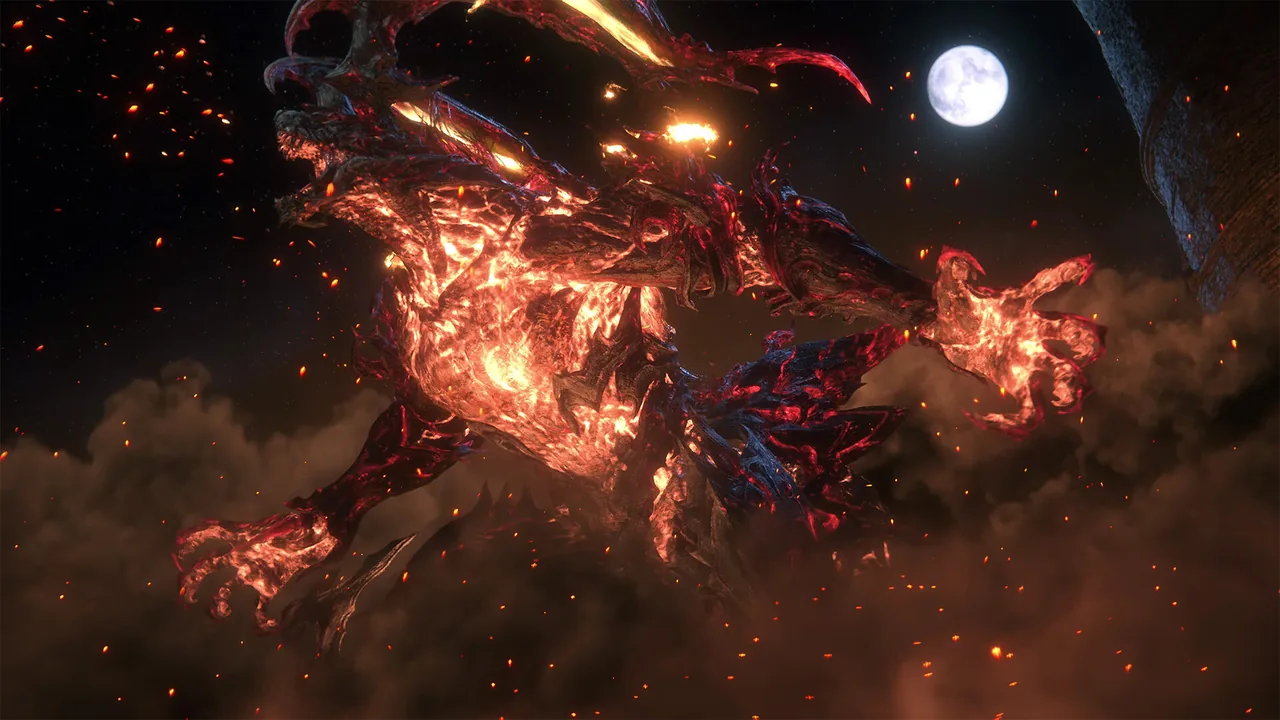
Whatever verdict you reach on the rest of the game, the Eikon battles are worth the price of admission on their own, and they're worth being specific about rather than just calling them spectacular. These are the clashes between the giant summoned beings that give the game its name — Ifrit, Titan, Bahamut and others — and rather than staging them as pre-rendered cutscenes punctuated by quick-time prompts, Square Enix built them as fully playable action sequences at a scale the studio has never attempted: city blocks collapsing in real time, the camera pulling out to kaiju scale before diving back into close-quarters combos, entire sequences that shift genre mid-fight from brawler to rail shooter to something closer to a bullet-hell dogfight, then back again. Each Eikon fight has its own bespoke mechanics built specifically for that encounter rather than reusing a shared toolkit, which is a genuinely expensive way to build five or six major set pieces and it shows in how distinct each one feels from the last. Nothing else currently on the market stages a fight at this scale while keeping the player's hands on the controls the entire time, and it's the strongest evidence in the whole game for what the action-first redesign bought.
Pacing and the mid-game problem
The trade-off shows up hardest in the side content, and the pattern in player feedback is specific enough to name directly. The main story is tightly paced through its opening hours and again once the back half's stakes escalate, but the middle stretch leans on side quests to pad the runtime between story beats, and a meaningful share of them reduce to the same loop: talk to an NPC, walk to a marker, kill or fetch something, walk back, collect a reward that's rarely worth the trip. Several of the most common complaints in recent Steam reviews single this out specifically — not "there are side quests," which every Final Fantasy has, but that too many of them are required, in the sense that skipping them leaves ability points and gil short of what later fights expect, at a point where the main story itself has slowed down. It's a different failure mode than an overstuffed open world; there's no map to ignore here, just a linear sequence of fetch tasks between two stronger stretches of story, and it's the section most likely to make a player who loved the opening hours put the controller down before the ending.
Tone and story: a fantasy that isn't trying to be an ensemble
Final Fantasy XVI's other major departure is tonal, and it's the one that will win or lose readers before combat even enters the conversation. This is a deliberately grim political fantasy in the mould of prestige television — slavery, systemic oppression of magic-using Bearers, and a body count that doesn't spare major characters — rather than the colourful ensemble-cast adventure the series is best known for. It plays its M rating straight rather than decoratively, and the writing commits to Clive's arc and the world's power structures with a seriousness the franchise usually reserves for subplots. That wins over players who wanted Final Fantasy to grow up alongside its long-time audience, and it loses players who came for the series' traditional warmth, humour and party banter — XVI has almost none of the latter, by design, and reviewers who miss it aren't wrong to.
The clearest way to see what that trade actually costs is to set it against Square Enix's other big single-player release from the same era. Final Fantasy VII Rebirth went the opposite direction on nearly every axis that matters here: a full controllable party, a Synergy system built specifically to reward switching between characters mid-fight, and a Materia-and-Folio build layer with genuine itemisation depth. Rebirth's problems are almost the inverse of XVI's — an open world stuffed with busywork gating real progression, versus XVI's tighter but shallower linear campaign — which makes the two games a genuinely useful pair for deciding what kind of Final Fantasy you actually want in 2026: deep RPG systems wrapped around uneven pacing, or a tighter story wrapped around a combat system with almost no RPG systems left in it at all. Producer Naoki Yoshida sits behind both this game and Final Fantasy XIV, and the connection is real — the same instinct for treating a story as the main event rather than a wrapper around levelling shows up in both, even though the genres could hardly be further apart. Players who specifically miss the class-and-party structure XVI set aside might find more of what they're after in a turn-based cast like Metaphor: ReFantazio, where an entire Archetype system exists to make party composition the whole point.
The PC port
The Windows version launched on Steam on 17 September 2024, more than a year after the PlayStation 5 original, and it arrived with the class of technical complaint PC ports of console-first Final Fantasy games have shipped with before: shader-compilation stutter, inconsistent frame pacing even on hardware above the recommended spec, and a 30 FPS-at-720p minimum-spec target that reads as a low bar for a 2024 release. Square Enix shipped three version updates in the months after launch — 1.01 in September 2024 added controller options and stability fixes, 1.02 in October 2024 addressed further gameplay issues, and 1.03 in March 2025 fixed display bugs and quietly removed the game's Denuvo anti-tamper protection. There's been no comparable update since. Recent Steam reviews, several posted within the last few weeks, still describe stutter, crashes and inconsistent optimisation nearly two years after launch, which suggests the March 2025 patch addressed specific bugs rather than the underlying performance profile. The recommended specification — a Ryzen 7 5700X or Core i7-10700 paired with an RX 6700 XT or RTX 2080 — targets only 60 FPS at 1080p, and 170GB of storage is a serious ask regardless of your rig. This isn't a port in crisis the way some day-one disasters are, but it's also not one that's been meaningfully improved since its early patches, and that should factor into a PC buyer's decision more than it would for the PS5 original.
Value
At NZ$79.95 for the base game, Final Fantasy XVI is priced like the flagship release it is, and a first playthrough of the main story runs long enough to justify that on length alone, before either DLC expansion enters the picture. Echoes of the Fallen (NZ$15.95) and The Rising Tide (NZ$31.95) add their own story content and superboss-tier fights respectively, and buying both through the NZ$39.95 Expansion Pass is meaningfully cheaper than picking them up separately. There's no single "Complete Edition" SKU on Steam the way PlayStation and Xbox storefronts package it — PC buyers assemble the equivalent themselves from the base game and the Expansion Pass — which is a minor friction rather than a real problem, since the pricing math still favours the bundle. Nothing about the monetisation model is objectionable: it's a premium purchase with paid story expansions and nothing sold that touches combat power beyond what finishing the content itself unlocks.
Verdict
Final Fantasy XVI succeeds completely at the game it's trying to be and struggles specifically where it stopped trying to be something else. Ryota Suzuki's combat system has a real, high execution ceiling for players willing to engage with stagger timing and ability chaining rather than default settings, and the Eikon battles are a genre-defining achievement that nothing else on the market currently matches. Set against that: only one controllable character, gear that barely qualifies as a system, a job structure cut before launch, and a mid-game side-quest stretch that drags on the strength of everything around it. The PC port's launch-era technical complaints are still surfacing in reviews without a major patch to answer them since March 2025.
This is a very good action game that used to be an RPG series, and whether that's a compliment or a complaint depends entirely on which of those two words you were shopping for. Buy it for the combat and the Eikon fights, and you'll get exactly what's promised. Buy it expecting a Final Fantasy in the traditional sense, and the removals listed above will read as losses rather than trades no matter how well the replacement plays.
Price, platform and Steam review data checked 2 August 2026.
Pros and cons
Pros
- Stagger, dodge and Eikon-ability combos give Clive's moveset a genuinely high execution ceiling for players who push past the auto-friendly default settings
- Eikon battles restage giant-monster clashes as fully playable, city-scale action sequences with their own bespoke mechanics rather than quick-time cutscenes
- Masayoshi Soken's score shifts between orchestral menace and full rock arrangements during Eikon fights without ever feeling like a gimmick
- A deliberately grim, political dark-fantasy story gives the cast and its themes of slavery and systemic oppression more weight than the series usually risks
- Accessory-driven Timely Accessories let players who want a pure story experience turn off the harder execution checks without being punished for it
Cons
- Only Clive is directly controllable; companions fight on their own AI logic with no party-tactics layer to manage
- Gear amounts to one weapon and a couple of accessories per slot with no meaningful build variety, socket system or itemisation depth to chase
- A stretch of mid-game side quests reduces to fetch-and-report busywork with barely disguised padding, and several are required to keep pace with the main story
- Default difficulty rarely demands the combat system's own depth, so a first-time player can clear most of the game without ever needing to learn stagger timing properly
- The PC port's shader and frame-pacing complaints from its September 2024 launch are still showing up in reviews nearly two years on, with no major patch since March 2025
Screenshots
-
FINAL FANTASY XVIImage: Square Enix via Steam -
FINAL FANTASY XVIImage: Square Enix via Steam -
FINAL FANTASY XVIImage: Square Enix via Steam -
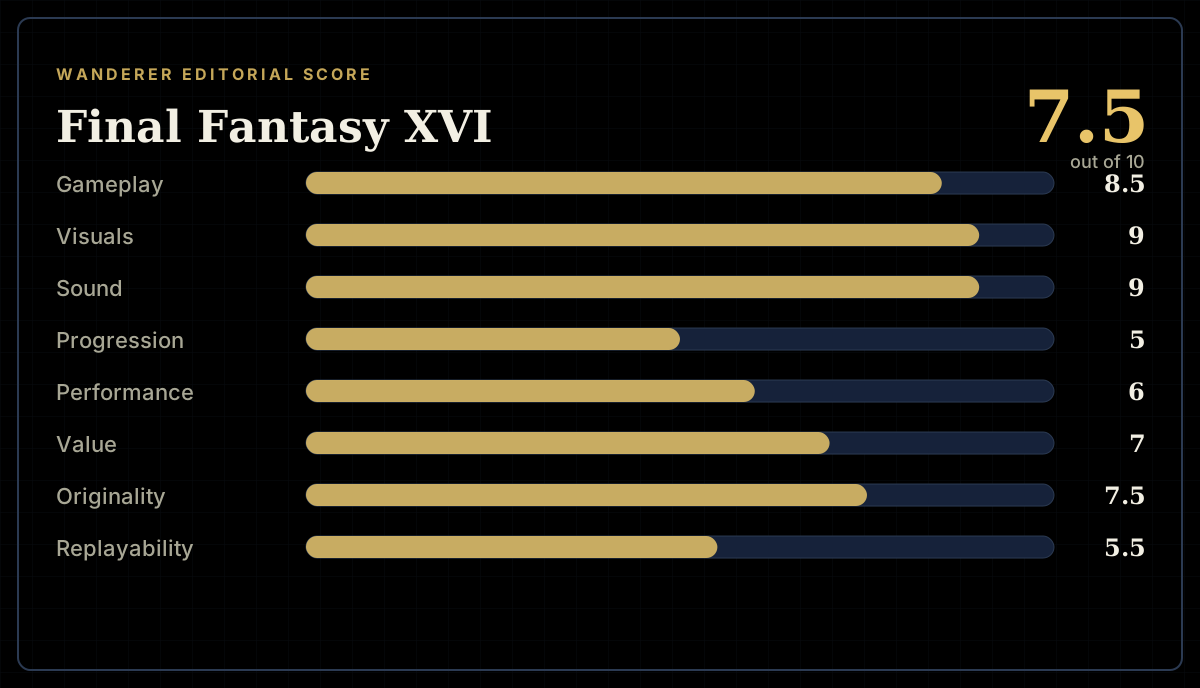
How the review scores each part of the gameWanderer Editorial -
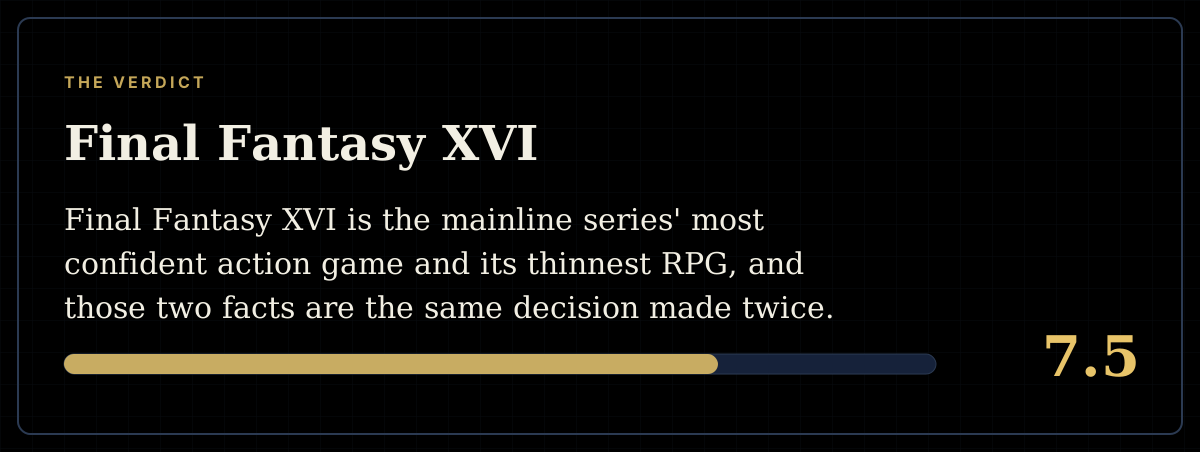
The short versionWanderer Editorial