Game review
Dragon Age: The Veilguard
6.5 / 10
- Developer
- BioWare
- Publisher
- Electronic Arts
- Released
- 31 October 2024
- Platforms
- Windows, PlayStation 5, Xbox Series X|S
- Genre
- Action RPG
- Monetisation
- Premium, one-off purchase. An optional Deluxe Edition Upgrade adds cosmetics and a soundtrack; a free cosmetic weapon-appearance pack is the only other add-on. No in-game store, no ongoing purchases, and no story DLC has been released or is planned
- Players
- Single-player
The short version
The Veilguard's combat is the most mechanically ambitious BioWare has ever shipped: three classes, nine specialisations, and a primer/detonator system that rewards constantly swapping which two companions you bring into a fight. Judged purely as an action game, it's genuinely good. The trouble is everything wrapped around that combat got thinner to make room for it — Dragon Age Keep is gone in favour of a handful of prologue choices, the loot system is a vendor loop instead of a crafting economy, and three previously pivotal characters simply don't exist in this timeline.
A meaningful share of this game's reputation online is discourse rather than design criticism, and that's worth naming plainly once: this review isn't here to adjudicate that fight. What's left after you set it aside is still a real verdict — a well-built combat system in a Dragon Age game that quietly stopped being the kind of RPG the name used to promise.
Biggest strengths
- The primer/detonator combo system between three classes and nine specialisations gives real-time combat genuine tactical depth
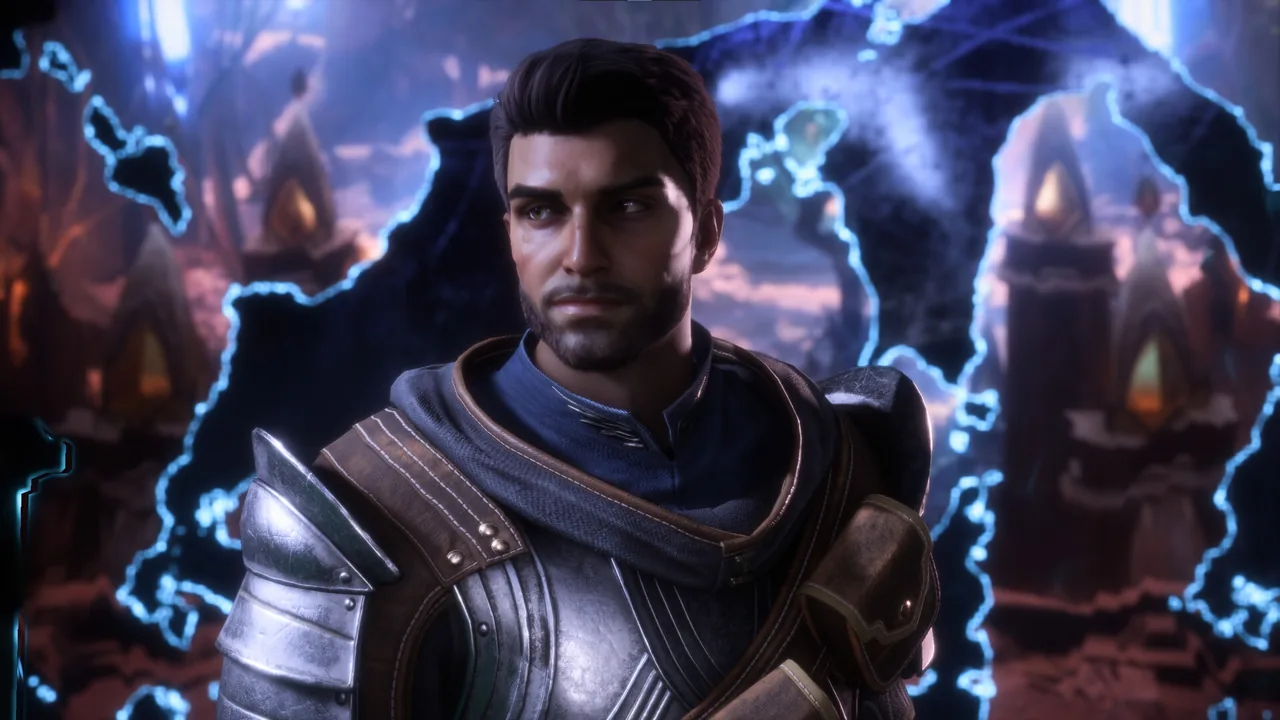
- The character creator is one of the most detailed the genre has shipped, down to individual hair physics
- Several companions carry genuinely strong personal arcs that critics singled out as some of BioWare's best writing in years
Biggest weaknesses
- Retiring Dragon Age Keep reduces three games of choices to a handful of prologue selections, and three previously pivotal characters are absent entirely
- Gear is found or bought rather than crafted, trading Inquisition's itemization depth for a single upgrade vendor loop
- Combat parties are capped at two companions at a time, down from three in Inquisition, narrowing squad-level tactics
Who it's for: Players who want a well-built, combo-driven action RPG and don't mind a Dragon Age game that plays nothing like Origins; a harder sell for long-time series fans who value carried-over choices and deep itemization over combat feel.
Our recommendation: Worth considering at a discount for the combat and the character writing on its own terms. Full price is a tough ask given there's no further support coming and the RPG systems that used to define this series have been cut back this far.
6.5 / 10
Dragon Age: The Veilguard is the fourth game in a series whose entire identity used to be "your choices carry forward." Origins let a Warden's decisions ripple into Dragon Age 2. Dragon Age 2's ending shaped the civil war Inquisition opens on. Inquisition's Trespasser epilogue set up a doomed elven god as the next game's villain — and every one of those threads ran through Dragon Age Keep, a companion website where players logged the specific fates of specific characters across three games so a new one could react to them. The Veilguard drops Keep entirely in favour of a short set of world-state choices made at the start of the game itself, and three characters who were central to Inquisition's ending — Leliana, Cassandra and Vivienne, all one-time candidates for the faith's highest office — don't appear in this game's version of events at all. That's not a marketing footnote. It's the single decision that explains most of what this review has to grapple with, because a Dragon Age game that no longer treats accumulated choice as its organising principle is a different kind of game than the one the name promises, whatever else it does well.
And there's a genuine amount it does well. This is worth saying plainly before getting into what's missing, because a lot of the discourse around this game never gets past the missing part.
Combat that actually rewards swapping who you bring
The Veilguard's combat is real-time and third-person, a clean break from the previous games' pause-and-command tactical camera, and it's the strongest thing here by a wide margin. Rook, your protagonist, picks one of three classes — Warrior, Rogue or Mage — each branching into three specialisations: a Warrior can become a shield-bearing Champion, a life-draining Reaper or a two-handed Slayer; a Rogue a dual-blade Duelist, a trap-laying Saboteur or a bow-focused Veil Ranger; a Mage a necrotic Death Caller, an area-control Evoker or a melee-leaning Spellblade. Nine distinct builds from three simple starting points is a sensible way to give an action combat system real range without the labyrinth of numbers earlier Dragon Age games buried it under.
The system's best idea is how it ties your two active companions into the fight rather than letting them sit in the background as damage sponges. Abilities across the whole cast are tagged as either Primers, which apply a status effect — Sundered, Weakened, Overwhelmed — to an enemy, or Detonators, which spend that status for a big payoff hit and an area explosion. Mages weaken and detonate sundered targets, Rogues sunder and detonate overwhelmed targets, Warriors overwhelm and detonate weakened targets, and the loop only works if you're actually swapping which two companions you bring rather than parking on a favourite pair for the whole campaign. It's a genuinely well-designed incentive structure, and it's the clearest evidence in the whole game that somebody on this team was allowed to just make a good action system without worrying about what franchise it had to also resemble.
The RPG scaffolding around that combat is thinner
Where the game runs into real trouble is everything that used to surround combat rather than sit inside it. Gear in The Veilguard is found on enemies or bought from faction vendors, not crafted — a specific NPC called the Caretaker handles upgrades, spending resources gathered while exploring to push a piece of equipment through ten upgrade levels, with Runes slotted in for extra customisation. It's a functional loop. It is not a crafting economy, and it's a clear step down from Inquisition's deeper itemization, which gave loot hunting and material gathering an actual reason to matter beyond "bigger number." Combat parties are also capped at two companions at once rather than Inquisition's three, which narrows the tactical picture exactly where the primer/detonator system most wants room to breathe — a third slot would have let the combo game extend further than a straight two-way split ever can.
Progression through skill trees is generous and legible, closer to Avowed's flexible respeccing than to a punishing build-defining choice, which is good news for players who want to try specialisations rather than commit blind. But paired with the thinner gear loop and the two-person party cap, the overall sense is of a game that simplified several systems at once in the same direction — toward faster, cleaner action encounters — without fully reckoning with how much of "RPG" those systems used to be doing.
Companions who are individually strong, collectively muted
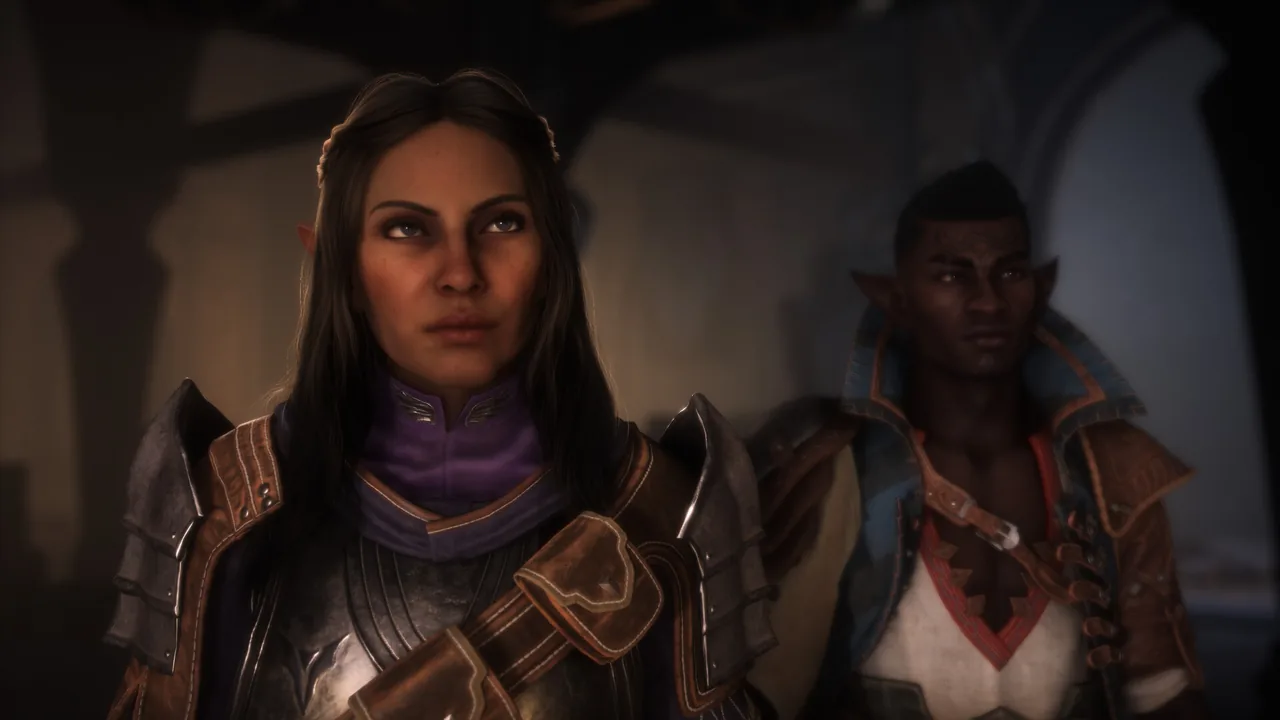
Character writing is a genuinely mixed picture, and it's worth being specific about where it succeeds and where it doesn't, because both halves are real. Individual companion arcs — pursued through Conversations, Outings and personal quests, with an approval system tracking specific choices rather than one blunt meter — land well often enough that several were singled out by critics as some of the strongest personal writing BioWare has produced in years. The problem is tone at the group level: banter between the cast leans consistently light and quippy, even in scenes built around genuinely dark stakes, and that evenness is the single most commonly repeated craft complaint across both critics and players, independent of anything else being said about the game. It reads as a deliberate stylistic choice rather than a bug, and it's a defensible one on its own terms — but it's also a real departure from the tonal range Origins and even Inquisition were willing to sit in, and long-time readers of this series noticing that shift are identifying a real difference, not imagining one.
Romance itself is more open than in any earlier entry: all seven companions can be pursued regardless of Rook's gender or lineage, with no jealousy mechanic locking out other approval gains if you flirt with more than one before committing. That's a genuine mechanical loosening compared with Origins and Inquisition, which gated several companions behind a specific player gender, and it removes a source of frustration for players who wanted a favourite companion but happened to build the "wrong" Rook for them. The trade is that a system with fewer restrictions also has less friction and fewer hard consequences built into it — nobody gets jealous, nobody storms off over a rival flirtation — which sits on the same side of the ledger as the softer overall tone: more accommodating, less charged.
Regions built for a straighter line than Inquisition's
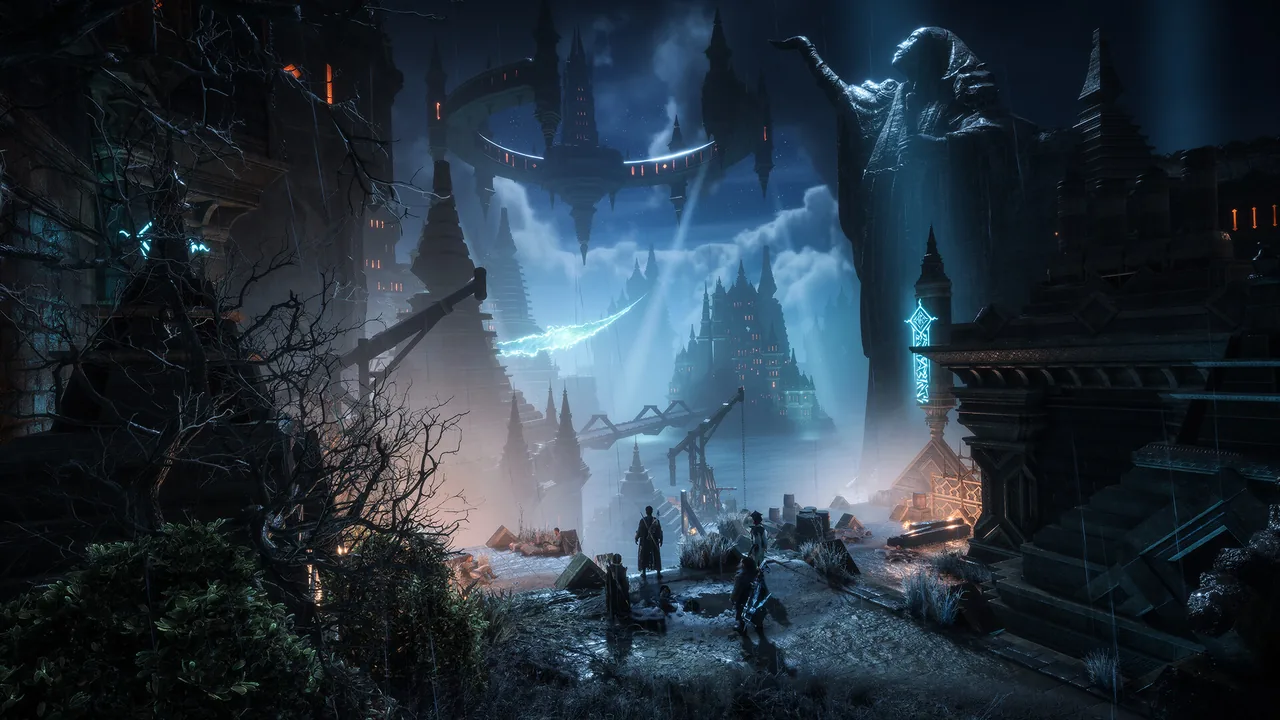
Level design trades Inquisition's open regional maps — some of them padded with busywork, to be fair — for more linear, hand-authored zones strung between hub areas. It's a reasonable trade in the abstract: less checklist exploration, more consistently art-directed critical path. In practice it also means less incentive to wander, since there's less of Avowed's or Inquisition's "investigate the suspicious rock formation" reward loop built into the wider map, and side content tends to sit closer to the main thread than branch meaningfully away from it. The environmental art carrying those zones is genuinely strong and distinct region to region, and the character creator — detailed enough to include individual hair physics — is one of the best the genre has fielded. This is not a game let down by its presentation budget.
Performance that hasn't fully settled
Windows, PlayStation 5 and Xbox Series X/S all launched together on 31 October 2024, and the console versions have generally had the smoother technical reputation. PC performance has been the more persistent sore point: shader-compilation stutter on first launch and after driver updates is a specific, recognisable complaint that continued showing up in player feedback well into 2026, nearly two years after release — an unusually long tail for an issue that normally settles within the first few months of patching. It's not universal, and plenty of players report a smooth experience on comparable hardware, but the complaint is specific enough and recurring enough across time that it reads as a real, unresolved issue rather than a launch-week blip.
Reading the review numbers honestly
The reception here is genuinely split, and it's worth separating what that split is actually made of rather than reporting the headline number and moving on. Critic reviews landed comfortably positive — Metacritic's aggregate sits around 80 on PC and higher on PlayStation 5 — while Steam's player score sits at 68% positive across roughly 44,700 reviews, in the "Mixed" band. That's a real critic/player gap, not a rounding difference, and reading the negative reviews directly shows what's actually inside that gap.
A large share of the negative volume is legitimate, specific craft criticism, consistent enough across independent reviewers to be a real pattern rather than a few loud voices: the quippy, tonally flat dialogue; the loss of Dragon Age Keep and the choices it used to carry; the thinner gear and itemization loop; the two-companion party cap; performance complaints that recur across a long stretch of time rather than clustering at launch. Those are design objections, made by players who clearly know the earlier games well and are comparing this one against them on the merits.
A separate portion of the negative review volume is not that. Reading through the negative-review pool turns up a recognisable strain of complaints targeting the cast and the writers' identities rather than the mechanics — the kind of framing that shows up as a coordinated talking point across many reviews rather than an organic, independently-arrived-at design critique. That's worth naming plainly, once, because pretending the 68% figure is purely a verdict on combat feel and itemization would be inaccurate in the other direction. It doesn't erase the legitimate half of the criticism above it, and it isn't a reason to inflate the score past what the game's own systems earn — it's a reason to read "68% positive" as a number that isn't cleanly measuring the game alone, and then get back to the game.
Where this leaves the series
BioWare confirmed shortly after launch that no story DLC is planned — the studio's stated reasoning was that Inquisition's Trespasser expansion was so essential to that game's ending it arguably should have shipped in the base game, and Veilguard was built to avoid needing the same fix. What's shipped since is a free cosmetic weapon-appearance pack and a paid Deluxe Edition Upgrade of cosmetics and soundtrack extras — nothing narrative. That decision looks different in hindsight than it did at launch: EA has said the game sold roughly 50% below its internal expectations despite engaging around 1.5 million players, and BioWare has since laid off a number of senior Veilguard staff, including its lead writer, while shrinking from around 200 employees to under 100 and redirecting the studio's remaining capacity entirely toward the next Mass Effect. Nothing about that changes what's on disc today, but it does mean this is the final form of the game rather than a foundation something else will build on — worth knowing before paying full price for it now.
Verdict
Judged purely as a combo-driven action RPG, The Veilguard is a genuinely well-built one: nine distinct specialisations, a primer/detonator system that makes swapping companions matter mechanically rather than cosmetically, a strong character creator and confident regional art direction. Judged as a Dragon Age game — as the fourth entry in a series that built its reputation on choices compounding across games, deep itemization and a full four-person tactical party — it's a clear step back on several fronts at once: Dragon Age Keep's continuity is gone, gear is a vendor loop instead of a crafting system, the active party shrank, and the tone flattens dark material into something lighter than the earlier games were willing to risk.
Both of those things are true, and the second one is why this doesn't land higher than 6.5 despite genuinely good combat design. A meaningful slice of the game's public reputation is discourse that has nothing to do with any of that, and separating it out doesn't rescue the score — the craft criticism holds up entirely on its own. This is a competent, sometimes very good action RPG that happens to carry a name whose whole promise was that it wouldn't need to be judged as a fresh start.
Price and Steam review data checked 30 July 2026.
Players who want to see what "the world remembers your specific choices" looks like when a studio commits to it fully rather than stepping back from it should read our Baldur's Gate 3 review — it's the sharpest available contrast to the Keep decision covered here.
Pros and cons
Pros
- The primer/detonator combo system between three classes and nine specialisations gives real-time combat genuine tactical depth
- The character creator is one of the most detailed the genre has shipped, down to individual hair physics
- Several companions carry genuinely strong personal arcs that critics singled out as some of BioWare's best writing in years
- Environmental art direction is distinct and confident region to region
- Full voice acting throughout, with standout performances in the main companion cast
- Broad accessibility options, including colour alternatives, adjustable difficulty and detailed subtitle controls
Cons
- Retiring Dragon Age Keep reduces three games of choices to a handful of prologue selections, and three previously pivotal characters are absent entirely
- Gear is found or bought rather than crafted, trading Inquisition's itemization depth for a single upgrade vendor loop
- Combat parties are capped at two companions at a time, down from three in Inquisition, narrowing squad-level tactics
- Even, quippy dialogue undercuts dark subject matter often enough that the tonal shift reads as a genuine writing problem, not just nostalgia
- Shader-compilation stutter and stability complaints were still being reported well into 2026, unusually persistent this far past launch
- BioWare has confirmed no story DLC is coming and has since shrunk considerably while pivoting fully to Mass Effect 5, so this is the finished product
Screenshots
-
Dragon Age™: The VeilguardImage: Electronic Arts via Steam -
Dragon Age™: The VeilguardImage: Electronic Arts via Steam -
Dragon Age™: The VeilguardImage: Electronic Arts via Steam