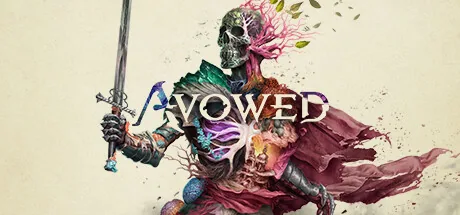
Game review
Avowed
7.5 / 10
- Developer
- Obsidian Entertainment
- Publisher
- Xbox Game Studios
- Released
- 18 February 2025
- Platforms
- Windows, Xbox Series X|S, PlayStation 5
- Genre
- Action RPG
- Monetisation
- Premium, one-off purchase across two editions — also included with Xbox Game Pass
- Players
- Single-player
The short version
Avowed is Obsidian doing what it's actually good at rather than what a marketing slide once promised: not a boundless open world, but four dense, handcrafted regions where the combat has real tactical texture and the companions push back on you instead of just following orders. When it's mixing swords, spells and shields into one fluid combat kit, it's one of the better first-person RPGs Xbox Game Studios has put out.
It's smaller than it first looked, though, and it knows it — no romance, a build system that narrows once you find a loadout you like, and a central mystery that resolves faster than the pacing around it earns. Day-one Game Pass access does more for the value case here than the sticker price ever could.
Biggest strengths
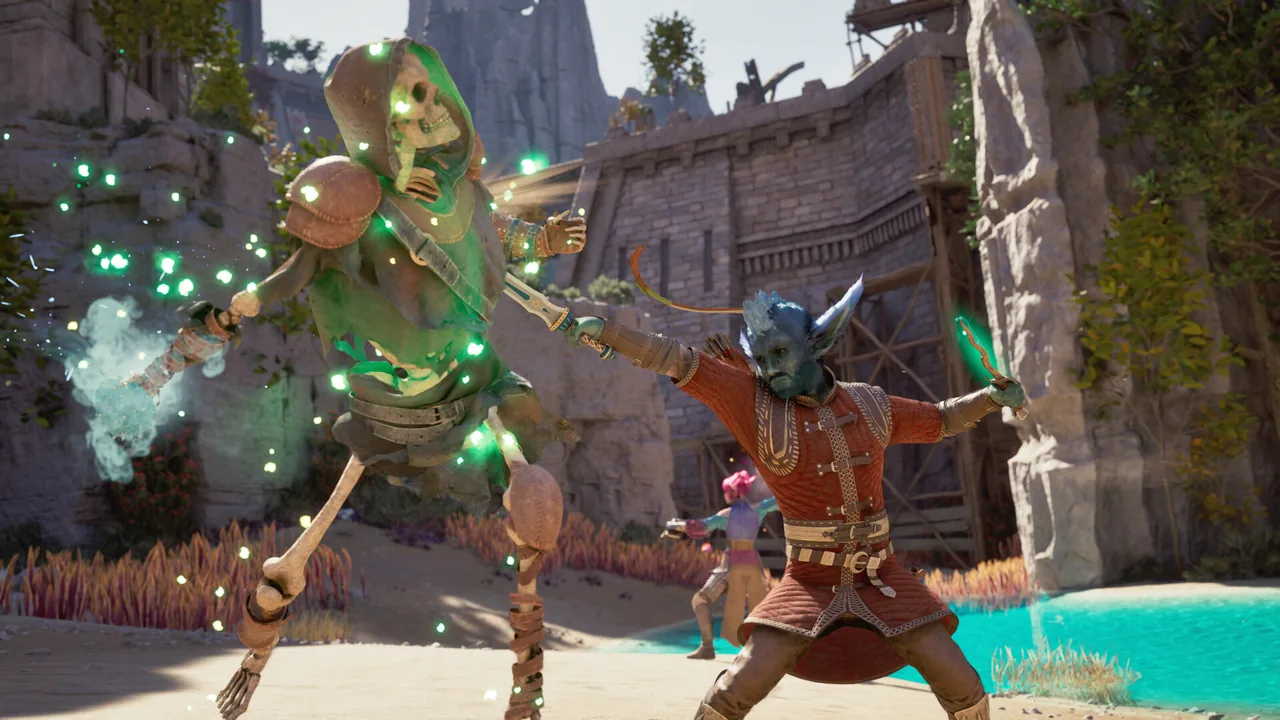
- Freeze an enemy with a spell and follow up with a melee strike, and the combo actually matters rather than just looking good
- Swapping mid-fight between dual wands, a two-handed axe, or sword-and-shield changes how a fight plays out, not just its numbers
- Companions have their own agendas and will openly disagree with bad calls instead of just tagging along
Biggest weaknesses
- The zone-based structure trades an open world for four contained regions, and pre-launch marketing didn't always make that scope clear
- No romance options for companions will disappoint players who treat that as a genre staple
- Skill trees reward settling into one loadout rather than the continuous weapon-and-spell mixing the combat pitch promises
Who it's for: Fallout and Skyrim players who want a tighter, more combat-focused first-person RPG, plus Pillars of Eternity readers curious how Eora looks from ground level for the first time.
Our recommendation: An easy recommendation if you already have Game Pass — it costs nothing extra to find out if the combat clicks for you. Buying it outright is still fair value at the current asking price, just go in expecting four good regions rather than one huge one.
7.5 / 10
Obsidian spent years pitching Avowed as an open-world RPG before quietly walking that back to something else: four large, handcrafted regions stitched together by loading screens rather than one seamless map. That decision is the single most important thing to understand about the game before you buy it, because everything it does well and everything it doesn't attempt flows from it. This is not Obsidian's Skyrim. It's Obsidian's answer to what a first-person RPG looks like when a mid-size team refuses to spread itself across a map it can't fill.
Four regions, not one world
The Living Lands is split into Paradis, a port city where the Aedyr Empire's colonial ambitions grind against the people already living there; the Emerald Stair, an agricultural region built on soul-manipulating Animancy; Shatterscarp, a desert colony picking through ruins older than anyone currently living there; and Pargrunen, the most established of the dwarven mountain settlements. Each is large enough to spend real hours in and dense enough that the density feels intentional rather than padded — quest lines curl back through areas you've already cleared, side content rewards actual investigation rather than a compass marker, and the environmental storytelling in each region is distinct enough that you could identify a screenshot's zone blind.
What it isn't is contiguous. There's no walking from Paradis to Pargrunen; you travel between zones through loading transitions, and the game never pretends otherwise. Judged as an open world, that's a letdown relative to what was once promised. Judged as what it actually is — four tightly authored regions instead of one sprawling, thinner one — it's a defensible trade, and arguably the more honest one for a studio this size to make. The issue isn't the format. It's that the pre-launch messaging spent a long time implying the other one.
The Living Lands themselves lean on the fact that this is Eora, a world with a working magic system rather than a generic fantasy backdrop. Animancy-warped farmland, reactive flora that responds to the god Sapadal's volatile moods, and ruins left by an extinct civilisation called the Ekida all give each zone a reason to look the way it does beyond "the desert one" or "the mountain one." Environmental secrets reward the kind of player who reads item descriptions and pokes at suspicious rock formations rather than one who beelines between markers, and that's the clearest sign the smaller-scope decision was the right one — there's enough craft here to fill four regions properly that would have been stretched thin across one continuous map.
Combat that rewards actually mixing your loadout
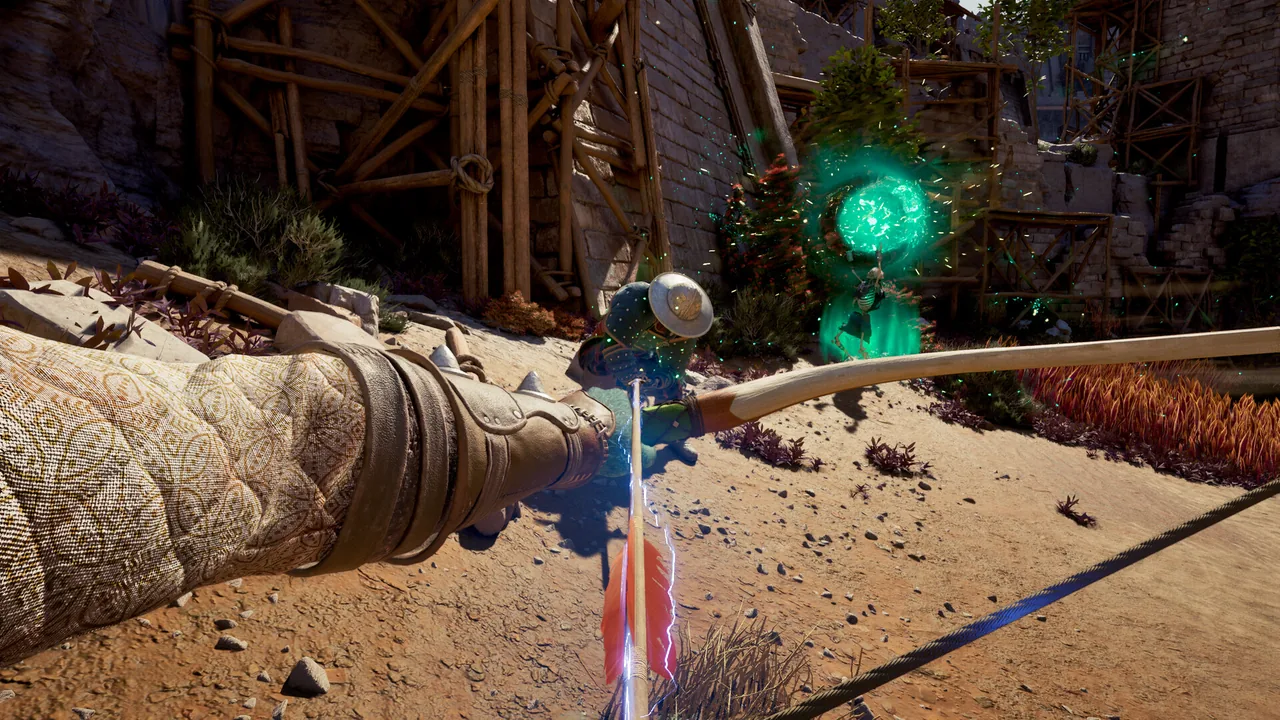
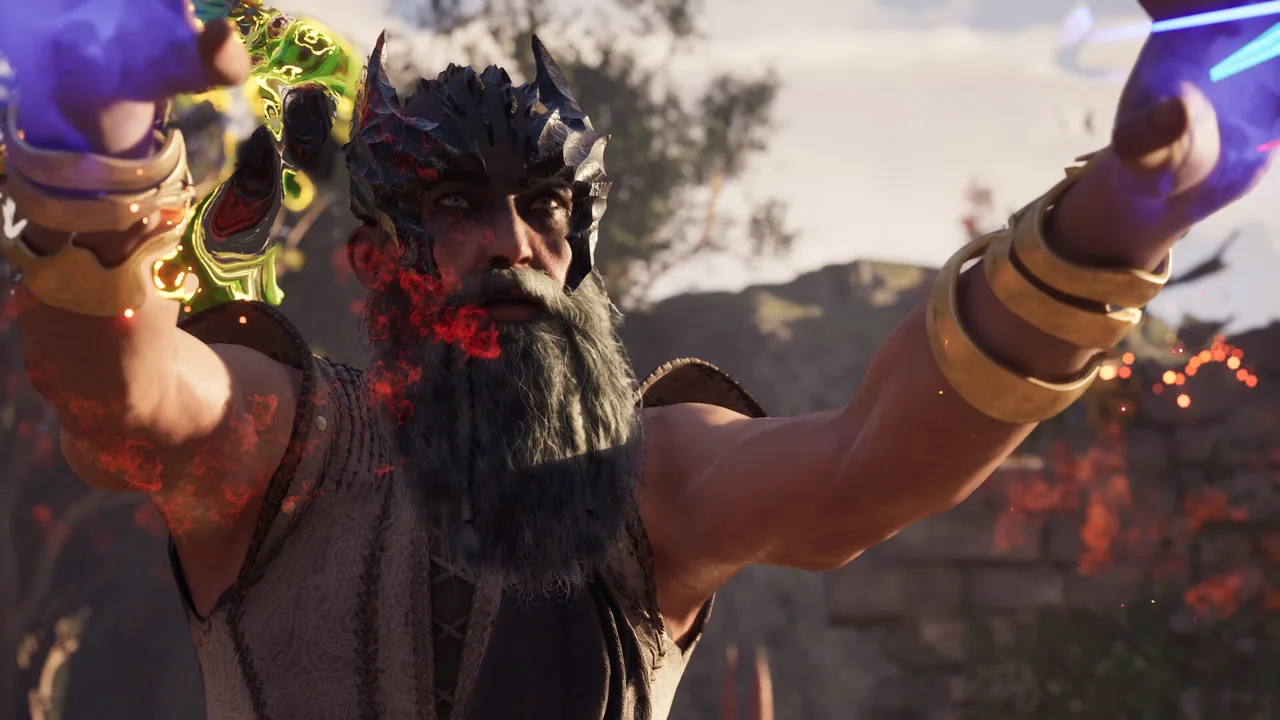
This is where Avowed earns most of its goodwill. Combat runs entirely in first person (with a third-person toggle available for players who prefer it) and hands you swords, spells, guns, bows and shields with genuine freedom to combine them — dual wands, a two-handed greataxe, a pistol paired with a shield, whatever the fight in front of you calls for. The elemental layer is where it clicks into place: freezing an enemy sets up a follow-up melee strike for extra damage, fire spreads to oil-slicked ground, and shock arcs between grouped enemies. None of this is new to the genre individually, but the speed at which you can swap a full loadout mid-encounter — not just a spell, the whole kit — makes experimentation cheap enough that you actually do it, rather than settling on one build and coasting.
Progression that flattens once it clicks
Gear and abilities improve along two tracks: skill trees that unlock new combat abilities and passive bonuses, and direct weapon upgrades that let you invest in a blade or wand you've grown attached to rather than constantly replacing it with the next number-up drop. Both systems are generous rather than punishing — respeccing costs little, and there's no wrong build in the sense that any weapon-and-spell combination is viable on the game's default difficulty. That's good news for players who want to experiment and slightly less good news for the sense of stakes; once you've found a loadout that clears fights comfortably, the game rarely forces you to reconsider it. Skill trees are deep enough to reward planning, but the game is generous enough with respecs and flexible enough with gear that most players will find a combination that works and lean on it rather than continuing to rotate loadouts the way the combat pitch promises. The best moments of build variety come from choosing to try something new, not from the game demanding it of you.
Companions who actually argue with you
Avowed's four companions — recruited across the main story rather than all available immediately — are the strongest writing Obsidian has put in a combat-focused RPG in some time. They comment on your choices, not with a generic approval meter but with specific, in-character objections that can sour a relationship without ending it outright. None of it is romanceable, which is a deliberate choice the writers have been upfront about rather than an oversight, and it's the one place where genre expectation and design intent are most likely to clash for players coming in from BioWare-style companion systems. What's there instead is closer to Obsidian's older strength: companions who feel like they have somewhere else they'd rather be, and who occasionally make that clear in combat as much as dialogue.
The full voice cast across a script this size is a genuine production achievement, and the writing earned Avowed a nomination for the Herman Melville Award for Best Writing at the New York Game Awards alongside a Best RPG nod at The Game Awards. It's not uniformly excellent — the companions carry the writing more than the wider cast of faction leaders and antagonists does — but it clears the bar the genre usually sets by a comfortable margin.
You don't need to have read the wiki
Avowed is set in Eora, the world Pillars of Eternity built across two isometric RPGs most players never played, and the smartest structural decision here is how little of that history it assumes you know. You arrive as an outsider — an envoy from a distant empire investigating a plague called the Dream Scourge — which gives the game a clean, textbook reason to explain its own setting to you as it explains it to your character. Returning Pillars readers will catch references the game doesn't bother spelling out, and there's real pleasure in seeing Animancy and the god Eothas' legacy handled in a different genre. But nobody needs the crash course to follow what's happening, and that accessibility is worth calling out explicitly, because plenty of long-running-setting spin-offs get this exact balance wrong in one direction or the other.
The central mystery itself is a mixed success. The Dream Scourge hook is strong early — a mysterious plague, a player character who dies and comes back changed, a god whose motives stay genuinely unclear for a long stretch — and the resolution, once it arrives, moves through its answers faster than the build-up earns. It's not a bad ending so much as a rushed one, the kind that reads like a team running out of production runway rather than a team that didn't know where the story was going.
Where the presentation shows its budget
Avowed runs on Unreal Engine 5 and looks the part in its best moments — Shatterscarp's ruins and the Emerald Stair's Animancy-lit farmland are genuinely striking — but the overall presentation doesn't reach for the technical showcase status Xbox Game Studios' bigger productions chase. Menus and inventory management are functional rather than fast, and the game asks you to sort through more incremental gear upgrades than its UI is built to handle gracefully. None of it is a dealbreaker; all of it is the kind of friction that becomes more noticeable the longer you play.
Performance is the more concrete complaint, and it splits cleanly by platform. Windows launched with the roughest edges — the PC Metacritic average of 77 sits several points below Xbox Series X/S's 80 and the PlayStation 5 version's 81, and PC-specific complaints around stutter and inconsistent frame pacing were common enough at launch to be a recognisable pattern rather than isolated hardware issues. Console players got the smoother baseline experience; PlayStation players simply had to wait a full year for it, since the PS5 version didn't arrive until February 2026, a year after the Windows and Xbox Series X/S launch.
Game Pass changes the arithmetic
Avowed launched day one on Xbox Game Pass, and that fact does more for its value proposition than any amount of sale pricing. At NZ$79.95 for the standard edition (about US$48 at prevailing exchange rates, checked 30 July 2026), it's priced fairly for a mid-size AAA RPG rather than aggressively — but if you already subscribe to Game Pass, the question of whether to buy it outright barely matters. You can find out whether the combat and the companions land for you at no marginal cost, which is precisely the kind of game Game Pass exists to de-risk: strong in specific, well-executed areas, more contained than its billing suggested, exactly the profile a subscriber tries for free and an outright buyer has to take on faith.
That gap between critical reception and commercial performance turned out to matter beyond the review scores. Reports through 2026 indicated Avowed underperformed Xbox Game Studios' sales expectations, and this July's wider restructuring within Microsoft's gaming division reportedly scaled back Obsidian's plans for a sequel, alongside layoffs affecting a meaningful share of the studio. None of that changes what's on disc today, but it's relevant context for anyone weighing whether to buy in now versus wait: this may be the fullest version of this particular world you get for a while, in the same way Obsidian's other 2025 RPG, The Outer Worlds 2, ran into a similar commercial ceiling despite strong reviews of its own.
Final verdict
Avowed succeeds most clearly as a combat game — the freedom to mix swords, spells, guns and shields on the fly, with elemental combos that reward paying attention, is genuinely well built, and the four companions who ride along with you argue back often enough to feel like people rather than quest dispensers. Newcomers to Pillars of Eternity's Eora will find the setting explained rather than assumed, which is exactly the right call for a spin-off trying to reach beyond its existing readers.
It settles at 7.5 rather than higher because it's smaller than its own marketing implied, because the ending arrives faster than the mystery deserves, and because the build variety the combat promises narrows once you've found something that works. That's a fair outcome for a well-executed, honestly scoped RPG rather than the sprawling one it was once pitched as. Buy it outright if the setting and the combat both appeal to you at the current price; if you already have Game Pass, there's no real reason to wait.
Price and platform details checked 30 July 2026.
Players who like reactive systems that keep tracking your choices long after you've made them may also enjoy Wanderer, which runs its own persistent version of the idea at a much smaller scale.
Pros and cons
Pros
- Freeze an enemy with a spell and follow up with a melee strike, and the combo actually matters rather than just looking good
- Swapping mid-fight between dual wands, a two-handed axe, or sword-and-shield changes how a fight plays out, not just its numbers
- Companions have their own agendas and will openly disagree with bad calls instead of just tagging along
- The four regions are handcrafted densely enough that wandering off the quest marker is consistently worth it
- Players with zero Pillars of Eternity history are eased into Eora rather than assumed to already know its politics and gods
- Full voice-acted companion writing earned a Best Writing nomination, and the dialogue mostly justifies it
Cons
- The zone-based structure trades an open world for four contained regions, and pre-launch marketing didn't always make that scope clear
- No romance options for companions will disappoint players who treat that as a genre staple
- Skill trees reward settling into one loadout rather than the continuous weapon-and-spell mixing the combat pitch promises
- The Dream Scourge mystery that opens the game strong resolves faster than the pacing leading up to it suggests it should
- Inventory and menu navigation show the seams of a mid-size team without a AAA UI budget
- PC performance lagged behind console at launch, and the PC Metacritic score sits noticeably below the Xbox and PS5 versions
Screenshots
-
AvowedImage: Xbox Game Studios via Steam -
AvowedImage: Xbox Game Studios via Steam -
AvowedImage: Xbox Game Studios via Steam -
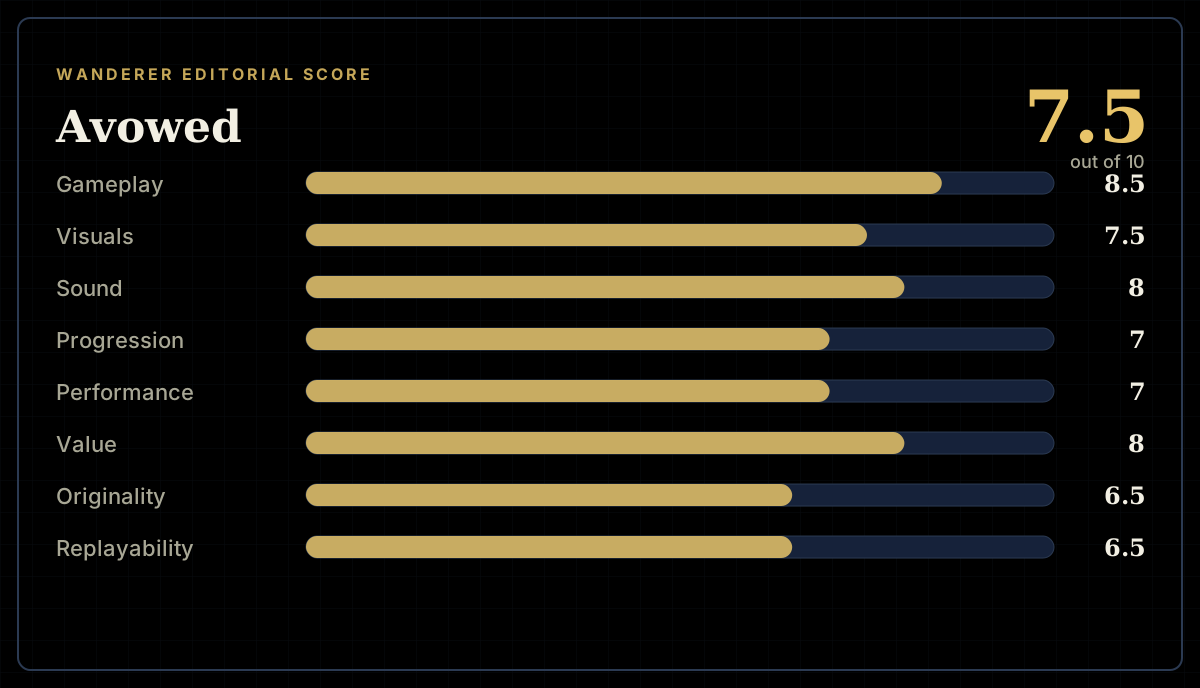
How the review scores each part of the gameWanderer Editorial -
The short versionWanderer Editorial