
Game review
Weird West
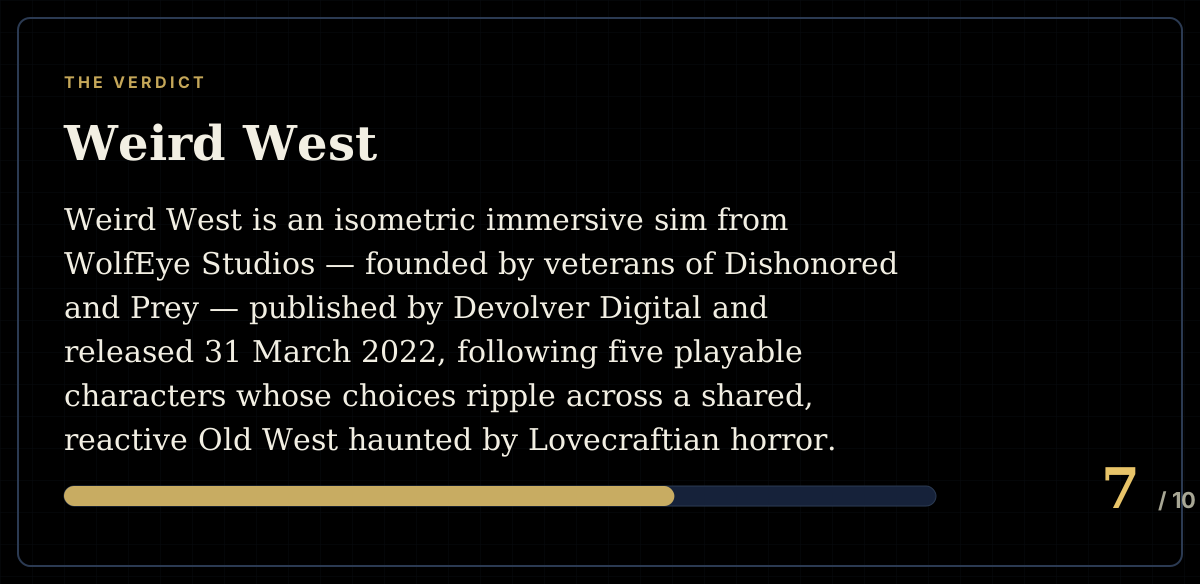
7 / 10
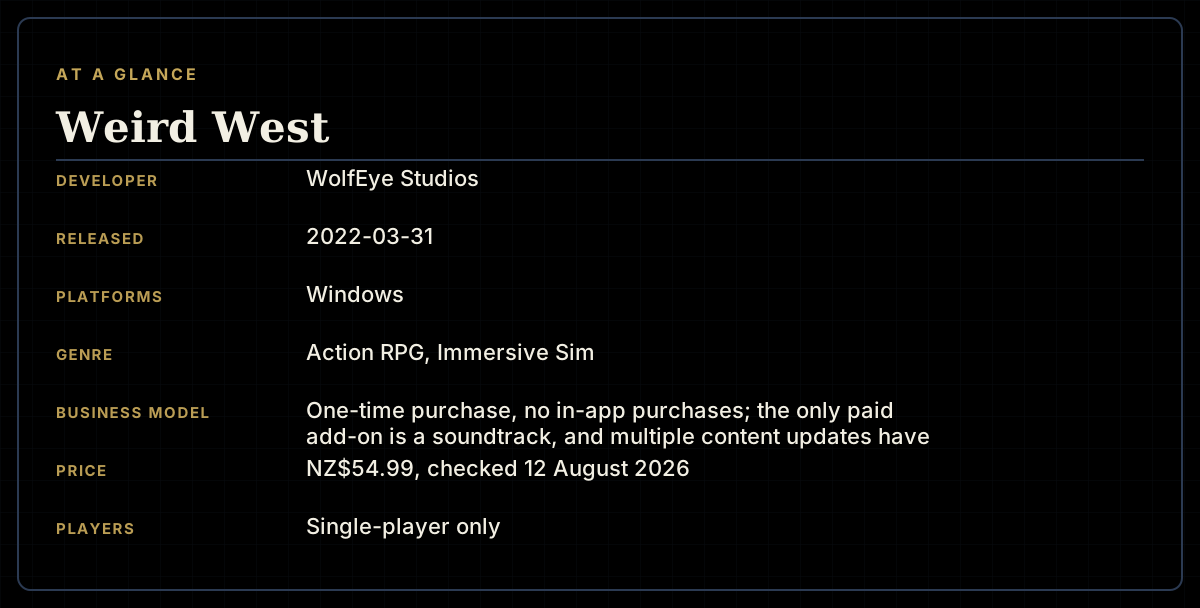
- Developer
- WolfEye Studios
- Publisher
- Devolver Digital
- Released
- 31 March 2022
- Platforms
- Windows
- Genre
- Action RPG, Immersive Sim
- Monetisation
- One-time purchase, no in-app purchases; the only paid add-on is a soundtrack, and multiple content updates have been released for free since launch
- Players
- Single-player only
The short version
Weird West is an isometric immersive sim from WolfEye Studios — founded by veterans of Dishonored and Prey — published by Devolver Digital and released 31 March 2022, following five playable characters whose choices ripple across a shared, reactive Old West haunted by Lovecraftian horror. It sits at Very Positive across 2,021 English-language reviews, and the split inside that number is unusually consistent: praise for genuinely emergent, systemic storytelling sits alongside detailed, specific criticism of the combat, companion AI and a console-first interface that a large share of its own fans call the game's clearest weakness. WolfEye supported the game with substantial free updates through the rest of 2022, including official first-person mod support, and a Definitive Edition later brought it to PlayStation, Xbox and Switch — but the core criticisms from launch week still appear, largely unchanged, in reviews written years later.
Biggest strengths
- The reactive, systemic world design draws consistent, specific praise — NPCs remember and retaliate for the player's actions in ways reviewers describe finding funny, surprising and genuinely emergent rather than scripted
- A distinctive setting that blends Old West iconography with Lovecraftian and gothic horror, praised repeatedly for atmosphere and art direction even by reviewers who dislike the combat
- Five playable protagonists whose interconnected stories give the world a sense of persistence and consequence across a single extended playthrough
Biggest weaknesses
- Combat draws detailed, repeated criticism as unforgiving in ways multiple reviewers believe were unintended, compounded at launch by a reported mouse deadzone bug that made precise aiming unreliable
- Companion AI is a recurring specific complaint, with reviewers describing squad-mates walking into hazards, blocking lines of fire and generally requiring babysitting rather than helping
- The interface is repeatedly described as console-first even on PC, and inventory management is a specific, named source of friction across the negative sample
Who it's for: Immersive sim fans who value systemic, reactive storytelling over polished combat, and players willing to tolerate real jank for a genuinely distinctive setting; a poor fit for anyone who wants tight, responsive isometric combat as the main event.
Our recommendation: A genuinely inventive, reactive world let down by combat and interface choices its own most invested players can't stop pointing out — worth playing for what it does that almost nothing else does, on a sale if the asking price gives you pause.
7 / 10
Introduction
Weird West sends five playable protagonists through an interconnected string of stories set in a haunted, isometric Old West where Lovecraftian horror bleeds through the cracks of a familiar frontier. It's the debut release from WolfEye Studios, founded by Raphael Colantonio and other veterans of Arkane's Dishonored and Prey, published by Devolver Digital, and released 31 March
- Its Steam standing is Very Positive, 82% across the 2,021 English-language reviews sampled
for this review. What makes that number worth digging into rather than simply reporting is how consistent the disagreement inside it is: reviewers who love this game and reviewers who don't are, overwhelmingly, praising and criticising the exact same systems, which is a much more useful signal than the percentage alone.
A world that actually remembers what you did
Start with what draws the clearest, most specific praise, because it's the thing Weird West does that almost nothing else in this genre attempts at this scale. NPCs in Weird West react to the player's choices in ways reviewers describe as genuinely emergent rather than scripted branching — one player recounted stealing a land deed from a resident who later found out, tracked them down, and sent people after them for it, purely as a consequence of the world's own simulation rather than a quest flag. Another, in one of the game's most-upvoted reviews, described picking up a lamp during the tutorial, accidentally setting the house on fire, watching their character's son die off-screen as a result, and then dying mid-cutscene while still burning — recounted not as a bug report but as a highlight, the kind of story an immersive sim is supposed to generate. A third buried and then looted their own murdered son's grave for pawn-shop cash, purely because the game let them. None of this reads as marketing copy; it's the specific, first-hand texture of a world built to react rather than to script, and it's the throughline connecting almost every strongly positive review in the sample, regardless of how that same reviewer felt about the combat underneath it.
The five-protagonist structure reinforces this. Choices made as one character ripple forward into the stories of the ones who follow, giving the whole game a sense of accumulating consequence that a single, linear playthrough usually can't manage. Atmosphere and art direction draw consistent praise too, even from reviewers who otherwise recommend against buying — the fusion of frontier iconography with gothic and Lovecraftian horror is repeatedly singled out as distinctive and well-executed, a setting, as one reviewer put it, "that isn't properly explored enough" elsewhere.
Where the game underneath the world stumbles
Set against that is a genuinely detailed, repeated set of criticisms aimed at the systems the player actually spends most of their time touching. Combat is the biggest one: reviewers describe an isometric, real-time combat system that feels unforgiving in ways several believe the developers didn't intend, particularly on the game's default difficulty. At launch this was compounded by a specific, reproducible bug — a mouse deadzone that made the game fail to register small aiming adjustments at lower DPI settings, turning precise combat into a fight against the control scheme itself rather than the enemies on screen.
Companion AI draws its own specific, recurring complaint. Reviewers describe squad-mates walking into environmental hazards, blocking the player's line of fire, and generally requiring active management rather than providing the support a posse system implies — one detailed review called the companion system "possibly the worst" element of an otherwise interesting design, a specific judgement rather than a vague gripe. The interface draws similarly pointed criticism: multiple reviewers describe menus and inventory management that feel built for a controller first and ported to mouse and keyboard as an afterthought, which is a notable complaint given the game does ship with full controller support and was designed across platforms from the outset.
Perhaps the most serious complaint, in terms of what it says about launch-day polish, came from a 145-vote review reporting that offline progress advertised in the game's promotional material either didn't function or was poorly implemented — a specific, falsifiable claim about a stated feature rather than a subjective complaint about feel. And underneath all of it, a meaningful number of reviewers who did finish the game — several logging 20 or more hours to do so — describe a middle stretch that starts to feel repetitive rather than escalating, with one detailed 214-vote review noting there "really wasn't much to the progression" once the initial novelty of the setting wore off.
Patches changed the content, less so the feel
It's worth being precise about what WolfEye actually did after launch, because the pattern matters. The developer shipped a genuinely substantial run of free updates through the rest of 2022 — patches 1.02 through 1.05, new content, automated recurring in-world events, and in November 2022 official mod support that included a free first-person camera mode, a significant addition for a studio this size. A Definitive Edition followed in May 2023, bringing the game to PlayStation 5, Xbox Series X|S and Nintendo Switch with 4K and 60fps support, arriving on the same Steam listing this review covers rather than as a separate product. By December 2023 the developer reported a two-million-player audience across platforms — a genuine commercial and critical success by any reasonable measure for a debut studio.
What's notable, reading the review sample by year, is what those patches did and didn't fix. Negative reviews cluster heavily at launch — 53 of the 100 sampled here are from April 2022 alone — but a steady trickle continues every year since, and reading them shows the same core complaints recurring rather than fading: a 2023 review explicitly notes "jank IS a thing here, from shoddy camera work, through disappearing horses to your companion[s]" nearly a year and a half after launch; a 2025 review still describes "serious flaws which result in an overall frustrating experience" around the combat specifically. The honest read is that WolfEye added content, platforms and quality-of-life fixes generously and consistently, but the fundamental feel of combat and companion management that launch reviewers flagged largely persisted. That's a real, useful distinction for a prospective buyer: the game you'd install today has more in it than the one that launched in 2022, but it plays much the same.
A single-player world with no strings attached
It's worth noting plainly what this game doesn't do, because it's increasingly rare: there's no premium currency, no in-app purchases, and the only paid add-on across the game's entire lifetime is a soundtrack. Every major update — new content, mod support, the first-person mode, platform expansion — shipped free to existing owners. Steam's achievement data backs up a healthy completion curve too: the most-earned achievement sits at 92.2%, tied to an early story beat, tapering gradually down through a genuinely broad midgame before the hardest late-game unlocks drop under 2%. That's consistent with a game a large majority of buyers actually start and meaningfully progress through, rather than one that loses its audience in the opening hour.
Final Verdict
Weird West earns its reputation as a genuine cult favourite for exactly the reason its strongest reviews describe: it builds a world that remembers, reacts and generates its own stories in a way few games at any budget attempt, wrapped in a setting distinctive enough to stand on its own even when the systems underneath falter. Where it falls short of a stronger score is that the falter is real and well-documented by its own players — combat that fights the control scheme as much as the enemies, companion AI that needs constant supervision, and an interface that never quite lets go of its console-first design, even years and several substantial free updates later. If reactive, systemic storytelling matters more to you than tight combat, this is very much worth your time. If it's the other way around, you already know from this review's own evidence which way you'll land.
Pros and cons
Pros
- The reactive, systemic world design draws consistent, specific praise — NPCs remember and retaliate for the player's actions in ways reviewers describe finding funny, surprising and genuinely emergent rather than scripted
- A distinctive setting that blends Old West iconography with Lovecraftian and gothic horror, praised repeatedly for atmosphere and art direction even by reviewers who dislike the combat
- Five playable protagonists whose interconnected stories give the world a sense of persistence and consequence across a single extended playthrough
- WolfEye supported the game with substantial free content and quality-of-life patches through the rest of 2022, including official mod support and a fully free first-person mode
Cons
- Combat draws detailed, repeated criticism as unforgiving in ways multiple reviewers believe were unintended, compounded at launch by a reported mouse deadzone bug that made precise aiming unreliable
- Companion AI is a recurring specific complaint, with reviewers describing squad-mates walking into hazards, blocking lines of fire and generally requiring babysitting rather than helping
- The interface is repeatedly described as console-first even on PC, and inventory management is a specific, named source of friction across the negative sample
- Several reviewers who finished the game report losing motivation well before the end, citing a middle stretch that feels repetitive rather than escalating
Screenshots
-
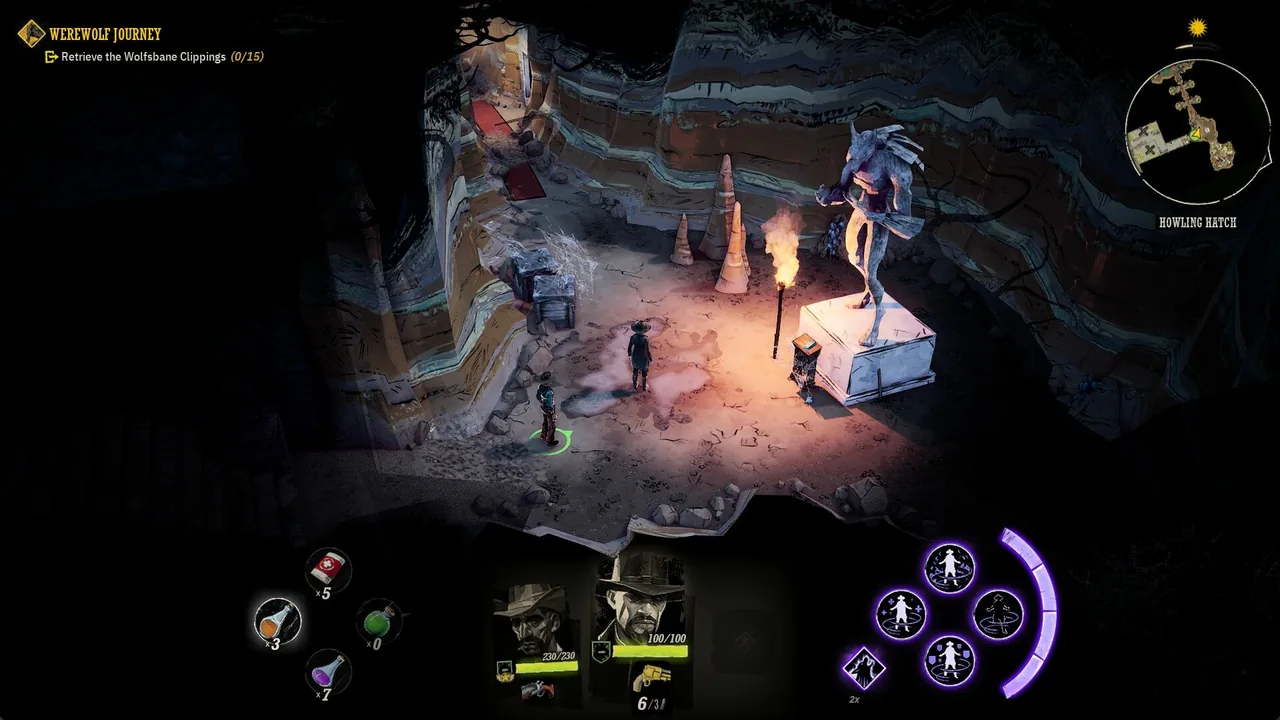
Weird West: Definitive EditionImage: Devolver Digital via Steam -
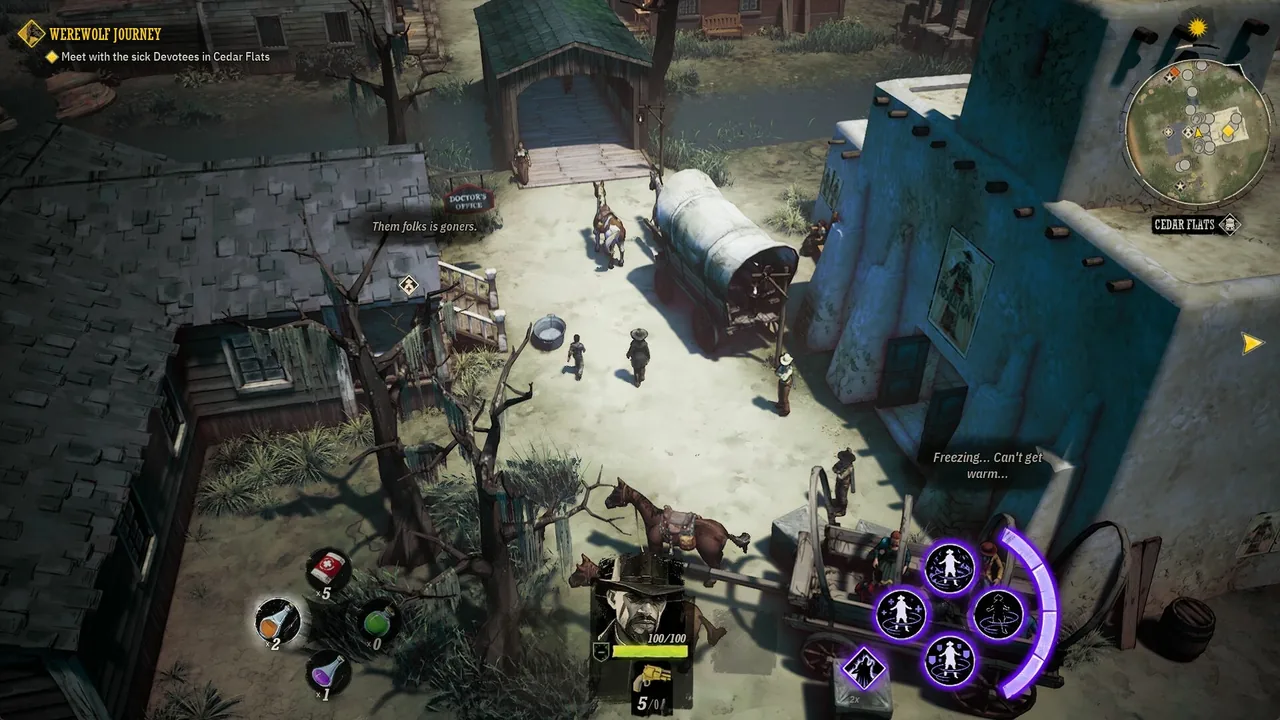
Weird West: Definitive EditionImage: Devolver Digital via Steam -
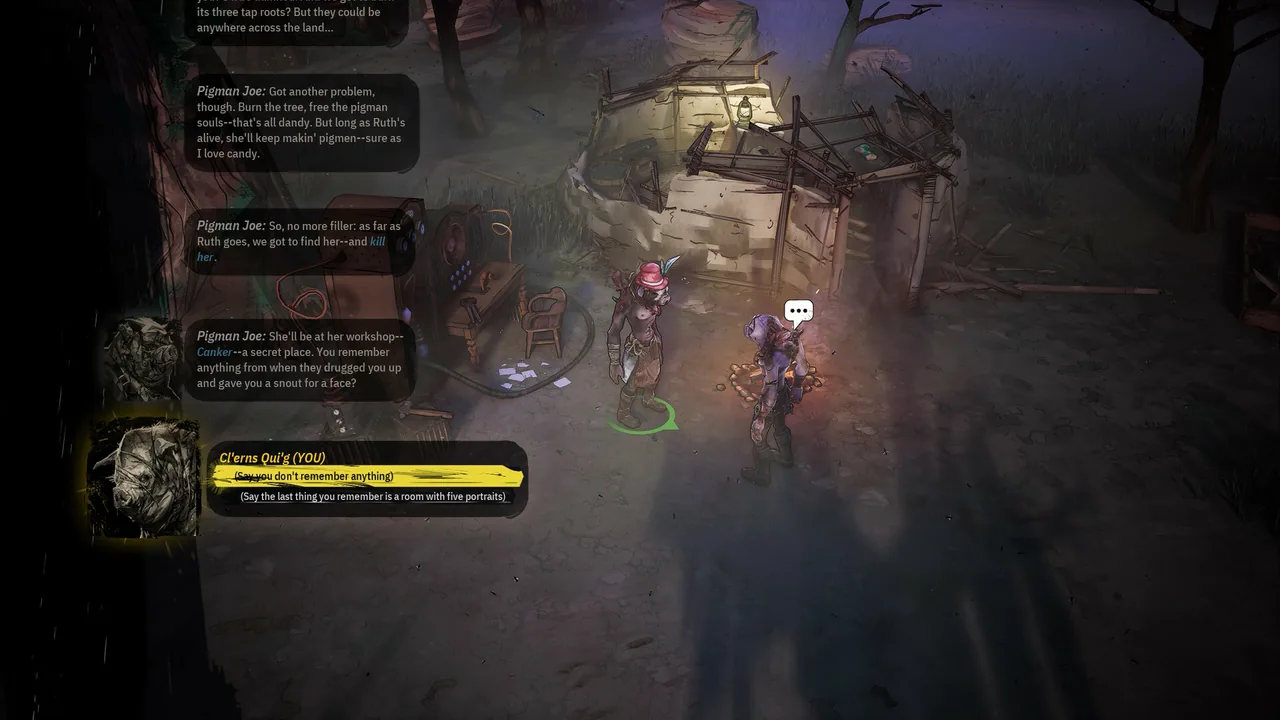
Weird West: Definitive EditionImage: Devolver Digital via Steam -
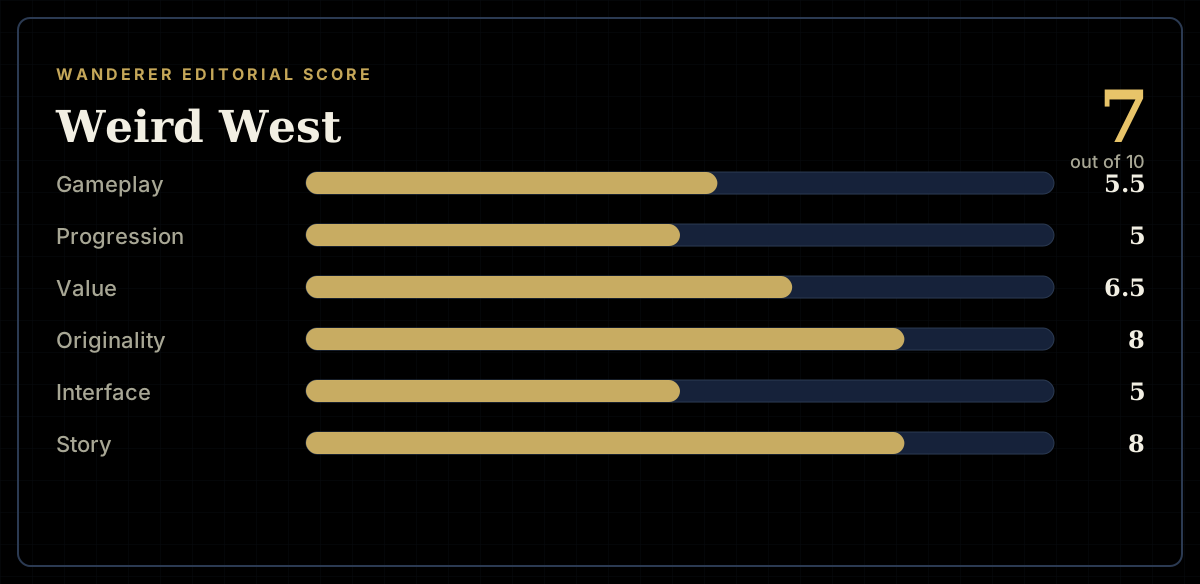
How the review scores each part of the gameWanderer Editorial -
The essentials at a glanceWanderer Editorial -
The short versionWanderer Editorial