Game review
A Hero's Rest: An RPG Town Simulator
6.5 / 10
- Developer
- Vanargand Games
- Publisher
- Vanargand Games
- Released
- 18 October 2024
- Platforms
- Windows
- Genre
- RPG Town Simulator
- Monetisation
- One-time purchase, no DLC and no in-game store
- Players
- Single-player
The short version
A Hero's Rest asks a genuinely different question from most fantasy management sims: instead of playing the adventurer, you outfit one, and the game is built entirely around how well you read a stranger's stats before sending them somewhere that might kill them. The crafting web underneath that idea — sixteen gear categories, thousands of cosmetic combinations, tiered workstations — is deep enough to justify the two years Vanargand Games spent building it in Early Access. What that time didn't fully fix is the building placement tool and a midgame that asks for a lot of shelf-restocking once the novelty of a new shop wears off.
Biggest strengths
- You never fight, but every Hero you send out is only as capable as the gear and provisions you chose to stock — a genuinely different spin on the town-sim formula
- Sixteen gear categories and thousands of cosmetic and stat combinations give the crafting loop more depth than the genre's shop-sim comparisons usually offer
- Active post-launch support well into 2026 — seasonal events, patch 1.2's quality-of-life pass and periodic hotfixes — from a two-person team that hasn't walked away from a finished 1.0
Biggest weaknesses
- Building placement is the single most repeated complaint in negative Steam reviews — grid snapping, lot restrictions and one-workstation-per-lot rules make expanding a town more fiddly than it should be
- Restocking shop inventory becomes a recurring chore once the opening buildings are up, and several reviewers single it out as the point where the loop stops feeling fresh
- No pan-and-tilt camera control was still a sore point for reviewers at launch, on a game whose whole pitch is watching a town from above
Who it's for: Players who liked the idea of Stardew Valley or Graveyard Keeper's shopkeeping loop but wanted a full town of NPCs to manage instead of one farm, and anyone who enjoys optimising a crafting web more than they enjoy combat itself.
Our recommendation: Worth it at a sale price for management-sim players patient with a two-person studio's rough edges, particularly the building tool; go in expecting a strong opening ten to fifteen hours and a slower, more repetitive stretch after your first tier of shops is built.
6.5 / 10
Most fantasy town sims eventually let you pick up a sword. A Hero's Rest never does. You are the proprietor — the shopkeeper, the innkeeper, the person who stocks the tavern shelves and decides which quest board posting a wandering adventurer is actually equipped to survive — and the Heroes who pass through your town make every combat decision entirely on their own, for better or very often for worse. It's a real structural choice, not a missing feature, and it's the thing that makes Vanargand Games' two-person, two-year Early Access project worth picking apart on its own terms rather than as a Stardew Valley or Graveyard Keeper clone with a different coat of paint.
The proprietor's job, not the hero's
The premise, straight from the store page: His Majesty the King has tasked you with running a town in the land of Felonia, a world "abounding with monsters," and your job is to recruit Heroes, build out the shops that supply them, and keep His Majesty's demands and your town's popularity both moving in the right direction. You don't control combat directly. Heroes read their own capability against a quest's danger level and decide for themselves whether to take it on — which means the entire game is really about information and provisioning: does this Hero have the gear, the potions and the class kit to survive what they're about to attempt, and did you sell it to them in time. Vanargand Games' own pitch is blunt about the stakes: Heroes "have a mind of their own and little regard for their safety," and sending one out under-equipped is how they die. That's an unusual amount of trust to place in systems you never directly pilot, and it's the single idea the whole review has to be judged against.
Sixteen categories deep
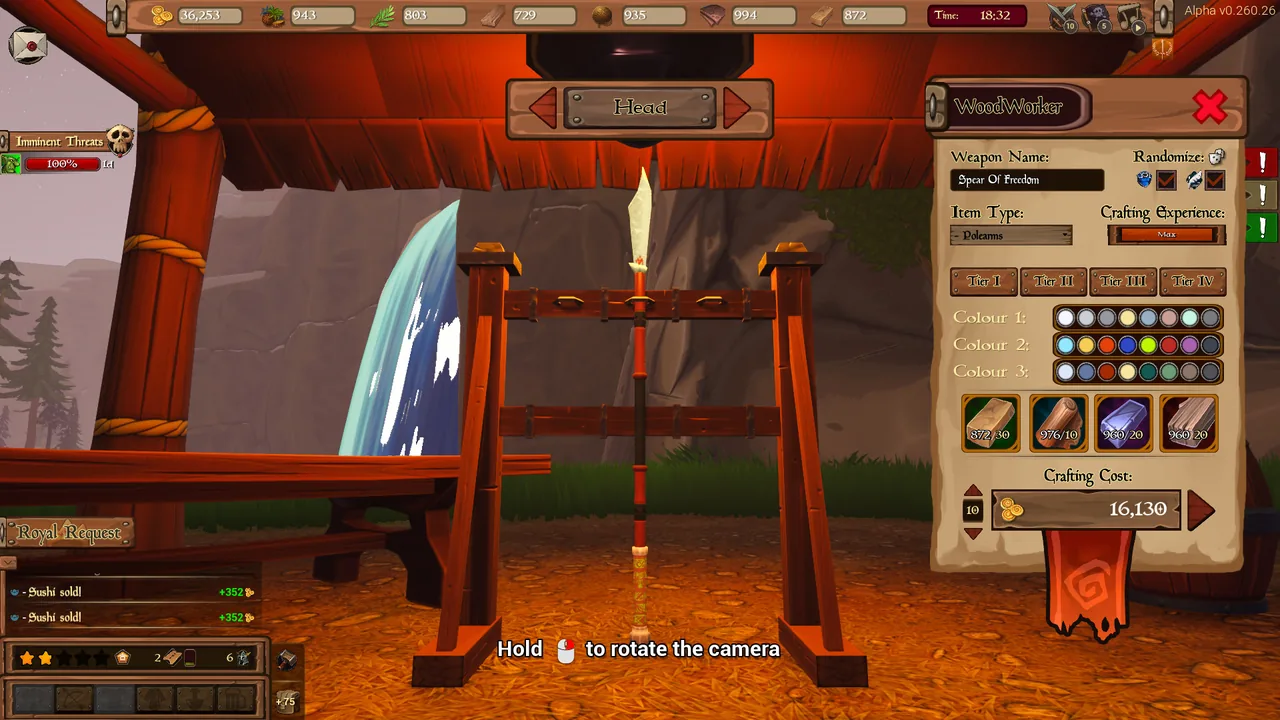
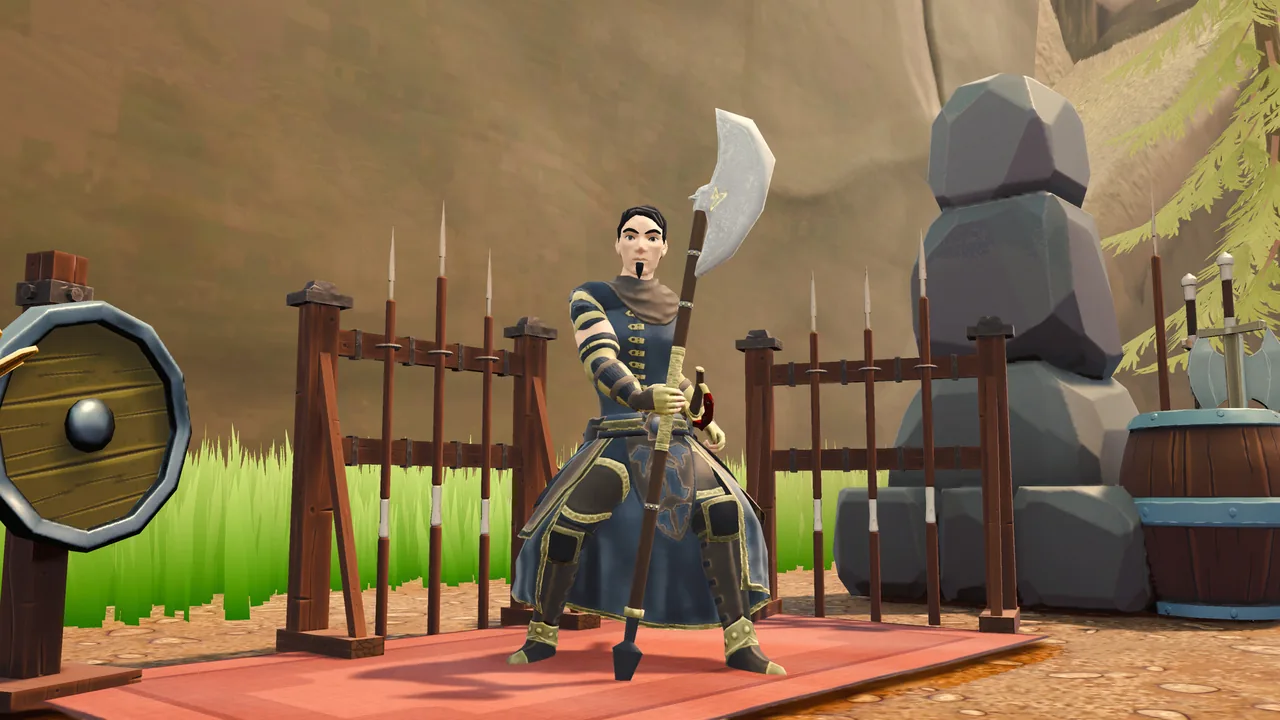
The crafting web is where the two years of Early Access clearly went. Gear splits across sixteen categories with, per the store listing, "thousands" of cosmetic and stat customisation options — armourers, weaponsmiths, tailors and other trade buildings each level up their own workstations to unlock higher tiers of what they can produce, and finished gear gets displayed on physical shop shelves that Heroes browse and buy from directly, so a well-stocked shop is visibly well-stocked rather than an abstract inventory number. That's a detail worth calling out on its own: watching a Hero walk up to a display, try something on and leave wearing it is the clearest through-line between the management layer and the adventuring layer, and it's the moment the game's central idea lands best.
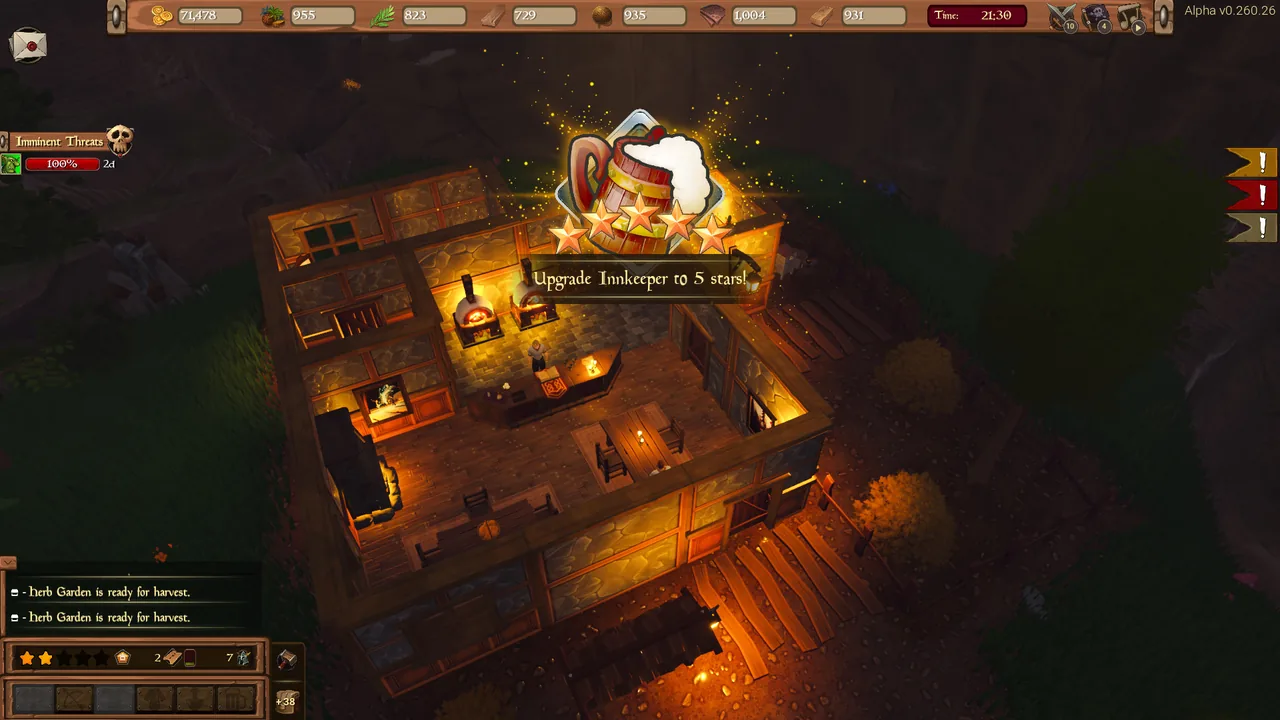
Buildings beyond the crafting trio — Innkeeper, Apothecary, Training Grounds and others — each grant a specific lever over Hero fate rather than a generic production bonus: an Innkeeper's rooms and an Apothecary's potions are framed explicitly as tools "to influence the fate of your Heroes and secure their safety," which keeps the shop-building layer tied back to the life-or-death stakes of the adventuring layer instead of drifting into a separate economy game sitting next to it. Recruited Heroes level up from "inexperienced adventurers to powerful Heroes" over time, and reviewers who put real hours in describe growing attached to specific ones — which is a strange, effective kind of stakes for a game where you're never the one holding the sword.
Where the loop gets repetitive
The trouble starts once a town's first tier of buildings is up. Steam's negative reviews are consistent on two points. First, restocking: shops run dry, and topping them back up becomes a recurring, unautomated chore rather than a strategic decision — one reviewer with 27 hours logged described needing to "restock the inn food every 5 minutes and all the shop upgrades," which is the kind of complaint that shows up specifically once the opening content has been built out and there's nothing left to do but maintain it. Second, and more frequently repeated across both Early Access and post-1.0 reviews: the building placement tool itself. Grid snapping, per-lot workstation limits — one reviewer's specific complaint was "one workstation per lot? No" — and a building system several reviewers independently called unintuitive show up across reviews spanning more than two years, which suggests it's a structural design choice Vanargand Games has been reluctant to rework rather than a bug queued for a fix. A missing camera pan-and-tilt control was still being flagged at launch on a game whose entire premise is overseeing a town from above, which compounds the same frustration.
None of that erases the crafting depth underneath it, but it does mean the honest shape of a playthrough is a strong opening stretch — new buildings, new gear tiers, new Heroes to meet — followed by a slower, more maintenance-driven middle once the framework is in place and the main remaining goal is grinding out quest chains against Heroes who are frequently over the challenge rating for what's actually available to send them at. More than one reviewer used almost that exact phrase independently, which is a strong signal the pacing issue is real rather than a one-off complaint.
Two people, two years, and what shipped at 1.0
A Hero's Rest spent exactly two years in Early Access, launching 12 October 2022 and reaching 1.0 on 18 October 2024 — a normal-length runway for a genre this systems-heavy, and one Vanargand Games, reportedly a two-person studio, used for real structural work: a December 2024 "Patch 1.2" update added new class-based crafting templates and a round of quality-of-life fixes, and the studio has kept shipping hotfixes and seasonal content into 2026, including Halloween and Winter holiday events and periodic sale pushes. That's a meaningfully better post-launch record than the "abandoned shortly after release" complaint a handful of reviewers raise — Steam's own achievement data backs that up with a smooth, gradual completion curve rather than a cliff, going from 85% of players clearing the opening tutorial achievement down through the 40s for mid-tier building unlocks to under 1% for the hardest raid and mastery achievements, the shape of a game with real content past its opening hours rather than one that runs out early.
Where the complaint has more teeth is pace: reviewers weighing $24.99 against the size of major content updates since 1.0 are a fair minority voice in Steam's review pool, and it's a reasonable thing to weigh against a Mixed rating that's held fairly steady since launch rather than trending upward the way a heavily-patched game's review score often does.
Verdict
A Hero's Rest is at its best in the idea nobody else in the genre is quite doing: you never fight, you only ever prepare someone else to, and the crafting and shop-building systems Vanargand Games spent two years building are deep enough — sixteen gear categories, tiered workstations, physical shop displays Heroes actually shop from — to make that preparation feel like the real game rather than a chore bolted in front of the fun part. The building tool never got the rework its most persistent critics have been asking for since Early Access, and the midgame leans harder on restocking shelves than on new decisions once a town's first tier is built, which is a fair account of why Steam's own review score sits at Mixed rather than higher. At a sale price, with realistic expectations about where the loop thins out, it's a genuinely different management sim worth the two-person studio's asking price. At full price, weigh the strong opening hours against a middle stretch that a fair number of players describe running out of patience with before it does them.
Readers who want the shopkeeping half of this idea without the town-management scale can read our review of Yolk Heroes: A Long Tamago, which turns rest itself into the core resource. Anyone drawn to managing progress that keeps ticking over even while you're away from the screen, without a building-placement tool to fight, may also want to look at Wanderer.
Pricing, platform availability and Steam review data checked 11 August 2026.
Pros and cons
Pros
- You never fight, but every Hero you send out is only as capable as the gear and provisions you chose to stock — a genuinely different spin on the town-sim formula
- Sixteen gear categories and thousands of cosmetic and stat combinations give the crafting loop more depth than the genre's shop-sim comparisons usually offer
- Active post-launch support well into 2026 — seasonal events, patch 1.2's quality-of-life pass and periodic hotfixes — from a two-person team that hasn't walked away from a finished 1.0
- Losing a Hero on a quest they weren't ready for has real weight once you've watched one level up, which gives the otherwise hands-off adventuring loop stakes it wouldn't have on paper
- Steam's achievement data shows a long, gradual completion curve rather than a wall a few hours in, suggesting there's genuine content past the opening loop for players who stick with it
Cons
- Building placement is the single most repeated complaint in negative Steam reviews — grid snapping, lot restrictions and one-workstation-per-lot rules make expanding a town more fiddly than it should be
- Restocking shop inventory becomes a recurring chore once the opening buildings are up, and several reviewers single it out as the point where the loop stops feeling fresh
- No pan-and-tilt camera control was still a sore point for reviewers at launch, on a game whose whole pitch is watching a town from above
- Windows-only, with no macOS, Linux or Steam Deck-verified support listed on the store page
- Recent Steam sentiment sits at "Mixed" (about 69% positive across 180 reviews as of checking), with a real minority calling the post-1.0 pace of major content updates too slow for a $24.99 asking price
Screenshots
-
A Hero's Rest: An RPG Town SimulatorImage: Vanargand Games via Steam -
A Hero's Rest: An RPG Town SimulatorImage: Vanargand Games via Steam -
A Hero's Rest: An RPG Town SimulatorImage: Vanargand Games via Steam -
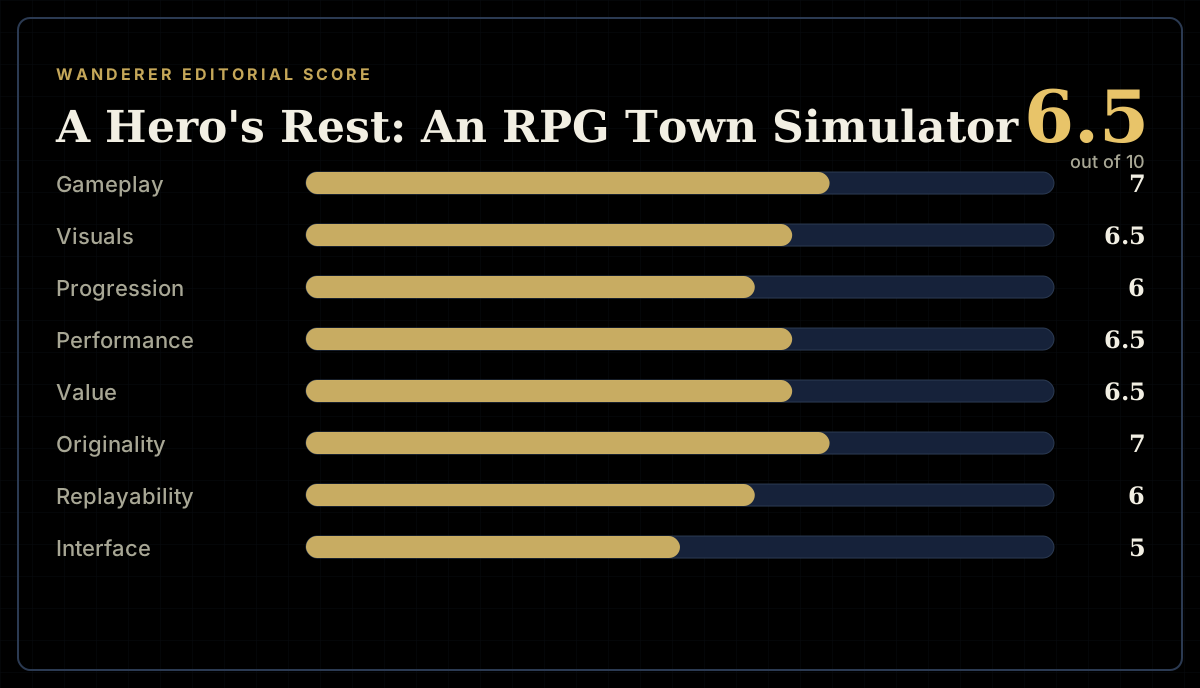
How the review scores each part of the gameWanderer Editorial -
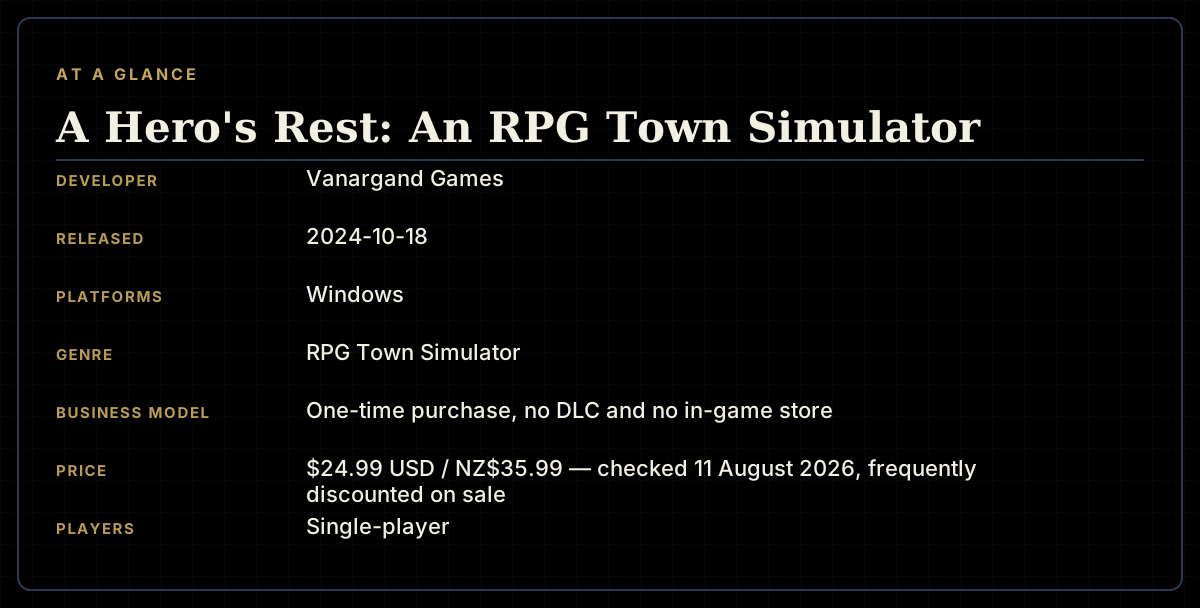
The essentials at a glanceWanderer Editorial -
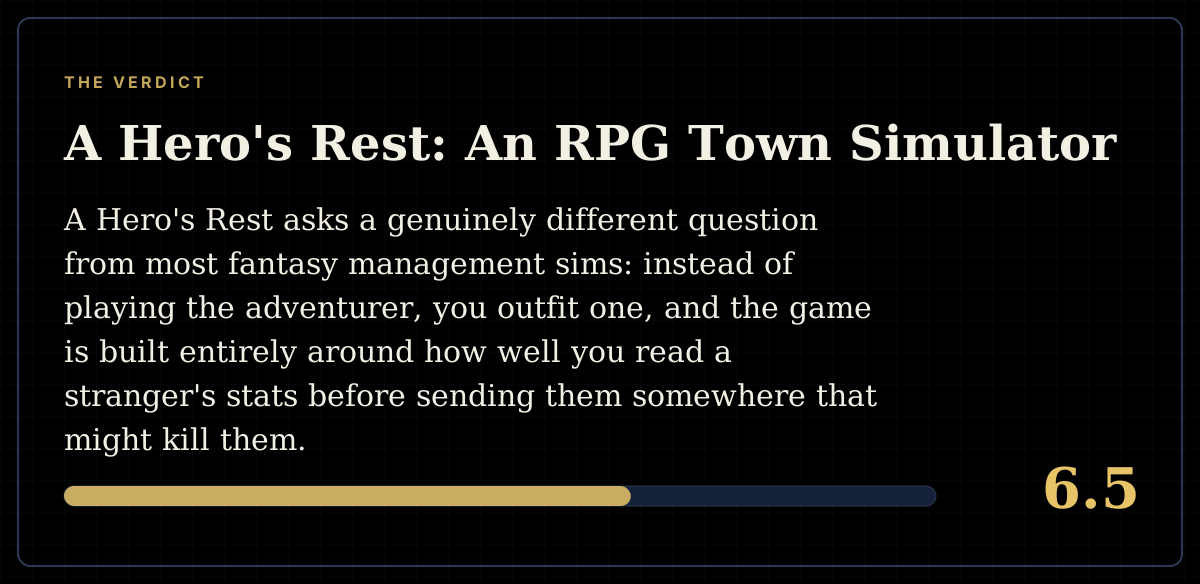
The short versionWanderer Editorial