
Game review
Yolk Heroes: A Long Tamago
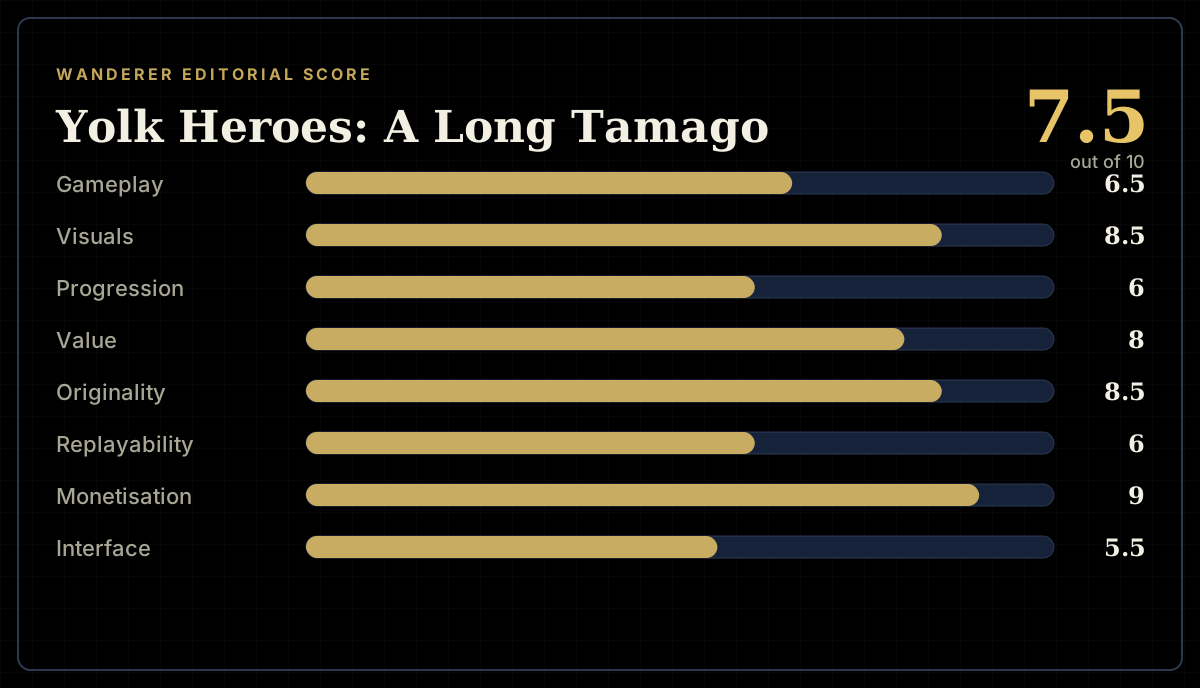
7.5 / 10
- Developer
- 14 Hours Productions
- Publisher
- 14 Hours Productions, Astrolabe Games
- Released
- 20 May 2024
- Platforms
- Windows
- Genre
- Idle RPG
- Monetisation
- One-time purchase, no in-app purchases, no ads, no subscription
- Players
- Single-player only
The short version
Yolk Heroes commits fully to its pitch: you're a guardian spirit raising a hero from egg to battle-ready adult, and the Game Boy-flavoured presentation sells that nostalgia trip from the first boot. The trouble is the two halves of its hybrid don't always pull their weight equally — the raising-sim side is charming and the idle loop genuinely respects your time, but the RPG layer underneath rarely asks you to decide anything once the queue is set.
It's a game people end up leaving running for hundreds, sometimes thousands, of hours, which is either the best evidence of a loop that works or a sign of how little there is to actively do — probably both, depending on which player you ask.
Biggest strengths
- The egg-to-adult raising loop is genuinely distinctive among idle games, and the Game Boy-era pixel art and interface commit to the bit rather than just referencing it
- A real queue system lets you stack quests, training, chores and rest in advance so the hero keeps working while you're away, matching the "check in a few times a day" pitch the store page makes
- One-time NZ$11.79 purchase with no ads, no in-app purchases and no energy-refill store — everything in the game is earned by playing
Biggest weaknesses
- The RPG layer is mostly automatic — stats and equipment climb on their own, and several long-time players single out the lack of meaningful tactical choice as the game's central ceiling
- Menus and queueing create real friction for a game sold on being low-maintenance; multiple players describe clicking through screens more than an idle game should ask of them
- Mid-to-late progression can stall hard, with some reviewers describing week-long plateaus before the next milestone opens up
Who it's for: Fans of Tamagotchi, Digimon and other creature-raising sims who also want a light RPG wrapped around the caretaking, and players who want an idle game that's honestly built for checking in a few times a day rather than tab-switching every few minutes.
Our recommendation: Worth the asking price for anyone who finds the premise appealing, provided you go in expecting a caretaking toy with RPG dressing rather than an RPG with a caretaking gimmick. Players chasing deep tactical combat or a fast-twitch idle-clicker dopamine loop should look elsewhere.
7.5 / 10
Idle games usually pick one metaphor and stick with it — a factory, a dungeon crawl, a stock portfolio that grows while you sleep. Yolk Heroes: A Long Tamago picks two at once. You're cast as a guardian spirit assigned by the Fairy Queen to raise a single hero from an egg through infancy into an adult capable of standing against a Dark Lord, and the raising half of that sentence is doing just as much work as the hero half. It's a Tamagotchi with a combat system bolted on, or an idle RPG with a digital pet's sense of obligation, depending on which part of the loop currently has your attention.
Three stages, one creature you actually get attached to
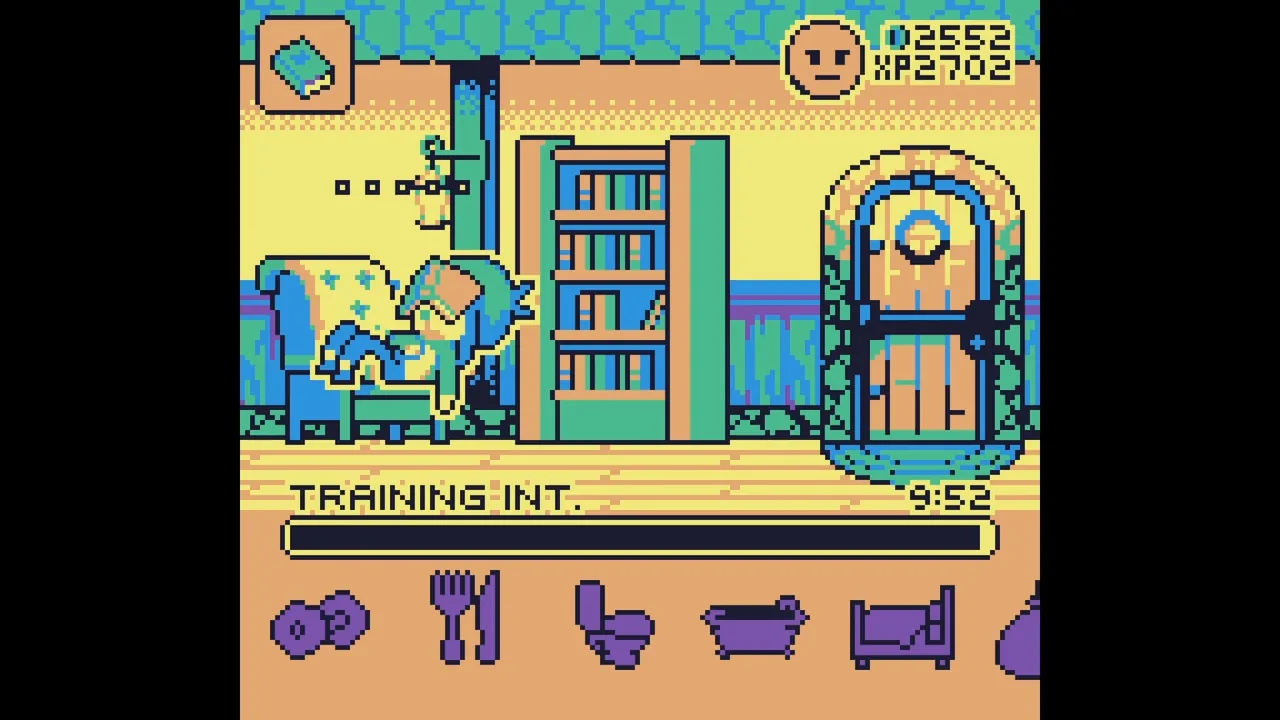
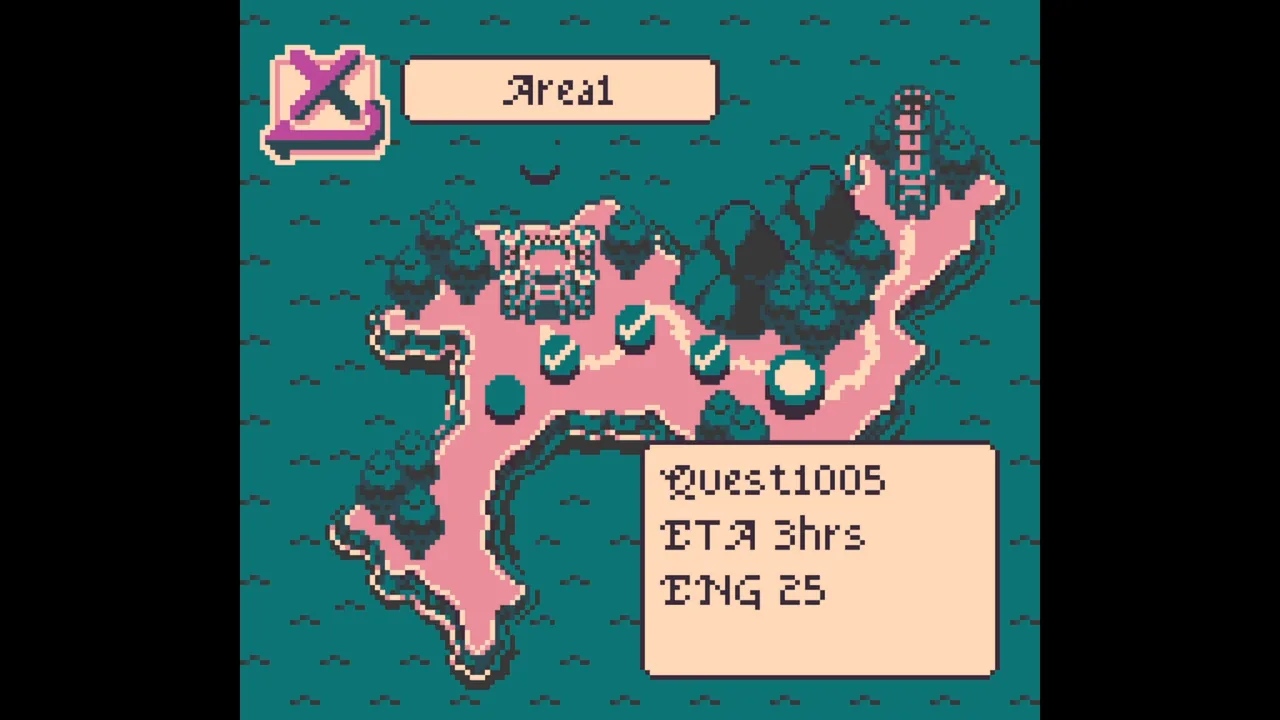
The structure is linear in a way that mirrors real pet-raising games rather than typical RPG level design. You start by keeping an egg at the right temperature to hatch the strongest possible hero — a short, deliberate mini-game rather than a formality. From there the creature moves through an infant phase, where errands, practice drills and lessons build up its early skills, and finally into a hero phase, where it's sent out on quests and adventures for loot and experience. Losing a fight doesn't end the run; a recovery system brings the hero home to heal rather than resetting progress, which keeps the tone closer to "worried caretaker" than "punishing roguelike."
What sells this structure is the presentation. The game boots up with a startup chime and a palette that deliberately recalls a handheld console rather than gesturing vaguely at "retro," and it stays disciplined about that choice throughout — chunky sprites, a limited colour range, music cues that sound like they belong on a cartridge. For a game built entirely around checking in on a creature you're raising, that discipline matters: it makes the hero feel like something you're actually minding, not just a stat block with a portrait.
The queue is the game, and mostly that works
Mechanically, Yolk Heroes lives or dies on its task queue. You line up quests, training sessions, chores and sleep in advance, hand tasks off to your hero, and let them play out in real time while you do something else. Energy is the limiting resource — every action costs it, and a depleted hero needs rest before it can do anything productive again — which is the game's way of enforcing its own "leisurely, periodic check-ins" pitch rather than rewarding players who sit and grind the interface.
When that loop is humming, it's a genuinely pleasant idle game to have running in the background, and the numbers back that up: reviewers routinely report playtimes in the hundreds of hours, with a meaningful share well past a thousand. That's not typical for a niche digital-pet hybrid five years after most Tamagotchi revivals have come and gone, and it says something real about how well the core check-in rhythm has held up for the players it clicks with.
Where it stops working is at the edges of that queue. A recurring complaint across player feedback is that the automation isn't quite complete — needs and readiness windows don't always line up the way an "idle" game implies they should, so keeping the queue full ends up requiring more active clicking through menus than the premise promises. For a game explicitly selling itself on requiring "only periodic check-ins," a UI that asks for more attention than that is a real tension, not just a nitpick.
The RPG half is thinner than the raising half
The more serious criticism, and the one that shows up most consistently once players get a few dozen hours in, is that the actual role-playing layer doesn't have much underneath it. Stats and equipment accumulate largely on their own — you assign tasks, but you're rarely asked to make a build decision, weigh a trade-off, or respond tactically to what an enemy is doing. For a caretaking sim that's a survivable trait; for something billing itself as part JRPG, it's a gap that becomes more obvious the longer you play. More than one long-term player has summed it up as a game where "your character just gets stronger without you making any choices," and it's hard to argue with that once you've seen the surface-level combat repeat for the fourth or fifth time.
Progression pacing compounds the issue in the middle stretch. Several reviewers describe hitting walls that take real-world weeks to clear without an obvious next step, which is a rough combination with a combat layer that isn't deep enough to make the grind itself entertaining. The early hours also front-load a heavy amount of tutorial explanation before the loop opens up — understandable for a hybrid this unusual, but enough to cost the game some players who bounce before the caretaking and the RPG systems start meshing.
Value and monetisation
There's very little to criticise on the business-model side. Yolk Heroes is a one-time purchase at NZ$11.79 with no in-app purchases, no advertising, and nothing resembling an energy-refill store bolted on top of its energy system — the energy limit is a pacing device, not a paywall. Combined with the playtime figures players report, it's a fair-to-generous deal by any premium idle game's standards, and one of the more straightforward monetisation stories this genre produces.
Final verdict
Yolk Heroes: A Long Tamago succeeds most clearly as what it's actually selling: a creature you raise and worry about, dressed in convincing Game Boy-era style, that keeps working for you while you're elsewhere. Its 90% positive standing across nearly 800 Steam reviews reflects a game that has found its audience and held onto a lot of them for a very long time.
It doesn't reach higher than a 7.5 because the RPG half of its hybrid never becomes more than decoration around the raising sim, and the interface asks for more clicking than an idle game built on "check in a few times a day" should. Go in wanting a low-maintenance pet you're genuinely fond of, not a tactical RPG with a cute wrapper, and the price is easy to justify.
Price and monetisation checked 1 August 2026.
Players who like progression that keeps moving while they're logged out, without giving up an actual RPG to make room for it, might also want to look at Wanderer.
Pros and cons
Pros
- The egg-to-adult raising loop is genuinely distinctive among idle games, and the Game Boy-era pixel art and interface commit to the bit rather than just referencing it
- A real queue system lets you stack quests, training, chores and rest in advance so the hero keeps working while you're away, matching the "check in a few times a day" pitch the store page makes
- One-time NZ$11.79 purchase with no ads, no in-app purchases and no energy-refill store — everything in the game is earned by playing
- Long-term players consistently report the loop holding their attention for hundreds of hours, an unusually strong retention signal for a five-year-old sub-genre
- 26 Steam achievements and a hero-recovery system give the caretaking side actual stakes without punishing failure too harshly
Cons
- The RPG layer is mostly automatic — stats and equipment climb on their own, and several long-time players single out the lack of meaningful tactical choice as the game's central ceiling
- Menus and queueing create real friction for a game sold on being low-maintenance; multiple players describe clicking through screens more than an idle game should ask of them
- Mid-to-late progression can stall hard, with some reviewers describing week-long plateaus before the next milestone opens up
- The opening stretch front-loads a lot of tutorialisation before the loop settles into its rhythm, which costs the game some players before it gets going
Screenshots
-

Yolk Heroes: A Long TamagoImage: 14 Hours Productions via Steam -
Yolk Heroes: A Long TamagoImage: 14 Hours Productions via Steam -
Yolk Heroes: A Long TamagoImage: 14 Hours Productions via Steam -
How the review scores each part of the gameWanderer Editorial -
The short versionWanderer Editorial