Game review
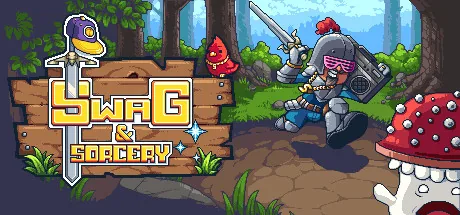
Swag and Sorcery
5.5 / 10
- Developer
- Lazy Bear Games, Uroboros Games
- Publisher
- tinyBuild
- Released
- 9 May 2019
- Platforms
- Windows
- Genre
- Idle RPG
- Monetisation
- One-time purchase, no in-app purchases, no DLC or expansions found on the Steam store page.
- Players
- Single-player only
The short version
Swag and Sorcery sells itself as an idle RPG about running a fantasy village and sending heroes out to loot, and the pixel art, the writing and the initial hook are genuinely good. What it doesn't do is leave you alone. Every fight has to be manually launched and manually pulled back from, there's no way to queue up a run and walk away, and the reward curve behind all that clicking is stingy enough that a large share of its own Steam audience calls the grind not worth the effort — after logging hundreds of hours proving it.
Biggest strengths
- The pixel art is detailed and consistently well animated across heroes, monsters and village buildings
- The writing is genuinely funny, built around an irreverent framing story about recovering a king's stolen wardrobe
- Character building has real depth once outfits, classes and combo bonuses start interacting
Biggest weaknesses
- Every combat run has to be started and manually pulled back from — there is no auto-resend or queue, which sits awkwardly against the game's own idle marketing
- Several long-time players describe cosmetic outfit sets outperforming purpose-built combat gear, undermining the point of gearing up at all
- The loot rate many reviewers describe as too slow to justify the number of times a fight has to be manually repeated
Who it's for: Players who like village-management RPGs with a strong sense of humour and don't mind babysitting every fight by hand. Not for anyone who picked this up expecting a game that progresses while the window is minimised.
Our recommendation: Worth a look on a deep sale for the art and the writing alone. At full price, with a genre label that promises more hands-off progression than it delivers, it's an easy game to bounce off within the first couple of hours.
5.5 / 10
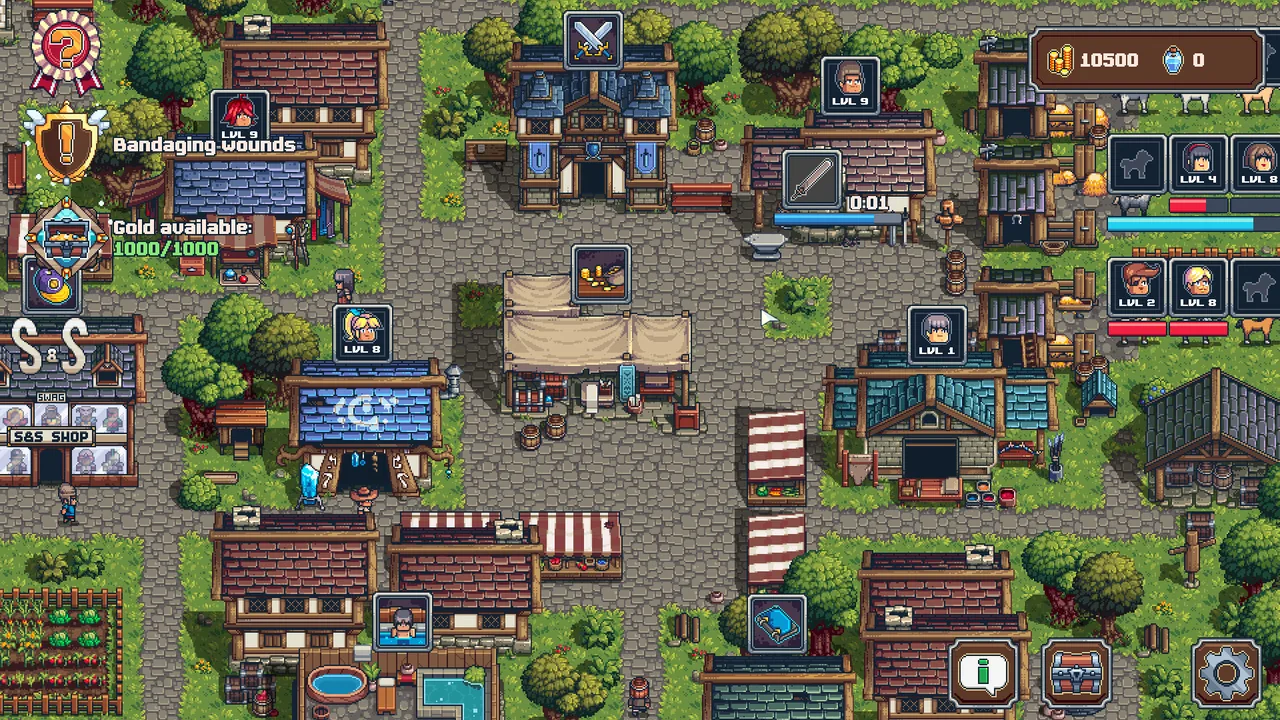
Swag and Sorcery opens with a joke worth repeating: the king's suit has gone missing, and it's somehow your village's problem to get it back. That irreverence carries through the whole game — a sarcastic supporting cat, a village full of oddball villagers, hero outfits that range from practical armour to deliberately ridiculous costumes. It's a good hook, and for the first few hours it works. The trouble starts once the hook has to carry the entire game, because underneath the humour Swag and Sorcery is a village-and-hero management sim marketed with idle-game language that its actual combat loop doesn't honour.
That gap between the label and the mechanic is the single most consistent thing Steam's own audience has to say about it, and it's why a game with real craft in its art and writing sits at a Mixed rating rather than comfortably above it.
A loop that never lets go
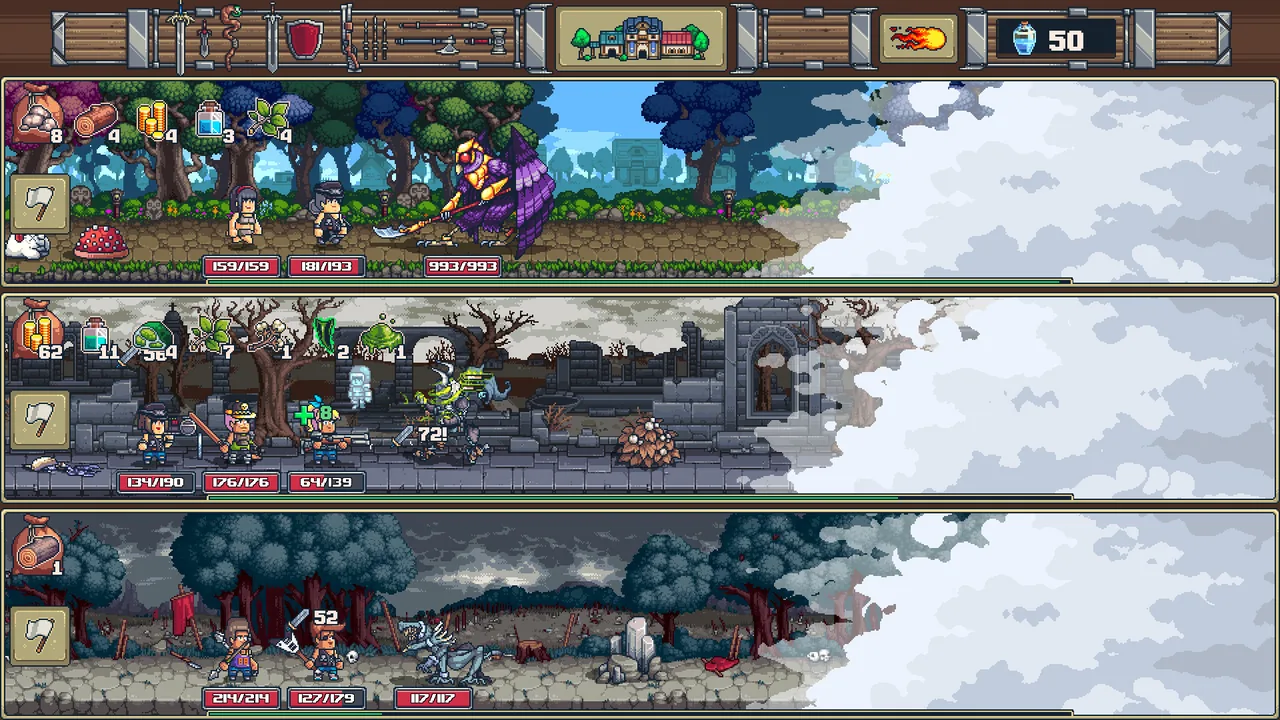
The structure is straightforward: equip up to three parties of heroes from village resources, send them out to fight, and watch their health bars. The catch is that watching isn't optional. Heroes don't retreat on their own, so keeping a party alive long enough to bank its loot means manually pulling it out of a fight before a losing exchange wipes the run, then manually sending it back in again. There's no auto-resend, no queue-and-walk-away option, and no way to let a run play out unattended the way "idle" typically promises elsewhere in the genre. Multiple long-time players describe this precisely: it's a mobile-style clicker wearing an idle game's marketing, one where "everything requires a manual input anyway" no matter how the store page frames it.
That wouldn't necessarily be a problem for a management RPG that never claimed to be idle in the first place — plenty of good village sims ask for constant attention and are better for it. The issue is the mismatch between expectation and delivery: players go in expecting a game that tolerates being left running, and instead find one that punishes exactly that behaviour, since an unattended party with no health left simply loses everything it was carrying.
Heroes, gear, and a balance problem worth flagging
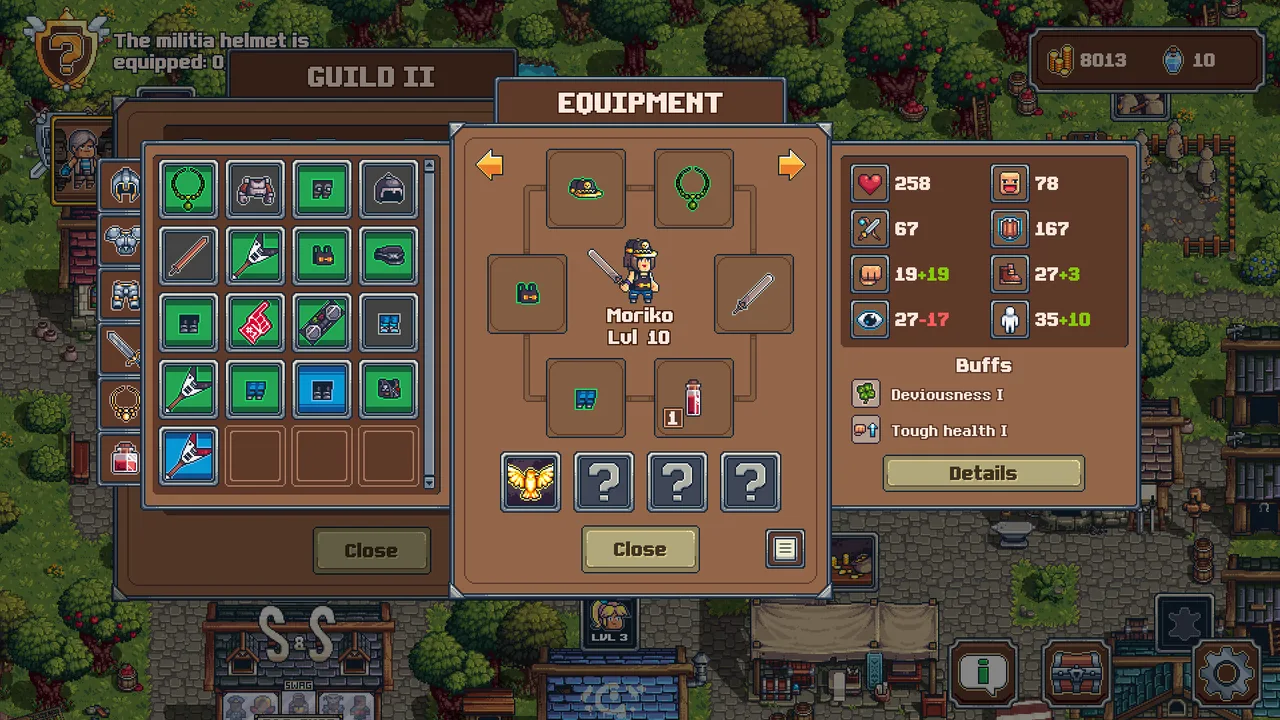
Progression runs on the genre's familiar rails — better gear, higher-level heroes, deeper village buildings unlocking new options — and for a while the numbers-go-up curve is satisfying enough on its own. The character-building layer has genuine texture once outfit sets, class choices and combo bonuses start interacting, and more than one reviewer specifically calls out the variety of enemies and equipment combinations as a highlight worth sticking around for.
The complaint that recurs often enough to matter is balance. Several reviewers with substantial playtime describe silly, cosmetic-leaning outfit sets outperforming gear that looks like it should be the stronger, more "serious" choice — which undercuts the whole point of chasing rarer loot if a joke costume quietly does the job better. Paired with a drop rate that a number of players call too slow relative to how many times a given fight has to be manually repeated to see meaningful gains, the mid-game starts to feel like it's asking for more manual effort than it's paying back in reward. One recurring theme from higher-playtime reviewers is that progress in the back half of the game slows to the point where a session can pass with almost nothing to show for it beyond another round of the same clicking.
Presentation carries more of the game than it should have to
Visually, this is where Swag and Sorcery is least in dispute. The pixel art is detailed and consistently well-animated, villages have real personality, and the character and monster designs lean into the game's comic tone rather than playing it straight. The writing matches — reviewers across both sides of the rating divide tend to agree the humour lands, and the framing story never takes itself too seriously even as it strings together several dozen hours of grinding underneath. That combination of strong art direction and a script that's actually funny is doing a lot of work to keep less patient players around longer than the underlying combat loop probably earns on its own.
An interface that withholds information it should show
Beyond the bigger structural complaint, there's a smaller but persistent one: the interface doesn't always tell players what they need to know to make a gearing decision. A specific, recurring example is item colour — a property that affects an item's set or bonus in some configurations — simply not being shown at the point where a player is comparing two pieces of gear. Small omissions like that compound with the game's already grind-heavy pacing, because every unclear comparison is another manually repeated fight spent finding out the hard way rather than being told upfront.
Value, and the honesty of the playtime numbers
Here's the detail worth sitting with before deciding whether to buy in at full price: a striking number of Swag and Sorcery's negative Steam reviews come attached to playtime in the hundreds, and in some cases well over a thousand, hours. That's not a game people bounce off in twenty minutes and never touch again — it's one that hooks players hard enough to keep them clicking long past the point where they've decided to recommend against it. That's worth reading as a genuine, if backhanded, compliment to the core loop's pull, even as it confirms just how repetitive that loop becomes over the long haul.
At full price, the calculus is harder to justify than it is on a deep discount. One veteran reviewer put a fairly exact number on it: worth recommending around the two-and-a-half-dollar mark, much harder to recommend at the double-digit list price the Steam store actually charges. That tracks with the wider sentiment — this is a game whose ideas are good enough to be worth experiencing, but whose asking price assumes a smoother, better-paced experience than the one a large share of its own audience reports getting.
Verdict
Swag and Sorcery has the bones of a good idle-adjacent RPG: a genuinely funny script, some of the better pixel art in the genre, and a hero-building system with enough depth to reward paying attention to outfits and combos rather than just chasing bigger numbers. None of that is in question, and it's exactly why so many of its harshest critics still put hundreds of hours into it before writing them off.
It settles into Mixed territory, and a 5.5 here, because the game's own marketing sets an expectation of hands-off progression that the actual combat loop never delivers — every fight needs a human hand on the mouse to start it and pull it back, with no automation to ease that burden as the hours pile up. Layer a loot rate several players call too slow and a balance problem where costume pieces can outperform proper gear, and the grind starts to feel less like a deliberate design choice and more like padding. Buy it on a sale for the art and the writing. Go in expecting a management RPG that asks for your constant attention, not an idle game that respects your time away from the keyboard.
Players who want their heroes' progress to keep moving without a mouse click for every single fight may prefer Wanderer, where offline time is part of the design rather than a gap the game punishes you for.
Pricing and Steam review data checked 1 August 2026.
Pros and cons
Pros
- The pixel art is detailed and consistently well animated across heroes, monsters and village buildings
- The writing is genuinely funny, built around an irreverent framing story about recovering a king's stolen wardrobe
- Character building has real depth once outfits, classes and combo bonuses start interacting
- Teaches its systems gradually enough that new players aren't overwhelmed in the opening hours
- A large number of its most negative reviewers still logged hundreds of hours before writing them
Cons
- Every combat run has to be started and manually pulled back from — there is no auto-resend or queue, which sits awkwardly against the game's own idle marketing
- Several long-time players describe cosmetic outfit sets outperforming purpose-built combat gear, undermining the point of gearing up at all
- The loot rate many reviewers describe as too slow to justify the number of times a fight has to be manually repeated
- Item comparison in the interface omits basic information, such as an item's colour variant, that players say they need to make gearing decisions
- Reviewers report the story trailing off without a clear ending, exposing how thin the content becomes once the early hooks wear off
Screenshots
-
Swag and SorceryImage: tinyBuild via Steam -
Swag and SorceryImage: tinyBuild via Steam -
Swag and SorceryImage: tinyBuild via Steam -
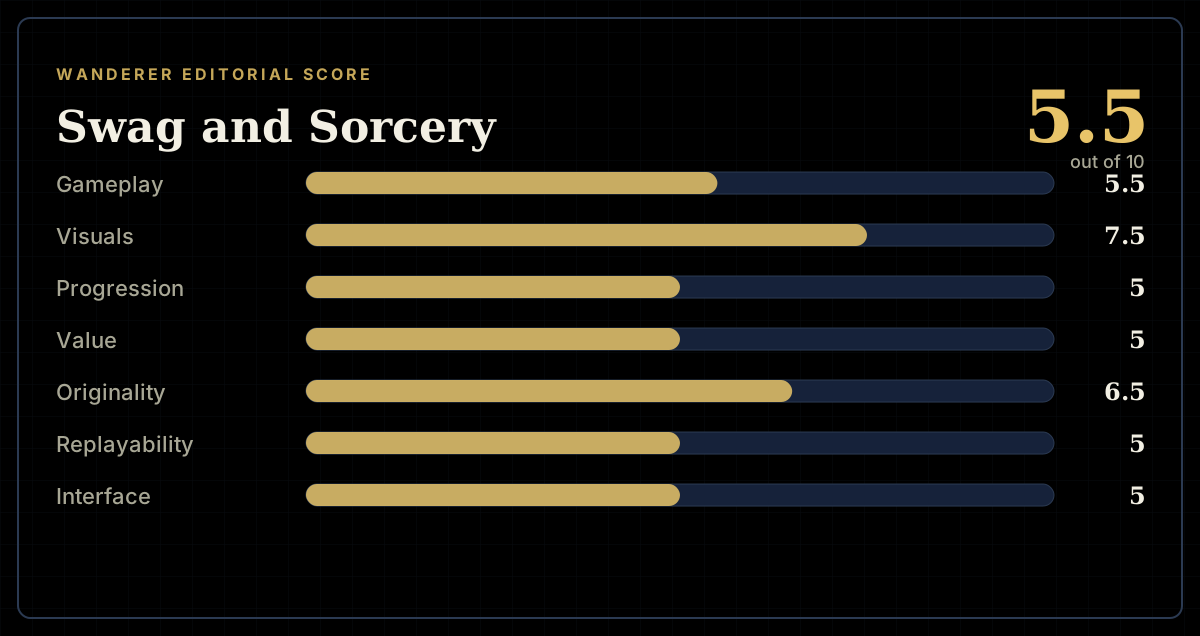
How the review scores each part of the gameWanderer Editorial -
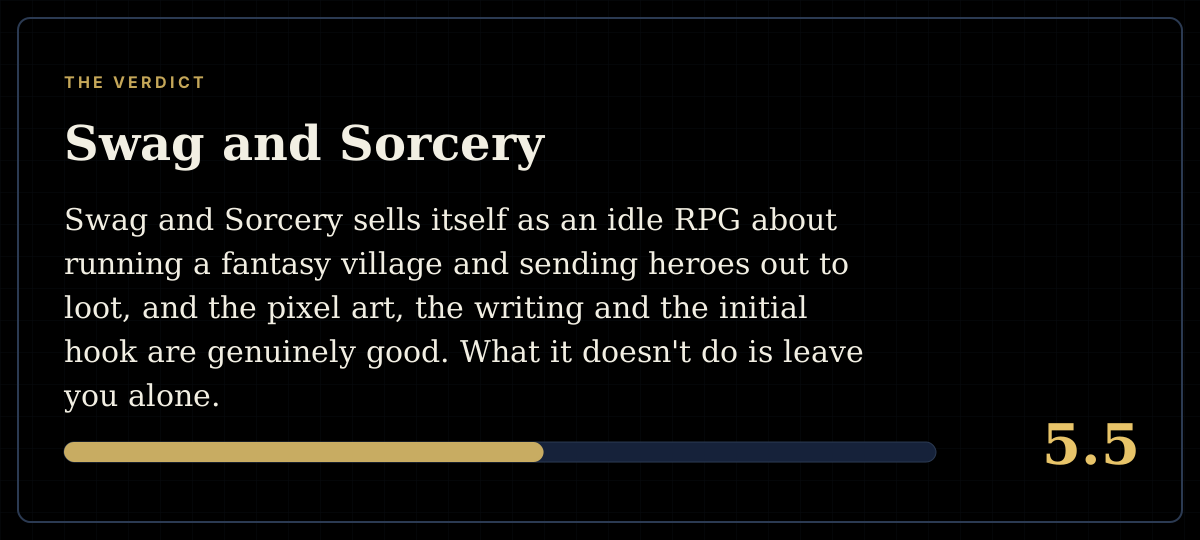
The short versionWanderer Editorial