
Game review
Idle Calibur
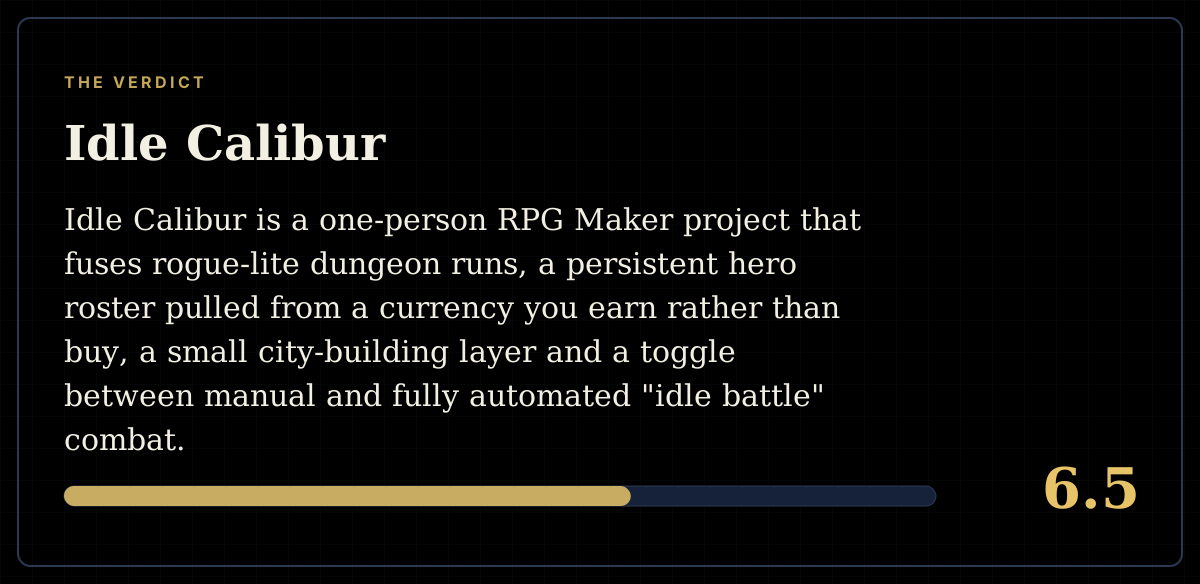
6.5 / 10
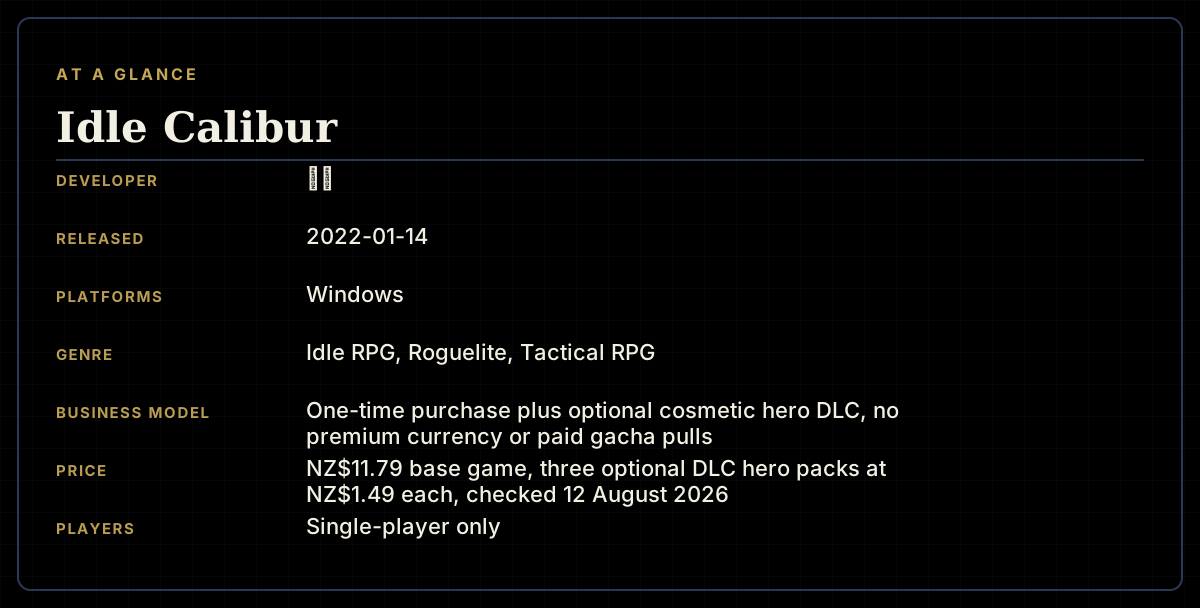
- Developer
- 绝汪
- Publisher
- 绝汪, Mecrew Games
- Released
- 14 January 2022
- Platforms
- Windows
- Genre
- Idle RPG, Roguelite, Tactical RPG
- Monetisation
- One-time purchase plus optional cosmetic hero DLC, no premium currency or paid gacha pulls
- Players
- Single-player only
The short version
Idle Calibur is a one-person RPG Maker project that fuses rogue-lite dungeon runs, a persistent hero roster pulled from a currency you earn rather than buy, a small city-building layer and a toggle between manual and fully automated "idle battle" combat. Released 14 January 2022, it sits at Very Positive across 1,316 reviews (86.4%), though the audience is overwhelmingly Chinese-language; the smaller English-language sample of 50 reviews, read here in full, is Mostly Positive and tells a much more specific story. Reviewers who stuck around consistently praise the depth of the systems and the honesty of the gacha, which never asks for real money. Almost every English complaint is the same one: the translation is bad enough, in places, to turn menus into a guessing game.
Biggest strengths
- The core loop genuinely earns comparisons to gacha games, with a persistent hero roster, marriage system and a currency-based pull system that multiple reviewers specifically credit for never requiring real money to progress
- The idle/manual split is honestly implemented — an "idle battle" mode grinds gold, gear currency and experience unattended, while short rogue-lite dungeon runs stay hands-on for players who want them
- City building, a skill tree and a light trading-economy layer give the moment-to-moment loop more going on than most idle games in its price bracket
Biggest weaknesses
- The English translation is the single most repeated complaint in the review sample by a wide margin, with several reviewers describing untranslated text, confusing item tooltips and menu options that require trial and error to understand
- One detailed reviewer identified several character portraits as stock assets from RPG Maker's Trinity Resource Pack rather than original art, undercutting the game's visual identity for anyone who recognises the source
- The interface asks for more clicks than it needs to and offers no in-game explanation of core systems, so even patient players describe an early stretch of confusion before anything clicks
Who it's for: Idle and gacha fans who don't mind rough English text and want a genuinely deep, one-time-purchase alternative to predatory mobile gacha; a poor fit for anyone who wants a polished interface or a controller-friendly session.
Our recommendation: A charming, unusually deep idle roguelite let down by a translation that never got finished — worth the low asking price if you're willing to puzzle out a menu now and then, hard to recommend without that caveat stated up front.
6.5 / 10
Introduction
Idle Calibur opens with a warning from its own developer: an in-game notice admits the English translation is a work in progress made by a solo Chinese developer working alone, and asks players to "please consider it carefully before buying." That's an unusually candid thing for a storefront page to say, and it turns out to be the single most accurate piece of marketing copy in the whole review sample. Released 14 January 2022, Idle Calibur is a pixel-art hybrid of rogue-lite dungeon runs, real-time tactical battles, city management, a currency-based gacha and, improbably, a marriage system, all built in RPG Maker by a developer working under the handle 绝汪 and published independently alongside Mecrew Games. Four years on it sits at Very Positive across 1,316 reviews, though that figure is carrying an audience that's overwhelmingly Simplified Chinese — 88 of the 100 most recent reviews in an all-language sample were written in Chinese, against six in English. The smaller English corpus, all 50 reviews of which were read for this review, tells a more specific and more useful story than the headline score does.
An unusually busy idle roguelite
Strip away the genre mashup and the loop is simple enough to describe in a sentence: run short, rogue-lite dungeons to gather heroes, gold and gear, then spend those resources building up a city, recruiting an army and pushing further. What makes it worth the description is how much sits on top of that spine. Heroes are acquired through an in-game gacha system that multiple reviewers went out of their way to praise specifically because it never asks for real money — the currency is earned through play, not purchased, and one reviewer summed up the appeal bluntly: "gacha without the need to go broke." That's a genuinely different pitch to almost anything on mobile carrying the same mechanics, and it's the strongest single argument in the game's favour.
Combat itself splits cleanly into two modes. Rogue-lite dungeon runs are short, active, and layer in the genre's usual stat boosts, extra units and random modifiers between attempts. Sitting alongside that is an "idle battle" mode that runs indefinitely in the background, gathering gold, experience and crafting materials without input — the closer of the two to what the word "idle" usually promises in this genre. One reviewer with 712 hours logged was careful to draw the line precisely: the game as a whole is not truly idle, since dungeon runs and hero management need real attention, but the idle battle mode genuinely is, and players who understand that split going in tend to be the happiest with what they bought. The community's own tag votes back this reading up — "Idler" sits at 194 votes on the store page, tied for the second-most-voted tag behind "Indie" and just ahead of "Roguelite," which is a real signal rather than a mistag; games with no idle mechanics rarely earn that kind of vote count on the tag.
Beyond combat there's a genuine city-building layer, a skill tree, hero recruitment and equipment progression, and a lightweight trading-economy system the store page calls "futures trading." None of it is deep enough to stand alone as its own genre, but stacked together it gives Idle Calibur more moment-to-moment variety than most games at its price point, and it's the reason its highest-praise reviews run long: players who get past the early confusion describe discovering new systems for dozens of hours.
The translation problem, stated plainly
Here's the part of the review that has to come first for anyone actually deciding whether to buy this: of the 11 English-language negative reviews this game has ever received, at least seven name the translation directly as the reason they can't recommend it, and several more raise it as a major frustration inside an otherwise positive review. This isn't a case of a few rough lines slipping through — reviewers describe untranslated Chinese text still appearing in menus, item descriptions that don't clarify whether an effect applies to a single battle or an entire run, and interface options that need to be puzzle-solved rather than read. One reviewer put it as generously as the problem allows: "the translation is exceptionally terrible, or the game itself doesn't clarify necessary information by the time you need it" — either way, the practical result for the player is the same confusion. Another reviewer, weighing whether to recommend it at all, wrote that the game "seems great" but that they couldn't recommend it "right now, due to the poor English translation," promising to reconsider once it improved. The Steam news feed shows regular content updates through 2022 and into early 2023, followed by a "thank you" post and, later, the developer's next project — there's no indication the translation itself was ever meaningfully revisited after launch.
To be fair to the game, this complaint is nearly universal but rarely fatal on its own. The majority of the positive English reviews mention the same rough translation and recommend the game anyway, treating it as a manageable annoyance rather than a dealbreaker — "the translation is not perfect, and some very minor descriptions are still in chinese, but it doesn't bother me," as one 290-hour player put it. That split is the honest picture: players willing to trial-and-error their way through an unclear menu find a deep, generous game underneath; players who want text that simply makes sense on the first read will bounce off it fast, and several did exactly that within the first hour.
Borrowed portraits, and other honest gripes
A second, more specific complaint surfaces in a smaller number of reviews but is worth repeating because it's checkable rather than a matter of taste: one detailed reviewer identified several character portraits as coming from RPG Maker's commercially available Trinity Resource Pack rather than being original art, and argued that leaning on stock assets undercuts a lot of the game's claimed uniqueness. It's a fair point for a game whose pixel art and "cute" presentation are otherwise praised — the tag "Cute" sits at 160 community votes, right alongside "Pixel Graphics" at 171 — and it's worth knowing before assuming every portrait in the roster is bespoke.
The interface earns criticism independent of translation, too. Several reviewers describe needing two clicks where one should do, no clear save-and-quit option despite the game repeatedly stressing the importance of saving, and a general lack of in-game explanation for systems that are genuinely rich once understood. None of this is unusual for a solo-developer RPG Maker project, but it compounds the translation issue rather than offsetting it — a confusing interface is a bigger problem when the text explaining it can't always be trusted either.
Progression, difficulty, and where players actually stop
Steam's global achievement data gives a cleaner read on where the game's difficulty curve sits than any single review can. The most-earned achievement sits at 90.8%, meaning the overwhelming majority of buyers who launch the game get through its opening stretch without giving up — a healthier start than plenty of idle games manage. From there the curve tapers gradually rather than cliffing sharply: several mid-tier achievements sit in the 60-80% range, before a real split appears around the harder unlocks, several of which sit under 15%, with the three hardest all under 8%. That matches what one recent reviewer flagged directly: the endgame balance has "a really abrupt jump in difficulty for the final" achievements, after a game that otherwise paces itself sensibly. Read together, the picture is a game with a genuinely broad, achievable midgame and a deliberately narrow endgame reserved for players who commit — not an idle game that runs out of ideas early, which is the more common complaint in this genre.
Monetisation done honestly
It's worth stating clearly, because it's rarer than it should be in this genre: Idle Calibur's monetisation is fair by any reasonable standard. The base game is a single NZ$11.79 purchase with no energy systems, no premium currency and no paid gacha pulls — every hero in the main roster is earned through play. Three small DLC packs exist, priced at NZ$1.49 each, adding a handful of bonus heroes (including, per the store page's own description, "Swimwear" and "Furry and Man" character options) and a "Gift of love" pack tied to the marriage system. None of it gates core progression, and the reviewers who mention money at all do so approvingly, praising a gacha system that doesn't punish players for not paying. For a genre where predatory monetisation is the norm rather than the exception, that's genuinely worth crediting.
Final Verdict
Idle Calibur is a strange, generous, obviously personal project — a solo developer's attempt to cram a rogue-lite, a city builder, a tactics game and a fair, no-cash gacha into one package, and by most accounts they largely succeeded at the systems side of that ambition. The 86% Very Positive score is real, but it's carried by an audience that mostly isn't reading the game in English, and the smaller sample that is tells a consistent, specific story: this is a good game wrapped in a translation that was never finished, sitting inside an interface that doesn't do it any favours. If that's a trade you're willing to make for a cheap, honest, unusually deep idle roguelite, there's a lot here to like. If a menu that sometimes needs to be reverse-engineered is a dealbreaker, wait and see whether a translation pass ever arrives — on the evidence of the last few years, don't count on it.
Pros and cons
Pros
- The core loop genuinely earns comparisons to gacha games, with a persistent hero roster, marriage system and a currency-based pull system that multiple reviewers specifically credit for never requiring real money to progress
- The idle/manual split is honestly implemented — an "idle battle" mode grinds gold, gear currency and experience unattended, while short rogue-lite dungeon runs stay hands-on for players who want them
- City building, a skill tree and a light trading-economy layer give the moment-to-moment loop more going on than most idle games in its price bracket
- Optional DLC hero packs are cosmetic bonus content at NZ$1.49 each rather than a paywall on core systems, and the achievement curve shows most buyers get well into the game before it gets genuinely difficult
Cons
- The English translation is the single most repeated complaint in the review sample by a wide margin, with several reviewers describing untranslated text, confusing item tooltips and menu options that require trial and error to understand
- One detailed reviewer identified several character portraits as stock assets from RPG Maker's Trinity Resource Pack rather than original art, undercutting the game's visual identity for anyone who recognises the source
- The interface asks for more clicks than it needs to and offers no in-game explanation of core systems, so even patient players describe an early stretch of confusion before anything clicks
- No controller support and no rebinding; this is a mouse-and-keyboard game only, on a genre that many players expect to run comfortably in the background
Screenshots
-
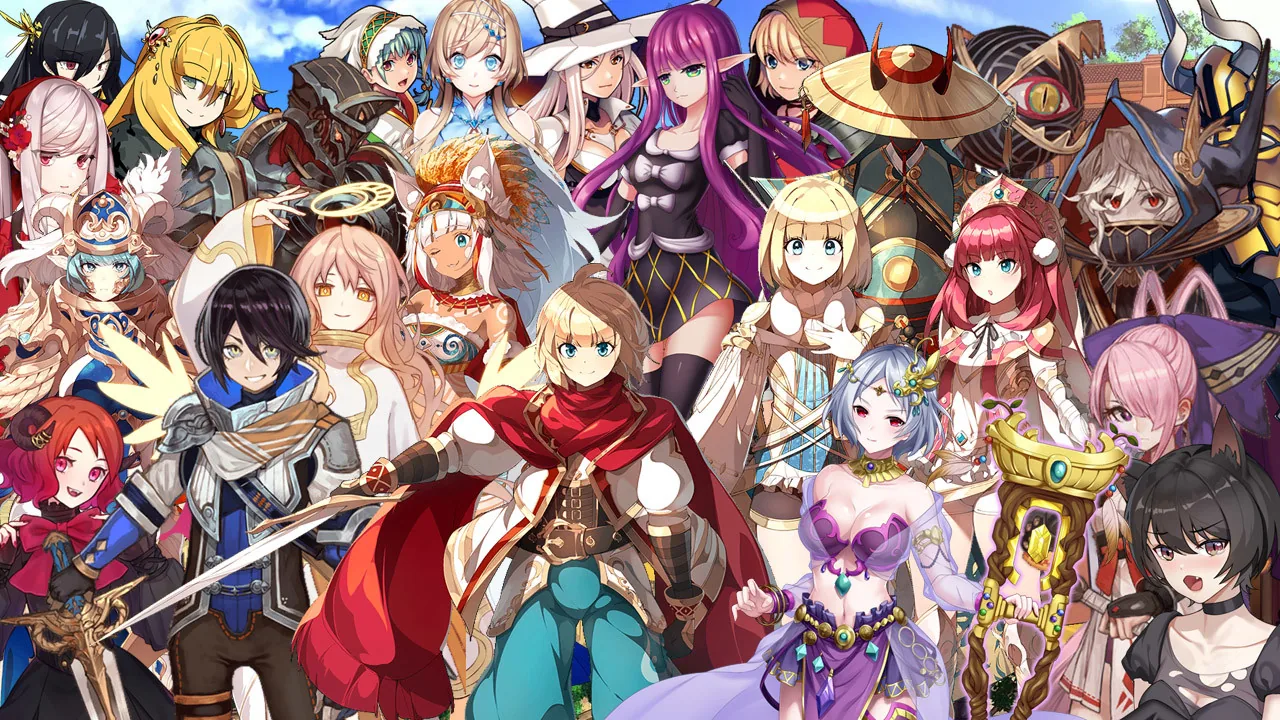
👑 Idle Calibur 👑(选王之剑)Image: 绝汪 via Steam -
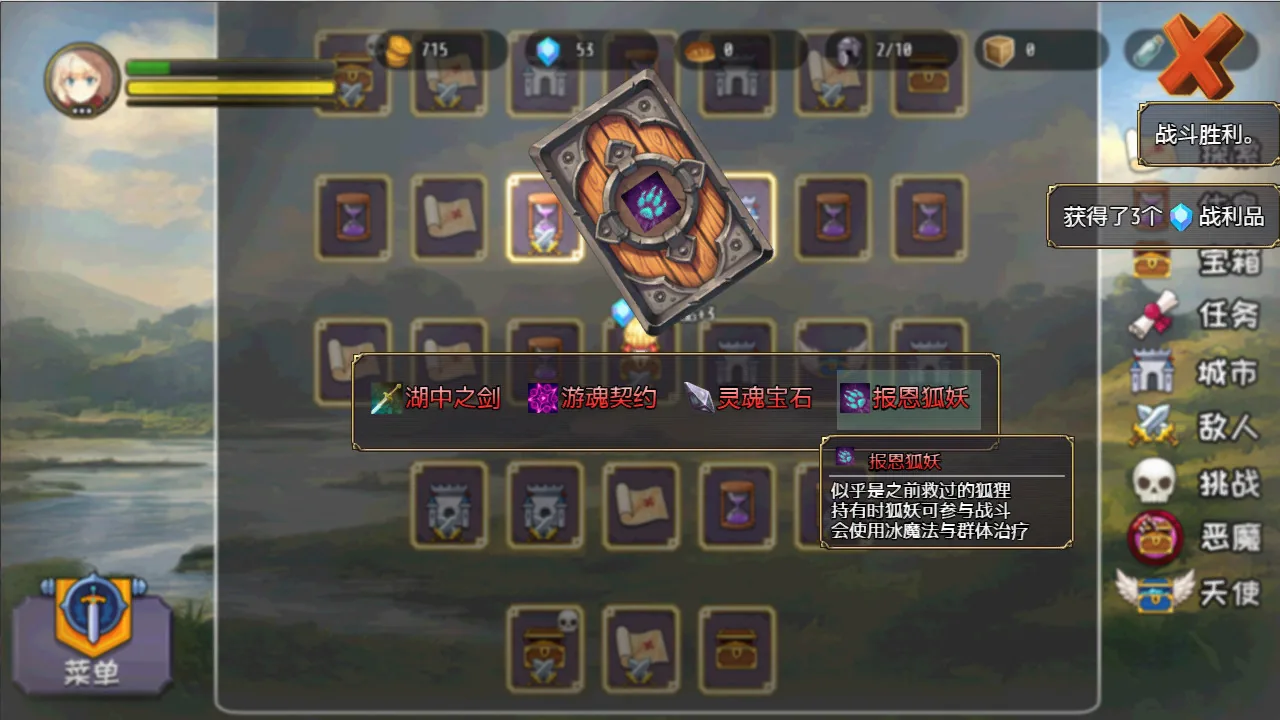
👑 Idle Calibur 👑(选王之剑)Image: 绝汪 via Steam -
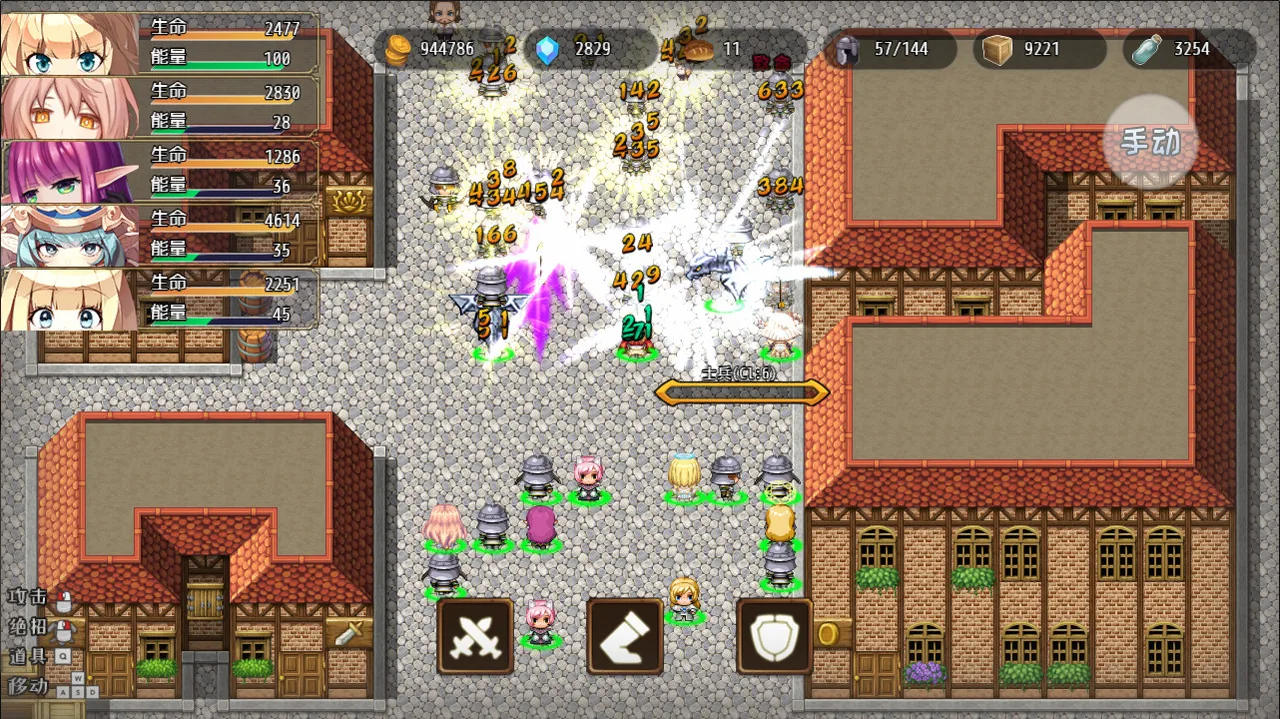
👑 Idle Calibur 👑(选王之剑)Image: 绝汪 via Steam -
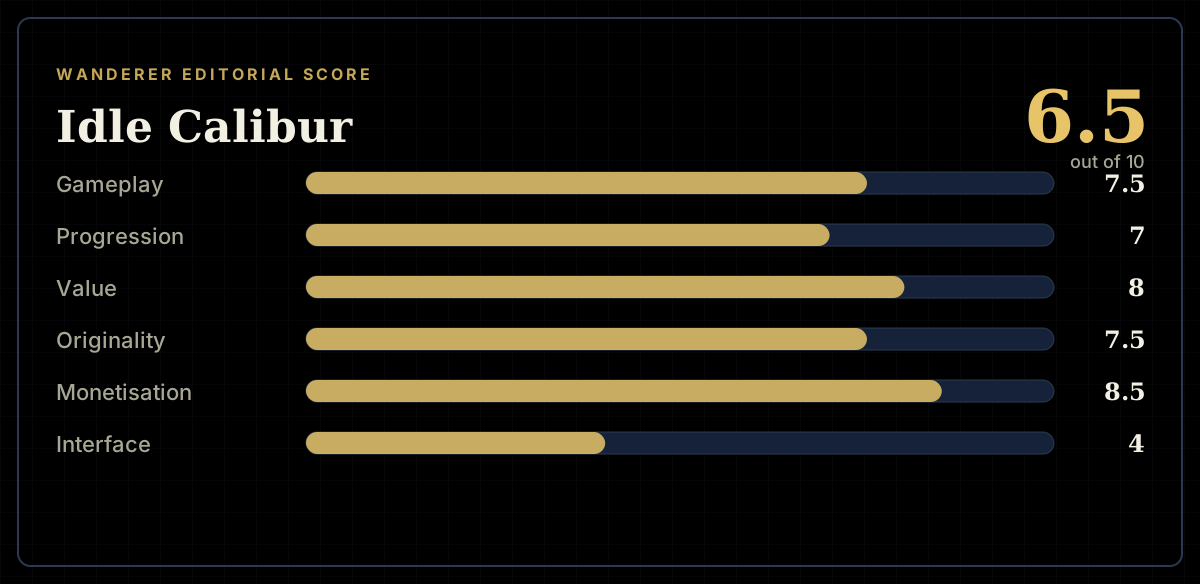
How the review scores each part of the gameWanderer Editorial -
The essentials at a glanceWanderer Editorial -
The short versionWanderer Editorial