Game review
Guildamation
6.5 / 10
- Developer
- Hammerback Games
- Publisher
- Hammerback Games
- Released
- 30 June 2026
- Platforms
- Windows
- Genre
- Idle RPG
- Monetisation
- One-time purchase (NZ$14.75); no in-game store, no IAP, no ads
- Players
- None; fully single-player
The short version
Guildamation's pitch is genuinely appealing: recruit heroes, script their behaviour with customisable Tactics in the vein of Final Fantasy XII's Gambit system, send multiple parties out concurrently on Group Orders, and let your guild grow with as much or as little hands-on attention as you want to give it. It's a real idea, well liked by a meaningful share of its players, sold entirely upfront with no cash shop behind it.
It also launched badly enough that players across English, Russian, German and Korean reviews independently reported the same thing within days of each other: severe stuttering, slideshow framerates, and crashes on hardware that should have handled it easily. What makes this case unusually well documented is that the same cross-language chorus later reported the developer fixing it — and Guildamation's own patch notes, a rapid-fire run of updates through its first nine days including two explicitly labelled performance patches, back that account up point for point. The "Mixed" rating on Steam captures a game that broke its own launch and largely, though not entirely, repaired it.
Biggest strengths
- A genuinely deep automation layer — Final Fantasy XII-style Tactics scripting combined with concurrent Group Orders across multiple parties — that reviewers who click with it describe as the game's real strength
- No in-game store or IAP of any kind; one Korean reviewer specifically recommends it to players "tired of Korea's monetisation-focused games" for having none of the usual pressure
- A dramatic, well-documented recovery: a launch performance crisis independently reported across four language communities was followed by a run of patches, including two explicitly titled performance updates, that many of the same reviewers credit with fixing it
Biggest weaknesses
- The launch-week performance crisis was severe and widely corroborated — reviewers across English, Russian, German and Korean independently describe slideshow framerates, stuttering and crashes, several explicitly saying the game should have launched in Early Access
- Even after the major patches, at least one detailed, high-playtime Korean review (118-140 hours) reports the game still crashing roughly every 30 minutes once running five parties simultaneously, alongside a bug that discards the last set orders and an autosave failure that can roll back hours of offline progress
- A separate detailed complaint describes the late-game progression loop — repeatedly resetting job levels to raise stat caps — as mechanically unsatisfying rather than rewarding
Who it's for: Idle RPG fans who want real tactical depth in their automation rather than a single auto-battle toggle, and who are willing to accept early-access-grade rough edges in a game sold as a full release.
Our recommendation: Worth it for the concept and the fact that the worst performance problems appear resolved for most players a month on, but go in aware some reviewers still report bugs and content gaps even after the fixes, and the price has drawn its own complaints separate from the technical issues.
6.5 / 10
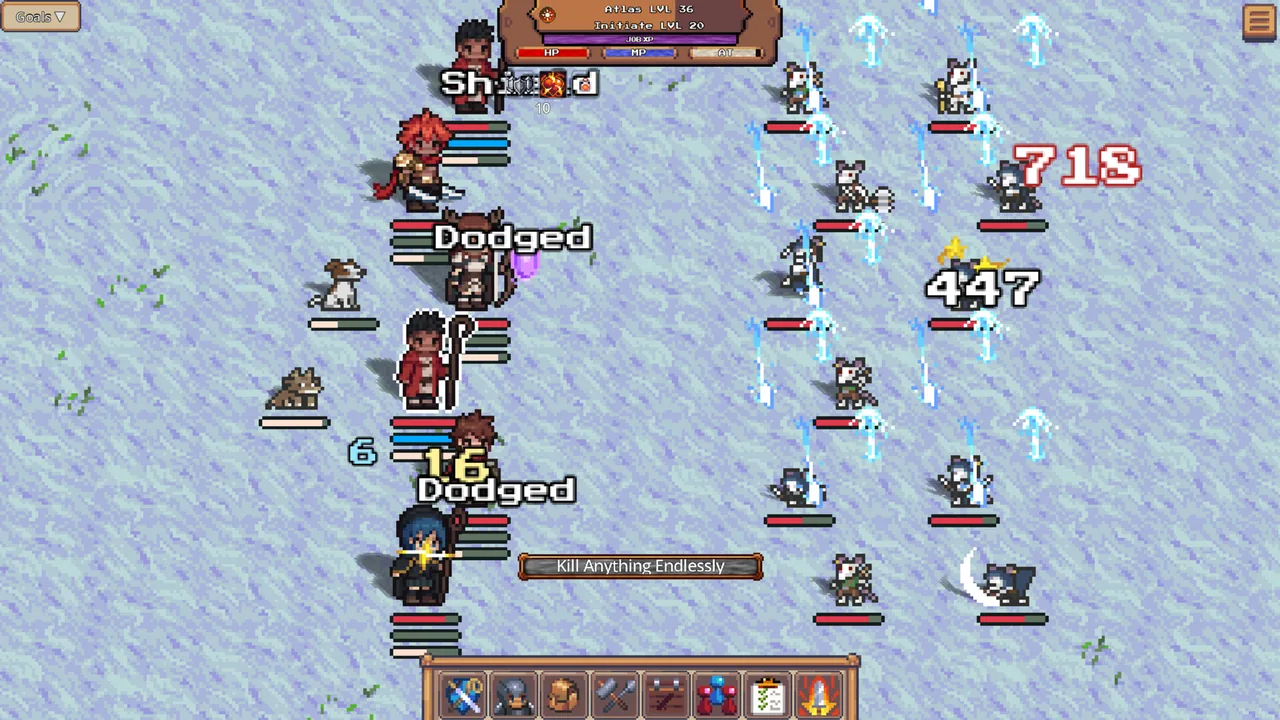
Guildamation's central idea sits close to what a lot of idle RPG fans say they actually want: not a single "auto-battle" toggle, but real scripted control over how your heroes behave. Set Tactics — priority-ordered conditional behaviours in the tradition of Final Fantasy XII's Gambit system — for each character, form them into parties, hand out Group Orders, and multiple squads work through dungeons concurrently while you're free to check in as much or as little as you like. It's a genuinely strong pitch for the genre, sold as a single upfront purchase with nothing held back behind a cash shop. It's also a game whose launch went badly enough, in a way independently documented across four separate language communities, that its own developer's patch notes read like a public apology tour — one that, by most accounts, largely worked.
Scripting your guild's behaviour
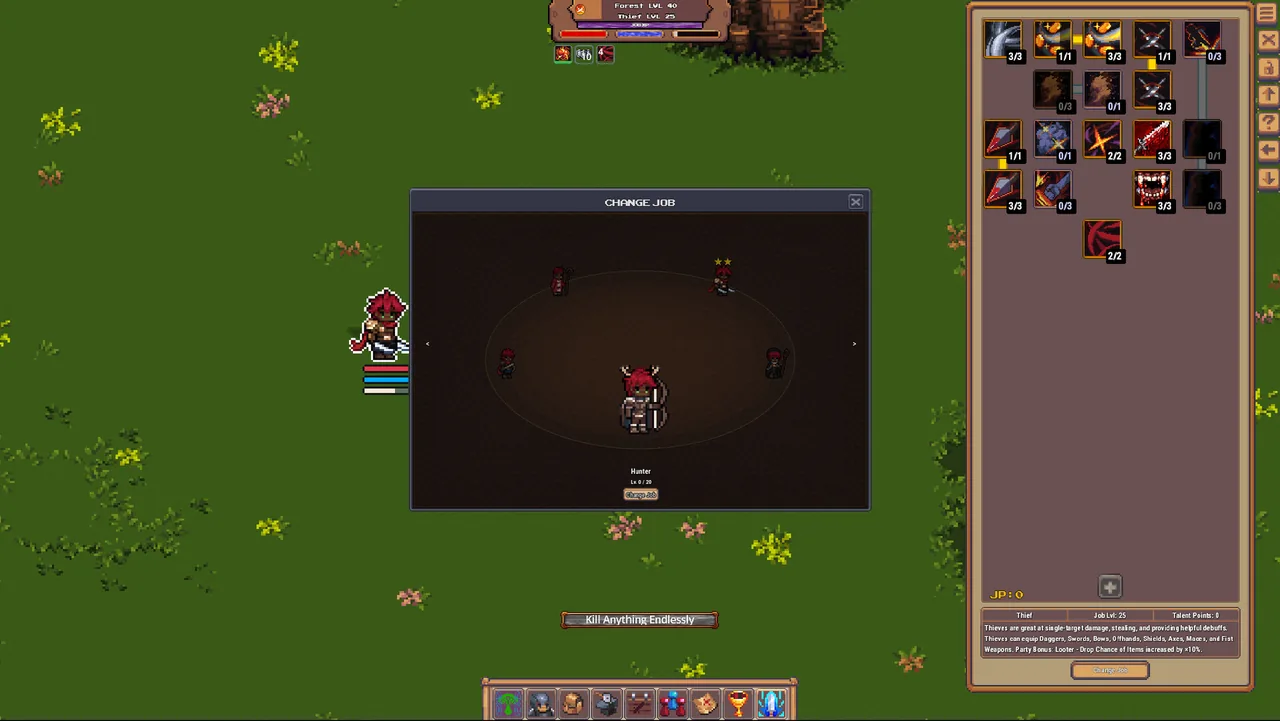
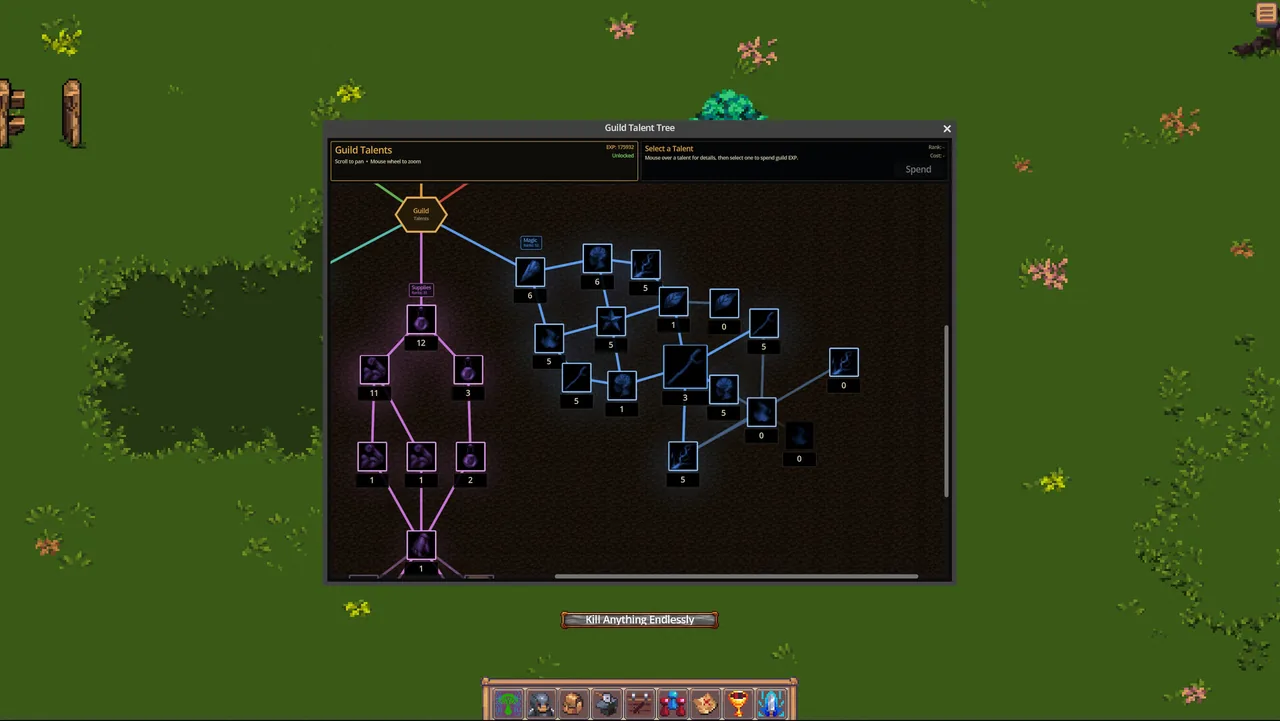
The core systems draw consistent praise from reviewers who stuck with the game. One writes about scheduling parties within the guild as "such a nice feature," and another sums up the appeal in a single line: "my adventurers fight dragons so I can spend 30 minutes deciding who picks flowers." That's the idle-RPG promise working as intended — meaningful upfront decisions that then play out automatically, with the satisfaction coming from having built the system rather than from constant manual input. A job and skill progression layer sits underneath the Tactics system, alongside gathering and crafting intended to keep the loop supplied with new equipment as characters level. Several reviewers describe genuine long-term investment: one details their system 35 characters deep, another logs over 250 hours, and a third, in Korean, puts it simply — "I find it fun."
A launch crisis, corroborated across four languages
What makes Guildamation's story unusually well documented is how consistently — and how independently — its launch problems were reported. An English review describes the game "just really bad" on the Godot engine it's built on. A Russian review, translated, opens by saying the demo was excellent but the release version "shat all over optimisation," specifically noting character movement that used to be smooth turning into a slideshow. A German reviewer calls it "a good idea with weak execution" on release. A separate English review reports stuttering to slideshow framerates within the first half hour on hardware built specifically for demanding workloads, writing flatly that there's "no way this game will actually run once you've built up multiple parties." None of these reviewers appear to be referencing each other — they're independently arriving at the same conclusion in four different languages within days of launch.
Checking that account against Guildamation's own patch history confirms it rather than contradicts it. The game launched 30 June 2026, and the following nine days saw seven separate updates: 1.0.1 through 1.0.7, including a same-day "Revert" on 2 July suggesting an attempted fix that had to be pulled back, and two patches explicitly labelled around performance — "1.0.4! Performance Improvement!" on 3 July and "More Performance and UI Improvements" on 5 July. That's not a developer going quiet after a bad launch; it's a developer visibly working through the exact problem their players were reporting, in near-real time.
Whether the fix actually held
Reviewer accounts of the aftermath are, again, unusually well corroborated — and mostly positive about the recovery. "The Dev(s) really put in overtime fixing the performance issues," reads one edited review, "it now does f[ine]." Another: "seems like all the performance issues at launch have been fixed today so if you didn't like it because of that, try again now!" A review with over 500 hours logged, posted nearly a month after launch, describes the early days as "laggy/Freezing and frustrating" before crediting the developer's fixes with resolving "All Lag/Freeze" and praising continued active engagement on Discord.
That's not the whole story, though. One of the most detailed reviews in the sample — a Korean review representing 118 to 140 hours of play, posted in mid-July, well after the major performance patches — reports the game still crashing roughly every 30 minutes once running five parties simultaneously on the reviewer's laptop, compounded by a bug that discards the last configured automatic orders on crash and an autosave failure that has, in that reviewer's account, rolled back hours of accumulated idle progress multiple times. That's a serious, specific, still-present problem reported well after the fixes other reviewers credit with resolving the issue — evidence that the patches meaningfully improved things for many players without eliminating the problem for everyone, particularly on lower-spec hardware running the game at scale.
What's left besides performance
Separate from the technical story, real complaints about the game's design persist even among reviewers who otherwise recommend it. A detailed Korean review describes the mid-to-late progression loop — repeatedly resetting a character's job level to raise its stat ceiling — as mechanically unsatisfying, arguing the growth "doesn't feel fun at all" given how steeply enemy difficulty scales by comparison. Another Korean review lists specific content gaps directly: no crafting recipes available beyond an early steel-ingot tier, items that don't function correctly with the blacksmith's crafting tools, and content missing "in many areas" — while still calling the game fun despite those gaps. Interface friction comes up independently more than once too: one reviewer describes needing to fully open and close a character's inventory and stat screens individually just to equip a single item, and another separately reports intermittent scroll-wheel failures requiring a manual click-and-drag workaround on the scrollbar itself.
The one thing nobody disputes
Whatever side of the performance debate a given reviewer lands on, monetisation draws no complaints anywhere in the sample. The most detailed positive review — a Korean player with over 250 hours logged — recommends Guildamation specifically to players "tired of Korea's monetisation-focused games," describing it as a stress-free idle game the developer has kept free of the extra-spending pressure common to the genre, "unlike many recent idle games." For a one-time NZ$14.75 purchase with no store, no currency, and no purchasable convenience of any kind, that's a promise the game has kept without exception across everything in this review's sample.
Final verdict
Guildamation is a genuinely interesting idle RPG built around real tactical depth, sold honestly with nothing behind a paywall, that launched in a state several of its own players independently compared to an unfinished Early Access build — and then, by a wide and cross-language margin of account, mostly fixed itself within days through a developer who kept shipping patches and stayed visibly engaged with the community reporting the problems. That's a genuinely creditable arc. It isn't a complete one: real bugs, real content gaps, and real progression-pacing complaints persist in detailed reports even weeks after the major performance patches landed.
If the guild-automation concept appeals to you and you're comfortable buying a full-price release that behaved like an Early Access build in its first two weeks, the evidence suggests the worst is behind it for most players — though not, on the record, for all of them.
Players who want that same blend of scripted automation and long-term guild growth, built for lasting stability inside a persistent shared world rather than a solo idle sim, may also want to look at Wanderer.
Pros and cons
Pros
- A genuinely deep automation layer — Final Fantasy XII-style Tactics scripting combined with concurrent Group Orders across multiple parties — that reviewers who click with it describe as the game's real strength
- No in-game store or IAP of any kind; one Korean reviewer specifically recommends it to players "tired of Korea's monetisation-focused games" for having none of the usual pressure
- A dramatic, well-documented recovery: a launch performance crisis independently reported across four language communities was followed by a run of patches, including two explicitly titled performance updates, that many of the same reviewers credit with fixing it
- A responsive developer, repeatedly praised across reviews for being active on Discord and shipping fixes quickly rather than going quiet after launch
- Real content scope for a solo or small-team release — dozens of characters, a job and skill system, gathering and crafting layered on top of the core combat loop
Cons
- The launch-week performance crisis was severe and widely corroborated — reviewers across English, Russian, German and Korean independently describe slideshow framerates, stuttering and crashes, several explicitly saying the game should have launched in Early Access
- Even after the major patches, at least one detailed, high-playtime Korean review (118-140 hours) reports the game still crashing roughly every 30 minutes once running five parties simultaneously, alongside a bug that discards the last set orders and an autosave failure that can roll back hours of offline progress
- A separate detailed complaint describes the late-game progression loop — repeatedly resetting job levels to raise stat caps — as mechanically unsatisfying rather than rewarding
- Multiple reviewers, independently, criticise the interface as clunky, citing scroll-wheel bugs and menus that must be closed and reopened individually for basic actions like equipping gear
- Content gaps are specifically named by more than one reviewer, including a crafting tree that reportedly stops meaningfully progressing beyond an early tier
Screenshots
-
GuildamationImage: Hammerback Games via Steam -
GuildamationImage: Hammerback Games via Steam -
GuildamationImage: Hammerback Games via Steam -
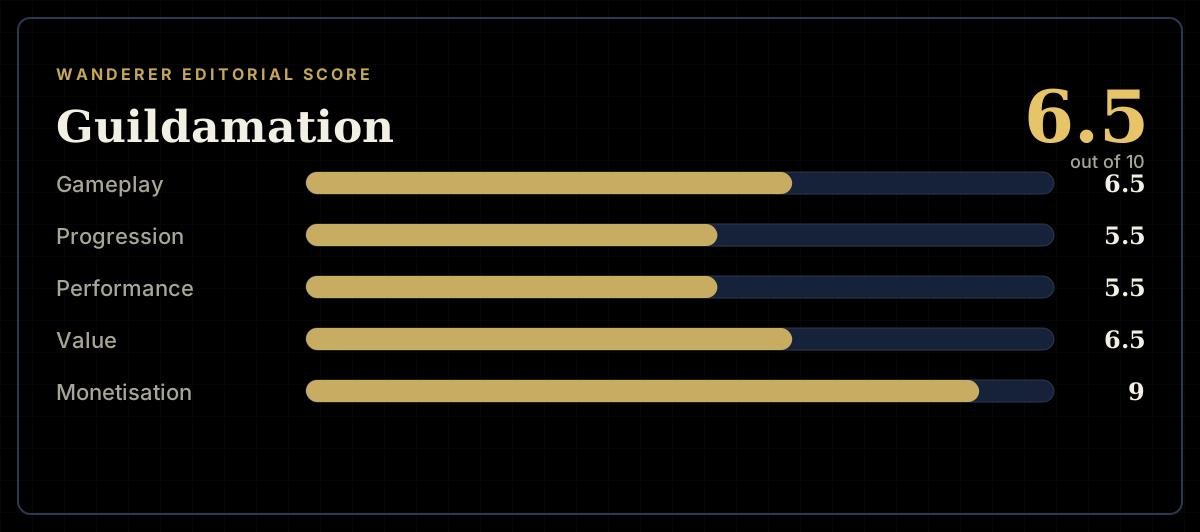
How the review scores each part of the gameWanderer Editorial -
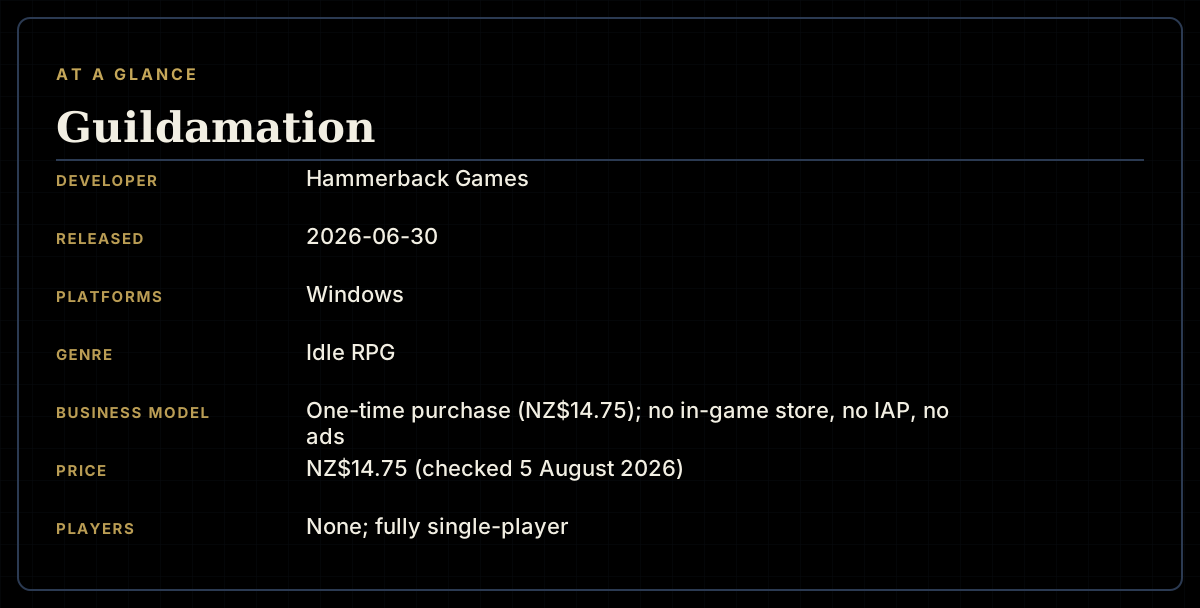
The game at a glanceWanderer Editorial -
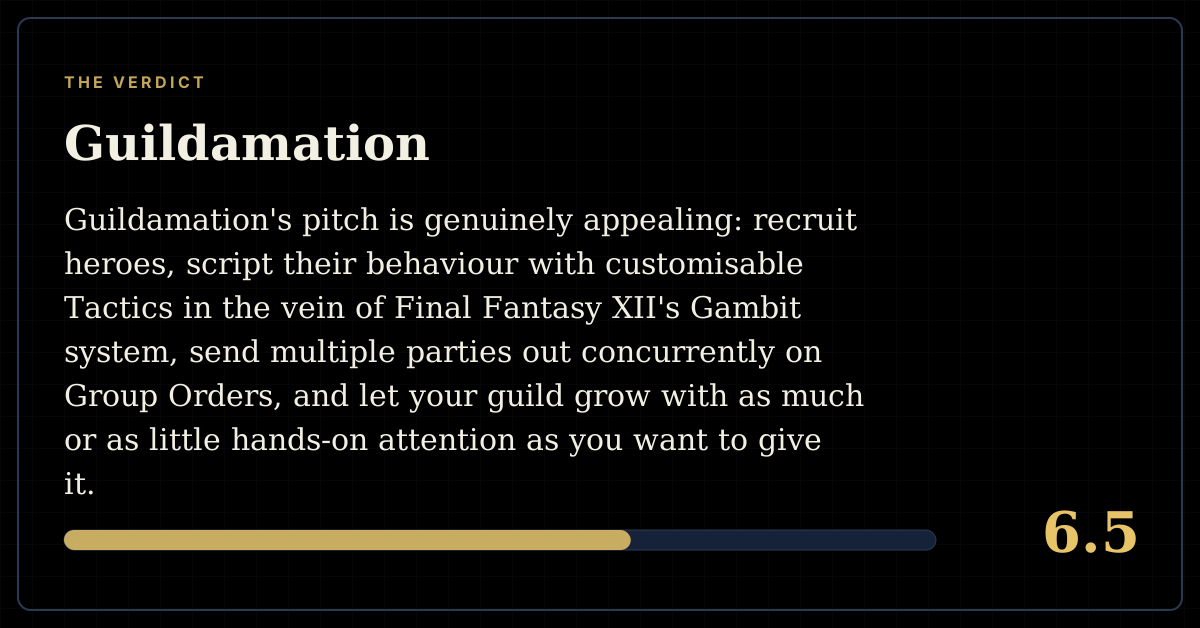
The short versionWanderer Editorial