Game review
Wonderland
6 / 10
- Developer
- Dragon Flame Games
- Publisher
- 摸鱼游戏 (Moyu Games)
- Released
- 30 July 2026
- Platforms
- Windows
- Genre
- Tactics RPG / Guild Management
- Monetisation
- One-time purchase, no in-app purchases, no DLC, no premium currency. Listed at NZ$11.79 with a 10% launch discount bringing it to NZ$10.61 — checked 3 August 2026.
- Players
- Single-player only, with an internal arena mode that pits your squad against other configurations
The short version
Start with an empty tavern and a thousand gold, recruit adventurers, send four-hero squads out on ranked contracts, and build a guild. The hook is that weapons define classes rather than the other way round — swap a sword for a staff and the skill tree reorganises around it — and combined with affix crafting it produces more build freedom than a game at this price usually attempts. The execution is rougher: a poor tutorial, auto-battle AI that misplays, arena balance that doesn't hold, and a steady drip of bugs. Worth ten dollars if the systems appeal. Just don't buy it because of the 90%.
Biggest strengths
- Weapons determine skills rather than fixed classes, so re-equipping a hero genuinely rebuilds them — a real idea, not a marketing line
- Affix crafting and a deep talent tree give build-focused players a lot to chew on for the money
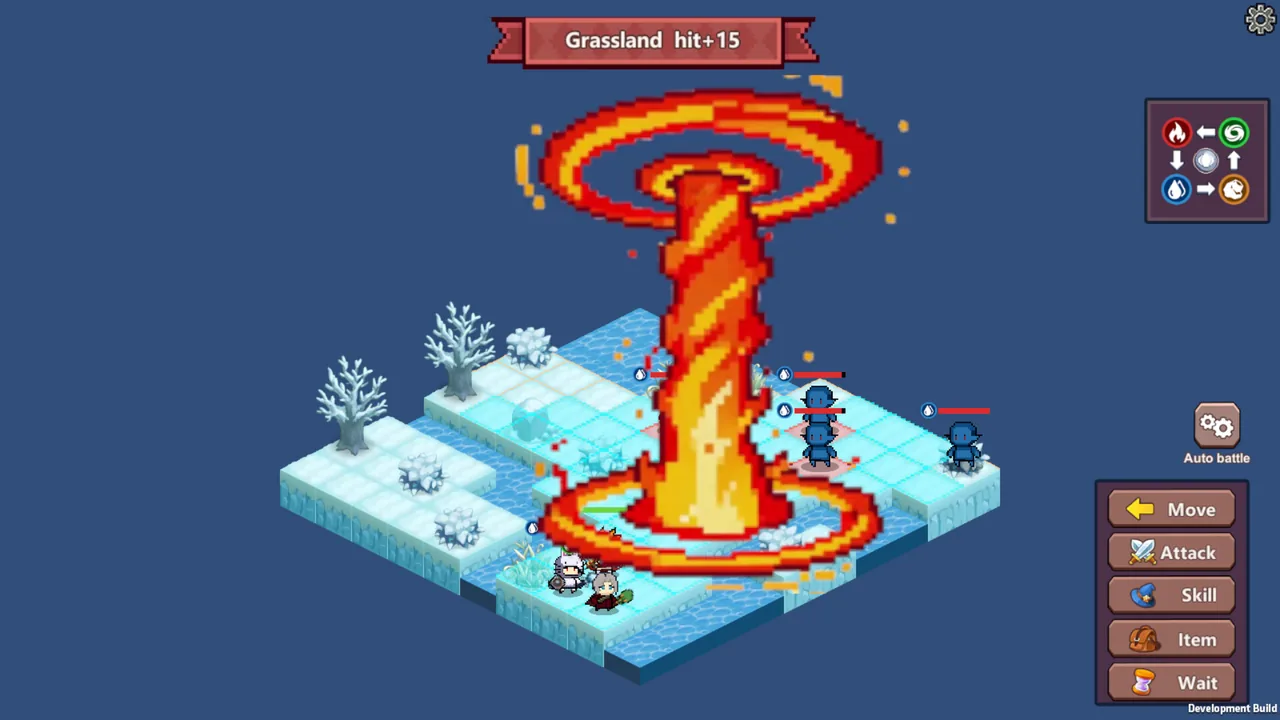
- Turn-based tactical combat uses terrain and positioning properly, and the deployment phase lets you undo placements with a right-click, which is a small mercy the genre often forgets
Biggest weaknesses
- The tutorial is widely described as inadequate; new players are left to work out core systems unaided
- Auto-battle AI misplays on harder content — healing when it should attack — so difficult fights require full manual control
- The arena is badly balanced; one player reports a fully legendary-geared team losing to level one opponents
Who it's for: Tactics players who like squad-building and gear crafting more than narrative, and guild-management fans looking for something cheap to pick apart. Not for players who need a clean tutorial or a stable competitive mode.
Our recommendation: A reasonable ten-dollar purchase if turn-based squad tactics with heavy build customisation is your thing, and if you're comfortable working out the systems yourself because the game won't teach them to you. Watch it for a few weeks first if you can — the bug reports are current, the arena is unbalanced, and the store rating is not a reliable signal here.
6 / 10
Wonderland opens the way a lot of good management games open: an empty tavern, a thousand gold coins, and a noticeboard of E-rank contracts nobody else wants. You recruit a few adventurers, send four of them out to clear a job, and start the long climb toward a guild that gets called for the S-rank work.
It's a solid premise executed with one genuinely interesting idea, and it costs about seven US dollars. It also sits behind a 90% Steam rating that does not hold up to scrutiny, and since that's unusual enough to matter to anyone about to spend money, let's deal with the game first and the review page second.
Weapons instead of classes
The best thing here is the character system. There are no fixed classes. What your hero can do is determined by what they're holding — hand someone a sword and the skill tree grows warrior abilities, give them a staff and it reorganises toward magic, and mastery with a weapon type develops as they use it. Swapping equipment isn't a stat adjustment, it's a rebuild.
Layer affix crafting on top — enchant gear, lock the rolls you want, combine attributes — and you get the kind of build-tinkering that normally lives in games costing five times as much. The detailed positive reviews are all about this: the freedom to develop a new tactical approach by changing a weapon, and the talent tree that supports it.
The combat around it is competent turn-based tactics with terrain and positioning mattering, four heroes to a squad, and missions with dynamic success rates driven by your squad's level and gear. The deployment phase lets you right-click to undo a placement before committing, which sounds trivial and is the sort of thing tactics veterans notice immediately.
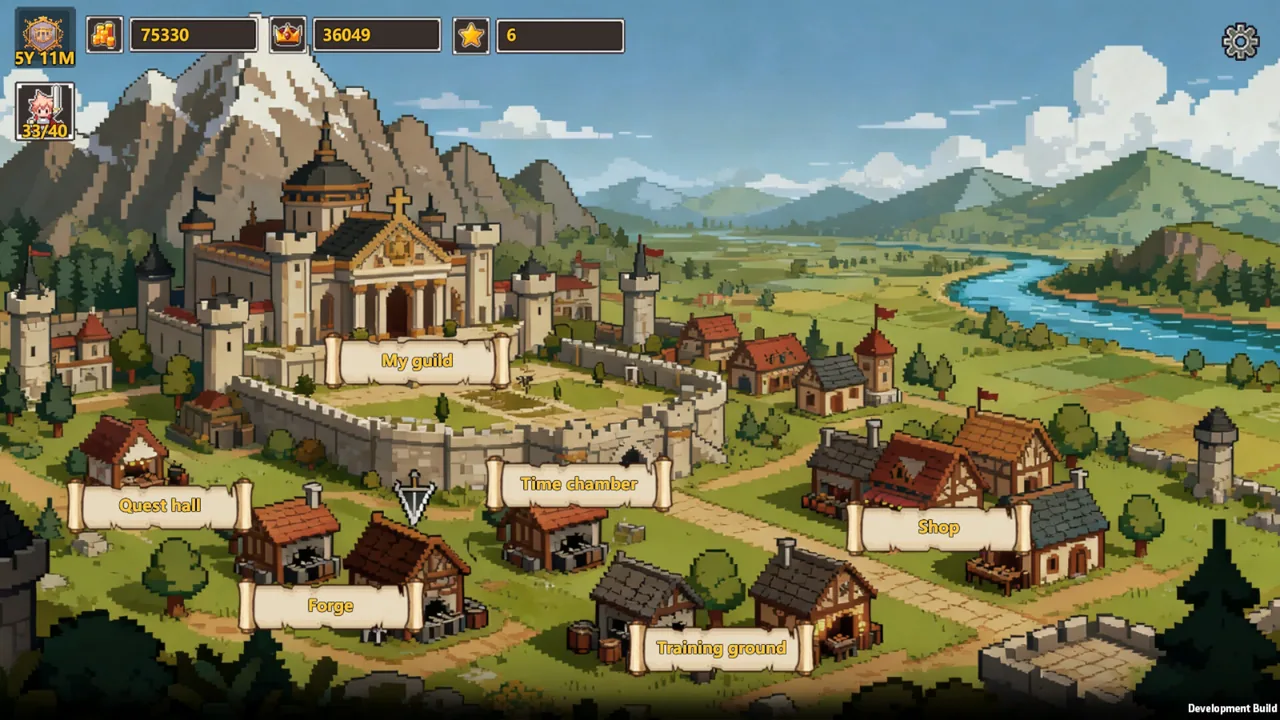
The guild layer works as a frame: a rotating monthly recruitment pool, three currencies to juggle, and buildings — shops, forges, training grounds — unlocked by prestige. There's also an idle component for farming materials while you're doing something else, which is well judged for a game this size.
Where it's rough
The criticisms are consistent across both camps, which is usually the sign they're real.
The tutorial is the most-cited failing — even reviewers recommending the game describe it as crude and say the opening leaves you confused. Auto-battle exists but misplays on harder content, with healers wandering off to attack, so anything difficult has to be driven manually. The arena is the sharpest complaint: one player reports a full legendary-geared squad being flattened by level-one opponents, which suggests the matchmaking or scaling isn't doing what it should.
And there are bugs. A Russian-language reviewer describes enemies walking up to the squad and then simply stopping, never ending their turn, forcing a restart of the mission — and notes this isn't tied to one enemy type. Several Chinese-language reviewers report the same general pattern in blunter terms. For a game four days old that's not disqualifying, but it's the current state.
Some players also hit repetition early, describing the loop as grind with too little new material arriving to justify it.
About that 90%
Here's why the store rating shouldn't carry much weight for you.
Several of the negative reviews allege directly that the positives were manufactured. That's an accusation, not evidence, and on its own it would not be worth printing. What makes it worth reporting is that the page has measurable oddities that anyone can check.
Start with achievements. Wonderland has twelve, and the most-earned one sits at 2.2%. The other eleven are between 0.4% and 1.7%. In a game whose positive reviewers describe five and six hour sessions, essentially nobody has earned anything. Either every achievement is a deep endgame milestone, or a very large share of the accounts that own this game have never meaningfully played it — and a store rating cannot tell those apart.
Then the playtime distribution. Of a hundred positive reviews sampled, seventy-eight were written by accounts with between five and seven hours logged, forty of them clustered at almost exactly six. Genuine audiences don't bunch like that. The accounts themselves are unusual too: the median one owns 376 games and has written 153 reviews, a profile far outside normal Steam behaviour.
Finally, the text. Distinct positive reviews share verbatim phrasing — the same specific praise for the right-click deployment undo, the same paired caveat about the rough tutorial and the balance needing polish, appearing across separate accounts. And at least one top-voted positive is a curator promotion carrying an advertising link.
None of that proves anyone paid for anything, and this review does not claim otherwise. What it does establish is that this review page is not a reliable measurement of whether people enjoyed the game, and the honest thing to do is tell you that rather than quote the number and move on.
Verdict
Judge Wonderland on its systems rather than its score and it's a decent, inexpensive tactics RPG with one properly clever idea in it. The weapon-as-class design is worth the ten dollars on its own if build-crafting is what you play these games for, and the guild management is a pleasant frame around it.
Judge it on polish and it's clearly a small team's first swing: a tutorial that doesn't teach, an AI that can't be trusted on hard content, an arena that doesn't work, and bugs that interrupt missions. Those are fixable, and at this price the ambition is worth some patience.
Just go in with your own expectations rather than the store's. Six out of ten, and the number on the page is doing a lot of work it hasn't earned.
Players who'd rather run a guild that keeps working while they're away — and who like knowing the numbers in front of them are real — may also enjoy Wanderer.
Pros and cons
Pros
- Weapons determine skills rather than fixed classes, so re-equipping a hero genuinely rebuilds them — a real idea, not a marketing line
- Affix crafting and a deep talent tree give build-focused players a lot to chew on for the money
- Turn-based tactical combat uses terrain and positioning properly, and the deployment phase lets you undo placements with a right-click, which is a small mercy the genre often forgets
- Guild management has the right texture — recruit from a rotating pool, train the promising ones, let the rest go, and unlock shops, forges and training grounds as prestige grows
- An idle mode lets you farm materials while you're busy, so progress doesn't demand constant attention
Cons
- The tutorial is widely described as inadequate; new players are left to work out core systems unaided
- Auto-battle AI misplays on harder content — healing when it should attack — so difficult fights require full manual control
- The arena is badly balanced; one player reports a fully legendary-geared team losing to level one opponents
- Multiple current reports of combat bugs, including enemies that stall mid-turn and force a restart of the mission
- Content thins out quickly for some players, with repetition setting in early
Screenshots
-
WonderlandImage: 摸鱼游戏 via Steam -
WonderlandImage: 摸鱼游戏 via Steam -
WonderlandImage: 摸鱼游戏 via Steam -
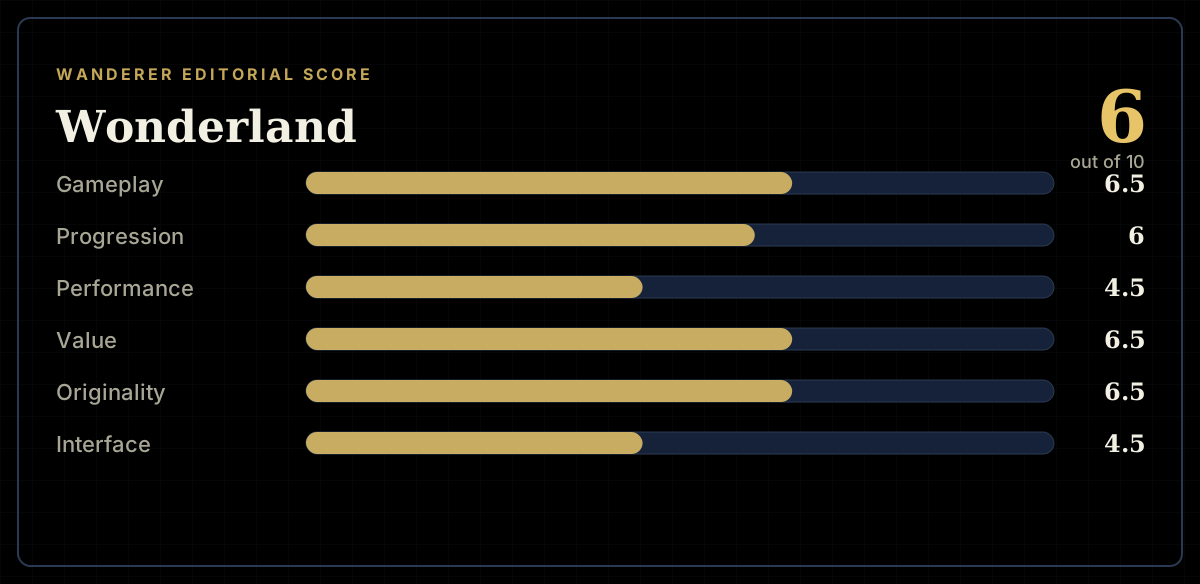
How the review scores each part of the gameWanderer Editorial -
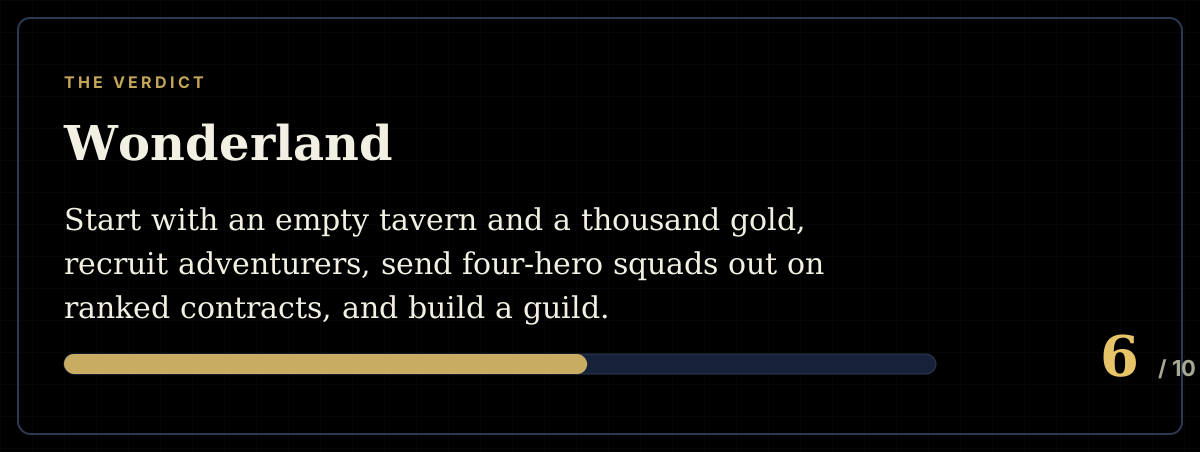
The short versionWanderer Editorial