Game review
Incremental Town RPG
5.5 / 10
- Developer
- Overaction Game Studio
- Publisher
- Overaction Game Studio
- Released
- 15 September 2024
- Platforms
- Windows, Mac, Linux
- Genre
- Village-Management Incremental RPG
- Monetisation
- Premium one-time purchase, no in-app purchases, no ads, no DLC
- Players
- Single-player only
The short version
Incremental Town RPG has a genuinely appealing idea at its centre — a village that visibly runs itself while you're doing something else — and a genuinely likeable solo developer patching it in real time. What it doesn't have, more than a year after launch, is an economy or an interface that gets out of its own way.
It's cheap, it's free of any monetisation tricks, and it looks good running in the background. Long sessions are where it falls apart, which is a serious problem for a game built to be left running for long sessions.
Biggest strengths
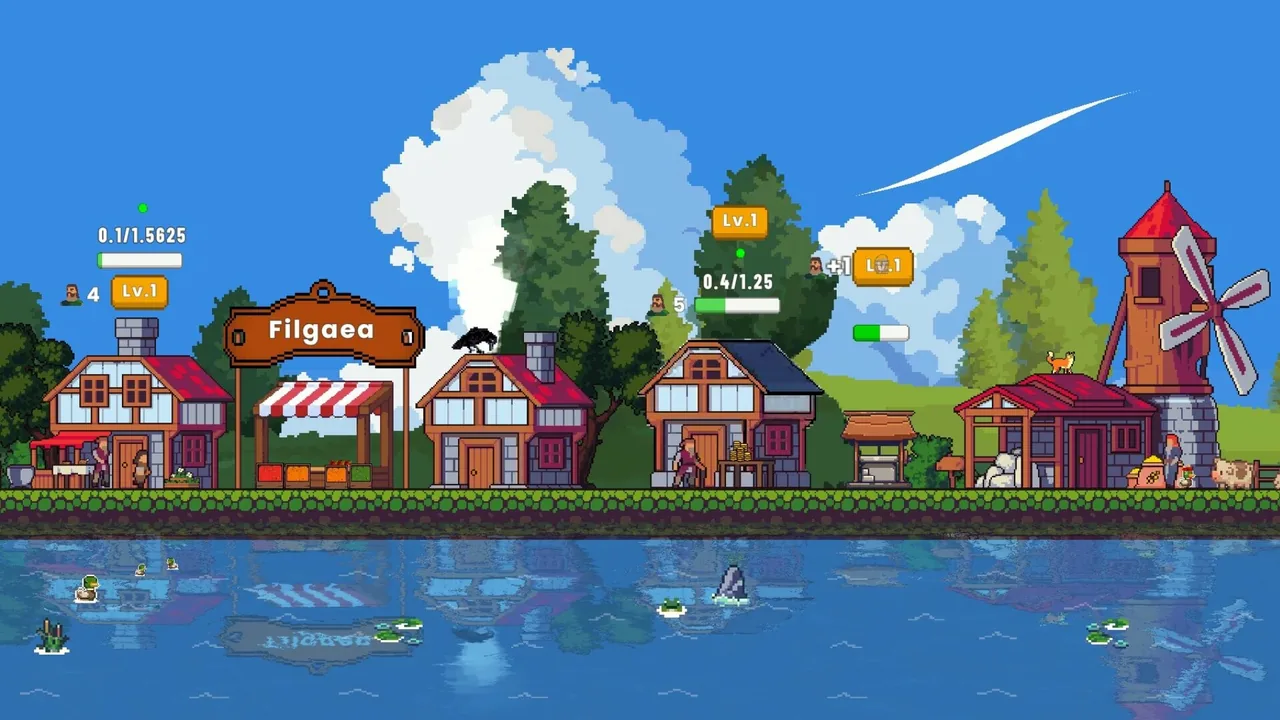
- The pixel-art village is genuinely pleasant to watch with the interface toggled off, workers visibly moving between fields, sawmills and the smithy
- A flat NZ$5.99 one-time price with no in-app purchases, premium currency, ads or paywalled content anywhere in the build
- Solo developer Rei Vax patches reported bugs quickly and answers players directly, both on Discord and in review responses
Biggest weaknesses
- Sessions left running for a few hours accumulate a memory leak that drags the frame rate down until a manual restart is the only fix
- Refined materials double as both a sellable commodity and the exact currency building upgrades demand, so the trade post and its coin economy stop mattering once early hoarding is done
- Worker automation works three different ways depending on the building — some assign automatically, some need you to open the building and press a plus button, a few allow no automation at all
Who it's for: Idle-genre completionists who don't mind rough edges, and players who want a low-stakes, no-monetisation village sim to leave ticking over in a window while they do something else for short stretches at a time.
Our recommendation: At NZ$5.99 with zero microtransactions, the price isn't the obstacle — the multi-hour performance drop and the muddled resource loop are. Worth a look if you're patient and curious about the genre's rougher fringes; skip it if you specifically want a game that rewards long, unattended idle stretches, since that's exactly where it currently struggles most.
5.5 / 10
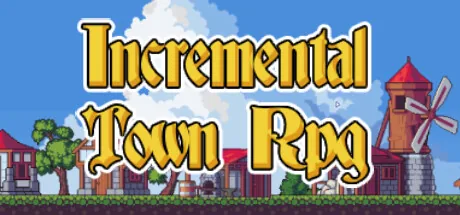
Turn the interface off in Incremental Town RPG and you get exactly what the trailer promises: a small pixelated village humming along by itself, workers filing between a sawmill, a farm and a smithy while a crow perches on the well. It's a good-looking scene, and for the first hour or two it's exactly the kind of low-stakes background game the store page describes. The trouble starts once you leave it running long enough to actually test the "idle" half of that promise, which is where this game asks the most of you and delivers the least.
Incremental Town RPG comes from Overaction Game Studio, effectively a one-person operation run by a developer going by Rei Vax. It spent roughly two months in Early Access from July 2024 before its full release on 15 September 2024, and it's been patched steadily since — the developer responds to nearly every negative Steam review individually and appears genuinely active on Discord. That responsiveness matters, because well over a year after launch the game is still working through problems that were being reported at release.
The loop, and where it comes apart
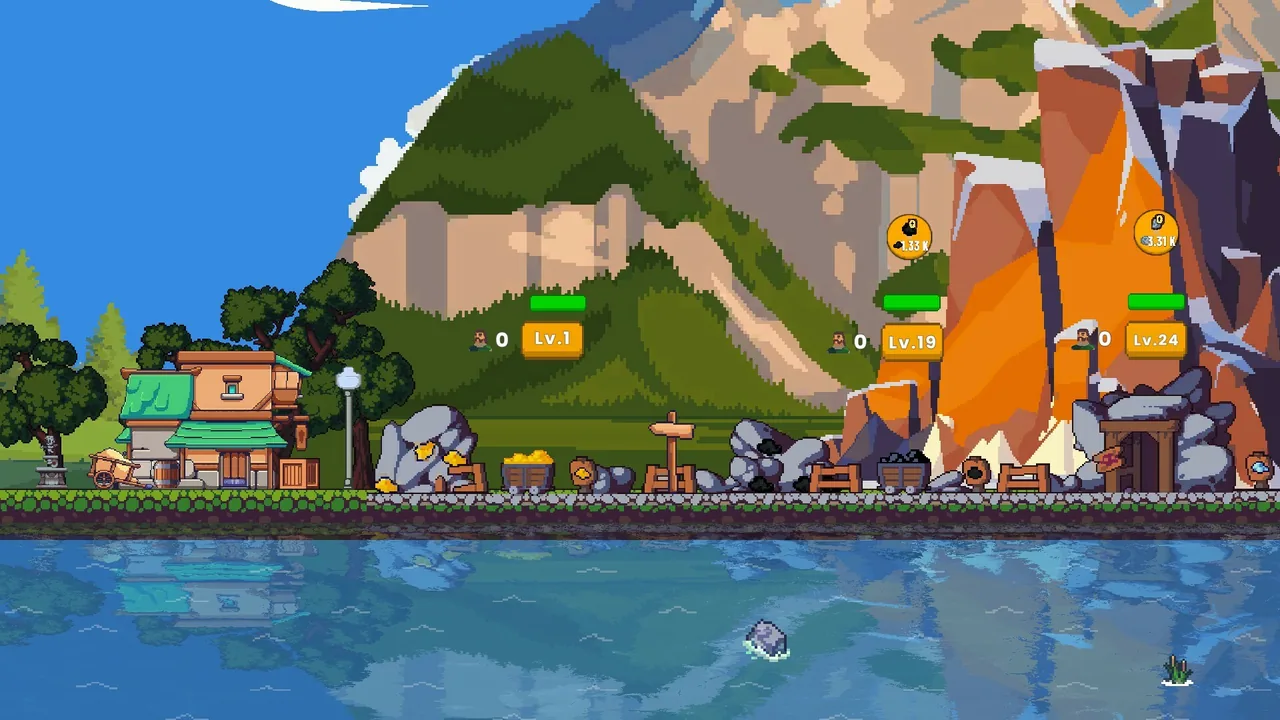
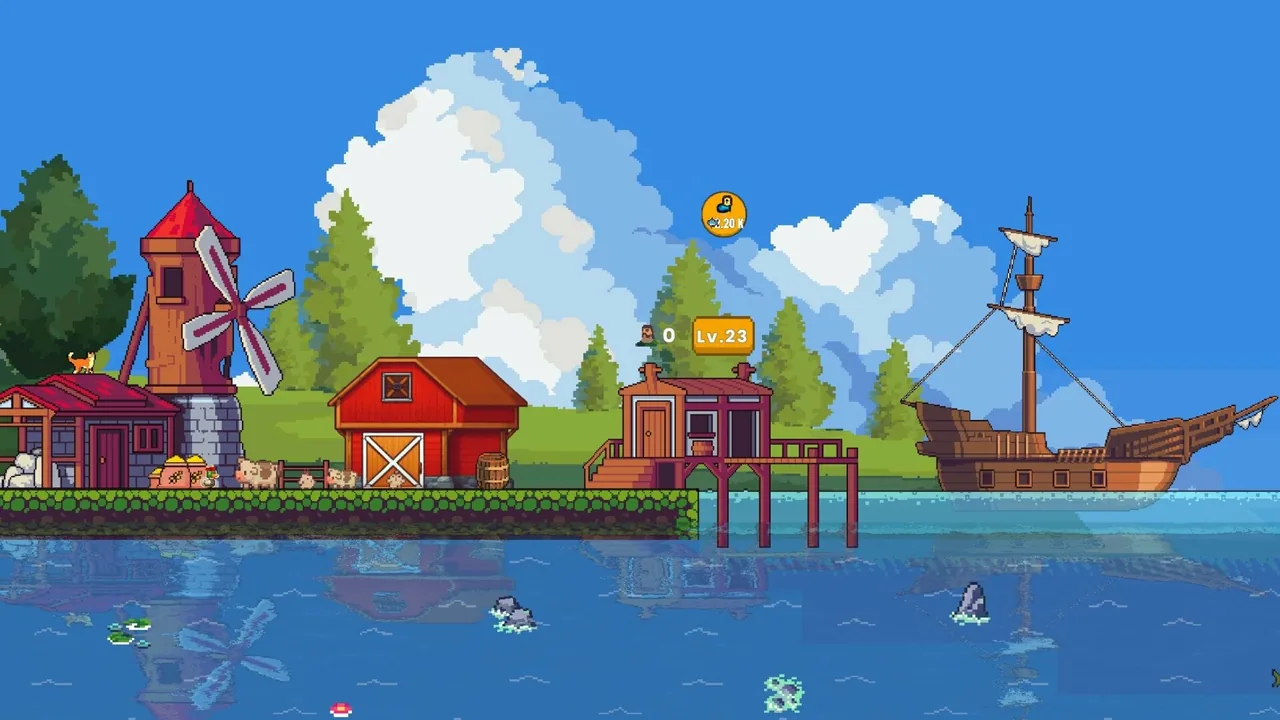
The pitch is straightforward: assign villagers to gather wood, stone, ore and food, feed those resources into production buildings, and use the output to expand the town, arm a small militia and eventually send an airship off to conquer new territory. Some resources can be clicked by hand for a manual boost; others only trickle in through assigned workers. That split alone causes friction — several vocal Steam reviews report spending their first half hour not realizing clicking did anything at all, because the game doesn't clearly signal which resources support it and which don't.
The bigger structural problem is what raw materials are actually for. Selling goods at the trade post earns coin, and coin's only real use is buying workers. That's a serviceable loop on its own, except building upgrades are priced in the raw materials themselves rather than in coin — so the same iron ore you'd sell for currency is also the exact thing every upgrade consumes. Once a player has stockpiled enough to clear the early upgrades, coin income outpaces anything worth spending it on, and the trade post — ostensibly a core system — becomes background noise. It's the kind of imbalance that's easy to miss in a five-hour early build and glaring after twenty, which tracks with when the pattern started showing up in review after review.
Automation compounds it. Some production buildings assign idle workers automatically once staffed; others require opening the building's own interior view and manually pressing a plus button per worker; a handful support no automated production at all, whether by click or by staffing. Three different interaction models for what is conceptually the same action — "make this building produce resources" — is a lot to hold in your head, and nothing in the tutorial distinguishes them up front.
Performance is the real dealbreaker
None of that would be fatal on its own — plenty of incrementals have messy early economies that get smoothed out by prestige resets. What's harder to forgive in a game explicitly designed to run for hours in the background is a documented tendency to slow down the longer it's left open. Players report smooth performance for the first hour or two, followed by a creeping frame-rate drop and stuttering input response that worsens until the only fix is saving, closing the game entirely and relaunching it. For a game whose entire pitch is "leave it running," that's about as central a flaw as a review can point to.
It's made worse by two related annoyances: the in-game quit button's confirmation dialog reportedly doesn't actually close the game, leaving players to force-quit through the OS, and neither trader settings nor building production toggles survive a relaunch. So the workaround for the performance problem — restart periodically — carries its own tax, since every restart means re-enabling whatever you had toggled on before.
Presentation carries more than the systems underneath it
Credit where it's due: the pixel art is the game's clearest success. The village reads well at a glance, building tiers have a visible sense of escalation, and the ambient presentation — birdsong, a wandering crow dispensing tips, small weather touches — gives the whole thing a cosy quality that shows up constantly in player feedback, including from reviewers who otherwise marked the game down. It's proof the underlying art direction was never the problem; the systems wrapped around it are.
The interface built on top of that art is a weaker story. Menus overlap, upgrade icons look identical whether or not an upgrade is actually available, and resource and combat notifications stack at the bottom of the screen persistently enough that several players describe wanting an option to simply turn them off. A UI-hidden "diorama" mode exists for players who just want to watch the village work, but it reportedly re-enables itself unpredictably rather than staying off until toggled back on — undermining the one feature built specifically to showcase the game's best asset.
Monetisation and value
There's nothing to complain about here, which is worth stating plainly given how much of this genre runs on rewarded video ads and premium currencies. Incremental Town RPG is a flat NZ$5.99 purchase with no in-app purchases, no advertising and no season pass sitting behind it — what you buy is what you get, including a full achievement list and a prestige system for players who want a longer tail. On Steam, user reviews sit at Mixed, with roughly six in ten of 98 reviews positive, and the shape of the negative third is consistent: not "this is a cash grab," but "this is unfinished in ways that get worse the longer you play it."
Final verdict
Incremental Town RPG has the bones of a likeable, low-pressure village idler, wrapped around an economy that doesn't hold together past the first few hours and a technical foundation that actively degrades the longer you leave it running — which happens to be the exact use case the whole game is designed around. The developer's visible, individual effort to keep patching it is a genuine point in its favour, and the price means there's little financial risk in finding out where you land. But right now, the systems asking the most patience from players — resource pricing, worker automation and multi-hour stability — are the ones still least resolved. That keeps this a mediocre recommendation rather than a good one: worth a cheap, curious look, hard to recommend without real reservations.
Players who want a persistent world that keeps advancing their character while they're away, without the frame-rate cost of leaving a window open for hours, might get more consistent mileage out of something built around genuine server-side offline progression — Wanderer included.
Pros and cons
Pros
- The pixel-art village is genuinely pleasant to watch with the interface toggled off, workers visibly moving between fields, sawmills and the smithy
- A flat NZ$5.99 one-time price with no in-app purchases, premium currency, ads or paywalled content anywhere in the build
- Solo developer Rei Vax patches reported bugs quickly and answers players directly, both on Discord and in review responses
- A genuine prestige tree gives committed players a reset-and-regrow loop rather than one flat progress bar
Cons
- Sessions left running for a few hours accumulate a memory leak that drags the frame rate down until a manual restart is the only fix
- Refined materials double as both a sellable commodity and the exact currency building upgrades demand, so the trade post and its coin economy stop mattering once early hoarding is done
- Worker automation works three different ways depending on the building — some assign automatically, some need you to open the building and press a plus button, a few allow no automation at all
- Trader settings and production toggles don't persist through a restart, so the performance issue above forces players to reconfigure the same choices repeatedly
- A persistent quest-log nag and a steady stack of resource popups make the opening hours busier than a game marketed as "relaxing" should be
Screenshots
-
Incremental Town RPGImage: Overaction Game Studio via Steam -
Incremental Town RPGImage: Overaction Game Studio via Steam -
Incremental Town RPGImage: Overaction Game Studio via Steam -
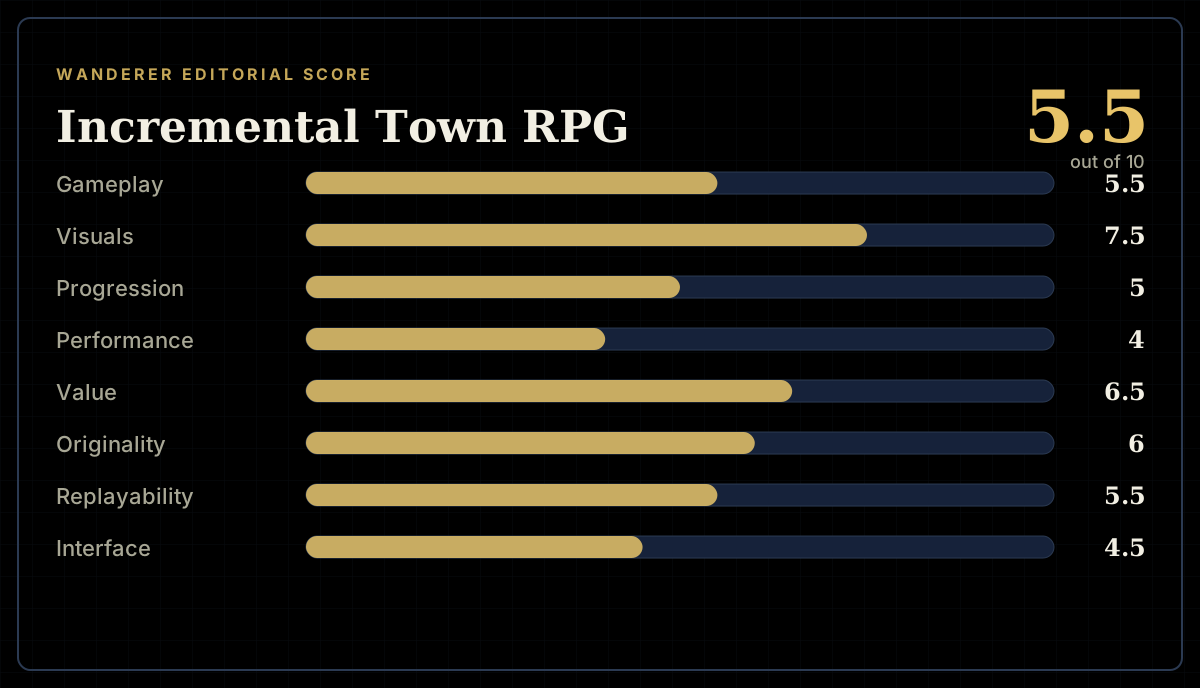
How the review scores each part of the gameWanderer Editorial -
The short versionWanderer Editorial