
Game review
Erenshor
7.5 / 10
- Developer
- Burgee Media
- Publisher
- Burgee Media
- Released
- 14 April 2025
- Platforms
- Windows
- Genre
- Simulated MMORPG / Action RPG
- Monetisation
- One-time purchase, no in-app purchases, no ads, no subscription; major content updates ship free during Early Access
- Players
- Single-player only; there is no online multiplayer, but the game populates its world with NPC "SimPlayers" that simulate the presence of a full server
The short version
Erenshor's premise is simple to describe and hard to believe works: it's a single-player MMORPG where every other "player" is a scripted NPC that levels, forms parties, joins guilds and rolls on loot right alongside you. The SimPlayer illusion is the best thing about the game by a wide margin, and it's convincing enough that the old EverQuest-era feeling of logging into a living world genuinely comes through. What holds it back from being an easy recommendation to everyone is that it's still Early Access in the least flattering sense too — a quest system that expects you to already know 2001-era MMO conventions, a UI that fights you more than it should, and a roadmap to 1.0 that doesn't finish until 2027.
Biggest strengths
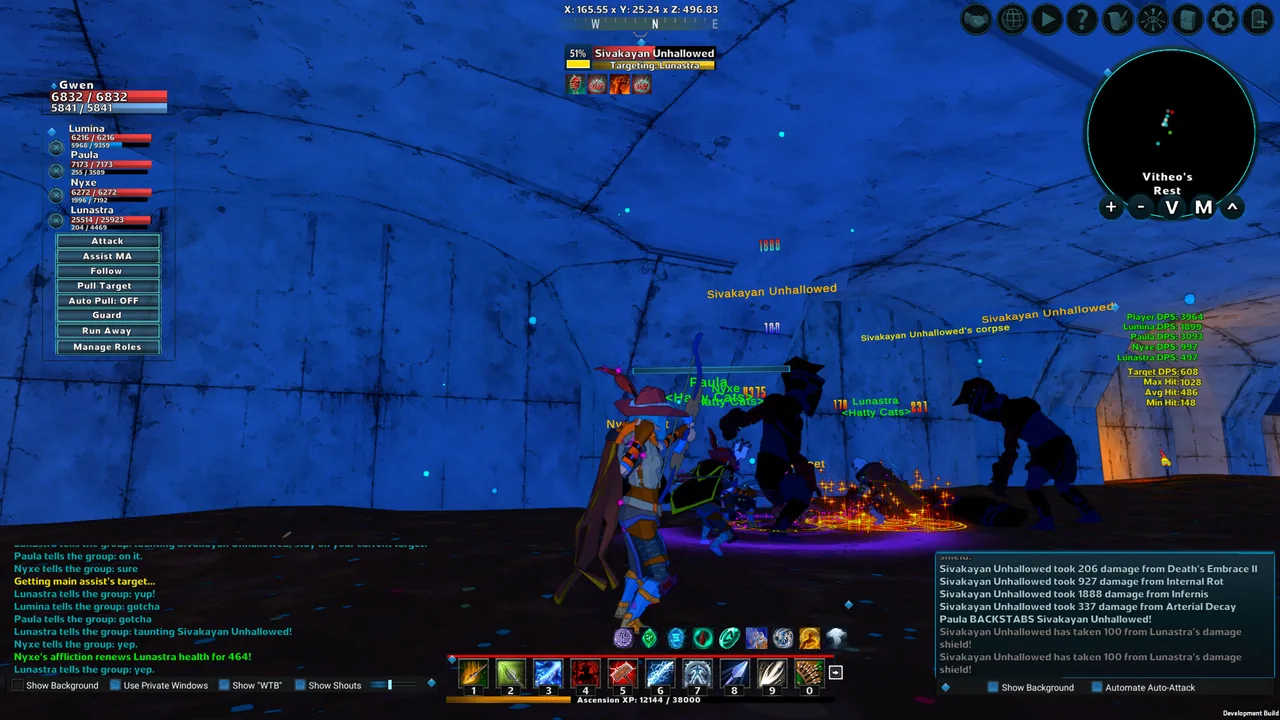
- SimPlayers genuinely behave like MMO party members — pulling, healing, rolling on loot and chattering in local chat — using scripted decision trees rather than generic idle NPCs
- Combat rewards preparation and positioning over reflexes, closer to a tactical pull-and-manage loop than a modern action-RPG combo system
- An in-game admin panel lets you retune spawn rates, XP curves and difficulty, which does real work smoothing out the game's roughest pacing complaints
Biggest weaknesses
- Quest progress frequently depends on saying specific keywords to NPCs in local chat or opening trade windows to hand over items, with no journal hint that this is what's expected
- The interface uses small text and cramped menus that make basic actions like initiating NPC dialogue more fiddly than they should be
- SimPlayer allies can visibly outperform the player character in group content, which undercuts the "you are the hero" framing the rest of the game is selling
Who it's for: Players who miss the specific texture of early-2000s MMORPGs — EverQuest, early Final Fantasy XI, launch World of Warcraft — but don't want to coordinate a raid schedule around other humans to get it. Less suited to players who want fast, legible combat feedback or a polished modern RPG interface.
Our recommendation: A confident recommendation for the nostalgia audience it's built for, with the understanding that you're buying into an Early Access project with real rough edges and a roadmap that stretches into 2027. Wait if quest-log hand-holding and clean UI matter more to you than atmosphere.
7.5 / 10
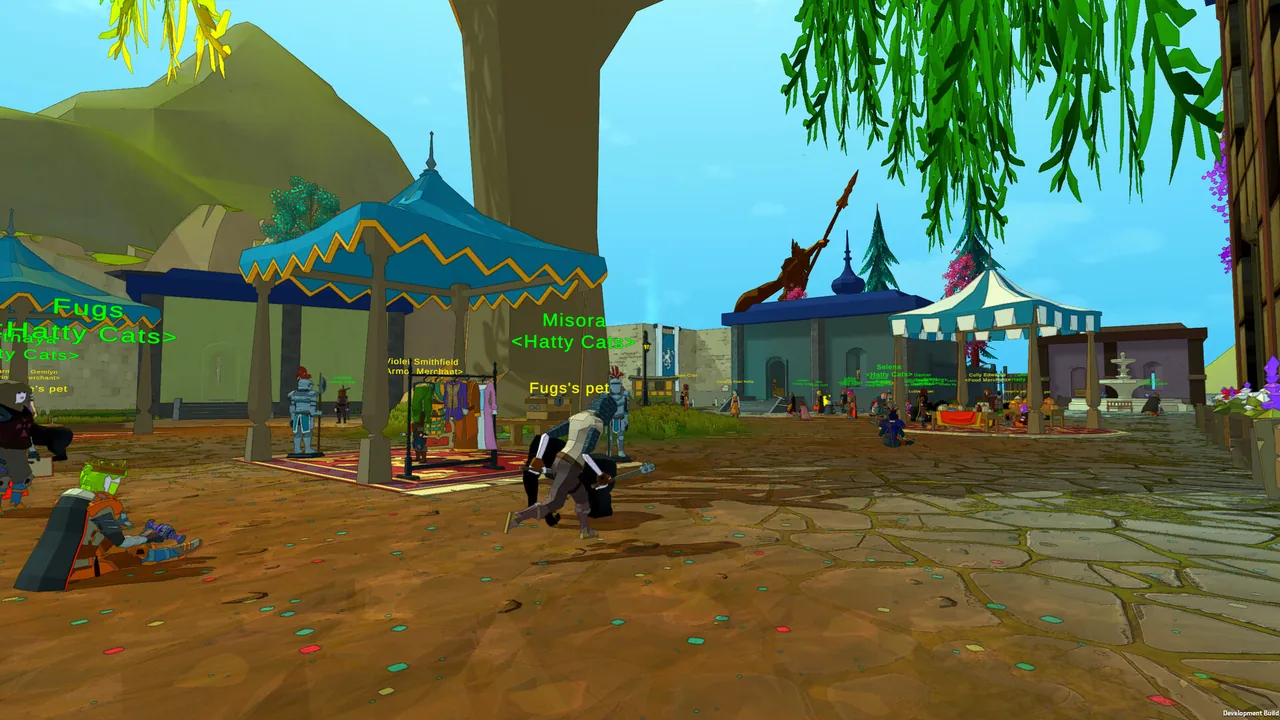
Every MMORPG veteran remembers a specific feeling that has almost nothing to do with combat balance: logging in, seeing the zone chat scroll past, watching a stranger's party form up outside the dungeon entrance, and feeling like you'd stepped into a world that kept moving whether or not you were in it. Erenshor's entire pitch is that it can manufacture that feeling with nobody else actually logged in. It mostly succeeds, which is a stranger and more impressive achievement than it sounds.
SimPlayers are the whole reason to play this
The game's signature system is the SimPlayer — an NPC that isn't a static quest-giver or a combat dummy but a character running its own loop of leveling, questing, grouping and looting throughout the world, on a timeline independent of yours. Ask one to join your party and it will actually pull its weight: healers heal, tanks hold aggro, and when a rare item drops, everyone including your temporary companions rolls on it like it's a real Need-or-Greed prompt. Under the hood, none of this is generative AI — the developer has been explicit that SimPlayers run on state machines and decision trees with pooled, parsed dialogue responses, not a language model, and has said publicly that he considers the current cost and reliability of LLMs unsuitable for the game. That turns out to be the right call for the effect Erenshor is going for: scripted behaviour that's consistent and predictable reads as "alive" far more convincingly than most players expect going in, precisely because it never breaks character or says something a 2003 MMO character wouldn't.
It's the single most-praised element in the game's own review base, and it's easy to see why. A solo player base logging hundreds of hours into a game that fakes having other people online is an unusual retention story, and it only works because the illusion holds up under real scrutiny rather than falling apart the moment you look closely.
Combat and progression built for patience, not reflexes
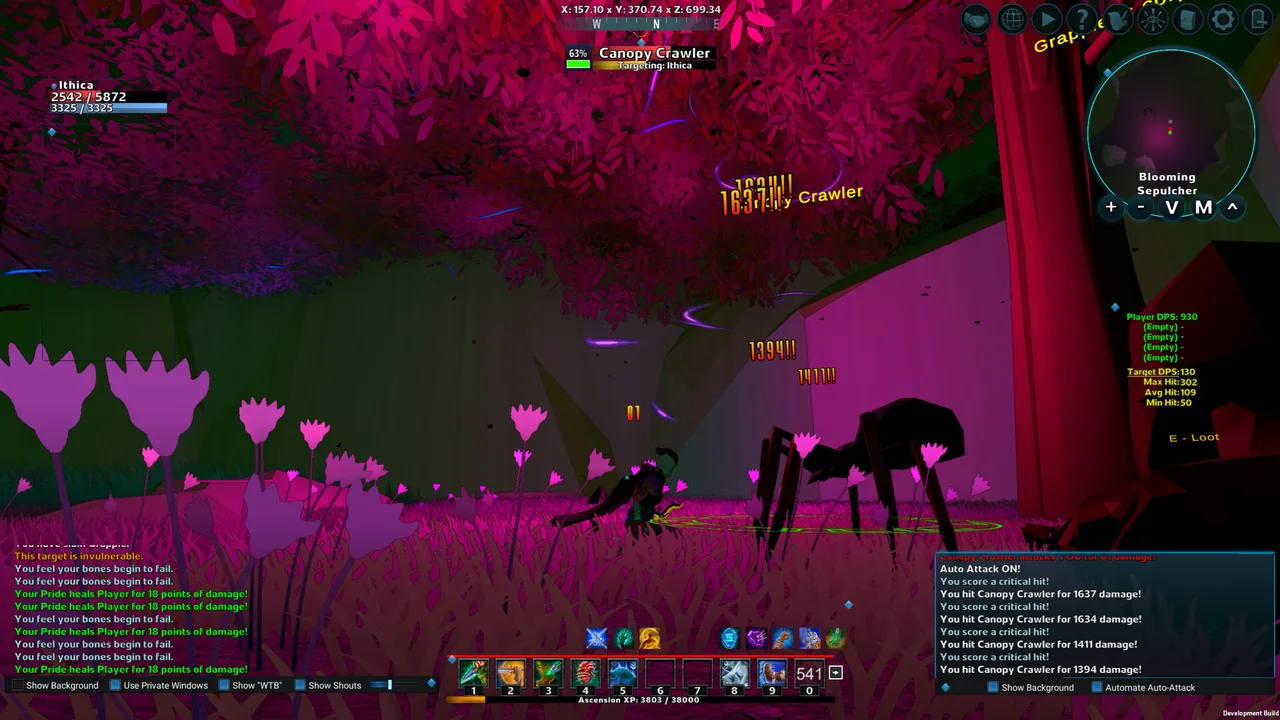
Erenshor doesn't try to modernise combat into something twitch-based. Encounters are built around pulling carefully, managing aggro, and committing to fights that punish carelessness rather than rewarding fast hands, which lines up with the late-1990s and early-2000s MMORPGs it's explicitly modelling itself on. That deliberate pace is a feature for the audience it's chasing and a genuine obstacle for anyone expecting modern action-RPG feedback — a recurring player complaint is not being able to tell what's happening in a fight at a glance, and that's a fair criticism of a combat system that trades clarity for atmosphere more than it probably needs to.
Progression follows the same old-school logic: gear is earned through long stretches of farming and dungeon runs rather than handed out on a quest-completion schedule, and the game's July 2026 "Planar March" update pushed that structure into proper endgame territory with four raid zones, more than 20 boss encounters and over 120 new pieces of gear. That's a serious content investment for a solo-developed Early Access title, and it signals the game is being built toward the kind of long-tail raiding loop its inspirations were known for, not just a short nostalgia trip. The tradeoff is that getting there means real grinding — hours of farming just to attempt raid attunement is a common description from players who've pushed that far, and the game doesn't soften that the way a modern MMO with catch-up mechanics would.
An in-game admin panel goes some way toward addressing this: spawn rates, experience gain and other pacing variables are all adjustable, which lets players who find the default curve too slow or too grindy tune it themselves rather than wait on the developer to rebalance it.
Quests assume you remember how MMOs used to work
This is where Erenshor's commitment to authenticity becomes a genuine liability. Quest progression regularly depends on knowing to say a specific keyword to an NPC in local chat, or opening a trade window to hand over an item the game never flags as tradeable, conventions that were common enough in early MMOs but that a modern quest log has trained most players out of expecting. The result, echoed consistently across negative player feedback, is stretches of "zero direction" where progress stalls not because the content is hard but because the game hasn't told you what it wants from you. That's a defensible design choice in the abstract — old MMOs really did work this way, and demanding player attentiveness is part of the throwback — but it's a rougher onboarding experience than the store page's "at your own pace" framing suggests, and it's the complaint that shows up most often from players who bounce off early.
Where the Early Access seams show
Erenshor is honest about being unfinished, and it shows in specific, fixable ways rather than broad instability. The interface is the most consistent target: small text, cramped menus and fiddly NPC-interaction prompts make routine actions more annoying than they should be, and it's the kind of issue that a UI pass can genuinely solve rather than a structural problem with the game's design. Class identity is thinner than the MMO framing implies in the early game, with several archetypes playing similarly until a build has had time to differentiate. And because SimPlayers are tuned to actually contribute, group content can end up with your AI companions visibly out-damaging you, which is a strange note to hit in a game whose whole pitch is putting you at the centre of the story.
None of this is surprising for a title with a public roadmap that doesn't reach 1.0 until Q2 2027. Burgee Media, working solo, has been transparent about that timeline and has backed it with substantial free content rather than letting Early Access stagnate — the biannual major-update cadence and the scale of the raid expansion are evidence the project is moving, not stalling. But buying in now means buying into a game that's still visibly under construction around its best idea, not one where the rough edges are cosmetic.
Value
At NZ$28.99 with no in-app purchases, no ads and no subscription layered on top, Erenshor is priced like a normal premium RPG rather than an early-access cash grab, and the amount of content already in the game — plus a steady stream of free updates since launch — makes it an easy value case regardless of where you land on its rough edges. There's nothing to warn buyers away from on the monetisation side; every criticism of this game is a design or polish criticism, not a spending one.
Final verdict
Erenshor earns its 94% Steam approval honestly. The SimPlayer system is a genuinely original idea, well enough executed that it delivers the specific, hard-to-fake feeling of an MMO server humming along around you, and the developer has backed that idea with real post-launch investment rather than coasting on the novelty. It doesn't score higher because the game asks players to bring old-MMO literacy to a genre that mostly moved past keyword-triggered quests two decades ago, and because the interface and combat clarity haven't caught up to how good the core illusion already is.
If the pitch appeals to you at all — a raid guild's worth of company without needing an actual raid guild — Erenshor delivers on it more completely than anything else attempting the idea right now, and it's worth going in knowing you're an Early Access participant, not just a customer, until 2027 closes that gap.
Price and monetisation checked 1 August 2026.
Players who like the idea of a persistent world that keeps moving around them, with real other players instead of scripted ones, might also want to look at Wanderer.
Pros and cons
Pros
- SimPlayers genuinely behave like MMO party members — pulling, healing, rolling on loot and chattering in local chat — using scripted decision trees rather than generic idle NPCs
- Combat rewards preparation and positioning over reflexes, closer to a tactical pull-and-manage loop than a modern action-RPG combo system
- An in-game admin panel lets you retune spawn rates, XP curves and difficulty, which does real work smoothing out the game's roughest pacing complaints
- A dedicated, communicative solo developer has shipped substantial free content since launch, including a major raid expansion adding four zones and over 20 boss encounters
- NZ$28.99 for a game already running dozens to hundreds of hours deep with more free content scheduled is a strong value proposition with no monetisation tricks attached
Cons
- Quest progress frequently depends on saying specific keywords to NPCs in local chat or opening trade windows to hand over items, with no journal hint that this is what's expected
- The interface uses small text and cramped menus that make basic actions like initiating NPC dialogue more fiddly than they should be
- SimPlayer allies can visibly outperform the player character in group content, which undercuts the "you are the hero" framing the rest of the game is selling
- Classes lean on similar early-game toolkits, so build identity takes longer to emerge than the game's MMO-class framing suggests
- The 1.0 roadmap runs into 2027, so structural rough edges around clarity and onboarding are likely to persist for a while yet
Screenshots
-
ErenshorImage: Burgee Media via Steam -
ErenshorImage: Burgee Media via Steam -
ErenshorImage: Burgee Media via Steam -
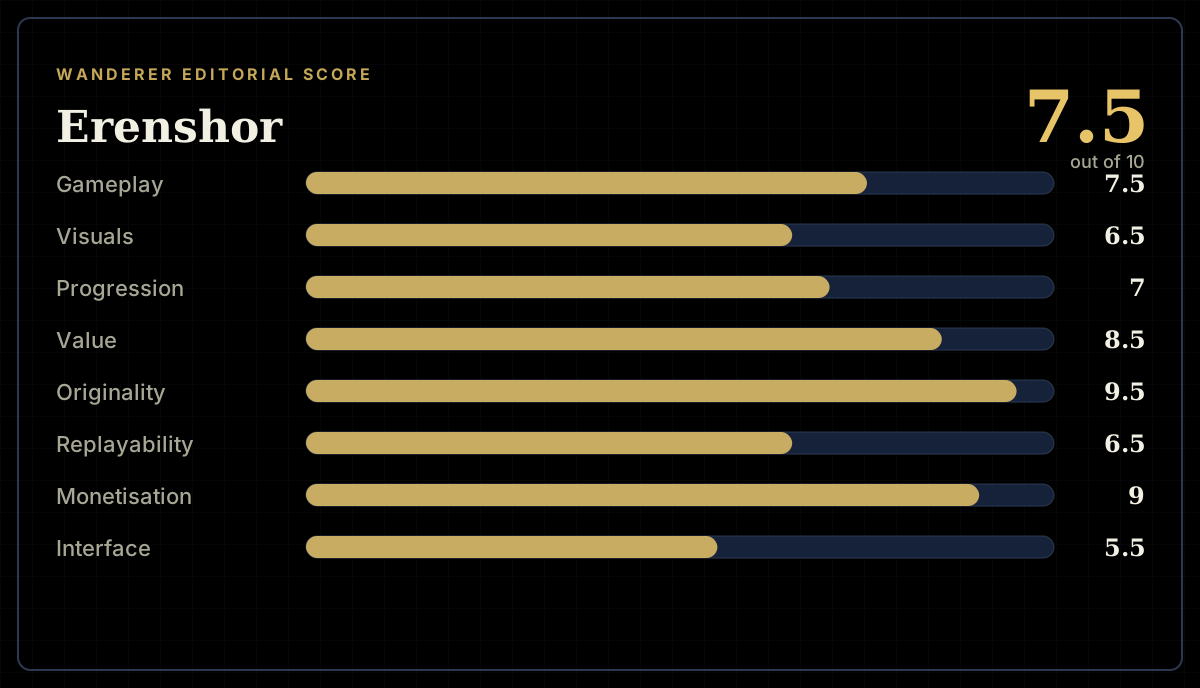
How the review scores each part of the gameWanderer Editorial -
The short versionWanderer Editorial