Game review
The Elder Scrolls V: Skyrim
8 / 10
- Developer
- Bethesda Game Studios
- Publisher
- Bethesda Softworks
- Released
- 11 November 2011
- Platforms
- Windows, PlayStation 4, PlayStation 5 (backward compatible), Xbox One, Xbox Series X|S (backward compatible), Nintendo Switch, Nintendo Switch 2, PlayStation VR, SteamVR (Skyrim VR)
- Genre
- Open-world action RPG
- Monetisation
- One-time purchase for Skyrim Special Edition. A separate paid Anniversary Upgrade DLC bundles the Creation Club quests, dungeons, weapons and cosmetics released before November 2021; earlier Creation Club items were sold individually for real-money Credits before that bundle existed. No subscription, no live-service systems, no season pass. The original 2011 release remains separately purchasable but has been unlisted from Steam's search and browse pages at the publisher's request.
- Players
- Single-player only. There is no official co-op or multiplayer mode; the fan-made Skyrim Together Reborn mod adds unsupported, unofficial co-op for players willing to set it up themselves
The short version
Skyrim's open world still does something almost nothing released since has matched as thoroughly: point yourself at any hillside, cave mouth or thin trail of smoke on the horizon and there is a reasonable chance something worth finding is waiting there. That design, not the combat and not the writing, is why the game is still selling in 2026. Everything built around that world — swordplay that never moved past two buttons and a stagger animation, a levelling curve that lets smithing and enchanting trivialise its own loot table, dialogue that resolves almost every choice identically — has been comfortably outpaced by RPGs this site has already reviewed. What keeps this from reading as a demotion is the modding scene Bethesda's tools made possible, which has kept this exact open world feeling current for a decade and a half longer than its own systems earned on their own.
Biggest strengths
- Fifteen years on, walking into any cave, ruin or unmarked hillside still produces something worth finding, in a way few open worlds released since have matched
- Skill-by-use levelling means playing a stealthy archer or a heavy-armour tank for fifty hours is enough to become genuinely good at it, with no separate class currency required
- Jeremy Soule's score, unchanged since 2011, remains one of the best pieces of environmental game music written for any RPG and still sells the world harder than the current-generation lighting does
Biggest weaknesses
- Melee combat is still two buttons and a stagger animation, and a decade of more physical action-RPG design elsewhere has made Skyrim's swordplay feel closer to a tech demo than a system
- Enchanting and smithing let a mid-level character trivialise the loot table entirely, so levelled drops rarely feel like a reward worth detouring for
- Quests resolve almost every dialogue choice the same way regardless of what's said, and the civil war storyline in particular treats a province-wide rebellion as a fetch-quest chain with no lasting world state
Who it's for: Players who want an open world built for wandering rather than being led, and anyone willing to treat modding as part of the intended experience rather than an optional extra. A poor fit for players who want combat with real mechanical depth, quest writing with lasting consequences, or a levelling curve that keeps loot meaningful past the midgame.
Our recommendation: Buy Skyrim Special Edition on its own for NZ$69.95 and treat the Anniversary Upgrade as optional — most of what it adds is minor quest and item content, not anything the base game is missing. Skip Skyrim VR unless you specifically want the room-scale experience; it's the same content at a higher price. If you already own the 2011 original from a Steam sale years ago, there's no pressing reason to double-buy Special Edition unless you want 64-bit stability for a heavy modlist.
8 / 10
Skyrim doesn't need an introduction so much as an accounting. Bethesda's fifth Elder Scrolls game came out in November 2011, and in the fifteen years since, it has been remastered, re-sold, ported to a VR headset, ported to a console that didn't exist yet, bundled with paid downloadable content under three different names, and kept alive the entire time by a modding community that has, without much exaggeration, kept fixing and improving it on Bethesda's behalf. None of that would matter if the thing underneath all the repackaging weren't still worth playing. It is — but not for the reasons its reputation usually gets credited for, and not without real, dated weaknesses that a decade and a half of better RPGs have made much harder to ignore.
The world is still the whole pitch
Skyrim's most durable idea has nothing to do with dragons, the Dragonborn prophecy, or the Empire versus the Stormcloaks. It's the placement of things. Point a character at literally any unexplored stretch of the map — a mountain pass, a column of smoke, a ruin half-buried in snow — and there is a genuinely good chance something is waiting there: a bandit camp, a Nordic tomb with its own small story wound through it, a hidden Daedric shrine, a word wall. The game almost never punishes curiosity with an empty room, and it almost never gates that curiosity behind a level requirement either. A level 3 character can wander into content built for a level 30 character and simply get flattened by it, which sounds like bad design until you notice what it buys: a world that never once feels artificially fenced off, where the only wall between a new character and any part of the map is their own judgement about the fight they're about to pick.
That design has aged better than almost anything else in the game, and it's the reason Skyrim still gets recommended to new players in 2026 instead of being treated as a historical curiosity. It's also worth being precise about what it isn't. It isn't reactive world-building — nothing you do in that bandit camp changes how the next one plays out — and it isn't mechanically deep exploration either; there's no traversal system worth the name, no climbing, no gliding, nothing that makes movement itself interesting the way it would a decade later in games built after Breath of the Wild reset expectations for the genre. What Skyrim sells is density and unpredictability of content placement, full stop, and it sells that better than almost anything released since.
Combat that time did not improve
Where Skyrim's age shows hardest is in the fight itself. Melee combat is built around two attack types — a fast hit and a charged heavy hit — plus blocking, a stagger system, and dual-wielding that mostly just doubles your input count without doubling your options. There's no dodge roll, no weight to hit reactions beyond a canned stagger animation, and enemy attack patterns rarely ask for anything more sophisticated than circling and waiting for an opening. Dragons, the game's headline set-piece encounter, are similarly one-note in practice: they circle, land, breathe, and repeat, and the fight rarely changes shape whether it's the third dragon encountered or the thirtieth.
None of this was best-in-class even in 2011, and the gap has only widened. This site has already reviewed Elden Ring, where every enemy's moveset demands the player actually read and react to specific animations, and Dragon's Dogma 2, where climbing onto a griffin mid-fight turns a boss encounter into a physical puzzle. Skyrim's swordplay isn't offensively bad, and a stealth archer build or a destruction-magic build can still carry a fight with real tactical thought behind it. But judged as a combat system rather than as a vehicle for exploring the world around it, it's the weakest link in the whole design, and no amount of remastering has touched the actual mechanics underneath the improved lighting.
Levelling and loot with nothing at stake
Skyrim's skill system is one of its genuinely good ideas: there's no experience bar tied to killing things, and instead every skill — one-handed weapons, sneak, alteration magic, smithing — levels by being used. Play as a heavy-armour tank for fifty hours and Heavy Armor and Block will climb whether or not you ever glance at a menu. It's an elegant, low-friction way to make a build feel like something you grew into rather than something you assembled from a talent tree, and it's held up well against most of the genre's alternatives.
What hasn't held up is what all that levelling is actually working toward. Loot in Skyrim scales to character level in a fairly blunt way, and the crafting loop — smithing gear up through Legendary quality, then enchanting it with the strongest effects the game allows — lets a mid-level character outclass almost anything the loot table can hand them. Once that loop clicks, dungeon crawling stops being about the gear at the end of it, because the gear at the end of it is worse than whatever the player already built. Compare that to the itemisation in Diablo IV or Grim Dawn, where a build genuinely reshapes itself around specific drops and affix combinations well into the endgame, and Skyrim's loot starts to look less like a system and more like a formality — numbers that go up because the character level went up, with very little chance of a find that actually changes how a fight gets approached.
Writing and quests: broad, rarely deep
Skyrim's dialogue system offers choices constantly and consequences almost never. Persuasion, intimidation and bribery checks usually just reskin the same outcome, and the main quests across every major faction — the Companions, the College of Winterhold, the Thieves Guild, the Dark Brotherhood — resolve in essentially one path regardless of how the player role-plays getting there. The civil war storyline is the clearest example: a genuinely interesting premise, a province choosing between an occupying Empire and a nationalist rebellion, gets flattened into a linear chain of "capture this hold" missions with no lasting change to the world once either side wins.
That's a real step down from where the genre has gone since. Baldur's Gate 3 and Divinity: Original Sin 2 both build entire acts around the idea that a dialogue choice should meaningfully close off or open up different content, not just flavour the same outcome differently. Skyrim's individual quest lines are frequently well-written in isolation — the Dark Brotherhood's opening murder-mystery dinner party is still one of Bethesda's best-constructed single missions — but the game as a whole was never built to react to the player the way its successors have made routine. Judged purely as writing and quest design, this is where Skyrim's fifteen years show hardest.
What the mod community built, and whether that's the game's credit to take
No review of Skyrim in 2026 is honest without talking about mods, and no honest review can dodge the harder question underneath that: how much of Skyrim's continued relevance belongs to Bethesda, and how much belongs to a community that has spent a decade and a half fixing, expanding and in places completely rebuilding the game on its own time? The Creation Kit and Steam Workshop opened the door, and what walked through it is genuinely extraordinary — SkyUI rebuilt the entire interface to be usable with a mouse and keyboard, years of unofficial patches fixed bugs Bethesda never got around to, and total-conversion projects like Enderal replaced the base game's story, map and quests wholesale while running on the same engine.
The fair way to weigh that: mod support is a real, reviewable feature of the base game, the same way a strong level editor or a robust API is a real feature of any other piece of software. Skyrim built the tools, kept them open, and never tried to lock the ecosystem down the way some publishers have with their own games. That's worth crediting directly, in the score, because it was a deliberate design and business decision. What shouldn't happen is treating third-party mods as if they were the shipped product — grading the vanilla game against what a hundred hours of hand-picked community mods can turn it into isn't a review of Skyrim, it's a review of Skyrim players. This review scores the game Bethesda ships and sells, with the modding foundation counted as one of that game's real, durable strengths rather than as a blank cheque covering for whatever the base game does poorly.
Creation Club, the Anniversary Edition, and the update that broke everyone's modlist
Bethesda's own relationship with paid content has been messier. Creation Club launched in 2017 as a curated marketplace of official add-ons — new quests, weapons, spells, minor game modes — sold for real-money Credits, and it was met with immediate and fairly durable suspicion from a community that had spent six years getting free content of comparable size from Nexus Mods. Bethesda's position was always that Creation Club content was commissioned, quality-controlled work rather than "paid mods," and there's something to that distinction — but it didn't stop the label from sticking, and it's easy to see why: the exact kind of content Creation Club charged for is the kind the community had already been making for free.
In November 2021, Bethesda folded all 74 Creation Club packs released up to that point into the Anniversary Edition, alongside a free engine update for every existing Special Edition owner that added fishing and assorted fixes. The Creation Club content itself, though, still isn't included with Special Edition by default — it's the paid Anniversary Upgrade, still $31.95 on Steam today. More consequential than the price was what the underlying engine update did to the mod ecosystem: the executable change that came with Anniversary Edition broke compatibility with the Script Extender, the tool a large share of the game's most significant mods depend on, for months. Modders who wanted their existing modlist to keep working had to specifically avoid the update and stay on the older Special Edition build while tool authors caught up — a maintenance tax that the 2011 original never asked anyone to pay, created directly by a monetisation decision rather than by necessary technical progress.
How many times has Bethesda sold you this game
It's worth actually counting, because the number is higher than the "Todd Howard keeps re-releasing Skyrim" joke usually implies, and every entry on the list is currently live and purchasable on Steam. The 2011 original is still sold, on its own storefront page, for $23.99 — though Bethesda had it unlisted from Steam's search and browse pages at some point, so a new customer won't stumble onto it by searching "Skyrim." Skyrim Special Edition, the 2016 remaster, is the version that surfaces instead, at $69.95 on its own. The Anniversary Upgrade DLC, layered on top of Special Edition, is another $31.95, and only combining the two gets a buyer to what the storefront actually labels the "Anniversary Edition," at $99.95 total. Skyrim VR is a fourth, separate SKU at $89.95. That's four different active purchase paths to broadly the same open world, each requiring the buyer to already understand which one is the base game, which is the remaster, and which is downloadable content before spending anything.
None of those individual prices is unreasonable on its own — Special Edition at $69.95 is comparable to any other current-generation single-player RPG, and the Anniversary Upgrade's $31.95 buys a genuinely large pile of extra quests and items for players who want them. What's harder to defend is the cumulative effect: a new player researching "how do I buy Skyrim" in 2026 has to do real homework to avoid either overpaying for content they don't want or underbuying and missing content that's now considered part of the definitive version. A game this significant to the genre deserves a cleaner front door than the one it currently has.
Presentation: a score that hasn't aged a day, visuals that have aged in patches
Jeremy Soule's soundtrack remains the single best-preserved part of Skyrim. Unchanged since 2011 and still doing more to sell Whiterun's plains or the Throat of the World's altitude than any graphical update has managed, it's aged essentially not at all. The visuals are more of a mixed picture: Special Edition's remastered lighting, water and volumetric fog genuinely improved the game's best vistas, but character models, facial animation and NPC line delivery all still read as distinctly mid-2010s Bethesda, stiff in exactly the ways that were already being criticised at launch. It's telling that Metacritic's aggregate critic score for the PC Special Edition sits at 74 — a "generally favourable" rating for a remaster of a genre landmark, reflecting exactly this gap between an art direction that's held up and a technical presentation that hasn't fully kept pace.
Verdict
Skyrim earns its 8 out of 10 the hard way: not because any individual system in it is best-in- class in 2026, but because the one thing it built its entire design around — a world where any direction is worth walking — is still genuinely unmatched, and the modding ecosystem that grew out of Bethesda's own tools has kept that world feeling current for far longer than its combat, loot and writing earned on their own. Judged against the RPGs this site has already covered, the swordplay is a decade behind, the loot table gets trivialised by its own crafting systems, and the quest writing rarely lets a real choice change anything lasting. None of that erases what still works. It does mean the score reflects a genuinely great open world wrapped around systems that haven't kept pace with it, sold through a re-release strategy — four separate active purchase paths to the same core game — that asks more patience of a new buyer than a game this good should require.
Buy Skyrim Special Edition if the pitch is exploration, atmosphere and the promise of an enormous modding scene once the vanilla game runs its course; that's still an easy recommendation. Go in expecting fights and quest lines to hold up the way the world around them does, and the cracks show fast.
Players who want that same "start anywhere, everything stays worth doing" feeling but would rather their character kept advancing on its own between sessions might also want a look at Wanderer — a much smaller game, built around letting progress continue while you're away rather than around a hand-placed open world.
Pros and cons
Pros
- Fifteen years on, walking into any cave, ruin or unmarked hillside still produces something worth finding, in a way few open worlds released since have matched
- Skill-by-use levelling means playing a stealthy archer or a heavy-armour tank for fifty hours is enough to become genuinely good at it, with no separate class currency required
- Jeremy Soule's score, unchanged since 2011, remains one of the best pieces of environmental game music written for any RPG and still sells the world harder than the current-generation lighting does
- The Creation Kit and Steam Workshop turned Skyrim into the most modded single-player game on the market, from interface fixes like SkyUI to full standalone campaigns like Enderal
- Special Edition's 64-bit engine lets a heavily modded save run for dozens of hours without the routine crashes that plagued the 32-bit 2011 original
Cons
- Melee combat is still two buttons and a stagger animation, and a decade of more physical action-RPG design elsewhere has made Skyrim's swordplay feel closer to a tech demo than a system
- Enchanting and smithing let a mid-level character trivialise the loot table entirely, so levelled drops rarely feel like a reward worth detouring for
- Quests resolve almost every dialogue choice the same way regardless of what's said, and the civil war storyline in particular treats a province-wide rebellion as a fetch-quest chain with no lasting world state
- The 2021 Anniversary Edition update changed the executable enough to break the Script Extender and the mods built on it for months, forcing serious modders to specifically hunt down and stay on the older Special Edition build
- Working out what to actually buy is its own puzzle: the 2011 original is still sold at $23.99 but hidden from Steam search, Special Edition is $69.95 alone, and the Creation Club content only appears once you add the $31.95 Anniversary Upgrade on top
Screenshots
-
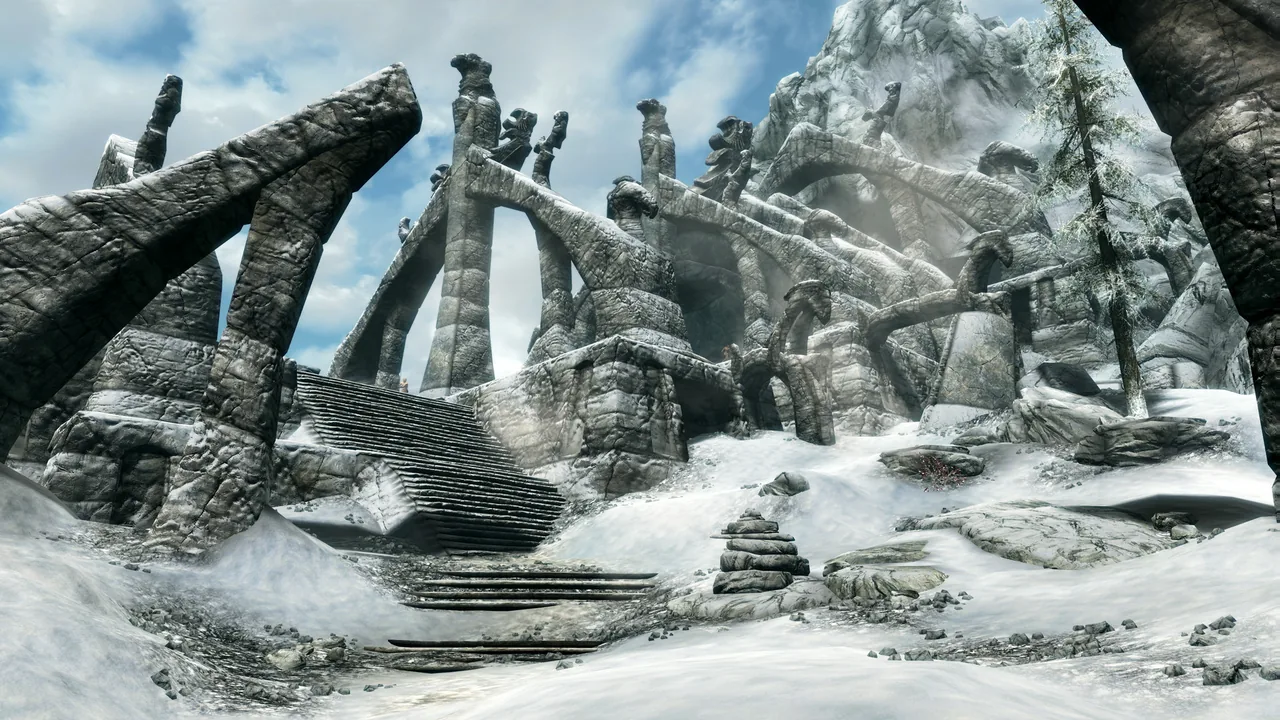
The Elder Scrolls V: Skyrim Special EditionImage: Bethesda Softworks via Steam -
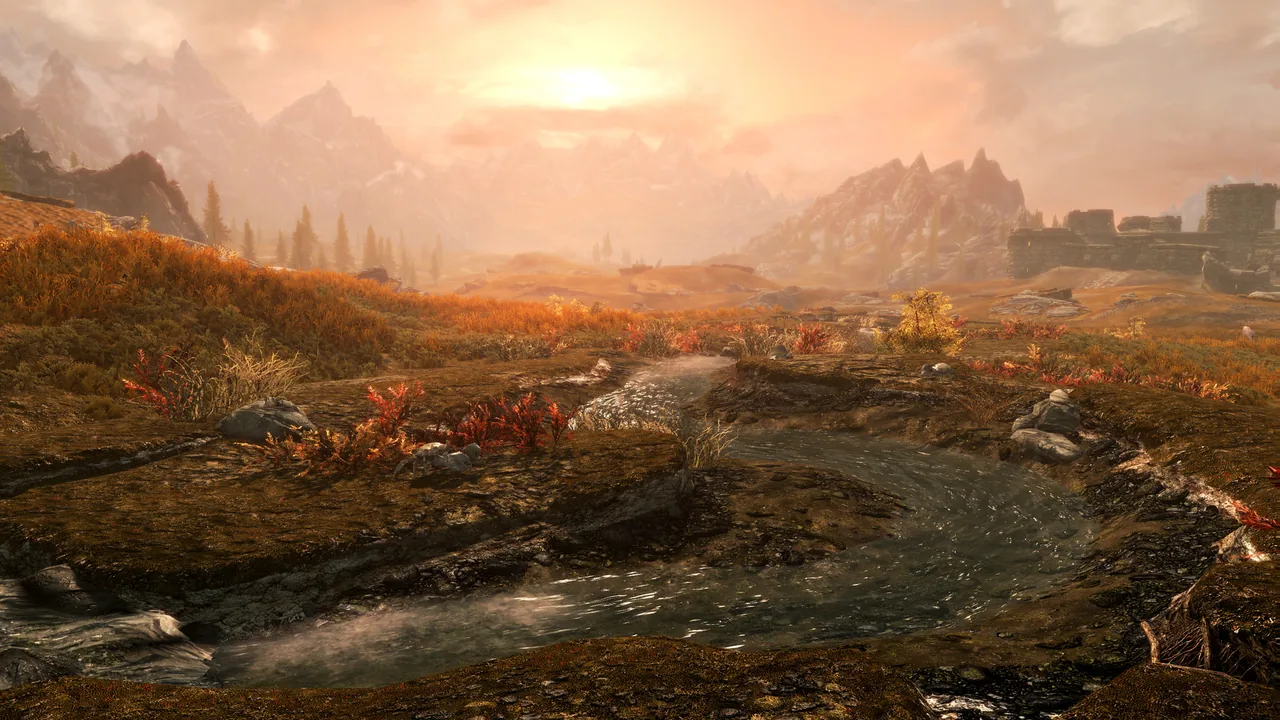
The Elder Scrolls V: Skyrim Special EditionImage: Bethesda Softworks via Steam -
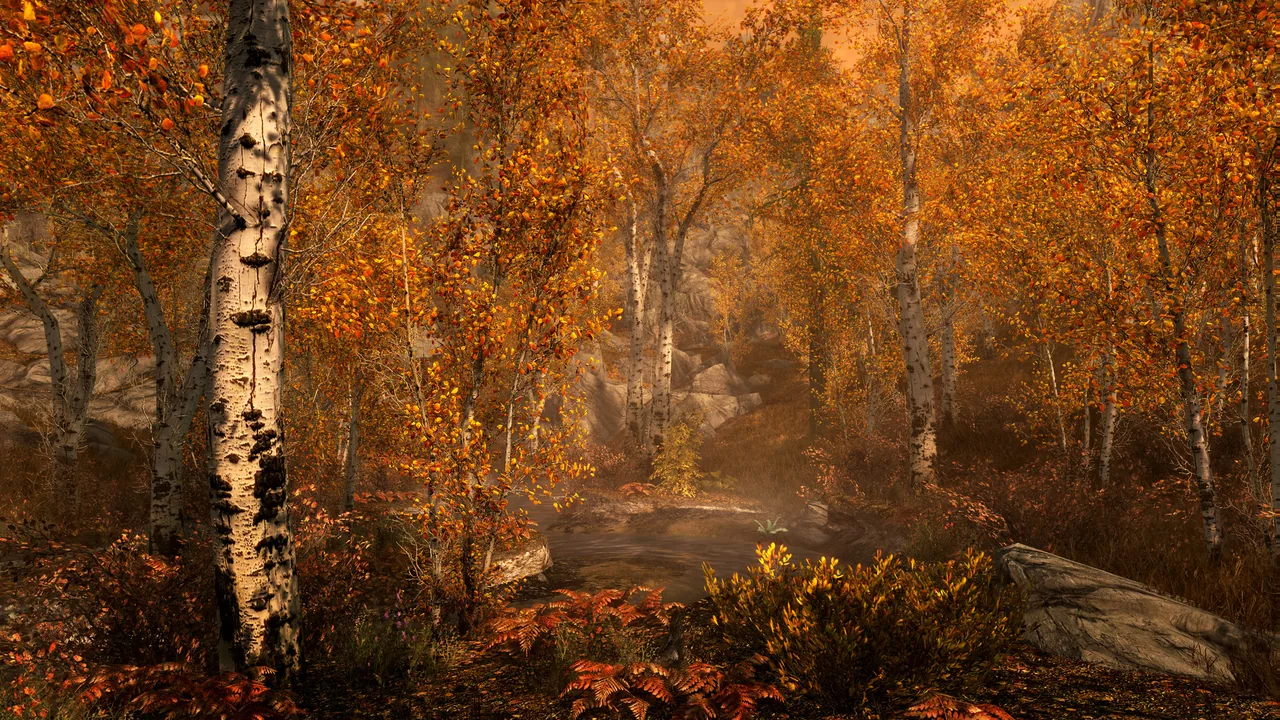
The Elder Scrolls V: Skyrim Special EditionImage: Bethesda Softworks via Steam -
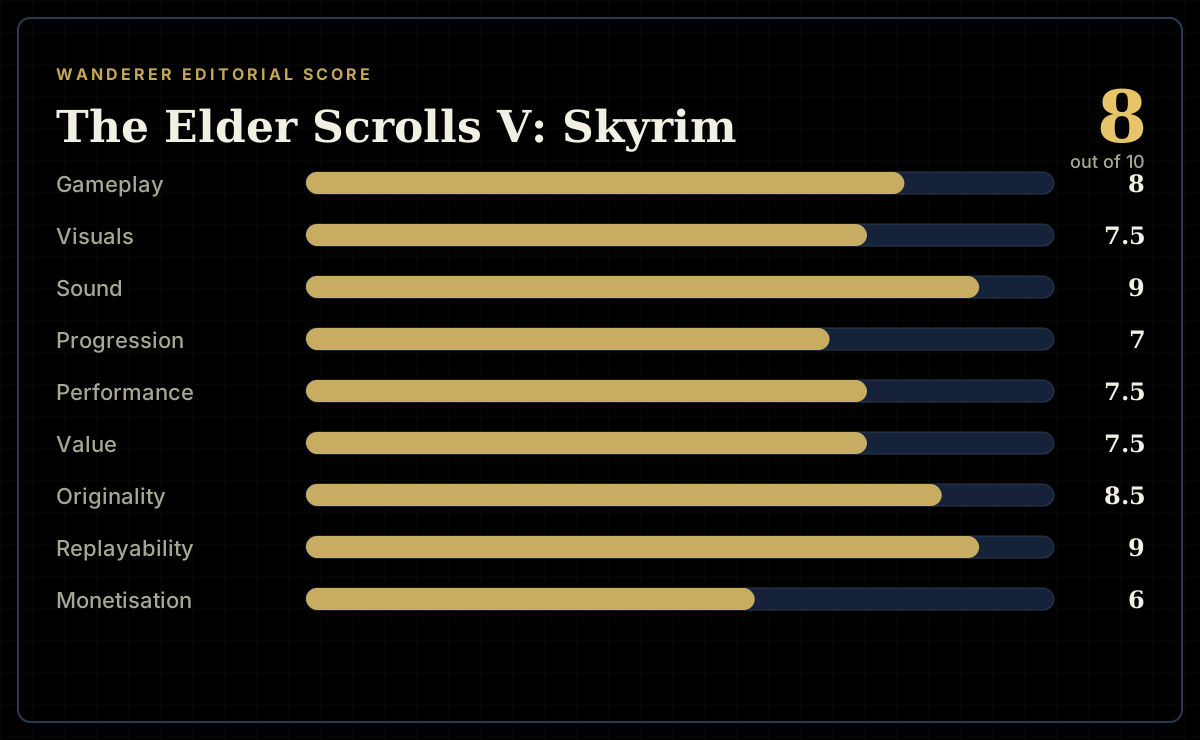
How the review scores each part of the gameWanderer Editorial -
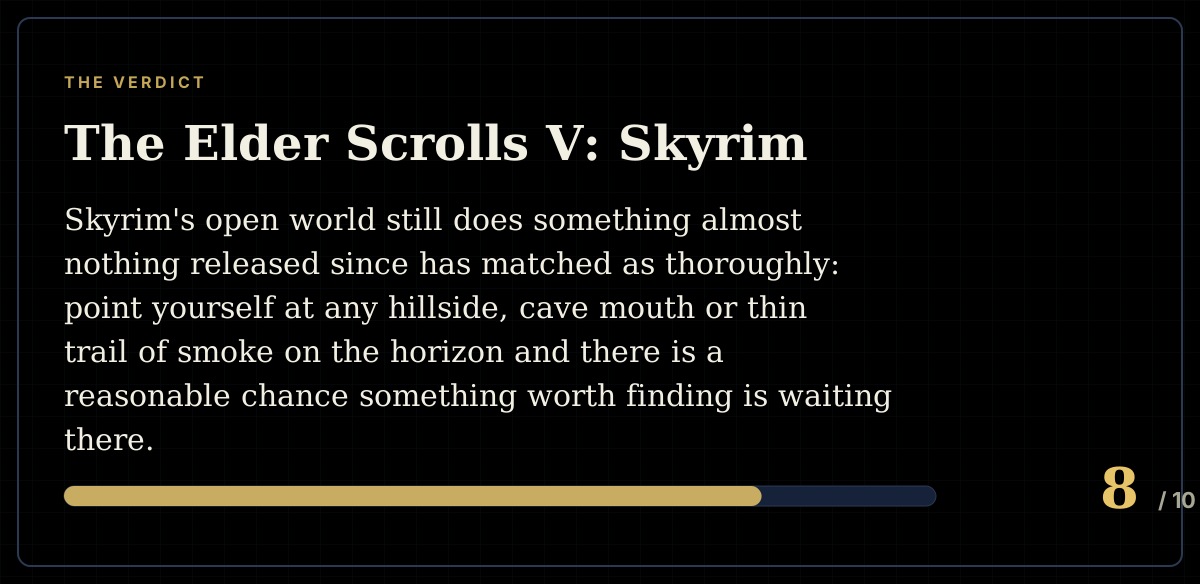
The short versionWanderer Editorial