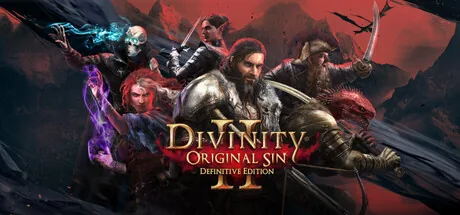
Game review
Divinity: Original Sin 2
8.5 / 10
- Developer
- Larian Studios
- Publisher
- Larian Studios (PC); Bandai Namco Entertainment (console)
- Released
- 14 September 2017
- Platforms
- Windows, macOS (Steam); PlayStation 4, Xbox One, Nintendo Switch and iPadOS ports; PlayStation 5 and Xbox Series X/S versions added December 2025
- Genre
- CRPG / Turn-Based Tactical RPG
- Monetisation
- Premium, one-off purchase — the Steam listing already is the Definitive Edition, with no separate upgrade to buy. The only paid add-ons are a soundtrack album and a Collector's Edition cosmetic pack; no in-game store, currency or loot mechanic of any kind
- Players
- Online, LAN and split-screen co-op for up to four players, a competitive PvP arena, and a Game Master mode for running fully custom tabletop-style campaigns with the game's own toolset
The short version
Divinity: Original Sin 2 built its combat around a simple physical idea and followed it further than almost any RPG since: water conducts electricity, oil burns, blood freezes into ice you can skate enemies across, and a character's armour — not their health bar — decides whether a stun or a freeze actually lands. That turns every fight into a small puzzle about what's on the ground before a single die is rolled, and it's still the best version of that idea in the genre, Baldur's Gate 3 included.
It's also a harder, rougher game to love than its more famous successor. Fort Joy, the opening act, throws armour-stacked ambushes at an under-levelled party before the tutorial has finished explaining the system that would let them survive it, and the same combo tactics that make combat brilliant in the middle acts become trivially exploitable once a player learns to chain them. Act 4 compresses a sprawling, 60-plus-hour campaign into a noticeably smaller final city to reach its ending. None of that erases what the middle two-thirds of this game does better than almost anything released since — it just means the first several hours ask more patience than most newcomers expect to pay.
Biggest strengths
- The armour-and-surface combat system turns nearly every fight into an environmental puzzle instead of a stat check
- Six origin characters each carry a fully written personal quest woven under the main campaign, not just flavour dialogue
- A constant, wry Narrator voices the entire game, including item flavour text and internal monologue, which nobody else does at this scale
Biggest weaknesses
- Fort Joy's opening hours are punishing for newcomers, throwing armour-heavy ambushes at an under-levelled party before the game has finished teaching its own systems
- The same surface-and-crowd-control combos that make mid-game combat brilliant become close to trivial once a player learns to chain teleport, knockdown and high-ground stacking
- Act 4's city of Arx is noticeably smaller and more linear than the three sprawling acts before it, and the story visibly hurries to close
Who it's for: Players who want tactical combat to reward chemistry and terrain over stat checks, and who don't mind a demanding, occasionally unforgiving difficulty curve to get there.
Our recommendation: A one-off NZ$59.99 with no further purchases needed for the full campaign, PvP arena and a custom-campaign toolset — genuinely excellent value next to games half its age. Worth pushing through a hard opening act for; skip it if a punishing first few hours is a dealbreaker rather than a hurdle.
8.5 / 10
Divinity: Original Sin 2 turns nine years old this September, and it is still doing something that even its own studio's next game never quite matched: it makes combat feel like a physics demonstration rather than a stat comparison. Larian Studios went on to make Baldur's Gate 3 a household name, but the systems that let that game's fights feel alive — height, terrain, elemental interaction — were built here first, on a made-up world with no licence to answer to and no rulebook telling the studio what a spell was allowed to do. That freedom shows in almost every fight this game has, for better and for considerably worse.
It's also, nine years on, a harder sell for a newcomer than Baldur's Gate 3. The opening act is genuinely brutal in a way modern RPGs mostly aren't, the very systems that make the combat great are also what make it exploitable, and the campaign's final stretch is a well-documented step down in scale from everything before it. None of that makes this a lesser game than its successor — in places it's sharper — but it is a different kind of demand on a player's patience, and worth being specific about before recommending it.
Combat as a physics puzzle
The core idea is simple to state and takes hours to fully internalise: the battlefield has a physical state, and every skill interacts with it. Water pools turn electric the moment a lightning spell hits them, frying anyone standing in the puddle. Oil slicks ignite instantly and keep burning long after the spell that lit them has ended its turn. Blood freezes into slick ice that turns footing into a liability. Poison clouds heal the undead and choke the living. None of this is flavour text — it's the actual mechanical backbone of nearly every encounter, and reading a battlefield's surfaces correctly is frequently more important than reading a character sheet.
Layered on top of that is the armour system, which is the single mechanical idea that makes this game's combat distinct from almost anything that came before or after it. Every character has two pools sitting in front of their health: physical armour and magical armour. While either pool is intact, the matching category of crowd control — stun, knockdown, freeze, charm, silence — simply doesn't land, no matter how good the roll would otherwise be. Only once the relevant armour is stripped to zero does a status effect actually take hold. That reframes an entire fight: burning through the right kind of armour with the right kind of damage isn't a side objective, it's the whole opening sequence, and a party that ignores it will watch its best control spells bounce off enemies turn after turn for no effect. It's a blunt, elegant solution to the classic CRPG problem of crowd control trivialising fights, and it forces build variety in a way a simple resistance stat never would — a pure magic-damage party can strip a heavily armoured warrior's physical pool for a very long time before their stuns start working.
The result, at its best, is combat that plays like a puzzle with a physical answer rather than a probability one. A fight against a room of oil-slicked pirates isn't won by better dice, it's won by recognising the oil, throwing fire before they can spread out, and forcing them to fight the terrain and the party at once. Nothing in the genre since has matched how thoroughly this system is baked into every single encounter, including the ones that look like throwaway trash fights.
Where the puzzle turns into an exploit
The same depth that makes this system brilliant also makes it breakable, and it's worth being honest about how badly. Chain-teleporting an enemy off a cliff removes them from a fight instantly, with no armour check, no saving throw, and no counterplay once a party has the spell. Backstab damage multipliers on a rogue who's used a spell to reposition behind an enemy every single turn can end fights in a couple of rounds regardless of the encounter's intended difficulty. Stacking the entire party's crowd control into a single opening turn, before an enemy has acted once, can neutralise an encounter that was clearly designed to be a multi-turn siege. None of this requires external mods or exploits in the pejorative sense — every tool involved is a normal skill the game hands out — but once a player learns the handful of combinations that trivialise fights, a meaningful chunk of the game's tactical tension evaporates. Tactician and Honour Mode difficulty settings raise enemy stats and add extra threats specifically to push back against this, and they help, but they don't remove the underlying combos, they just make a party need more of them working at once. A player who wants the intended puzzle-solving experience has to opt into some self-restraint the game itself doesn't enforce.
Fort Joy: a beautiful, brutal front door
The campaign opens on Fort Joy, a magic-suppressing prison island, and it is one of the most striking and most punishing opening acts in the genre. The atmosphere is genuinely excellent — a sprawling, half-ruined fortress full of desperate prisoners, corrupt guards and half a dozen routes through the same central conflict — but the difficulty curve does newcomers few favours. Encounters here regularly stack multiple armoured, elementally resistant enemies against a party that is still two or three character levels away from having the resources to answer them, and several early fights are effectively ambushes with no safe retreat once triggered. The tutorial introduces the armour and surface systems in passing rather than drilling them, so a first-time player is often improvising against exactly the mechanics that would make the fight fair if understood in advance.
This isn't accidental difficulty spikiness so much as a deliberate design choice that assumes a returning or patient player — Original Sin 2 rewards a party that retreats, rests, explores for better gear and comes back over-levelled rather than one that pushes straight through story encounters in sequence. That's a legitimate way to build a CRPG, and the act's back half, once a party has levelled up on side content, becomes considerably more forgiving. But it is a genuinely hostile first impression for anyone used to a modern RPG easing them in, and it's the single biggest reason some players bounce off this game in the first two hours and never come back.
Six would-be gods
Character writing is where the game's ambition is easiest to see directly. Players choose either a fully custom Fane-like blank slate or one of six pre-written Origin characters — an undead prince, an elven cannibal cleric, a lizard noble, a dwarven inquisitor, a human death knight and a shapeshifting fox — each with a personal storyline that runs the entire length of the campaign and occasionally pulls the whole party into their specific unfinished business. Recruit an Origin character you didn't choose to play and their personal arc becomes a companion quest instead; the underlying content doesn't change, only the vantage point does, which is a clever way of getting more mileage out of the same writing.
The game's constant Narrator does a lot of the heavy lifting that voiced protagonists handle in later Larian games — commenting on choices, reading internal thoughts, needling characters with a dry, theatrical wit that's present in nearly every scene, not just cutscenes. It's a genuinely unusual choice for an RPG this large to voice that much of its prose rather than leaving it as silent flavour text, and it's a large part of why the writing reads as confident rather than padded even during long stretches of exploration.
Arx and the acts that don't match
The campaign is structured across four acts — the prison island of Fort Joy, the war-torn Reaper's Coast, the mystery-driven Nameless Isle, and finally the city of Arx — and the pacing between them is uneven in a way that's been a fixture of community discussion since launch. The first three acts are large, exploratory and generous with side content; each one comfortably supports ten-plus hours of detours without feeling padded. Arx, the finale, is noticeably smaller and more linear by comparison, and the main plot threads that had been building since Fort Joy resolve in a compressed final stretch that plays more like a well-produced dungeon crawl than the open regional sandbox the first three acts trained players to expect. It isn't broken, and the character writing holds up all the way through, but the scale mismatch is real enough that finishing the game can feel like the last chapter of a much longer book got trimmed to fit a deadline.
It's worth naming because it's the same shape of criticism that later followed Baldur's Gate 3's own final act, just inverted — where BG3's Act 3 is accused of being too dense for its own pacing, Original Sin 2's Act 4 is accused of being too thin for the campaign that led into it. Larian has had this specific pacing problem, in opposite directions, across both of its major RPGs.
Choosing between this and Baldur's Gate 3
Anyone deciding between the two isn't choosing between a good game and a bad one — they're choosing between two different demands on their time and patience, made by the same studio six years apart. Original Sin 2 is the one to pick for tighter, more punishing tactical combat built on a system that rewards genuine chemistry-set thinking over character-sheet optimisation; for a campaign that respects a smaller time budget, at roughly 60 hours for a focused main-quest run against Baldur's Gate 3's well over 100; for a price that's a third of its successor's and still not discounted nine years later; and for Game Master mode, a full toolset for building and running custom tabletop-style campaigns that Baldur's Gate 3 has no equivalent of at all.
Baldur's Gate 3 is the better choice for a player who wants a gentler on-ramp, a licensed ruleset with decades of familiar vocabulary behind it, a fully voiced and cinematically directed player character rather than a narrated one, and a campaign whose difficulty spikes are considerably more evenly distributed than Fort Joy's opening gauntlet. If a rough, sometimes actively hostile first few hours would sour the whole experience rather than read as a hurdle worth clearing, start with Baldur's Gate 3 instead and come back to this one once the genre's rhythms feel familiar.
Co-op, PvP and Game Master mode
Up to four players can run the full campaign together online, over LAN, or split-screen, each piloting their own Origin character or custom build, and the game handles four simultaneous personal storylines without them stepping on each other's content — a genuinely different design problem than Baldur's Gate 3's co-op, where a much larger single-protagonist narrative has to route around extra players rather than being built for several leads from the start. A competitive PvP arena mode exists alongside the campaign for players who just want to test builds against each other directly, using the same armour-and-surface systems as the story fights.
Game Master mode is the standout feature with no real equivalent in the studio's later game: a full toolset that lets one player run a custom tabletop-style campaign for the rest of the group, placing monsters, narrating scenes and adjudicating rules live using the game's assets and mechanics. It's a niche feature that most players will never touch, but for the group that does, it's a genuinely unique offering nothing else in this space provides at this scale.
What it costs, and what it's still worth
The Steam listing is already the Definitive Edition — the improved version with a rebalanced economy, expanded storyline and revoiced act one that shipped as a free upgrade for original owners back in 2018 — sitting at NZ$59.99 with no discount currently active. The only further purchases are a NZ$6.29 soundtrack album and a cosmetic Collector's Edition pack; there is no in-game store, no currency, and nothing withheld from the base campaign. Metacritic still lists the PC version at 93 and the Definitive Edition at 95, and Steam's own user score sits at Overwhelmingly Positive from more than 83,000 reviews — a rare piece of consensus for a nine-year-old game that has had no reason to inflate its numbers with a sale spike or a marketing push in years.
For a single flat price, that buys a 60-plus-hour campaign, a PvP arena, a full custom-campaign toolset, and four-player co-op that doesn't feel bolted on afterward. Very little released since at any price has matched that combination.
Verdict
Divinity: Original Sin 2 is still the sharper combat system of Larian's two major RPGs, even after Baldur's Gate 3 became the bigger name. The armour-and-surface interplay makes nearly every fight a small puzzle about terrain and sequencing rather than a stat comparison, and nothing since has pushed that specific idea as far. The cost of that ambition is real: Fort Joy is a genuinely brutal front door for anyone new to the genre, the same combo tactics that make the middle acts brilliant can be chained into trivialising them, and Arx closes the campaign at a noticeably smaller scale than the three acts that built up to it.
None of that is enough to keep this out of the conversation about the best tactical RPGs made this decade — it's enough to keep it out of a perfect score, and enough to mean it's a better fit for a player who wants combat to reward system mastery than one who wants an evenly paced, gently onboarded story from minute one. Players who push through the opening hours get one of the richest tactical combat systems the genre has produced. Players who want that same ambition with a softer landing already know where to find it, six years later, from the same studio.
Price and Steam review data checked 30 July 2026.
Pros and cons
Pros
- The armour-and-surface combat system turns nearly every fight into an environmental puzzle instead of a stat check
- Six origin characters each carry a fully written personal quest woven under the main campaign, not just flavour dialogue
- A constant, wry Narrator voices the entire game, including item flavour text and internal monologue, which nobody else does at this scale
- One flat purchase price with no loot boxes, store or ongoing charge of any kind, and the listing already is the improved Definitive Edition
- Game Master mode lets a group build and run entirely custom tabletop-style campaigns using the game's own assets and rules
- Respeccing at any mirror means an early build mistake never permanently cripples a save
Cons
- Fort Joy's opening hours are punishing for newcomers, throwing armour-heavy ambushes at an under-levelled party before the game has finished teaching its own systems
- The same surface-and-crowd-control combos that make mid-game combat brilliant become close to trivial once a player learns to chain teleport, knockdown and high-ground stacking
- Act 4's city of Arx is noticeably smaller and more linear than the three sprawling acts before it, and the story visibly hurries to close
- Inventory and crafting across a four-person party is a genuine late-game chore without community UI mods to help sort it
- Positioning and pre-fight setup reward playing the grid over playing the character, a system-versus-roleplay tension the game never resolves
- Switch and iPad ports trade real visual fidelity and frame rate for portability compared with the PC version
Screenshots
-
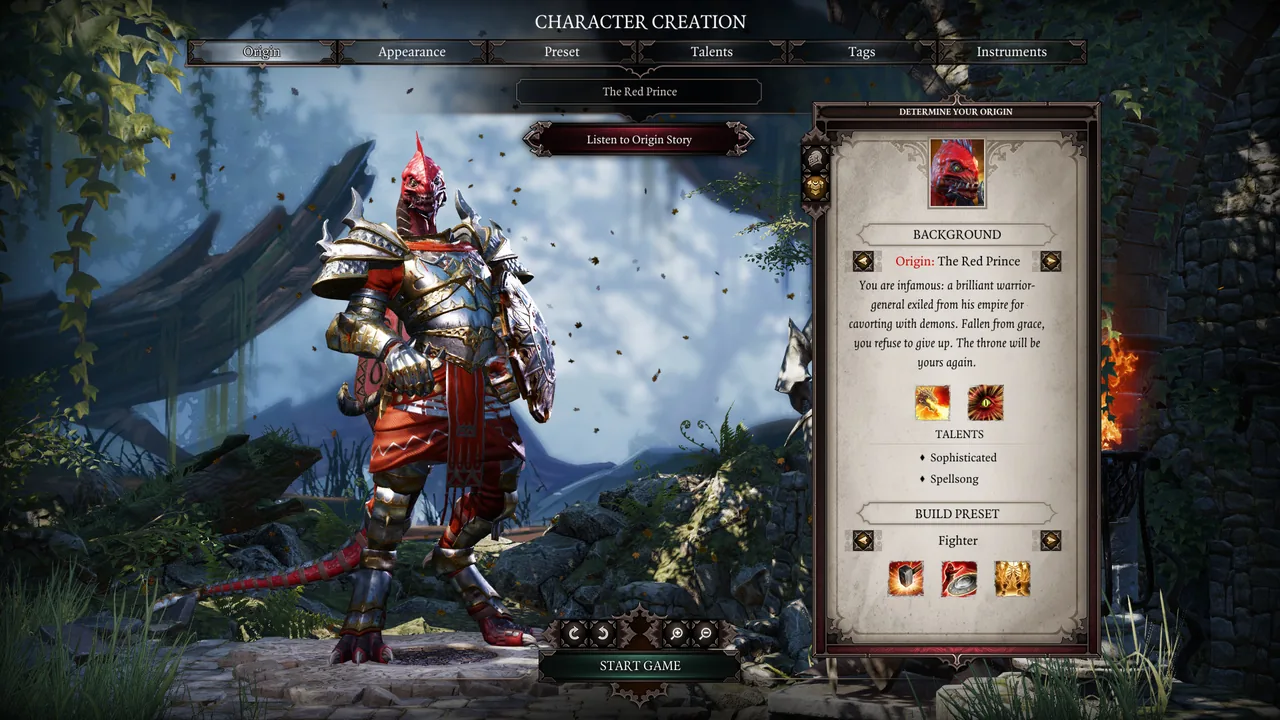
Divinity: Original Sin 2 - Definitive EditionImage: Larian Studios via Steam -
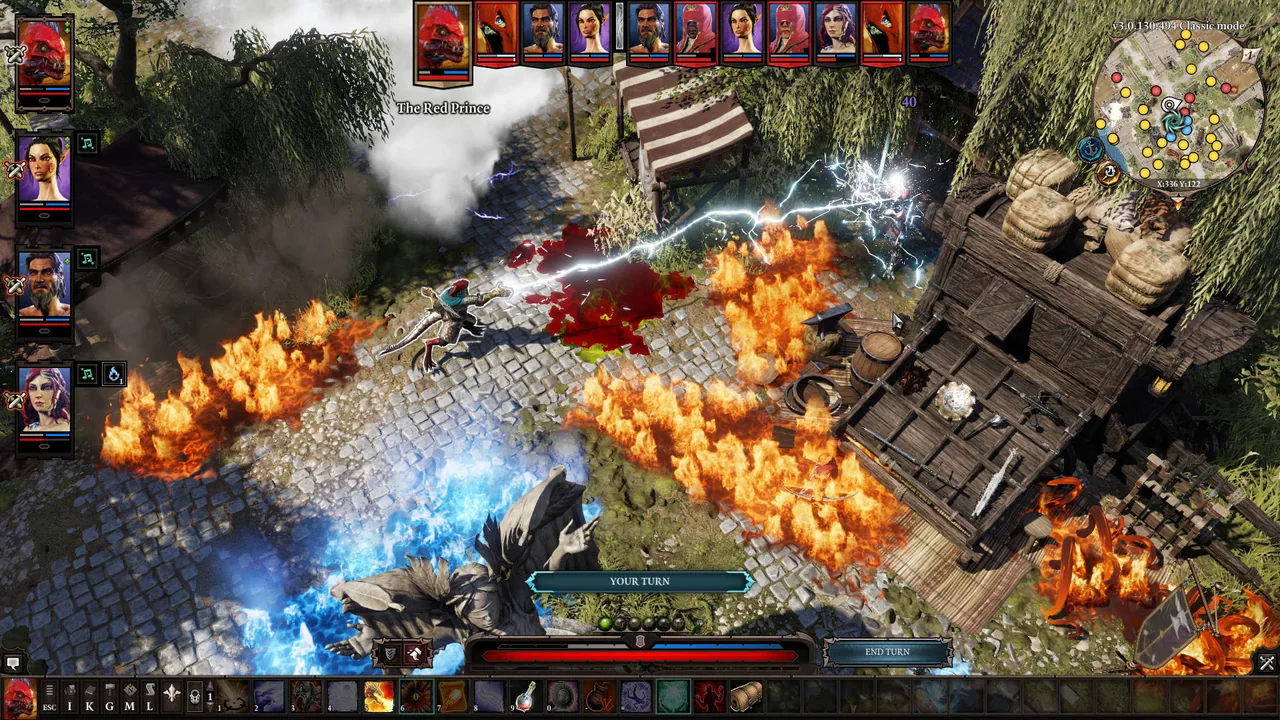
Divinity: Original Sin 2 - Definitive EditionImage: Larian Studios via Steam -
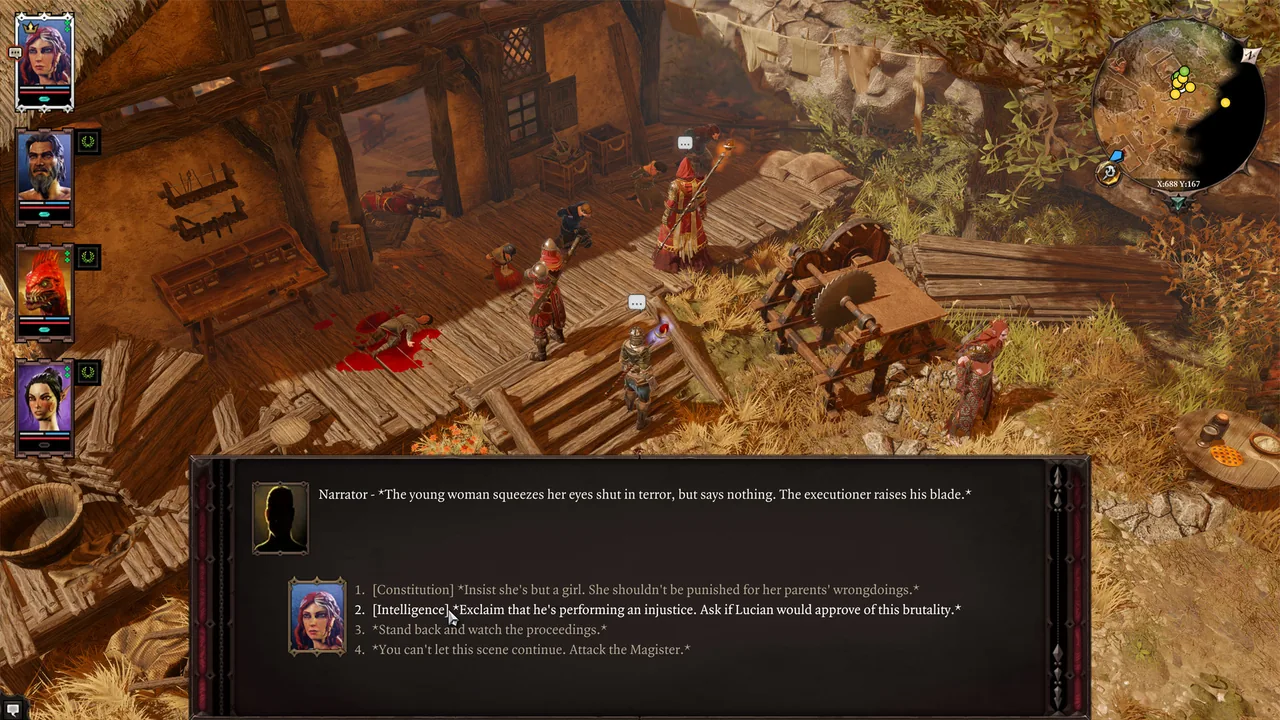
Divinity: Original Sin 2 - Definitive EditionImage: Larian Studios via Steam -
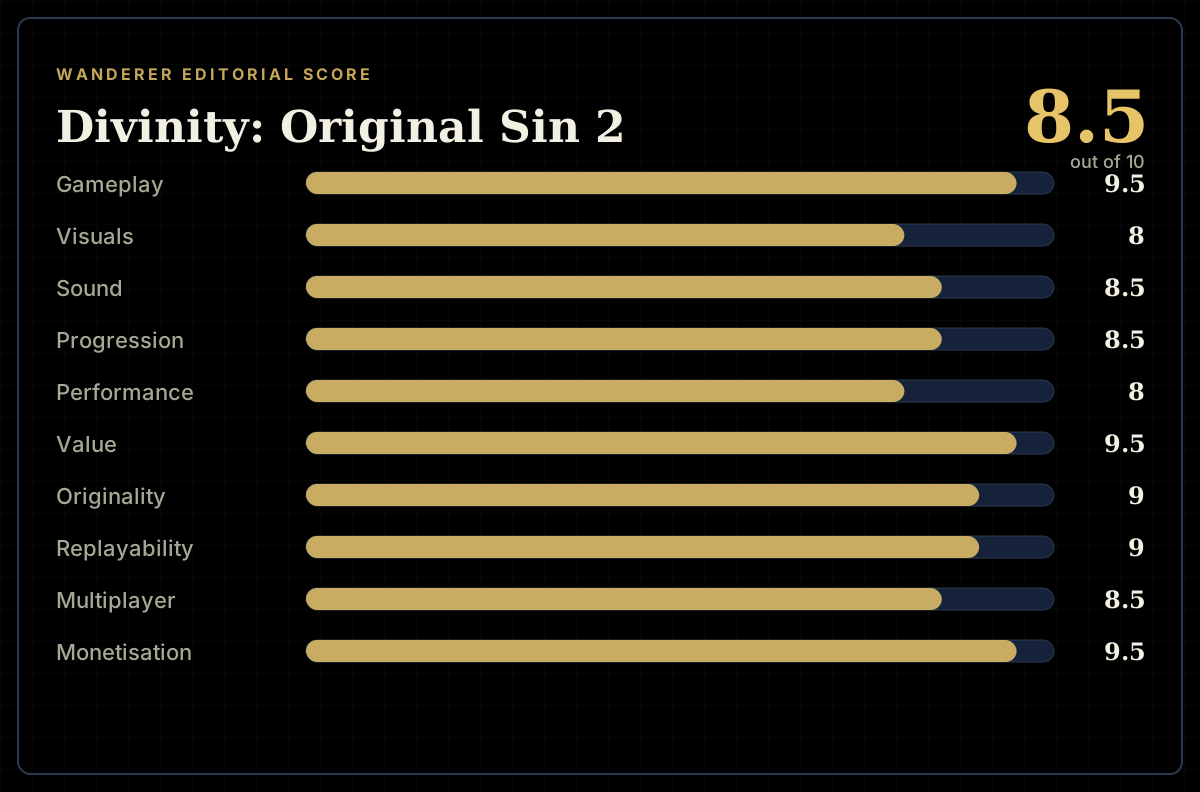
How the review scores each part of the gameWanderer Editorial -
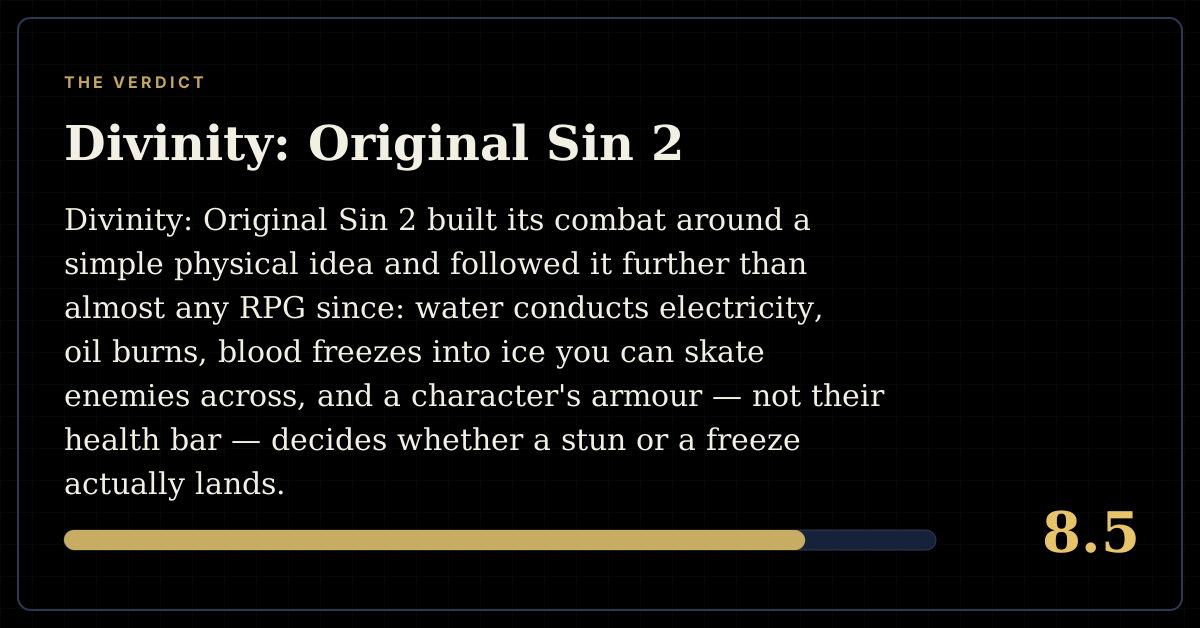
The short versionWanderer Editorial