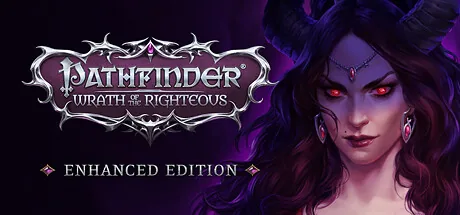
Game review
Pathfinder: Wrath of the Righteous
7.5 / 10
- Developer
- Owlcat Games
- Publisher
- Owlcat Games; META Publishing (select regions and console SKUs)
- Released
- 2 September 2021
- Platforms
- Windows, macOS (Steam); PlayStation 4 and Xbox One (Sep 2022); PlayStation 5 (Mar 2024); Nintendo Switch via cloud version. No Linux support on Steam
- Genre
- CRPG / Tactical RPG
- Monetisation
- Premium, one-off purchase. Fourteen paid add-ons exist on Steam — six story expansions adding classes, archetypes, companion content and a roguelike side campaign, a Season Pass bundle, and several cosmetic packs (pet, portrait and soundtrack-adjacent items). None of it is required to finish the base campaign, and there is no in-game currency, loot box or live-service system of any kind
- Players
- None. Wrath of the Righteous is single-player only, with no co-op or PvP mode of any kind — a deliberate difference from Owlcat's stablemates in this genre
The short version
Wrath of the Righteous takes the Pathfinder 1st-edition tabletop ruleset and puts almost all of it on screen unfiltered — multiclassing, attacks of opportunity, prestige classes, feat chains and a spell list with a triple-digit page count — then builds nine Mythic Path endgames on top of it that let a Crusade's chosen champion become an angel, a lich, a swarm of insects, or several other things that are not, strictly, a person any more. That combination makes it one of the most mechanically ambitious CRPGs of the decade and one of the least forgiving to walk into cold.
It also asks a lot outside combat. A strategic layer has the player managing an actual crusader army on a regional map between story chapters, and it is the single most divisive system in the game — a meaningful chunk of the people who love everything else here actively dislike this part and say so in nearly every recent review. None of that erases what the character system achieves. It just means the audience for this game is narrower, and more experienced, than the one Baldur's Gate 3 opened the genre up to.
Biggest strengths
- Nine Mythic Paths hand out entirely different late-game kits, companion reactions and endings, not just a reskinned damage number
- Character creation ports Pathfinder 1st edition's rules almost intact, giving system-literate players a build space few CRPGs attempt
- Companions and their personal arcs hold up across a genuinely long campaign without going quiet in the back half
Biggest weaknesses
- The crusade army-management layer between chapters is the game's most consistently disliked system, even among players who rate everything else highly
- Pre-fight buff routines and bloated ability lists create real decision paralysis for players who haven't memorised the ruleset going in
- The opening hours in Kenabres throw system-heavy encounters at a party before the tutorial has finished explaining the system that would make them fair
Who it's for: Tabletop-literate CRPG players who want a character system with real mechanical teeth and are willing to trade a gentle on-ramp and a beloved strategy layer for it.
Our recommendation: A one-off NZ$27.99 for a 70-to-100-hour campaign plus nine largely distinct endgames, with optional story DLC on top — strong value on paper. Worth it for players who already know they like tactical depth for its own sake; a genuinely rough first ten hours for anyone who doesn't.
7.5 / 10
Most CRPGs let you pick a class and call it character progression. Wrath of the Righteous lets you pick a class, then — dozens of hours later — lets you stop being the kind of thing that has a class at all. One of its nine endgame Mythic Paths turns the player character into the Swarm-That-Walks, a hive of insects wearing a person-shaped memory of who they used to be. Another makes them an undead Lich, ruling from a phylactery instead of a body. That is not a marketing line; it is the actual mechanical and narrative shape the game commits to for a third of its runtime, and no other CRPG released this decade has been willing to go that far with what a "build" is even allowed to mean.
It's also, underneath that ambition, one of the most demanding character systems the genre has put in front of a mainstream audience, sitting on top of a strategic layer a large share of its own players actively wish they could skip. Both of those things are true at once, and neither cancels the other out. This is a review of a genuinely major CRPG that also happens to be a genuinely difficult one to recommend without a lot of caveats attached.
Nine ways to stop being a person
Owlcat built Wrath of the Righteous around Pathfinder's own Wrath of the Righteous Adventure Path, a demon-invasion campaign first published for the tabletop in 2013, and the game's central hook is what it calls Mythic Paths. Roughly a third of the way through the story, the player character begins accumulating mythic power and eventually commits to one of nine tracks: Angel, Demon, Lich, Aeon, Azata, Trickster, Gold Dragon, Swarm-That-Walks, or Legend — the last of which means staying mortal and turning down godlike power entirely, which is its own kind of ending.
The question worth asking about a system this large is whether it actually reshapes a playthrough or just re-skins the same campaign with a different coat of paint on the finishing move, and the honest answer is that it does both, in different places. The map doesn't change. The core quest chain — close the Worldwound, hold Kenabres, lead the Fifth Crusade against the demon horde pouring out of it — plays out on the same skeleton no matter which path a player ends up on. What does change, substantially, is the character's actual toolkit: a Lich gets negative-energy abilities and a fundamentally different relationship to death and undeath than an Angel throwing holy smites, and companions react to those choices in ways that ripple into their personal storylines and, eventually, the ending each of them gets. That's a meaningfully deeper form of branching than most games attempt under the same "multiple endings" label — it's not a final cutscene variable, it's a mechanical identity a player lives inside for the back half of a 70-to-100-hour campaign. It just isn't, and was never going to be, a wholesale rewrite of the plot that gets you there.
Pathfinder 1st edition, almost raw
The Mythic Path system sits on top of a character creator that is unusually faithful to its source material, and that fidelity is simultaneously the game's biggest strength and its steepest barrier to entry. The Steam listing advertises 25 base classes, twelve playable races and more than a thousand spells, feats and abilities, and community tallies of archetypes — specialised subclass variants layered on top of the base classes — regularly put that number above 200 once the story DLC classes are counted in. Multiclassing is unrestricted in the way tabletop Pathfinder allows it, prestige classes exist as genuine build goals rather than flavour text, and attacks of opportunity, spell preparation and buff durations all function the way they do at a tabletop, not the simplified version most digital RPGs settle for.
For a player who already knows this ruleset, or who wants to learn it properly, that's about as deep as build variety gets in this genre. For everyone else, it is a genuine wall. Recent Steam reviews describe pre-fight routines that stack thirty, forty, sometimes fifty buff spells before a serious encounter even starts, and more than one recent review specifically names the bloated ability list and pre-fight ritual as the source of real decision paralysis rather than tactical satisfaction. That's not a fringe complaint; it's one of the most consistently repeated criticisms in the game's current review base, sitting alongside genuine praise for the same system from players who've made peace with it. The game does not meaningfully ease a new player into any of this. Kenabres, the opening city, throws demon incursions and system-literate encounter design at a party before the tutorial has finished explaining the mechanics that would make those fights fair, and a first-time player without prior Pathfinder or Kingmaker experience should expect the first several hours to feel like reading a rulebook mid-ambush.
The crusade nobody signed up to manage
Between story chapters, the player also runs the Fifth Crusade itself: recruiting units, managing a regional map, deploying armies against demon incursions and making high-level strategic calls that sit almost entirely outside the tactical, character-driven combat the rest of the game is built around. It's the single most consistently disliked system in the whole package. IGN's review at launch specifically called out the military-management layer as the weak link against everything the story and character systems were doing well, and that verdict has aged into something close to community consensus — current Steam reviews describe the crusade mode as tedious and something they'd rather the game let them skip, even from players who otherwise rate the game highly. It isn't universal; some current reviews call the strategic layer solid once understood, and a full command-and-conquer difficulty toggle exists for players who want the system without the busywork, or almost none of it at all. But when a chunk of your own enthusiast audience is telling you, unprompted, that they wish an entire pillar of the game had an off switch, that's a real design problem, not a matter of taste.
What launch broke, and what got fixed
Owlcat's two Pathfinder CRPGs share a well-earned reputation for shipping ambitious and rough, then getting patched into something considerably better over the following year. Wrath of the Righteous fits that pattern: PC, PlayStation 4 and Xbox One versions landed at meaningfully different Metacritic scores at launch — 83, 80 and 79 respectively — a spread that lines up with widely reported platform-specific technical friction rather than any difference in the underlying game. The version on sale today is not the one that shipped in September 2021. The current Steam listing is branded Enhanced Edition rather than sold as a separate remaster, meaning years of patches, balance passes and quality-of-life work have been folded directly into the base product a new buyer downloads. Owlcat has also kept shipping substantial free and paid content for years after release — six story expansions between March 2022 and June 2024 alone — and when an unannounced analytics tool triggered a genuine privacy backlash from the community in July 2023, the studio pulled it within 24 hours rather than digging in. None of that erases a rough first impression for players who bought in during 2021 launch week. It does mean a player arriving in 2026 is buying a considerably more stable, more complete game than the one critics originally reviewed, and the current Very Positive Steam rating — accumulated across more than 43,000 reviews over nearly five years — reflects that longer, steadier track record rather than a launch-week snapshot.
Two ways to fight the same war
Combat runs in either real-time-with-pause, where the whole party acts simultaneously and the player pauses to issue orders, or a full turn-based mode that slows everything down into discrete, sequential turns, and the game lets a player switch between the two at will rather than committing to one for the whole campaign. That flexibility matters more than it sounds: the same tabletop ruleset that makes a real-time skirmish borderline unreadable, with a dozen buffs and status effects ticking simultaneously across six characters, becomes legible and genuinely tactical once slowed to individual turns. Bigger, system-heavy encounters — the ones with mythic-tier enemies and stacked crowd control — are considerably more manageable turn-based; smaller trash fights move faster left in real time. Having both available, and switchable mid-campaign rather than locked in at character creation, is one of the more player-respecting decisions in the whole design.
Choosing this over Baldur's Gate 3
Anyone deciding between this and the games that made CRPGs mainstream again — Baldur's Gate 3, or Larian's own Divinity: Original Sin 2 — isn't choosing a better game so much as a completely different contract with their time and patience. Wrath of the Righteous is the pick for a player who wants a licensed, tabletop-accurate ruleset with build depth that neither of those games attempts to match, nine genuinely distinct character endgames rather than one branching plot, and a story built around a war on a scale — armies, sieges, a literal demon apocalypse — that a four-person adventuring party was never really built to carry. It is not the pick for a player who wants the genre's best-in-class writing, a cinematic, fully-voiced protagonist, evenly distributed difficulty, or a strategic layer that earns its own screen time rather than testing a player's patience for it. Baldur's Gate 3 remains the far better starting point for someone new to the genre; this is the game for someone who's already finished that one, or Original Sin 2, and wants to know what happens when a studio stops filing the tabletop rules down for a wider audience and just runs them as written.
What it costs
The base game sits at NZ$27.99 on Steam with no discount currently active — genuinely inexpensive for a campaign most players report running well past seventy hours, before touching any of the fourteen paid add-ons. Those add-ons split cleanly into two categories: substantial story expansions that add classes, companions and entire side campaigns, and smaller cosmetic packs that change nothing about how the game plays. None of it is required to finish the base campaign or see a Mythic Path through to its ending, and there's no in-game currency, subscription or loot mechanic anywhere in the package. For a genre where full-price releases regularly land above NZ$100, this is close to the best raw value-per-hour on the market for a player who's actually going to use the depth on offer.
Verdict
Wrath of the Righteous is a genuinely major CRPG built by a studio willing to let a ruleset be as complicated as its source material actually is, and to let a story end nine meaningfully different ways depending on what kind of power a player decides is worth becoming. That ambition is real, not marketing — the Mythic Path system changes what a character actually does in combat and how companions respond to them, even if the map and central quest chain hold their shape underneath it. The cost of that ambition is just as real: a crusade-management layer a large share of its own fans wish didn't exist, an opening act that assumes a returning player's fluency rather than teaching a newcomer's, and a launch reputation for platform-specific rough edges that took Owlcat years of steady patching to fully live down.
None of that is enough to keep this out of the conversation for the most mechanically ambitious CRPG built this decade. It is enough to keep it out of a score any higher than this, and to mean it's the right choice for players who specifically want a tabletop ruleset with its teeth still in, rather than a gentler on-ramp into the genre. Anyone who finishes it walks away having played one of nine substantially different games. Getting there is the part that isn't for everyone.
Price, Steam review data and DLC list checked 30 July 2026.
Pros and cons
Pros
- Nine Mythic Paths hand out entirely different late-game kits, companion reactions and endings, not just a reskinned damage number
- Character creation ports Pathfinder 1st edition's rules almost intact, giving system-literate players a build space few CRPGs attempt
- Companions and their personal arcs hold up across a genuinely long campaign without going quiet in the back half
- Switching between real-time-with-pause and full turn-based combat mid-campaign lets a player pick the pace that suits a given fight
- A one-off price with no loot boxes, currency or live-service layer, and years of free patches folded into a single Enhanced Edition listing
- Owlcat's response to a 2023 backlash over an unannounced analytics tool was to remove it within 24 hours, a rare show of listening fast
Cons
- The crusade army-management layer between chapters is the game's most consistently disliked system, even among players who rate everything else highly
- Pre-fight buff routines and bloated ability lists create real decision paralysis for players who haven't memorised the ruleset going in
- The opening hours in Kenabres throw system-heavy encounters at a party before the tutorial has finished explaining the system that would make them fair
- Story quality is uneven; some companion writing and later-chapter dialogue reads as padded compared with the strongest material earlier on
- PC, PS4 and Xbox One versions launched to measurably different critical scores, a spread that tracks with well-documented platform-specific technical friction at release
- No Linux support and no multiplayer of any kind, unusual omissions next to genre peers built on the same engine family
Screenshots
-
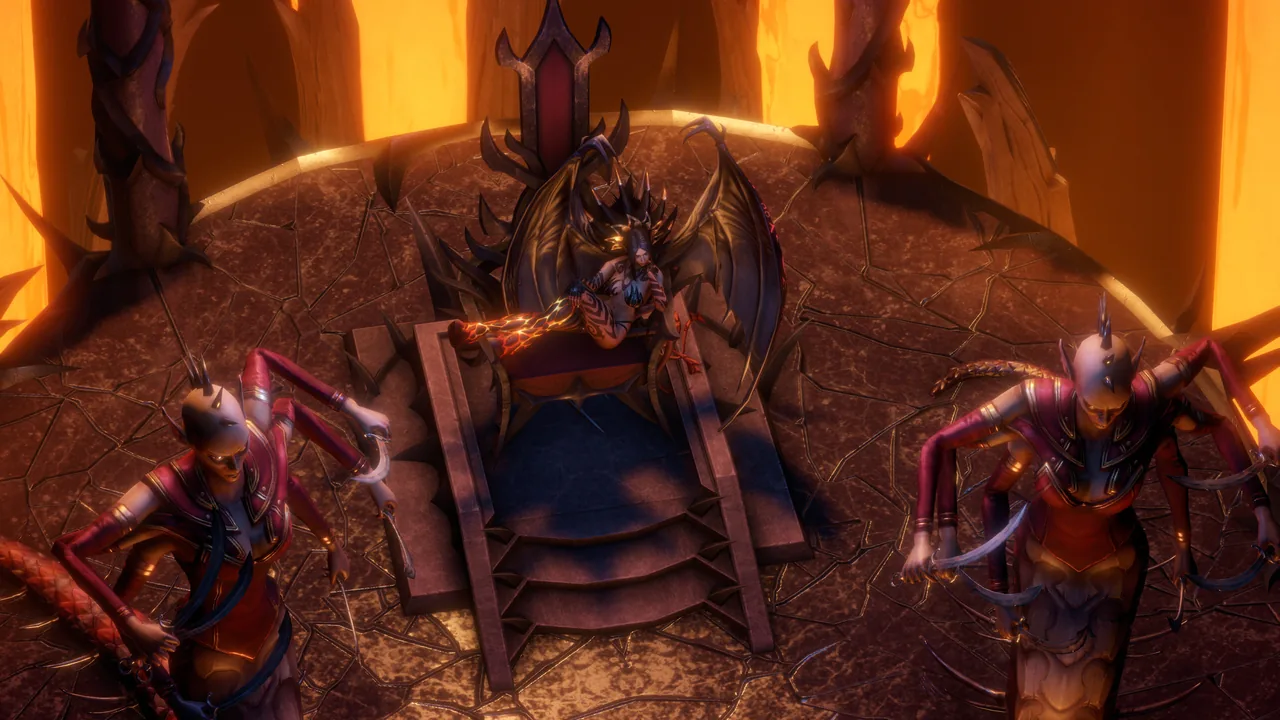
Pathfinder: Wrath of the Righteous - Enhanced EditionImage: META Publishing via Steam -
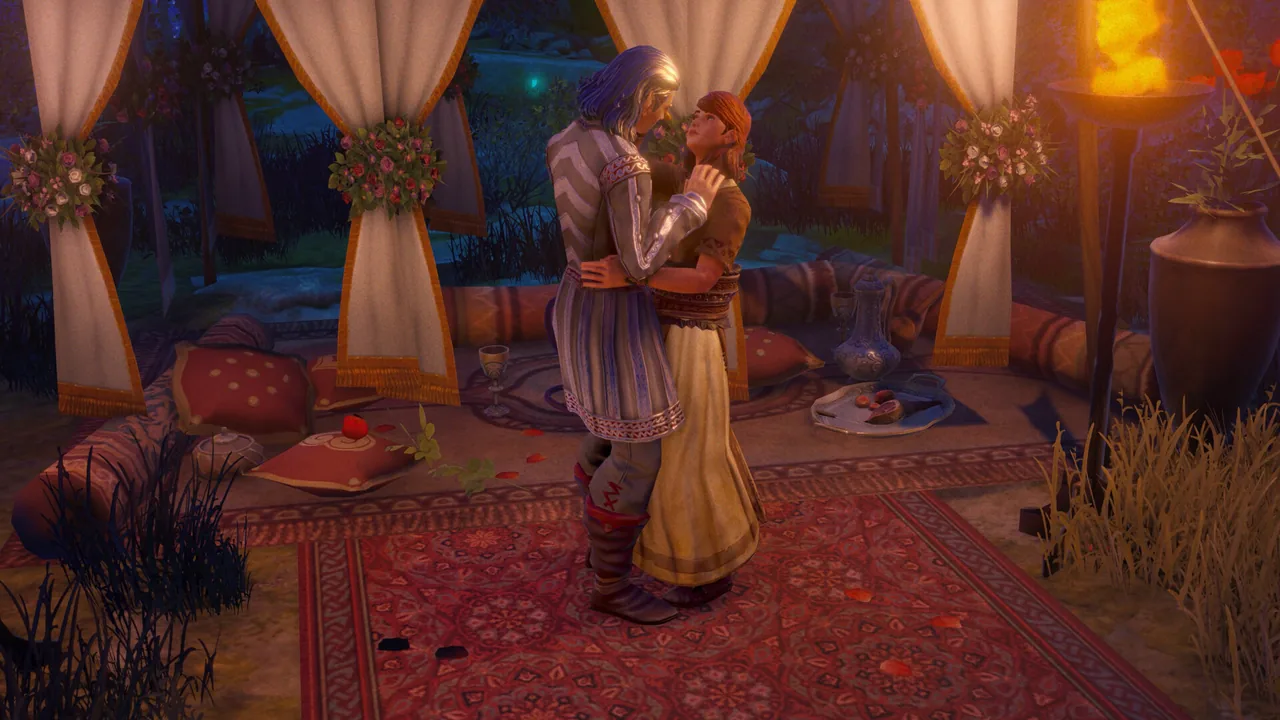
Pathfinder: Wrath of the Righteous - Enhanced EditionImage: META Publishing via Steam -
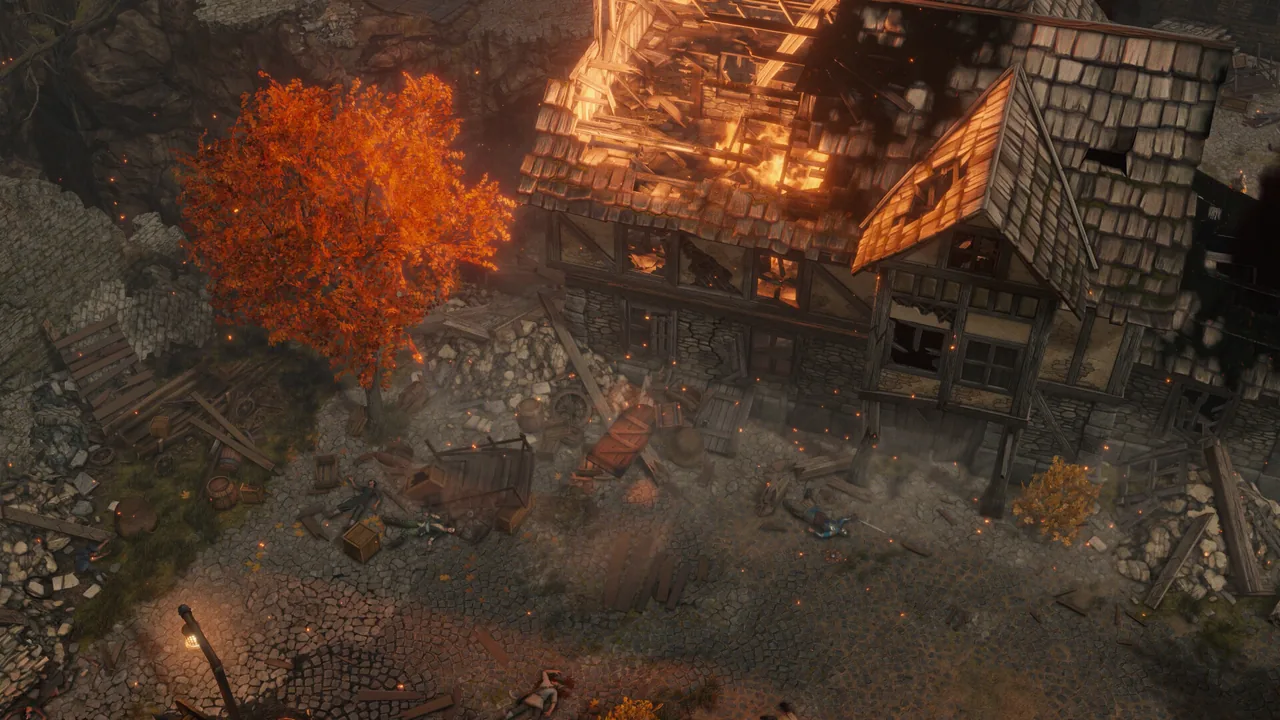
Pathfinder: Wrath of the Righteous - Enhanced EditionImage: META Publishing via Steam -
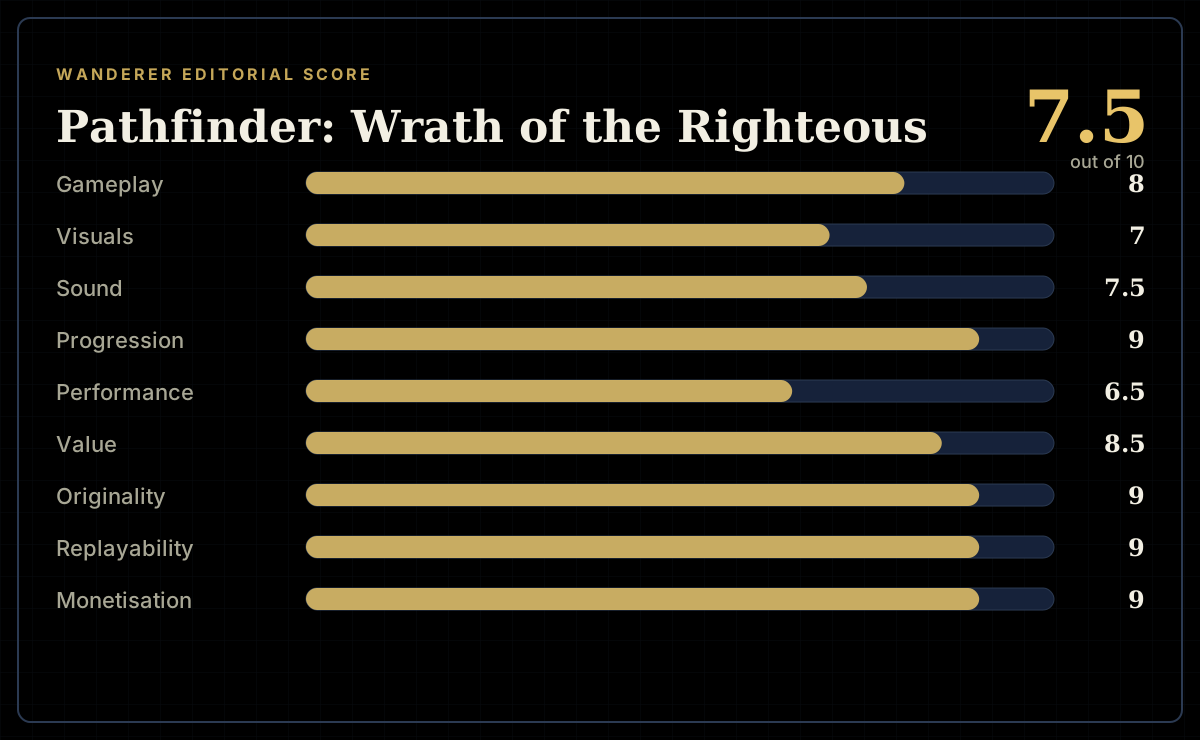
How the review scores each part of the gameWanderer Editorial -
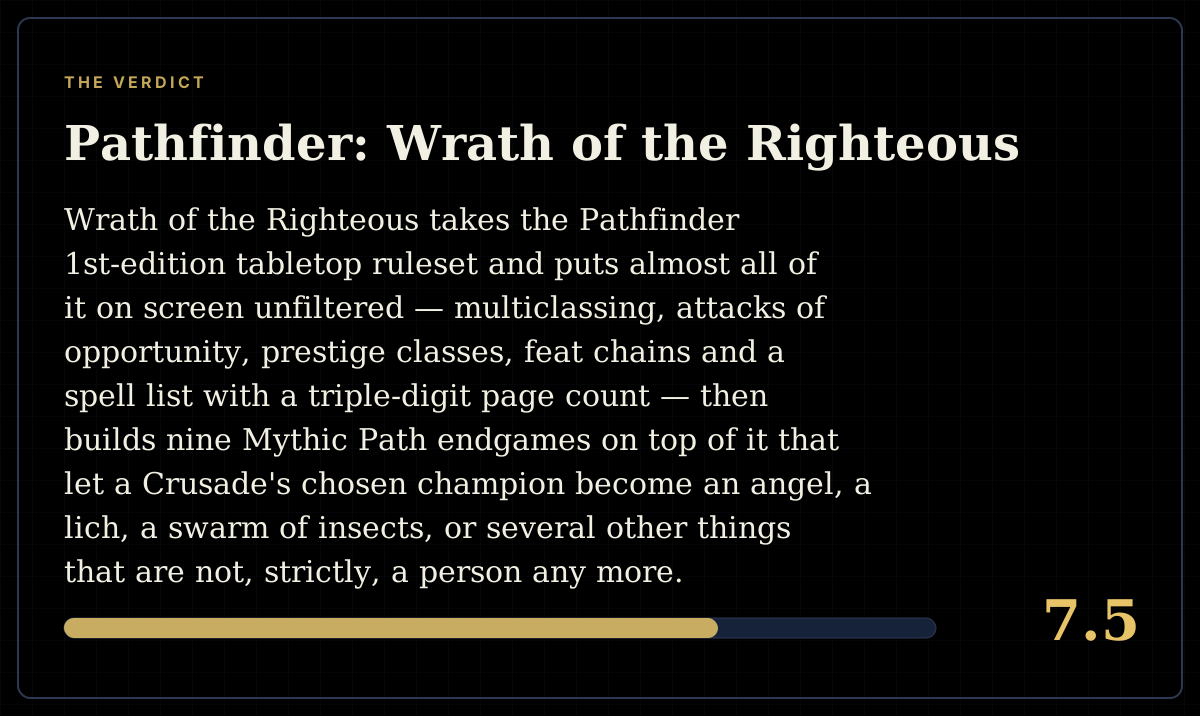
The short versionWanderer Editorial