Game review
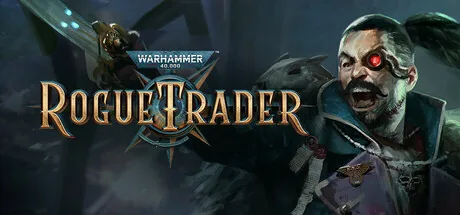
Warhammer 40,000: Rogue Trader
7.5 / 10
- Developer
- Owlcat Games
- Publisher
- Owlcat Games
- Released
- 7 December 2023
- Platforms
- Windows, macOS, PlayStation 5, Xbox Series X|S
- Genre
- CRPG / Tactical RPG
- Monetisation
- Premium, one-off purchase. Nine paid add-ons exist on Steam beyond the base game: three narrative expansions of roughly 15 hours each, two Season Pass bundles that discount those expansions together, two cosmetic packs (Deluxe and Voidfarer), a hairstyle and augmetic Appearance Pack, and one free crossover weapon (The Shovel, a Warhammer 40,000: Darktide tie-in). None of it is required to finish the base campaign, and there is no premium currency, loot box or live-service system anywhere in the package
- Players
- None for actual play. The Steam listing carries Co-op and Cross-Platform Multiplayer category tags left over from an early ambition, but Rogue Trader ships and plays as a single-player-only campaign with no functioning multiplayer mode
The short version
Rogue Trader takes everything Owlcat learned building two Pathfinder CRPGs and points it at Warhammer 40,000 instead, and the fit is better than it has any right to be: a career system built from fourteen Archetypes across three power tiers turns a competent gunslinger into something closer to a demigod by the final act, and the turn-based combat's Momentum bar gives every fight its own rising and falling tension. None of that changes what shipped in December 2023 — a game riddled with broken quests, stuck cutscenes and a final act that buckles under its own systems. Two years of patching have fixed most of the former. The latter is still just bad pacing, no patch required.
The Infinite Museion, released this June, is proof Owlcat is still actively building this game rather than just maintaining it, which matters more than usual for a CRPG whose reputation was made and then partly unmade in its first few weeks on sale.
Biggest strengths
- The three-tier Archetype system (Tier 1 to level 15, Tier 2 to 35, the universal Exemplar tier to 55) makes the back half of a build feel genuinely different from the front half, not just bigger numbers
- The Momentum bar ties every Heroic Act and Desperate Measure to the actual state of a fight, so build-defining abilities feel earned rather than handed out on a cooldown timer
- Companions each commit to their own reading of the Imperium, and most of them will openly disapprove of a Lord Captain who doesn't share it
Biggest weaknesses
- Act three noticeably buckles: pacing slows to a crawl, boss encounters lean on inflated stat blocks rather than new tactics, and outcomes here quietly depend on choices made in Act two with no warning at the time
- Launch-week Rogue Trader shipped with quest-blocking bugs, stuck cutscenes and broken abilities severe enough to derail entire playthroughs; most of that is now fixed, but it took the better part of a year of patches to get there
- Large encounters still stutter and hitch on capable hardware, particularly once several companions, familiars and status effects are active on screen at once
Who it's for: CRPG players who want a genuinely alien setting and a character system with real mechanical depth, and who are prepared to fight through some UI friction and a rocky third act to get the most out of both.
Our recommendation: NZ$69.99 for a 60-to-100-hour campaign that is considerably more stable today than the one that launched, plus three substantial paid expansions if the base game lands. Full price is defensible for the genre's core audience; anyone allergic to jank should wait for a sale and expect the interface, not the story, to be the sticking point.
7.5 / 10
Most CRPGs let a character get stronger. Rogue Trader lets one stop being a person the game's own mechanics still fully agree is human. Push a Soldier or an Officer far enough up the Archetype tree and by the game's third power tier — the Exemplar, a class every build eventually funnels into regardless of where it started — a Lord Captain is dodging attacks that should kill them, turning a losing fight around with a single Momentum-fuelled ability, and making Imperial law itself bend around a decision made three chapters earlier. That's the promise of the character system, and for the most part it delivers on it. Getting there means living with a launch reputation this game earned honestly, and a third act that still hasn't fully recovered from its own ambition.
What this actually is
Rogue Trader is Owlcat's first Warhammer 40,000 game, built with Games Workshop's direct involvement, and it swaps the studio's usual fantasy trappings for one of the least newcomer-friendly settings in genre fiction and somehow makes that a selling point rather than a barrier. You play a Rogue Trader — a dynastic warrant-holder answerable to almost nobody, free to raid, trade, colonise and crusade across the barely-charted Koronus Expanse in the God-Emperor's name, so long as the profit keeps flowing back to the Imperium. That premise does real narrative work: unlike a Pathfinder party of adventurers, this cast has actual institutional power, and the game spends its whole runtime asking what a person does with it. A newcomer to 40K doesn't need the lore appendix to follow this; the game front-loads enough about faith, xenos and the Imperium's grinding bureaucracy to make sense of every choice as it comes, and the specifics matter less than the fact that virtually everything here — including your own crew — has an opinion about how you wield the power you've been handed.
A career system built to compound
Character building runs on fourteen Archetypes split across three tiers. A Tier 1 Archetype — Soldier, Officer, Operative and others — governs levels 1 through 15 and sets the base stats and early kit a character leans on. At level 16, that Archetype unlocks a specific set of Tier 2 options: a Soldier or Operative can advance into Master Tactician, for instance, while Operative or Officer opens the path to Arch-Militant, a generalist who becomes competent with essentially every weapon type in the game. Tier 2 runs to level 35, at which point every build — regardless of what came before it — funnels into Exemplar, the single Tier 3 Archetype that carries a character from 36 to the level cap at 55.
That structure is the game's best idea and its most quietly dishonest piece of marketing. It isn't multiclassing in the Pathfinder or D&D sense — there's no mixing two active class kits at once — but the effect on a long playthrough is similar in the way it matters: what your Lord Captain does in combat at level 50 shares almost nothing with what they did at level 10, because two entire prerequisite Archetypes' worth of talents, feats and passive bonuses are all still active and stacking underneath the current one. The absurd late-game power the genre's audience shows up for is genuinely here, and it's built from choices made across the whole campaign rather than handed out in one late-game power spike. The cost is that the game explains almost none of the actual prerequisite chain up front — a player picking a Tier 1 Archetype at character creation has no in-game way of knowing which Tier 2 options it opens sixteen levels later, which turns build planning into a wiki exercise for anyone who wants to commit to a specific endgame rather than discover it by accident.
Momentum, Heroic Acts and why turns feel like turns
Combat is fully turn-based, built on cover, positioning and action economy in the way this genre's audience expects, but the system that actually makes fights memorable is Momentum: a shared bar that starts every encounter at 100 out of a possible 200, climbs when your side lands hits or kills, and drains when your characters take damage or go down. Cross 175 and a character can unleash a Heroic Act — a build-defining ability tied to their specific Archetype, at an escalating Momentum cost each time it's used in the same fight. Drop below 25 instead and the same character can pull a Desperate Measure: mechanically similar to their Heroic Act, but with a real drawback attached, usable only because things have gone badly enough to justify it.
That's a smarter version of an "ultimate ability" than most tactical RPGs bother building, because it ties the biggest moments in a fight to the actual state of that fight rather than a cooldown timer ticking down in the background. A battle that's going well builds toward a Heroic Act that closes it out; a battle that's going badly opens up a genuinely different, riskier tool instead of just losing. It gives even a mid-level, unremarkable fight a shape — rising, falling, a turn where the bar tips one way or the other — that most turn-based combat in this genre doesn't bother to build in. The trade-off is legibility: with several companions, familiars and status effects active simultaneously, tracking whose Momentum-fuelled ability is about to come online, and what it actually does, is left almost entirely to tooltips the game expects you to have already read and memorised.
Conviction, and companions who actually disagree with you
Alongside the mechanical build, every major choice nudges a separate axis: Iconoclast (individual life matters more than Imperial doctrine), Dogmatic (the Imperium's law is the only thing holding the Expanse together) or Heretical (an active embrace of the Ruinous Powers). This isn't cosmetic dialogue flavour — conviction thresholds gate entire talent trees, companion approval, and which of the game's competing factions will actually work with you, and most companions commit hard to one lane and will say so when a Lord Captain strays from it. Only one companion in the base roster tolerates a Heretical playthrough at all, which makes going that route feel appropriately isolating rather than just another dialogue-wheel option with no real cost. That's the kind of choice-and-consequence design this genre talks about constantly and rarely commits to as visibly as this game does.
Companions, the ship, and the colony you're stuck running
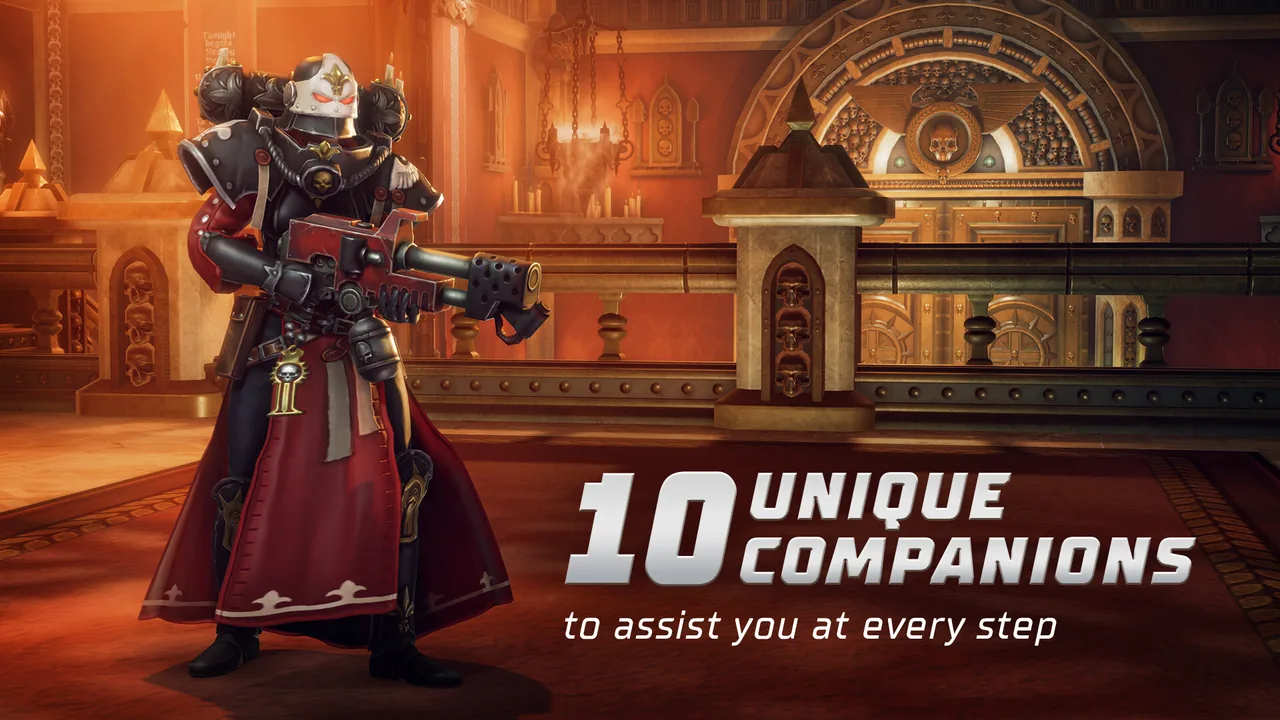
The companion writing holds up its end of a long campaign — Kibellah the death cult assassin and Solomorne Anthar of the Adeptus Arbites, both added in the story expansions, sit comfortably alongside the base roster rather than reading as bolted-on DLC content. Where the game asks more of its own patience is everywhere outside combat and dialogue: the player's voidship is both a second combat system (turn-based ship-to-ship battles with their own upgrade economy) and a literal home base with decks to explore, crew to manage and a bridge that fills up with new officers as the story progresses, and a colony-management layer sits on top of that again. None of it is poorly designed in isolation. Stacked together — ship upgrades, colony output, companion approval tracks, three convictions, and a fourteen-Archetype build space — it's an enormous amount of simultaneous system to keep straight, and the game's interface does very little to help. Menus rarely explain why a number changed or what unlocked a new option; a player is expected to notice, or look it up.
What launched, and what it took to fix it
It's worth being direct about the game's first weeks on sale, because the current, patched build is a meaningfully different experience from the one critics reviewed in December 2023. Rogue Trader launched with quest lines that could silently break and stop progressing, cutscenes that got stuck and required a reload to clear, abilities and items that didn't function as described, and stability problems that got measurably worse the deeper into the campaign a player got — Act three and beyond saw a real spike in crashes on top of everything else. Console versions had it harder still, with memory-related crashes and performance problems significant enough that Owlcat shipped a dedicated console-optimisation patch within weeks of release. None of that is speculation or an isolated complaint; it's the consistent shape of the game's launch-week reputation, and it's a large part of why critic scores landed in the high-70s to low-80s range rather than higher — OpenCritic's aggregate sits at 75 from 63 outlets, with 73% recommending it, a solid but hardly unanimous reception for a game this ambitious.
Two years on, most of that specific list is fixed. Owlcat kept a steady patch cadence through early 2024 addressing exactly the broken quests, stuck cutscenes and non-functional talents players were reporting, and the game has kept receiving substantial free updates and paid story content since — three narrative expansions between September 2024 and June 2026, most recently The Infinite Museion. The current Very Positive standing on Steam, built from close to 47,000 reviews accumulated over more than two years rather than a launch-week snapshot, reflects that longer track record. What patching hasn't fixed, because it isn't a bug, is Act three's pacing: even now, the general player consensus is that the third act meaningfully sags compared to the first two, leaning on bloated boss stat blocks in place of new tactical wrinkles and hinging outcomes on Act two choices the game never signals are load-bearing at the time you make them. Performance in the biggest encounters — multiple companions, familiars and stacked status effects all resolving at once — still produces real stuttering on capable hardware. This is a considerably more finished game than the one that shipped. It is not a fully solved one.
What it costs, and what you get for it
The base game is NZ$69.99 on Steam with no discount currently active — full asking price for the genre, and worth weighing against the fact that a 60-to-100-hour campaign is the baseline expectation before touching any add-on. Three story expansions exist so far — Void Shadows (voidship intrigue and a Genestealer Cult threat from within your own crew), Lex Imperialis (the Adeptus Arbites and the grim mechanics of the Imperial Tithe), and The Infinite Museion (a vault curated by the Necron collector Trazyn the Infinite, plus a new augmetic-implant system) — each roughly 15 hours and NZ$26.29 individually, or bundled in pairs through Season Pass and Season Pass 2 at NZ$39.99 each. A fourth expansion, Processional of the Damned, is confirmed as part of Season Pass 2's bundle but hadn't reached its own standalone Steam listing as of this writing. Beyond the story content, a Deluxe Pack (artbook, soundtrack, a handful of unique starting items, NZ$21.99), a small Voidfarer cosmetic pack (NZ$6.99) and a free hairstyle and augmetic Appearance Pack round out the cosmetic side. One DLC — a crossover Sapper Shovel melee weapon tied to Owlcat's collaboration with Fatshark's Warhammer 40,000: Darktide — is free to everyone. None of the paid content gates story progress or sells power outright; it's all additional campaign, not a toll on the base one.
Verdict
Rogue Trader earns its ambition. The Archetype system genuinely reshapes how a character plays across a full campaign rather than just inflating numbers, Momentum gives turn-based combat a rhythm most tactical RPGs never bother building, and the conviction system makes faith, xenos policy and Imperial law feel like real choices with a real cost attached, largely because your own companions will tell you so. None of that erases what shipped in December 2023, and it shouldn't: a launch this broken is part of the honest story of this game, not a footnote to it, even if two years of patching have fixed the specific bugs that made headlines at the time. Act three's pacing problems were never a bug to begin with, and they're still there. So is an interface that explains almost nothing about the enormous pile of systems it's asking you to run at once.
What's left after all of that is a genuinely major CRPG, built by a studio whose pattern by now is plain — Owlcat ships ambitious and rough, then spends years proving it, the way it did with Pathfinder: Wrath of the Righteous before this. The setting is used well enough that a player who's never touched a tabletop or a Space Marine novel can follow every beat of it. Anyone who wants a demigod-building career system and is willing to fight through some UI friction and a slow final act to get there is well served at full price. Players who bounce hard off jank, or who want their third act to match the quality of their first two, should let the patches and the sale price keep doing their work a while longer first. Wanderer players who like a long game that keeps handing them a reason to log back in will recognise the shape of what keeps Rogue Trader's Steam numbers climbing more than two years after launch — that's what steady, patched-in content does for a game's tail, on any platform.
Price, Steam review data and the DLC list checked 30 July 2026.
Pros and cons
Pros
- The three-tier Archetype system (Tier 1 to level 15, Tier 2 to 35, the universal Exemplar tier to 55) makes the back half of a build feel genuinely different from the front half, not just bigger numbers
- The Momentum bar ties every Heroic Act and Desperate Measure to the actual state of a fight, so build-defining abilities feel earned rather than handed out on a cooldown timer
- Companions each commit to their own reading of the Imperium, and most of them will openly disapprove of a Lord Captain who doesn't share it
- The setting is used as more than backdrop — Imperial faith, xenos hatred and the samples of grimdark bureaucracy the tabletop lore is built on all show up as actual choices with actual consequences
- Void combat and the ship itself give the game a second combat layer and a home base that keeps evolving instead of sitting static between story beats
- The Infinite Museion (June 2026) shows Owlcat is still adding real content years after launch, not just patching a finished product
Cons
- Act three noticeably buckles: pacing slows to a crawl, boss encounters lean on inflated stat blocks rather than new tactics, and outcomes here quietly depend on choices made in Act two with no warning at the time
- Launch-week Rogue Trader shipped with quest-blocking bugs, stuck cutscenes and broken abilities severe enough to derail entire playthroughs; most of that is now fixed, but it took the better part of a year of patches to get there
- Large encounters still stutter and hitch on capable hardware, particularly once several companions, familiars and status effects are active on screen at once
- The game rarely explains its own systems clearly — Archetype prerequisites, conviction thresholds and the colony/ship-upgrade economy are all left for the player to reverse-engineer or look up
- The ship and colony management layer between story chapters adds real depth but also real busywork, and offers no way to meaningfully delegate it
- Two Steam multiplayer category tags on the store page (Co-op, Cross-Platform Multiplayer) describe a feature that doesn't actually exist in the shipped game
Screenshots
-
Warhammer 40,000: Rogue TraderImage: Owlcat Games via Steam -
Warhammer 40,000: Rogue TraderImage: Owlcat Games via Steam -
Warhammer 40,000: Rogue TraderImage: Owlcat Games via Steam -
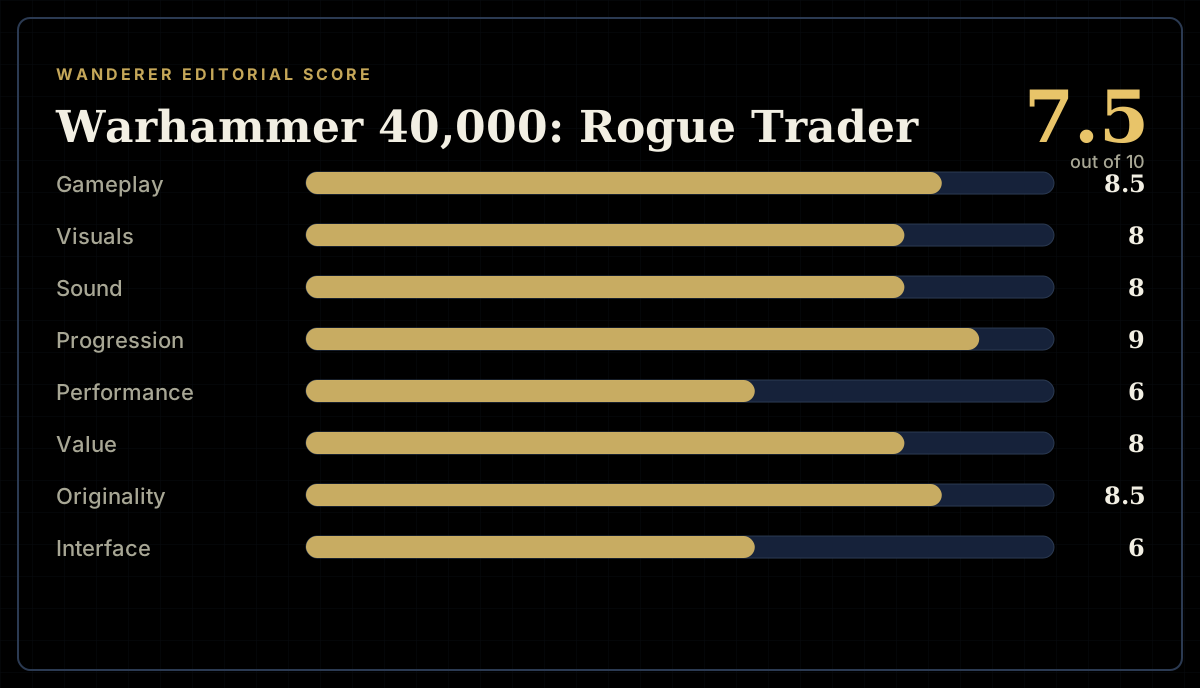
How the review scores each part of the gameWanderer Editorial -
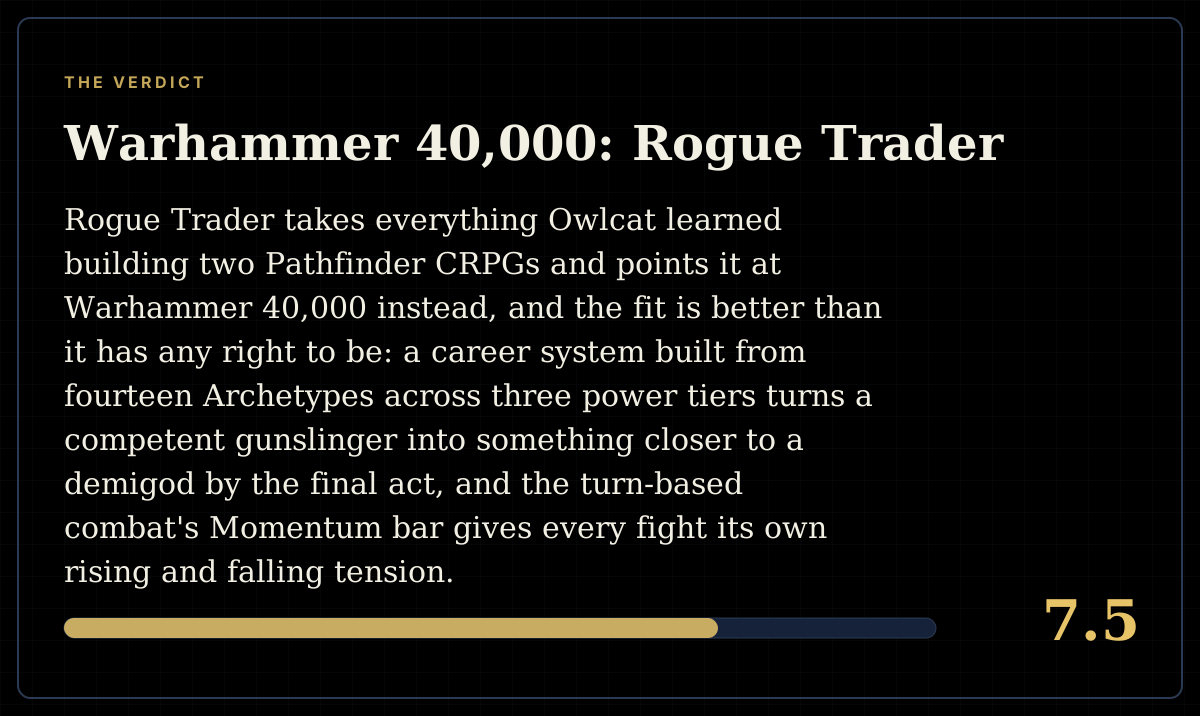
The short versionWanderer Editorial