Game review
Diablo IV
7.5 / 10
- Developer
- Blizzard Entertainment
- Publisher
- Blizzard Entertainment
- Released
- 6 June 2023
- Platforms
- Windows, PlayStation 5, PlayStation 4, Xbox Series X|S, Xbox One
- Genre
- Action RPG
- Monetisation
- Premium purchase, plus two paid expansions (bundled cheaper together than bought apart), a repeating cosmetic-only Battle Pass roughly every three months, and a separate Platinum-currency cosmetic shop — no purchasable stat upgrades of any kind
- Players
- Online co-op up to four players, shared open-world zones, dedicated PvP zone (Fields of Hatred); always-online with no offline mode
The short version
Diablo IV in its current, twice-expanded state is a substantially better game than the one that launched in 2023 — its combat was always excellent, and its itemization has gone from the seasonal biggest complaint to one of its genuine strengths since the Loot Reborn overhaul. Lord of Hatred adds two classes with real identity and a competent third chapter to the Mephisto story, and the endgame now has more systems worth running than most players will ever clear in a season.
None of that is free, in either sense of the word. The seasonal model means a fresh build and a relearning curve every three months, recent itemization changes around Mythic uniques have reopened old grind complaints, and the store pricing has a genuine trap in it for anyone who already owns the base game and only wants one expansion. It's a very good action RPG that asks more of returning players than it used to.
Biggest strengths
- Combat still feels like the best moment-to-moment click of any current-generation ARPG, five classes in or nine
- Tempering and Masterworking turned itemization from a slot machine into a system you can actually plan around
- The Age of Hatred Collection bundles the base game and both expansions for barely more than the base game alone
Biggest weaknesses
- Existing base-game owners pay the full collection price to add just Vessel of Hatred, which punishes anyone who bought early
- Every season still asks for a fresh seasonal character, and returning after a break means relearning whatever itemization or balance changed while you were gone
- Recent seasons' Mythic unique drop rates have drawn sustained player complaints for demanding more grind than the payoff justifies
Who it's for: Action RPG players who want the deepest endgame in the genre and don't mind a live service rhythm; less suited to anyone who wants to buy once, finish a campaign and be done.
Our recommendation: Worth buying now via the Age of Hatred Collection if you're new to the series — it's the best value the game has offered since launch. Returning players should budget for the Mythic grind before diving back in, and existing owners eyeing just one expansion should check the bundle price before buying it standalone.
7.5 / 10
Diablo IV is no longer the game that launched in June 2023, and that's really the whole review. Two paid expansions, something like a dozen quarterly seasons, one genuinely franchise-saving itemization rework and a class roster that's grown from five to nine later, this is a substantially different game wearing the same box art. It's also, inevitably, a live-service machine that now asks a lot more of anyone trying to stay current with it than it did in year one.
That's the tension worth writing about. The moment-to-moment game was never really the problem — Blizzard has been making things feel good to hit for three decades, and Diablo IV never lost that. What was broken at launch, and what has since been rebuilt almost from scratch, is everything around the hitting: the loot, the endgame structure, and now the pricing and pacing of a game that expects you to keep showing up.
The combat still doesn't need fixing
Barbarian's four-weapon stance-switching, Sorcerer's enchantment slots, Necromancer's minion army, Rogue's imbuement combos, Druid's shapeshifting — the original five classes each play like a distinct fantasy rather than a reskinned generic kit, and that hasn't changed. What has changed is the roster around them. Vessel of Hatred's Spiritborn brought a genuinely new rhythm built around animal-spirit stances and rapid melee chaining, and Lord of Hatred's Paladin and Warlock continue that trend rather than just filling gaps on a class-select screen. Paladin leans into holy-damage tanking with an aura-and-block identity that none of the launch classes really touched, and Warlock reintroduces the pet-and-curse fantasy longtime Diablo players have wanted back since Diablo II's Necromancer covered that ground differently. Nine classes in, none of them feel like leftovers.
Where the series still shows its age is pacing at the very top end of a build. Diablo IV's power curve is generous early and steep late, and the game leans hard on stacking multipliers — the usual Diablo trap where a build either one-shots screens or feels sluggish, with a narrow band of "appropriately challenging" in between that most builds pass through quickly on the way to the former. That's a genre-wide problem, not a Diablo IV problem specifically, but it's fair to note the game hasn't solved it any better than its competitors have.
Itemization after Loot Reborn — and after Mythics
If you played Diablo IV at launch and bounced off it, itemization is almost certainly why, and itemization is also the single biggest thing that's actually improved since. The original system buried players in near-identical yellow items with randomized, largely uncontrollable affixes — the classic "slot machine" loot problem the genre has fought since Diablo II. The Loot Reborn overhaul rebuilt this from the ground up: drop volume went down sharply, item power went up, and two new systems — Tempering (rerolling in specific affixes rather than hoping for them) and account-wide Masterworking (a bounded, resettable upgrade path per item) — gave players actual levers to pull instead of a slot machine to feed. It remains, two years on, one of the best executed itemization reworks any live-service ARPG has shipped, and it changed the entire character of playing Diablo IV.
The current friction point sits one layer up, at Mythic uniques — the game's rarest item tier, now the primary long-term chase for a fully built character. Recent seasonal patches have adjusted how Mythics drop and how they're farmed, and a lot of currently active players consider the change a step backward: more than one recent review complains, in different words, about a grind that no longer feels proportionate to what it rewards, with the newest season's Realmwalker and Reaper encounters singled out as the current best (and by some accounts, still not great) routes to earn them. It's worth being precise about what this complaint actually is: it's not pay-to-win, since Mythics aren't purchasable, and it's not that the chase is unfun exactly — it's that the time investment required has crept upward faster than most players' patience for a seasonal reset has. That's a legitimate design complaint, and it's the reason itemization scores lower here than the underlying systems, on their own, would deserve.
An endgame with more systems than most seasons need
Diablo IV's endgame has grown, expansion by expansion, into one of the densest in the genre, and that's mostly to its credit. Helltides turn zones into timed, high-density farming events. Legion events and World Bosses are scheduled group content that doesn't require organizing a party in advance. Nightmare Dungeons remain the bread-and-butter difficulty-scaling loop. Infernal Hordes, added in an earlier season, layered a horde-survival mode with its own currency and reward track on top of all of that. Vessel of Hatred added the Realmwalker, a roaming world-boss-style event tied to the new Nahantu region, and the current season has redesigned that encounter again alongside a new "Ruptures" mechanic built around hunting a death cult.
The honest criticism here isn't that any one of these systems is weak — most of them are genuinely well made — it's that there are now enough of them that no single season asks a player to master all of it, and the game doesn't do a great job of telling a returning player which of its half-dozen endgame loops is actually the efficient one this season. The Pit remains the clean answer for "how strong is my build, precisely" — an endless-format pushed-depth dungeon that functions as Diablo IV's version of the greater-rift benchmark the genre has leaned on since Diablo III — and it's the single best piece of endgame design the game has. Everything else is optional flavour around it, which is good breadth and slightly muddled focus at the same time.
Lord of Hatred and the campaign question
Lord of Hatred continues the story Vessel of Hatred set up, moving the fight against Mephisto's resurgence to the Skovos Isles and giving the two new classes a proper introduction through the main quest rather than a side-loaded tutorial. As a campaign it's competent Blizzard storytelling — strong voice work, expensive-looking cinematics, a villain with actual presence — without ever quite recapturing the tonal weight of Lilith's story in the base game, which remains the series' high point for narrative ambition. That's a fair trade for most of the audience: expansion campaigns in a seasonal ARPG exist mostly to be played once and then skipped by everyone who reaches for the Skip Cutscene button on their sixth seasonal character, and Lord of Hatred does the job it needs to do in that role.
The more interesting question is what the expansion changes structurally, and the answer is mostly additive rather than transformative — two classes, a region, an endgame encounter refresh — rather than a rework on the scale of Loot Reborn. That's a reasonable choice for a franchise two expansions deep, but it means Lord of Hatred reads as a very good content drop rather than a reason on its own to come back if you'd already walked away from the game entirely.
What the seasonal loop actually asks of you
This is where Diablo IV's live-service shape matters most for anyone deciding whether to jump back in. Each season — roughly every three months — resets the seasonal realm, introduces a new mechanic or two, and asks players who want the full experience to roll a fresh seasonal character rather than continue on an existing one. Diablo IV has gotten genuinely fast at the early hours of this: levelling to endgame readiness now takes a fraction of the time it did at launch, thanks to accumulated quality-of-life passes to the campaign skip, world tiers and early XP curve. That's real, earned credit — a lot of live-service ARPGs never fix their own onboarding friction, and this one has.
What hasn't gotten easier is staying current on systems knowledge. A player who last logged in two seasons ago is coming back to changed Mythic drop logic, a reworked Realmwalker, whatever class balance patch landed most recently, and a Paragon board and Glyph system that's had small adjustments layered onto it repeatedly since launch. None of this is insurmountable — build guides from the community catch up within days of every patch — but it's a real cost in time and attention that the game asks of anyone who doesn't play every season, and it's worth being honest that "the seasonal loop" is, functionally, a part-time relationship the game expects you to maintain rather than a game you can put down for a year and pick back up unchanged.
Monetisation, line by line
This is the part of the review that matters most to anyone deciding whether to spend money here, so it's worth being precise rather than general.
The base game is US$49.99 on Steam. Blizzard also sells the Age of Hatred Collection — base game plus both Vessel of Hatred and Lord of Hatred — for US$69.99, which is an excellent price for three products and clearly the intended entry point for anyone new to the series. If you're starting today, that bundle is the correct purchase and one of the better value propositions in the genre right now.
The trap is on the other side of that bundle. Someone who already owns the base game and wants to add just Vessel of Hatred pays US$69.99 for the expansion alone on Steam — the exact same price as the entire three-product collection costs a brand-new player. Lord of Hatred by itself is a more reasonable US$39.99. In practice, this means an existing owner who wants both expansions piecemeal is looking at roughly US$110 on top of a game they already bought, when a new player gets everything for US$70 total. That's not an unusual live-service pricing pattern — bundling old content near-free to drive collection sales while pricing the standalone item as a soft nudge toward the bundle is a known playbook — but it's worth knowing before you buy pieces separately, because the maths only work in the buyer's favour one way.
On top of the purchase price sits the seasonal Battle Pass, which repeats roughly every three months alongside each new season. The free track gives cosmetics to any owner of the game. The paid Premium track costs around US$10 and unlocks additional tiers worth two full armor sets, a seasonal mount and matching mount armor. An Accelerated tier, roughly US$25, adds instant tier skips on top. None of it affects power — everything purchasable is cosmetic, and Blizzard has been consistent about that boundary since launch, which is genuinely to the game's credit next to plenty of mobile and free-to-play competitors this site covers. But "genuinely to its credit" and "free" are different things: a player who buys every season's Premium pass is looking at roughly US$40 a year indefinitely, on top of a separate Platinum-currency cosmetic shop selling individual sets and mounts outside the pass entirely. None of this is required to build a strong character. All of it is designed to feel like it should be bought anyway, which is the entire craft of a live-service cosmetic shop.
The fair summary: content pricing is genuinely good if you buy in the right order, power is never for sale, and the ongoing cosmetic layer is the real, if optional, cost of playing this game the way its most invested players do.
Player sentiment and the Steam score
Diablo IV's Steam rating currently sits at Mixed, with roughly 65% of 74,390 all-time reviews positive. Read that number with real context, not at face value: Steam is a minority platform for this game specifically, since the majority of the player base has always played through Battle.net, and a Steam-only review sample skews toward players motivated enough by a recent frustration to leave a review on a storefront they don't primarily use to launch the game. That doesn't make the sentiment worthless — the specific, recurring complaints in it (Mythic grind, the pricing structure above, occasional Steam Deck compatibility regressions after patches) are consistent with what's discussed elsewhere in the community — but treat the raw percentage as directional rather than representative of the wider player base's mood.
Verdict
Diablo IV in its current, twice-expanded state earns a genuinely different review than the one it would have earned at launch. The core act of playing it — the combat, now across nine classes instead of five — was always strong and remains so. The itemization system that used to be the game's biggest liability is now, after the Loot Reborn rework, one of the better-designed loot systems in the genre, even with legitimate current complaints about Mythic pacing. The endgame has more good ideas in it than most players will exhaust in a season, and Lord of Hatred is a competent, well-produced continuation rather than a disappointment.
What keeps this from scoring higher is entirely about what the game now asks of you to keep up with it: a seasonal relearning curve every three months, a genuine pricing trap for existing owners buying expansions piecemeal, and an ongoing cosmetic-shop rhythm that, while never pay-to-win, is clearly built to be an annual line item rather than a one-time purchase. None of that makes Diablo IV a bad game — it's a very good one, arguably the most systemically complete action RPG currently being actively supported — but it's a live-service relationship more than a finished product, and 7.5 reflects a game that rewards the players willing to stay in that relationship considerably more than it rewards the ones dropping in for a season and leaving.
Buy the Age of Hatred Collection if you're new. Budget for the Mythic grind and a few hours of patch-notes reading if you're coming back. And if you already own the base game and only want one expansion, check the bundle price before you buy it alone — it will very likely be cheaper to buy everything than to buy the one thing you actually wanted.
Players who'd rather their progression kept moving while they were away from the keyboard, rather than resetting every three months, may find Wanderer's own idle-driven loop a useful change of pace between Diablo IV seasons.
Pricing, season and expansion details checked 30 July 2026.
Pros and cons
Pros
- Combat still feels like the best moment-to-moment click of any current-generation ARPG, five classes in or nine
- Tempering and Masterworking turned itemization from a slot machine into a system you can actually plan around
- The Age of Hatred Collection bundles the base game and both expansions for barely more than the base game alone
- Cosmetic-only monetisation means nothing in the shop or the Battle Pass changes what your build can do
- Paladin and Warlock give the class roster real mechanical identity after years of five distinct-but-similar kits
- Endgame density — Helltides, Nightmare Dungeons, Infernal Hordes, The Pit — means there's always a next system to run, not one tower to climb
Cons
- Existing base-game owners pay the full collection price to add just Vessel of Hatred, which punishes anyone who bought early
- Every season still asks for a fresh seasonal character, and returning after a break means relearning whatever itemization or balance changed while you were gone
- Recent seasons' Mythic unique drop rates have drawn sustained player complaints for demanding more grind than the payoff justifies
- The Battle Pass repeats roughly every three months, so chasing every season's cosmetics is a genuine ongoing cost, not a one-off
- Steam sentiment sits at Mixed, and the negative reviews cluster tightly around the grind and pricing issues above
- The always-online requirement means there is still no offline mode for solo players, unlike several genre rivals
Screenshots
-
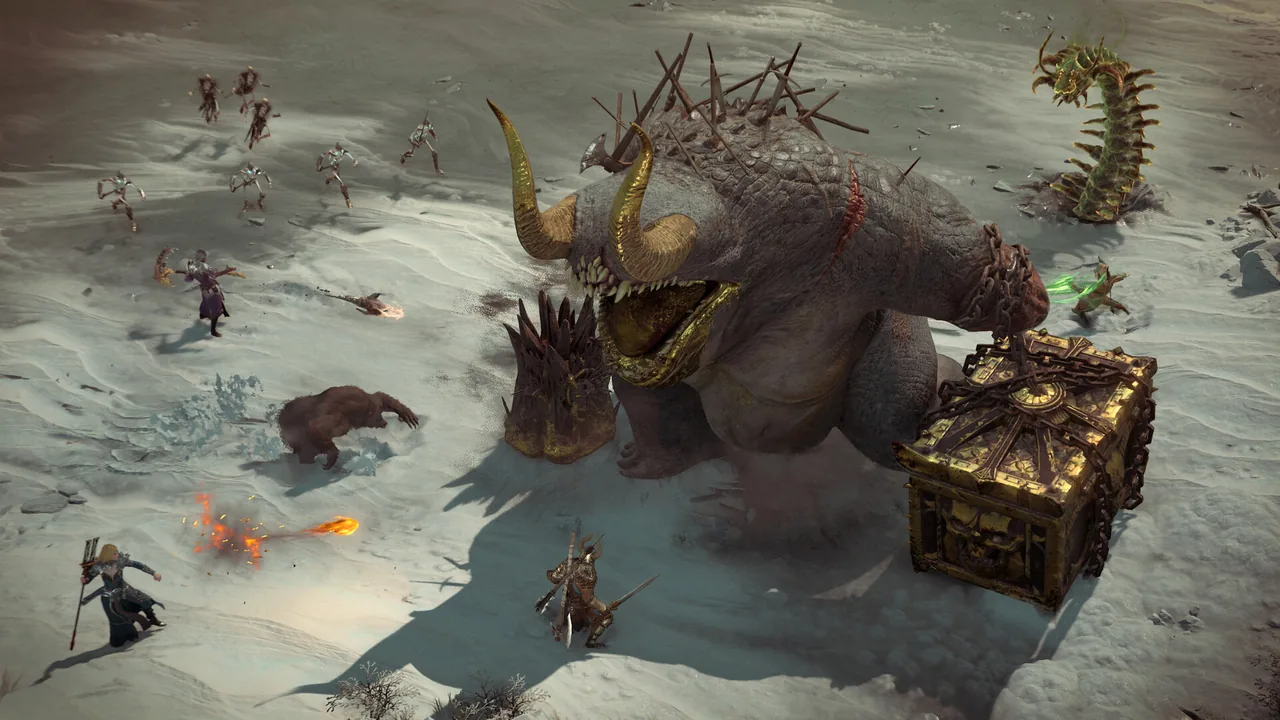
Diablo® IVImage: Blizzard Entertainment, Inc. via Steam -
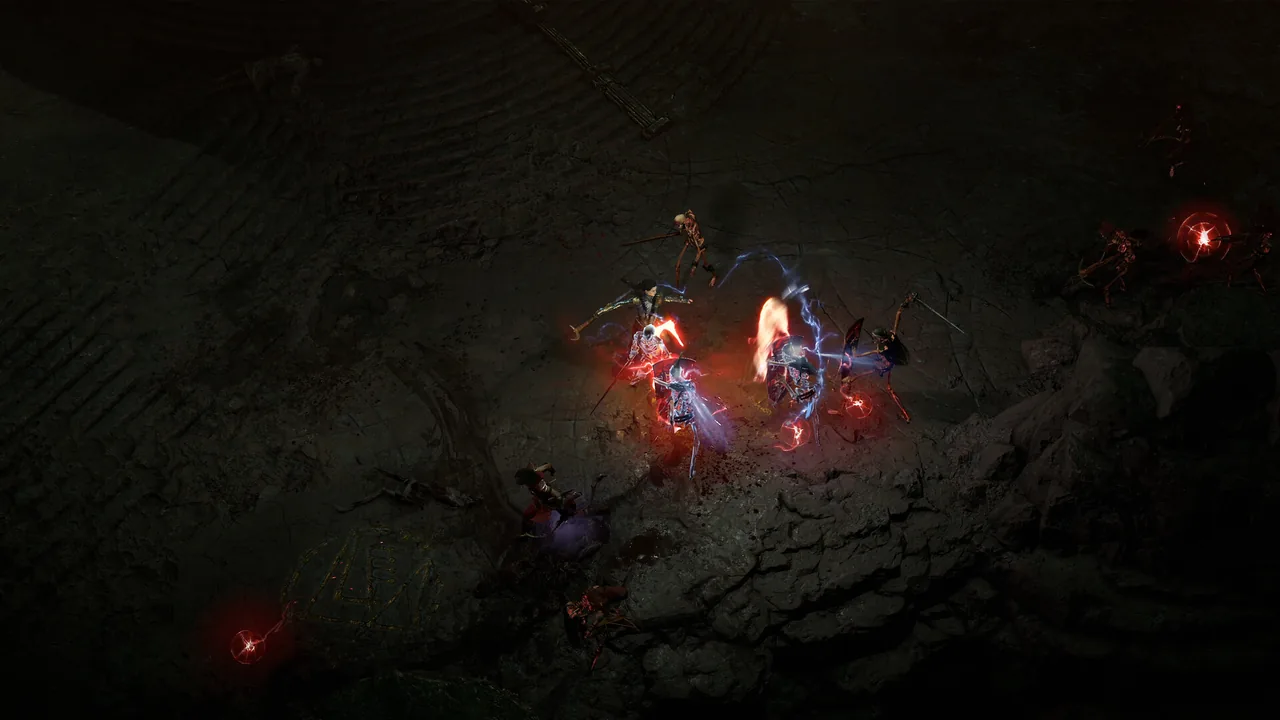
Diablo® IVImage: Blizzard Entertainment, Inc. via Steam -
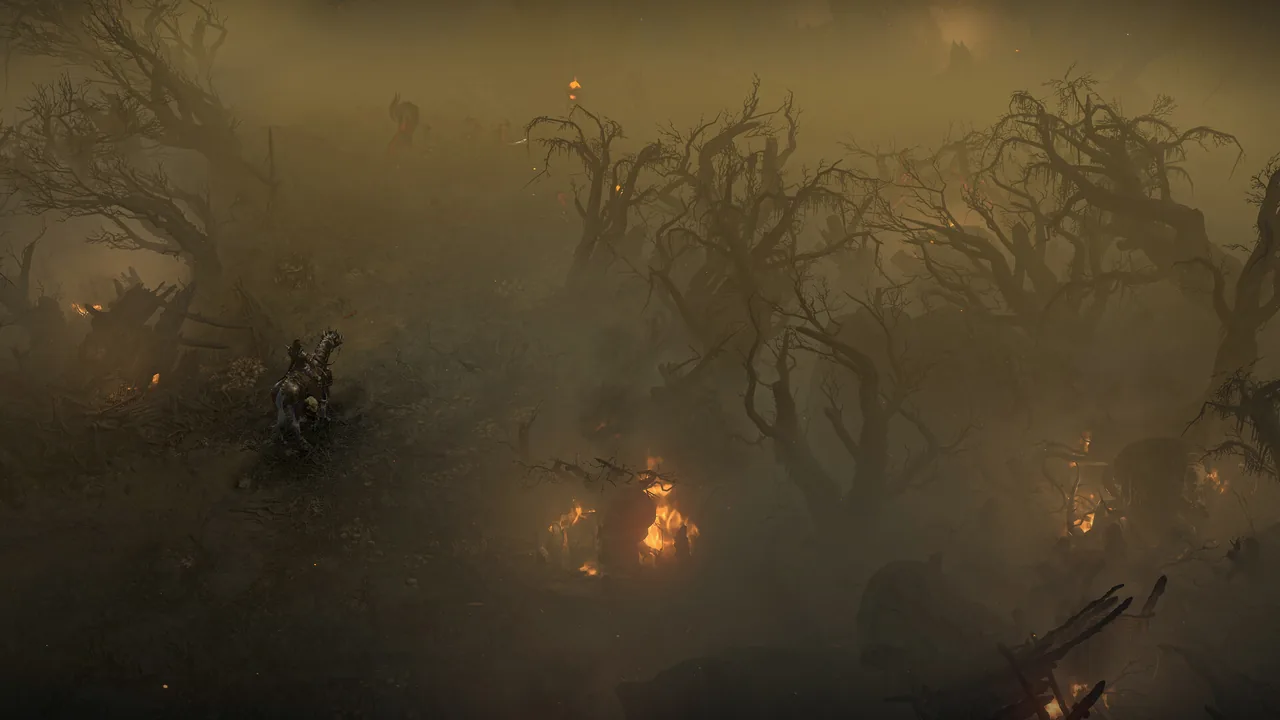
Diablo® IVImage: Blizzard Entertainment, Inc. via Steam -
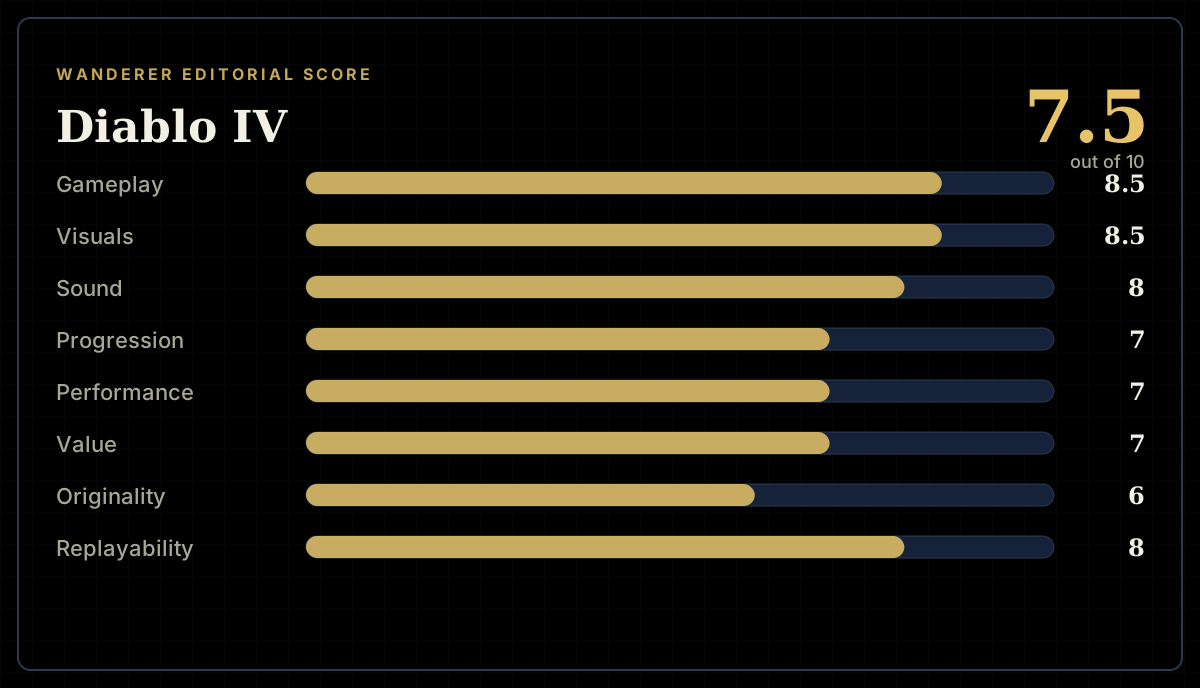
How the review scores each part of the gameWanderer Editorial -
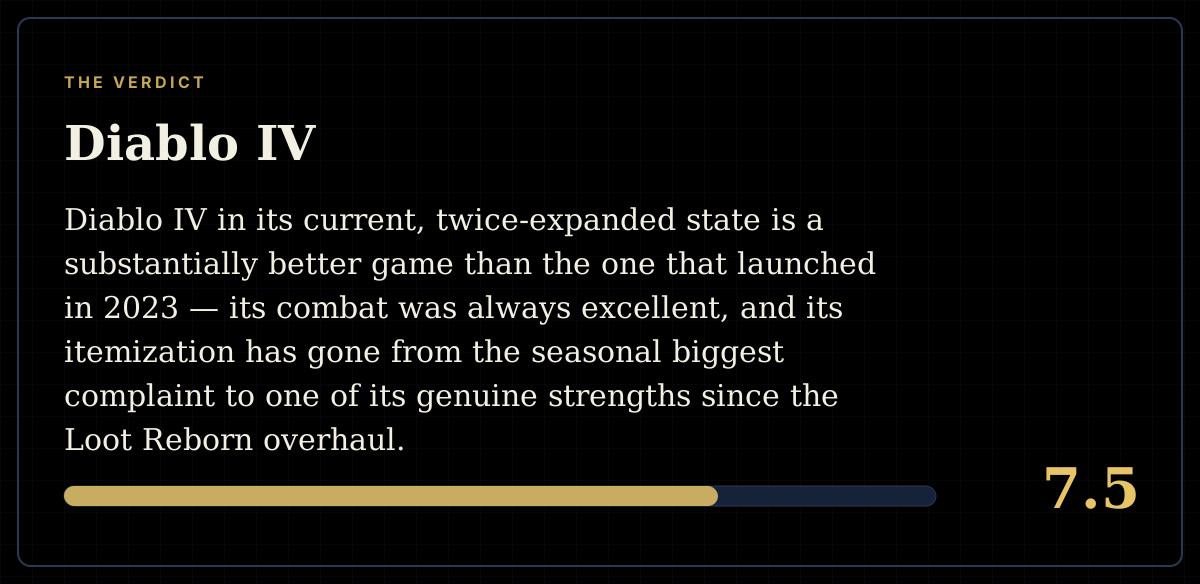
The short versionWanderer Editorial