Game review
Path of Exile 2
8 / 10
- Developer
- Grinding Gear Games
- Publisher
- Grinding Gear Games
- Released
- 6 December 2024
- Platforms
- Windows, PlayStation 5, Xbox Series X|S
- Genre
- Action RPG
- Monetisation
- Free-to-play at full release; during Early Access, entry requires a one-off supporter-pack purchase. Cosmetic microtransactions and premium stash tabs are sold with points shared across Path of Exile 1 and 2; Grinding Gear Games states the shop carries no power purchases
- Players
- Online co-op for up to six players, alongside solo play
The short version
Path of Exile 2 redesigned combat around deliberate, committed hits instead of the original game's screen-clearing sprint, then paired that with the deepest skill-gem and passive-tree rework the series has ever attempted. Four campaign acts already play like the best thing Grinding Gear Games has built. The endgame that's supposed to hold players for hundreds of hours afterward is still being substantially rewritten patch by patch, nineteen months into Early Access, with no confirmed date for when that stops being true.
It's a very good action RPG that is unmistakably not finished, sold today through a paid Early Access pack rather than the free-to-play storefront its box art promises.
Biggest strengths
- Skill gems can be slotted with support gems built for entirely different weapons, so a staff build can borrow a crossbow skill purely for its interaction
- The expanded passive tree's dual-specialization system lets one character carry two builds' worth of committed nodes
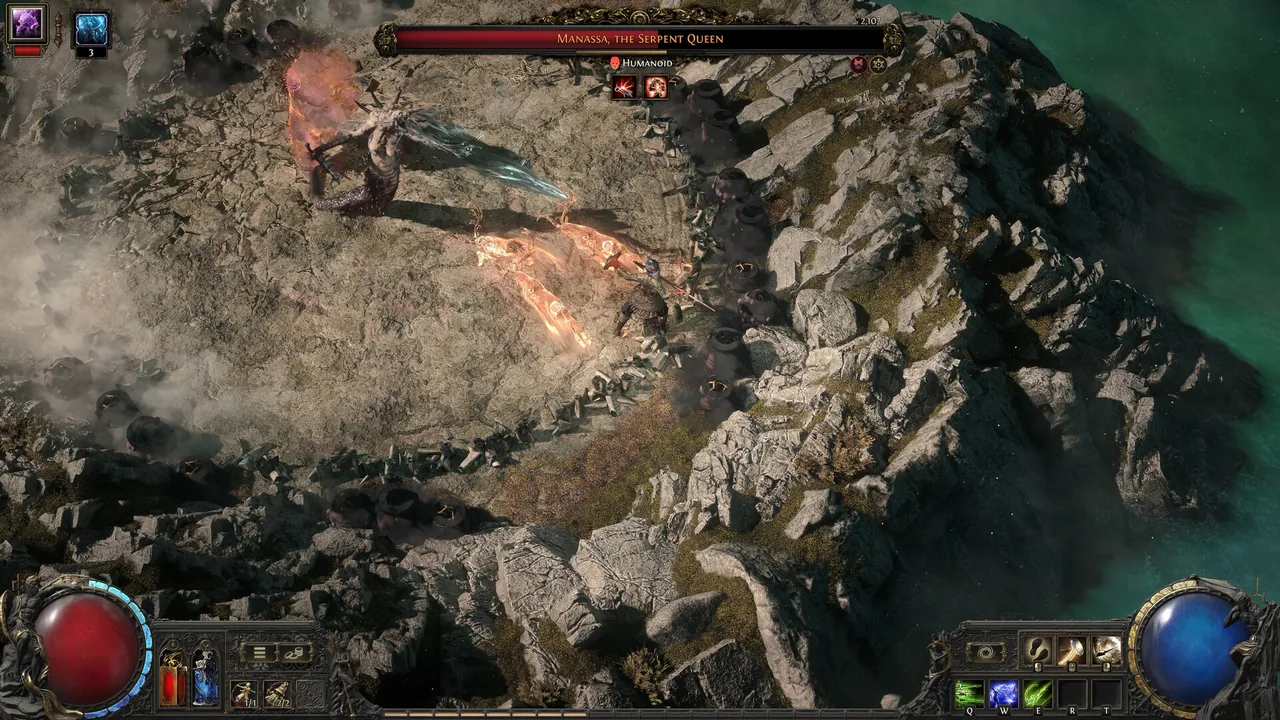
- Boss fights are staged like genuine set-pieces, with readable telegraphs that reward patience over panic
Biggest weaknesses
- The endgame has been substantially reworked in nearly every patch since May, which makes investing real time in a single league feel premature
- Entry to Early Access still requires buying a supporter pack, so the free-to-play pitch on the store page isn't actually true yet
- GGG's early insistence on slow, committed combat drew enough backlash that later patches walked large parts of it back, leaving the pacing feel inconsistent build to build
Who it's for: Series veterans curious whether the sequel earns its slower pace, and any action-RPG player who wants build variety measured in the thousands rather than dozens — but not anyone who wants a complete, stable game to sink a season into today.
Our recommendation: Worth buying into now only if you're comfortable treating Early Access as Early Access — expect league-to-league rebalancing, an endgame in flux, and features still missing. Players who want the finished article should watch for the 1.0 announcement instead of paying to preview it.
8 / 10
Grinding Gear Games spent a decade building Path of Exile into the action RPG genre's most trusted brand, then opened its sequel by asking the same players who made that happen to unlearn how they play. Path of Exile 1 rewards you for turning every fight into a blur — screen-filling area damage, movement speed stacked until the map itself becomes a formality, entire rooms of monsters gone before you've finished reading their names. Path of Exile 2 asks you to look at one enemy, read what it's about to do, and decide whether this is the hit you commit to. That single decision — slow the whole genre's most beloved fast game back down — is still the most interesting thing about it, and, in July 2026, still the thing the game hasn't fully settled on doing.
The deceleration, and the pullback from it
At its December 2024 Early Access launch, Path of Exile 2's combat was unmistakably a departure. Attacks had weight and commitment. A dodge roll actually mattered. Boss patterns were built to be read rather than melted, and early builds punished anyone who tried to play it like the original game with a new coat of paint. It was, by design, a slower, more methodical fight against fewer, more dangerous things — closer in spirit to a Souls game's encounter pacing than to an isometric loot-sprint.
That design pillar has not survived Early Access unchanged. Across the campaign expansions and league updates that followed — Huntress and the Third Edict's support-gem overhaul in 2025, the Druid's arrival that December, and the endgame reworks running through 2026 — a meaningful amount of community pressure pushed GGG to speed things back up: more movement speed available, denser monster packs in places, more forgiving early-game pacing. The result, reached patch by patch rather than by one clean redesign, is a game that still asks for commitment in its best encounters but no longer commits nearly as hard to that idea everywhere else. Whether that's a compromise or a course correction depends on which side of the original debate you were on, but either way it means the pacing you get depends noticeably on which build, which act and which patch you're playing — a harder thing to review cleanly than either extreme would have been.
What hasn't wavered is what makes the slower fights actually land: boss design. The current roster of act and league bosses stages real attack sequences rather than damage checks, with tells specific enough that dying to one twice in a row usually means you misread it, not that you were undergeared. That's the part of the "slow it down" thesis that was always going to be worth keeping, and it's the part GGG never walked back.
A tree redrawn, a gem shelf rebuilt
The bigger, less reversible change is underneath the combat feel: the entire build-crafting layer has been rebuilt from the socket grid up. Path of Exile 1's skills lived as gems slotted into colour-matched sockets on your gear, a system that worked but tied build identity to item colours as much as intent. Path of Exile 2 separates the two entirely — skills and their support gems are chosen and levelled independently of what you're wearing, on a passive tree that has grown toward two thousand nodes with a dual-specialization system letting a single character commit to two build directions worth of points at once, rather than forcing a second character to try the road not taken.
The skill-gem roster itself — currently in the low hundreds of active gems paired with roughly as many support gems — is where the sequel earns the "rebuilt from scratch" claim rather than just asserting it. Supports aren't generic damage multipliers stapled onto whatever you're casting; they're built to interact with specific skill categories, so a fire skill's gas cloud can be detonated by an unrelated ignite source, or a staff-wielding build can slot a support gem that only makes sense next to a totem or a minion, prompting weapon and skill combinations that wouldn't previously have shared a character. It's the single strongest argument for playing this over the original game right now: more decisions, spread across more moments, each one visibly changing how a fight plays rather than just how big a number gets.
The trade-off is legibility, at least for now. A build space this large, still being rebalanced league to league, is genuinely hard to plan around without outside tools or a guide, and newer players comparing this to Last Epoch's more readable specialization trees will feel the difference immediately — our Last Epoch review covers a system built specifically to solve the problem Path of Exile 2 has chosen to embrace instead. That's a legitimate design position, not a flaw by itself, but it does mean the depth on offer here asks more of a new player than most of its rivals do.
Four acts that already play like a finished game
Say what you will about the systems still in flux underneath it — the campaign wrapped around them is the best thing Grinding Gear Games has built. Wraeclast's current four acts (of a planned six) move through genuinely distinct environments with the kind of environmental storytelling and set-piece direction the original game's campaign never really attempted, backed by full voice acting and boss encounters that would be memorable in a full-price single-player release, let alone a free one. The pacing between story beats and mechanical introductions is handled with real care — new systems arrive when there's room to understand them, not all at once in the opening hour.
It's also, notably, the part of the game GGG has touched the least since launch relative to everything downstream of it. Act Four and its interludes arrived in the 0.3.0 update and have been comparatively stable since, which stands in sharp contrast to what happens the moment the credits roll on it.
An endgame that's still being rewritten under the players standing on it
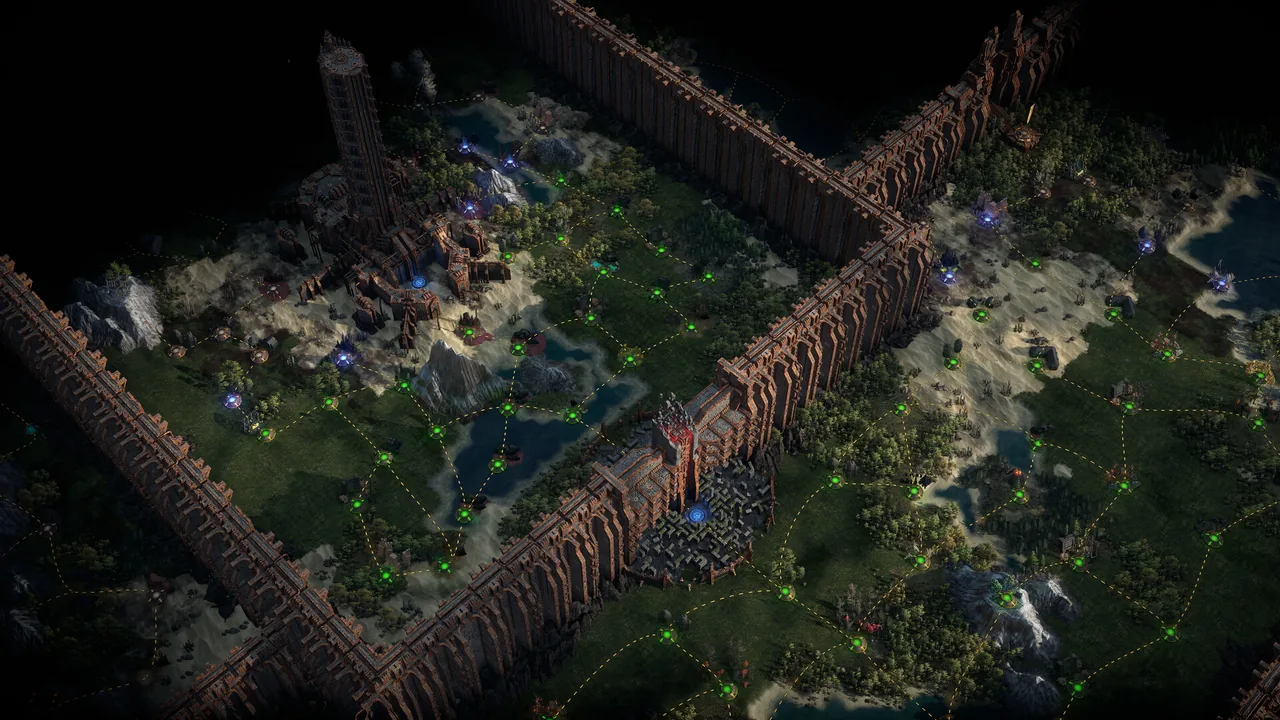
Path of Exile 2's endgame runs on an Atlas passive tree and a rotating set of league mechanics layered over repeatable maps — the same shape as the original game's late-game loop, dressed in new systems. In principle it's the part of the game meant to hold a committed player for hundreds of hours between campaign replays. In practice, as of the current Runes of Aldur league, it's the part of the game that has changed the most, the most recently, and with the least sign of settling.
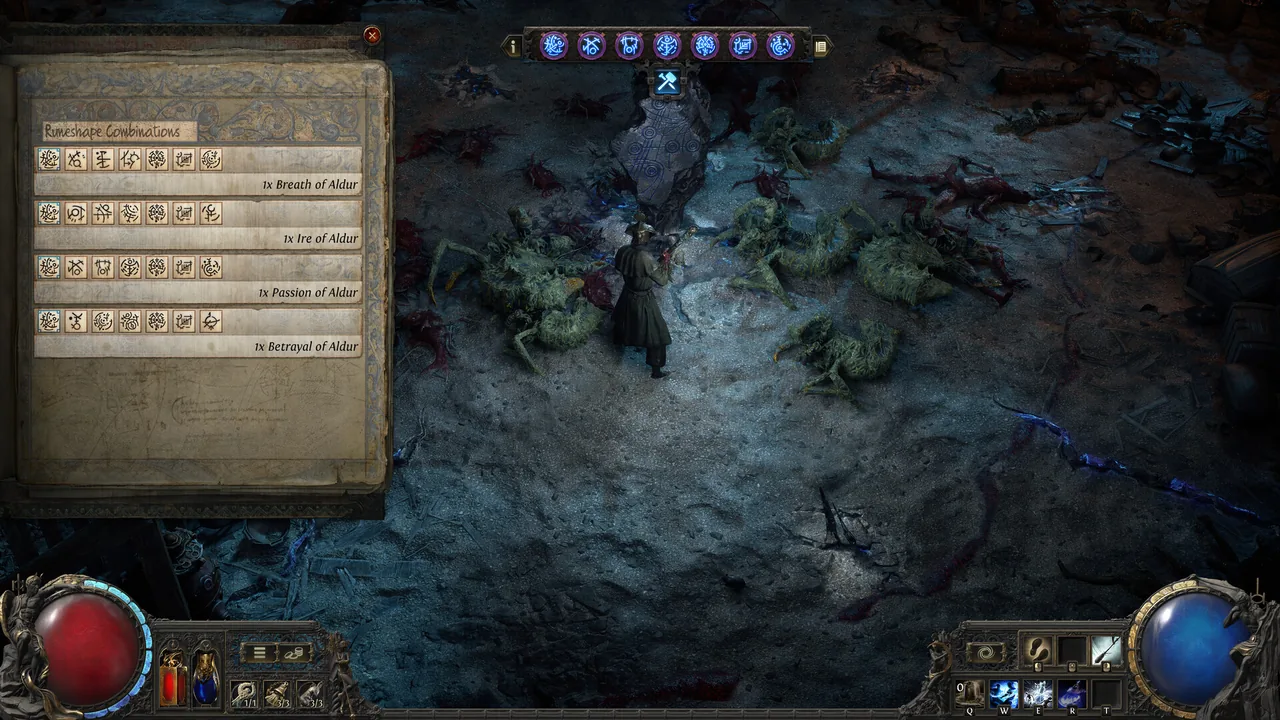
The current 0.5.0 "Return of the Ancients" update, which shipped in late May 2026, rebuilt Breach, Abyss, Delirium and Expedition encounters more or less simultaneously, folded the previously separate Fate of the Vaal content into the core Atlas tree, and introduced a wholly new rune-crafting mechanic built around Remnants found in the field. That would be a lot of change for one league. What followed it wasn't a quiet balance pass — successive 0.5.1 through 0.5.4 patches kept adjusting Delirium's difficulty scaling, expedition rewards, boss resistances and Atlas passives well into July, with the most recent hotfix landing days before this review was checked. Some of that is healthy live-service iteration. A lot of it reads as a system that launched before it was tuned and is being tuned in public, league mechanic by league mechanic, while players are actively grinding it for keeps.
None of that makes the endgame bad in any single snapshot — the Atlas tree gives you a genuine sense of steering your own late-game rather than climbing an undifferentiated ladder, and the boss design that carries the campaign carries over here too. It does make it a poor foundation to commit serious hours to right now if what you want is a stable target to master, because the target keeps moving underneath you in ways the campaign simply doesn't.
Quarterly leagues, and what they cost you
Path of Exile 2 has inherited its predecessor's league cadence largely intact: a themed, roughly three-to-four-month season built around one new mechanic, run on a fresh economy, with progress from the previous league folding into a permanent core-game pool once the season ends. Runes of Aldur is the current one; Return of the Ancients is the patch that opened it. It's a format the original game spent a decade proving works, and the sequel's version of it — new Remnant-based crafting this time, rather than a reskin of something already in the game — suggests GGG hasn't lost the ability to make each season feel meaningfully different.
The cost of that cadence is the one described above: nothing about the endgame is allowed to stay still for long, because every three or four months a meaningful chunk of it gets replaced outright, and the months in between see it rebalanced repeatedly. That's a completely normal trade-off for a live-service ARPG with a decade of goodwill behind it. It's a much harder trade- off to recommend buying into during Early Access, when the campaign has already proven what a finished GGG product looks like and the endgame keeps demonstrating that it isn't one yet.
What free-to-play actually costs right now
Grinding Gear Games' shop pitch, both in Path of Exile 1 and repeated on Path of Exile 2's own store page, is "Fair-to-play. Never pay-to-win," and on the evidence of a decade of the original game's economy, that claim has largely earned its trust — the shop sells cosmetics, stash tabs and quality-of-life conveniences, with account-wide points that spend across both games, and nothing in it makes a character stronger. Nothing observed in Path of Exile 2's current shop breaks that pattern.
What's worth being precise about, checked as of 30 July 2026, is that Path of Exile 2 is not actually free-to-play yet. The storefronts list no free download; access to Early Access requires buying one of three supporter packs, starting around NZ$51 (about US$30) and running up to NZ$171 for the top tier, with the game's own marketing explicitly promising the free-to-play model arrives only "once the game is out of Early Access." That's a meaningfully different pitch from "free game, optional cosmetics," and it's easy to miss if you're going in expecting the original Path of Exile's zero-cost entry point.
Once you're in, the familiar Path of Exile stash-tab economy carries over largely unchanged: specialised premium tabs — for currency, maps, and other item categories — are sold individually rather than as a single bundle, and mapping seriously in the endgame without owning a handful of them is a real and deliberately uncomfortable experience. It's not pay-to-win in any sense that affects combat outcomes, but it is the same soft squeeze the original game has run for a decade, and calling the total cost of "playing comfortably" a few dollars would understate it once you've bought the tabs most endgame players consider close to mandatory.
Verdict
Judge Path of Exile 2 purely on its best ideas and it's one of the most interesting action RPGs in progress anywhere — a passive tree and skill-gem system that genuinely rethinks how build identity is expressed, a campaign that's already the best thing its studio has shipped, and boss design that makes the slower combat pillar worth keeping even where the rest of that pillar has been walked back under pressure. Judge it on where it actually stands today, in line with what this review is asked to do, and it's an unmistakably unfinished game: an endgame still being rewritten patch to patch, no confirmed 1.0 date after nineteen months in Early Access, two acts and a third of the planned class roster still missing, and a store page that sells access rather than giving it away despite calling itself free-to-play.
Eight out of ten reflects both halves honestly. It's not a five-way split between excellent systems and an unfinished shell — the systems really are that good, and the campaign really is complete enough to judge on its own terms. But a review has to score the game people can buy into today, not the one GGG has promised for whenever ExileCon lands its full-release announcement, and today's Path of Exile 2 is still visibly a work in progress wearing a very good game's clothes. Buy in now if Early Access instability doesn't bother you and you want a head start on build knowledge before 1.0. Everyone else should wait for the version this review will eventually need to be rewritten for.
Pricing and store details checked 30 July 2026.
Pros and cons
Pros
- Skill gems can be slotted with support gems built for entirely different weapons, so a staff build can borrow a crossbow skill purely for its interaction
- The expanded passive tree's dual-specialization system lets one character carry two builds' worth of committed nodes
- Boss fights are staged like genuine set-pieces, with readable telegraphs that reward patience over panic
- The four currently playable acts are the best-looking, best-directed campaign Grinding Gear Games has ever shipped
- Quarterly leagues keep introducing real new systems, not reskins — Runes of Aldur's rune-crafting Remnants replaced the previous league's mechanic outright
- A decade of "never pay-to-win" credibility from the original game carries over, and nothing in the shop touches character power
Cons
- The endgame has been substantially reworked in nearly every patch since May, which makes investing real time in a single league feel premature
- Entry to Early Access still requires buying a supporter pack, so the free-to-play pitch on the store page isn't actually true yet
- GGG's early insistence on slow, committed combat drew enough backlash that later patches walked large parts of it back, leaving the pacing feel inconsistent build to build
- After more than a year and a half in Early Access there is still no confirmed date for the 1.0 launch
- Premium stash tabs are sold individually rather than in a starter bundle, and mapping seriously without several of them is genuinely uncomfortable
- Two of six planned campaign acts and four of twelve planned classes still don't exist, so today's roughly 100-hour offering is a fraction of the advertised final game
Screenshots
-
Path of Exile 2Image: Grinding Gear Games via Steam -
Path of Exile 2Image: Grinding Gear Games via Steam -
Path of Exile 2Image: Grinding Gear Games via Steam -
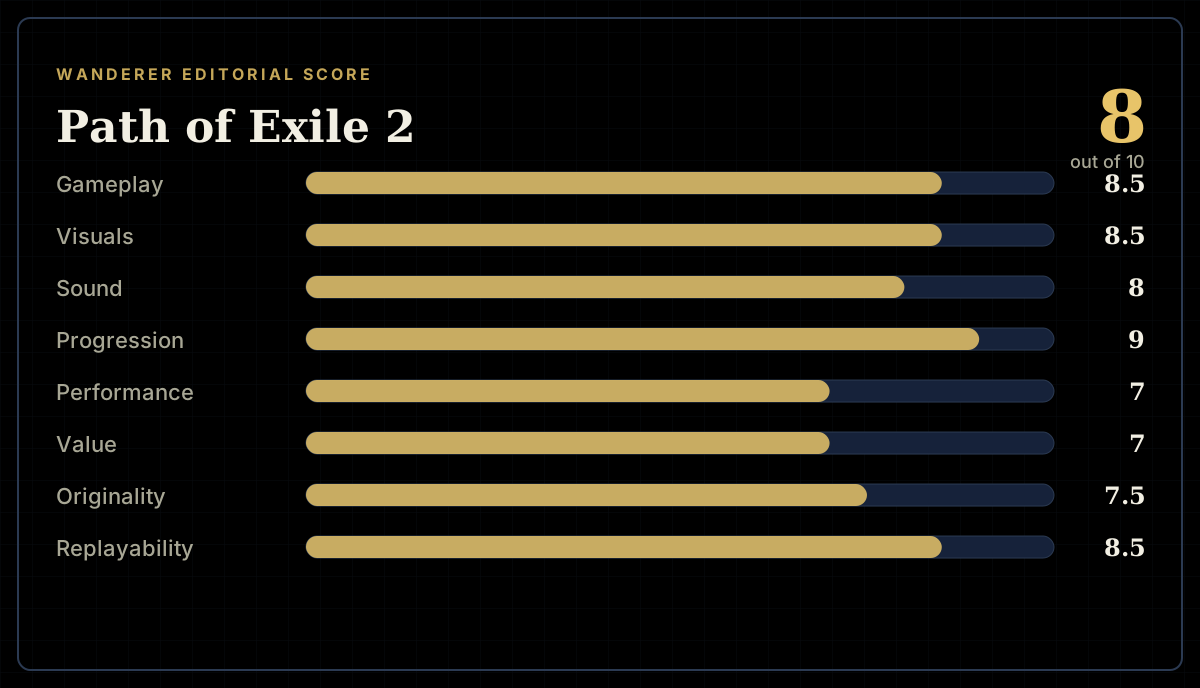
How the review scores each part of the gameWanderer Editorial -
The short versionWanderer Editorial