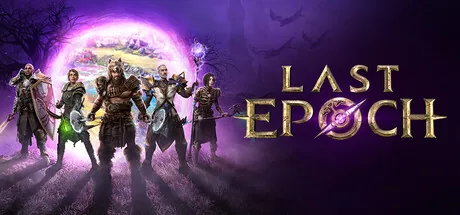
Game review
Last Epoch
8 / 10
- Developer
- Eleventh Hour Games
- Publisher
- Eleventh Hour Games, KRAFTON, Inc.
- Released
- 21 February 2024
- Platforms
- Windows
- Genre
- Action RPG
- Monetisation
- Premium, one-off purchase, plus an optional cosmetic-only shop (Epoch Points and paid supporter packs); developers state the game has zero pay-to-win purchases
- Players
- Online co-op, alongside offline single-player
The short version
Last Epoch's real achievement isn't its time-travel setting, it's that it made build crafting legible. Fifteen mastery classes each carry their own identity, every skill gets its own specialization tree instead of a handful of generic modifiers, and the crafting system lets you choose what an item becomes instead of rerolling a slot machine until it agrees with you.
The campaign that delivers all of this is the weakest part of the package, and the Monolith of Fate endgame that follows it settles into a groove rather than keeps expanding. Add a launch that genuinely buckled under its own popularity and a new owner whose public messaging hasn't always reassured its playerbase, and you get a very good game that has had to work harder than it should to keep people's trust.
Biggest strengths
- Fifteen mastery classes each play like a distinct build space, not a reskinned base class
- A dedicated specialization tree on every single skill turns loadout building into real design work
- Crafting lets you target the specific modifier you want on an item instead of gambling for it blind
Biggest weaknesses
- The campaign is a one-time toll most players actively skip past on later characters
- Monolith of Fate's echo loop repeats its structure for hundreds of hours with too little variation between timelines
- Once you're past the deterministic crafting ceiling, chasing the actual build-defining uniques and exalted items is back to plain RNG
Who it's for: Players who want to actually understand their build rather than copy one from a guide, anyone burned by RNG-only crafting in other loot games, and returning players curious whether the game recovered from its rocky first year.
Our recommendation: Buy it. At full price it undercuts most of its genre rivals, the systems it's built its reputation on are still the best version of themselves in the market, and two years of seasonal support have proven the studio keeps building rather than coasting.
8 / 10
Most action RPGs ask you to trust a number. Last Epoch is the rare one that shows its work. Open any skill and instead of three or four generic modifiers you get a full specialization tree — branching, legible, built for the specific skill in front of you rather than copy-pasted from a shared modifier pool. Open the crafting bench and instead of feeding items into a slot machine until the right line appears, you choose which stat to add and watch a forging-potential bar count down as you push your luck. It's a small design decision repeated at every layer of the game, and it's why Last Epoch built a reputation as the ARPG for players who want to understand their character rather than follow someone else's build guide.
That reputation was earned before the game even reached 1.0, and it survived a first year that gave the studio every reason to lose it. Eleventh Hour Games spent nearly five years in Early Access refining these systems with a vocal community, launched version 1.0 on 21 February 2024 into a server meltdown that briefly tanked its Steam rating, got acquired by KRAFTON in July 2025, and has spent the year since proving — mostly through actions rather than words — that the acquisition didn't change what the game is. Two full seasons later, the case for Last Epoch is still the same one it always was: the best build-crafting tools in the genre, wrapped around a campaign and an endgame that don't quite live up to them.
Fifteen masteries, and none of them feel like leftovers
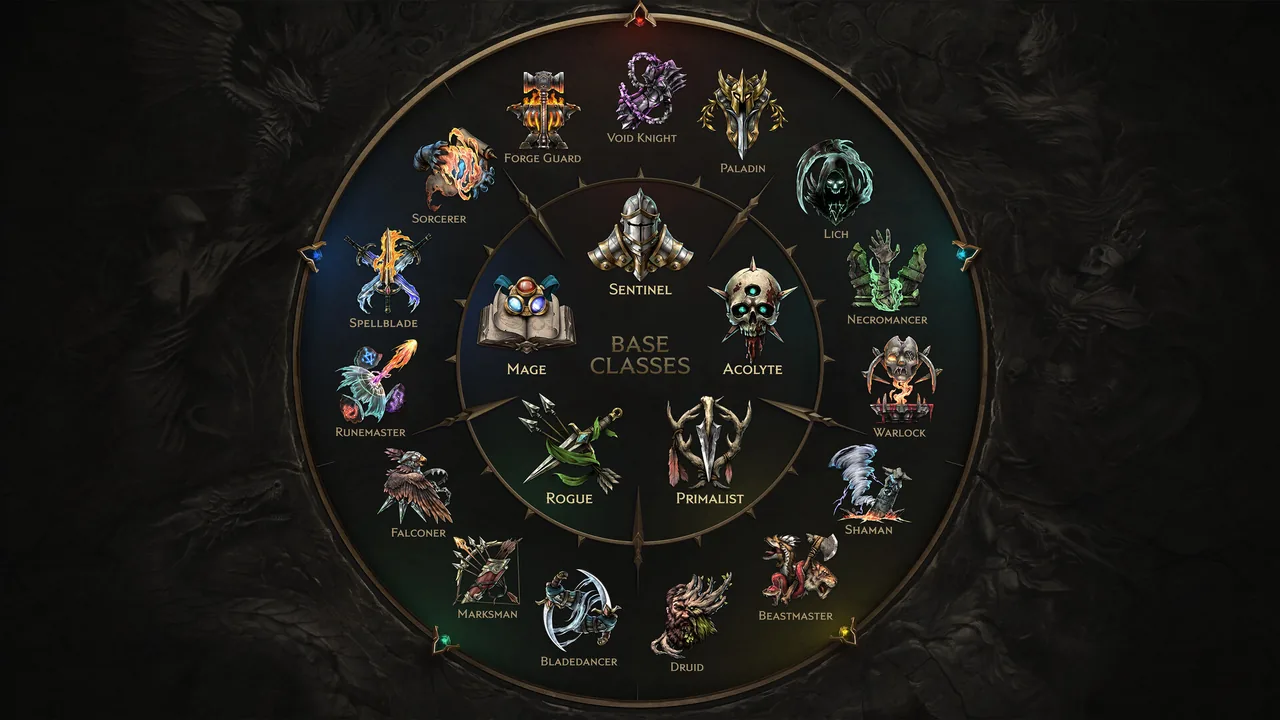
You start as one of five base classes — Mage, Sentinel, Primalist, Acolyte or Rogue — and around level twenty you commit to one of three masteries under that class, each of which plays like its own game rather than a reskin of its parent. A Sentinel becomes a Void Knight, a Forge Guard or a Paladin, and those three don't share a fantasy so much as share a starting point. That's true across the roster: fifteen distinct destinations from five doors, and every one of them was clearly designed rather than generated by permutation.
The specialization trees are where that design work actually pays off. Rather than a shared bank of generic "+damage, +area, +duration" nodes that every skill in the game draws from, each skill has its own bespoke tree with its own transformations — a summoned skeleton can be pushed toward ranged archers instead of melee grunts, a serpent-themed strike can be made to summon actual snakes on hit. Over a hundred and twenty of these trees exist across the skill roster, and the practical effect is that two characters playing the same mastery with different skill choices can look and feel like entirely different builds. That's a genuinely rare thing to pull off at this scale, and it's the single biggest reason Last Epoch's progression outscores almost everything else in the genre on this list.
Crafting you can steer, not just survive
The other pillar is crafting, and it solves a problem most loot games never bother fixing: the gap between "the item you found" and "the item you actually want" usually gets closed by pure repetition — reroll, reroll, reroll, hope. Last Epoch's system instead lets you add specific affixes to gear deliberately, spending shards and glyphs on the modifier you're actually chasing, with a forging-potential meter that tells you exactly how much more risk an item can absorb before crafting becomes destructive. It's not risk-free — push too far and you can ruin a good base — but the risk is visible and chosen, not hidden inside a drop table. For players who've spent hours in other loot games feeding currency into RNG with no read on their odds, this is the difference between gambling and engineering.
It isn't total control. Once you're past what the crafting bench can reliably deliver, the items that actually define an endgame build — the uniques and exalted-tier rares with the exact roll you need — are back to being drops you hope for like anywhere else. Crafting narrows the gap between mediocre and good gear dramatically; it doesn't close the gap between good and best. That's a reasonable place to draw the line, but it's worth knowing going in that the genre-defining system is a first-half solution, not a full one.
A campaign that exists to get out of the way
The time-travel premise — chase a way to save Eterra's timeline from the Void, hopping between past and present versions of the same regions — is a serviceable frame, and it does real work letting the game reuse zones with different stakes and states rather than building the whole map twice. But the campaign itself is where Last Epoch is least interesting. Pacing is uneven, story beats are delivered rather than explored, and by the third or fourth character most returning players are speed-running it as a formality rather than experiencing it as content. That's not an unusual trade for the genre — Diablo and Path of Exile both carry the same tax — but Last Epoch's campaign feels particularly optional next to how much care clearly went into what comes after it.
Monolith of Fate: strong shape, thinning content
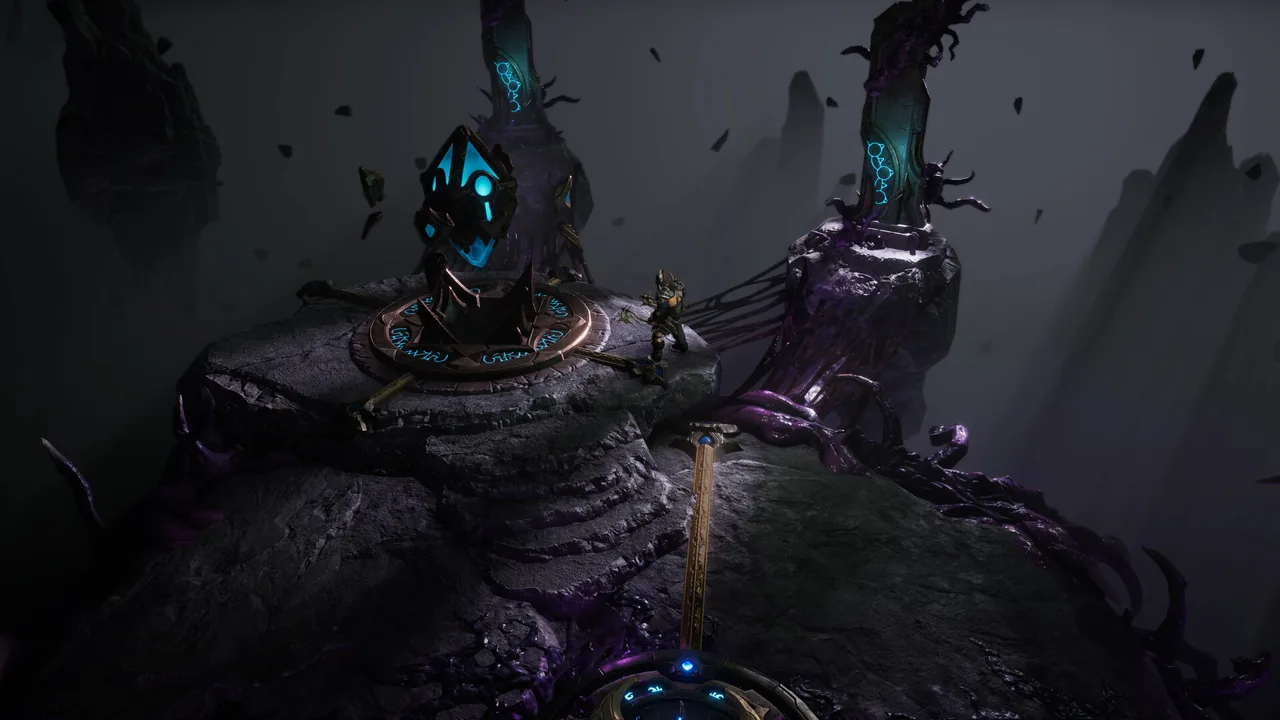
The endgame, Monolith of Fate, replaces a linear campaign with a web of timelines you push through repeatable missions called echoes, stacking corruption for better rewards and eventually "correcting" a timeline to unlock its empowered, harder-hitting version. Structurally it's smart — it gives you a visible map of where your power is going rather than an infinite ladder with no shape — and Season 4, Shattered Omens, added Omen Windows and Echo Chains in March 2026 specifically to cut down on the dead time between meaningful fights, which the system needed.
What it still doesn't have is enough variety in what an echo actually asks you to do once you've seen the handful of objective types a few dozen times. The structure stays interesting longer than the moment-to-moment gameplay does, which is a real problem for a system that's supposed to be where you spend the majority of your time with the game. The choice between the two endgame item factions helps: Circle of Fortune biases your own drops toward rare and exclusive finds at the cost of trading, Merchants Guild opens a player economy at the cost of that exclusivity, and picking between them meaningfully changes how the same content feels to chase. It's a smart seam built into an otherwise repetitive loop, not a fix for it.
A rocky year, and a new owner
It would be an incomplete review that skipped the last eighteen months of context, because a meaningful slice of the current Steam sentiment is about them rather than about the game on disc. The 1.0 launch in February 2024 sold well beyond what Eleventh Hour Games had provisioned servers for, and the resulting queues, disconnects and error codes triggered a genuine wave of negative reviews before the infrastructure caught up. KRAFTON's acquisition of the studio in July 2025 brought a second wave of anxiety, not over anything shipped in the game but over KRAFTON's own public "AI-first" positioning and voluntary-resignation offers at the corporate level — enough that Eleventh Hour's studio lead felt the need to publicly state the development approach and creative direction weren't changing.
Judged on what's actually reached players since, that reassurance has held up better than the initial noise suggested it would. Season 4 landed on schedule in March 2026 with a real new mechanic rather than a content drought disguised as one, and a Season 5 roadmap and a paid, console-launching Orobyss expansion later this year both point at a studio still building forward. The recent-review score sitting a notch below the all-time score is the honest scar tissue from that period, not a live problem — but it's fair for a cautious buyer to want to see Season 5 land on schedule before fully letting the worry go.
Where it sits next to Diablo and Path of Exile
Last Epoch isn't trying to out-scale Path of Exile's decade of systems or out-produce Diablo IV's budget, and reviewing it as if it should is the wrong comparison. Its case is narrower and more specific: if the thing that frustrates you about other loot games is that you can't tell why your build works or doesn't, or that crafting means feeding currency into a machine and hoping, Last Epoch is built specifically to fix that frustration, and it does. If what you actually want is the deepest possible endgame ladder with years of accumulated seasonal systems layered on top, Path of Exile still wins that fight outright, and Last Epoch's two seasons of post-launch support haven't tried to close that specific gap yet.
At $34.99 with no subscription, no battle pass and a cosmetic shop that stays cosmetic, it's also one of the cheaper entry points in the genre, and unlike some Early Access ARPG launches on this list, what you're buying today is a genuinely finished game rather than a promise of one.
Verdict
Score this on its best systems alone and Last Epoch is a nine — the specialization trees and deterministic crafting are simply the clearest, most player-legible versions of build design that mainstream action RPGs currently offer, and calling that Eleventh Hour Games' signature contribution to the genre isn't an overstatement. Score it on the campaign that delivers those systems and the endgame that's supposed to sustain them for hundreds of hours, and it drops closer to a seven — competent, but visibly the least-finished half of the game.
Eight is the honest middle: a very good action RPG whose strongest ideas are genuinely best-in-class, held back from greatness by a story you'll skip on your second run and a Monolith of Fate that needs a few more seasons of content before it stops repeating itself. Buy it for the build crafting, and let the seasonal cycle carry you the rest of the way.
Price and store details checked 30 July 2026.
Pros and cons
Pros
- Fifteen mastery classes each play like a distinct build space, not a reskinned base class
- A dedicated specialization tree on every single skill turns loadout building into real design work
- Crafting lets you target the specific modifier you want on an item instead of gambling for it blind
- Choosing between Circle of Fortune and Merchants Guild gives loot-chasing and trading genuinely different textures
- Two years of seasonal cycles (most recently Shattered Omens) have added real mechanics, not reskinned content
- The cosmetic shop stays cosmetic — nothing sold affects power, and the base game needs no DLC to be complete
Cons
- The campaign is a one-time toll most players actively skip past on later characters
- Monolith of Fate's echo loop repeats its structure for hundreds of hours with too little variation between timelines
- Once you're past the deterministic crafting ceiling, chasing the actual build-defining uniques and exalted items is back to plain RNG
- The February 2024 launch buckled under demand, and the resulting error codes and queues left a scar on the Steam page that hasn't fully faded
- KRAFTON's public "AI-first" messaging since acquiring the studio has unsettled part of the community, regardless of what's actually shipped
Screenshots
-
Last EpochImage: Eleventh Hour Games via Steam -
Last EpochImage: Eleventh Hour Games via Steam -
Last EpochImage: Eleventh Hour Games via Steam -
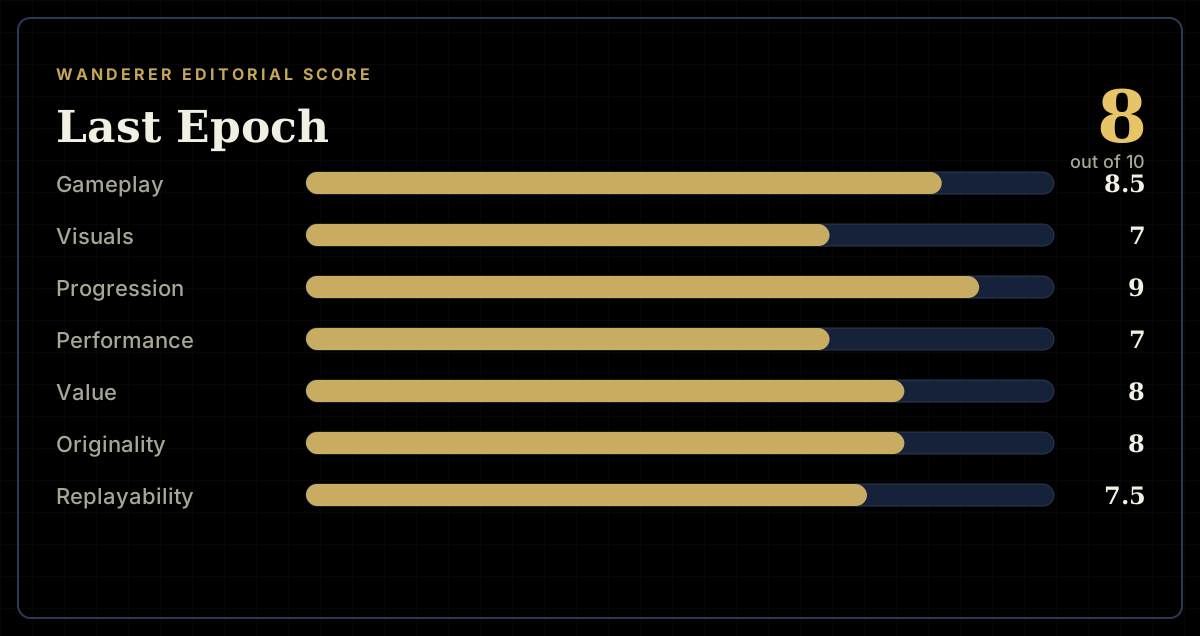
How the review scores each part of the gameWanderer Editorial -
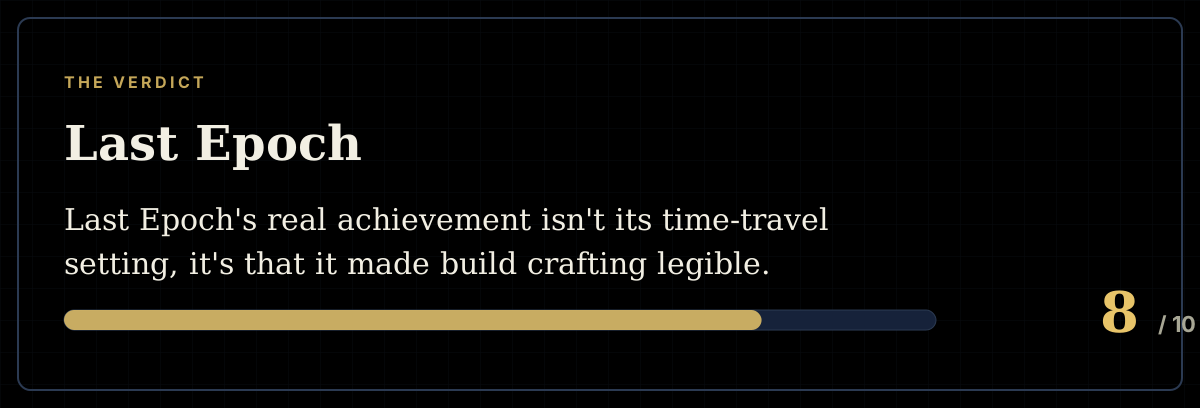
The short versionWanderer Editorial