Game review
Tainted Grail: The Fall of Avalon
7.5 / 10
- Developer
- Questline
- Publisher
- Awaken Realms
- Released
- 23 May 2025
- Platforms
- Windows, PlayStation 5, Xbox Series X/S
- Genre
- Action RPG
- Monetisation
- Premium, one-off purchase, plus a slate of optional paid DLC
- Players
- Single-player
The short version
Tainted Grail: The Fall of Avalon wears its Elder Scrolls influence openly — first-person exploration, a huge skill list, a world you're meant to walk rather than fast-travel through — and then earns its own identity through a genuinely dark, well-written take on Arthurian myth and a night cycle that turns from atmosphere into a real threat. Its build variety and quest writing are better than a game this size usually manages.
It's let down by faces that don't match the ambition around them, launch-era bugs that some players are still hitting, and a combat system that rarely tries to be more than competent. Buy it for the world and the writing; go in expecting a rougher version of the game its trailers promise.
Biggest strengths
- Skill and attribute builds genuinely change how a fight plays out, not just how big your numbers are
- Three handcrafted regions reward exploration with actual writing, not just loot pinatas
- The Wyrdness/Wyrdnight system makes night a real survival threat instead of a lighting filter
Biggest weaknesses
- Character faces are flat and expressionless next to the environmental art around them
- Quest-tracking and item-looting bugs reported at launch are still turning up well after 1.0
- Combat rarely goes beyond familiar swing-block-dodge mechanics borrowed wholesale from bigger games
Who it's for: Skyrim and Morrowind players who want a darker, more written take on the same shape of game, and anyone who prefers a world with real reading material over one with a marker on every hilltop.
Our recommendation: Worth buying at full price if you want a long, dense single-player RPG and can live with some jank; wait for a sale if inconsistent frame pacing or flat facial animation are dealbreakers for you.
7.5 / 10
Avalon in this telling isn't a golden age slipping quietly into legend. It's stuck — frozen mid- autumn, its king missing, its people getting by under a spreading corruption that turns the night into something you don't want to be caught outside in. Questline spent two years in Early Access building that premise into a full-sized first-person RPG, and the shape of the result is not a mystery to anyone who's played Bethesda's output over the last fifteen years. What's worth talking about is what the studio did with that shape once it had it.
The comparison nobody's hiding from
Let's deal with it directly, because the game doesn't pretend otherwise: this is a first-person open-world RPG with a huge skill list, a big handcrafted map, dozens of side activities, and a main quest you can ignore for hours at a time in favour of fishing, farming or reading someone's journal in an abandoned cottage. If you've played Skyrim or Morrowind, every one of those sentences will feel instantly familiar, and Questline knows it — the marketing leans into "dark Arthurian open-world RPG" rather than pretending to have invented a new genre.
The question worth asking isn't whether Tainted Grail resembles those games. It obviously does. It's whether the writing, the world and the systems built on top of that shape do enough to earn their own identity rather than just borrowing someone else's momentum. Mostly, yes — and where it doesn't, it's usually a budget problem rather than a vision problem.
A world worth reading, not just walking
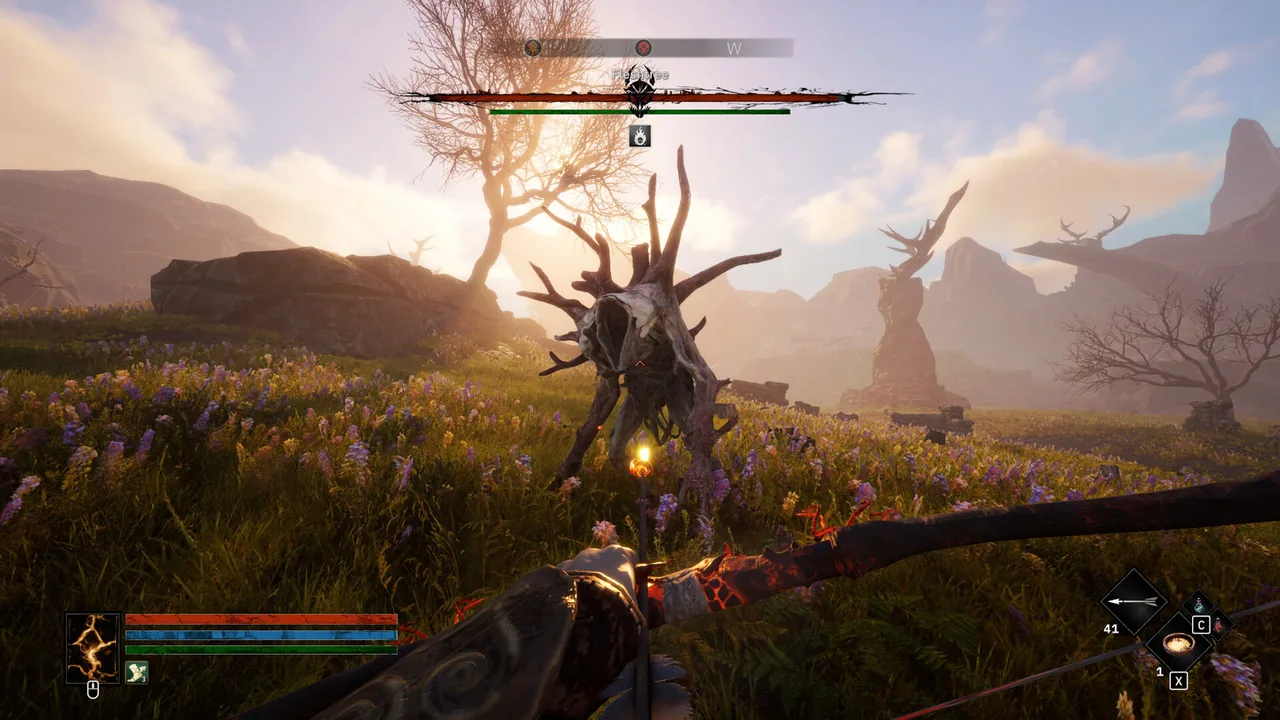
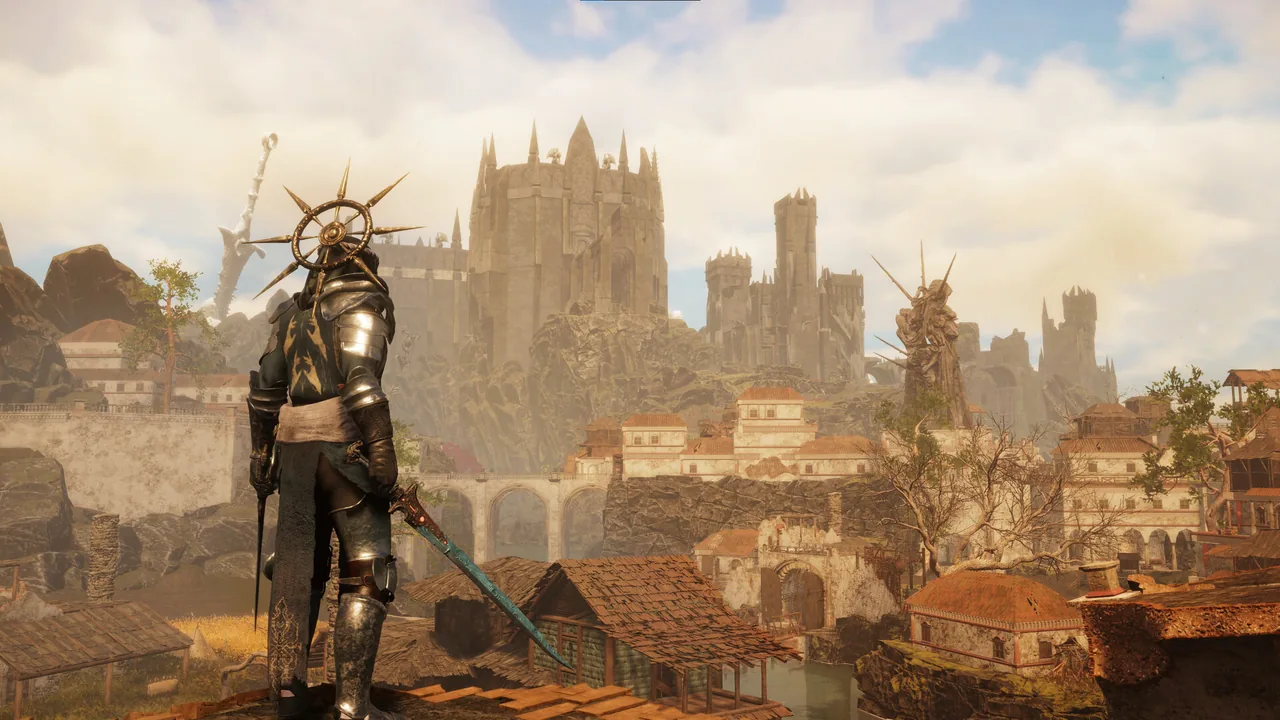
The three regions — the misty Horns of the South, Cuanacht's sunlit farmland, and the frozen Forlorn Swords further out — are handcrafted rather than proc-generated, and it shows in the way they're populated. Over 250 named NPCs and more than 200 side quests sit inside a story built around morally ambiguous choices rather than clean good-or-evil branches, and the writing leans into the "dark reimagining" premise properly: this isn't a sanitised Round Table, it's a kingdom that's already lost and knows it.
That density is the game's clearest strength. A lot of open-world RPGs treat their world as a grid of icons to clear; this one is closer to Vahrin's Call's approach of building a place first and trusting players to find their way into its stories, though Tainted Grail has the bigger budget to back that ambition with a genuinely large cast and a fully voiced English script across a 50-to-70- hour game. That's not a small thing for a studio this size to pull off, and it's the kind of production value smaller indie RPGs in this genre usually can't afford.
The smaller systems around that world reinforce the same idea rather than padding it out. A sketchbook-style journal collects notes on people and places as you find them, which does real work in a world this dense with named characters — it's the difference between forgetting who a minor NPC was three hours later and actually building a picture of Avalon as you go. House management and decoration sit off to the side of all this as a low-stakes hobby rather than a system the game leans on, which feels like the right amount of attention to give it: present for players who want a base to return to, entirely skippable for players who don't.
Builds that remember how you actually played
The skill and attribute system is where the game earns the "countless builds" line in its own marketing rather than just repeating it. You're not locked into a class at character creation; instead you shape a build out of melee weapons, shields, bows, magic, throwables and alchemical mixtures, with perks that let genuinely odd combinations click into place — an alchemist-berserker who poisons a target before closing the distance with a two-hander, or a blacksmith-mage who crafts gear by day and summons the undead by night. A stealth archer build is in there too, for anyone who's never met an open-world RPG they didn't want to snipe their way through.
What makes this land rather than just sound good on a feature list is that the supporting activities aren't cosmetic. Alchemy, blacksmithing, cooking, farming, fishing and house management all feed back into the build you're actually running, rather than sitting off to the side as a distraction between dungeons. A character built around alchemy has a real reason to keep gathering ingredients thirty hours in, the same way a blacksmith-focused build has a reason to keep mining. That's the progression system doing its job properly: it makes your time investment visible in how you fight, not just in a number going up.
Combat that's fine, and rarely more than that
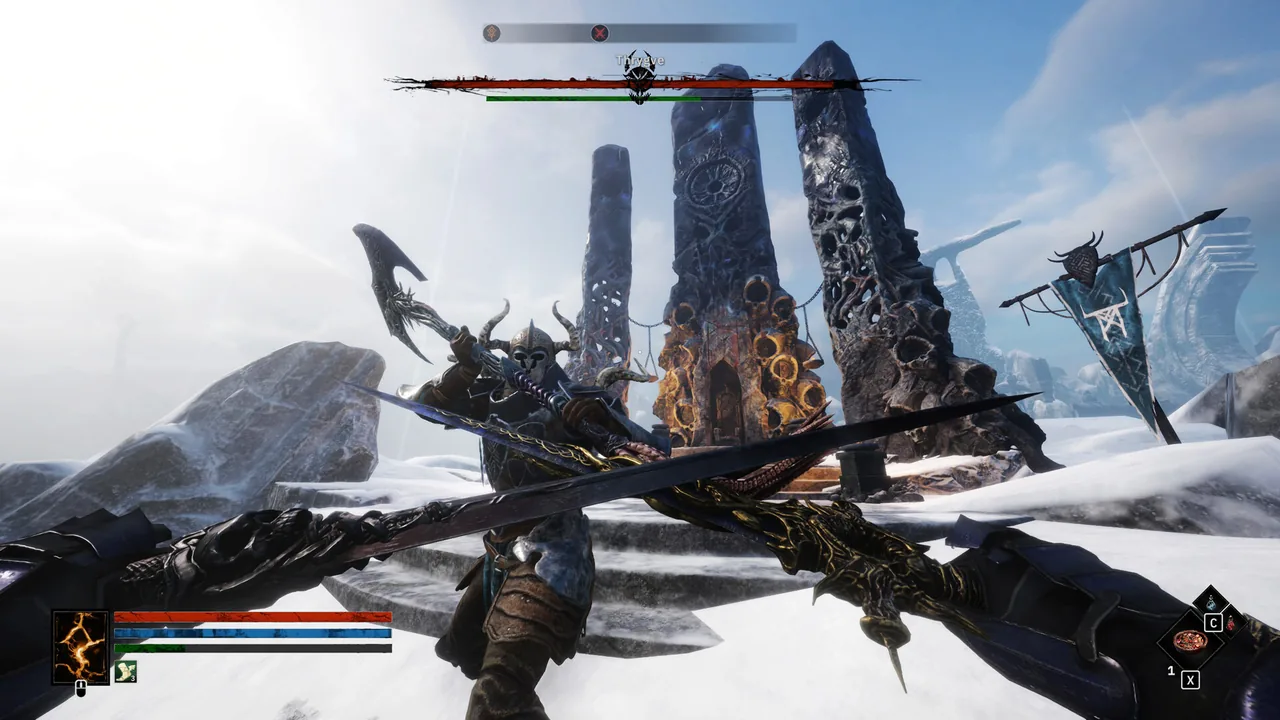
First-person combat mixes melee, ranged and magic with dodge, parry and block options, and dual- wielding or two-handed weapons change your options meaningfully enough that switching loadouts between fights is worth doing. It's a perfectly serviceable system. It is also, almost point for point, the same combat vocabulary the genre's biggest names have used for over a decade, and Tainted Grail doesn't do much to push past it. There's no equivalent here of Dragon's Dogma's climbing-and-grappling verticality or Kingdom Come's apprenticeship-style skill gating — it's swing, block, dodge, repeat, with build variety doing most of the work of keeping things interesting.
That's not a fatal flaw. Plenty of good RPGs run on competent-rather-than-innovative combat and get away with it because everything around the fighting is strong enough to carry it. This is mostly that case. But it's worth being honest that the moment-to-moment swordplay is the least distinctive part of a game that's distinctive almost everywhere else.
When the corruption comes out at night
The Wyrdness system is the mechanic that actually justifies calling this a dark reimagining rather than just a reskin. By day, Avalon plays like any handcrafted open-world RPG. At night, Wyrdnight events intensify that corruption, spawning tougher enemies and warping the rules the world runs on — it stops being atmosphere and starts being a real decision point about whether you're equipped to be outside at all. It's a light survival layer bolted onto an RPG chassis, and it works because it's tied directly into the setting's central idea rather than feeling like a difficulty slider someone added late.
It also does useful pacing work. A 50-to-70-hour open world can sag in the middle once the initial thrill of exploration wears off; having a recurring reason to be somewhere specific by nightfall, or to have prepared for what happens if you're not, keeps that back half from turning into pure sightseeing.
Where the smaller budget shows
Here's the honest part. Reception at launch and since has been consistent on one point: character faces read as flat, low-fidelity and close to expressionless — the "Play-Doh skin" description that's followed the game since release isn't an exaggeration so much as a fair shorthand. It's a strange gap, because the environmental art, the hair and cloth rendering, and the world's overall mood direction are genuinely strong. Somewhere in the production, the faces simply didn't get the same pass the landscapes did, and in a first-person RPG built around 250-plus named NPCs and branching conversations, that's exactly the wrong place for the budget to run thin.
The other recurring issue is stability. Visual glitches, quest-indicator bugs and problems with item looting were flagged at launch, and reports of quest tracking going wrong haven't fully gone away more than a year later. None of it appears to be the kind of thing that stalls a save file outright, but in a game this dense, a broken quest marker or a lost item pickup is the sort of friction that compounds the longer you play. Console players should note that PS5 and Xbox versions have consistently scored several points below the PC release on Metacritic, which lines up with the pattern of a smaller studio's optimisation budget stretching further on the platform it built the game on first.
None of this reads as a game that shipped unfinished so much as a game that shipped exactly the size its team could actually finish — and the parts that got the most attention (writing, world, build design) are also the parts that show it.
What you're actually paying for
The base game sits at NZ$64.49 with no discount as of this writing, which is a full-price entry for a first-person RPG that reasonably claims 50 to 70 hours to see through. On a cost-per-hour basis that's a fair trade if the setting and build variety appeal to you, and it compares well against other full-price open-world RPGs at similar length.
Where it gets more complicated is the DLC slate, which has grown quickly since launch: a paid Sanctuary of Sarras expansion at roughly NZ$21.99, a Supporters Pack around NZ$14.75, a Challenge Mode add-on, a Merlin's Tomb dungeon, and four smaller bonus-content packs, alongside an Anniversary edition bundling some of the above. None of it reads as predatory — this is cosmetic and optional-content territory, not gated progression or pay-to-win systems, and the base game is a complete, self-contained RPG without any of it. But readers weighing up the "real" price of owning everything should budget for it being noticeably more than the sticker price on the core game, and decide up front whether they want the base experience or the fuller collection. It's a different shape of monetisation to Vahrin's Call's flat one-off price, and neither approach is wrong, but this one asks you to keep making small decisions after the big one.
Verdict
Tainted Grail: The Fall of Avalon doesn't try to hide what it's built from, and it's better off for not trying. What it does with that borrowed shape — a genuinely dark, well-written Arthurian setting, a build system that rewards playing rather than optimising at a menu, and a night cycle that turns from mood-setting into a real mechanic — is enough to make it worth recommending on its own terms rather than as a placeholder for something bigger. The combat won't convert anyone who finds the genre's swing-and-block loop tiresome, and the gap between its landscapes and its faces is the kind of thing you notice in almost every conversation once you've spotted it once.
Seven and a half puts it solidly in "worth playing for the right audience" territory: an easy recommendation for anyone who wants more Skyrim-shaped RPG with sharper, sadder writing, and a reasonable one to approach carefully if flat facial animation or the occasional broken quest marker will bother you more than a strong world and a flexible build can make up for. Readers who enjoyed Vahrin's Call's classless progression and refusal to make you the chosen one will find a lot to like here, on a considerably larger scale and budget.
Price and store details checked 30 July 2026.
Pros and cons
Pros
- Skill and attribute builds genuinely change how a fight plays out, not just how big your numbers are
- Three handcrafted regions reward exploration with actual writing, not just loot pinatas
- The Wyrdness/Wyrdnight system makes night a real survival threat instead of a lighting filter
- Branching, morally ambiguous quests give 200-plus side quests a reason to exist beyond a checklist
- A fully voiced English script across a 50-to-70-hour game is a genuine achievement for this size of studio
- Two years in Early Access clearly went into systems and writing, not just marketing beats
Cons
- Character faces are flat and expressionless next to the environmental art around them
- Quest-tracking and item-looting bugs reported at launch are still turning up well after 1.0
- Combat rarely goes beyond familiar swing-block-dodge mechanics borrowed wholesale from bigger games
- PS5 and Xbox versions trail the PC release by several critic points, and it shows in the build quality gap
- The DLC slate already runs to four bonus packs, a supporters pack, a challenge mode and a dedicated dungeon
- Its own marketing invites the Skyrim comparison, and the combat loop doesn't do enough to escape it
Screenshots
-
Tainted Grail: The Fall of AvalonImage: Awaken Realms via Steam -
Tainted Grail: The Fall of AvalonImage: Awaken Realms via Steam -
Tainted Grail: The Fall of AvalonImage: Awaken Realms via Steam -
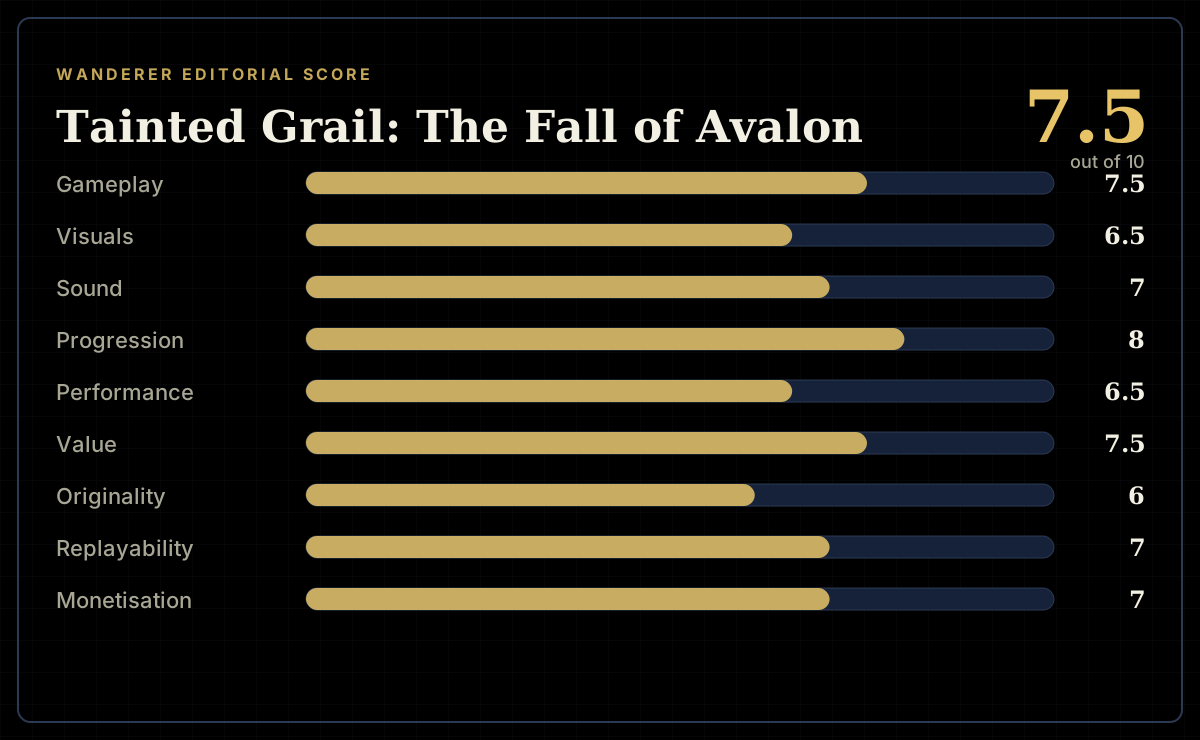
How the review scores each part of the gameWanderer Editorial -
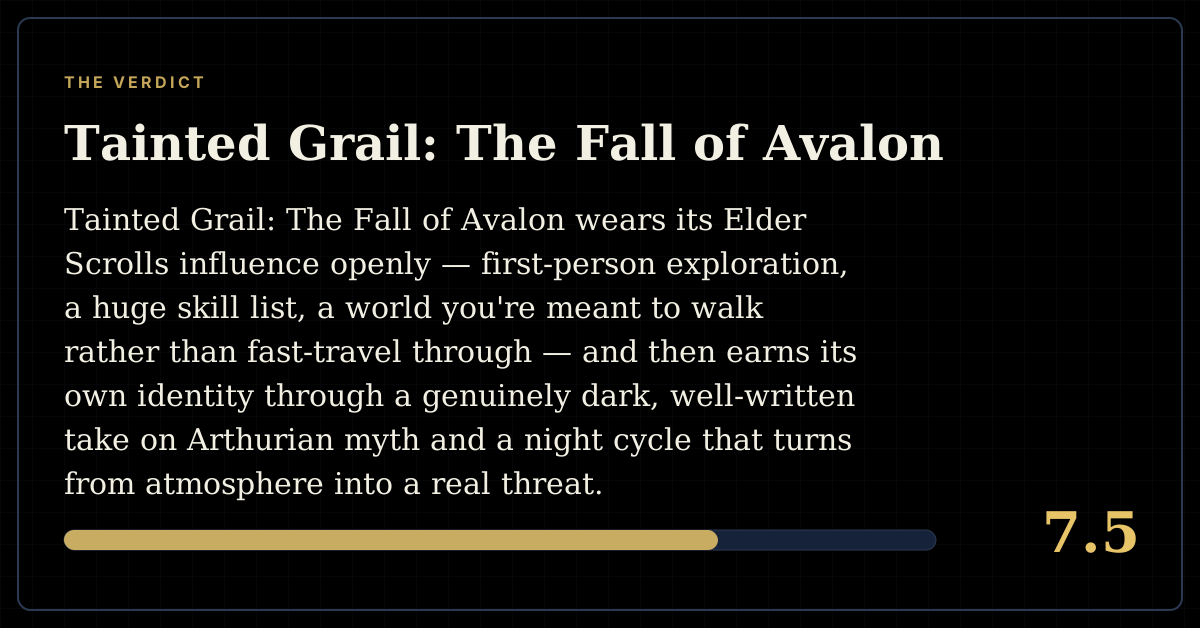
The short versionWanderer Editorial