Game review
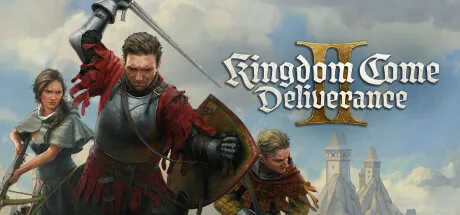
Kingdom Come: Deliverance II
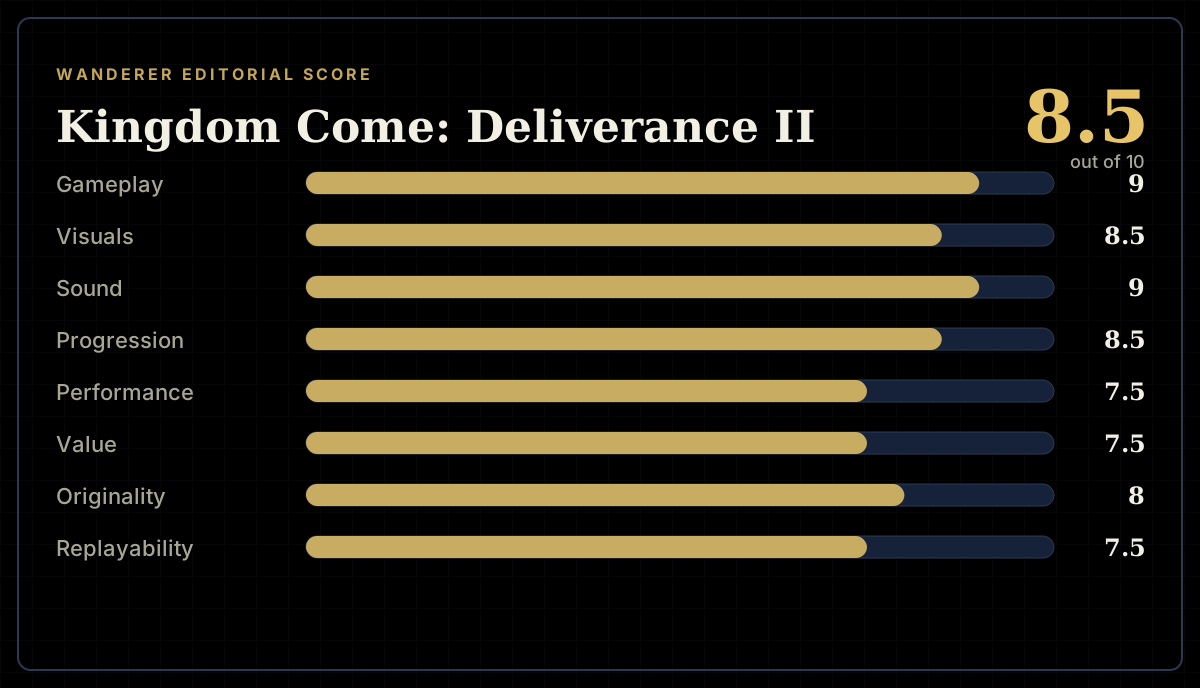
8.5 / 10
- Developer
- Warhorse Studios
- Publisher
- Deep Silver (Plaion)
- Released
- 4 February 2025
- Platforms
- Windows, PlayStation 5, Xbox Series X|S
- Genre
- Action RPG
- Monetisation
- Premium, one-off purchase — three paid story expansions available individually or bundled in an Expansion Pass, plus a cosmetic armour questline, two soundtrack releases and an artbook; a Royal Edition bundles the base game with all of it
- Players
- Single-player
The short version
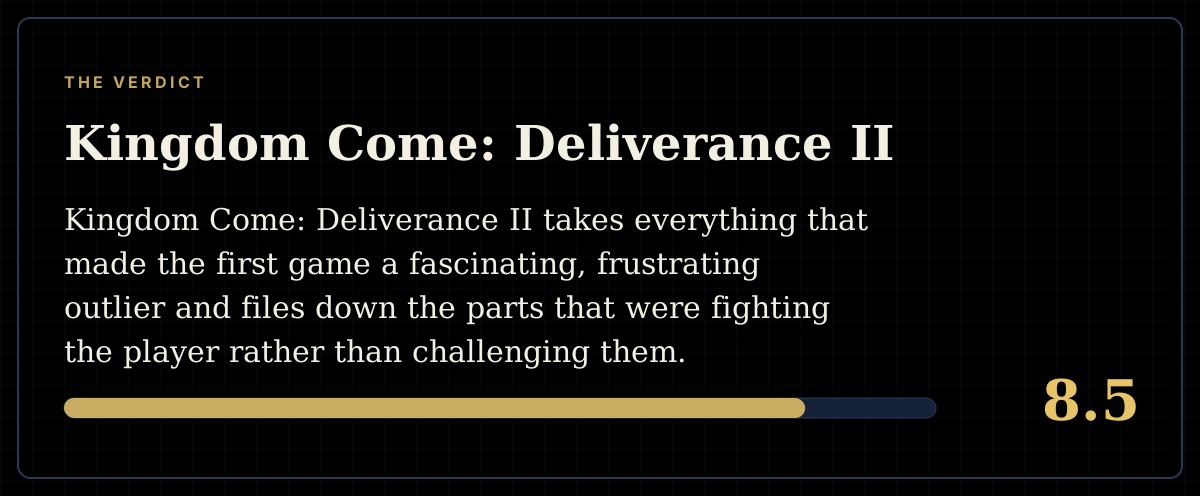
Kingdom Come: Deliverance II takes everything that made the first game a fascinating, frustrating outlier and files down the parts that were fighting the player rather than challenging them. Its hunger, sleep, reputation and gear-condition systems still cost you something real, but they now cost you something earned rather than something arbitrary.
Combat remains a genuine skill to learn rather than a stat check, and the writing is the best the studio has produced. It's not a game that wants to be easy, and eighteen months of paid story expansions mean the full package now costs considerably more than the box price.
Biggest strengths
- Skills level through use rather than points, so a build is a record of what you actually did with your time
- Combat's stance-and-timing system rewards reading an opponent instead of memorising a combo string
- Reputation, cleanliness and social class genuinely change how NPCs and guards treat you, not just shop prices
Biggest weaknesses
- The save system still runs through a consumable item, which will frustrate players used to modern RPG conveniences
- Early combat against multiple opponents can feel unfair before the player has learned to read stances and openings
- Hunger, sleep and grooming upkeep add real busywork on top of an already dense list of systems to track
Who it's for: Players who want their RPG friction to mean something — Morrowind and original Kingdom Come veterans, history fans, and anyone who'd rather lose a fight to a mistake than a number.
Our recommendation: Buy the base game now if slow, deliberate, systems-heavy RPGs appeal to you at all; treat the story expansions as a later purchase once you know whether the core loop has hooked you.
8.5 / 10
Henry of Skalitz spends most of Kingdom Come: Deliverance II being told, in one way or another, that he isn't important. He's a blacksmith's son playing at soldiering in a war between two kings who barely know he exists, and the game keeps finding ways to remind him of it — a noble who won't look him in the eye, a guard who searches him on sight because his boots are muddy, a tavern full of people who couldn't care less about his revenge plot. That's the game's whole personality in miniature: it will let you do almost anything, but it will never once pretend the world owes you for doing it.
Warhorse Studios built the original Kingdom Come: Deliverance in 2018 on that same stubbornness, and it made for a fascinating, deeply uneven game — a genuinely novel simulation wrapped around combat and saving mechanics that fought the player as often as they engaged them. The sequel keeps the stubbornness and largely fixes the fight. What's left is one of the densest, most convincing medieval settings in the genre, attached to systems that mostly earn the friction they charge you.
A build made of habits, not choices
Deliverance II drops the usual RPG ritual of picking a class or allocating points at level-up. Instead, every skill — swordsmanship, archery, stealth, alchemy, lockpicking, the six dialogue skills that now include Appearance, Coercion and Dominate alongside the original Oratory, Charisma and Intimidation — improves through use. Fight with a longsword and your longsword skill climbs. Talk your way past a guard and your Oratory does the same. There's a perk system layered on top that hands out genuine mechanical changes rather than flat bonuses, but the headline idea is that your character sheet, weeks into a save, is an honest record of what you actually did with your time rather than a build you theorycrafted on a wiki before starting.
It's a system that rewards consistency and punishes dabbling, which is a deliberate trade-off worth naming: a player who commits to one approach — say, sword-and-shield combat backed by alchemy — will feel their character grow noticeably competent within a dozen hours. A player who tries to be a swordsman, an archer, a thief and a diplomat all at once will feel diluted for much longer, because none of those skills climb fast enough on their own to compensate for being spread across four. That's not a flaw so much as a design that wants you to specialise the way a real person living this life would have to, and it's more coherent than most "level everything" open- world RPGs manage.
Does the simulation earn its keep
The question that decides how you'll feel about this game inside its first few hours is whether its layer of realism functions as meaningful friction or just obedience to the idea of realism for its own sake. Henry gets hungry and needs to eat — and overeating causes its own penalty, so gorging on stew isn't a free fix. He needs to sleep on a schedule or start suffering stat penalties. His clothes and cleanliness affect how NPCs read him, to the point that a bloodied, unwashed adventurer in noble's finery gets treated with more suspicion than a scruffy peasant, and class-appropriate dress genuinely opens or closes doors, sometimes literally. His weapons and armour degrade with use and need sharpening or repair, which changes their actual combat performance rather than just their sale value. His reputation is tracked town by town, and a theft in Kuttenberg doesn't follow him to a village three days' ride away, but a theft witnessed by the wrong person absolutely will.
Individually, none of these systems are new — survival games have done hunger and sleep for years, immersive sims have done reputation and disguise for longer than that. What Deliverance II does well is refuse to let any one of them become decorative. Cleanliness isn't a cosmetic slider; it's tied to a Charisma-adjacent mechanic that visibly changes what an NPC will tell you or sell you. Gear condition isn't a durability bar ticking down for its own sake; a blunted blade does less damage and a degraded set of armour does less to stop the next one. The post-launch addition of a Hardcore mode — which strips out fast travel, the compass, quest markers and even the visible health and stamina bars — is the clearest evidence the studio believes in this stuff rather than just tolerating it: that's not a mode you build for a game whose systems are set dressing.
Where it tips from "meaningful" into "obedient" is in the accumulation. Managing hunger, sleep, grooming, weapon condition, armour condition, horse care and a reputation meter per settlement, all at once, is a lot of bookkeeping layered on top of an RPG that already has six dialogue skills and a full crafting suite. None of it is individually onerous, but stacked together it becomes the kind of upkeep that a player has to actively enjoy rather than tolerate, and the inventory and alchemy menus — functional, but slow, especially once your pack starts filling with quest items, ingredients and half-repaired gear — don't make the bookkeeping any lighter.
Combat as an apprenticeship
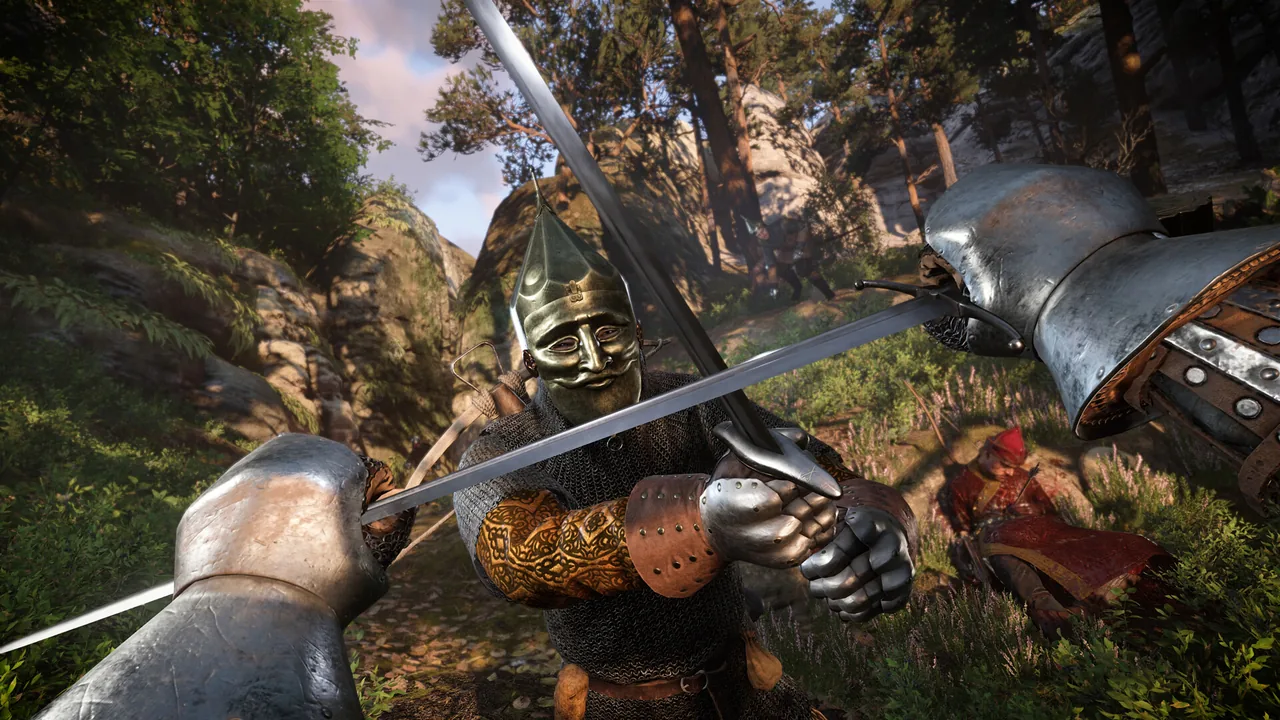
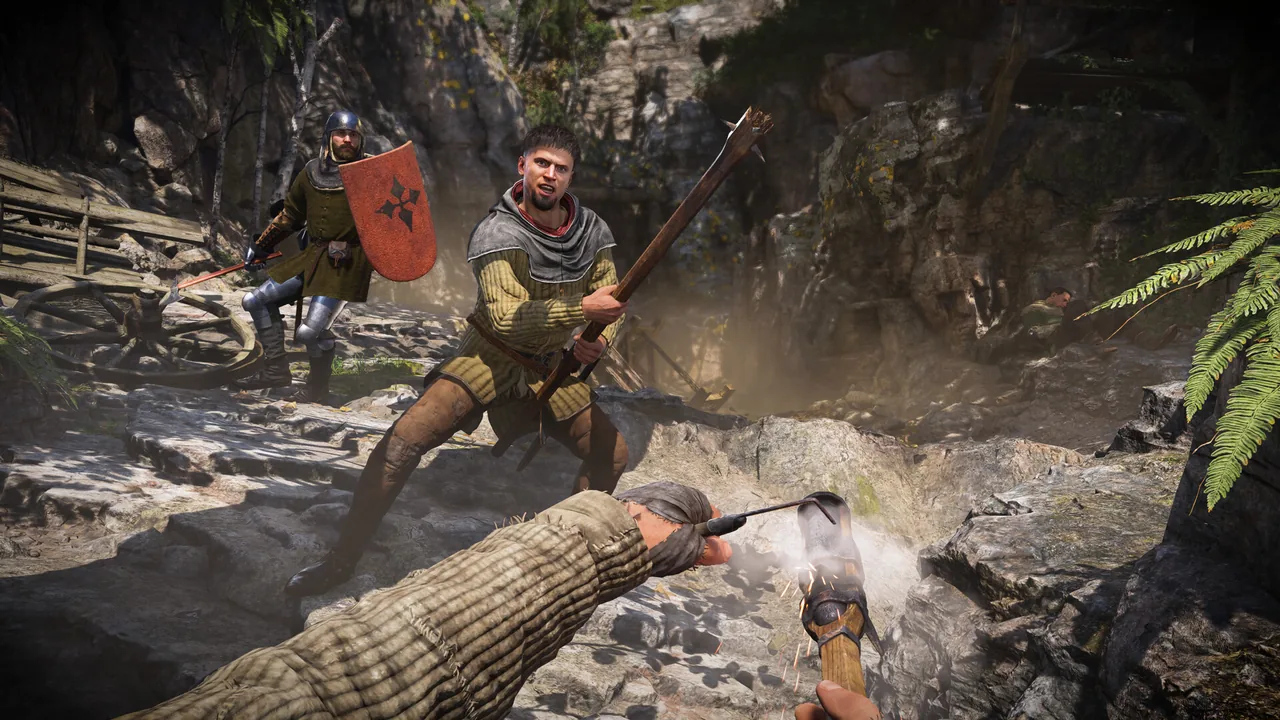
Fighting is where the sequel's improvements are most obvious and most necessary. The underlying idea returns from the first game: directional stances, telegraphed swings, blocks that have to match an attack's line, and counters and combinations that unlock through actual practice rather than a shop menu. It is not, and was never going to be, an action game in the modern hack-and-slash sense. Every fight is a negotiation about openings, and a player who tries to button-mash through an early encounter will get cut down by opponents who are, individually, not especially dangerous.
That's the honest criticism to make here: the learning curve is real, and the game asks a lot of patience from players before combat starts feeling fair rather than arbitrary. Where Deliverance II earns credit is in how much clearer that curve has become compared to 2018 — training with in-fiction combat instructors is better paced, enemy tells are more readable, and perks unlocked through actual swordplay give you concrete new options rather than incremental number bumps. Once it clicks, taking on multiple opponents by managing spacing and picking targets rather than mashing attacks feels like a skill the player has, not just the character. Getting to that point still takes longer than most action RPGs would ask of you, and players who bounce off the first few hours of combat are unlikely to be talked back into it by systems elsewhere.
Quests that remember what you did
The writing is the clearest across-the-board upgrade from the first game, and the reactivity is where it shows. Main and side quests alike tend to support several genuinely different approaches — talk your way past a problem, bribe it, sneak around it, or fight through it — and the game is consistently willing to let a bad decision or a missed skill check close off a cleaner solution rather than quietly steering you back onto rails. Consequences carry forward in ways that feel observed rather than scripted: a theft witnessed by the wrong person, a fight picked in the wrong town, or a favour called in early can all resurface later in ways that don't announce themselves as "consequence" the way a quest-log entry would.
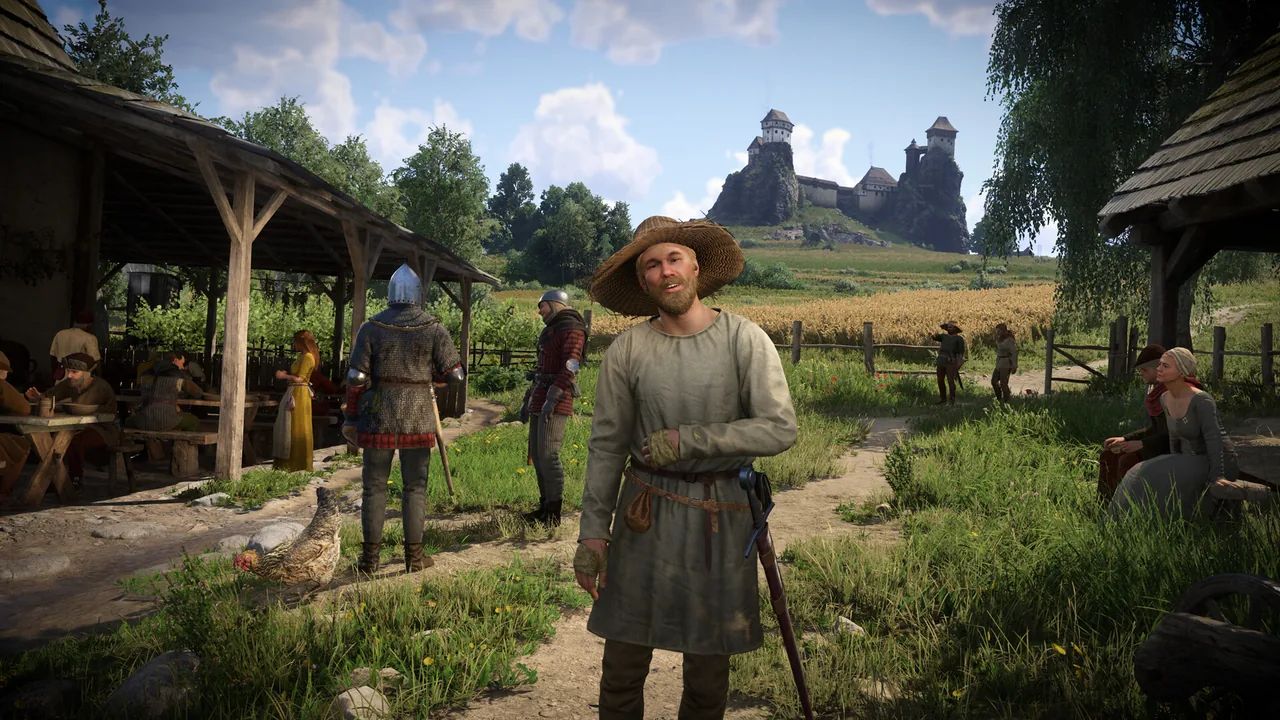
The two main regions help this land. Kuttenberg is a dense, vertical mining city with its own politics, guilds and crime, while the Bohemian Paradise countryside is the kind of open, walkable wilderness the first game specialised in. Splitting the world this way, rather than stretching one region twice as far, means neither environment overstays its welcome, and it gives the writing two genuinely different registers to work in — urban intrigue in one, rural survival and banditry in the other.
What actually got fixed
Anyone who played the 2018 original will recognise most of what changed as a direct response to that game's loudest complaints. The save system is still built around Saviour Schnapps, a drinkable item Henry needs to save outside of sleeping or specific checkpoints — a decision that will still frustrate players used to being able to quit anywhere, and it's the single biggest concession the sequel refuses to make. But the surrounding friction has eased: autosaves at natural checkpoints mean a crash or a bad decision no longer costs the hours it used to, and the game is considerably less stingy about letting you brew or buy your way back into a save slot than it was in 2018. Combat's clarity, discussed above, is the second major fix. The third is scale without bloat — a bigger, more varied world that still feels handmade rather than proceduralised, which is a genuinely difficult needle to thread and one the original game didn't fully manage.
Technically, the sequel also arrived in far better shape than its predecessor, whose 2018 launch was rough enough to become part of its reputation. Reviewers at launch and in the months since have generally described a well-optimised release with comparatively few of the bugs and stutters that defined the first game's opening weeks — a real achievement for a production of this scope, even if "comparatively few" isn't the same as "none."
DLC, editions and what the full price actually is
The base game's US$59.99 hasn't moved and there's no discount active on it as of this writing. What has changed since launch is the amount of paid content sitting on top of it. Three story expansions have shipped across 2025 — Brushes with Death (an artist's mystery built around shield painting), Legacy of the Forge (rebuilding a ruined forge into a player-owned home and workshop in Kuttenberg), and Mysteria Ecclesiae (a quarantined monastery mystery with a detective framing) — each sold individually for US$5.99 to US$13.99, or together in a US$29.99 Expansion Pass that also throws in a cosmetic unlock. A separate, smaller DLC called The Lion's Crest sells a self-contained questline built around a set of legendary armour for US$4.99, and Warhorse has also released two separate soundtrack packages and an artbook for players who want the extras. A Royal Edition, released in November 2025, bundles the base game with everything above.
None of that is unreasonable by current industry standards for a game this size, and none of it gates content that should have shipped at launch — this isn't a battle pass or a live-service drip feed, it's conventional single-player expansion content on a conventional premium-game schedule. But it's worth being explicit about the real cost of the complete experience: a player who wants the base game plus every expansion is looking at meaningfully more than sixty dollars, and the smarter buy for most people is the base game now, with the Expansion Pass or Royal Edition picked up later once you know the core loop has actually hooked you.
Who should skip it
This isn't a game for players who want their fantasy power fantasy handed to them quickly. If the appeal of an RPG is stat progression that feels good within the first hour, or combat you can learn by feel in a single afternoon, or a world that treats you as its centre of gravity from the opening cutscene, Deliverance II is going to feel slow and occasionally punishing rather than rewarding. It's also simply not built for anyone allergic to menus — between weapon condition, alchemy recipes, six dialogue skills and per-town reputation, the amount of information the game expects you to track is real, and the interface doesn't make tracking it effortless.
Players whose idea of a satisfying grind is doing the same thing repeatedly until a number goes up, rather than living inside a set of interlocking systems, will likely find more of what they want in Wanderer's own steadier, always-ticking style of progression than in Henry's very deliberately unglamorous war.
Verdict
Kingdom Come: Deliverance II is the rare sequel that understood exactly which parts of its predecessor were the point and which parts were just friction for friction's sake, and it had the discipline to leave the first alone while genuinely fixing the second. Its hunger, sleep, reputation and gear systems mostly justify themselves; its combat is a real skill rather than a gear check once you've put in the hours to learn it; and its writing and reactivity are a clear step up from a studio that was already unusually ambitious for its size.
It loses half a point for reasons that are almost entirely about volume rather than quality: a save system that still asks more of the player than most modern RPGs would dare, an accumulation of upkeep systems that can tip from engaging into chore-like across a long session, and a post-launch content plan that spreads its story additions across three separate purchases instead of one satisfying expansion. None of that undoes what the core game does — it just keeps this from being the flawless landmark some of its most enthusiastic critics have called it. For the audience it's built for, it's an easy recommendation. For everyone else, it's worth knowing exactly what kind of demands it's going to make before you commit.
Pros and cons
Pros
- Skills level through use rather than points, so a build is a record of what you actually did with your time
- Combat's stance-and-timing system rewards reading an opponent instead of memorising a combo string
- Reputation, cleanliness and social class genuinely change how NPCs and guards treat you, not just shop prices
- Quests routinely support stealth, dialogue, bribery and violence as equally valid solutions with different consequences
- Kuttenberg and the Bohemian Paradise countryside are two distinct, densely detailed environments rather than one padded map
- The 2.2-million-word script is fully voiced and holds up across dozens of hours without going flat
Cons
- The save system still runs through a consumable item, which will frustrate players used to modern RPG conveniences
- Early combat against multiple opponents can feel unfair before the player has learned to read stances and openings
- Hunger, sleep and grooming upkeep add real busywork on top of an already dense list of systems to track
- The story content is being sold as three separate mid-priced expansions rather than one substantial add-on
- Menus for inventory, alchemy and blacksmithing are functional but slow going once your pack fills up
- Some side content leans on fetch-and-return structure that the main quests mostly avoid
Screenshots
-
Kingdom Come: Deliverance IIImage: Deep Silver via Steam -
Kingdom Come: Deliverance IIImage: Deep Silver via Steam -
Kingdom Come: Deliverance IIImage: Deep Silver via Steam -
How the review scores each part of the gameWanderer Editorial -
The short versionWanderer Editorial