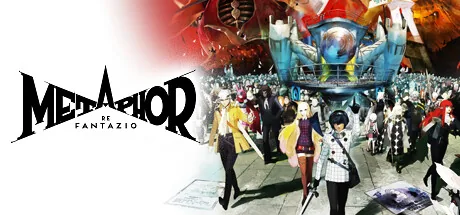
Game review
Metaphor: ReFantazio
8.5 / 10
- Developer
- ATLUS
- Publisher
- SEGA
- Released
- 10 October 2024
- Platforms
- Windows, PlayStation 4, PlayStation 5, Xbox Series X/S
- Genre
- Fantasy JRPG
- Monetisation
- Premium, one-off purchase; eight cosmetic-and-BGM DLC packs sold separately
- Players
- Single-player
The short version
Metaphor: ReFantazio takes the class-based dungeon crawler and welds it to a political campaign, and the fusion works because the campaign isn't set dressing — the Archetype system it unlocks is one of the deepest class structures a JRPG has shipped in years, and the calendar governing your days makes every choice to explore, socialise or grind feel like it's spent against a real budget.
It's also a long game that doesn't fully justify every one of its hours. The calendar pressure that makes early decisions matter turns into a scheduling chore by the midgame, side dungeons recycle the same handful of environments far more than the main story dungeons do, and the political themes it's built around occasionally tell you what to think rather than trusting the story to show it. None of that undoes what the Archetype system and the Squad Battle combat get right, but at NZ$127.95 with no discount, this is a purchase that rewards players already sold on eighty-plus hours of turn-based JRPG, not a safe blind buy.
Biggest strengths
- The Archetype system's lineage trees, skill inheritance and synthesis classes give party building more depth than most tactical RPGs manage, let alone a JRPG
- Squad Battles reward reading enemy weaknesses precisely, with half-cost turn icons turning a good read into a genuine tempo swing
- Fast Battles let you clear trash encounters in the field without ever opening a menu, so the turn-based system is reserved for fights that deserve it
Biggest weaknesses
- The calendar's two-activity-per-day structure turns exploration and socialising into a constant opportunity-cost calculation that wears thin well before the campaign's end
- Side dungeons reuse the same handful of cave and forest layouts far more than the hand-built main story dungeons, which is where the design budget clearly went
- The middle third slows considerably as story missions pause for stretches of calendar-filling side content before the plot allows itself to move again
Who it's for: Turn-based JRPG and Persona fans who want a fantasy setting and a genuinely deep class system to build around, and anyone who enjoys a management layer sitting on top of their combat rather than combat being the whole game.
Our recommendation: Worth the price if you already know you'll sink sixty-plus hours into a turn-based RPG and want the deepest Archetype-building JRPG currently available. If you're unsure about the time commitment or the calendar-management layer, wait for a Steam sale before spending full price.
8.5 / 10
Every RPG with a calendar eventually asks the same question: is your time actually scarce, or is the game just pretending it is while quietly letting you do everything anyway? Metaphor: ReFantazio answers that question honestly, and it's the most interesting thing about a game that already has plenty going for it. Miss the window to build a bond, and it's gone for the rest of that stretch of the story. Spend an evening grinding instead of socialising, and a follower relationship you wanted stalls out. The game from the Persona 5 core team took the social-link calendar that series is known for, moved it into an original fantasy world, and made the stakes of wasting a day feel real rather than theoretical.
That's the frame worth understanding before anything else, because almost every other system in the game — combat, class building, exploration, story pacing — gets filtered through it. Whether that frame works for you personally is close to the whole review.
An election, not a war
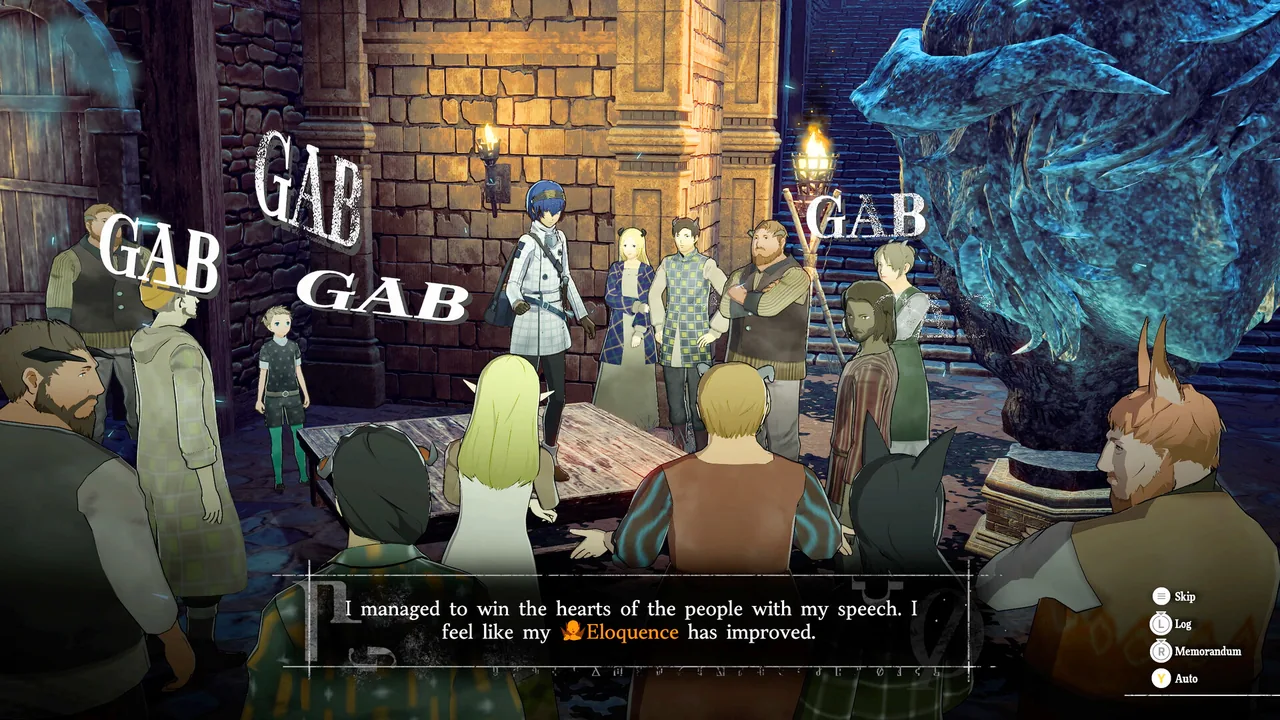
The premise is unusual for the genre: the king is dead, and the crown will go to whoever wins an open election held across the fractured nation of Euchronia — a contest any citizen, including a member of a persecuted underclass like the protagonist, is legally entitled to enter. The narrative's real subject is division: the game's tribes are visibly coded around real-world prejudice, and its story spends its runtime interrogating who gets to hold power and why people vote against their own interests. It's a more overtly political premise than most fantasy JRPGs attempt, and the ambition is admirable even where the execution leans toward telling you the theme in dialogue rather than letting the plot's structure make the same point on its own. The campaign framing gives the story's back half real momentum once the stakes of specific regional elections come into focus — this review won't go further into how that plays out.
The calendar economy: time as the real currency
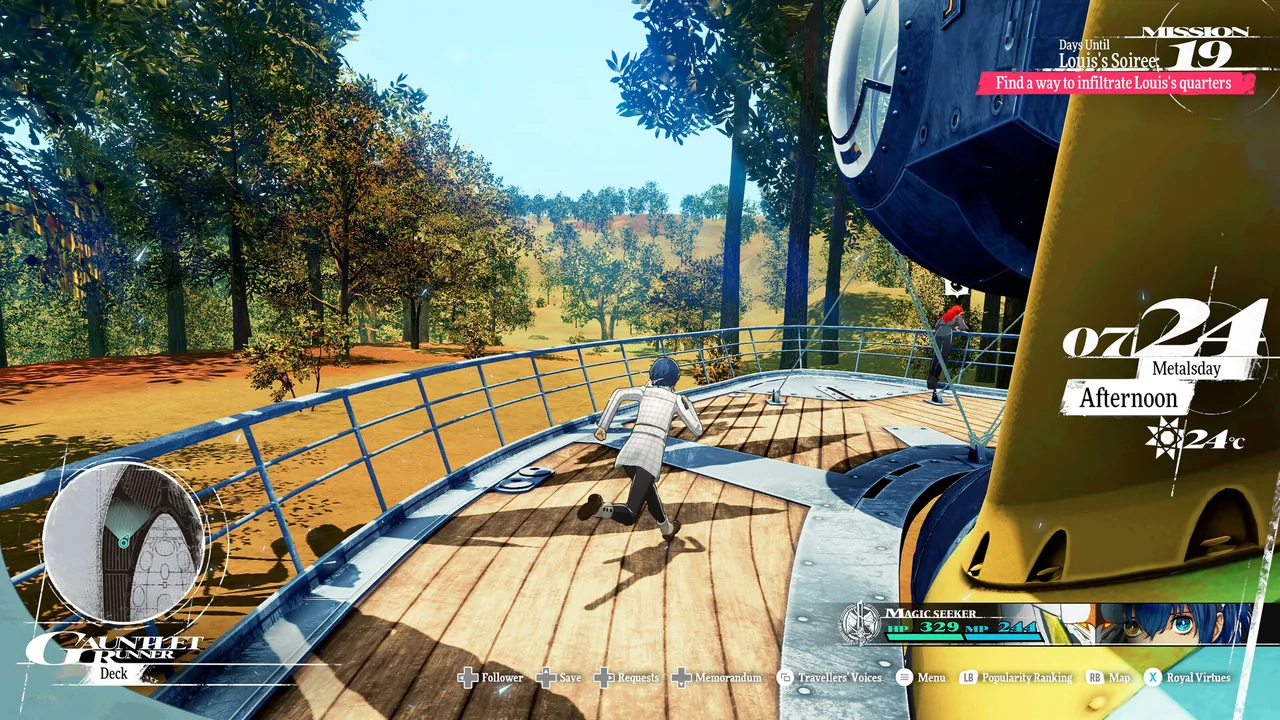
Structurally, you get one daytime activity and one evening activity per calendar day, spent against a fixed deadline before the current story arc's election. That single design decision reshapes everything else. Dungeons that take multiple real-world days of in-game time to clear compete directly against follower bonds that only advance on specific days, which compete against study and combat training that raise the stats gating which bonds you can even start. There's no way to do all of it in one playthrough, and the game wants you to feel that scarcity rather than paper over it.
Early on, this is genuinely one of the best-tuned resource systems currently in a JRPG — every choice has a visible opportunity cost, and planning a week around a dungeon push or a social push is a real decision rather than a formality. The trouble is that the system doesn't flex much as the story's needs change. By the midgame, once you're juggling several followers, side dungeons, equipment shopping and story deadlines simultaneously, the calendar stops feeling like a meaningful constraint and starts feeling like a spreadsheet you're filling in around the plot. The worst version of this shows up when the story pauses its own momentum at a dramatic high point specifically to let the calendar catch up on side content — a pacing decision that protects the game's systems at the expense of its own narrative tension, which is a strange trade for a game this narratively ambitious to keep making.
Archetypes: the progression system doing the real work
If the calendar is the game's clock, Archetypes are what you're actually spending your time building toward, and this is where Metaphor: ReFantazio distinguishes itself from both its Persona siblings and most of the rest of the genre. Archetypes are class slots, not stat sticks — fourteen starting Origin Archetypes branch outward through lineage trees into roughly forty-six total classes, each with an Adept and an Elite evolution that opens new skills and stat growth as you level the class itself rather than just the character wearing it.
The part that turns this from a decent job system into a genuinely deep one is inheritance. Every Archetype starts with one skill-inheritance slot — a socket where you can carry a learned skill over from a different class entirely — and building a strong bond with the right follower unlocks additional slots for that follower's entire Archetype lineage, shared across your whole active party, up to four slots per class. In practice that means a character's build is never fully defined by which class they're currently wearing; a frontline Warrior can carry a healing spell learned on a completely different class months earlier, and that flexibility compounds the longer you play rather than flattening out once you've "solved" a build. Layer synthesis on top — combining two Archetypes to create hybrid classes with blended skill pools, like a stealth-healer that opens fights with status cures instead of damage — and party composition stops being a matter of picking the strongest four options and starts being a genuine design puzzle with real trade-offs. Few JRPGs give players this much room to actually engineer a party rather than assemble one from a fixed menu, and it's the single strongest reason to spend the hours this game asks for.
Followers as stat progression, not just story
The follower system is the game's answer to Persona's social links, and Wanderer's readers in particular should notice what it's actually doing mechanically rather than treating it as a dating-sim layer bolted onto an RPG. Each bond gates specific Archetype unlocks and inheritance slots behind relationship rank, which means the "story" content is functionally a skill tree with dialogue wrapped around it — advancing a bond is a stat investment with a direct, permanent effect on what your whole party can build toward, not flavour text you can skip without consequence. That's a smarter integration of narrative and mechanics than the genre usually manages, and it's also exactly why the calendar's opportunity-cost pressure matters as much as it does: skipping a bond isn't skipping a scene, it's skipping a permanent unlock.
Combat: two systems, used correctly
Combat splits cleanly into two modes, and the split is one of the better structural ideas in the game. Fast Battles happen directly in the field — walk into a weaker enemy and you can strike it down in real time without ever opening a menu, or land a hit that staggers it before combat formally begins. Squad Battles are the traditional turn-based system: each action spends a Turn Icon from a shared pool, and landing a hit against an enemy's specific elemental or physical weakness only costs half an icon, effectively granting an extra action for reading the fight correctly.
The effect is that the turn-based system, the part that actually asks for tactical thought, is reserved for the fights that deserve the attention — trash encounters get cleared in seconds through Fast Battles, and Squad Battles only kick in when an enemy is dangerous enough to be worth the ceremony. That's a meaningfully better pacing decision than most turn-based RPGs make, where every random encounter gets the same full command-menu treatment regardless of how trivial it is. The weakness-exploitation loop itself isn't a new idea for this development team, but the execution here — half-cost icons instead of a flat extra-turn bonus — rewards precision play more granularly than the "one weakness hit equals one bonus turn" formula most of the genre still uses.
Where the dungeon design doesn't keep pace with the combat
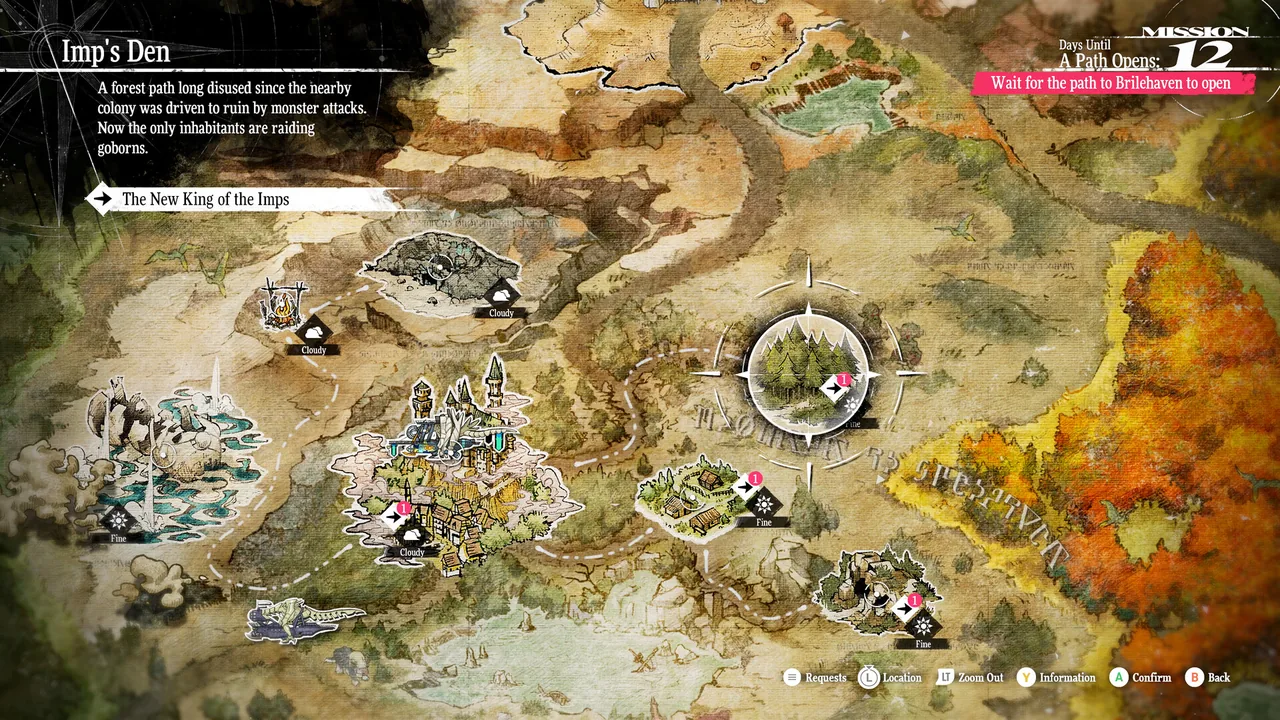
Combat this considered deserves environments built with the same care, and that's only partly true here. The main story dungeons are genuinely strong — each one built around a distinct visual identity and a structural gimmick specific to that location, the kind of hand-authored dungeon design the genre's biggest budgets don't always bother with anymore. Side dungeons are a different story: several of them draw from the same small pool of generic cave and forest layouts, differentiated mostly by enemy roster rather than structure or layout, and the repetition becomes noticeable well before the game's back half. It's an understandable trade-off given how much of the budget clearly went into the Archetype system, the follower writing and the handful of major set-piece dungeons — but it means the exploration layer has a visible gap between its best and worst moments in a way the combat and progression systems mostly don't.
Presentation, sound and interface
This is a strength worth calling out on its own rather than folding into a general compliment. Shigenori Soejima's character and world art gives Euchronia a distinct painterly identity, and Shoji Meguro's score — leaning on choral and orchestral arrangements rather than the jazz-and-acid-rock signature of the Persona scores — is one of the best JRPG soundtracks of its year by a wide margin. The interface deserves equal credit: menus, battle UI and the calendar itself are laid out with the same aggressive, legible graphic design ATLUS has built a reputation on, readable at a glance even when a screen is carrying several overlapping systems (party status, Archetype unlocks, follower rank, calendar deadline) at once. Few RPGs this systems-dense manage to keep their UI feeling this uncluttered.
Performance and value
On PC, the game runs well on the hardware it targets and Steam Deck compatibility has held up in player reports, though as with most releases at this scale, older or budget configurations should expect to drop settings to maintain a stable frame rate rather than assume a flawless out-of-the-box experience. There's no always-online requirement and no premium currency to worry about — this is a straightforward premium purchase, and the eight DLC packs on offer are cosmetic school-uniform and costume sets bundled with bonus battle music, none of which touch progression or difficulty.
The price is the harder conversation. NZ$127.95 with no standing discount is expensive even by full-price JRPG standards, and it's asking that much for a genre-typical sixty-to-eighty hour campaign rather than anything unusually short. Judged purely on hours delivered per dollar it's defensible for players who already know they'll finish it; judged as a speculative purchase for someone unsure whether the calendar-and-Archetype loop is for them, it's a genuinely risky amount of money to spend before finding out. There's no demo to test the waters the way some of its genre peers offer, which makes that risk harder to hedge.
Reception
Metaphor: ReFantazio swept Best RPG, Best Narrative and Best Art Direction at The Game Awards 2024, and it holds a Very Positive standing on Steam at roughly 90% positive across more than 42,000 reviews — a strong, consistent number rather than an early-review spike that faded. The recurring complaints in that feedback line up closely with what shows up here: calendar fatigue in the middle stretch and side-dungeon repetition, rather than anything structural in the combat or class systems, which have been near-universally praised.
Verdict
Metaphor: ReFantazio earns its acclaim through one system in particular — the Archetype tree is one of the best class-building structures a turn-based RPG has shipped in years, and the way follower bonds tie directly into it means the game's social layer is doing real mechanical work instead of just padding the runtime. The Fast Battle and Squad Battle split is a smart, well-executed idea that most of the genre still hasn't caught up to, and the presentation — art, score and interface alike — is close to the best the genre currently offers.
What keeps it half a point off the top tier is pacing discipline: the calendar system that makes the opening hours feel urgent starts working against the story by the midgame, side dungeons don't match the ambition of the main story's set pieces, and a script this interested in political themes occasionally states them outright rather than trusting players to arrive there. None of that erases what the game gets right, and none of it should stop genre fans from buying in — but at NZ$127.95 with no discount and an eighty-hour minimum ask, this is a purchase for people who already know they want a serious class-based RPG to live in for a while, not a casual weekend pickup.
Players who like the idea of time itself being the scarcest resource in a progression system — rather than gold or gear — will recognise the appeal immediately even outside the JRPG space; it's a similar instinct to what keeps players logging back into Wanderer between sessions, just compressed into a single, much longer campaign.
Price, platform and Steam review data checked 30 July 2026.
Pros and cons
Pros
- The Archetype system's lineage trees, skill inheritance and synthesis classes give party building more depth than most tactical RPGs manage, let alone a JRPG
- Squad Battles reward reading enemy weaknesses precisely, with half-cost turn icons turning a good read into a genuine tempo swing
- Fast Battles let you clear trash encounters in the field without ever opening a menu, so the turn-based system is reserved for fights that deserve it
- Follower bonds function as real stat and skill-tree progression, not just conversation trees bolted onto the side of the game
- Shoji Meguro's score and the game's UI design are both genre-best work, readable at a glance and stylish without getting in the way
- A real ending on a fixed campaign length rather than a live-service structure designed to keep extracting time and money
Cons
- The calendar's two-activity-per-day structure turns exploration and socialising into a constant opportunity-cost calculation that wears thin well before the campaign's end
- Side dungeons reuse the same handful of cave and forest layouts far more than the hand-built main story dungeons, which is where the design budget clearly went
- The middle third slows considerably as story missions pause for stretches of calendar-filling side content before the plot allows itself to move again
- Its political and social commentary sometimes states its themes directly through dialogue rather than trusting the story's structure to carry them
- NZ$127.95 with no standard-edition discount is a serious ask even by full-price JRPG standards, and the eight DLC packs add another line item for players who want the bonus tracks
Screenshots
-
Metaphor: ReFantazioImage: SEGA via Steam -
Metaphor: ReFantazioImage: SEGA via Steam -
Metaphor: ReFantazioImage: SEGA via Steam -
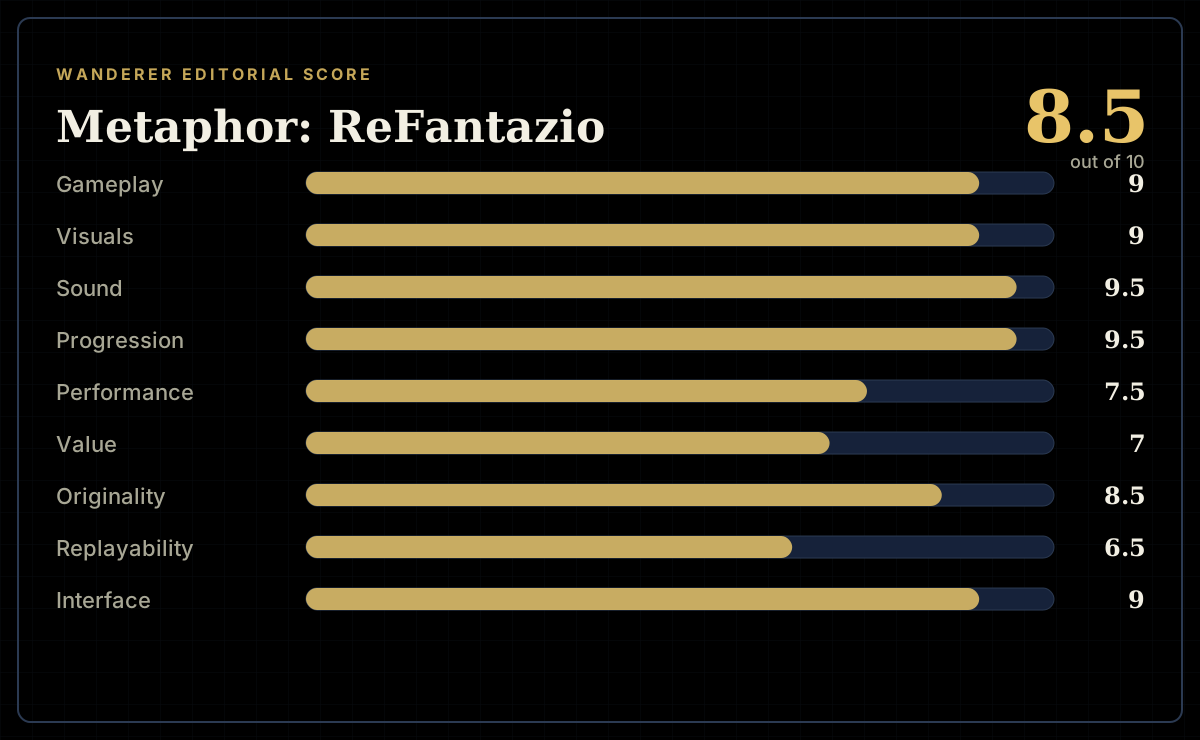
How the review scores each part of the gameWanderer Editorial -
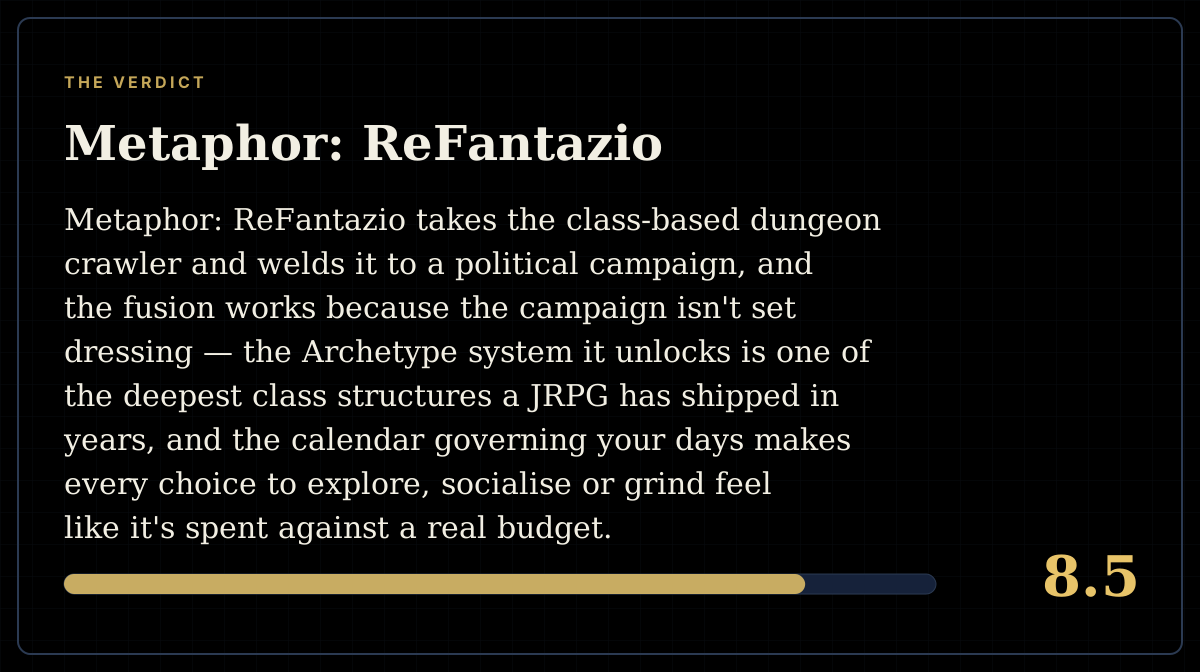
The short versionWanderer Editorial