
Game review
Doloc Town
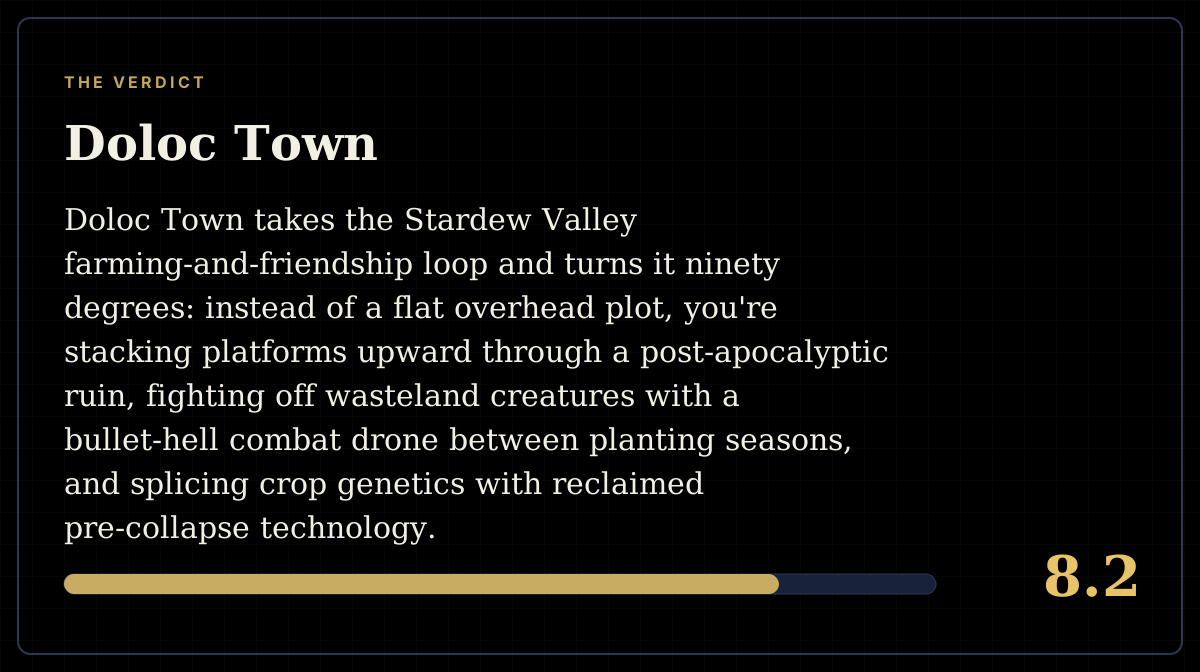
8.2 / 10
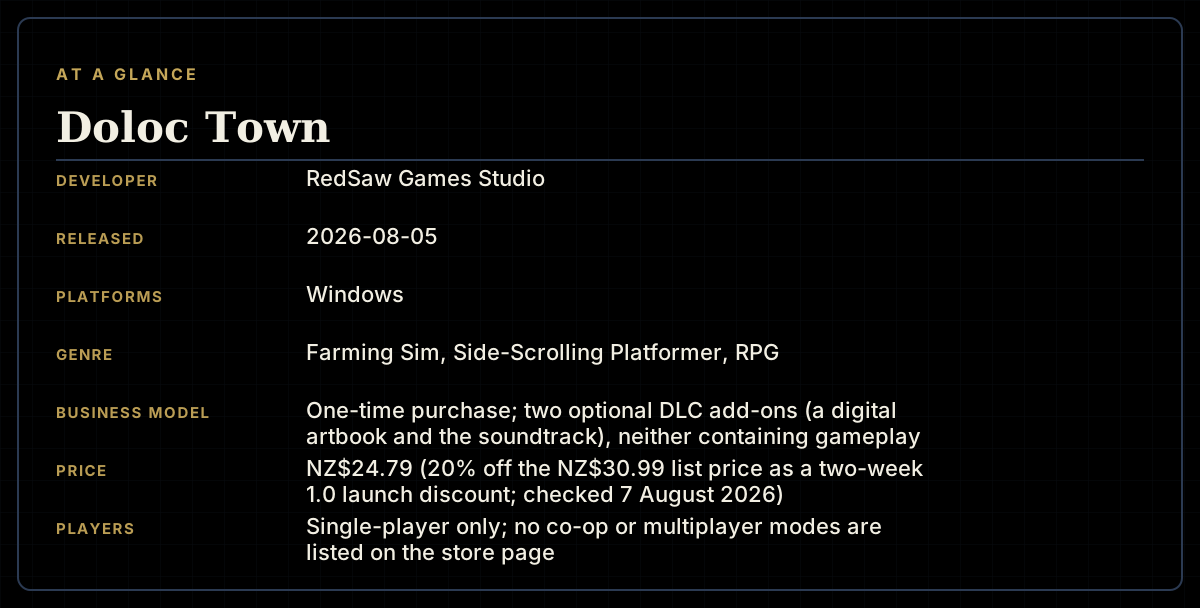
- Developer
- RedSaw Games Studio
- Publisher
- Logoi Games, Pathea Games
- Released
- 5 August 2026
- Platforms
- Windows
- Genre
- Farming Sim, Side-Scrolling Platformer, RPG
- Monetisation
- One-time purchase; two optional DLC add-ons (a digital artbook and the soundtrack), neither containing gameplay content; free Steam Workshop support for community content; no in-game currency, energy system or timers
- Players
- Single-player only; no co-op or multiplayer modes are listed on the store page
The short version
Doloc Town takes the Stardew Valley farming-and-friendship loop and turns it ninety degrees: instead of a flat overhead plot, you're stacking platforms upward through a post-apocalyptic ruin, fighting off wasteland creatures with a bullet-hell combat drone between planting seasons, and splicing crop genetics with reclaimed pre-collapse technology. It's a genuinely distinct angle on an increasingly crowded genre, backed by a real Early Access track record — save compatibility, community feedback folded into fifteen months of patches, and a launch that 99 of its most recent 100 English Steam reviews called positive. The rough edges are specific rather than vague: interface scaling breaks at low resolutions, one loud complaint about dropped double-jump inputs dates back to the Early Access build, and at least one player found the main story's ending arrived without warning.
Biggest strengths
- Vertical platform-stacking construction is a real structural difference from the genre's usual flat-plot layout, not just a visual reskin of Stardew Valley's farm grid
- The gene system lets players splice traits across 30-plus crop types using reclaimed pre-apocalypse technology, giving crop optimisation a sci-fi hook most farming sims don't attempt
- Farming automation via solar and wind-powered drone stations gives the loop a genuine late-game shift from active farming to managed production, matching the store page's own "scavenger to farming tycoon" pitch
Biggest weaknesses
- The interface does not scale correctly at lower resolutions — one player specifically reported UI elements running off-screen at 1280x720 and 800x600, with no scaling option to compensate
- The single most-upvoted English negative review (41 votes) describes double-jump and sprint inputs dropping during platforming sections on controller; it dates to the Early Access build and the current English review sample is too thin to confirm whether it persisted into 1.0
- One reviewer described the main story ending abruptly mid-dialogue rather than at a natural narrative beat, which is a specific enough complaint to flag even from a single account
Who it's for: Stardew Valley and My Time series fans who want the farming-sim formula reframed through platforming and light bullet-hell combat, and players who specifically want their crafting and relationship systems wrapped in more narrative stakes than a cozy game usually bothers with.
Our recommendation: At NZ$24.79 for a stated 30-plus hours of main story and 100-plus hours of total content, with clean one-time-purchase monetisation and two genuinely optional add-ons, this is an easy recommendation for anyone who likes the genre and wants something structurally different from it. Check your resolution against the UI-scaling complaints below before committing if you're not running a standard widescreen desktop setup.
8.2 / 10
Farming sims have spent a decade converging on the same overhead plot of dirt, so the trick Doloc Town pulls is a simple one on paper and a genuinely different game in practice: turn the farm on its side. Crops, coops and crafting stations don't spread outward across a field here, they stack upward through platforms you build yourself, one level at a time, in a settlement wedged into the ruins of a world that ended before you were old enough to remember it. RedSaw Games Studio spent roughly fifteen months building that idea out in Early Access before shipping the finished game on 5 August 2026, and the result is a farming sim that asks a genuinely different spatial question than its genre-mates while still delivering the crop timers, relationship meters and cluttered inventory screens the audience came for.
A farm you build up, not out
The premise is efficient: you play a scavenger named Proti (rename optional) who wakes up on a small plot after a fall, drawn back to a settlement called Doloc Town by half-remembered childhood ties. From there the loop is recognisably farming-sim — plant, water, harvest, sell, befriend the locals, repeat through in-game seasons — but the platform-stacking construction changes how all of it feels moment to moment. Where Stardew Valley or Fields of Mistria hand you a rectangle of dirt to subdivide, Doloc Town has you crafting and placing platforms freely across vertical space, climbing and jumping between levels you built yourself to reach a coop, a planter row, or a crafting bench. It's the difference between arranging furniture in a room and building the room, and it's the single clearest reason this doesn't read as a reskin of the genre's dominant template.
That vertical structure carries a cost the genre doesn't normally impose: spatial planning becomes a real constraint rather than a light optimisation puzzle, because every platform you don't build is space you don't have. Several of the game's own promotional beats — wall-running sections, a "choose the right path" branching area — suggest the team leaned into that rather than treating it as a limitation to route around, and the achievement list backs up that the platforming isn't window dressing on top of a farming game so much as load-bearing structure underneath one.
Gathering, genes, and the long tail of automation
Underneath the platforming, the resource systems are dense even by genre standards: more than 40 kinds of scavenged minerals, plants and scrap; over 30 crop types; 40-plus fish species; and 80-plus crafting recipes spanning gathering, farming, fishing, ranching and cooking. What separates the mid-game from a typical farming sim is the gene system, which lets players reclaim pre-apocalypse technology to splice traits across those 30-plus crops — breeding hardier strains or deliberately engineering unusual new properties into them. It's a mechanic that gives crop optimisation an actual knowledge curve instead of just a bigger sprinkler, and it ties cleanly into the game's broader "restore the wasteland" framing rather than sitting off to one side as a mini-game.
The endgame answers the genre's usual "what do I do once the farm runs itself" question more directly than most: solar and wind power stations feed automated drone systems that handle seeding, tending and harvesting without direct input, letting the loop shift from active farming to managed production exactly as the store page's "scavenger to farming tycoon" pitch promises. Combat sits alongside all of this as a genuine secondary system rather than genre lip service — a combat drone equipped with weapon and lighting modules carries you through bullet-hell encounters across five distinct exploration zones (outskirts, mining areas, forests, river valleys and wetlands, plus the Old City Ruins), which is a heavier commitment to action than most cozy farming games attempt.
A story with real stakes, and one loud complaint about how it lands
Doloc Town's writing leans harder into plot than the genre typically bothers to: an unexplained "Eden" mark on pre-apocalypse technology, a vanished town leader, and a river valley that stayed lush while everything around it died are all set up as genuine mysteries rather than flavour text, and the 1.0 update specifically added roughly ten hours of main-story content on top of what Early Access buyers already had, bringing the core story to a stated 30-plus hours before side content and relationship arcs stretch the total past 100. Reader response to that expanded story has been strong — high-playtime English reviewers describe it as more dystopian and more grounded than they expected from the pitch, set only a few years after collapse rather than in either the immediate aftermath or a fully wild future.
Set against that, one detail from the small English negative-review sample is specific enough to flag rather than wave away: a player with roughly 27 hours logged described the story ending abruptly, mid-dialogue, without a natural stopping point to signal the credits were coming. It's a single account rather than a pattern, but it's a precise enough complaint — about pacing at the very end of a 30-hour investment — that it's worth going in aware of rather than discovering cold.
Where the edges are rough
Two structural complaints are worth naming plainly, because both come with dates attached rather than vague dissatisfaction. The first: a negative review reports the interface simply not scaling at lower resolutions, with UI elements running off-screen at both 1280x720 and 800x600, and no scaling setting available to correct it — worth checking against your own display before buying if you're not on a standard widescreen desktop. The second, and the single most-upvoted negative review in the game's entire English corpus at 41 votes: a controller player describes double-jump and sprint inputs occasionally failing to register during precision platforming sections, specifically flagged as disruptive during a puzzle that requires stringing several jumps together. That review is dated to May 2025, well inside the Early Access period and more than a year before 1.0 shipped, and it's worth being honest about what can and can't be verified from here: the game's entire English negative-review sample is only eight reviews, all of them predating the 1.0 launch, and none of the most recent hundred English reviews — all posted in the days immediately after 5 August — raise it again. That's suggestive rather than conclusive; an eight-review sample is too small to certify a fix, but it's also too small to keep repeating a stale complaint as though it were current without saying so.
Steam Deck compatibility sits in a similar honest-disclosure category: the developers describe the game as playable with full controller support, while explicitly stating they haven't had the development time to formally optimise for Deck. There's no native Mac or Linux build. On the more generous side, the accessibility options go further than a farming sim is typically expected to: Camera Comfort, Color Alternatives, Custom Volume Controls and a "Playable without Timed Input" mode are all listed store categories, meaning reflex-dependent moments like the drone combat aren't mandatory to actually finish the game.
A clean Early Access graduation, priced to match
Doloc Town's path to 1.0 is worth stating plainly because it's the exception rather than the rule: roughly fifteen months in Early Access, a public FAQ confirming that existing save files transfer without requiring a restart, and a launch that added a full new area, farming automation and the back half of the main story rather than simply flipping a version number. The developers state directly that pricing was locked ahead of the 1.0 launch, and the current NZ$24.79 is a 20%-off two-week launch discount against a NZ$30.99 list price — an honest promotional window rather than a permanent-looking markdown designed to manufacture urgency.
The two DLC add-ons back that up: a NZ$4.79 digital artbook and a NZ$3.99 soundtrack, both explicitly described as containing no gameplay content, alongside free Steam Workshop support for community add-ons. There's no premium currency, no energy system, no timers gating progress behind real money, and no edition-exclusive content locked away from the base purchase. For a genre that has occasionally drifted toward mobile-adjacent monetisation even on desktop storefronts, this is about as clean as it gets.
Player sentiment backs the graduation up rather than contradicting it. The lifetime score sits at 96% positive across 2,557 reviews (Overwhelmingly Positive), with the caveat that nearly three-quarters of that corpus — 1,878 of 2,557 — is in Simplified Chinese, reflecting a large existing audience through the game's Chinese-market Early Access run and Pathea Games' own established base from the My Time series. The English-language slice most Western buyers will actually read is smaller but no less positive: 435 reviews at 98% Very Positive, and — the number that matters most for anyone buying today rather than a year ago — 99 of the 100 most recent English reviews, all posted in the four days after 1.0 launched, called it a recommend. CGMagazine's own review, syndicated through Steam's news feed, scored it 8/10 and specifically called out the platforming-farming combination as something the genre hasn't really attempted before. The global achievement data supports a game built for the long haul rather than a short burn: the single most-earned achievement sits at 59.1% and the median across all 80 sits at 5.2%, a curve far more consistent with a 100-hour-plus completionist tail than with players bouncing off early content.
Final verdict
Doloc Town earns its 8.2 by doing something the crowded farming-sim genre rarely attempts: rebuilding the core loop around a genuinely different spatial idea, then backing it with a gene-splicing crop system, real automation, and a story with actual narrative stakes, all delivered through an Early Access period that visibly used its fifteen months rather than just running out the clock. It doesn't score higher because the rough edges that exist are specific and real rather than cosmetic — a UI-scaling bug at lower resolutions, a loud EA-era complaint about dropped platforming inputs that the current review sample is too thin to confirm as fixed, and at least one account of a story ending that arrives without warning. None of that undercuts the fundamentals: the monetisation is close to exemplary, the accessibility options are better than the genre requires, and a launch week where 99 of the last 100 English reviews came back positive is about as clean a 1.0 as this library has seen. If you've worn out Stardew Valley's flat plot of dirt and want the same emotional register with a vertical, more dangerous twist, this is an easy recommendation; if you're sensitive to interface polish, check your resolution against the complaints above before you commit.
Pros and cons
Pros
- Vertical platform-stacking construction is a real structural difference from the genre's usual flat-plot layout, not just a visual reskin of Stardew Valley's farm grid
- The gene system lets players splice traits across 30-plus crop types using reclaimed pre-apocalypse technology, giving crop optimisation a sci-fi hook most farming sims don't attempt
- Farming automation via solar and wind-powered drone stations gives the loop a genuine late-game shift from active farming to managed production, matching the store page's own "scavenger to farming tycoon" pitch
- Monetisation is about as clean as the genre gets — one purchase, an optional artbook and soundtrack that contain no gameplay content, and free Steam Workshop support
- Fifteen months of Early Access produced a real patch history rather than a rushed 1.0: existing saves carry over intact, and the 1.0 update specifically added roughly ten hours of story on top of what Early Access buyers already had
- Accessibility options are more substantial than a farming sim strictly needs to offer, including Camera Comfort, Color Alternatives, Custom Volume Controls and a "Playable without Timed Input" mode
Cons
- The interface does not scale correctly at lower resolutions — one player specifically reported UI elements running off-screen at 1280x720 and 800x600, with no scaling option to compensate
- The single most-upvoted English negative review (41 votes) describes double-jump and sprint inputs dropping during platforming sections on controller; it dates to the Early Access build and the current English review sample is too thin to confirm whether it persisted into 1.0
- One reviewer described the main story ending abruptly mid-dialogue rather than at a natural narrative beat, which is a specific enough complaint to flag even from a single account
- Nearly three-quarters of the review corpus (1,878 of 2,557 total) is in Simplified Chinese, so the English-language sample most Western buyers will search out is comparatively small — 435 reviews, only eight of them negative
- Windows-only, with no native Mac or Linux build; Steam Deck is described by the developer as "playable" but not yet formally optimised
Screenshots
-
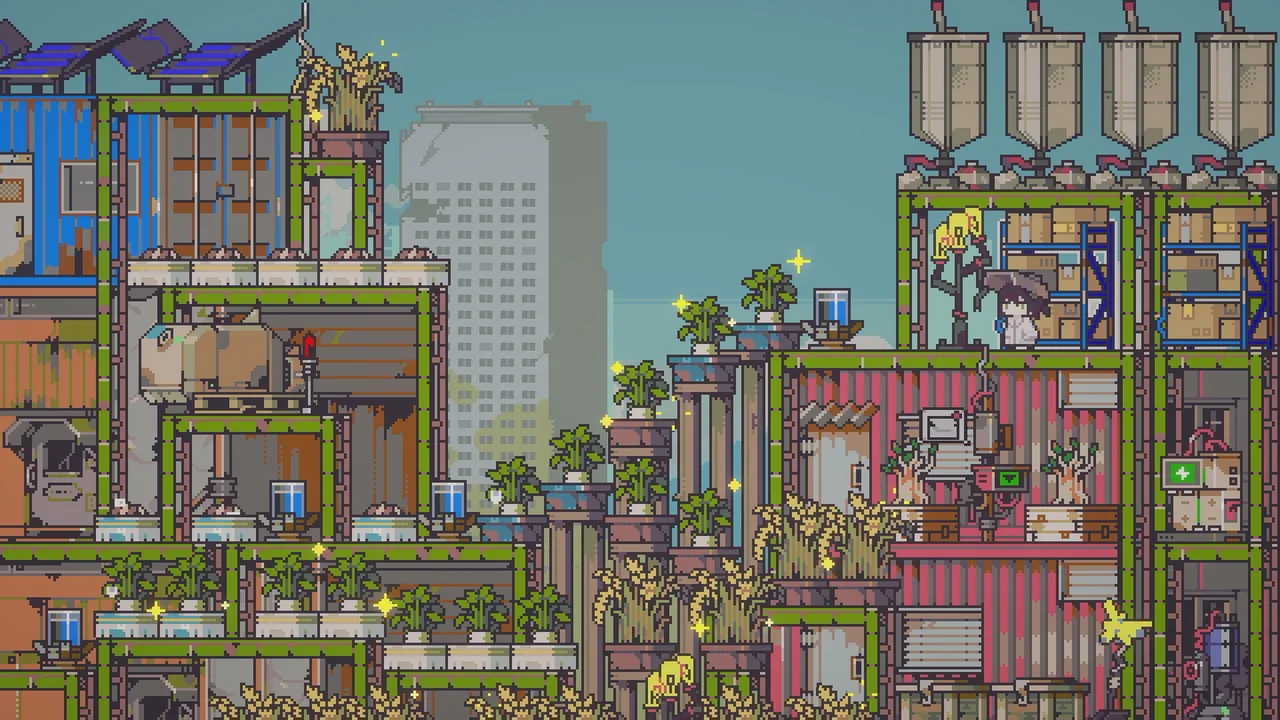
Doloc TownImage: Logoi Games via Steam -
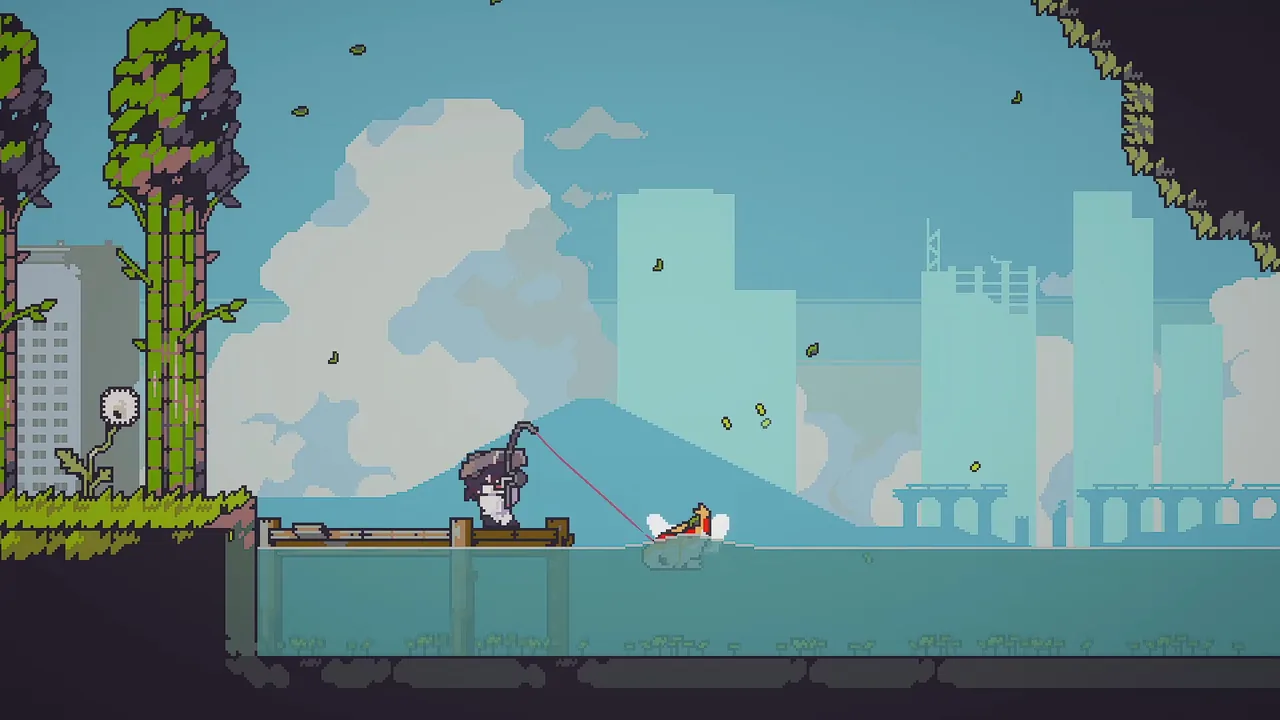
Doloc TownImage: Logoi Games via Steam -
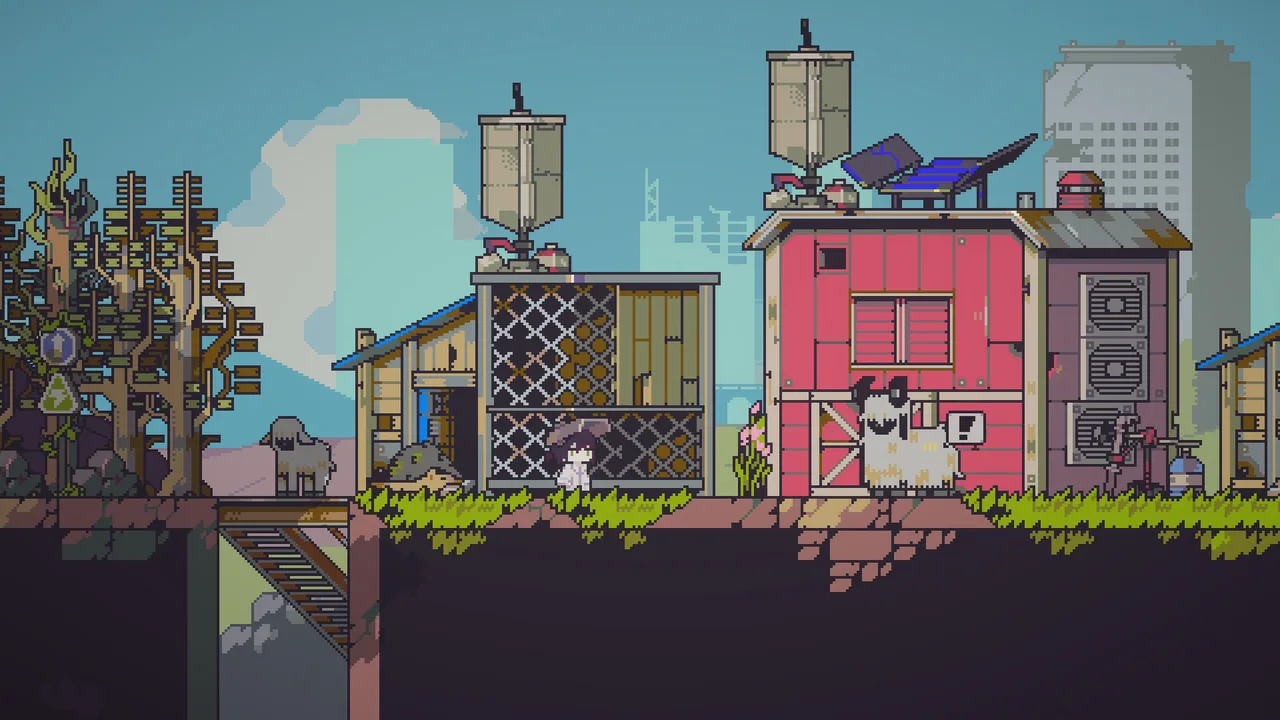
Doloc TownImage: Logoi Games via Steam -
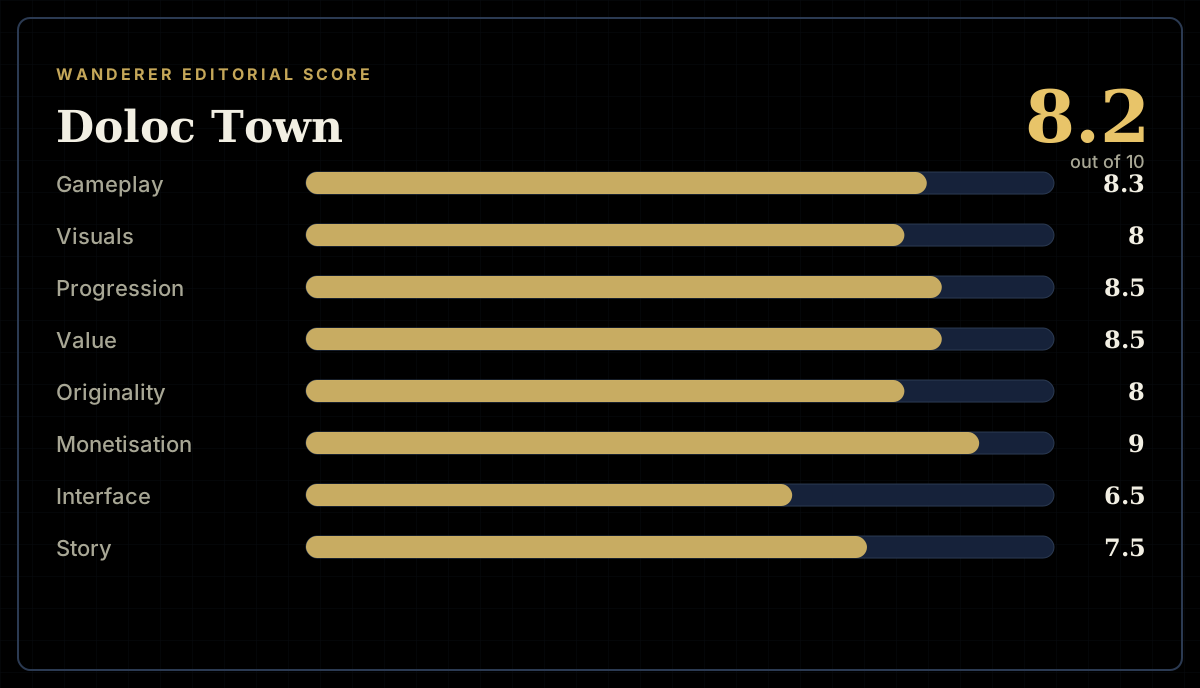
How the review scores each part of the gameWanderer Editorial -
The game at a glanceWanderer Editorial -
The short versionWanderer Editorial