Game review
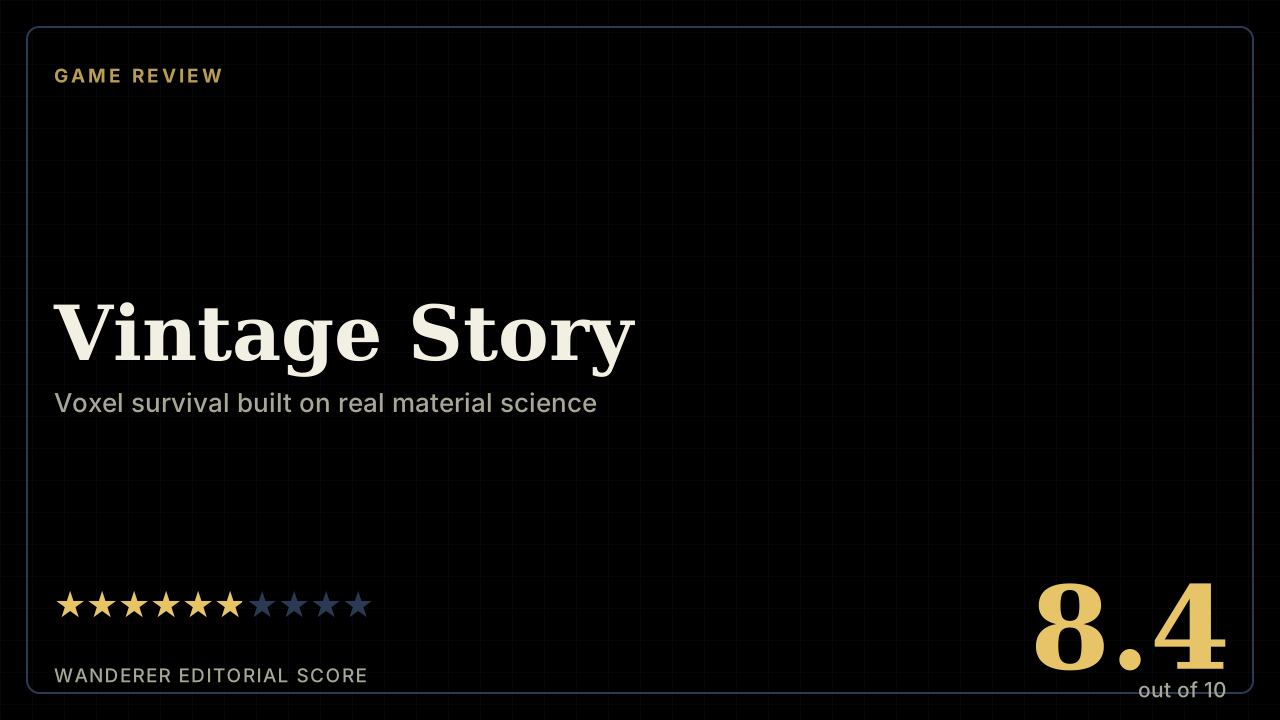
Vintage Story
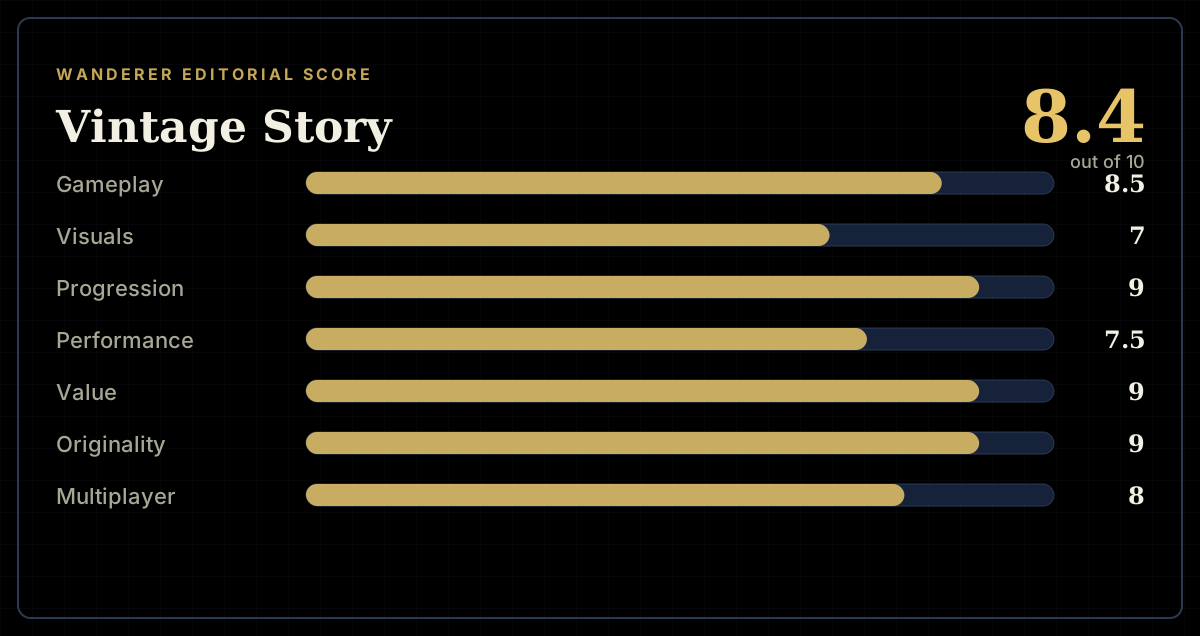
8.4 / 10
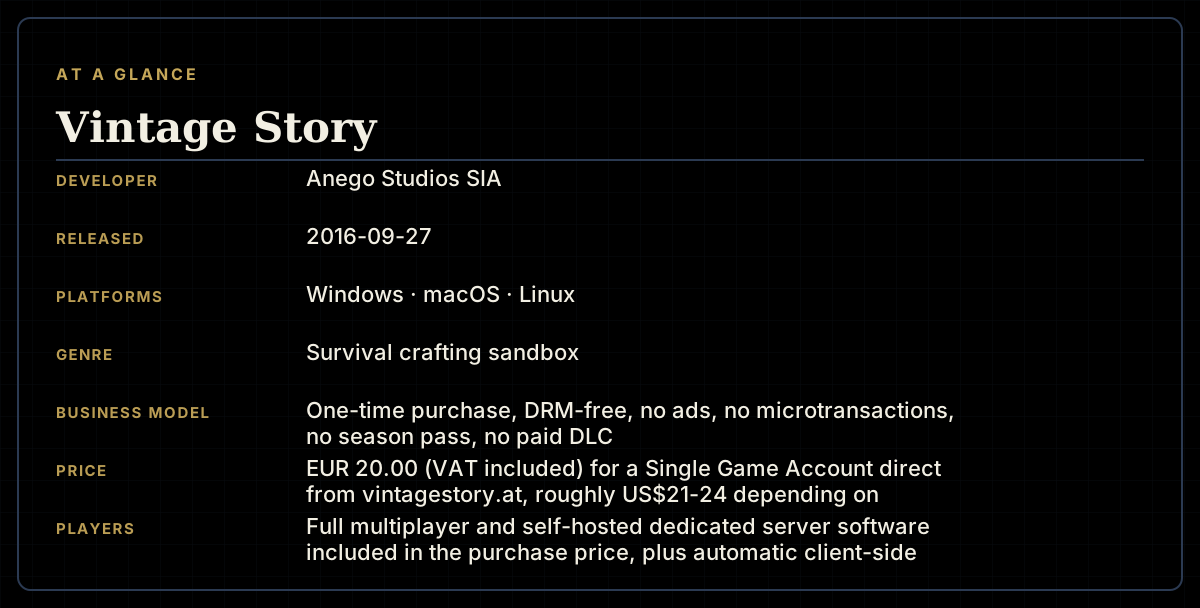
- Developer
- Anego Studios SIA
- Released
- 27 September 2016
- Platforms
- Windows, macOS, Linux
- Genre
- Survival crafting sandbox
- Monetisation
- One-time purchase, DRM-free, no ads, no microtransactions, no season pass, no paid DLC
- Players
- Full multiplayer and self-hosted dedicated server software included in the purchase price, plus automatic client-side mod syncing when joining a modded server
The short version
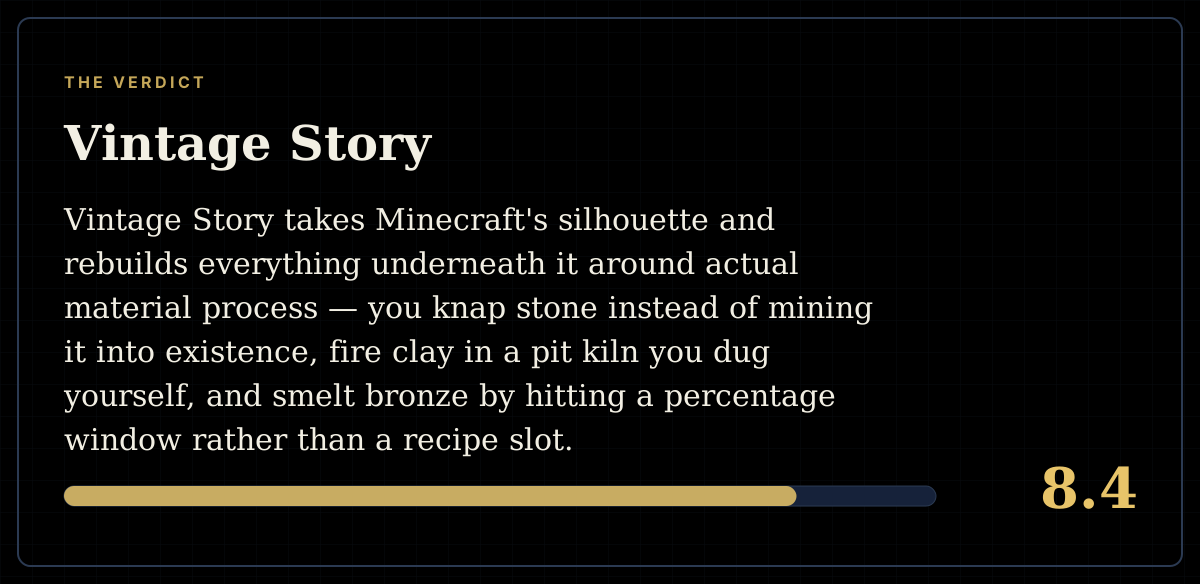
Vintage Story takes Minecraft's silhouette and rebuilds everything underneath it around actual material process — you knap stone instead of mining it into existence, fire clay in a pit kiln you dug yourself, and smelt bronze by hitting a percentage window rather than a recipe slot. That depth is the entire pitch, and it's real: this is the most convincing "realistic" crafting ladder in the genre, taught almost entirely through an in-game handbook that does the job the tutorial refuses to.
It is also brutally unhurried in the opening hours, visually muted rather than pretty, and still wearing an Early Access label after ten years and twenty-two major versions. None of that is false advertising — Anego Studios sells exactly the game it says it's selling, for one flat payment, forever — but it means the audience is narrower than Minecraft's shadow suggests.
Biggest strengths
- The crafting ladder is genuinely taught by real material process, not recipe-slot abstraction — pit kilns, bloomeries and alloy percentages all behave like the real thing
- The in-game handbook explains almost every block, item and mechanic without forcing a wiki tab, which is rare for a game this systemically deep
- A single EUR 20 purchase includes full multiplayer, self-hosted dedicated server software and automatic mod syncing, with no account tier above that
Biggest weaknesses
- The opening hours are slow even by survival-sandbox standards — reaching a basic bronze toolkit is measured in many hours, not minutes, and the game does nothing to soften that
- The nutrition system's five food categories demand real farming and hunting variety early on, and a narrow diet quietly caps your maximum health
- The muted, painterly art style and horror-tinged atmosphere read as murky rather than inviting next to brighter voxel competitors
Who it's for: Players who found Minecraft's tech tree too easy and wanted the friction to mean something — people who enjoy Rimworld-adjacent process chains, cooking with real nutrition math, and multiplayer worlds that reward a settled community over a fresh wipe.
Our recommendation: Buy it if the description of knapping your first axe head sounds satisfying rather than tedious. Read the in-game handbook before asking the wiki anything, and go in expecting your first ten hours to be slow by design, not by accident.
8.4 / 10
Most voxel survival games borrow Minecraft's shape and change the coat of paint. Vintage Story borrows the shape and rebuilds everything underneath it. You don't punch a tree and pull planks out of thin air — you knap a stone core into a flint blade on a ten-by-ten voxel grid, chipping away exactly the pieces that don't belong. You don't smelt iron by feeding ore into a furnace slot — you build a pit kiln from the wood and dirt you dug yourself, fire it for real in-game hours, and only then get to touch a bloomery. Bronze isn't a recipe; it's a percentage window — 88 to 92 percent copper, 8 to 12 percent tin, measured in the units you actually poured into the crucible. Anego Studios has spent a decade turning "realistic survival crafting" from a marketing phrase into a functioning simulation, and whether that reads as the deepest crafting ladder in the genre or friction dressed up as authenticity depends entirely on what kind of player is asking.
A funding model as unusual as the crafting
Vintage Story has never been on Steam, and that's worth stating plainly before anything else, because it shapes everything about how the game is sold and supported. Anego Studios SIA, a Latvia-based studio founded by Tyron and Irena Madlener in February 2016, sells the game only through its own store at vintagestory.at (with a handful of authorised resellers like itch.io and Humble). A Single Game Account costs EUR 20.00, VAT included, as a one-time purchase — no storefront cut, no platform wallet, no regional key reseller games. That price gets a game key, access to a client area for downloading every future update, full multiplayer, the mod database, and — notably — the server software to self-host a dedicated world, all bundled into the same purchase rather than gated behind a separate SKU. The studio's own boilerplate spells out the business model explicitly: "No marketplace. No loot boxes. No microtransactions. No season pass. No paid DLC. No hidden fees. No pay2win. No ads." Ten years later, that statement still holds.
It's a genuinely rare structure for a game with this much ongoing development behind it. Most long-running Early Access projects either move to a platform with its discovery and refund infrastructure, or they monetise the gap with cosmetics and expansions. Vintage Story does neither. The trade-off is that discovery is entirely word-of-mouth and community-driven rather than algorithm-fed, and there's no aggregated Steam review score to point new players at — you have to go looking for the wiki, the Discord and the forums yourself. For a studio that's grown from one founder to a 23-person international team without outside publishers, that's evidently been enough. The game still carries the words "Early Access" a decade and twenty-two major version numbers after its first public build in September 2016, and there is no announced date for that to change. That's not a red flag in the usual sense — updates have shipped on a steady, almost monthly cadence for years, most recently a run of 1.22.x patches through the middle of 2026 — but it is a permanent asterisk that a prospective buyer should know about before paying.
The ladder: knapping to steel, the slow way
The core loop is a genuine tech tree, and it's worth walking it in some detail because "realistic crafting" gets thrown around loosely in this genre. You start with nothing but bare hands, and your first tools come from knapping — selecting a stone type, then chipping voxels off a flat grid until a workable axe head, knife or arrowhead remains. From there it's pit kilns to fire clay pots and bricks, then a proper kiln, then copper — the first real metal age, mined and smelted rather than mystically converted. Bronze is the first alloy tier, and it comes in three distinct recipes with three distinct property profiles: tin bronze mines fastest, bismuth bronze lasts longest, black bronze (built from silver and gold rather than tin) produces the best tools overall. None of the three is a strict upgrade over the others, so which one you chase depends on what you're actually trying to build. Iron comes next, worked on an iron anvil that bronze tools can't manage, and steel caps the ladder for players who push that far.
None of this is fast, and the game is not interested in pretending otherwise. A common, consistent observation across player accounts is that reaching a basic bronze toolkit — mining enough copper, finding tin, building and firing the intermediate steps — can eat well over a dozen hours for a solo player learning the systems for the first time, against the roughly half-hour it takes to get diamond gear in Minecraft. That comparison sounds damning out of context, but it's the entire point: Vintage Story is explicitly not trying to be a faster Minecraft, it's trying to be a slower, more legible one, where every tier of gear represents a chain of real processes rather than a mining-depth gate. Whether sixteen hours to a basic toolkit is "deep" or "padded" is going to split players cleanly down the middle, and there's no version of this review that resolves that argument for you — it's a design choice the game commits to fully, not a balance oversight.
The handbook is the tutorial, and it mostly works
The single best piece of design in the whole package is the in-game handbook. Press a key, search or browse, and the game surfaces a written, illustrated entry for almost every block, item, tool and mechanic in the world — including the exact percentage windows for each alloy, the temperature a kiln needs to reach, and what a given tool is actually good for. That matters enormously for a game this systemically dense, because the alternative — tabbing out to a third-party wiki every time you hit an unfamiliar mechanic — is exactly the failure mode this genre usually falls into. Vintage Story mostly avoids it. New players still end up on the community wiki eventually, particularly for build order or optimal alloy recipes the handbook states but doesn't rank, but it's a supplement rather than a requirement, which is a genuinely higher bar than most crafting-heavy sandboxes clear.
Nutrition is the other system that separates Vintage Story from its peers, and it's stricter than it first appears. Food falls into five categories — protein, vegetable, grain, fruit and dairy — and each one fills its own bar as you eat, separate from the overall satiety meter that actually keeps you fed. Satisfy all five categories and you bank a meaningful health bonus; live on bread and jerky and you'll cap out well below your maximum HP without ever technically starving. It's a quiet, constant pressure rather than an obvious penalty screen, and it pushes toward the kind of mixed farming-hunting-foraging economy that a lot of survival games only gesture at. New players who ignore it won't die from it, but they will wonder why they're squishier than they expect, and the handbook — again — is where that answer actually lives.
Multiplayer and the modding scene
The self-hosting story is one of the cleanest in the genre: the same purchase that buys a single account also grants the dedicated server software, no separate license, no per-slot fee. Since version 1.16, joining a modded server auto-syncs the required client-side mods, which removes a huge amount of the manual setup friction that sinks a lot of modded voxel communities before they start. The official mod database now carries north of five thousand community mods, everything from quality-of-life tweaks to total conversions, and the game's engine — built in C# on OpenTK rather than forked from Minecraft's Java stack — runs noticeably lighter than Mojang's game at comparable render distances, which matters a great deal once a server is hosting a persistent, long-lived world rather than a fresh disposable one. That performance edge over Minecraft is one of the more consistently repeated points in player and critic feedback alike, and it's a real, earned advantage rather than a marketing claim.
Where the game asks more of its multiplayer communities is longevity: this is a sandbox built around settled towns and long-running economies, not drop-in public servers with constant world resets, and the temporal-stability system (an eldritch-adjacent threat that intensifies the longer a world runs without maintenance) actively punishes an abandoned server. That's a feature for the kind of dedicated Discord-organised community this game clearly wants, and a mild barrier for anyone hoping to hop into a random public world for an afternoon the way you might in Minecraft.
Presentation
Visually, Vintage Story trades Minecraft's bright primary-colour cheerfulness for something muddier and more atmospheric — desaturated palettes, a slightly unsettling ambient horror streak running through its lore and its nighttime threats, and textures that favour material accuracy over readability at a glance. It's a deliberate mood, and it suits the "found world after something went wrong" backstory the game is quietly building toward with recent story-mode additions. It is not, however, a game that photographs well next to brighter competitors, and players who bounce off Minecraft clones for being visually flat may find this one duller still on first impression, even though the material and lighting detail up close is considerably higher than it looks in a screenshot.
Verdict
Vintage Story earns its reputation as the most rigorously "realistic" crafting sandbox in the voxel-survival genre because the depth is real rather than decorative — knapping, alloy ratios, pit-fired ceramics and a genuine five-category nutrition system all behave the way their real-world counterparts would, taught almost entirely by a handbook that does its job. That's a genuine achievement, and combined with a one-time EUR 20 purchase that has never grown a storefront, a loot box or a season pass in ten years, it's an unusually clean value proposition. It loses ground on pacing that will read as glacial to anyone who didn't sign up for it, a visual style that undersells its own detail, and an Early Access label that's been sitting on the box for a decade with no exit date attached. This isn't a game for players who want Minecraft with better graphics — it's a game for players who thought Minecraft's crafting was too easy and wanted the friction to actually mean something.
Players who liked Core Keeper's mining loop but wanted the crafting chain underneath it to have real steps rather than instant conversions should take this seriously, as should anyone who enjoyed Necesse's settlement layer and wants a harder, slower version of the same idea. Fans of Project Zomboid's unforgiving, skill-respecting approach to survival will recognise the philosophy immediately, even though the two games have almost nothing else in common. And players who like systems that keep rewarding patient, long-term investment rather than a quick reset may find something familiar in Wanderer, too.
Price and version details checked August 2026.
Pros and cons
Pros
- The crafting ladder is genuinely taught by real material process, not recipe-slot abstraction — pit kilns, bloomeries and alloy percentages all behave like the real thing
- The in-game handbook explains almost every block, item and mechanic without forcing a wiki tab, which is rare for a game this systemically deep
- A single EUR 20 purchase includes full multiplayer, self-hosted dedicated server software and automatic mod syncing, with no account tier above that
- Over 5,000 community mods on the official ModDB give the sandbox a second life well past the vanilla content
- A decade of continuous, well-documented updates under one flat price, with no DLC or subscription layered on top since launch
Cons
- The opening hours are slow even by survival-sandbox standards — reaching a basic bronze toolkit is measured in many hours, not minutes, and the game does nothing to soften that
- The nutrition system's five food categories demand real farming and hunting variety early on, and a narrow diet quietly caps your maximum health
- The muted, painterly art style and horror-tinged atmosphere read as murky rather than inviting next to brighter voxel competitors
- Ten years and twenty-two major versions in, the project still carries an Early Access label with no announced release date, which will read as a red flag to anyone burned by an abandoned sandbox before
- No controller support and an interface built entirely around mouse-and-keyboard tooltips, so it is a desktop-only experience with no console version on the horizon
Screenshots
-
How the review scores each part of the gameWanderer Editorial -
The game at a glanceWanderer Editorial -
The short versionWanderer Editorial