Game review
SOMA
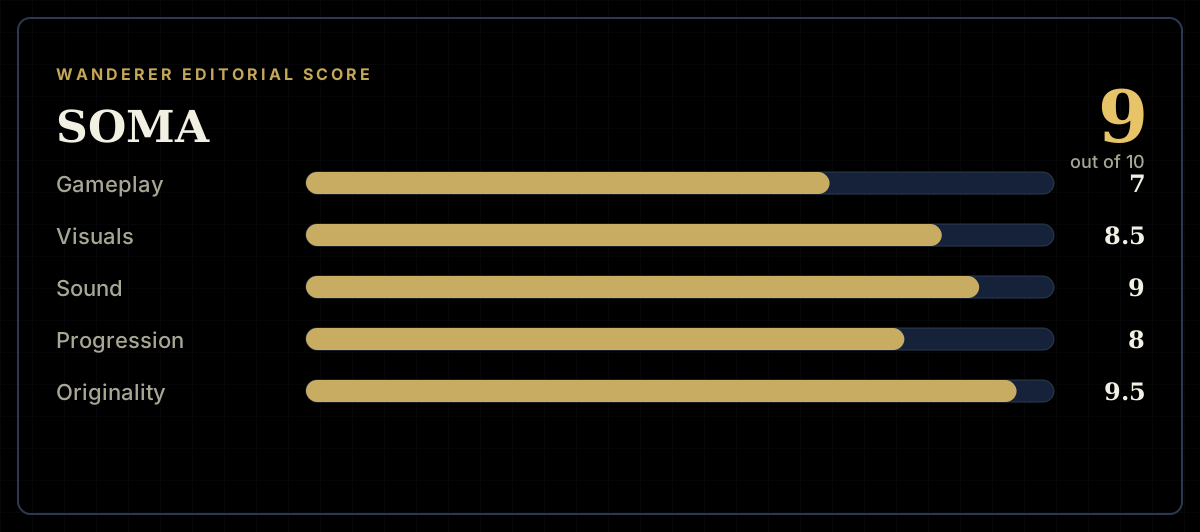
9 / 10
- Developer
- Frictional Games
- Publisher
- Frictional Games
- Released
- 21 September 2015
- Platforms
- Windows, macOS, Linux
- Genre
- Sci-Fi Horror
- Monetisation
- One-time purchase, NZ$43.59. No microtransactions, no paid DLC.
- Players
- Single-player only
The short version
SOMA sends you into a collapsing, half-flooded underwater research facility after an unspecified catastrophe, and slowly turns a survival-horror premise into a genuinely philosophical meditation on consciousness, continuity and what makes someone still themselves. It's routinely cited among the smartest horror games ever made, and 95.9% positive across 52,226 reviews, largely unmoved across nine years, reflects a reputation that formed quickly and has simply held.
The honest, consistent dissent is specific and hasn't changed shape since launch: a real minority of reviewers find the stealth-horror encounters with monsters thin and repetitive, arguing they interrupt rather than enhance a story strong enough to carry itself. It's a genuine, considered criticism from players who often still finish the game and credit its ideas — not a complaint about the writing, but about what's built around it.
Biggest strengths
- A genuinely ambitious, well-executed philosophical narrative about consciousness and identity, consistently cited as some of the smartest writing horror games have produced
- Oppressive, meticulously crafted atmosphere and sound design from a studio with a proven pedigree in the genre
- An ending reviewers across every year describe as staying with them long after finishing, often years later
Biggest weaknesses
- A consistent, considered minority criticism across all nine years: the monster-stealth encounters are described as thin and repetitive, interrupting a story reviewers say is strong enough not to need them
- No option to disable head bob in the base experience was flagged by at least one reviewer as a real barrier for players with motion sensitivity
- Enemy encounters are described by several reviewers as tense for the first hour or so before becoming a predictable, less frightening pattern
Who it's for: Players drawn to slow-burn, idea-driven horror that trusts a story to be unsettling on its own terms, closer to a great science fiction novel than a jump-scare gauntlet. Less suited to anyone who wants tense, skill-based stealth encounters to carry equal weight with the narrative.
Our recommendation: Buy it, and if the stealth sections frustrate more than they thrill, know that Frictional Games later added a free "Safe Mode" that removes hostile monster encounters entirely while preserving the full story — a genuinely useful option for players here for the ideas rather than the survival tension.
9 / 10
SOMA opens like a fairly conventional survival horror game — dark corridors, disfigured creatures, audio logs explaining what went wrong — and then, gradually and deliberately, becomes something else entirely: a genuine, unflinching argument about what a mind actually is, and whether copying one preserves anyone at all.
A story that earns its reputation
Reviewers across nine years return to the same conclusion with real consistency: this is one of the smartest, most thematically committed horror games ever made. "Thank god for developers like Frictional Games, that are willing to take the risk and time to explore more complex themes and ideas," reads one of the most-upvoted reviews, going on to say the game "isn't perfect" but that its ending justifies everything before it. Another, writing eight years after playing it, says they still think about the game and its ending "on a regular basis" — a specific, recurring pattern across the corpus of players describing the story as something that stayed with them long after a relatively short, ten-hour playthrough.
The honest gameplay criticism, unchanged since launch
What's notable about SOMA's negative-review corpus is how little it's shifted in nine years. The core complaint present at launch is the same one present today: the monster-stealth encounters, meant to create survival tension between story beats, are described by a consistent minority as thin and repetitive rather than genuinely frightening. "Scary for the first 30 minutes or so then not really anymore," one reviewer writes, describing enemies becoming "an annoyance" rather than a threat once their patterns are learned. Another, more pointed, argues the gameplay actively works against the story: "if you can stomach boring gameplay for a good story yeah go buy this, if not just watch analysis/gameplay videos on youtube." This is a considered criticism, not a rejection of what the game is trying to do — several of these same reviewers explicitly credit the writing and ideas while still finding the moment-to-moment play a weaker complement to them.
Frictional Games' own response to this exact tension is worth noting: a free "Safe Mode" was added after launch that removes hostile monster encounters entirely while preserving the complete story, directly addressing the gap between players who want the ideas and players who want the survival tension. That's a rare, direct acknowledgment from a developer that a specific, recurring criticism had merit.
Reading the completion data
The achievement curve is notably shallow for a horror game, and that's meaningful in its own right. The most common achievement sits at 68.2%, and even the game's final story milestone still reaches 31.1% of the entire player base — an unusually high completion rate for the true ending of a story- driven game, reflecting SOMA's tightly linear structure and relatively short runtime. Most players who start this game see it through to its conclusion, which is itself a quiet piece of evidence for how compelling the story keeps people moving forward.
9 out of 10. SOMA remains one of the most intellectually ambitious horror games made, carrying ideas about consciousness and identity that few games in any genre attempt as seriously. It loses a point to an honest, unchanged criticism: for a consistent minority, the survival-stealth mechanics built around that story don't hold up to the same standard, becoming predictable rather than tense across a playthrough. Frictional Games' own Safe Mode option is the clearest evidence that criticism was heard — and it's worth using if you're here primarily for the ideas SOMA is built to deliver.
Pros and cons
Pros
- A genuinely ambitious, well-executed philosophical narrative about consciousness and identity, consistently cited as some of the smartest writing horror games have produced
- Oppressive, meticulously crafted atmosphere and sound design from a studio with a proven pedigree in the genre
- An ending reviewers across every year describe as staying with them long after finishing, often years later
- A free Safe Mode option added post-launch for players who want the story without the survival stealth encounters
- A relatively short, tightly paced runtime that respects the amount of story it actually has
Cons
- A consistent, considered minority criticism across all nine years: the monster-stealth encounters are described as thin and repetitive, interrupting a story reviewers say is strong enough not to need them
- No option to disable head bob in the base experience was flagged by at least one reviewer as a real barrier for players with motion sensitivity
- Enemy encounters are described by several reviewers as tense for the first hour or so before becoming a predictable, less frightening pattern
- As with several story-driven horror games, some reviewers who went in on reputation alone describe feeling the game is overhyped relative to their own experience of it
Screenshots
-
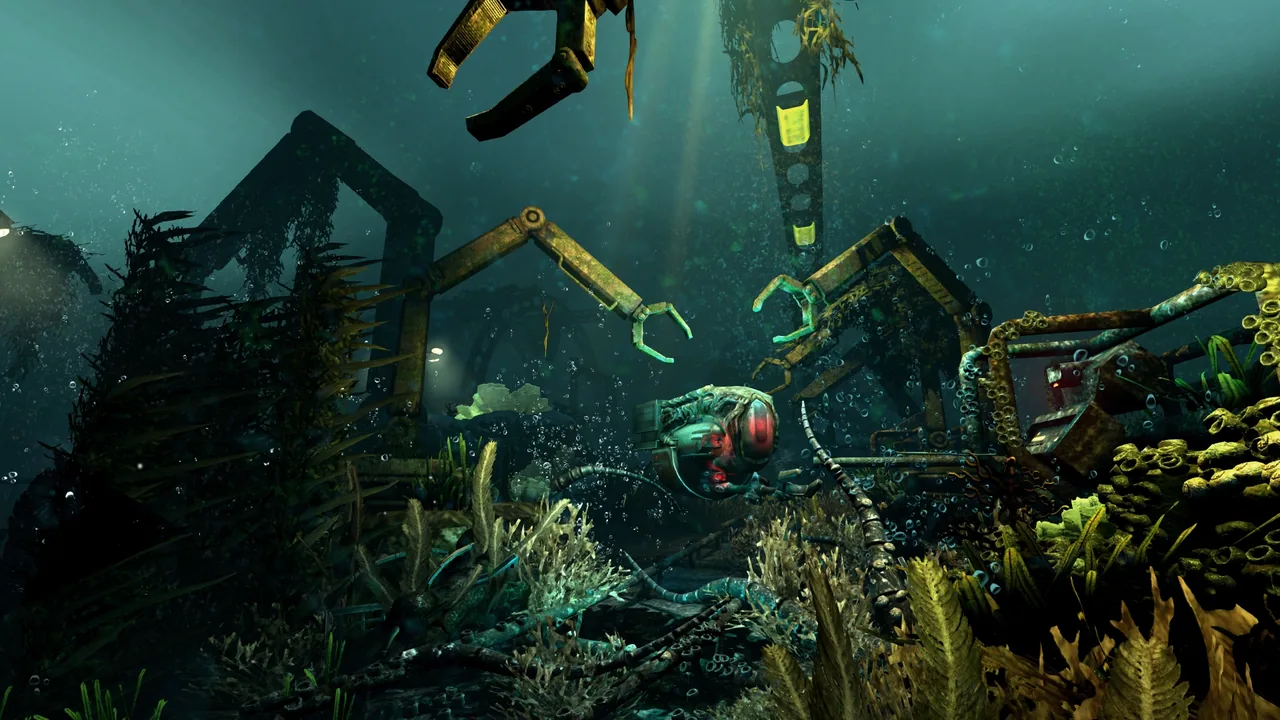
SOMAImage: Frictional Games via Steam -
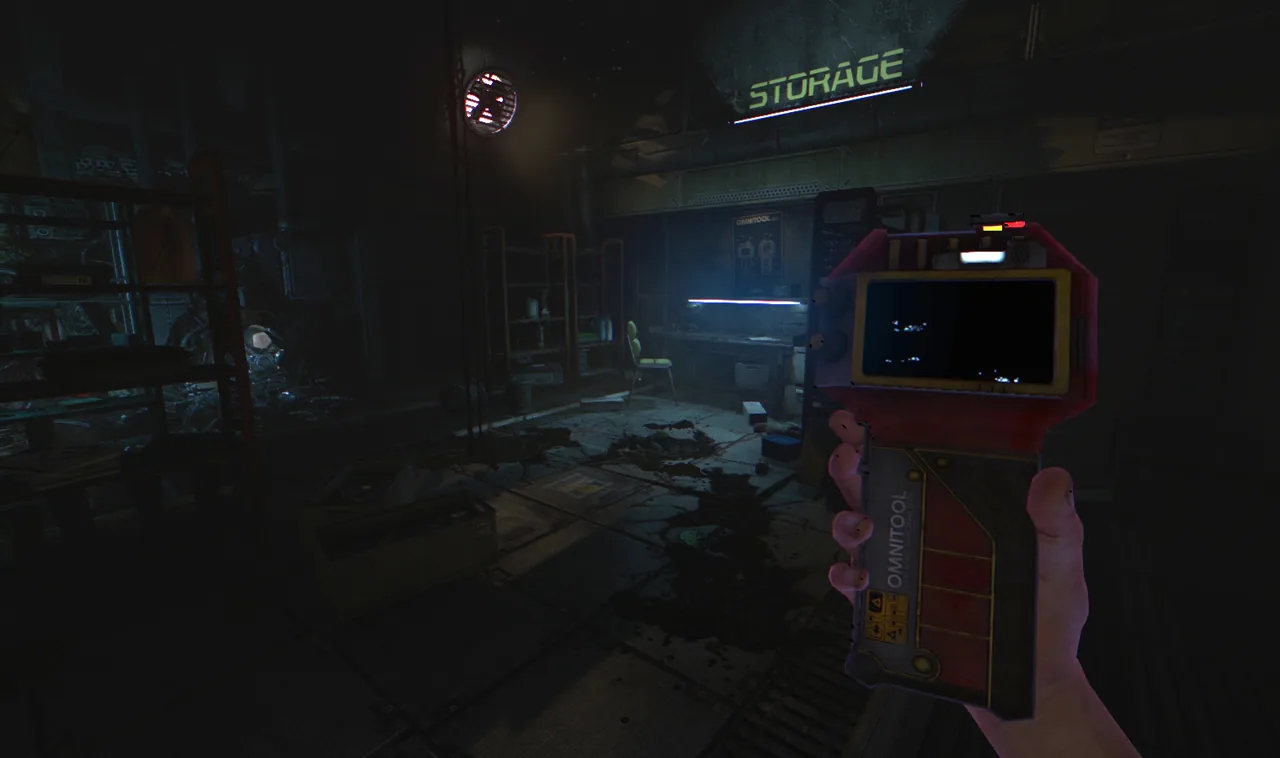
SOMAImage: Frictional Games via Steam -
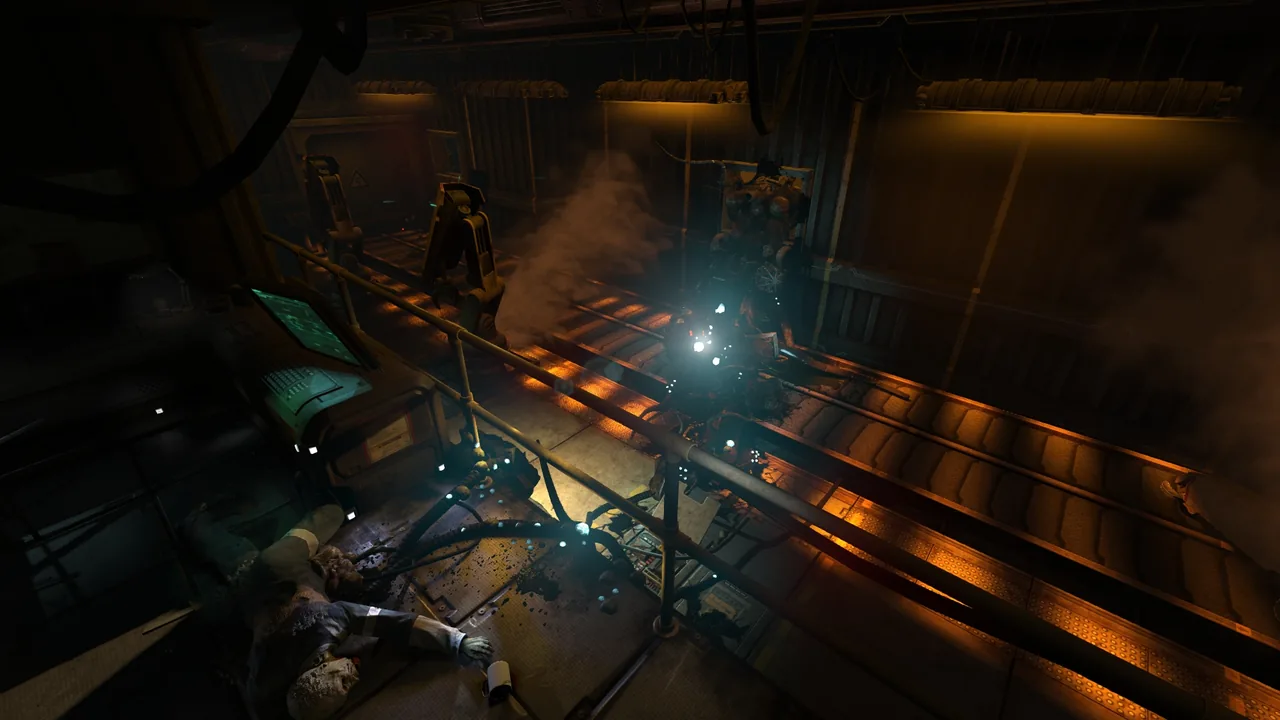
SOMAImage: Frictional Games via Steam -
How the review scores each part of the gameWanderer Editorial -
The short versionWanderer Editorial