Game review
SHENZHEN I/O
8 / 10
- Developer
- Zachtronics
- Publisher
- Zachtronics
- Released
- 17 November 2016
- Platforms
- Windows, macOS, Linux
- Genre
- Engineering Puzzle
- Monetisation
- One-time purchase. No DLC, no in-game purchases.
- Players
- Single-player, with global solution histograms
The short version
An electronics engineer takes a job at a Shenzhen manufacturer and starts building circuits to order — laying out chips, wiring them, and programming each one in a fictional assembly language. The conceit extends to a genuine PDF manual you're meant to print and put in a ring binder.
It's the most demanding thing Zachtronics made, and its reception says so: **94.4% positive in English**, the lowest of the three engineering puzzlers I've assessed today. Programming and code appear in 57 of the 100 most-helpful negatives, manual or documentation in 39 — and the top negative, with 905 votes, explicitly recommends the game to anyone who already writes code.
Biggest strengths
- A wonderfully committed conceit, right down to the printable ring-binder manual
- Real assembly-style programming with genuine optimisation depth
- Solution histograms that turn every working circuit into a starting point
Biggest weaknesses
- Documentation gaps are the recurring specific complaint, including a reportedly missing command
- It genuinely is programming, which several reviewers found indistinguishable from work
- Steep even by the studio's standards — the median achievement is held by 2.4% of players
Who it's for: People who program and want programming as a puzzle, or who want to learn assembly the hard way. If writing code is your job and not your hobby, several reviewers warn this feels like overtime.
Our recommendation: Buy it if fake assembly language sounds like a pleasure rather than a chore, and budget time for the manual — it's mandatory reading, not flavour. Start with Opus Magnum instead if you want the Zachtronics experience without the programming.
8 / 10
The most-upvoted negative review of SHENZHEN I/O has 905 votes — the largest single review I've encountered on a game this size — and it recommends the game:
This is one of those cases where I really wish there was a more neutral option for recommendations, as it pains me to bring down the score of a Zachtronics game, and for people who already know how to code this is a game I would 100% recommend. Personally I found it overwhelming in the extreme.
That is not a complaint about quality. It's a complaint about fit, and it's the honest centre of this game's 94.4% rating — the lowest of the three engineering puzzlers I've assessed today, and the one where the score least reflects how good the game is.
What it actually asks of you
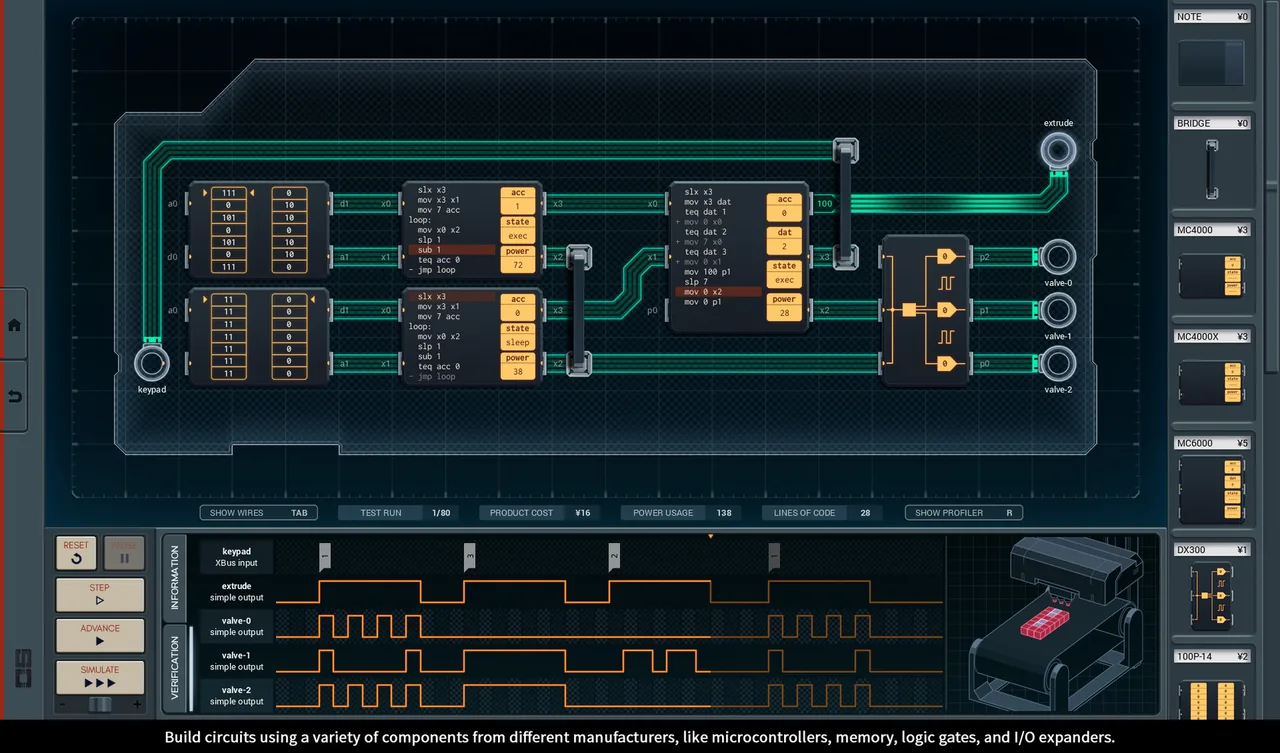
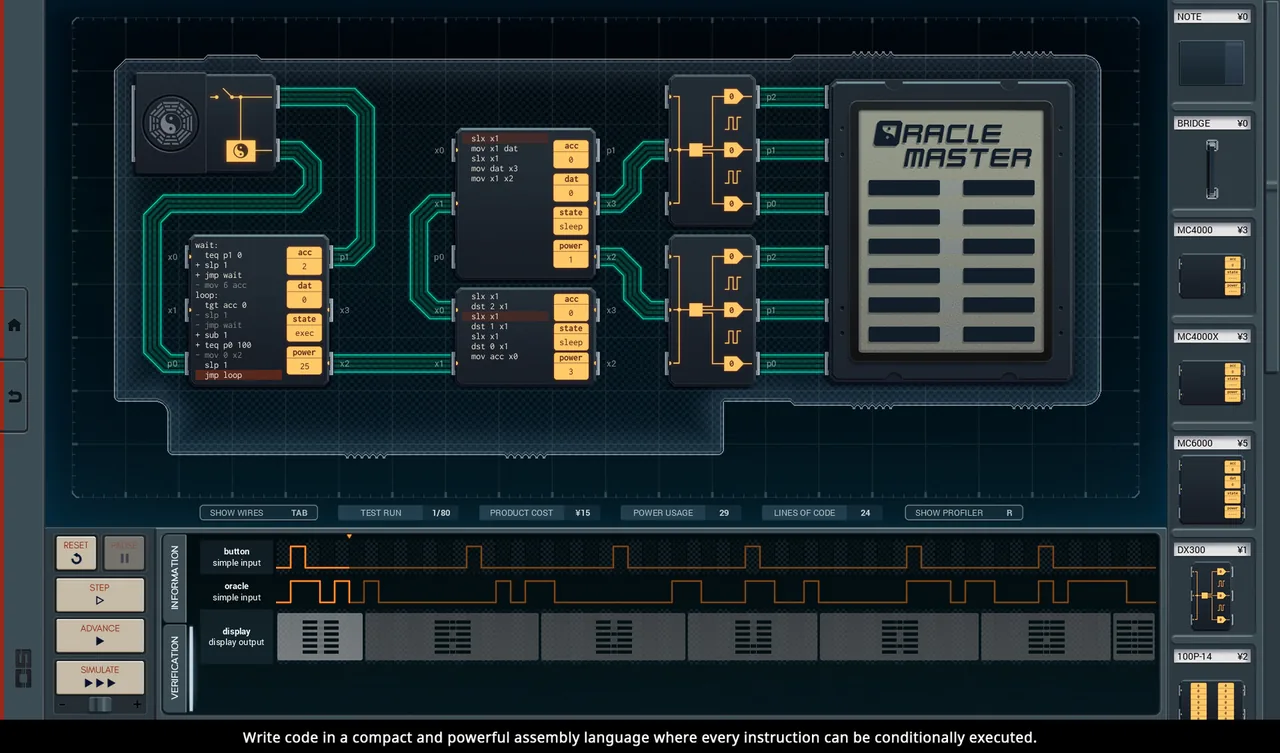
You've moved to Shenzhen for an electronics job. Each assignment arrives as an email: a client wants a device that does something specific. You lay out microcontrollers, sensors and logic chips on a board, wire them together, and then write a program for each chip in a constrained assembly-style language with a strict instruction budget.
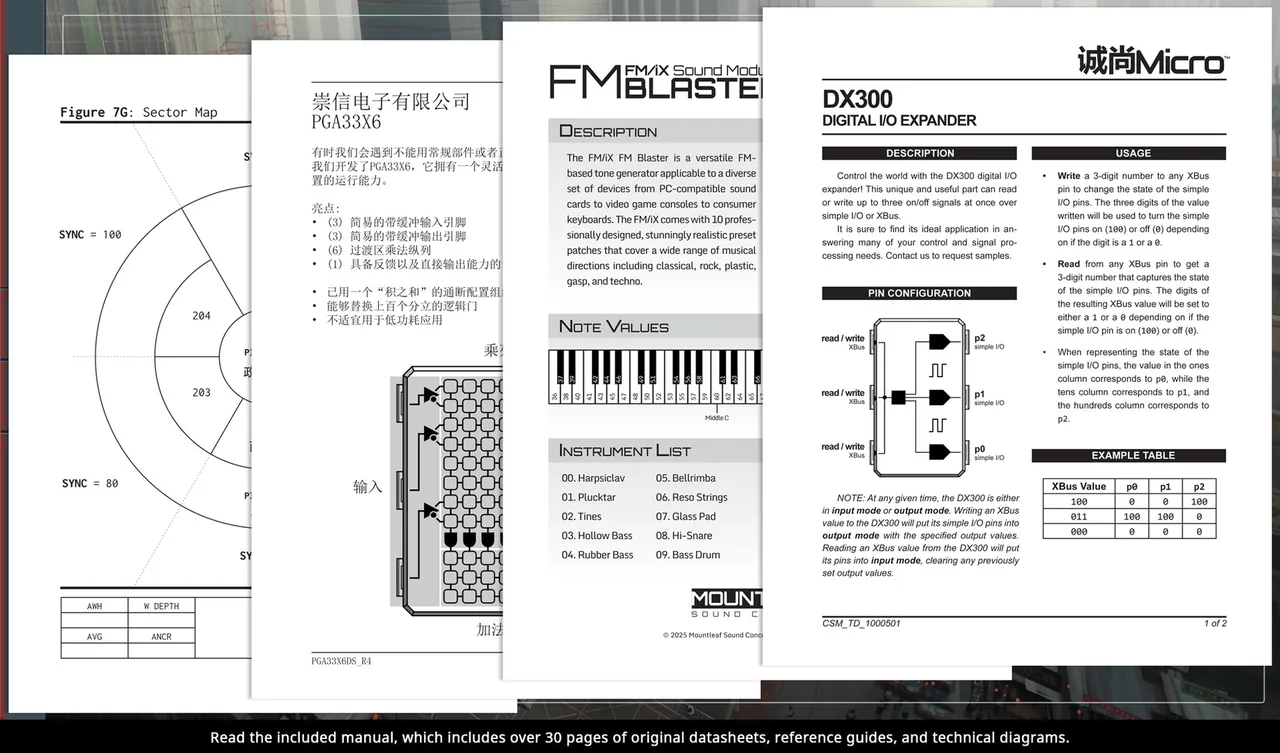
The conceit is total. The reference material is a PDF manual designed to be printed and kept in a ring binder, complete with datasheets. Manual and documentation appear in 39 of a hundred negatives — not because it's bad but because it's load-bearing. This is a game where the correct first move is to go and read forty pages.
Then, as always with this studio, the histograms appear: cost, cycles, lines of code, everyone else's solutions plotted against yours.
The complaint that's really a warning label
Programming and code appear in 57 of the hundred negatives — the top term by a wide margin — and the sentiment is consistent.
A 1.5-hour reviewer: "after an hour or so I realised that it was too much like being at work! If you don't work as a software engineer/programmer and dream of doing so then this is probably a great game for you." An 8-hour Python developer: "this quickly devolves into a 'Worst Parts of Coding Simulator'." A 30-hour reviewer puts the philosophical version: the pleasure "is the same kind of pleasure you get by solving real problems, like programming or math problems… But why not just pick up [real ones]."
None of those is wrong. SHENZHEN I/O does not gamify programming; it presents programming, with a narrative frame. Whether that's a holiday or a busman's holiday depends entirely on your day job.
The complaint that is a genuine fault
Documentation gaps, and one specific enough to check.
A 52-hour reviewer with 51 votes reports that the game "strongly tell[s] you to read the manual, but they omit commands in the manual (apparently they're in the Chinese manual)" — naming a gen instruction they had to discover elsewhere. I can't open the manual to verify which commands appear in which edition, so that stands as their account rather than a confirmed fact. But it fits the wider pattern: another reviewer with 41 votes calls the documentation for the pseudo-assembly language outright "terrible", and 34 of the hundred negatives raise the manual or documentation directly.
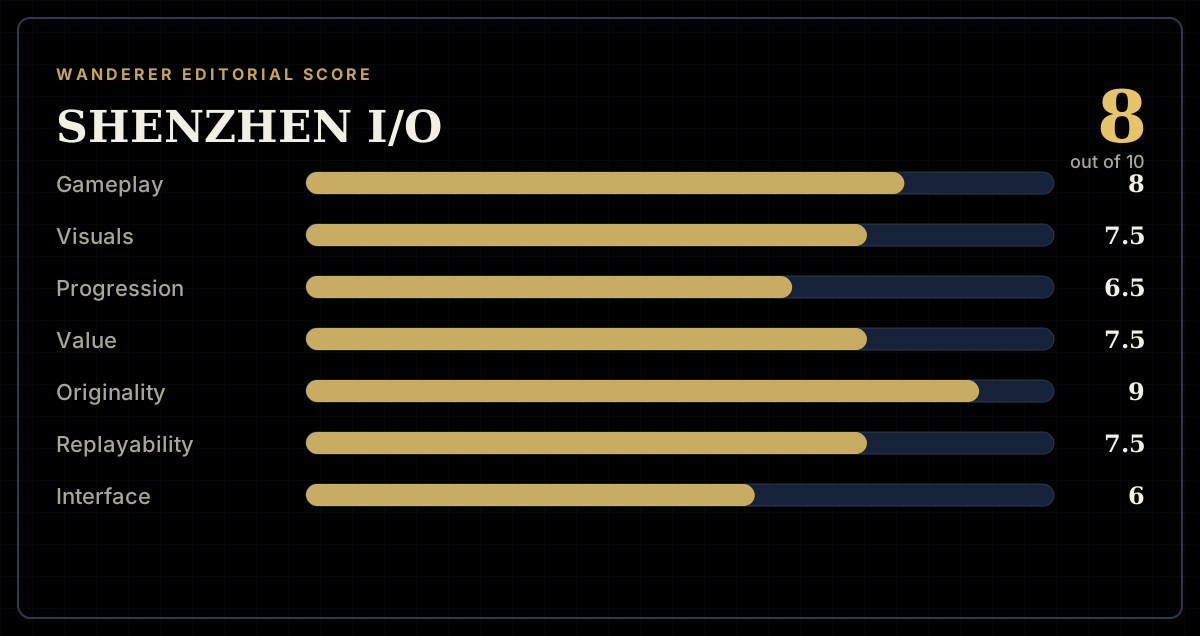
For a game that makes reading the manual mandatory, incomplete documentation isn't a rough edge — it's the game withholding the one thing it told you to rely on. Interface scores a 6 for that.
Reading the dates properly
One thing worth flagging for anyone checking my working. Negatives cluster oddly — 25 of the hundred are from 2020, which looks like an event. It isn't: those reviews carry a median of 3 votes, against 16 for the ten from 2016. That's Steam padding the sample with low-weight recent entries, the same artefact I caught on Hotline Miami earlier today, and the documentation complaints inside that 2020 group are inflated by it.
The durable picture is steadier: documentation complaints appear in most years, recent English reviews sit at 93 of 100 positive, and the achievement curve confirms the difficulty — six achievements, the most common held by 46.4% of players, the median by 2.4%.
The verdict
SHENZHEN I/O earns an 8. It's the most atmospheric and most committed thing Zachtronics made, the assembly puzzles have genuine depth, and at NZ$21.99 it's the cheapest of the three I've covered today.
It sits below Opus Magnum at 8.5 because it's narrower — replayability is lower, the audience is smaller, and the documentation gaps undercut its own core instruction. It sits above Turing Complete at 7.5 despite a nearly identical Steam rating, and the distinction matters: Turing Complete promises to teach you and doesn't, whereas SHENZHEN I/O never promised to be gentle. One fails its own pitch; the other just isn't for everyone.
Buy it if writing tight little programs sounds like fun. Print the manual first.
Pros and cons
Pros
- A wonderfully committed conceit, right down to the printable ring-binder manual
- Real assembly-style programming with genuine optimisation depth
- Solution histograms that turn every working circuit into a starting point
- Strong atmosphere — the emails, the fictional company, the catchy soundtrack
- Cheaper than its siblings and complete, with no DLC of any kind
Cons
- Documentation gaps are the recurring specific complaint, including a reportedly missing command
- It genuinely is programming, which several reviewers found indistinguishable from work
- Steep even by the studio's standards — the median achievement is held by 2.4% of players
- Little reason to replay once solved, unlike its more open-ended siblings
- The learning curve assumes prior comfort with low-level code
Screenshots
-
SHENZHEN I/OImage: Zachtronics via Steam -
SHENZHEN I/OImage: Zachtronics via Steam -
SHENZHEN I/OImage: Zachtronics via Steam -
How the review scores each part of the gameWanderer Editorial -
The short versionWanderer Editorial