Game review
Opus Magnum
8.5 / 10
- Developer
- Zachtronics
- Publisher
- Zachtronics
- Released
- 7 December 2017
- Platforms
- Windows, macOS, Linux
- Genre
- Engineering Puzzle
- Monetisation
- One-time purchase with one optional extra. No in-game purchases.
- Players
- Single-player, with global solution histograms
The short version
You are an alchemical engineer. You build a machine out of arms, tracks and glyphs that turns lead into gold, and then the game shows you a histogram of everyone else's solutions and quietly suggests yours is too big, too slow and too expensive. It's 97.1% positive across 4,423 English reviews.
The two durable criticisms are worth knowing. **Interface terms appear in 22 of the 100 most-helpful negatives** — though dating them shows the complaints have collapsed since 2020 and the game was patched as recently as **28 July 2026**. And a subtler objection: with unlimited space and parts, some players find solutions arrive without ever feeling earned.
Biggest strengths
- The machines are genuinely beautiful in motion — the GIF export exists for good reason
- Open-ended solutions with cost, cycle and area histograms driving endless refinement
- The most approachable Zachtronics entry, with a real story and a solitaire minigame attached
Biggest weaknesses
- Interface friction — fiddly component dragging, no instruction annotation, awkward hotkeys
- Unlimited board space means solutions can feel inevitable rather than clever
- Later puzzles get longer rather than more interesting, by several accounts
Who it's for: Anyone who enjoys optimisation for its own sake — shaving cycles off a working machine. If "it works, but can it be smaller" isn't a thought you enjoy having, this isn't for you.
Our recommendation: Buy it if the idea of competing against a global histogram appeals. It's the most visually beautiful and most accessible Zachtronics game, and the interface complaints that dominate its negative reviews describe 2017–2020 rather than now.
8.5 / 10
The most-upvoted negative review of Opus Magnum, at 162 votes, warns of interface, scaling and resolution problems and reports that the developer said on a 2017 podcast they had no intention of ever fixing them.
I can't verify what was said on a podcast nine years ago, and I'm not going to try. What I can check is the record since, and it's straightforward: Zachtronics posted six updates to this game between 17 June and 28 July 2026 — minor improvements, Korean and Russian translations, an in-game option for the GIF output directory, and bug fixes. A nine-year-old puzzle game received a patch a fortnight before this review.
The interface complaints themselves tell the same story when you date them. Twenty-three of the hundred negatives mention UI, interface, resolution, scaling or hotkeys — but by year that's 2, 6, 1, 6, then single digits, with one in 2026 and two in the hundred most recent reviews. Whatever the state of things in 2017, this is not what current players are talking about.
What it is
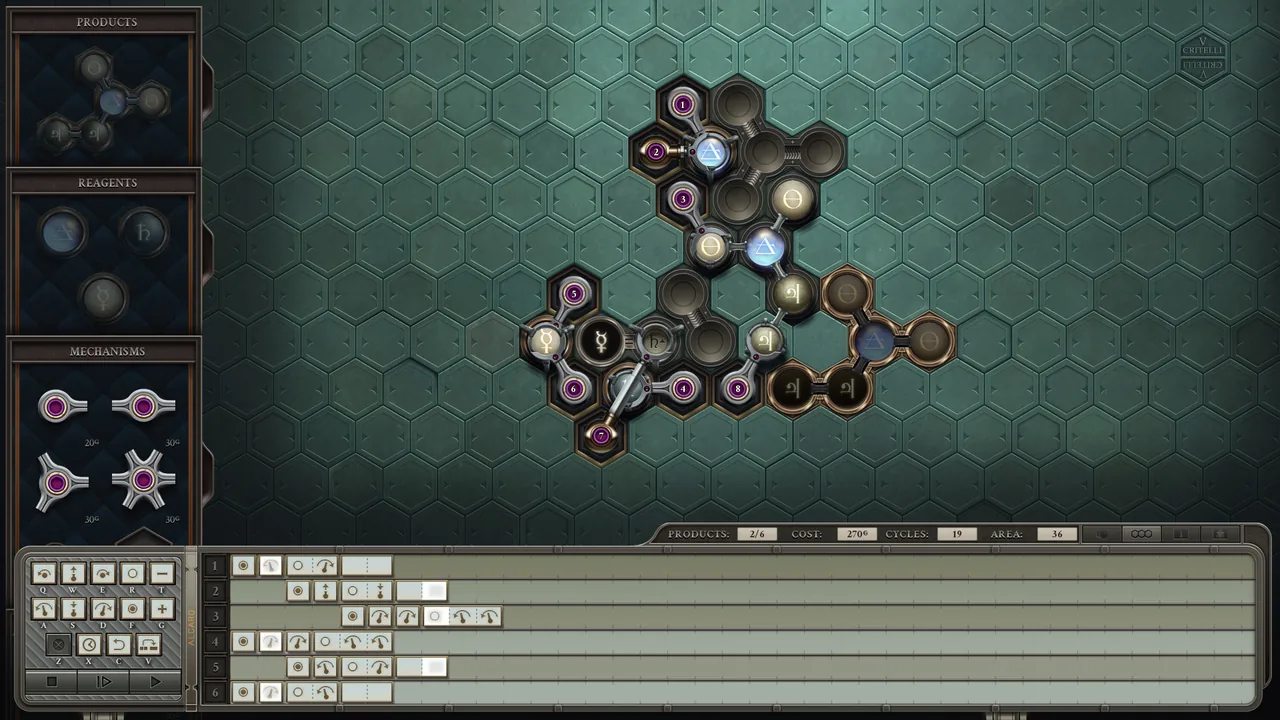
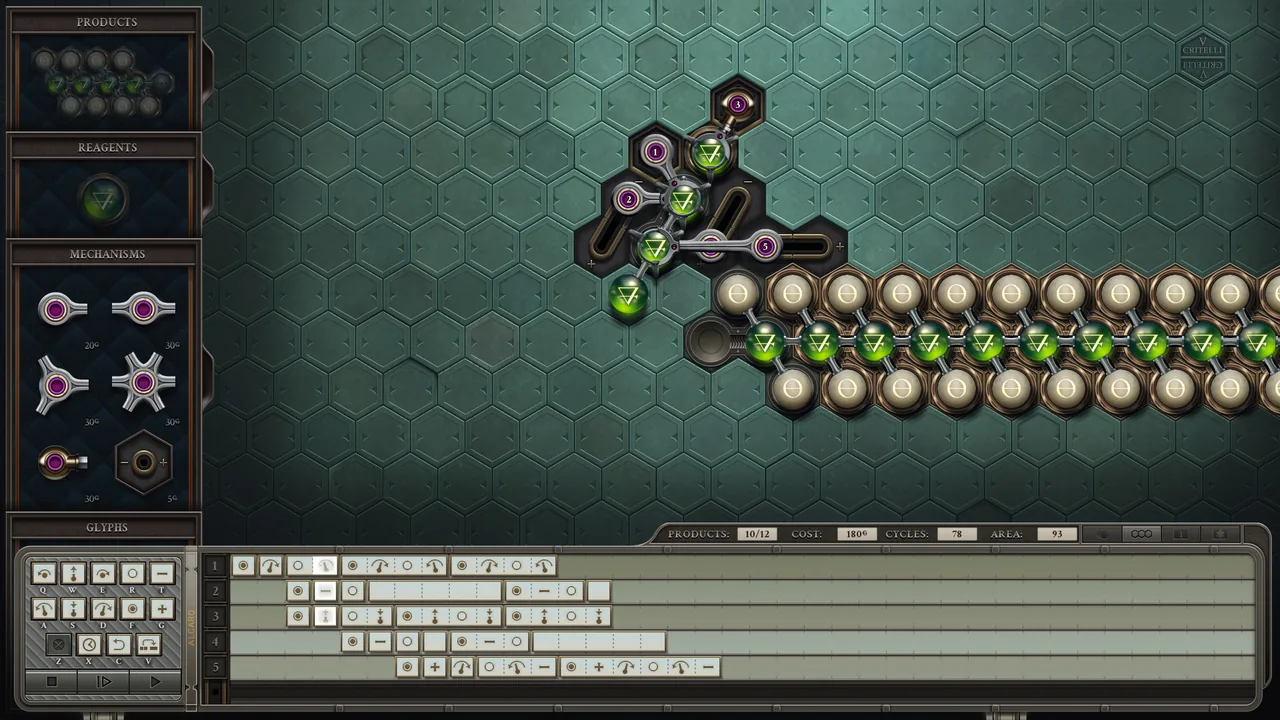
An engineering puzzle game dressed as alchemy. You're given input reagents and a target product, an empty hex grid, and a toolbox of mechanical arms, tracks, pistons and transmutation glyphs. You build a machine that performs the conversion, press play, and watch it run.
Then the game shows you three histograms — cost, cycles, area — comparing your machine to everyone else's, and that's where it actually begins. A working solution takes twenty minutes. A good one takes considerably longer, and the game politely never tells you to stop.
The presentation is the reason people fall for it. The machines are gorgeous in motion — brass arms swinging in choreographed loops — and there's a built-in GIF exporter precisely because people want to show them off. Visuals score a 9 and it isn't close.
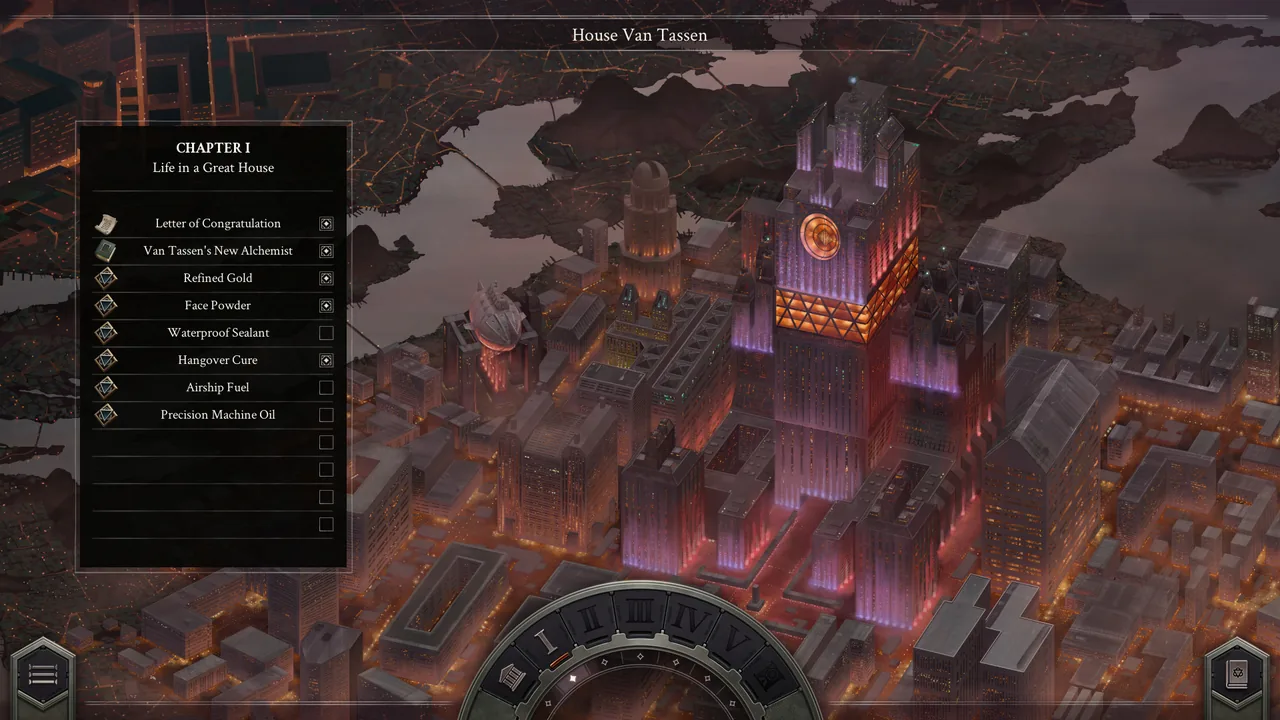
There's also a proper story with characters and intrigue between puzzles, and a full solitaire minigame, which is more framing than most puzzle games bother with.
The criticism that isn't about the interface
The more interesting objection comes from a 34-hour player at 68 votes: "With infinite playing space and pieces, solutions feel inevitable, not rewarding. Past the first half of the game, puzzles get longer, not more interesting."
That's a real design tension. Opus Magnum gives you an effectively unlimited board, so unlike a tightly constrained puzzle there's rarely a moment of "aha, that's the trick" — there's just building until it works. The pleasure is meant to arrive afterwards, in refinement.
A 33-hour reviewer sharpens it by comparison: "Of all the Zachtronics puzzle games, this one feels the least like a game. The gameplay is well designed for optimization, but I don't personally get much enjoyment out of optimizing the cost, size and time of a device with a completely abstract size, cost and run time." SpaceChem appears in 7 of the negatives on similar grounds — that's the thirteenth game today whose critics reach for a specific comparison, and here it's the studio's own back catalogue.
I think that's fair, and it defines the audience precisely. If watching a histogram bar move left is its own reward, this is one of the great games. If you need the puzzle to resist you, Patrick's Parabox — reviewed earlier today — will suit you better.
Numbers
Only six achievements, the most common held by 50.7% of players and the median by 7.6% — this is not a game that measures itself in unlocks. The critics' median playtime is 7 hours, with a maximum of 217, which is the usual shape: people either finish the campaign and stop, or never stop.
Recent English reviews sit at 97 of 100 positive, and the 2026 negatives carry a median of two votes apiece — ordinary background, not a shift.
The verdict
Opus Magnum earns an 8.5. It's the most beautiful thing Zachtronics made, the most welcoming entry into a famously unwelcoming genre, and it's still being cared for nearly a decade later.
It stops short of a 9 because the interface genuinely is fiddlier than a game demanding this much precision deserves — even if that's improved — and because the unlimited board means the puzzles themselves rarely bite. The joy is in refinement, not discovery, and that's a narrower appeal than the 97% suggests.
Buy it if you've ever made something work and then immediately wanted to make it smaller. And ignore the review at the top of the negative column, which is describing a game from 2017 that has been patched dozens of times since.
Pros and cons
Pros
- The machines are genuinely beautiful in motion — the GIF export exists for good reason
- Open-ended solutions with cost, cycle and area histograms driving endless refinement
- The most approachable Zachtronics entry, with a real story and a solitaire minigame attached
- Still actively maintained nine years on, including new localisations in July 2026
- Cross-platform on Windows, macOS and Linux
Cons
- Interface friction — fiddly component dragging, no instruction annotation, awkward hotkeys
- Unlimited board space means solutions can feel inevitable rather than clever
- Later puzzles get longer rather than more interesting, by several accounts
- Optimisation is the whole appeal; without that itch the game ends quickly
- NZ$28.99 with only six achievements and no discount at time of writing
Screenshots
-
Opus MagnumImage: Zachtronics via Steam -
Opus MagnumImage: Zachtronics via Steam -
Opus MagnumImage: Zachtronics via Steam -
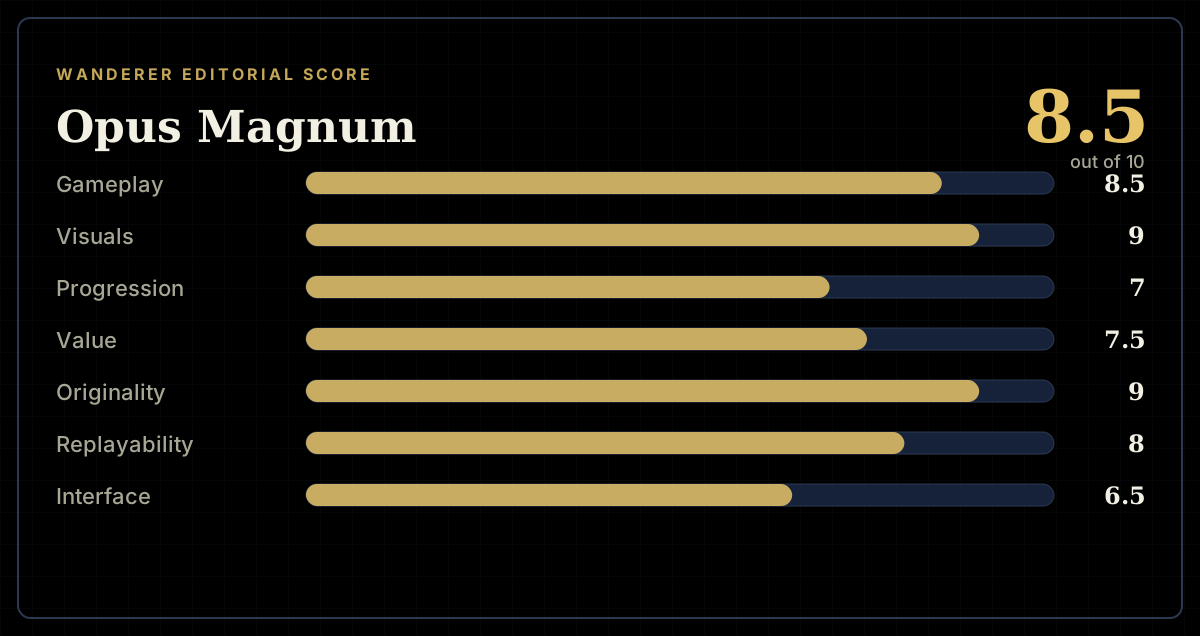
How the review scores each part of the gameWanderer Editorial -
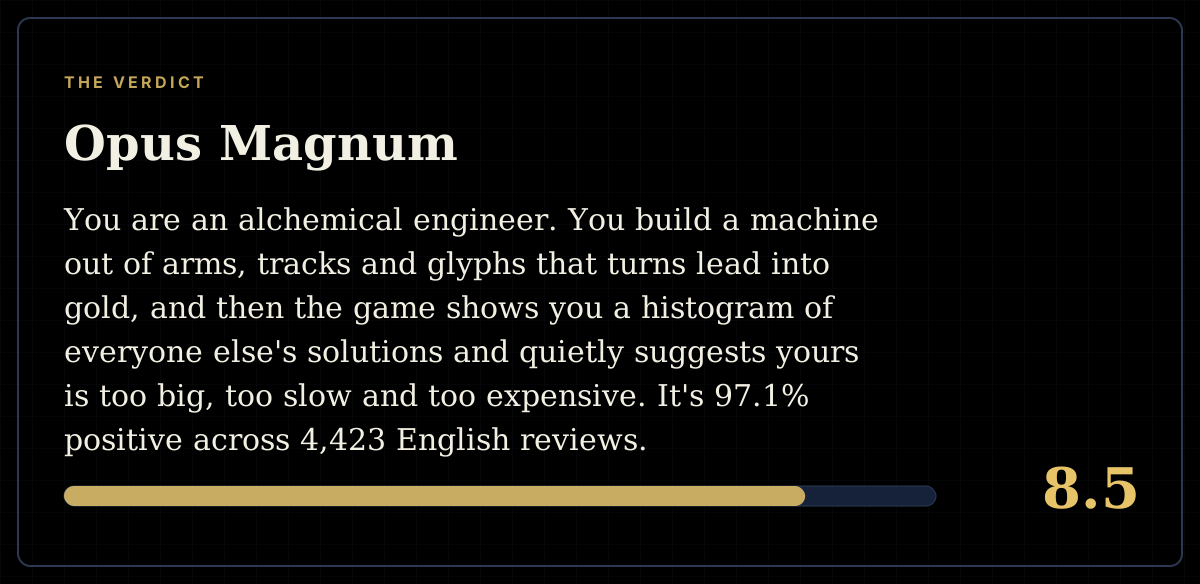
The short versionWanderer Editorial