Game review
Infinifactory
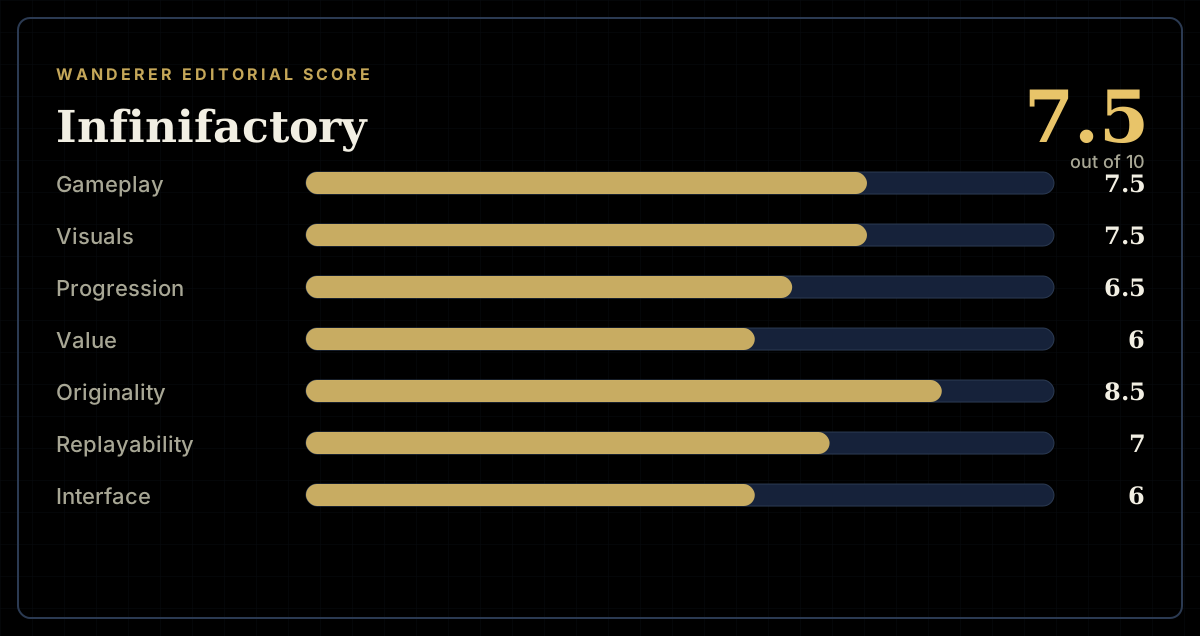
7.5 / 10
- Developer
- Zachtronics
- Publisher
- Zachtronics
- Released
- 30 June 2015
- Platforms
- Windows, macOS, Linux
- Genre
- Engineering Puzzle
- Monetisation
- One-time purchase. No DLC, no in-game purchases.
- Players
- Single-player, with global solution histograms
The short version
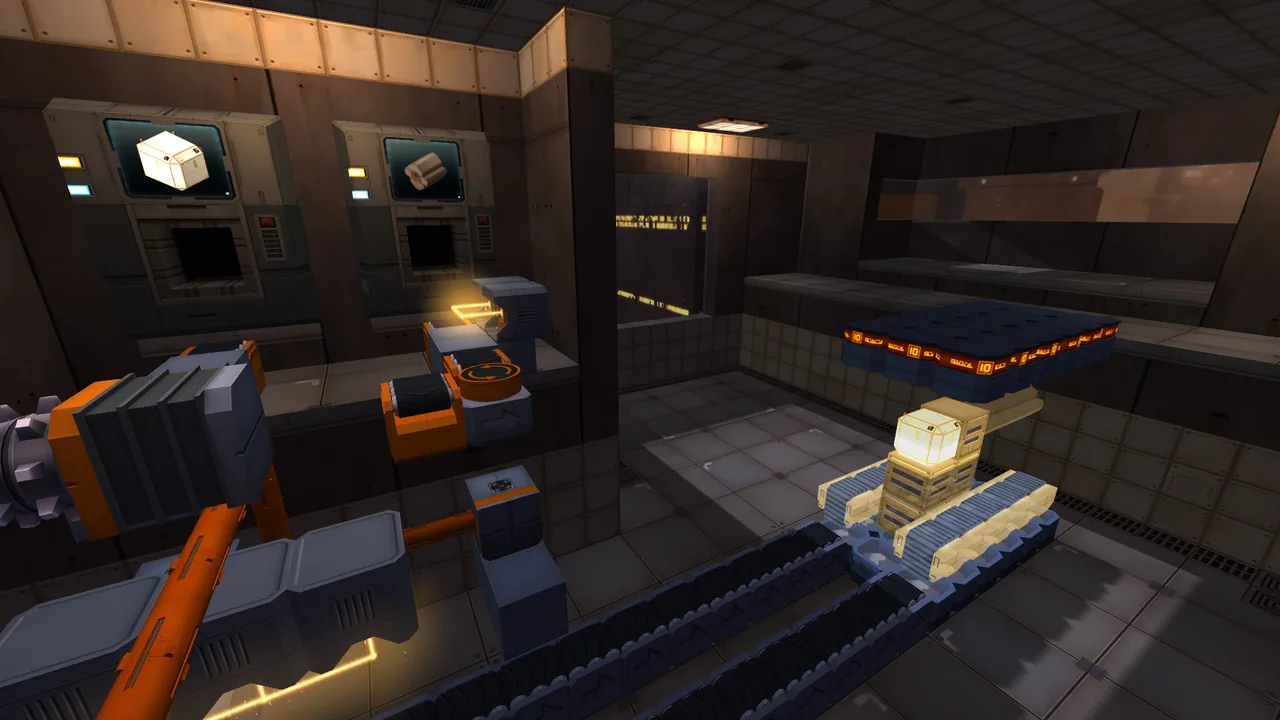
Aliens have abducted you to build things. You lay conveyors, welders and pushers in a three-dimensional space to assemble products to spec, while the histograms measure your cycles, footprint and blocks used. It's the studio's only fully 3D puzzle game, and the reviews of its siblings kept naming it as one of the fun ones.
Its own numbers are cooler than that reputation: **95.0% positive**, below TIS-100's 96.9% and Opus Magnum's 97.1%, and it's the most expensive of the six at NZ$35.99. The specific complaints are its own: the 3D space is awkward to navigate, block interaction rules have edge cases, and — most tellingly — people expect a factory sandbox and get a constrained puzzle.
Biggest strengths
- The only fully three-dimensional take on the studio's optimisation formula
- Genuinely satisfying to watch a working assembly line run
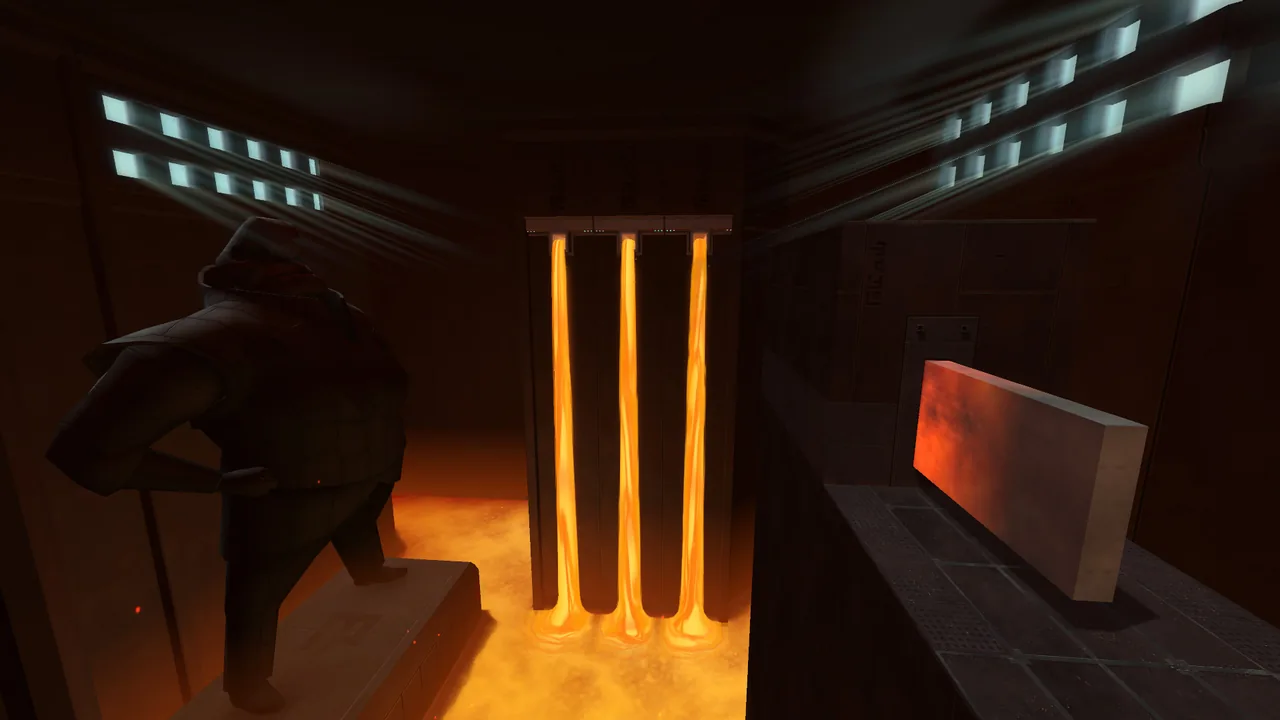
- Strong sci-fi atmosphere, with more environmental storytelling than its siblings
Biggest weaknesses
- Navigating and building in 3D is fiddly compared with the studio's 2D games
- Block interaction rules have edge cases reviewers find inconsistent
- The name and framing suggest freeform factory building, which this isn't
Who it's for: People who liked Opus Magnum and want the same optimisation in three dimensions. Not for anyone hoping for freeform factory building; that's a different genre and its critics say so.
Our recommendation: Buy it on discount. The 3D optimisation is genuinely distinctive and the alien framing is more atmospheric than the studio's usual, but at NZ$35.99 it's the priciest entry into a catalogue where TIS-100 costs NZ$10.49 and rates higher.
7.5 / 10
Across the five other engineering puzzlers I've reviewed today, Infinifactory kept coming up in their negative reviews as the one that got it right. "Infinifactory and Opus Magnum are still the most fun games by Zachtronics," wrote one EXAPUNKS critic. Another, reviewing TIS-100, said they'd recommend Infinifactory over it.
I went to check whether its own numbers agreed. They partly don't.
| Game | English rating | Price |
|---|---|---|
| Opus Magnum | 97.1% | NZ$28.99 |
| TIS-100 | 96.9% | NZ$10.49 |
| Infinifactory | 95.0% | NZ$35.99 |
| Turing Complete | 94.8% | NZ$30.99 |
| EXAPUNKS | 94.7% | NZ$28.99 |
| SHENZHEN I/O | 94.4% | NZ$21.99 |
It sits mid-table, and it's the most expensive of the lot — three and a half times what TIS-100 costs, for a lower rating.
Why the reputation and the rating diverge
Because "fun compared with writing assembly" is a low bar, and that's the comparison those reviewers were making. Infinifactory is spatial rather than textual — you build with conveyors, welders and pushers rather than instruction sets — which makes it far more approachable than SHENZHEN I/O or TIS-100. Programming appears in only 4 of its 99 negatives, against 41–57 in the text-based games.
But approachable isn't the same as loved, and Infinifactory has problems its siblings don't.
Three dimensions are awkward. A 35.8-hour reviewer at 74 votes: "It is hard to navigate physically. The rules for how pieces interact have some bizarre edge cases (like when a piece larger than 1 square behaves when over rollers of multiple directions)." Navigation and camera complaints appear across the game's whole life — 2015, 2016, 2019, 2024, 2025 — so this isn't a launch issue that got patched. Building in a 3D volume with a free camera is simply fiddlier than arranging things on a plane, and Opus Magnum's flat board is easier to think in.
The name sets the wrong expectation. This is the sharpest complaint, and it's the same expectation-setting pattern that explained TIS-100's high rating. The most-upvoted negative, at 97 votes from a 30-hour player, opens: "I was misled into thinking this was a game about factories where you'd have some freeform interpretation of how to solve problems, create different things, and improve on the efficiency of your factories. Wrong."
Six of the 99 negatives name Factorio directly, including one that reads, in full: "This just didn't click for me, unlike Zachtronic's other games. Play Factorio instead."
They're describing a real mismatch. "Infinifactory" sounds like an open-ended factory builder. It's a puzzle game with fixed objectives and correct answers, and people arriving from the automation genre find that constricting rather than liberating.
What it does well
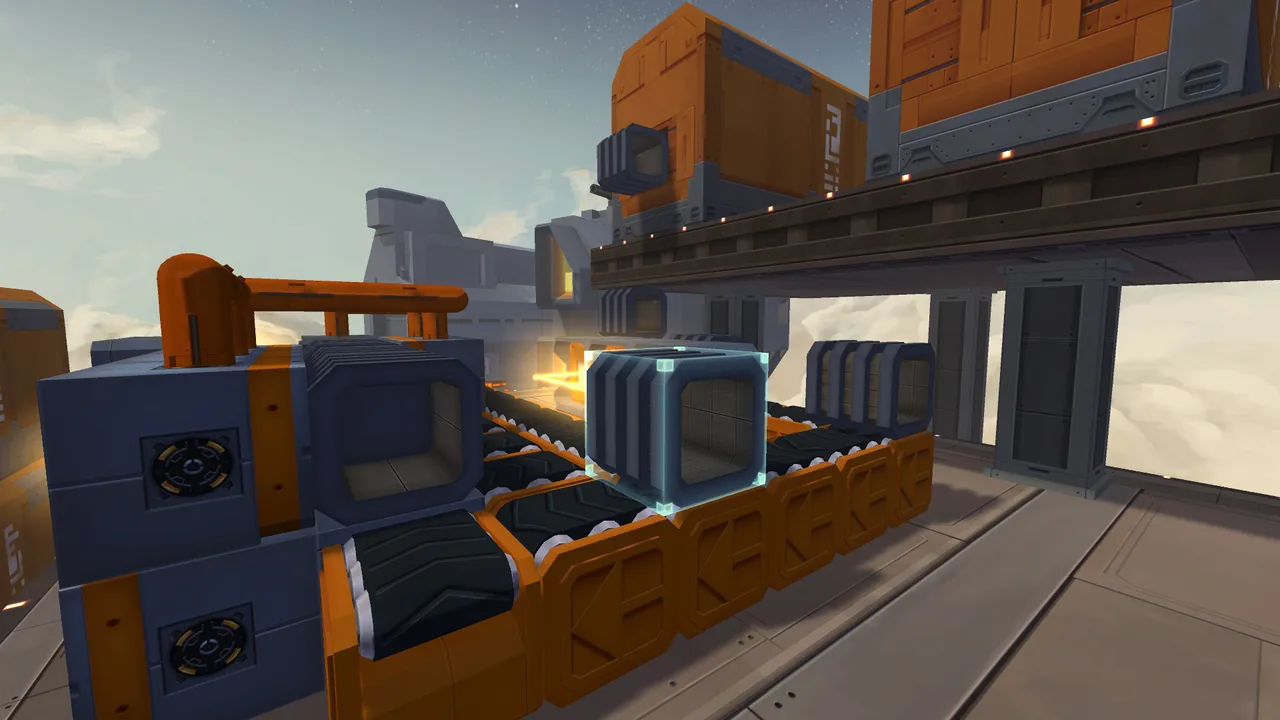
The moment an assembly line works is genuinely gratifying in a way the 2D games can't quite match — blocks moving through a machine you built in space, welding themselves into a product, on a loop. The alien-abduction framing gives it more environmental storytelling than the studio usually bothers with, and there's a real sense of place.
The optimisation loop is intact: cycles, footprint and blocks, plotted against everyone else.
The numbers
The critics' median playtime is 2.4 hours — the fast-bounce pattern again — but recent reviewers average 28.2 hours, so the people it suits stay a long while. Recent English reviews sit at 94 of 100 positive.
Achievements: 22, the most common held by 64.9% of players and the median by 5.1%.
Negatives cluster in 2016–2018 (54 of 99) with a median of 4 votes — a genuine early cluster rather than sample filler, thinning to four or five a year since.
The verdict
Infinifactory earns a 7.5. The 3D optimisation is a real idea executed with the studio's usual rigour, the atmosphere is its strongest suit, and watching a finished line run is a pleasure the flat games don't replicate.
It sits below Opus Magnum and TIS-100 because three dimensions add friction rather than depth, the interaction rules have rough edges its own players still report a decade on, and it costs the most of any game in the set while rating in the middle.
Buy it if you've finished Opus Magnum and want more, and buy it in a sale. If you came here because the word "factory" appealed, the game you actually want is a different one — six of its critics will tell you which.
Pros and cons
Pros
- The only fully three-dimensional take on the studio's optimisation formula
- Genuinely satisfying to watch a working assembly line run
- Strong sci-fi atmosphere, with more environmental storytelling than its siblings
- Solution histograms across cycles, footprint and block count
- Cross-platform on Windows, macOS and Linux, with no DLC
Cons
- Navigating and building in 3D is fiddly compared with the studio's 2D games
- Block interaction rules have edge cases reviewers find inconsistent
- The name and framing suggest freeform factory building, which this isn't
- The most expensive Zachtronics game, at more than three times TIS-100's price
- Difficulty spikes sharply once the training campaign ends
Screenshots
-
InfinifactoryImage: Zachtronics via Steam -
InfinifactoryImage: Zachtronics via Steam -
InfinifactoryImage: Zachtronics via Steam -
How the review scores each part of the gameWanderer Editorial -
The short versionWanderer Editorial